
Reviewed · BRITISH MUSEUM TOURS
Private Tour, The British Museum, popular with Families & Small Groups
History is easier when someone tells the story. This private British Museum tour makes a huge collection manageable, especially for families and small groups, with an engaging guide, short quizzes, and memorable tales about mummies, kings, lions, and ancient engineering. I especially like the guaranteed line access and the chance to give your group the guide’s full attention. I also like the planned comfort break, a small but valuable touch in a museum that can feel like too much of a good thing.
The main drawback is the price: $286.41 per person is a serious outlay for roughly two to two and a half hours. The value depends on your group size, how much help you want choosing the highlights, and whether you would otherwise wander through the British Museum without a clear plan. A small meeting mix-up has also happened before, so arrive early and look for the guide by the phone box opposite the Museum Tavern.
In This Review
- Key points at a glance
- Why a private British Museum tour helps
- Meeting your guide at the main gates
- Egyptian galleries and the Rosetta Stone
- Assyria, winged bulls, and lion hunts
- Greek galleries and the Elgin Marbles
- The planned comfort and refreshment break
- Mummies and ancient Egyptian animals
- Sutton Hoo and Britain’s own treasures
- Roman engineering and life in Britain
- A modern surprise before the Great Court
- What the guides add
- Is $286.41 per person good value?
- Who should book this tour?
- Should you book the British Museum private tour?
- FAQ
- Where does the British Museum tour start?
- Where does the tour end?
- How long does the tour last?
- Is this a private tour?
- Is a Blue Badge guide included?
- Does the tour include line access?
- Is food included?
- Is the tour suitable for families?
- Is the tour offered in English?
- Can I cancel for a full refund?
Key points at a glance
- Rosetta Stone first: The Egyptian galleries offer an immediate blockbuster and a playful hieroglyphics challenge.
- Family-friendly storytelling: Gory tales, quizzes, animal-headed gods, kings, and mummies help younger visitors stay involved.
- Blue Badge guide: Your guide provides professional museum interpretation and guaranteed access without waiting in the long public line.
- Private format: Only your group takes part, so you can ask questions and move at a pace that suits your family.
- Built-in pause: A short comfort and refreshment break prevents the museum’s enormous collection from becoming exhausting.
- Strong guide feedback: Marina, Lawrence, Denisa, Ainura, and Lucy have each been praised for clear explanations, warm storytelling, and keeping groups engaged.
Why a private British Museum tour helps
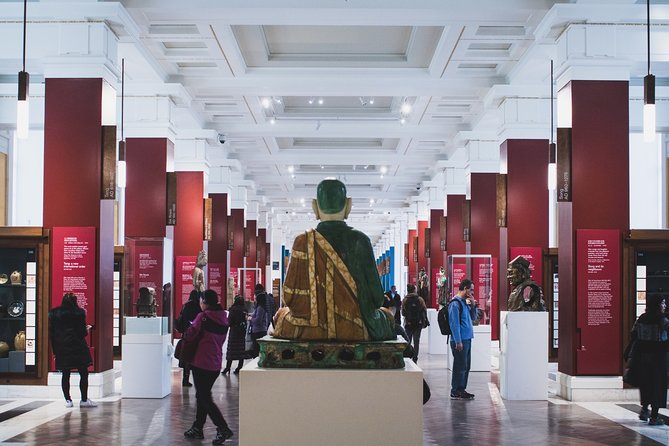
The British Museum is free to enter, but free does not mean simple. Its galleries cover thousands of years and several continents, and the most famous objects are spread across a large building. You can easily spend an hour walking, checking a map, and still miss the pieces you came hoping to see.
A private tour gives you a route. Instead of trying to decide between Egypt, Assyria, Greece, Rome, Britain, and more modern displays, you follow a clear story through time. That matters most when your museum window is limited to two hours.
I like the family focus here because the tour does not treat children as small adults. The guide uses questions and challenges to keep the visit active. You might be asked how the word cat appears in Egyptian writing, or invited to decide who would win a battle between a human king and an animal king.
That approach also helps adults. A good question gives you something to look for, rather than leaving you in front of a glass case with a long label and fading concentration.
The format is private, so you are not sharing the experience with a large mixed group. You can ask for clarification, slow down at an object that catches your eye, or let the guide know when your children need a breather. The guide’s attention belongs to your party.
More British Museum visits:
- British Museum London Guided Tour Semi-Private 8ppl Max
★ 5.0 · 984 reviews - The British Museum London – Exclusive Guided Museum Tour
★ 5.0 · 555 reviews - British Museum Guided Tour
★ 4.0 · 470 reviews
Meeting your guide at the main gates
The meeting point is at the main museum gates, next to the phone box opposite the Museum Tavern. The guide waits there at your allocated start time. I would arrive a little early, since one past booking had an initial problem finding the group, even though guide Lucy later turned the day around with professional help and strong museum expertise.
The meeting directions are specific, but central London can still be distracting, particularly with children in tow. Check the location before leaving your hotel and make sure everyone knows that the phone box is the landmark, not simply the general museum entrance.
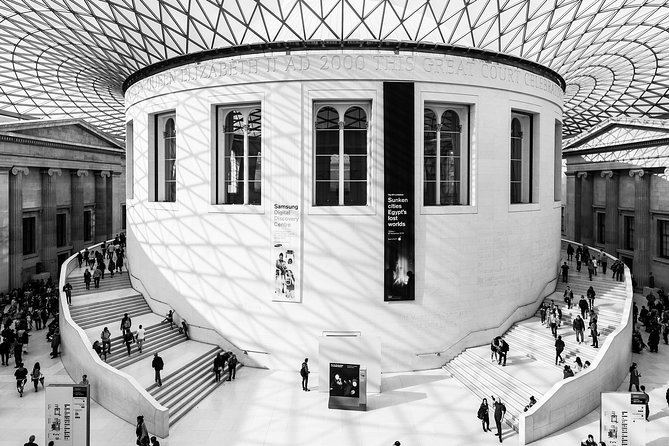
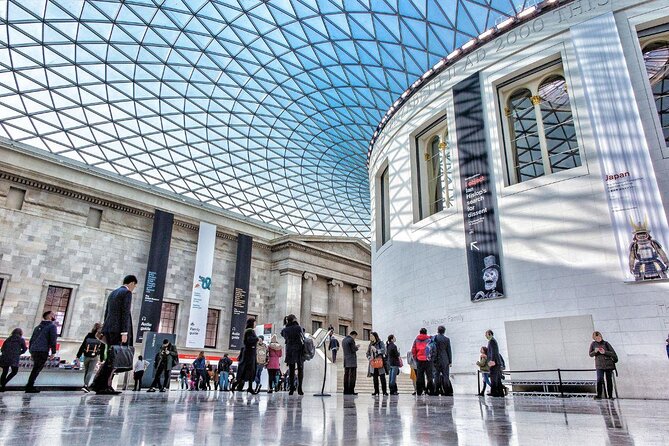
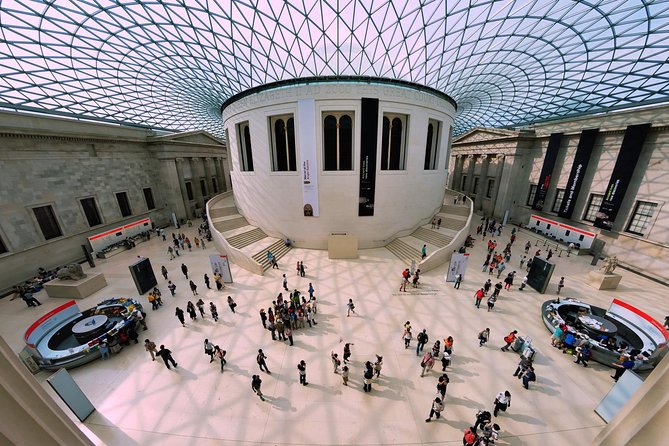
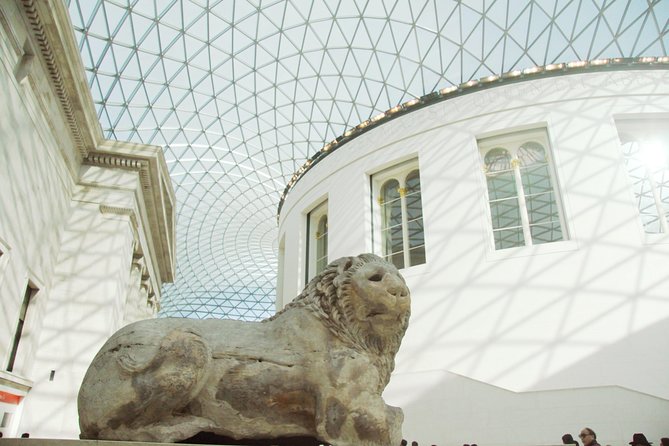
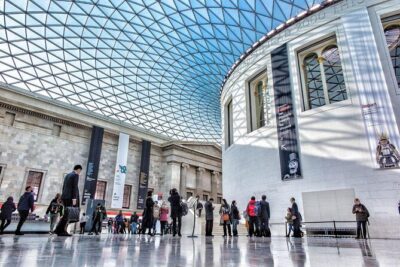
Once you meet, the tour moves into the British Museum and heads toward the Great Court. This is one of the best opening moments. The pale circular space, glass roof, and broad walkways create an immediate sense of scale, and it gives your group a natural place for family photographs before the objects begin competing for attention.
The tour ends back at the Great Court. That is practical because you are not left in an unfamiliar gallery after the guide departs. You can sit, regroup, and decide if you want to continue on your own.
Egyptian galleries and the Rosetta Stone
The Egyptian section usually comes first, which is a smart choice. The Rosetta Stone is one of the museum’s best-known objects, and seeing it early gives you a clear anchor for the rest of the visit.
The guide can turn the stone from a famous name into a readable puzzle. You may be encouraged to look at how the word cat appears in hieroglyphics. A small prompt like this changes the experience. Instead of only admiring the surface, you start examining the symbols and thinking about how written language worked.
Egypt also gives the tour its strongest material for families. Mummification, animals, rulers, and burial customs offer plenty of drama. The subject matter can be intense, but the guide’s storytelling helps keep it suitable for a mixed-age group without making it dull.
The first Egyptian stop is on the ground floor. Later, after the break, you return upstairs to the mummies. That split works well because it gives the collection a beginning and an end rather than presenting every Egyptian object in one long stretch.
Assyria, winged bulls, and lion hunts
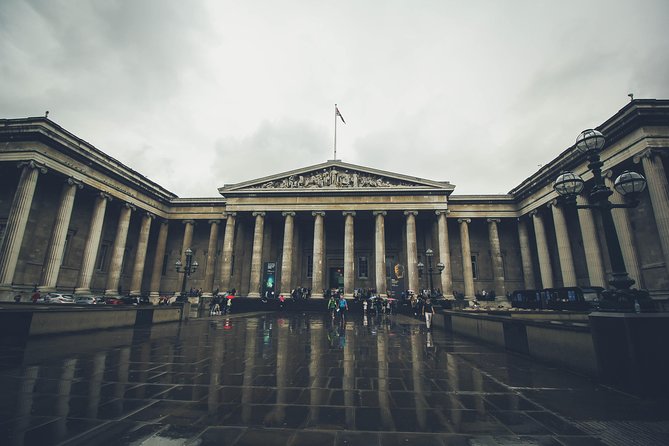
From Egypt, the route continues to Assyria, another major ancient empire. Here the focus shifts from writing and burial to power, warfare, and royal display.
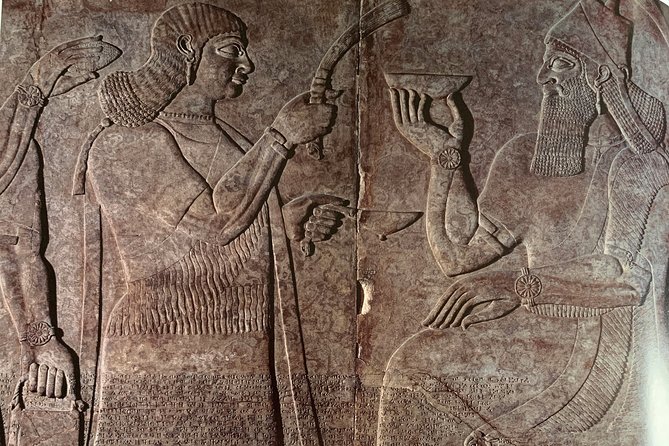
The winged bulls are especially useful for children because they are instantly visual. These huge guardian figures were placed to protect city entrances, and their unusual combination of human, animal, and winged forms gives the guide plenty to explain.
The Assyrian royal lion hunts add another layer. The displays show kings presenting themselves as powerful hunters, while the animals bring movement and danger to the story. The guide’s question about a battle between a human king and an animal king gives children a way into the scene.
This section is a good example of why the guide matters. You can see the carved figures alone, but the story explains what the images were trying to say about kingship. You begin to notice that these objects were not just decoration. They communicated authority.
More Museums in London:
- Tower of London and Crown Jewels Exhibition Ticket
★ 4.5 · 6,677 reviews - Chelsea FC Stadium Tours and Museum
★ 5.0 · 1,908 reviews - Official tickets: Moco Modern & Contemporary Art Museum
★ 4.5 · 1,157 reviews - The Postal Museum Admission Ticket
★ 4.5 · 347 reviews
Greek galleries and the Elgin Marbles
The tour then reaches Athenian objects in the Duveen galleries, home to the Elgin Marbles. The guide uses this section to address a common point of confusion: the Acropolis and the Parthenon are not the same thing.
That distinction is useful before you look at the sculptures. The Acropolis is the hilltop complex, while the Parthenon is the famous temple on it. The gallery becomes easier to understand once you know where the sculptures belonged and what role they played.
The Greek displays can be a quiet change after the violence and drama of Assyria. You get a chance to look at form, detail, and the way ancient artists represented bodies, movement, and myth. The guide can connect the objects to the building they came from, helping you picture them in their original setting.
One practical note: a two-hour tour cannot give every gallery equal time. The guide has to keep moving, and the most famous sections receive priority. If Greek sculpture is the main reason you came, tell your guide at the beginning so your interests can shape the pace.
The planned comfort and refreshment break
After the main ground-floor galleries, the tour includes a short comfort and refreshment break. Food and drinks are not included, so you handle any purchase yourself.
This pause is not filler. The British Museum can be tiring, especially for younger children or anyone who has already spent the morning sightseeing. A few minutes to sit, use the facilities, and reset your attention can make the upstairs galleries much more enjoyable.
The break also makes the tour feel better paced than a nonstop march through famous objects. You begin with Egypt, move through Assyria and Greece, pause, and then return to Egypt before covering Britain, Rome, and later material.
The exact timing can vary because the experience lasts about two to two and a half hours, while the stated museum visit itself is described as two hours. Treat the schedule as an approximate window rather than a precise finish time.
Mummies and ancient Egyptian animals
After the break, you return to the Egyptian galleries upstairs to see the mummies. This is often the section children remember most, though the subject may not suit every child.
The tour compares two different styles of mummification, giving you a useful way to see that burial practices were not all identical. You can also search for the mummy of an ibis, a baboon, or a young woman.
That search element keeps the room active. Instead of listening to a long explanation while standing still, children have a task. It also gives adults a chance to ask about the relationship between people, animals, religion, and burial.
The guide’s tone matters here. The tour promises gory stories, so this is not a sanitized, purely decorative museum walk. If your group includes children who are sensitive to death or preserved bodies, you may want to mention that before the tour starts.
Sutton Hoo and Britain’s own treasures
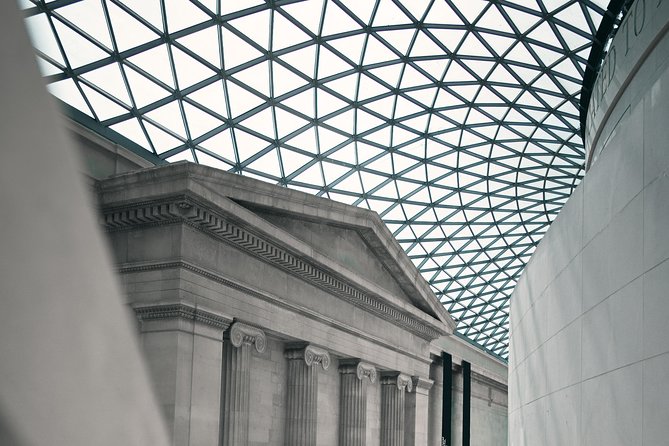
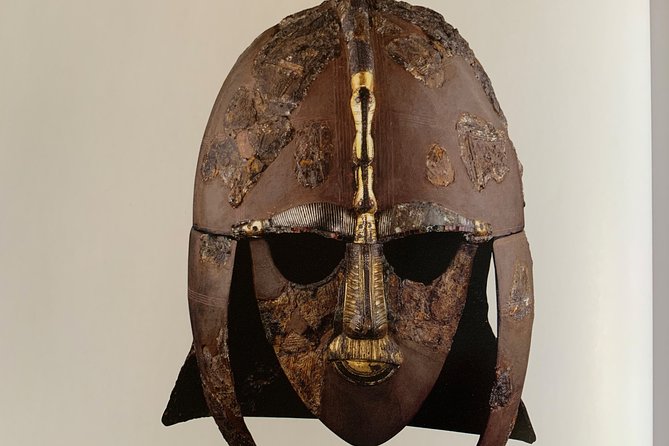
The route does not treat the museum as a collection of overseas cultures alone. It also includes British material, notably the Sutton Hoo treasure.
Sutton Hoo helps bring the story closer to home. After Egypt, Assyria, Greece, and Rome, the British display shows that the islands had their own complex societies and ceremonial objects. It gives the tour a welcome local chapter.
For families, this change of subject can refresh attention. You move from monumental ancient empires to a discovery connected with Britain, then continue into the Roman influence on the islands.
The guide can help you connect the pieces rather than seeing each gallery as a separate stop. That broad movement is one of the tour’s strongest features: you are not simply checking off famous objects, you are following how different cultures shaped ideas about power, belief, art, and daily life.
Roman engineering and life in Britain
The Roman galleries show a culture that was skilled at building, engineering, and art. The tour asks what the Romans did for Britain, opening the door to more than the usual story of conquest.
This section is valuable because it shifts attention from emperors and battles to practical achievement. Roads, structures, tools, and artistic work can help explain why Roman influence lasted so long.
The guide may connect Roman objects in Britain to the wider empire, showing how local life changed under Roman rule. You get a sense of Britain as part of a large network rather than an isolated province.
By this point, the route has covered several major areas. That is also where the limits of the time become clear. You will see highlights, not every Roman room. If you want a slow, specialist look at Roman Britain, you may need a separate museum visit.
A modern surprise before the Great Court
The final part moves beyond ancient empires into more modern times. One playful prompt asks you to guess how many tablets an average human being consumes during a lifetime, then shows them laid out in front of you.
The question gives the ending a lighter tone after mummies, warfare, and royal power. It also reminds you that museums are not only about distant civilizations. Modern objects can be just as revealing about habits, health, and society.
Ending at the Great Court is sensible. You can sit down and reflect on the route, take more photographs, or continue exploring independently if you still have energy. The tour does not attempt to cover the whole museum, and that restraint is a strength.
What the guides add
The guide is the heart of this experience. Marina has been praised for keeping a family group involved and offering options that worked across different ages. Lawrence’s storytelling made the museum a high point of a London trip, while Denisa helped a group see much more in limited time.
Ainura was especially valued for leading a group through the museum’s treasures and explaining details that would be easy to miss alone. Lucy handled an initial meeting problem and still delivered a strong experience through professionalism and museum expertise.
Those comments point to the quality you should hope for: clear explanations, lively stories, and good judgment about when to move on. The guide is not simply there to point at the Rosetta Stone. The real benefit is having someone decide what deserves your attention and explain why.
Guide assignments can vary, so you cannot book a particular person based on these names. Still, the repeated praise for storytelling, personal attention, and family engagement gives the tour a strong record.
Is $286.41 per person good value?
At $286.41 per person, this is not a budget museum visit. The British Museum itself has free admission, so you are paying for the private guide, the planned route, the family-oriented presentation, and guaranteed access without the long line.
The price makes more sense for a small group that values time. If you have only one afternoon in London, spending part of it searching for galleries and reading labels may cost more in lost sightseeing than the tour fee suggests.
A larger private group may also find the format more reasonable because the benefit is shared across your party. For one or two people, the cost is harder to justify unless guided interpretation is a major priority.
Group discounts are available, but the specific saving is not given. Check the total before booking rather than assuming the per-person price will fall substantially.
Who should book this tour?
I would recommend it most strongly to families, first-time British Museum visitors, and small groups with two to two and a half hours available. It suits you if you want the famous objects, a clear route, and enough storytelling to keep children interested.
It is also a good choice if you dislike large group tours. Only your party takes part, and you receive the guide’s undivided attention.
You may want to skip it if you prefer wandering alone, already know the museum well, or mainly want to study one specialist collection at your own pace. The tour moves through many subjects, so it favors breadth and storytelling over detailed examination of every object.
The experience is offered in English. Confirmation arrives when you book, service animals are allowed, and the museum is near public transportation. Most people can take part, though the tour’s length and walking between galleries are worth considering for anyone who tires easily.
Free cancellation is available if you cancel at least 24 hours before the start time. Changes or cancellations inside that window are not accepted for a refund.
Should you book the British Museum private tour?
Book it if you want the museum to feel organized, lively, and possible in a short visit. The strongest reasons are the private format, the family-friendly questions, the break, and guides such as Marina, Lawrence, Denisa, Ainura, and Lucy, who have brought clear stories and strong personal attention to the experience.
I would not book it simply because the museum is free. The fee is for direction and interpretation, not entry alone. For families who might otherwise lose steam among hundreds of rooms, that service can be worth the cost. For independent museum lovers with plenty of time, exploring on your own will be cheaper.
FAQ
Where does the British Museum tour start?
The guide waits at the main museum gates, next to the phone box opposite the Museum Tavern.
Where does the tour end?
The activity ends back at the meeting point, in the Great Court area.
How long does the tour last?
The experience lasts approximately two hours to two hours and thirty minutes. The museum visit itself is described as two hours.
Is this a private tour?
Yes. Only your group participates in the activity.
Is a Blue Badge guide included?
Yes. A Blue Badge guide is included.
Does the tour include line access?
Yes. Guaranteed access without waiting in the long lines is included with the Blue Badge guide.
Is food included?
No. Food and drinks are not included.
Is the tour suitable for families?
Yes. It is designed with families in mind and includes gory stories, interactive quizzes, and an engaging guide.
Is the tour offered in English?
Yes. The tour is offered in English.
Can I cancel for a full refund?
Yes, if you cancel at least 24 hours before the experience start time. Cancellations made less than 24 hours before the start time are not refunded.
Just added in London
- Private Tour: Royal High Tea At Kensington Palace Gardens★ 5.0 · 39 reviews
- Private Tour: Personal Travel Photographer Tour in London★ 4.5 · 27 reviews
- London East End Private Walking Food Tour – Secret Food Tours★ 5.0 · 26 reviews
- Private Tour: Night Photography Tour in London★ 5.0 · 48 reviews
- London Like a Local, Private & Personalized (2-3 hrs)★ 4.5 · 11 reviews
- British Museum & National Gallery of London – Exclusive Guided Combo Tour★ 5.0 · 48 reviews
- Private Tour: Tower of London and St Paul’s Cathedral★ 5.0 · 1 review
- London Soho District – Exclusive Guided Walking Tour★ 5.0 · 2 reviews
British Museum Tours, compared.
British Museum London Guided Tour Semi-Private 8ppl Max
Read our review →
The British Museum London – Exclusive Guided Museum Tour
Read our review →
Private Guided Tour of the British Museum – Tickets Included
Read our review →
British Museum Guided Tour with Priority Timeslots(Small Group)
Read our review →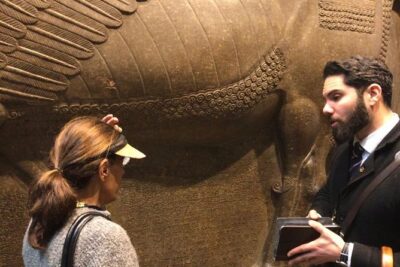
British Museum & National Gallery of London Semi-Private 8ppl Max
Read our review →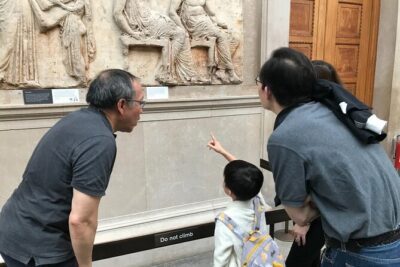
Explore Biblical Artifacts at the British Museum
Read our review →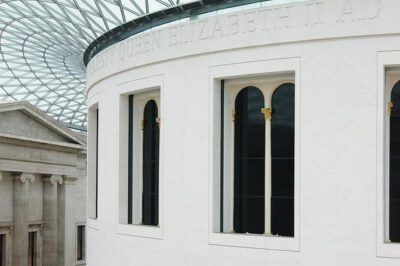
British Museum Highlights Private Tour in London including the Rosetta Stone
Read our review →Browse the lists this tour appears in