
Reviewed · BRITISH MUSEUM TOURS
Explore Biblical Artifacts at the British Museum
Ancient stones can sharpen familiar Bible stories. This small-group British Museum tour connects specific Bible passages with Assyrian lamassu, Egyptian statues, Greek sculpture, Roman coins, and objects linked to the world of Jesus and Paul. I like the clear historical timeline and the way guide David uses a Bible app, study notes, and museum pieces together. I also like the optional folding stools, a small comfort that matters during several hours on hard floors.
The main consideration is focus. This is not a general introduction to every major collection in the museum, and the pace may feel slow if you want a quick highlights visit. At about $77.50 per person, the price makes the most sense if biblical archaeology and scriptural context are central to your London plans.
In This Review
- Key points to know before you book
- What this British Museum tour is really about
- Beginning with Egypt, Assyria, and Greece
- Moving upstairs into the Roman world
- David’s teaching style and the study materials
- The practical comfort of a small group
- Is $77.50 a fair price?
- Who will get the most from this experience?
- What to know before meeting at Great Russell Street
- Should you book this British Museum experience?
- FAQ
- Where does the tour begin and end?
- How long does the tour last?
- How much does the experience cost?
- What languages are offered?
- How many people can join the tour?
- Which British Museum galleries are included?
- What should I prepare before arriving?
Key points to know before you book
- Assyrian lamassu and royal reliefs: See enormous 40-ton guardian beasts and connect Assyrian rulers with passages about Jonah, Ahab, and Hezekiah.
- Egyptian links to Joseph and Moses: Egyptian galleries provide the setting for stories familiar from the Old Testament.
- Roman objects from the time of Jesus and Paul: Roman emperors, coins, and daily-life objects help place the New Testament in its political setting.
- David’s timeline-based teaching: He brings together Egypt, Assyria, Babylon, Persia, Greece, Rome, Jesus, and Paul in a clear sequence.
- Small groups of no more than 10: You get a more personal setting for questions than you would on a large museum tour.
- Useful preparation materials: A Google Doc, Bible verses, and an offline Bible app help you follow along without relying on mobile data.
What this British Museum tour is really about
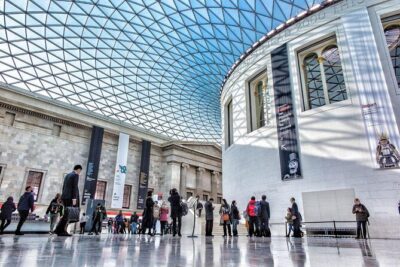
The British Museum can feel like a vast attic of world history. You can wander from an Egyptian coffin to a Greek temple sculpture, then lose your sense of time and place. This tour gives you a thread to follow: the political powers, rulers, cities, and objects that form the setting for biblical events.
The approach is chronological rather than simply geographical. David begins with major ancient civilizations and guides you toward the Roman period, where the stories of Jesus and Paul come into view. That structure matters because many Bible passages name kings and empires without explaining how they fit together.
You will not simply look at an artifact and hear its date. You will also discuss the biblical person or event connected with its wider setting. Egypt is linked with Joseph and Moses. Assyria brings in Jonah, Ahab, and Hezekiah. The Greek and Roman sections help explain Paul’s world, while Roman objects relate directly to the period of Jesus.
I especially like this format for anyone who has read the Bible but finds its royal names and foreign places difficult to hold in order. The tour turns a long sequence of names into a visual timeline. It also works for people who are curious about biblical settings but do not approach the subject from a strictly religious point of view. You can listen to the connections, examine the objects, and decide how persuasive or useful you find the interpretation.
More British Museum visits:
- British Museum London Guided Tour Semi-Private 8ppl Max
★ 5.0 · 984 reviews - The British Museum London – Exclusive Guided Museum Tour
★ 5.0 · 555 reviews - British Museum Guided Tour
★ 4.0 · 470 reviews
Beginning with Egypt, Assyria, and Greece
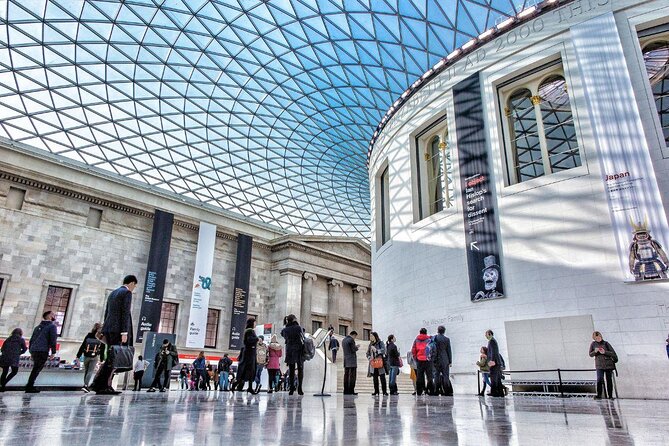
The tour starts on the British Museum’s ground floor, in the Assyrian, Egyptian, and Greek galleries. These rooms hold some of the museum’s most famous objects, so the first section gives you a strong sense of scale as well as context.
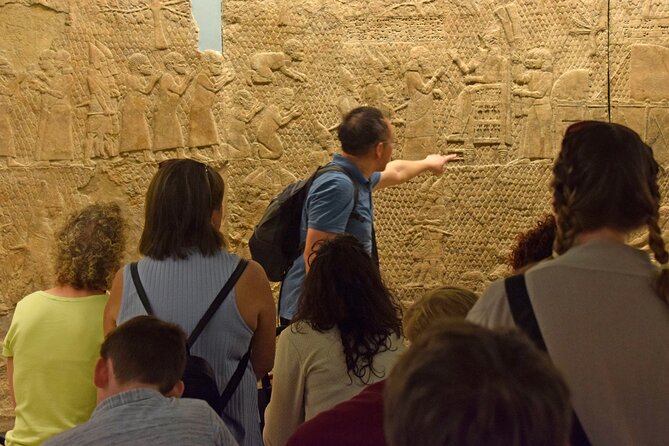
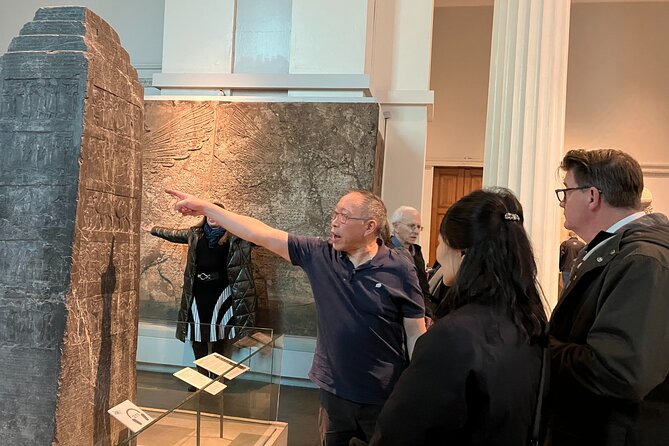
The Assyrian lamassu are the immediate crowd-pleasers. These huge winged figures with human heads and animal bodies once guarded entrances in Assyrian palaces. Their size alone is memorable, but the biblical connection makes them more than impressive stone sculpture. They help you picture the power of the empire that appears in the stories of Jonah, Ahab, and Hezekiah.
The Assyrian material also helps explain how ancient rulers presented themselves. Royal images, inscriptions, and palace decoration were designed to show authority. As David relates those objects to biblical kings and prophets, familiar passages gain a physical setting. You begin to see the ancient Near East as a network of competing kingdoms, not as a flat backdrop behind isolated Bible stories.
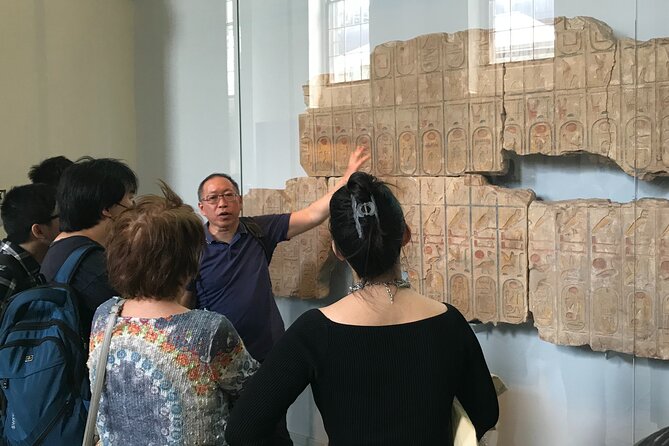
The Egyptian galleries bring another kind of visual power. You will see statues of famous pharaohs and discuss the civilization connected with Joseph and Moses. The museum objects cannot recreate the lives of those biblical figures, but they can show the style, symbols, and royal culture of the world described in the text.
That distinction is worth keeping in mind. This is a tour built around biblical connections, not a claim that every Egyptian statue or inscription names a biblical character. The value comes from seeing the customs, rulers, and artistic language of the period while reading the related passages.
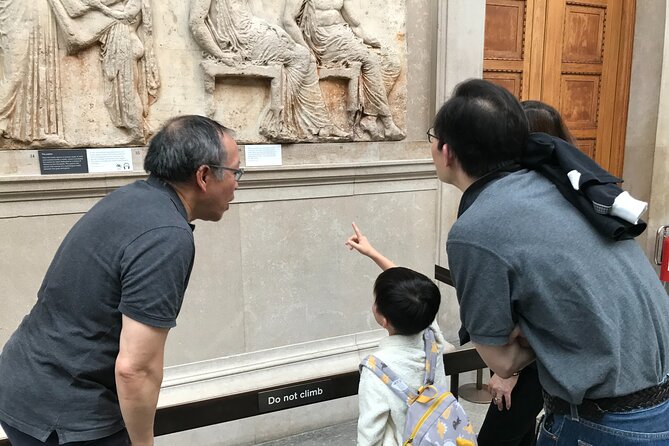
The Greek galleries add a different layer. The Parthenon sculptures were made for Athens, not Jerusalem, but they help place the Greek world within the larger sequence leading toward the New Testament. Paul traveled through Greek cities and addressed audiences shaped by Greek language and culture. Seeing the art of that world can make his setting easier to picture.
The first three galleries also show why a guide helps. On your own, you might admire the lamassu, pharaohs, and sculptures as separate museum highlights. David’s job is to explain how each civilization fits into the larger story and to point out details you might otherwise pass without noticing.
Moving upstairs into the Roman world
After a break, the route continues upstairs to the Roman galleries. This change of floor marks a change in emphasis. The early part of the tour concerns empires and Old Testament settings. The Roman section moves closer to the period of Jesus and Paul.
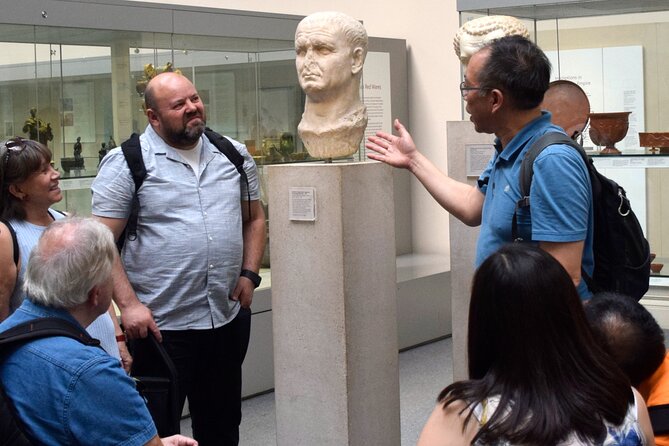
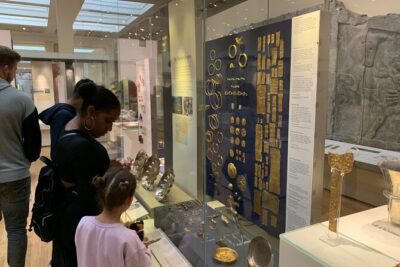
You will look at Roman emperors and objects connected with the political world of the New Testament. Roman power shaped travel, taxation, law, military life, and public authority across the region. Those forces are easy to overlook when reading Gospel or Pauline passages in isolation.
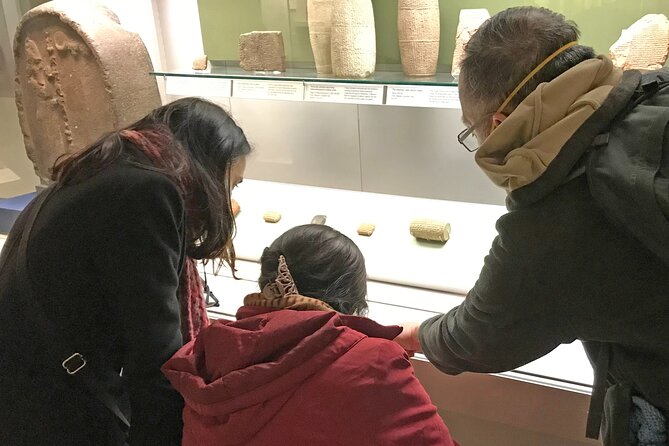
Coins are one of the most useful objects here. The tour includes Roman coins bearing the faces of leaders who lived around the time of the crucifixion. A small coin can put a human face on an emperor and make the political references in the New Testament more concrete.
This is also where the tour can help you understand Paul’s position in the Roman world. Paul’s journeys took place across territories governed by Rome, while his letters addressed communities influenced by both Roman rule and Greek culture. The Roman and Greek galleries together give you a fuller picture of that setting.
The route may include Persia and Babylon if time allows and if the group prefers it. That flexibility is helpful because the interests of a small group can shape the afternoon. It also means you should not expect every possible gallery on every tour. The core route is the Egyptian, Assyrian, Greek, and Roman material, with Persia and Babylon as possible additions.
Gallery schedules can also affect the route. David has adjusted the order when a room was due to close early, which is practical in a large museum. You should still expect the exact sequence to change if the museum’s operating needs require it.
David’s teaching style and the study materials
The guide is central to the value of this experience. David is described as funny, clear, passionate, and exceptionally well versed in both Scripture and museum objects. His strongest skill is connecting several kinds of information without making the timeline feel like a list of names.
He uses Bible passages during the tour, often asking the group to look up a verse as they reach a related object. A Bible app that works in airplane mode is recommended, with YouVersion suggested as a useful choice. Downloading or preparing it before you arrive is sensible, since it keeps the group from waiting for a signal inside the museum.
You also receive access to a Google Doc with study notes and related verses. Read at least some of it before the tour if you can. The material gives you a framework for the afternoon, and it remains useful after the museum visit when you want to revisit a passage or artifact.
The preparation is more than a nice extra. Without it, the tour could become a fast stream of rulers, dates, and references. With it, you can follow the argument and ask better questions. David has also sent follow-up information after tours, including extra clarification and a video showing how a Persian king’s rhyton was used to pour wine.
That level of follow-up will appeal to serious Bible students. It may be more than you want if you prefer to keep a museum visit light and spontaneous. The tour asks you to pay attention, and that is part of its strength.
More Museums in London:
- Tower of London and Crown Jewels Exhibition Ticket
★ 4.5 · 6,677 reviews - Chelsea FC Stadium Tours and Museum
★ 5.0 · 1,908 reviews - Official tickets: Moco Modern & Contemporary Art Museum
★ 4.5 · 1,157 reviews - The Postal Museum Admission Ticket
★ 4.5 · 347 reviews
The practical comfort of a small group
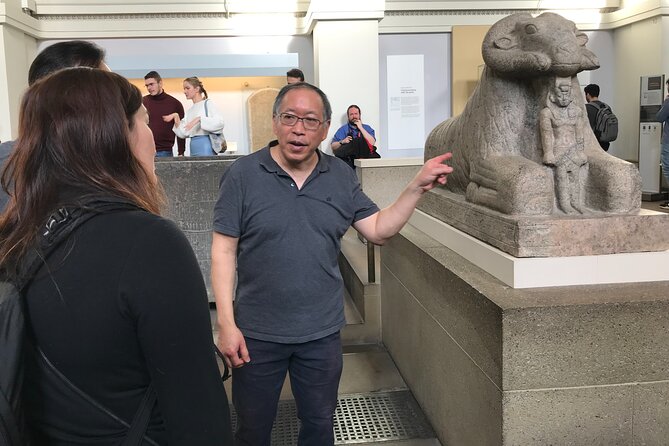
The maximum group size is 10 people. That is a good fit for this type of tour, since the subject invites questions and discussion. A small group also makes it easier for David to respond when someone wants to examine a detail, ask about a verse, or request a short explanation of an unfamiliar ruler.
The optional folding stools are a particularly useful detail. The tour lasts about three to four hours, and some participants have stayed closer to five hours when questions and extra discussion extended the visit. Museum floors can be tiring, especially when you are standing in front of objects for a long explanation.
Look for the stools as soon as you meet David, and take one if you think you will need it. Older visitors and anyone with foot or back concerns should not dismiss this as a minor issue. One younger participant also found some parts of the museum uncomfortably warm, so you may want to dress in light layers.
This is not a good choice immediately after a long-haul flight. The subject requires concentration, and jet lag can make a three-hour museum session feel much longer. Schedule it after you have rested, especially if you want to use the study notes and Bible app fully.
The museum is near public transportation, and the meeting and end point are both at the British Museum on Great Russell Street. Service animals are allowed, and most people can participate. Confirmation arrives at booking, but you should also check your email and tour apps for important messages before the start.
Is $77.50 a fair price?
At $77.50 per person, this is not the cheapest way to visit the British Museum. The museum admission for the tour itself is listed as free, so you are paying for David’s time, preparation, subject expertise, route planning, and small-group instruction.
The price is easier to justify if you would otherwise spend several hours wandering without knowing how the objects connect to the Bible. A general visit can show you famous pieces, but it may not explain why Assyrian rulers matter to a particular passage or how Roman coins relate to the New Testament setting.
I would also compare the price with your priorities. If biblical archaeology is the main reason you want to visit the museum, a focused half-day can be good value. If you are mainly interested in Greek sculpture, Egyptian mummies, or the museum’s wider collection, you may prefer a free self-guided visit and more time to explore on your own.
Group discounts may be available, which can improve the value for families or church groups. The small maximum group size is another factor. You are not paying for a large lecture where it is hard to ask questions.
The tour takes only part of your day, leaving the rest for other London plans. That makes it easier to fit into a wider itinerary than a full-day museum course. Still, keep some breathing room afterward if you expect to ask questions or continue exploring the British Museum independently.
Who will get the most from this experience?
I would recommend this tour first to people who want the Bible placed in a real ancient setting. It is especially useful if you know the broad stories but want help connecting Joseph, Moses, Jonah, Assyrian kings, Persian rulers, Jesus, and Paul to actual cultures and political periods.
It also suits families with older children and teenagers. The story-based approach gives younger participants something to follow, and the guide’s humor helps break up long explanations. Younger children may find the length and warm galleries harder, so consider your child’s patience before booking.
Bible study groups, church groups, and visitors with an interest in archaeology should find plenty to discuss afterward. The study document and follow-up references make the experience continue beyond the museum doors.
You do not need to be a Bible expert. The early timeline helps set the scene, and David’s explanations are designed to link passages with objects as you go. Still, you should enjoy listening, reading short passages, and spending time with artifacts. This is not a quick photo stop.
For skeptics or nonreligious visitors, the tour offers a stated biblical reading of the museum’s collection. You may appreciate the historical setting while reaching different conclusions about faith and evidence. The important point is to arrive open to the approach, but not expecting a neutral survey of every scholarly view.
What to know before meeting at Great Russell Street
Your start and end point are at the British Museum, Great Russell Street, London WC1B 3DG. The activity does not provide a separate museum admission charge, but the guided experience has its own fee.
Install the Viator and Tripadvisor apps before the tour and check your email inbox. Several important messages may be sent there. Download your Bible app for use without an internet connection, and look through the Google Doc before arriving.
Plan on three to four hours, but keep in mind that discussion can extend the visit. A half-day is the right amount of time to protect in your schedule. You can then use the remaining afternoon or evening elsewhere in London.
Free cancellation is available when you cancel at least 24 hours before the local start time. Cancellations or changes made inside that window are not accepted for a refund.
Should you book this British Museum experience?
Book it if you want the museum to function as a visual Bible study, not just a collection of famous objects. David’s strength is his ability to build a clear timeline and keep tying artifacts back to Scripture. The lamassu, pharaohs, Greek sculptures, Roman emperors, and coins become connected pieces rather than isolated displays.
I would skip it if you want a fast, general museum orientation or a full survey of the British Museum. The tour has a clear religious focus, and the long explanations require attention. At $77.50, the value depends heavily on how much you want that focus.
For Bible readers, ancient-history fans, and curious families with older children, this is a thoughtful use of half a day in London. Prepare the app, read the notes, take a stool if needed, and leave room for questions. That small amount of preparation should help you get far more from the objects than you would by simply following the museum map.
FAQ
Where does the tour begin and end?
The tour begins at the British Museum, Great Russell Street, London WC1B 3DG, UK. It ends back at the meeting point.
How long does the tour last?
The planned duration is approximately three to four hours. Discussion and questions may make the experience longer, so allow extra time if possible.
How much does the experience cost?
The listed price is $77.50 per person. Group discounts are available.
What languages are offered?
The tour is offered in English.
How many people can join the tour?
The maximum group size is 10 travelers.
Which British Museum galleries are included?
The route starts with the Assyrian, Egyptian, and Greek galleries on the ground floor, then continues to the Roman galleries upstairs. Persia and Babylon may be included if time and group preference allow.
What should I prepare before arriving?
Install the Viator and Tripadvisor apps, check your email for important messages, and prepare a Bible app that works in airplane mode. You will also receive access to a Google Doc with study notes and related Bible verses.
Just added in London
- Private Tour: Royal High Tea At Kensington Palace Gardens★ 5.0 · 39 reviews
- Private Tour: Personal Travel Photographer Tour in London★ 4.5 · 27 reviews
- London East End Private Walking Food Tour – Secret Food Tours★ 5.0 · 26 reviews
- Private Tour: Night Photography Tour in London★ 5.0 · 48 reviews
- London Like a Local, Private & Personalized (2-3 hrs)★ 4.5 · 11 reviews
- British Museum & National Gallery of London – Exclusive Guided Combo Tour★ 5.0 · 48 reviews
- Private Tour: Tower of London and St Paul’s Cathedral★ 5.0 · 1 review
- London Soho District – Exclusive Guided Walking Tour★ 5.0 · 2 reviews
British Museum Tours, compared.
British Museum London Guided Tour Semi-Private 8ppl Max
Read our review →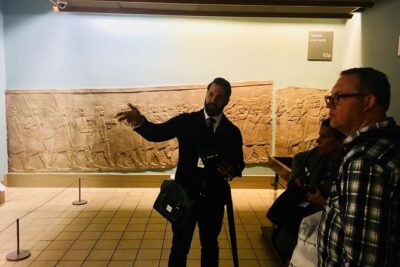
The British Museum London – Exclusive Guided Museum Tour
Read our review →
Private Guided Tour of the British Museum – Tickets Included
Read our review →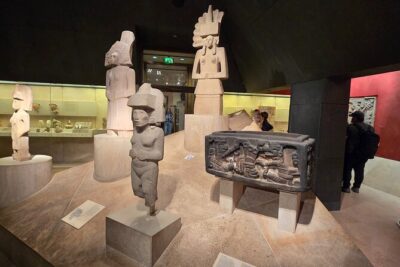
British Museum Guided Tour with Priority Timeslots(Small Group)
Read our review →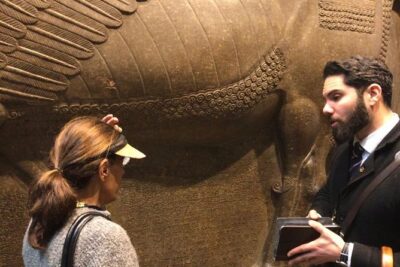
British Museum & National Gallery of London Semi-Private 8ppl Max
Read our review →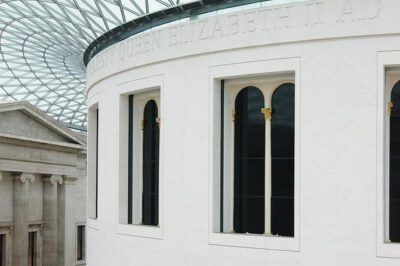
British Museum Highlights Private Tour in London including the Rosetta Stone
Read our review →
Browse the lists this tour appears in