
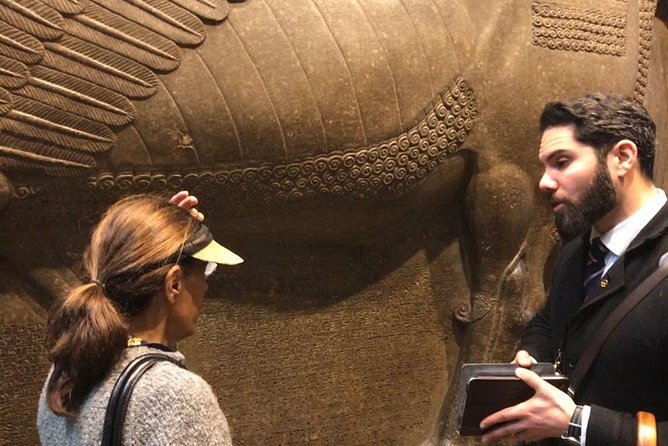
Reviewed · BRITISH MUSEUM TOURS
British Museum & National Gallery of London – Exclusive Guided Combo Tour
Two London museums, one very full morning. This 5.5-hour private tour links the British Museum and National Gallery with a guide who turns famous objects into stories rather than leaving you to wander past them. I especially like the carefully chosen highlights, including the Rosetta Stone, Parthenon sculptures, Van Gogh’s Sunflowers, and Jan van Eyck’s Arnolfini Portrait. I also like ending at the National Gallery, where you can keep exploring at your own pace.
The main drawback is the pace. Two and a half hours in each museum gives you a strong introduction, not a complete visit. At $199.62 per person, the price makes the most sense for a small group that values personal instruction and efficient sightseeing. You will also need to buy your own refreshments during the break, arrange your own transport, and leave large bags behind.
In This Review
- Key points to know before booking
- Why this British Museum and National Gallery pairing works
- Meeting your guide at the British Museum
- Two and a half hours among British Museum treasures
- The break between Russell Square and Trafalgar Square
- Two and a half hours inside the National Gallery
- What the guide adds to the experience
- Timing, comfort, and practical limits
- Who should book this London museum tour?
- Should you book the British Museum and National Gallery combo?
- FAQ
- How long does the tour last?
- Where does the tour begin and end?
- Is admission to the museums included?
- Is this a private tour?
- Can I bring a large suitcase?
- What is the cancellation policy?
Key points to know before booking
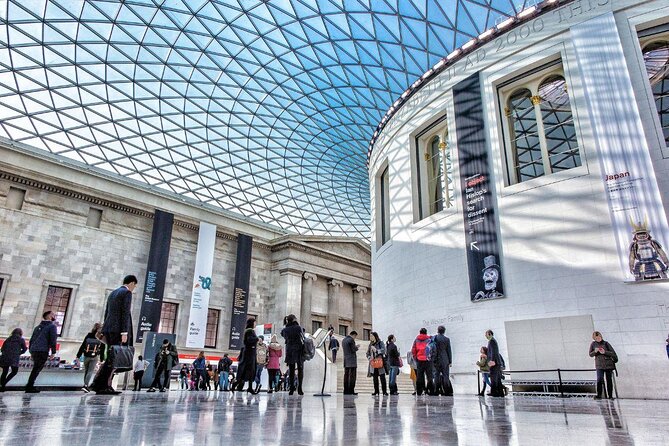
- Six thousand years at the British Museum: See the Rosetta Stone, Oxus Treasure, Mummy of Katebet, and Parthenon sculptures with historical explanation.
- Fourteenth-century art to Van Gogh: The National Gallery portion covers Raphael, Vermeer, Van Eyck, Botticelli, Monet, Rembrandt, and more.
- A guide assigned to your group: The private format allows questions, conversation, and a tour shaped around your interests, if you choose the fully private option.
- A useful central London route: Begin near Russell Square and finish at Trafalgar Square, with a break between the two museums.
- Strong guide-led teaching: Guides including Stéph Kuypers, Jake, Jamie, Wesley, Ellie, Luis, Matilda, Becky, and Danielle have been praised for clear stories, warmth, and command of art and history.
- Five and a half hours is a serious museum session: Wear suitable clothing, bring water if needed, and use a small bag that can pass security.
Why this British Museum and National Gallery pairing works
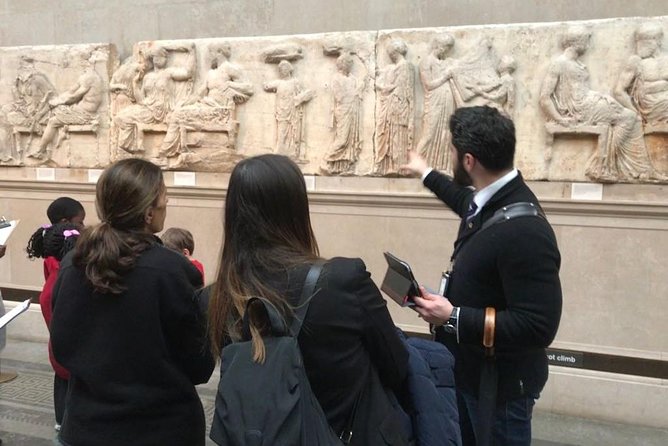
London has no shortage of museums, but these two make a sensible pair. The British Museum tells the story through objects, from ancient writing and burial customs to imperial power and sculpture. The National Gallery then shifts the focus to painted images, artistic technique, religion, portraiture, and changing ideas of beauty.
That contrast gives the day a useful rhythm. You begin with artifacts made for ritual, government, trade, and remembrance. After a short break, you move into rooms where artists used paint to show people, places, faith, wealth, and emotion.
I like this approach for a first visit because a guide can give you a framework. Without one, the British Museum can feel like a very large collection of disconnected objects, while the National Gallery can feel like an endless parade of old paintings. A good guide shows you what deserves your attention and explains why.
The tour is offered in English and is intended for one group. If you select the full private version, the guide is exclusively for your party. A lower-priced semi-private option is also available, but the private-guide and wheelchair-friendly details do not apply in the same way to that choice, so read the booking selection carefully.
More British Museum visits:
- British Museum London Guided Tour Semi-Private 8ppl Max
★ 5.0 · 984 reviews - The British Museum London – Exclusive Guided Museum Tour
★ 5.0 · 555 reviews - British Museum Guided Tour
★ 4.0 · 470 reviews
Meeting your guide at the British Museum
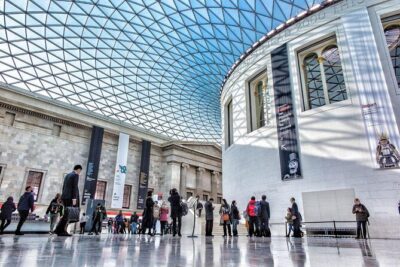
The day begins at 10am outside the British Museum, at the stated meeting point near Stop W, London WC1B 3BP. The museum is close to public transportation, but hotel pickup and drop-off are not included. I would plan your route in advance and allow time to reach the meeting point without rushing.
The opening meeting matters because the museum is large and its entrances can be confusing. Keep your phone available, since providing a mobile number with country code is required. The tour information is designed to include the guide’s contact details and meeting instructions, which is useful in a city where one wrong exit can put you on the wrong street.
You will pass through security, so bring only what you need. Large bags and suitcases are not allowed inside. Handbags and small, thin backpacks are permitted, but security checks can still take time. Some rooms require very quiet behavior or limit speaking, and your guide will explain those rules before you enter.
Two and a half hours among British Museum treasures
The British Museum holds more than eight million objects, so no five-hour tour could possibly cover it all. The first half of this experience instead selects major pieces that help you move through about 6,000 years of human history.
The Rosetta Stone is an obvious but worthwhile starting point. Its importance is not simply that it is famous. It helped scholars understand Egyptian hieroglyphs because the same decree appears in different scripts. A guide can turn that basic fact into a lesson about language, archaeology, and how one object changed the study of ancient Egypt.
The Mummy of Katebet offers a more personal look at the ancient world. A mummy can seem distant when seen alone, but the name and burial context help you think about an individual life rather than only an ancient civilization. Expect the guide to connect the object with Egyptian beliefs about death and the afterlife.
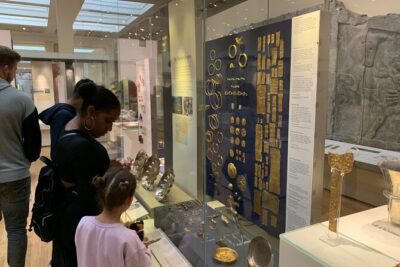
The Oxus Treasure shifts the focus toward the Persian world. Its gold objects and small scale reward close looking, especially when a guide explains the skill, symbolism, and historical setting behind the pieces. This is the kind of collection that is easy to pass without context, then surprisingly memorable after someone points out what you are seeing.
The Parthenon sculptures bring a familiar debate into view. They are beautiful works of classical Greek sculpture, but they also raise questions about ownership, removal, empire, and the role of museums in displaying objects from other countries. The tour may not settle those questions, but seeing the sculptures with historical context gives you more to think about than simply admiring their form.
The itinerary also allows attention to other major objects, including works connected with Ramses II and African bronzes. The exact selection can vary during the year, since rooms and collections may change. That flexibility is normal in a large museum, and a private guide can adjust the route when a gallery is closed or a particular object is unavailable.
This part is best for you if you enjoy explanation as much as display. The guide can connect primitive tribes, mighty empires, religious practice, trade, warfare, and daily life across different periods. It becomes less about checking off famous names and more about seeing how people organized their world.
The limitation is simple: two and a half hours goes quickly. You will not see every department, and you may need to accept that some favorite object or gallery will not fit. If you already have a long British Museum wish list, tell your guide early and understand that choices will be necessary.
The break between Russell Square and Trafalgar Square
After the British Museum, the schedule allows a short break for refreshments before continuing to the National Gallery. Lunch is at your own expense, and the tour does not include a meal.
This pause is practical rather than elaborate. Five and a half hours of standing and listening can be tiring, so use the break to drink water, eat something, and check the plan for the afternoon. The experience does not include hotel transport, and the two museums are in different parts of central London, so follow the guide’s directions and leave enough energy for the second half.
The route finishes at Trafalgar Square. That is a useful ending point because you can continue sightseeing in central London after the guided portion, rather than being taken back to your hotel or returned to the starting point.
More Museums in London:
- Tower of London and Crown Jewels Exhibition Ticket
★ 4.5 · 6,677 reviews - Chelsea FC Stadium Tours and Museum
★ 5.0 · 1,908 reviews - Official tickets: Moco Modern & Contemporary Art Museum
★ 4.5 · 1,157 reviews - The Postal Museum Admission Ticket
★ 4.5 · 347 reviews
Two and a half hours inside the National Gallery
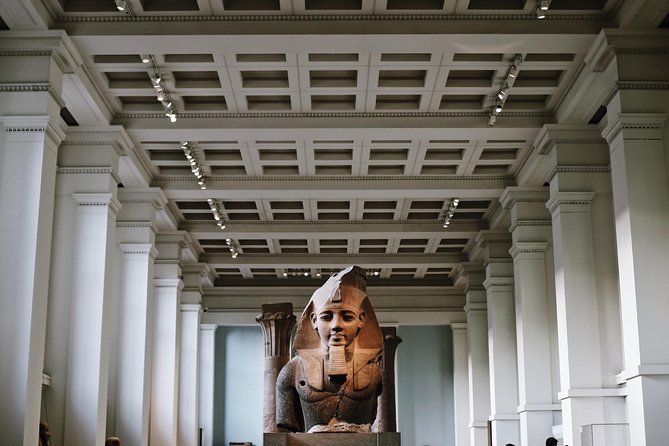
The National Gallery portion begins in grand, high-ceilinged galleries and moves through art from the 14th century onward. Here the guide’s role changes. Instead of explaining what an artifact was used for, the guide helps you read a painting: its subject, symbols, technique, period, and meaning.
Leonardo da Vinci and Vincent van Gogh are among the major names included. Van Gogh’s Sunflowers is a familiar image, but familiarity can make you look too quickly. A guide can draw attention to brushwork, color, and the decisions that give the painting its energy.
Johannes Vermeer’s A Young Woman Standing at a Virginal rewards patience. Vermeer’s quiet interiors can seem simple at first glance, yet small details about light, space, music, and social life carry much of the painting’s meaning. This is a good example of why a guided visit can help: you learn where to look instead of merely recognizing the artist.
Jan van Eyck’s Arnolfini Portrait offers another lesson in close observation. Its details invite questions about marriage, wealth, objects, gesture, and symbolism. You may already know the painting from books or screens, but standing before the original lets you examine its surface and scale in a different way.
Raphael’s Madonna of the Pinks provides a gentler counterpoint. The delicate brushwork and devotional subject show how Renaissance artists balanced tenderness, ideal beauty, and religious purpose. The guide places works like this within their period, making it easier to understand how styles changed over time.
The route can also include Botticelli, Monet, Rembrandt, and other important painters. You may hear about Cubism and Impressionism as well, with the discussion adjusted to the works in front of you. One guide, Jake, was especially praised for having written a dissertation on Velázquez, which suggests that a conversation may sometimes move beyond the basic museum script and into a more focused art-history discussion.
At the National Gallery, the guide can help you compare paintings rather than viewing each one in isolation. You might notice how different artists handle light, how religious subjects shift across centuries, or how portraiture reveals social status. That kind of comparison is one of the strongest reasons to book a guide instead of using only an audio recording.
The guided visit ends inside the National Gallery. You are free to continue looking around independently, which I consider a real advantage. If a painting catches your attention, you can stay. If your feet have had enough, Trafalgar Square and the surrounding area are right outside.
What the guide adds to the experience
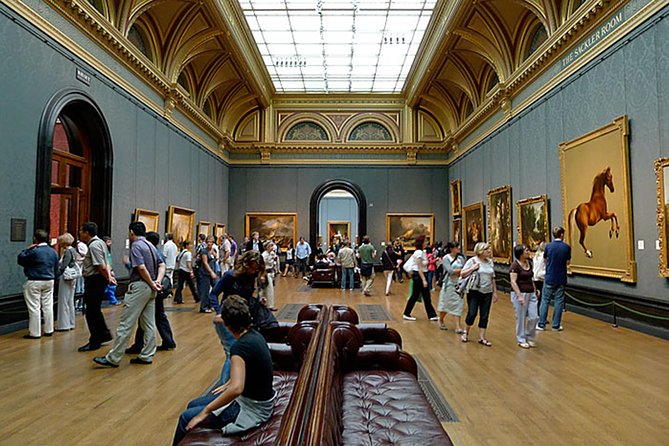
The strongest praise for this tour centers on the guides, not just the museums. Stéph Kuypers was described as exceptional, while Alex, Jamie, Wesley, Ellie, Luis, Matilda, Becky, and Danielle were praised for warmth, clear explanations, and strong storytelling.
That pattern tells you what to expect from the best version of the experience. Becky was praised for weaving stories into both museums. Danielle was noted for positioning the small group at good viewing points and keeping everyone together. Luis brought artifacts and art to life through meaning and context, while Matilda was singled out for her breadth of information about paintings.
A private format also gives you room to ask questions. If you want more ancient Egypt, more Renaissance painting, or a clearer explanation of the Parthenon sculptures, say so. The tour has a planned structure, but a personal guide can respond to your interests more easily than a large group outing.
Still, the guide is part of the value calculation. At $199.62 per person, you are paying for attention, interpretation, and time saved, not for rare admission tickets. Admission to both museums is listed as free, and temporary exhibitions are not included. A solo visitor on a tight budget may prefer to enter independently and use free museum materials. A couple, family, or small group that wants a focused day may find the cost easier to justify, especially if shared among several people and eligible for a group discount.
Timing, comfort, and practical limits
The tour lasts about 5 hours and 30 minutes, including the break. You should expect plenty of walking and standing, so a moderate level of physical fitness is advised. Appropriate dress is required for entry into some sites.
The experience is wheelchair friendly when you select the applicable private option. That benefit does not apply to the save-money semi-private choice according to the tour conditions, so confirm the exact product before paying.
Museum access can change without warning. If an opening is delayed by more than an hour, an alternative may be offered, but the conditions state that refunds or discounts are not available in such cases. Some rooms may be quiet or restrict talking, and some collections may change during the year.
Free cancellation is available if you cancel at least 24 hours before the start time. Changes or cancellations inside that window are not accepted for a refund. The local cut-off time applies.
Who should book this London museum tour?
I would choose this experience if you have one day for major museums and want help making sense of them. It suits first-time London visitors, families with older children, couples who enjoy art and history, and anyone who finds large museums tiring without a plan.
It is also a good choice if you have already visited the British Museum alone and felt you missed the point. A guide can turn a return visit into something more focused, as Jake did for one group that had been there six years earlier.
I would hesitate if you want a slow, unstructured museum day. The schedule is fixed, the route covers a lot of ground, and you will not have time to study every room. I would also compare the cost carefully if you are traveling alone or mainly want admission, since both museums offer free entry and temporary exhibitions cost extra.
Should you book the British Museum and National Gallery combo?
Book it if you value expert storytelling, a private guide, and a carefully chosen route more than independent wandering. The Rosetta Stone, Oxus Treasure, Mummy of Katebet, Parthenon sculptures, Vermeer, Raphael, Van Eyck, and Van Gogh make a powerful pair, and the guide helps connect them.
Skip it if your main goal is to spend hours with a single collection or keep costs as low as possible. For everyone else, this is an efficient, serious introduction to two of London’s great museums, with the useful bonus of ending at the National Gallery so you can keep exploring after the guide says goodbye.
FAQ
How long does the tour last?
The tour lasts approximately 5 hours and 30 minutes, including a break. Each museum receives about 2 hours and 30 minutes of guided time.
Where does the tour begin and end?
It begins outside the British Museum near Stop W, London WC1B 3BP, at 10am. It ends at the National Gallery in Trafalgar Square, London WC2N 5DN.
Is admission to the museums included?
Admission tickets are listed as free for both the British Museum and the National Gallery. Temporary exhibitions are not included.
Is this a private tour?
The experience is a private activity for your group when you choose the full private option. A save-money semi-private option is also offered, but the exclusively assigned guide does not apply to that choice.
Can I bring a large suitcase?
No. Large bags and suitcases are not allowed inside the museum. Only handbags or small, thin backpacks are permitted through security.
What is the cancellation policy?
You can cancel up to 24 hours before the start time for a full refund. Cancellations or changes made less than 24 hours before the start time are not accepted for a refund.
Just added in London
- Private Tour: Royal High Tea At Kensington Palace Gardens★ 5.0 · 39 reviews
- Private Tour: Personal Travel Photographer Tour in London★ 4.5 · 27 reviews
- London East End Private Walking Food Tour – Secret Food Tours★ 5.0 · 26 reviews
- Private Tour: Night Photography Tour in London★ 5.0 · 48 reviews
- London Like a Local, Private & Personalized (2-3 hrs)★ 4.5 · 11 reviews
- Private Tour: Tower of London and St Paul’s Cathedral★ 5.0 · 1 review
- London Soho District – Exclusive Guided Walking Tour★ 5.0 · 2 reviews
- Private Tour: Westminster Abbey and Churchill War Rooms Tour★ 4.5 · 22 reviews
British Museum Tours, compared.
British Museum London Guided Tour Semi-Private 8ppl Max
Read our review →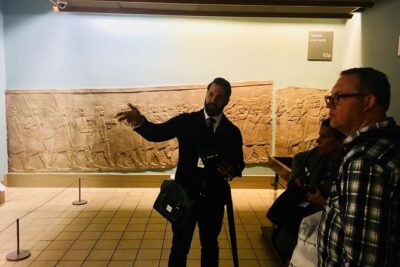
The British Museum London – Exclusive Guided Museum Tour
Read our review →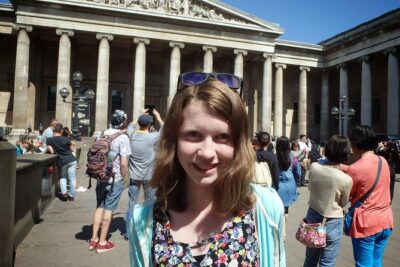
Private Guided Tour of the British Museum – Tickets Included
Read our review →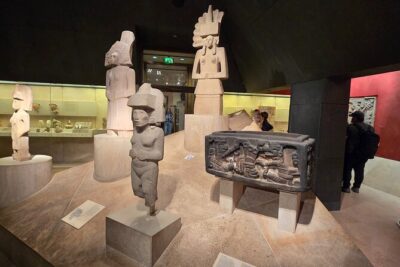
British Museum Guided Tour with Priority Timeslots(Small Group)
Read our review →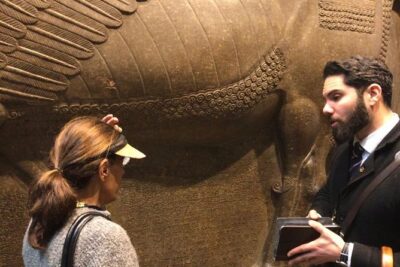
British Museum & National Gallery of London Semi-Private 8ppl Max
Read our review →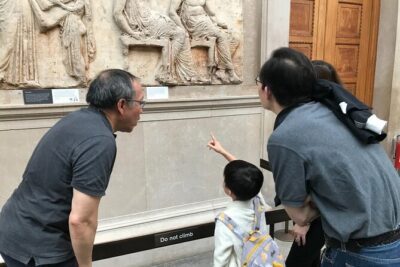
Explore Biblical Artifacts at the British Museum
Read our review →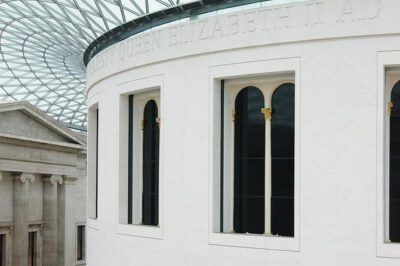
British Museum Highlights Private Tour in London including the Rosetta Stone
Read our review →Browse the lists this tour appears in