
Reviewed · EVENING EXPERIENCES
Private Tour: Night Photography Tour in London
London looks better after the lights come on. This private South Bank walk pairs famous views with hands-on lessons from a professional Fine Art photographer. I especially like the one-to-one camera tuition and the route’s steady run of strong subjects, from the London Eye to Big Ben and Thames reflections. The main drawback is the price: at $337.60 per person, this makes the most sense if you truly want to improve your photography.
You’ll walk at a relaxed pace for about three hours, with the route shaped around your camera, skill level, and interests. I also like that the guide can work with everything from a compact camera to a DSLR. Still, you need to bring your own equipment, and a tripod is recommended for the best long exposures.
In This Review
- Key details before you book
- Why London at night makes a good classroom
- Starting beside the London Eye and South Bank
- Making the London Eye move with slow exposures
- Following the Thames toward Jubilee Bridge
- Using Jubilee Bridge as an elevated viewpoint
- Photographing action near Royal Festival Hall
- Big Ben and the Houses of Parliament across the river
- Traffic trails from Westminster Bridge
- Victoria Embankment and the full London Eye
- What the private teaching is really worth
- Equipment, weather, and walking practicalities
- Who should pay for this tour?
- Should you book the London night photography tour?
- FAQ
- How long does the London night photography tour last?
- Where does the tour begin?
- Where does the tour finish?
- Is this a private tour?
- What camera should I bring?
- Do I need a tripod?
- What should I bring besides my camera?
- Is cancellation free?
Key details before you book
- South Bank after dark: Photograph Big Ben, the Houses of Parliament, the London Eye, and the Thames while staying on a well-known central route.
- Private instruction: The photographer teaches only your group, so you can ask basic questions without holding up other people.
- Camera-specific help: Bring your own camera and learn settings that fit the equipment you actually use.
- Long-exposure practice: Work with slow shutter speeds, traffic light trails, rotating structures, and reflections on the river.
- Three-hour walking route: The tour begins near London Eye Waterloo Pier and finishes close to Westminster Tube Station.
- Strong teaching reputation: The guide named in the available feedback, Lou, is praised for patience, calm instruction, and skill with many camera types.
Why London at night makes a good classroom
Night photography can make a familiar city feel new. Buildings that seem ordinary in daylight pick up warm light, bright edges, deep shadows, and reflections once the sun goes down. London is especially useful for practice because the Thames gives you open views, moving traffic creates light trails, and major landmarks offer clear subjects from several angles.
This tour is not simply a walk to famous sights. Its real purpose is to help you understand why a photograph works. You’ll look at framing, exposure time, color, movement, and the direction of available light. Those lessons are useful long after you leave London.
The private format matters. If you are new to night photography, you can stop and ask what each button does. If you already know your way around manual settings, you can spend more time refining compositions and trying different exposure times. The photographer can adjust the pace and teaching to your needs instead of giving one fixed talk to a mixed group.
That flexibility comes with a high price. At $337.60 per person, this is not a cheap sightseeing walk. It is closer to a private photography lesson that happens to use central London as its studio. A group discount may improve the value, but the amount of that discount is not specified, so check the final cost before booking.
More Photo Tours in London:
- Professional Photoshoot in London Photographer
★ 5.0 · 102 reviews - Private landmarks photoshoot for families and couples
★ 5.0 · 92 reviews - 30 Major London Attractions Walking Tour With Photos
★ 4.5 · 51 reviews
Starting beside the London Eye and South Bank
The meeting point is London Eye Waterloo Pier. From here, you begin on the South Bank with the London Eye, Westminster, and the Houses of Parliament close at hand. The first part lasts about 45 minutes and sets up the main skills of the evening.
You’ll learn how to photograph the city after dark with a professional Fine Art photographer beside you. That means practical guidance at the exact moment you need it, rather than general advice that becomes hard to apply later.
South Bank is a useful opening area because it offers several subjects without demanding a long walk. You can work on architectural framing with the Houses of Parliament, skyline balance with the London Eye, and reflections or open space along the Thames. The guide can show you how small changes in viewpoint alter the relationship between the landmarks.
This is also a good place to learn how night photography differs from ordinary snapshots. The photographer can help you manage low light, choose exposure times, and make the most of your own camera’s controls. The experience is suitable for all skill levels, but you will get more from it if you arrive ready to ask questions and try the settings yourself.
Making the London Eye move with slow exposures
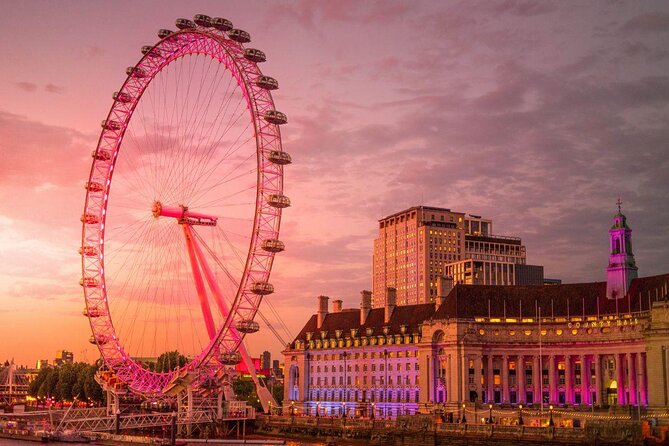
The London Eye receives its own 30-minute stop. Rather than simply photographing the wheel as a bright circle, you’ll experiment with longer exposures while it rotates slowly across the evening sky.
This is a smart subject for learning. A slow shutter speed can record movement and make the wheel appear to change character. Different exposure times produce different results, so you can compare images instead of relying on one preset and hoping for the best.
The guide also covers angles of view, light, and color. Those are simple words, but they matter in practice. A small shift in position can place the wheel against a cleaner section of sky or change how surrounding lights frame it. You’ll also learn how blue hour, twilight, and low light affect a photograph during warmer months.
The timing may affect what you see. The tour is described as an evening experience, and summer conditions can offer a useful period between daylight and full darkness. If your main aim is blue hour photography, ask about the seasonal timing when you book.
Following the Thames toward Jubilee Bridge
The walk along the Thames takes about 15 minutes before reaching Jubilee Bridge. Along the way, you photograph the river, people, and illuminated buildings including Royal Festival Hall, the National Theatre, and the British Film Institute.
This section adds variety. You are not photographing only grand monuments. The route includes people moving through the scene, lit public buildings, and the changing surface of the river. That gives you a chance to practice both still architectural images and photographs that suggest movement.
Reflections are a major reason to pay attention here. The photographer shows you how to use longer exposures to smooth the water and create glass-like surfaces. Bright colors from the buildings and nearby lights can stretch across the river, giving your image more depth.
The short stop also keeps the walk moving. Fifteen minutes is enough for a focused lesson, but not enough for endless experimentation. If reflections are your main interest, mention that early so the guide can give the subject the attention it deserves.
A few more to weigh up in London
- Stonehenge, Windsor Castle, and Bath from London
★ 4.5 · 18,662 reviews - London Big Bus Hop-On Hop-Off Tour with Optional River Cruise
★ 3.5 · 10,803 reviews - London Small Group Tour of Historical Pubs
★ 5.0 · 10,422 reviews - Stonehenge, Windsor Castle and Bath with Pub Lunch in Lacock
★ 4.5 · 7,402 reviews
Using Jubilee Bridge as an elevated viewpoint
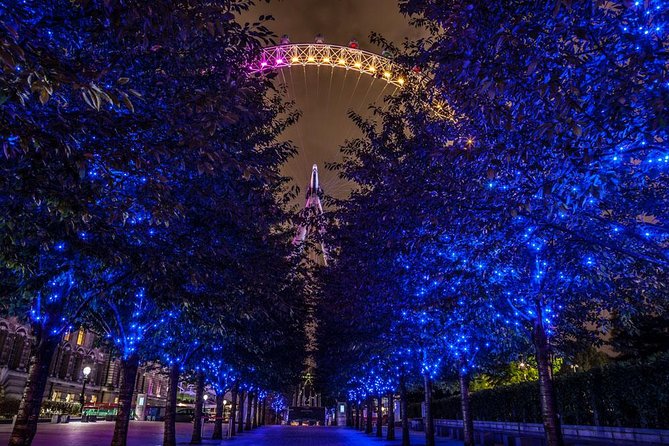
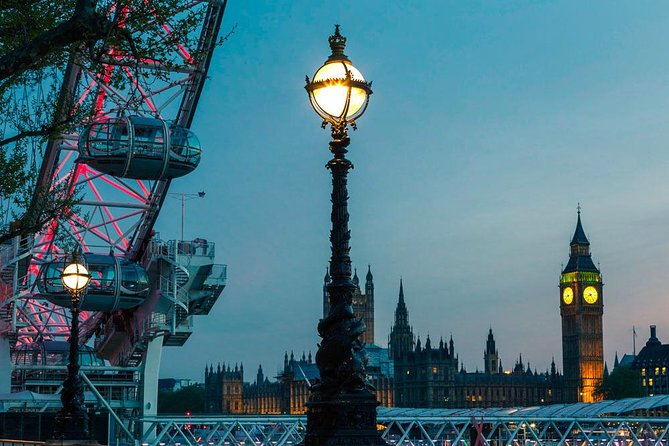
Jubilee Bridge provides another 15-minute stop and changes the height and direction of your photographs. From this raised position, you can frame Westminster, the Houses of Parliament, Big Ben, the London Eye, and St Paul’s Cathedral.
Good night photography often depends on finding a useful viewpoint, not just finding a famous building. An elevated position can help you arrange several parts of the city in one frame. The bridge also gives you a chance to think about balance, leading lines, and how much sky or water to include.
You’ll photograph the life of the river at night while learning how to use the bridge as part of the composition. The guide’s role here is especially useful because it is easy to point a camera at a landmark and produce a flat record shot. A skilled photographer can help you look for stronger framing.
The stop is brief, so do not expect a long, quiet session at every landmark. This tour covers many locations. Its strength is the range of subjects and repeated practice, rather than spending an hour perfecting a single image.
Photographing action near Royal Festival Hall
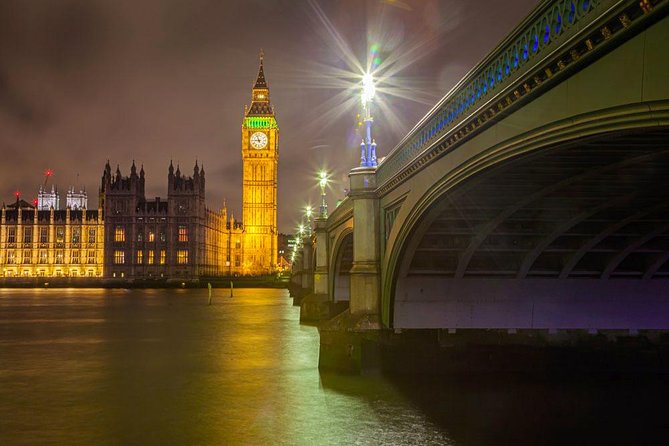
Royal Festival Hall receives about 15 minutes, with the nearby skate park providing a change from buildings and river views. Here, the lesson turns to action photography.
You’ll work on freezing movement and making atmospheric slow exposures. Those are opposite approaches, and comparing them helps you understand how shutter speed changes the feeling of an image. A frozen action shot can show a precise moment, while a slower exposure can suggest energy and motion.
The guide takes you to useful viewpoints and helps you decide when to react. This is one of the more distinctive parts of the route because it gives you something active to photograph. It also prevents the evening from becoming a string of similar pictures of illuminated architecture.
As with the other short stops, preparation helps. Have your camera ready and expect to make several attempts. Action photography is rarely solved with one frame, and the tour includes additional memory cards as a recommended item for good reason.
Big Ben and the Houses of Parliament across the river
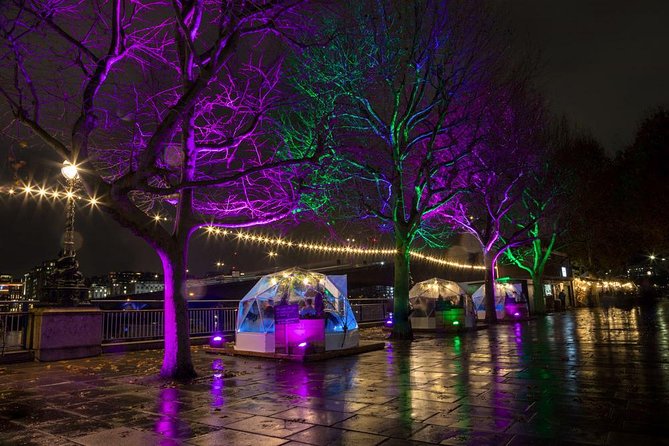
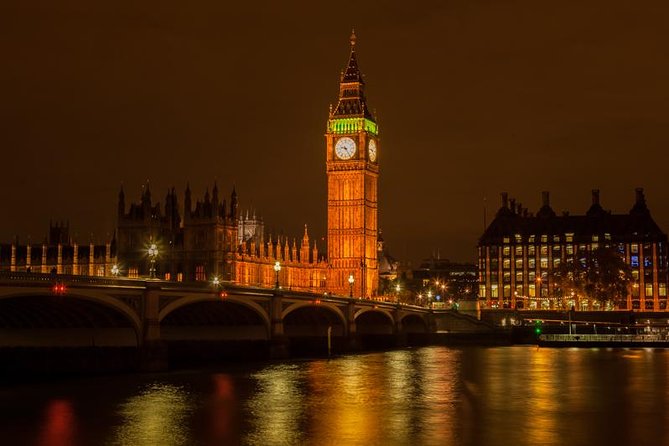
Big Ben and the Houses of Parliament form the visual center of the Westminster section. From across the river, you’ll spend about 15 minutes working on mood, framing, and composition.
Big Ben is easy to recognize, but that does not automatically make it easy to photograph well. The guide can help you decide how much of the clock tower and Parliament to include, how to use the riverbank, and how to create a sense of atmosphere rather than simply recording the building.
The next 15-minute stop focuses on the Houses of Parliament themselves. This is where historical architecture meets modern evening light. You’ll work on compositions that show the building’s scale and character while placing it within present-day London.
These stops are close in theme, but they are not redundant. Big Ben gives you a strong focal point. The Parliament session broadens the frame and asks you to consider the building as part of a larger scene. If you have visited London before, this section can still produce fresh images because the lesson is about seeing and composing, not merely ticking off sights.
Traffic trails from Westminster Bridge
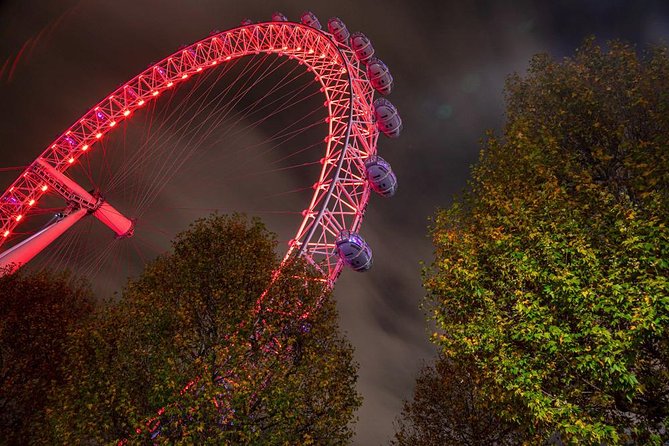
Westminster Bridge offers one of the clearest chances to practice light trails. In about 15 minutes, you’ll use slow shutter speeds to record the paths of moving traffic.
This is a practical lesson you can repeat in almost any city. The traffic supplies the movement, while the bridge gives you a recognizable London setting. You’ll learn how exposure time changes the length and character of the light trails.
The bridge is also a busy public route, so do not expect a silent studio. That is part of the point. You are learning to work with real city conditions, changing movement, and limited time. The photographer can help you make useful choices rather than waiting for perfect calm.
For beginners, this may be the moment when night photography begins to make sense. Instead of letting the camera choose everything, you see how your settings control the result. One participant who arrived with little night-photography experience and mostly used automatic mode reported leaving with strong images and enough confidence to continue photographing independently.
Victoria Embankment and the full London Eye
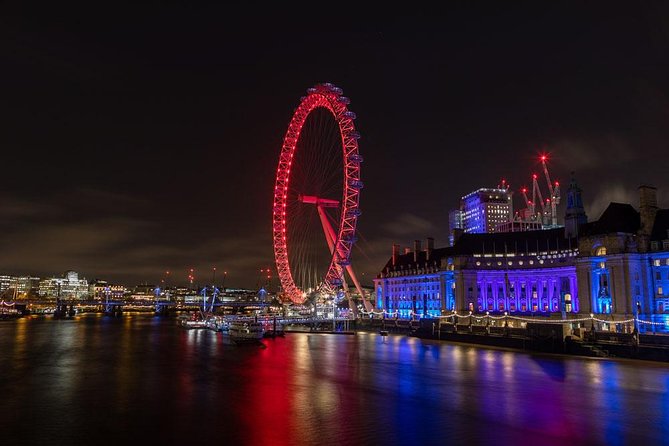
The final photographic area is Victoria Embankment, where you photograph the London Eye from across the river. The aim is to capture the complete circular form, along with light, color, movement, and reflections.
This viewpoint gives you a useful comparison with the earlier London Eye stop. On South Bank, you work close to the wheel and study its rotation. From the embankment, you can place it within the broader river view and experiment with a wider composition.
The Thames is again central. Slow exposures can smooth the water, while reflected color adds another layer to the frame. The guide can help you decide how to balance the bright wheel against the darker surroundings.
The tour ends near Westminster Tube Station. That is convenient for continuing your evening or returning to your accommodation by public transport. You finish with a route that has moved from South Bank through several major views without requiring you to navigate unfamiliar streets alone.
What the private teaching is really worth
The strongest feature here is the direct instruction. The photographer does not simply point out good locations. She helps you operate your own camera, reviews photographs, and explains how to keep developing your skills.
Lou is the photographer named in the feedback connected with this experience. She is repeatedly described as calm, patient, and able to work with many camera brands and types. That matters if you have just bought an SLR or are unsure how to move beyond automatic mode.
The teaching appears particularly useful for people who want hands-on help. One person arrived as an eager novice and asked the guide to shape the evening around their ability. The result was not only a set of London photographs, but techniques that remained useful later in the trip, including in Paris.
Still, beginners should set realistic expectations. Three hours will not turn you into a night-photography expert. You can, however, learn how to set up your camera, understand slow exposures, and make better choices on your own. Intermediate photographers may appreciate having a professional challenge their framing and help them find more refined compositions.
Equipment, weather, and walking practicalities
Bring your own camera, a fully charged battery, and extra memory cards. Night photography can involve many test shots, especially when you are comparing exposure times. A spare battery is sensible because long exposures and repeated image review can use power.
A tripod is recommended. You may be able to hire one by contacting the provider after booking, and one participant specifically found tripod rental useful because it avoided carrying extra equipment through London. The rental details are not specified, so confirm the cost and arrangements in advance.
The tour works with compact cameras as well as DSLR cameras. The information does not specify mirrorless cameras, so if that is your setup, ask before booking rather than assuming. The key requirement is that you bring a camera you can use and want to understand better.
The experience operates in all weather conditions. Dress for the forecast, and remember that standing beside the river at night can feel colder than walking through central streets. Refreshments are not included, so carry water and plan a snack before or after the tour.
Service animals are allowed, and the route is near public transportation. Most people can participate, but the experience is still a three-hour walking tour with repeated stops on bridges and along the river.
Who should pay for this tour?
I would recommend it most strongly to someone who values instruction as much as sightseeing. It suits a beginner who wants to stop relying on automatic mode, an intermediate photographer looking for better compositions, or a returning London visitor who has already seen the landmarks and wants a more creative evening.
It can also work well for couples, families, or a small personal group with different skill levels because the photographer can tailor the session. Group discounts may help spread the cost, though you should check exactly how they apply.
I would hesitate to recommend it to someone who only wants a guided London walk or a quick collection of landmark snapshots. The price is hard to justify if you will not use the photography lesson. You also need to accept the possibility of rain and the need to carry or arrange a tripod.
Should you book the London night photography tour?
Book it if you want to learn a repeatable skill while photographing London’s best evening views. The combination of private tuition, camera-specific advice, slow-exposure practice, and a carefully chosen South Bank to Westminster route gives you more than a standard sightseeing stroll.
The value rests on the photographer. The consistently strong feedback about Lou’s patience, clear instruction, and camera skills is encouraging. If she is your assigned guide, you should expect a calm, practical teacher who will adapt the session to your level.
At $337.60 per person, this is a premium experience. I would book it for a serious photo learner, not simply for a tourist seeking entertainment. Bring a charged camera, extra memory, and suitable clothing, and you should finish with both memorable London images and a better idea of how to make them yourself.
FAQ
How long does the London night photography tour last?
The tour lasts approximately three hours.
Where does the tour begin?
It begins at London Eye Waterloo Pier in London.
Where does the tour finish?
The tour ends near Westminster Tube Station, at Underground Ltd, Westminster Station, Bridge Street.
Is this a private tour?
Yes. Only your own group participates.
What camera should I bring?
You should bring your own camera. The tour is suitable for all skill levels and for camera types ranging from compact cameras to DSLR cameras.
Do I need a tripod?
A tripod is recommended for night photography. You can contact the provider after booking if you wish to ask about hiring one.
What should I bring besides my camera?
Bring a fully charged battery or spare battery, plus additional memory cards for the photographs you take. Refreshments are not included.
Is cancellation free?
You can cancel at least 24 hours before the start time for a full refund. Cancellations or changes made less than 24 hours before the experience are not accepted for a refund.
Just added in London
- Private Tour: Royal High Tea At Kensington Palace Gardens★ 5.0 · 39 reviews
- Private Tour: Personal Travel Photographer Tour in London★ 4.5 · 27 reviews
- London East End Private Walking Food Tour – Secret Food Tours★ 5.0 · 26 reviews
- London Like a Local, Private & Personalized (2-3 hrs)★ 4.5 · 11 reviews
- British Museum & National Gallery of London – Exclusive Guided Combo Tour★ 5.0 · 48 reviews
- Private Tour: Tower of London and St Paul’s Cathedral★ 5.0 · 1 review
- London Soho District – Exclusive Guided Walking Tour★ 5.0 · 2 reviews
- Private Tour: Westminster Abbey and Churchill War Rooms Tour★ 4.5 · 22 reviews
Evening Experiences, compared.
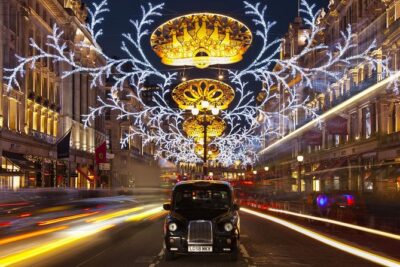
London by Night Bus Tour with Christmas Lights and Live Guide
Read our review →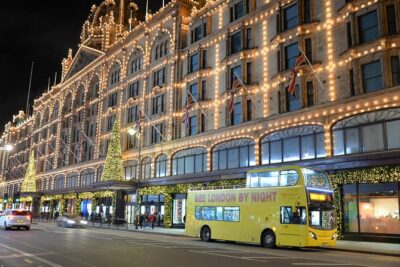
London by Night Sightseeing Tour – Open Top Bus
Read our review →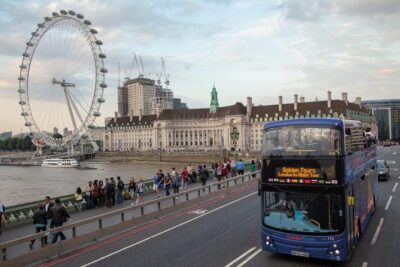
London by Night Sightseeing Open Top Bus Tour with Live Guide
Read our review →
River Thames Evening Cruise with Sparkling wine and Canapés
Read our review →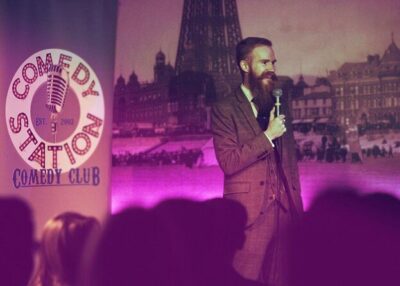
The Best in Stand Up Comedy – Comedy Shows every night of the week
Read our review →
Evening ‘Happy Hour’ Boat Cruise For All Ages In York
Read our review →
Thames Rockets Sunset London Speedboat Experience
Read our review →Browse the lists this tour appears in