
Reviewed · BRITISH MUSEUM TOURS
Private Highlights Tour of the British Museum
History gets personal here. This private British Museum tour turns a vast collection into a focused three-hour walk, shaped around what you want to see. I like the custom route, and I like that the guide does not dodge hard questions about empire, ownership, and cultural loss. The possible drawback is the price: $468.78 per group is a serious spend for three hours, even with up to 10 people included.
The tour also wins points for its small private group, which makes it easier to ask questions and keep children, teens, or older family members involved. Guide Jessica earned especially warm praise for holding the attention of a group of 10, including teenagers, with clear stories and balanced context. Still, anyone who prefers to wander alone may find a guided route too structured.
In This Review
- Key points at a glance
- Why a private British Museum tour makes sense
- Meeting at Montague Place and entering the museum
- The Rosetta Stone and the problem with famous objects
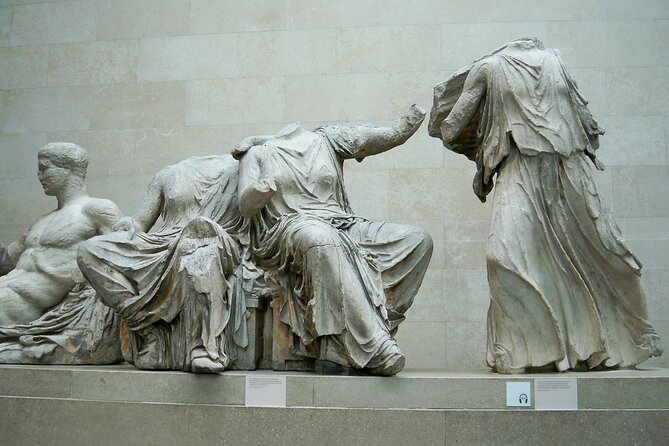
- Parthenon Sculptures and the museum’s difficult questions
- From the Lewis Chessmen to Sutton Hoo
- Vindolanda Tablets and the everyday Roman world
- The Standard of Ur and ancient Mesopotamia
- Mummies, Ramesses II, and the appeal of ancient Egypt
- A serpent, a vase, and objects that reward close looking
- Tara, the Ife Head, Hoa Hakananai’a, and the FeeJee Mermaid
- What the guide adds to a huge collection
- Who gets the best value from $468.78?
- Should you book this British Museum experience?
- FAQ
- How long does the private British Museum tour last?
- How many people can join the private tour?
- Is admission to the British Museum included?
- What language is the tour offered in?
- Where does the tour begin and end?
- Can I request a specific gallery or subject?
Key points at a glance
- A custom three-hour route: You tell the guide what interests you, then shape the museum visit around those themes.
- Major objects in one walk: The route can include the Rosetta Stone, Parthenon Sculptures, Egyptian mummies, Lewis Chessmen, Sutton Hoo, and more.
- A guide who tackles difficult subjects: Questions about empire, colonial collecting, ownership, and controversy are part of the conversation.
- Private for up to 10 people: Your group receives the guide’s full attention instead of sharing the experience with strangers.
- A useful first visit: The tour helps you get oriented inside one of London’s largest museums, so you can return later with a plan.
- Free museum admission: The tour includes entry through a lesser-known entrance, but the museum ticket itself is listed as free.
Why a private British Museum tour makes sense
The British Museum can be thrilling, but it can also feel like a giant attic with no obvious path through it. Objects from Africa, Asia, Europe, the Americas, and the ancient Middle East sit within a collection that spans thousands of years. You can easily spend hours here and still miss the pieces you most wanted to find.
This tour solves that problem with a human route. At the start, the guide asks what matters to you. You might care most about ancient Egypt, military history, religious art, archaeology, British discoveries, or the uncomfortable story of how museums acquired their collections. The guide then adjusts the walk to fit.
That personal approach matters most if your group has mixed interests. One person may want mummies, another may be fascinated by Roman Britain, and a teenager may need a strong story to stay engaged. Jessica’s work with a 10-person family group shows why a private format can help. She kept adults and teenagers involved by explaining objects through stories and context instead of simply naming dates.
I also like the direct tone promised here. The British Museum’s collection includes celebrated objects, disputed acquisitions, and items connected to colonial power. A good guide should explain both the object and the argument around it. This experience makes that discussion part of the visit rather than pretending every display has a simple, settled story.
More British Museum visits:
- British Museum London Guided Tour Semi-Private 8ppl Max
★ 5.0 · 984 reviews - The British Museum London – Exclusive Guided Museum Tour
★ 5.0 · 555 reviews - British Museum Guided Tour
★ 4.0 · 470 reviews
Meeting at Montague Place and entering the museum
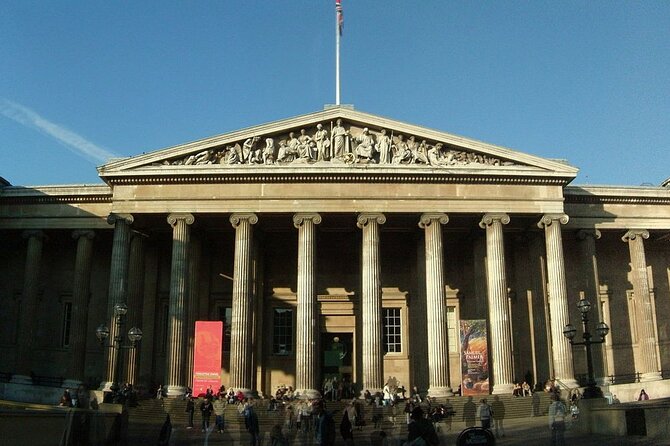
The tour begins at Montague Place and finishes inside the British Museum on Great Russell Street. That arrangement is useful because you do not need to leave the museum with the guide and then find your way back to the main entrance.
Entry is through a lesser-known entrance, which can save you from the uncertainty of approaching a large public museum for the first time. The exact ease of that entrance can depend on the day and the museum’s current arrangements, so I would still arrive with a little time to spare. Your confirmation is provided at booking, and the tour is offered in English.
The museum admission is free, while the charge is for the private guide service. At $468.78 for a group of up to 10, the per-person value changes sharply with your group size. For 10 people, the cost works out to about $47 per person. For two people, it is about $234 each. Families and larger groups receive the strongest value.
The three-hour length is long enough to cover major highlights without turning the visit into an all-day march. You should still expect plenty of walking and standing. The route crosses galleries rather than settling in one room, so comfortable shoes and a reasonable amount of energy will help.
The Rosetta Stone and the problem with famous objects
The Rosetta Stone is an obvious first target, and rightly so. It helped scholars read Egyptian hieroglyphs because the same decree appears in different scripts. The object is famous, but a guide can give you a reason to look beyond its celebrity.
You can expect the guide to place it within the story of translation, archaeology, and British collecting. The stone is also a useful doorway into larger questions about who excavated important objects, who transported them, and who has the right to display them today.
That is one advantage of a private tour. You can pause at a major object and ask the question that comes to mind, instead of moving along with a large group. You can also tell the guide if the controversy interests you or if you would rather spend more time on the object’s technical and historical importance.
Parthenon Sculptures and the museum’s difficult questions
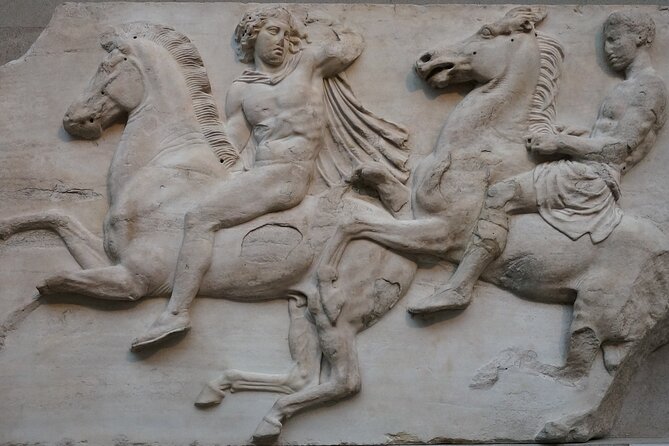
The Parthenon Sculptures, often called the Elgin Marbles, are among the museum’s best-known and most disputed holdings. They offer beauty, craftsmanship, and a direct connection to arguments over ownership and repatriation.
This is where the guide’s willingness to discuss tougher topics becomes especially valuable. You should not expect a quick verdict that turns a complicated issue into a slogan. The useful approach is to hear the historical background, understand why the sculptures are here, and consider why Greece and others continue to challenge that arrangement.
I would particularly recommend this section for history buffs who want more than dates and artistic labels. If your interest is purely visual, the sculptures are still impressive. If you care about museums and cultural heritage, they may become one of the most memorable parts of the three hours.
More Museums in London:
- Tower of London and Crown Jewels Exhibition Ticket
★ 4.5 · 6,677 reviews - Chelsea FC Stadium Tours and Museum
★ 5.0 · 1,908 reviews - Official tickets: Moco Modern & Contemporary Art Museum
★ 4.5 · 1,157 reviews - The Postal Museum Admission Ticket
★ 4.5 · 347 reviews
From the Lewis Chessmen to Sutton Hoo
The Lewis Chessmen are small, expressive medieval figures, famous for their carved faces and strong personalities. They make an excellent stop for families because the pieces are easy to understand at a glance. You can see the game, the characters, and the human detail without needing a long explanation before the display becomes interesting.
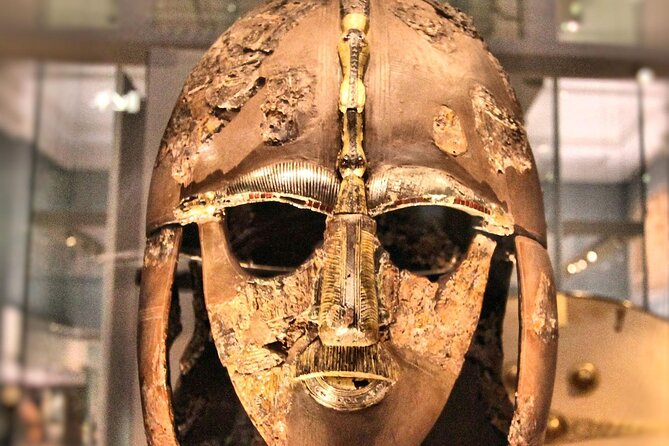
Sutton Hoo shifts the focus to early medieval Britain. The objects connect to a ship burial and offer a view of power, belief, craft, and trade in a period often reduced to a few vague labels. I like this pairing because it balances a familiar object with a more layered archaeological story.
The guide can also help you compare how the museum presents objects from different parts of the world. The British Museum is not just a collection of isolated treasures. It is a place where objects are grouped, labeled, and interpreted through modern museum choices. A private guide can point out those choices as you move.
Vindolanda Tablets and the everyday Roman world
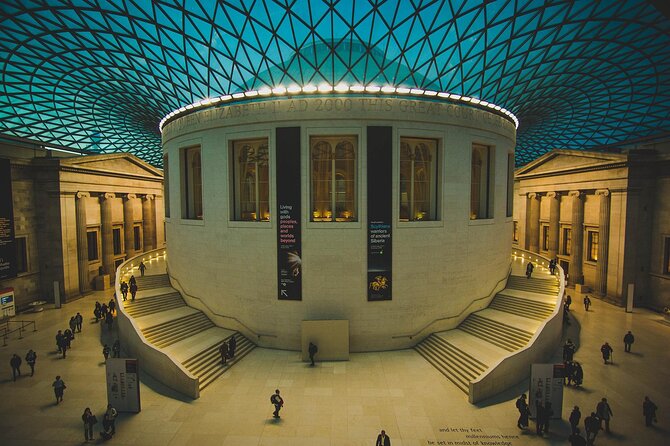
The Vindolanda Tablets are a fine reminder that history is not only made from statues and royal tombs. These thin wooden writing tablets preserve messages connected with Roman Britain, including the practical concerns of people living and working near the frontier.
Their appeal comes from their ordinary nature. You are not looking at a grand monument. You are looking at evidence of communication, administration, and daily life. That can make Roman Britain feel more immediate than a list of emperors ever could.
If your group includes children or teenagers, this kind of object can work well because it carries a simple question: what did people write to one another nearly 2,000 years ago? A guide who tells the story clearly can turn a small display into a strong memory.
The Standard of Ur and ancient Mesopotamia
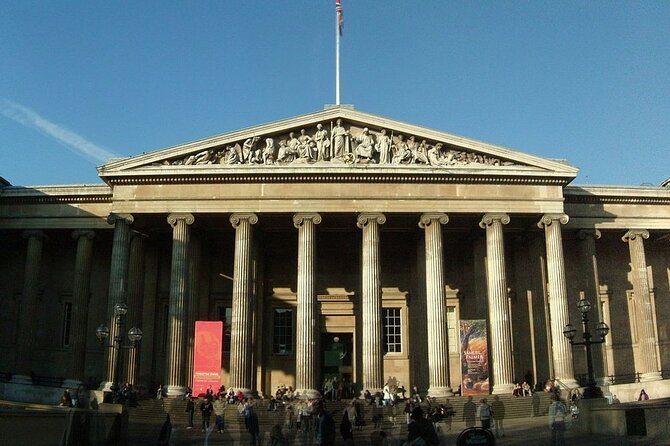
The Standard of Ur is one of the museum’s major objects from ancient Mesopotamia. Its decorated panels show organized society, warfare, ceremony, and hierarchy. It is a compact object with a lot to say about how people presented power.
This stop is especially useful if you want the tour to move beyond the most familiar Egyptian and Greek material. The Standard opens a window onto a very early urban culture and gives you a chance to compare ancient ideas of leadership with those shown in other galleries.
I would ask the guide to explain what can be known from the object and what remains uncertain. Museum displays can make ancient life look more complete than the surviving evidence really is. A careful explanation helps you separate evidence from interpretation.
Mummies, Ramesses II, and the appeal of ancient Egypt
The Egyptian galleries provide some of the museum’s most immediate sights, including mummies and objects linked with Ramesses II. These displays attract almost everyone, but the value of a guided visit is in moving past the simple shock of seeing human remains.
You can learn about burial practices, royal authority, religious beliefs, and the way modern museums display the dead. The macabre side is part of the appeal, but it should sit beside respect for the people represented. A good guide can keep the material engaging without turning it into a sideshow.
Ramesses II offers a chance to discuss kingship and public image. Monumental rulers wanted to be remembered, and the museum’s statues show how art helped build that memory. If Egypt is your main interest, tell the guide at the beginning. The route is customized, so you may be able to spend more time here than a standard highlights walk would allow.
A serpent, a vase, and objects that reward close looking
The Aztec Double-Headed Serpent is a striking object with strong visual impact. Its form is immediately memorable, but its meaning becomes clearer when you consider materials, ritual use, and the culture that produced it.
The Portland Vase offers a very different kind of pleasure. Its delicate decoration and craftsmanship invite close looking rather than a quick reaction. I like having both objects on the same tour because they show how broad the museum’s collections are. One is bold and symbolic, the other refined and technically demanding.
The Assyrian Guards provide another powerful visual moment. These carved figures once protected an important space, and their scale and detail help you understand how ancient rulers used art to project power. Ask the guide to compare them with Egyptian royal images or the Standard of Ur. Those connections are where a highlights tour becomes more than a checklist.
Tara, the Ife Head, Hoa Hakananai’a, and the FeeJee Mermaid
The Statue of Tara represents South Asian religious art and gives the tour another chance to discuss beauty, belief, and interpretation. The Ife Head brings you to West African history and artistic achievement, an area that many first-time museum visitors might otherwise overlook.
Hoa Hakananai’a, a moai from Rapa Nui, carries a difficult story about removal, display, and cultural meaning. It is precisely the kind of object that benefits from a guide who will address controversy rather than present it as a detached curiosity.
The FeeJee Mermaid brings a strange and macabre note to the collection. Its appeal lies partly in the question of what it is, why people believed in it, and how museums preserve objects connected with hoaxes or popular culture. This stop can lighten the mood while still raising useful questions about evidence and public fascination.
These objects also show why you should state your interests clearly at the beginning. You may want more time with world cultures, belief systems, unusual objects, or museum ethics. The guide can shape the balance instead of giving every display the same amount of attention.
What the guide adds to a huge collection
The guide’s academic background includes advanced degrees in Cultural Heritage and Museum Studies. That does not guarantee that every topic will match your personal interests, but it does fit the tour’s promise of context and frank discussion.
The strongest praise attached to this experience focuses on storytelling. Jessica was singled out for bringing artifacts to life, keeping a large family group involved, and offering explanations that felt relevant and balanced. Those details matter more than a list of credentials because they describe how the tour may feel in practice: active, conversational, and easier to follow than reading labels alone.
You should also use the private format. Ask why an object is in the museum. Ask what is known about its original use. Ask what has been lost. Ask which gallery deserves a return visit. The guide’s value is not only in speaking, but in helping you frame better questions.
Who gets the best value from $468.78?
I see the best value for families, friend groups, and history-focused visitors who can share the cost across several people. A private group of 10 pays far less per person than a couple, and the guide can respond to different ages and interests.
The tour is also useful for London locals who have postponed visiting the British Museum because it feels too large. You can get a well-planned introduction, then return later to explore at your own pace. For a first-time visitor with only a few hours, the structure may prevent a lot of aimless walking.
The price is harder to justify for one or two people who are comfortable reading labels and choosing their own route. The British Museum offers free entry, so you are paying for focus, explanation, and private attention rather than admission. If those are not important to you, explore independently.
The experience is offered in English. Most people can participate, service animals are allowed, and the museum is near public transportation. The listing does not provide a detailed accessibility assessment, so if your group has specific mobility needs, ask before booking rather than assuming the route will suit you.
Cancellation is free if you cancel at least 24 hours before the start time. Changes or cancellations made inside that window are not accepted for a refund.
Should you book this British Museum experience?
Book it if you want the British Museum to feel less like a maze and more like a conversation. It is a particularly good choice for a group with mixed ages, a family that wants one shared experience, or anyone who wants famous objects explained alongside the arguments surrounding them.
I would skip it if you prefer total independence, plan to spend a full day in one specialist gallery, or are visiting alone and find the group price too high. The museum is free, and a self-guided visit can work well with preparation.
For most groups of six to 10, the numbers make sense. Tell the guide your interests before the walk begins, ask for time with the objects that matter most to you, and expect a thoughtful route that includes beauty, oddity, and some uncomfortable truths. That combination is the tour’s real strength.
FAQ
How long does the private British Museum tour last?
The tour lasts approximately three hours.
How many people can join the private tour?
The tour is private for your group, with up to 10 people included.
Is admission to the British Museum included?
Entry to the museum is free, and the experience includes entry through a lesser-known entrance.
What language is the tour offered in?
The tour is offered in English.
Where does the tour begin and end?
The tour begins at Montague Place in London and ends inside the British Museum on Great Russell Street.
Can I request a specific gallery or subject?
Yes. The guide can create a fully bespoke route around a specific topic or gallery if you make your interests known.
Just added in London
- Private Tour: Royal High Tea At Kensington Palace Gardens★ 5.0 · 39 reviews
- Private Tour: Personal Travel Photographer Tour in London★ 4.5 · 27 reviews
- London East End Private Walking Food Tour – Secret Food Tours★ 5.0 · 26 reviews
- Private Tour: Night Photography Tour in London★ 5.0 · 48 reviews
- London Like a Local, Private & Personalized (2-3 hrs)★ 4.5 · 11 reviews
- British Museum & National Gallery of London – Exclusive Guided Combo Tour★ 5.0 · 48 reviews
- Private Tour: Tower of London and St Paul’s Cathedral★ 5.0 · 1 review
- London Soho District – Exclusive Guided Walking Tour★ 5.0 · 2 reviews
British Museum Tours, compared.
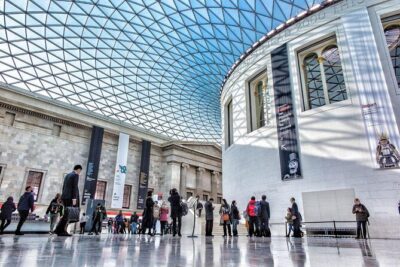
British Museum London Guided Tour Semi-Private 8ppl Max
Read our review →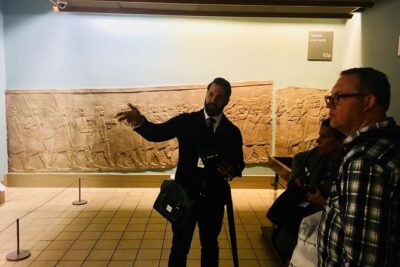
The British Museum London – Exclusive Guided Museum Tour
Read our review →
Private Guided Tour of the British Museum – Tickets Included
Read our review →
British Museum Guided Tour with Priority Timeslots(Small Group)
Read our review →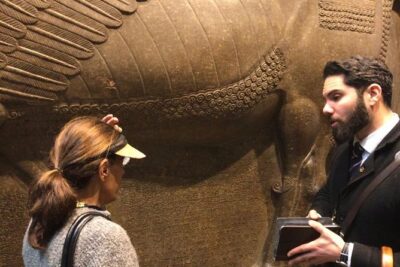
British Museum & National Gallery of London Semi-Private 8ppl Max
Read our review →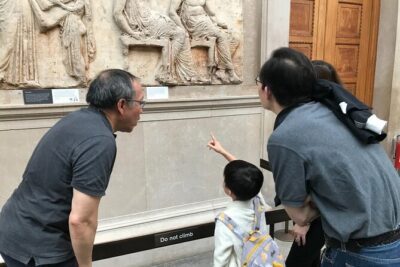
Explore Biblical Artifacts at the British Museum
Read our review →
British Museum Highlights Private Tour in London including the Rosetta Stone
Read our review →Browse the lists this tour appears in