
Reviewed · MUSEUMS
Natural History Museum Tour – by Uncomfortable Oxford™
Oxford has more than pretty stone. This 90-minute tour uses the Natural History Museum as a doorway into Oxford’s links with colonialism, empire, science, and education. I like its discussion-led style, and I like that it joins museum visits with Oxford streets instead of treating the city as a postcard.
The experience is also appealing because guides such as Ffion, Devika, and Cameron have been praised for making difficult subjects accessible and respectful. The main caution is practical: the tour costs $96.11 per person, and one booking ended badly when the guide and group failed to meet, so you should confirm the meeting details and keep your phone available.
In This Review
- Key points to know before you book
- Why this Oxford tour takes a different route
- Starting at the Oxford University Museum of Natural History
- From natural history to the Pitt Rivers Museum
- Walking through Oxford’s colonial connections
- A guide-led conversation, not a standard lecture
- What the $96.11 price really covers
- The meeting point deserves careful attention
- Who will get the most from this experience?
- Timing, access, and what to plan around it
- The main strengths and the honest limitations
- Should you book Uncomfortable Oxford?
- FAQ
- Where does the Natural History Museum Tour start?
- Where does the tour end?
- How long does the tour last?
- What language is the tour offered in?
- Is museum admission included?
- How many people can join the tour?
- Can I cancel for a full refund?
Key points to know before you book
- The Natural History Museum begins the conversation: The museum is not just a backdrop. It introduces the colonial connections that shape the rest of the tour.
- Discussion matters as much as sightseeing: You are encouraged to think, respond, and question rather than simply listen to a prepared speech.
- Oxford’s beauty gets a fuller context: The walk connects handsome university buildings and museums with less comfortable stories about empire, race, wealth, and power.
- The Pitt Rivers Museum may form part of the route: Past tours have included both Oxford museums before continuing to other sites around the city.
- The group is capped at 15 people: That is small enough for a real exchange, though the experience is also described as private and personalized.
- The price reflects the specialist format: Museum admission is free, so you are paying mainly for the guide’s research, interpretation, and ability to lead sensitive discussion.
Why this Oxford tour takes a different route
Oxford tours often focus on colleges, famous scholars, film locations, and grand stone courtyards. Those sights matter, but they can leave you with a polished version of the city that skips the harder questions.
Uncomfortable Oxford takes another approach. The tour examines how Oxford’s institutions connect to colonial power and how those connections still shape the city. You may hear about race, empire, museum collections, scholarship programs, and the people whose work or wealth helped build the Oxford you see today.
I like this approach because it does not ask you to choose between admiring Oxford and questioning it. You can appreciate the architecture while also asking who benefited from the systems behind it.
The tone is discussion-based, not simply corrective. Several accounts describe guides who shared facts, invited responses, and gave people room to think. That matters here. A subject this sensitive can quickly become a lecture or a scolding session. The best evidence suggests that the guides aim for a calm, respectful exchange instead.
More Museums in Oxford:
- Ashmolean Museum Tour – by Uncomfortable Oxford™
★ 5.0 · 9 reviews - Tower of London and Crown Jewels Exhibition Ticket
★ 4.5 · 6,677 reviews - Chelsea FC Stadium Tours and Museum
★ 5.0 · 1,908 reviews
Starting at the Oxford University Museum of Natural History
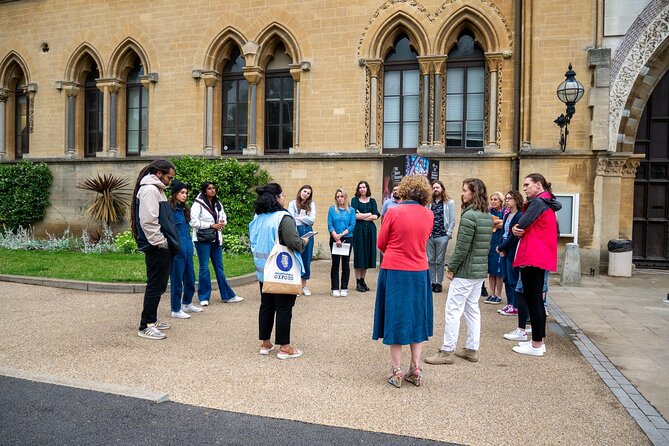
The meeting point is the Oxford University Museum of Natural History on Parks Road, Oxford OX1 3PW. This is a sensible starting place because the museum’s collections and institutional story provide an immediate link to science, classification, collecting, and empire.
The museum itself is free to enter, according to the tour information. The listed itinerary gives about 15 minutes at this first stop, although the broader experience includes entry into several museums and a walking route through Oxford. You should read the precise meeting instructions supplied with your booking, since the museum is both a public attraction and the place where your guide will look for you.
Do not expect the tour to be a standard museum highlights walk. The point is not to rush from display to display naming specimens. Instead, the museum acts as a starting point for questions about how knowledge was gathered, who controlled it, and how objects and ideas moved through imperial networks.
That makes the first stop useful even if you have already seen the building. You may look at familiar displays in a new way. A museum can feel neutral, but the choice of what gets collected, labeled, displayed, and preserved is never entirely neutral.
The 15-minute allocation also tells you something about the tour’s priorities. You are not being given a full museum tour. The guide is using the building to set up a wider conversation that continues elsewhere.
From natural history to the Pitt Rivers Museum
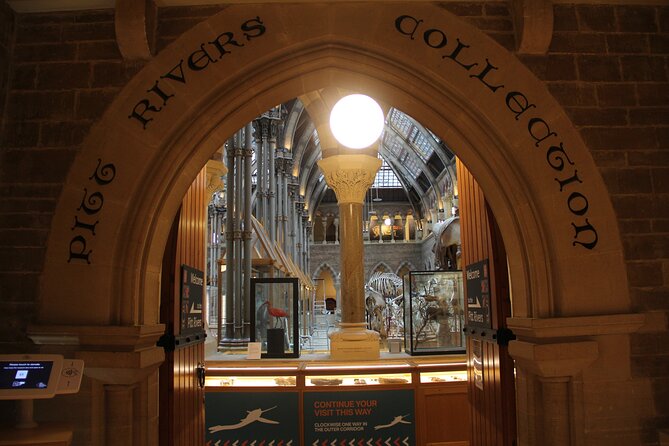
Past tour accounts describe a route through both the Natural History Museum and the Pitt Rivers Museum, followed by other Oxford sites. The supplied itinerary formally names the Natural History Museum as the first stop, so the exact sequence may vary by date or booking. Still, Pitt Rivers is an important part of understanding the tour’s subject.
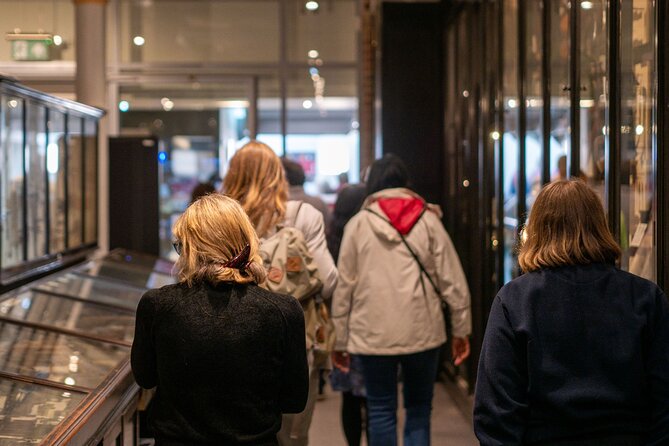
Its collections can prompt questions about anthropology, collecting, display, and the language institutions use to describe other cultures. The setting is visually memorable, but the tour encourages you to look beyond the atmosphere and consider how objects arrived in Oxford and how they were presented to the public.
That is where a guide adds value. You can walk through a museum alone and notice unusual objects. With a discussion leader, you are more likely to pause over the assumptions behind a display and think about the relationship between the institution, its donors, and the people represented.
Fifteen minutes at the first museum cannot cover every issue. If you want a slow museum visit, this will feel brisk. If you want a guided framework that connects museum collections to the city beyond the doors, the compact timing makes sense.
Walking through Oxford’s colonial connections
After the museum portion, the experience continues on foot around Oxford. The supplied details do not list every street or building, so you should not book it expecting a fixed checklist of named landmarks. The route is best understood as a moving classroom, with the city itself supplying examples.
One particularly useful subject is the Cecil Rhodes scholarship. Oxford’s relationship with Rhodes is often presented through achievement, prestige, and international education. This tour also examines Rhodes’s attitudes toward people of color and questions about the scholarship’s diversity.
That discussion gives you a practical way to understand how an institution can offer real educational opportunities while also being tied to a figure and system with deeply troubling racial views. You are not asked to reduce the subject to a simple verdict. Instead, you are encouraged to examine the contradiction.
This is one of the strongest reasons to choose the tour. It does not merely add an unpleasant fact to an otherwise comfortable sightseeing route. It asks how public memory works, why some names remain prominent, and what institutions do when their heritage includes both achievement and harm.
The walking format helps because Oxford’s history is not locked inside one gallery. Colleges, museums, scholarships, monuments, and public spaces all connect. Moving between them lets you see how the city’s physical beauty and institutional power developed together.
More History Tours in Oxford:
- Oxford: 90 minute Architectural & Historical Highlights Tour
★ 5.0 · 23 reviews - Reformation Oxford Christian History Tour private groups
★ 5.0 · 14 reviews - History of Medicine Tour – by Uncomfortable Oxford™
★ 4.5 · 8 reviews - 3 Hour Private History Tour to Blenheim Palace in a Rolls Royce
★ 5.0 · 5 reviews
A guide-led conversation, not a standard lecture
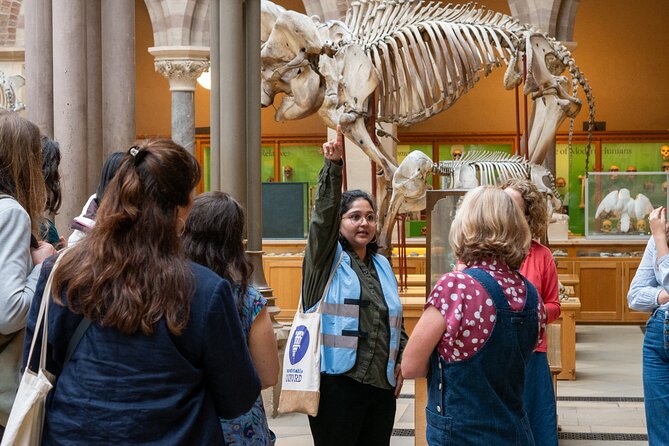
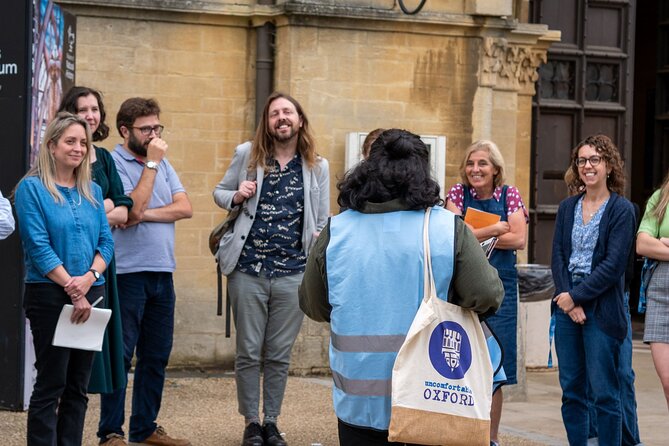
The guide is central to the experience. Ffion has been praised for presenting a large amount of material in an accessible way, including the Rhodes scholarship discussion. Devika has been described as sensitive and attentive to the group, helping people stay together and take part. Cameron has also been praised for creating lively conversations.
Those names are useful because they show the kind of leadership this tour needs. You are not just hiring someone to point toward buildings. You are relying on a person to explain complex subjects without flattening them, manage different opinions, and keep the walk moving.
The best descriptions of the tour emphasize that it does not feel preachy. That is an important distinction. You should expect challenging material, but not necessarily an argument directed at you. The format invites you to consider evidence and take part in a respectful exchange.
I would choose this experience if you enjoy asking why a place looks and operates as it does. I would not choose it if you want a light introduction to Oxford with mostly architecture, royal anecdotes, and university traditions.
The discussion format can also make the tour feel different from one group to another. The guide’s skill matters, but so does the willingness of the group to participate. You may hear questions that take the conversation in an unexpected direction. That is part of the appeal, though it means the experience is less predictable than a tightly scripted tour.
What the $96.11 price really covers
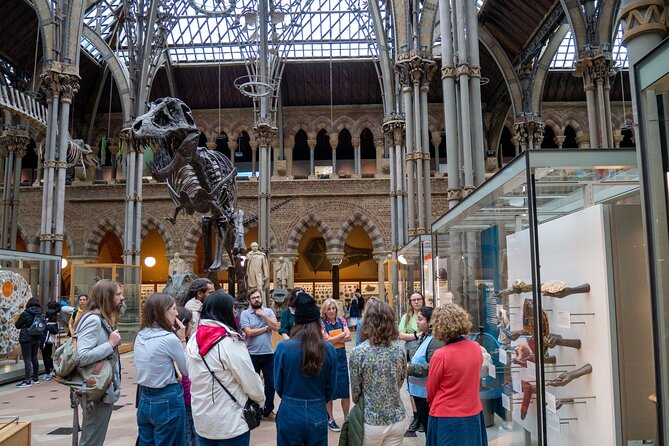
At $96.11 per person, this is not a cheap way to see Oxford. The Natural History Museum admission is free, and the tour lasts about one hour and 30 minutes. On a simple time-per-pound calculation, the price may feel high.
You are paying for something other than entry tickets, however. The cost covers specialist preparation, a guide who can connect separate parts of Oxford’s story, and a small-group conversation about material that is often missing from ordinary sightseeing.
The value depends on your purpose. If you want to enter a museum and see the exhibits on your own, spend nothing on the tour and take your time. If you want an informed route through Oxford’s connections with empire and race, the fee may be reasonable, especially if the guide turns the city into a coherent story rather than a series of unrelated facts.
The group limit is 15 people. That gives the guide a better chance to hear questions and keep the discussion balanced than a large coach tour would. The experience is described as private and personalized, so check the terms attached to your booking if that distinction matters to you.
Group discounts are available. For friends, families, or an organization, the per-person cost may work better than it does for a solo visitor. Most people can participate, service animals are allowed, and the meeting point is near public transportation, which keeps the practical side straightforward.
The meeting point deserves careful attention
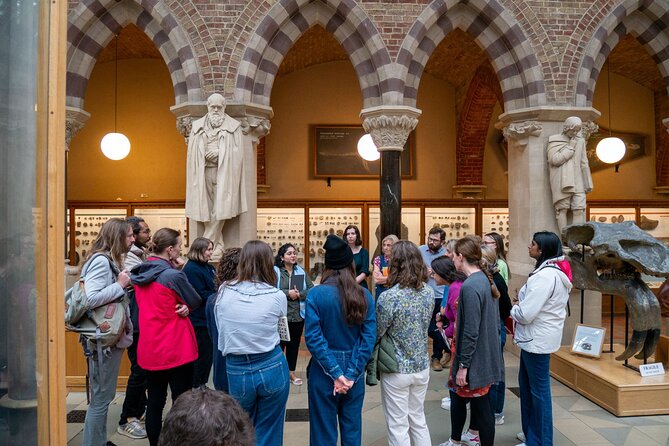
Start at the Oxford University Museum of Natural History, Parks Road, Oxford OX1 3PW. The activity ends back at the meeting point, so you do not need to plan a separate return journey from an unknown part of town.
Arrive early enough to identify the front of the museum and keep your phone accessible. One reported booking went wrong when the group waited outside and the guide did not connect with them. The company said the supplied telephone number did not connect and that the guide continued looking for the group for more than an hour.
That does not prove the problem is common, but it is a useful warning. Check the number attached to your booking, confirm that your phone can receive messages, and make sure everyone in your party knows the exact museum. If something goes wrong, contact the operator promptly rather than waiting in uncertainty.
This is especially important if you have children with you. A 20-minute wait in the sun can quickly sour the day, and the tour’s intellectual value will not matter if the meeting fails before it begins.
Who will get the most from this experience?
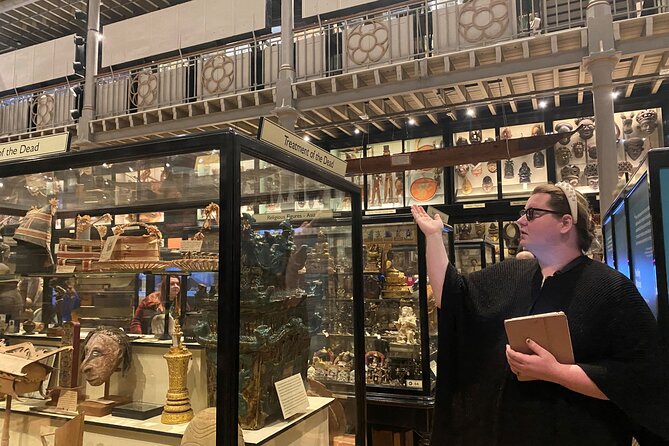
I would recommend the tour to adults and older students who want to examine Oxford rather than simply photograph it. It suits anyone interested in colonialism, museums, race, education, public memory, or the way universities present their past.
It can also work well for Oxford residents. A local attendee described gaining more from several Uncomfortable Oxford sessions than from decades of living in Oxfordshire. That makes sense: familiarity with streets does not always mean familiarity with the forces that shaped them.
The tour may suit families with older children, but the subject matter needs to match their interest and maturity. The listing says most people can participate, yet the group discussion format may be less comfortable for very young children who need constant movement or entertainment.
I would be cautious about booking it for someone who wants a relaxed introduction to the city. The subject is deliberately demanding, and the guide may ask you to question ideas you have accepted for years.
Timing, access, and what to plan around it
The advertised duration is approximately 90 minutes. That makes it easy to fit into a morning or afternoon, but do not assume the tour will provide a full day at either museum. You may want to return later if a collection catches your attention.
The meeting point is near public transportation, and service animals are allowed. Most people can take part, but the experience is a walking tour, so you should consider your own comfort with moving between museums and outdoor sites.
The tour is offered in English. That matters for this experience because much of its value comes through discussion, nuance, and the ability to follow a changing conversation.
Free cancellation is available if you cancel at least 24 hours before the local start time. Cancellations or changes made inside that window are not accepted for a refund, so check your plans before the deadline.
The main strengths and the honest limitations
The strongest feature is the way the tour joins Oxford’s beauty with its difficult past. You are not asked to ignore the university’s achievements, but you are given tools for understanding the power, wealth, and racial attitudes that also shaped the institution.
The second strength is the human guidance. Ffion, Devika, and Cameron are each praised for making people feel welcome while keeping the conversation serious. That combination is difficult to achieve, especially when the topic could make a group defensive or quiet.
The main limitation is the short duration. Ninety minutes is enough to frame important questions, not enough to answer all of them. You may leave with a stronger understanding of the issues and a list of subjects you want to explore on your own.
The price is another limitation. Since museum entry is free, you need to care about interpretation and discussion to see the value. For a person interested only in sightseeing, it is expensive.
Finally, take the meeting process seriously. The reported no-show experience was not resolved at the start, even though the operator later offered to reschedule and explained its efforts to locate the group. A careful phone check before the tour is sensible.
Should you book Uncomfortable Oxford?
Book it if you want an Oxford tour that makes you think, not just look. The combination of the Natural History Museum, possible time in the Pitt Rivers Museum, and walking discussion about colonialism and the Rhodes scholarship gives you a more searching view of the city.
Skip it if you want a conventional college tour, a slow museum visit, or a low-cost activity. At $96.11, the price only makes sense when you value the guide’s research and the chance to take part in a serious conversation.
For the right person, this is a useful way to see Oxford with fewer comforting shortcuts. Arrive at Parks Road early, check your contact details, and come ready to listen as well as speak.
FAQ
Where does the Natural History Museum Tour start?
It starts at the Oxford University Museum of Natural History, Parks Road, Oxford OX1 3PW, UK.
Where does the tour end?
The activity ends back at the meeting point.
How long does the tour last?
The tour lasts approximately one hour and 30 minutes.
What language is the tour offered in?
The tour is offered in English.
Is museum admission included?
The Natural History Museum stop lists admission as free, and the experience includes entry into several museums.
How many people can join the tour?
The maximum group size is 15 people. The experience is also described as private and personalized.
Can I cancel for a full refund?
Yes. You can cancel at least 24 hours before the local start time for a full refund. Cancellations or changes made less than 24 hours before the start are not accepted for a refund.
Just added in Oxford
- Oxford Bike and Walking Tour★ 4.5 · 27 reviews
- Oxford’s Famous Alumni: Self-Guided Story Puzzle Walk★ 4.0 · 2 reviews
- Undiscovered Cotswolds Private Tour★ 5.0 · 87 reviews
- History of Medicine Tour – by Uncomfortable Oxford™★ 4.5 · 8 reviews
- Tours of Oxford private walking tours for the Discerning Traveler★ 5.0 · 70 reviews
- Women and Queer Histories Tour – by Uncomfortable Oxford™★ 5.0 · 60 reviews
- Multi Day Cotswold Village Trail★ 5.0 · 1 review
- The Inklings Oxford Writers Tour – Private Groups Daily★ 5.0 · 107 reviews
Museums, compared.

Tower of London and Crown Jewels Exhibition Ticket
Read our review →

Official tickets: Moco Modern & Contemporary Art Museum
Read our review →
British Museum London Guided Tour Semi-Private 8ppl Max
Read our review →
The British Museum London – Exclusive Guided Museum Tour
Read our review →


Skip the Line: Liverpool Beatles Museum – The perfect tribute to the Beatles
Read our review →Browse the lists this tour appears in