

Reviewed · OXFORD TOURS
Women and Queer Histories Tour – by Uncomfortable Oxford™
Oxford has stories its buildings rarely tell. The Women and Queer Histories Tour by Uncomfortable Oxford looks past the university’s grand facades to examine women’s rights, queer lives, gender, class, and access to education. Led by University of Oxford students, it uses seven city stops to connect personal experience with the places where people studied, worked, lived, and were controlled. I like its small maximum of 15 people and its discussion-based style, which gives you room to ask questions rather than simply follow a guide’s speech. The one drawback is that the tour deals with difficult subjects, so it may feel confronting if you want a light introduction to Oxford.
I also like the route itself. It begins at the Radcliffe Observatory Quarter and ends beside the Clarendon Building in the city centre, moving from former hospital grounds and a women’s college to old passages and university buildings. The walk takes about 90 minutes and costs $27.54 per person, a fair price if you want a focused social-history tour rather than another parade of famous colleges.
- Small group format: The maximum group size is 15, giving you a better chance to speak with the guide.
- Student-led insight: University of Oxford students lead the walk and bring a close connection to the university’s past and present.
- Women’s education: Somerville College and St Paul’s Nursery show how education was shaped by childcare, gender, and class.
- Queer Oxford: The story of Laurence Michael Dillon introduces the history of trans people in Oxford.
- Interactive discussion: Guides ask for opinions and ideas, creating a respectful space for conversation.
- Central finish: The walk ends outside the Clarendon Building, close to Oxford’s city-centre sights and transport links.
In This Review
- Why This Oxford Walk Takes a Different Route
- Starting at the Radcliffe Observatory Quarter
- Somerville College and the Fight for Women’s Education
- St Paul’s Nursery and the Problem of Childcare
- The War Memorial Garden and Laurence Michael Dillon
- Lamb and Flag Passage and Oxford Masculinity
- Wadham College and Representations of Women
- The Clarendon Building and Policing Women
- The Discussion Style and Guide Quality
- Price, Timing, and Who Gets Good Value
- Practical Advice Before You Go
- Who Should Book the Women and Queer Histories Tour?
- Should You Book It?
- FAQ
- Where does the Women and Queer Histories Tour begin?
- Where does the tour finish?
- How long does the tour last?
- How much does the tour cost?
- How many people can join the tour?
- Are the stops free to enter?
- Can I cancel for a refund?
Why This Oxford Walk Takes a Different Route
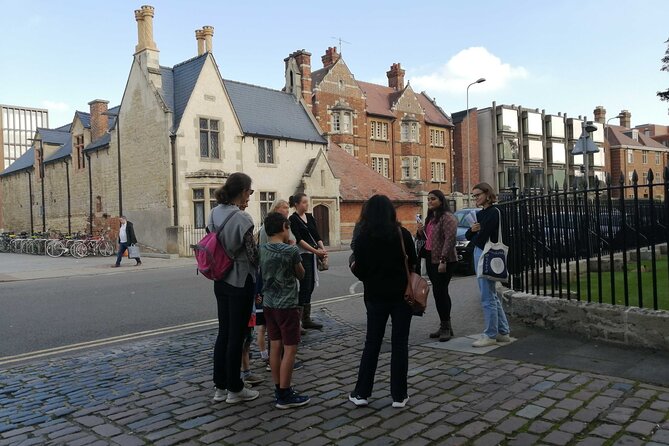
A standard Oxford tour usually points toward famous architecture, college courtyards, literary connections, and academic traditions. This walk asks who was allowed into those spaces, who was left out, and how the city’s buildings can reveal or conceal personal lives.
That shift in focus matters. The tour is not simply a collection of unusual anecdotes. It uses places such as a nursery, a war memorial garden, and a university office to discuss larger questions about opportunity and authority. You look at the same Oxford that appears in guidebooks, but the questions change.
The format is also more conversational than a fixed lecture. Guides invite the group to consider difficult issues and discuss possible answers. Past sessions led by guides including Devika, Julie, Olivia, Cameron, Waqas, Chase, and Waqar have been praised for their energy, preparation, and ability to involve the whole group.
Do not expect a polished sightseeing performance with a constant stream of dates. You may be asked what you think, how a place should be remembered, or what an uncomfortable legacy means today. That approach works best if you enjoy discussion and do not need every question wrapped up neatly.
Starting at the Radcliffe Observatory Quarter
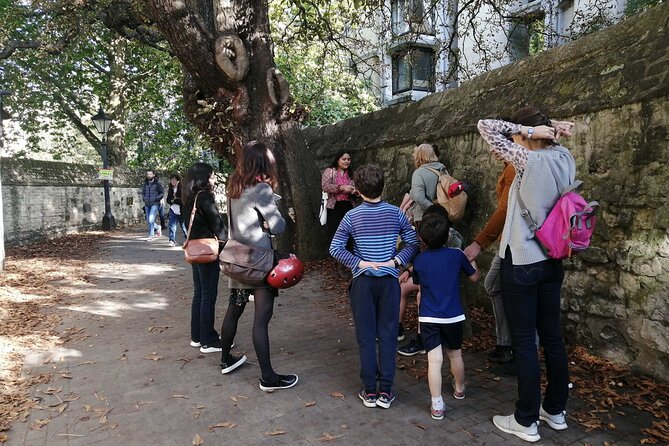
The meeting point is the Old hospital site at the Radcliffe Observatory Quarter on Woodstock Road. The first 15 minutes set up one of the tour’s central ideas: some community histories are difficult to find in the built environment.
A building may remain, yet the people connected to it can disappear from public memory. Names may be missing. Plaques may tell only one version of events. A place can look impressive while offering little clue about the lives shaped within it.
Starting here is useful because it teaches you how to read Oxford during the rest of the walk. You are encouraged to notice absence as well as presence. Who appears in a memorial? Who gets a college portrait? Which experiences are preserved, and which survive mainly through personal accounts or later research?
The stop is free to enter, and the tour does not require admission tickets at the individual locations. You should still wear comfortable shoes. The route covers several parts of Oxford, and the value comes from moving between real places rather than sitting in one room.
A few more to weigh up in Oxford
- Oxford University Walking Tour With University Alumni Guide
★ 5.0 · 6,905 reviews - 1.5-hour Oxford City and University Walking Tour
★ 4.5 · 1,383 reviews - Oxford Official University & City Tour
★ 5.0 · 1,134 reviews
Somerville College and the Fight for Women’s Education
Outside Somerville College, the tour turns to the difficulties women faced when they first attended Oxford. This is one of the clearest stops for understanding how a famous institution could offer education while still limiting recognition, status, and opportunity.
Somerville is especially relevant because it is one of Oxford’s well-known women’s colleges. From outside its entrance, you consider what it meant for women to enter a university designed around male traditions and expectations.
The focus is not only on whether women could attend classes. The larger issue is how access worked in practice. Education, examinations, credentials, college membership, and professional prospects were not automatically equal. A woman could be close to the university’s intellectual life and still face barriers that male students did not.
I find this kind of stop more useful than simply hearing that a women’s college was founded. It connects architecture with policy and personal experience. The college is not just a picturesque Oxford scene. It becomes evidence of a long argument about who belongs in academic space.
The visit lasts about 10 minutes and takes place outside the college. That means you should not expect an interior tour or an extended look around the grounds. The reward is the conversation and context, not access to college rooms.
St Paul’s Nursery and the Problem of Childcare
The next stop, outside St Paul’s Nursery, examines access to childcare and the barriers faced by academics. It is a short 10-minute stop, but it brings the discussion down from institutional rules to everyday logistics.
Education and employment are often described as matters of talent or hard work. Childcare shows why that explanation is incomplete. Parents may have the ability to study or teach but lack practical support. The location of a nursery can affect who can take part in academic life, how long they can remain, and what choices are open to them.
This stop also adds a class dimension. Support systems are not equally available to everyone. A person with money, family help, or flexible work may face a very different set of choices from someone without those resources.
The setting is valuable because it makes a broad subject concrete. Instead of discussing equality only through laws or college policy, you consider the basic conditions that let a person participate.
The tour’s emphasis on childcare may surprise anyone expecting only stories about famous women or queer figures. That is part of its strength. It shows how social history is built from ordinary needs as well as dramatic events.
The War Memorial Garden and Laurence Michael Dillon
At the War Memorial Garden, the tour introduces Laurence Michael Dillon and the history of trans people. This 10-minute stop provides a personal focus after the broader discussion of education and childcare.
Dillon’s story helps place trans lives within Oxford’s historical record. The subject is not treated as a modern issue detached from the past. Instead, you are asked to see how people navigated identity, public institutions, and social expectations in earlier periods.
A war memorial garden may seem an unexpected setting for this topic. That contrast is precisely what makes the stop effective. Traditional memorial spaces often present a narrow picture of whose lives deserve public remembrance. The discussion encourages you to think about the people connected to Oxford who may not fit familiar categories.
This portion may be especially important for visitors interested in LGBTQ+ history, gender studies, or the way public memory is shaped. It is also one of the tour’s more emotionally serious moments. The guide’s discussion-based approach gives the group room to consider the material rather than rushing from one fact to the next.
A completely different sort of day out:
- City Sightseeing Oxford Hop-On Hop-Off Bus Tour
★ 4.5 · 1,042 reviews - Harry Potter Walking Tour of Oxford Including New College
★ 4.5 · 930 reviews - Oxford Sightseeing River Cruise Along The University Regatta Course
★ 4.5 · 652 reviews - Afternoon Tea Sightseeing River Cruise in Oxford
★ 5.0 · 583 reviews
Lamb and Flag Passage and Oxford Masculinity
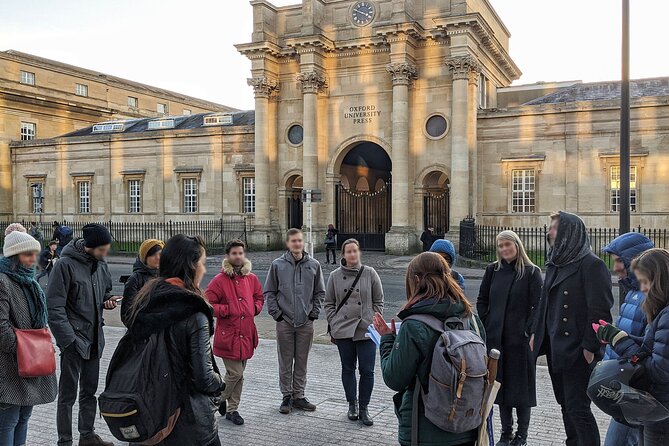
The route then moves into the older parts of the city, reaching Lamb and Flag Passage. Here the subject shifts toward masculinity in both the town and the university.
Oxford has long been shaped by powerful ideas about what a scholar, gentleman, student, or public leader should be. Those ideas affected men, women, and queer people alike. Masculinity could open doors for some while creating pressure and exclusion for others.
This 15-minute stop is a useful reminder that a tour about women and queer histories cannot discuss only women and queer people. Gender systems involve expectations placed on everyone. The university and the city interacted in complicated ways, with social status, education, and local life influencing one another.
The passage itself helps change the mood. You leave the more formal university setting and enter an older urban route. That movement makes the distinction between town and gown feel more tangible, even as the tour shows that the two worlds were never fully separate.
Because the passage is in an active part of Oxford, you may encounter ordinary city movement around the group. Keep close to the guide and listen carefully. Small groups help here, since a large crowd would make a narrow route less comfortable and make discussion harder.
Wadham College and Representations of Women
Outside Wadham College, the tour examines representations of women from the early modern period. The examples include women from wealthy backgrounds and women with fewer resources, allowing the guide to compare how class shaped the ways women were seen and recorded.
This is an important distinction. There is no single historical experience of being a woman. Wealth, family position, education, and social connections could greatly affect a person’s options and public image.
Wadham gives the tour another chance to look at how institutions represent people. Portraits, memorials, stories, and architectural details can appear respectful while still reflecting the priorities of the people who commissioned them. You are encouraged to ask what is shown, what is missing, and who had the authority to define the record.
The stop lasts about 15 minutes and takes place at the college. Again, the main attraction is not a promise of interior access. It is the way the guide uses the college as a place to discuss women’s historical visibility and the social divisions that influenced it.
If you enjoy looking closely at monuments and portraits, this may be one of the most rewarding sections. If you prefer a tour built around famous names and major events, the interpretive approach may require more patience.
The Clarendon Building and Policing Women
The final stop is the Clarendon Building, the historic office of the vice-chancellor. Here the tour discusses the policing of women in the city.
That phrase covers more than formal law enforcement. It can include rules, surveillance, social judgment, institutional discipline, and expectations about where women could go and how they should behave. The university and city each played a part in defining acceptable conduct.
Ending here gives the walk a strong sense of direction. You have moved from questions about who can access history to questions about who controls public behavior. The Clarendon Building becomes a place connected with authority, not just a grand piece of architecture.
The walk finishes outside the building on Broad Street, in central Oxford. This is practical if you want to continue sightseeing afterward. You are close to the city’s main attractions, shops, cafés, and transport connections, though the tour itself does not include entry to the building.
The Discussion Style and Guide Quality
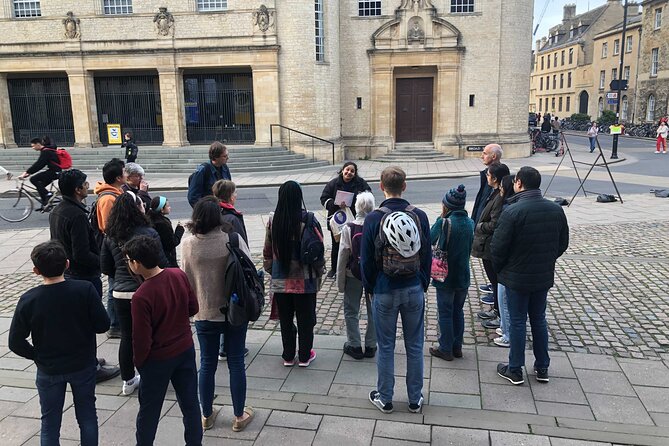
The guides are central to this experience. The strongest feature is not just the amount of information. It is the way the material is presented.
Devika has been praised for an engaging presentation and for making participants feel included. Julie is noted for a discussion format that allows different ideas to emerge rather than forcing one fixed answer. Olivia has been described as passionate and clear, while Cameron is praised for energy and audience involvement. Other guides, including Waqas, Chase, and Waqar, have also been recognized for making difficult material approachable.
Those details point to a consistent teaching style. You should expect questions, conversation, and room for interpretation. The goal is not to hand you a final verdict on every issue. It is to help you notice how Oxford’s past continues to shape the way the city is presented.
That can make the tour feel more personal than a conventional walk. You are not only collecting information for later. You are thinking with the group as you move through the streets.
The small group limit of 15 matters here. A discussion works poorly when the guide is addressing 40 people at once. With fewer participants, you have a better chance to ask for clarification or offer a point of view. Still, the quality of the conversation will depend partly on the group. If you prefer to listen quietly, you can do that, but this is not a purely passive tour.
Price, Timing, and Who Gets Good Value
At $27.54 per person, the tour is priced like a specialist city walk rather than a basic orientation tour. You receive about 90 minutes of guiding, seven stops, and a focused look at topics that are often missing from standard Oxford sightseeing.
The value is strongest if you want social context and active discussion. You are paying for the guide’s preparation and the route’s carefully chosen connections, not for admission to buildings. All stops are listed as free admission locations.
The price may feel less attractive if you mainly want interior visits, famous college views, or a broad introduction to Oxford’s architecture. This experience is narrow by design. It gives you a different way to understand the city, but it will not replace a general Oxford tour.
The timing is convenient for fitting around other plans. Ninety minutes is long enough to develop an argument without taking half a day. The route begins north of the main centre and ends on Broad Street, so plan your day around that north-to-central movement.
Group discounts are available, and confirmation is provided at booking. Free cancellation is allowed up to 24 hours before the start time for a full refund. Cancellations or changes made within 24 hours are not refunded or accepted.
Practical Advice Before You Go
Wear shoes suited to city walking and arrive at the Radcliffe Observatory Quarter with enough time to find the Old hospital site. The tour is near public transportation, and service animals are allowed.
Most people can participate, according to the supplied access information. Specific details about step-free access, seating, toilets, or the surface of every section are not provided, so contact the provider if you have mobility concerns or need a particular accommodation.
The tour runs outdoors at every listed stop. Oxford weather can change quickly, so bring suitable clothing. Since the route depends on hearing the guide and joining discussion, rain and street noise may affect your experience.
I would also arrive ready to listen carefully. The tour covers exclusion, trans history, childcare barriers, social control, and uncomfortable parts of institutional life. It is not designed as a cheerful photo stop between college visits.
Who Should Book the Women and Queer Histories Tour?
I would recommend this walk to anyone who has already seen Oxford’s famous buildings and wants to understand the people and power structures behind them. It suits visitors interested in feminism, LGBTQ+ history, gender, education, class, public memory, or the relationship between a university and its city.
It is also a good choice if you prefer guides who ask questions and welcome discussion. The interactive style has been a repeated strength, and the respectful tone is important when the subjects are personal or politically charged.
You may want to choose another activity if you want a purely architectural tour, extensive access inside colleges, or a light introduction suitable for very young children. The material is thoughtful and accessible in tone, but the subjects themselves can be challenging.
Should You Book It?
Yes, if you want an Oxford walk that changes how you read the city. The route is short, the group is limited, the price is reasonable for a specialist tour, and the seven stops build a clear argument about gender, access, identity, and authority.
Book it especially if you enjoy conversation rather than a one-way lecture. Go with an open mind, expect some difficult material, and allow yourself time afterward to think about what you heard. For a fuller Oxford visit, pair it with a conventional architecture or college tour, because this experience is at its best as a second look at the city, not a complete introduction.
FAQ
Where does the Women and Queer Histories Tour begin?
The tour begins at the Old hospital site in the Radcliffe Observatory Quarter on Woodstock Road, Oxford OX2 6GG.
Where does the tour finish?
It finishes outside the Clarendon Building at 48 Broad Street, Oxford OX1 3AZ, in the city centre.
How long does the tour last?
The walking tour lasts approximately 1 hour and 30 minutes.
How much does the tour cost?
The listed price is $27.54 per person. Group discounts are available.
How many people can join the tour?
The maximum group size is 15 participants.
Are the stops free to enter?
Yes. Each listed stop has free admission, and the experience is conducted as an outdoor walking tour.
Can I cancel for a refund?
You can cancel up to 24 hours before the experience start time for a full refund. Cancellations or changes made less than 24 hours before the start time are not accepted, and the amount paid is not refunded.
Just added in Oxford
- Oxford Bike and Walking Tour★ 4.5 · 27 reviews
- Oxford’s Famous Alumni: Self-Guided Story Puzzle Walk★ 4.0 · 2 reviews
- Undiscovered Cotswolds Private Tour★ 5.0 · 87 reviews
- Natural History Museum Tour – by Uncomfortable Oxford™★ 4.5 · 17 reviews
- History of Medicine Tour – by Uncomfortable Oxford™★ 4.5 · 8 reviews
- Tours of Oxford private walking tours for the Discerning Traveler★ 5.0 · 70 reviews
- Multi Day Cotswold Village Trail★ 5.0 · 1 review
- The Inklings Oxford Writers Tour – Private Groups Daily★ 5.0 · 107 reviews
Oxford Tours, compared.

Oxford University Walking Tour With University Alumni Guide
Read our review →
1.5-hour Oxford City and University Walking Tour
Read our review →

City Sightseeing Oxford Hop-On Hop-Off Bus Tour
Read our review →
Harry Potter Walking Tour of Oxford Including New College
Read our review →
Oxford Sightseeing River Cruise Along The University Regatta Course
Read our review →
Afternoon Tea Sightseeing River Cruise in Oxford
Read our review →
Inspector Morse, Lewis and Endeavour Oxford Walking Tour
Read our review →Browse the lists this tour appears in