
Reviewed · HISTORICAL TOURS
History of Medicine Tour – by Uncomfortable Oxford™
Medicine gets personal in Oxford. This walking tour connects plague, anatomy, prostitution, inoculation, imperial science, wartime medicine, penicillin, and the NHS in one tightly planned route. I like its unusual subject and the way it links medical change to everyday life, not just famous doctors and discoveries. I also like the small group limit of 15, which should make it easier to hear the guide and join the discussion.
The main drawback is that the tour lasts about 1 hour 45 minutes while covering eight stops across central Oxford. You will spend much of the time outside, and the subject can turn grim. This is not a light sightseeing stroll, but it offers a serious and engaging look at how illness and medical care shaped the city.
In This Review
- Six things to know before you book
- Starting beneath Oxford’s Bridge of Sighs
- New College and the fear of plague
- The Bodleian Library and the early study of anatomy
- The Clarendon Building, prostitution, and public health
- The King’s Arms and inoculation in a pub
- The Natural History Museum and imperial science
- War Memorial Garden and medical change during two wars
- St Luke’s Chapel, penicillin, and the NHS
- What the guide adds to the experience
- Price, pace, and overall value
- Who should book this Oxford walk?
- Should you book the History of Medicine Tour?
- FAQ
- Where does the History of Medicine Tour begin?
- Where does the tour end?
- How long does the tour last?
- How much does the tour cost?
- How many people can join the tour?
- Is the tour offered in English?
- What is included in the price?
- Can I cancel for a full refund?
Six things to know before you book
- The route covers eight very different subjects: You move from medieval plague to the founding of the NHS, with stops on anatomy, prostitution, inoculation, imperialism, and war medicine along the way.
- The group is capped at 15 people: That is a useful size for a walking tour built around questions and discussion.
- The tour begins beneath the Bridge of Sighs: You start with Oxford’s medieval geography and its effect on disease, rather than jumping straight into medical names and dates.
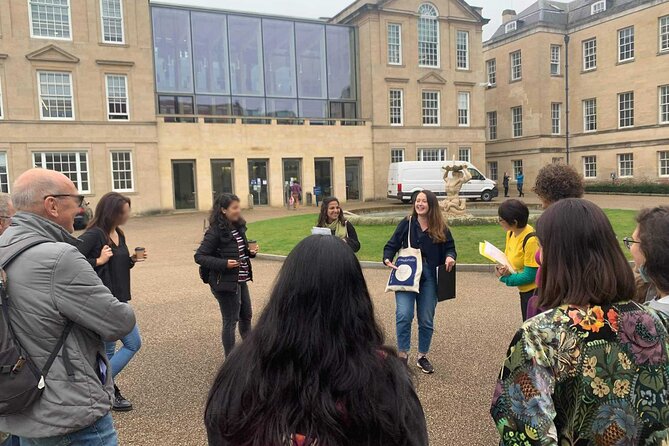
- Devika has received especially warm praise: Her approach includes sources, questions, and social context, making the tour useful even if medicine is not your main interest.
- Every stop is outside or at a public setting: The route uses streets, college exteriors, gardens, and public buildings rather than relying on museum admission.
- The advertised price is $95.98 per person: Group discounts may be available, and the package includes a certified Uncomfortable Oxford guide and a souvenir postcard.
Starting beneath Oxford’s Bridge of Sighs
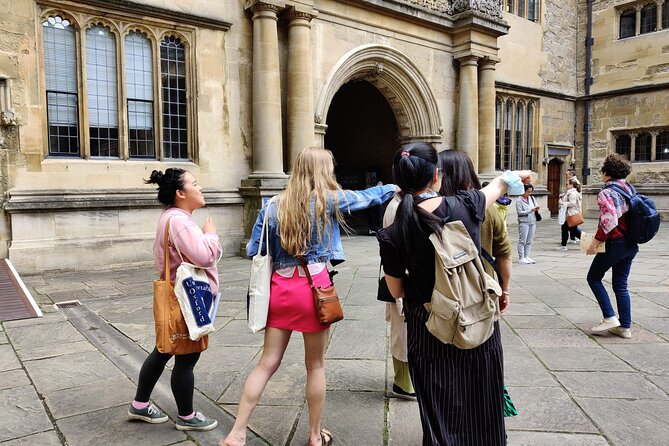
The meeting point is beneath the Bridge of Sighs on New College Lane, Oxford OX1 3BL. This is a memorable place to begin, but it can be busy and easy to miss if you arrive in a hurry. I would give myself enough time to locate the bridge and gather your bearings before the starting time.
The opening ten minutes explain medieval geography and disease. That is a smart first step. Instead of treating plague as an isolated disaster, the guide places it within the shape and workings of the medieval city. Where people lived, studied, worked, and moved could affect how illness spread.
This first stop also sets the tone. You are not simply collecting medical trivia. You are looking at the links between buildings, institutions, public behavior, and health. If you enjoy city tours that use streets as evidence, this introduction should work well.
There is no admission charge at this stop. Since the tour is built around public outdoor locations, you do not need to budget for separate entry tickets along the route.
More History Tours in Oxford:
- Oxford: 90 minute Architectural & Historical Highlights Tour
★ 5.0 · 23 reviews - Natural History Museum Tour – by Uncomfortable Oxford™
★ 4.5 · 17 reviews - Reformation Oxford Christian History Tour private groups
★ 5.0 · 14 reviews
New College and the fear of plague
The next stop is outside medieval New College, where the group spends about ten minutes discussing plague and past epidemics. The college setting gives the subject a strong sense of place, even though the tour does not list entry into the college itself.
I like this stop because it keeps disease connected to Oxford’s academic and civic life. Plague is often presented as a distant European catastrophe. Here, you consider how epidemics affected a real city and the people living and studying in it.
The discussion may be challenging for anyone hoping for a purely architectural tour. New College is a famous Oxford sight, but the focus here is not its interiors, art, or student traditions. You are using the college as a setting for a conversation about disease.
The short ten-minute stop also shows the brisk pace of the experience. The guide has a lot to cover, so you will hear a focused account rather than every detail about Oxford’s epidemics.
The Bodleian Library and the early study of anatomy
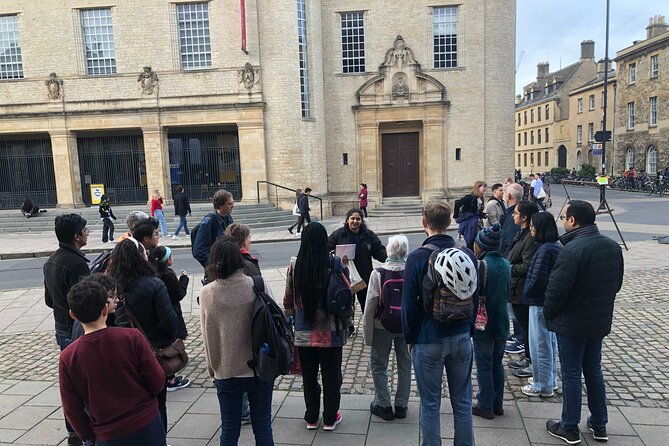
At the Bodleian Library, the tour spends about 15 minutes on anatomical dissections and the early study of medicine at the University. The setting brings academic medicine into view, but you should note that the tour description identifies this as a stop at the old libraries, not a general library tour.
This part should appeal to you if you want to understand how medicine changed from inherited ideas toward direct observation. Anatomical dissection raises questions about the body, education, religion, ethics, and access to knowledge. Those questions give the stop more weight than a simple list of early medical practices.
The Bodleian also helps explain why Oxford matters to the story. The university was not only a place where books were stored. It was a place where people argued over evidence, studied the body, and helped shape medical teaching.
I would not book this tour expecting a long indoor visit to the Bodleian. The itinerary gives this subject 15 minutes, and the tour continues to another outdoor setting. Still, the stop offers a useful bridge between medieval illness and the more organized medical science that followed.
The Clarendon Building, prostitution, and public health
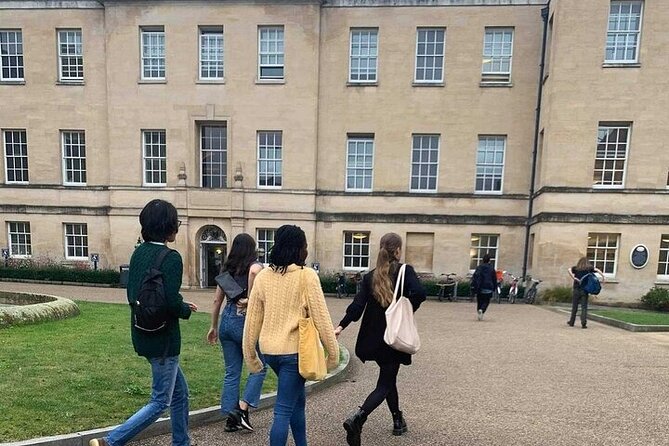
The Clarendon Building now houses the office of the Vice Chancellor. For about ten minutes, it becomes the setting for a discussion of prostitution and public health.
This is one of the tour’s most unusual subjects. It shows that medical history is not only about laboratories, hospitals, and famous treatments. Public health also involves social rules, sexual behavior, poverty, policing, and the ways institutions try to control disease.
I appreciate the choice of setting. A grand university building beside this difficult topic creates a useful contrast. Oxford’s academic world did not exist apart from the social problems of the city. Health policy often developed in response to behavior and conditions that respectable institutions preferred not to discuss openly.
This section may not suit you if you want a strictly clinical account of medicine. It is more social and political, and that is part of the point. The tour asks you to think about who received protection, who was blamed, and how public health measures could affect people unevenly.
A few more to weigh up in Oxford
- Oxford University Walking Tour With University Alumni Guide
★ 5.0 · 6,905 reviews - 1.5-hour Oxford City and University Walking Tour
★ 4.5 · 1,383 reviews - Oxford Official University & City Tour
★ 5.0 · 1,134 reviews - City Sightseeing Oxford Hop-On Hop-Off Bus Tour
★ 4.5 · 1,042 reviews
The King’s Arms and inoculation in a pub
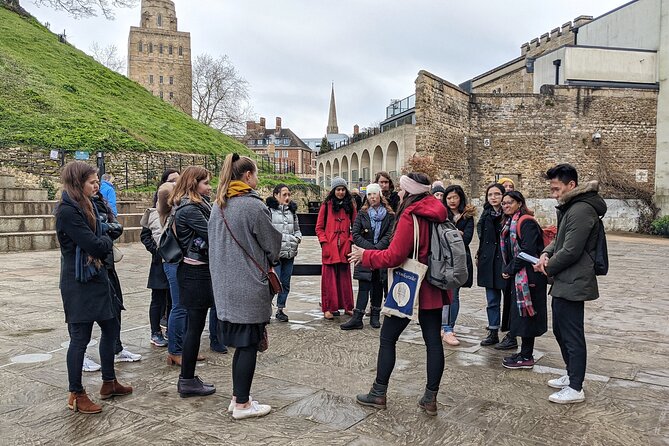
The 15-minute stop at the King’s Arms offers one of the route’s most memorable details: pubs served as an early place for inoculation in Oxford.
That idea immediately changes how you picture medical care in the past. A pub was not only a place for a drink. It could also serve as a practical community meeting point, where people encountered news, services, and medical practices.
I like this stop because it gives you a concrete image of how medicine reached ordinary people. Rather than imagining inoculation as something delivered only in a formal clinic, you consider the settings where public trust and local contact actually existed.
The pub setting also adds a little humor to a serious subject. Medicine can feel remote when it is presented through institutions alone. A familiar Oxford pub makes the story easier to picture and remember.
As with the other locations, admission is free. The stop is outside the cost of the paid tour, so you should not assume that a drink or food is included. The tour description does not include refreshments.
The Natural History Museum and imperial science
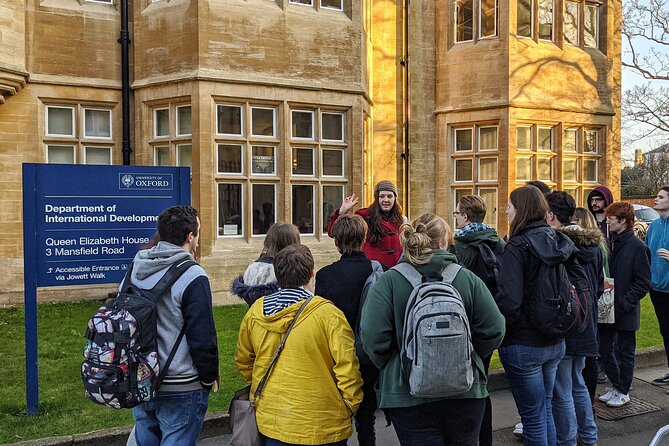
Outside the Oxford University Museum of Natural History, the guide turns to the way imperialism transformed science and medicine in the 18th century. This is another 15-minute stop, and it broadens the tour beyond local events.
The subject matters because medical progress did not happen in isolation. Exploration, empire, collecting, trade, and unequal power all influenced what European institutions studied and how they classified the natural world. The museum provides an appropriate setting for examining those connections.
This section may be especially useful if you want a less polished account of scientific development. New knowledge could bring real medical advances, while the systems that gathered and organized that knowledge could also involve exploitation. The tour appears designed to hold both facts in view.
You will not get a full museum visit as part of the experience. The discussion takes place outside, and the scheduled time is limited. If the museum itself is on your Oxford list, plan a separate visit rather than expecting this tour to cover its exhibits.
War Memorial Garden and medical change during two wars
At the St. Giles’ Memorial Garden, the group spends about 15 minutes considering major changes in medical practice that grew from the First and Second World Wars.
War often forces medical systems to respond quickly to large numbers of injuries and urgent needs. This stop looks at how those pressures affected treatment and medical organization. The memorial garden gives the subject a quiet setting for reflection.
I find this part valuable because it connects medical progress with a hard question: advances can emerge from terrible circumstances. It is possible to recognize improvements in practice without treating war as a positive force.
The garden also changes the pace of the tour. Earlier stops focus on disease, institutions, and social policy. Here, you have a chance to consider the human cost behind medical development. The subject remains serious, but the setting may help the group pause before the final section.
The tour data identifies this location as the War Memorial Garden and also refers to St. Giles’ Memorial Garden. Follow the guide’s directions at the meeting point, since the route uses the memorial garden as its named stop.
St Luke’s Chapel, penicillin, and the NHS
The final discussion takes place outside St Luke’s Chapel, the former city hospital. Over about 15 minutes, you learn about early trials of penicillin in Oxford and the founding of the NHS.
This is a strong ending because it brings the route toward medical systems you still recognize today. Penicillin marks a major change in the treatment of infection, while the NHS raises larger questions about access, public services, and the role of the state.
The former hospital gives the story a direct local setting. You are not ending with a vague account of modern medicine. You are standing outside a place connected to Oxford’s medical past and considering how treatment moved from experiments and early trials toward a national health system.
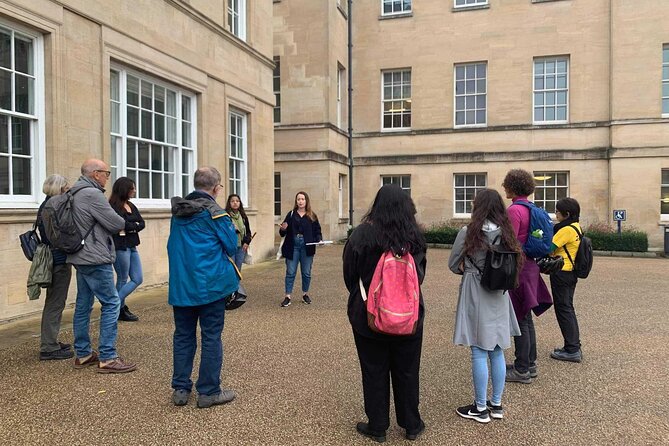
The tour ends at the Radcliffe Observatory Quarter on Woodstock Road, Oxford OX2 6GG, outside Radcliffe Humanities. That is different from the starting point, so plan your onward route. The experience does not return you to New College Lane.
What the guide adds to the experience
The guide is a certified Uncomfortable Oxford guide, and the quality of the discussion is central to the value of this tour. A short route with eight stops needs a guide who can explain difficult ideas clearly without flattening them into easy answers.
Devika received particular praise for sharing sources, asking thought-provoking questions, and linking medical events to their wider social effects. That description tells you something useful about the style: you should expect conversation and interpretation, not only a memorized speech.
One participant described the guide as pleasant and said the group had a chance to discuss the subject. That is important here. Topics such as prostitution, imperialism, war, and public health benefit from room for questions, especially when people bring different views.
The group limit of 15 supports that format. It is small enough for the guide to hear questions, yet large enough to create a real group discussion. The experience may be less satisfying if you prefer to walk silently and take photographs, but it should suit you if you like to think aloud and test ideas.
The included Uncomfortable Oxford souvenir postcard is a small extra, not a reason to book by itself. Still, it gives you a simple reminder of a tour that covers subjects most standard Oxford walks skip.
Price, pace, and overall value
The price is $95.98 per person. That is a substantial fee for a 1-hour-45-minute walking experience, especially since no admission tickets or refreshments are included.
The value depends on how much you want from the guide. You are paying for a specialized subject, a carefully linked route, a certified guide, and a small group rather than for entry to major attractions. If you want medical history tied to social and political questions, the price may feel justified. If you mainly want Oxford architecture or interior access, it is probably not the best use of your sightseeing budget.
Group discounts may improve the value if you are booking with others. The experience accepts mobile tickets, and confirmation is provided at booking. It is offered in English.
The tour is listed as suitable for most participants, allows service animals, and is near public transportation. Since the route moves between several central locations and includes outdoor stops, you should be ready for a walking tour rather than a seated lecture.
Free cancellation is available until 24 hours before the start time for a full refund. Changes or cancellations made inside that window are not accepted for a refund. The experience also requires a minimum number of participants, so a cancellation by the operator can result in another date or experience, or a full refund.
Who should book this Oxford walk?
I would recommend it to you if you enjoy:
- Medical and scientific history presented through real places
- Social questions about disease, public health, and access to care
- Small-group walks with time for questions
- Oxford experiences that move beyond colleges and famous buildings
- Serious subjects handled with discussion rather than a simple fact list
It may not be right for you if you want a relaxed introduction to Oxford, a tour with extensive interior visits, or a route focused on architecture. The subject includes plague, prostitution, war, imperialism, and the limits of past medical practice. You should expect difficult material.
The route also suits repeat visitors who have already seen the main sights. It gives familiar Oxford buildings a different purpose and helps you notice how the city’s institutions shaped public life.
Should you book the History of Medicine Tour?
Book this tour if you want to understand how medicine developed through disease, power, war, institutions, and everyday social life. The strongest feature is its range. In less than two hours, you move from medieval geography to the NHS without treating medical progress as a clean, simple march forward.
The price is high for a short walking tour, and the lack of included admissions means the guide and subject must be your main reason for booking. For the right audience, that focus is worthwhile. Devika’s discussion-led approach, the maximum group size of 15, and the route’s unusual stops give the experience more substance than a standard city walk.
I would choose it for a curious adult, a student of medicine or social history, or anyone who wants Oxford explained through questions of public health and human behavior. I would skip it if your main goal is grand interiors and postcard views. Bring an open mind, allow time to reach the separate ending point, and expect to leave with more questions than you started with.
FAQ
Where does the History of Medicine Tour begin?
It begins beneath the Bridge of Sighs on New College Lane, Oxford OX1 3BL, UK.
Where does the tour end?
The tour ends at Radcliffe Humanities in the Radcliffe Observatory Quarter on Woodstock Road, Oxford OX2 6GG.
How long does the tour last?
The experience lasts approximately 1 hour and 45 minutes.
How much does the tour cost?
The listed price is $95.98 per person. Group discounts are available.
How many people can join the tour?
The maximum group size is 15 participants.
Is the tour offered in English?
Yes. The tour is offered in English.
What is included in the price?
The price includes a certified Uncomfortable Oxford guide and an Uncomfortable Oxford souvenir postcard. Tips are not included.
Can I cancel for a full refund?
Yes. You can cancel at least 24 hours before the start time for a full refund. Cancellations or changes made less than 24 hours before the start time are not accepted for a refund.
Just added in Oxford
- Oxford’s Famous Alumni: Self-Guided Story Puzzle Walk★ 4.0 · 2 reviews
- Oxford Bike and Walking Tour★ 4.5 · 27 reviews
- Undiscovered Cotswolds Private Tour★ 5.0 · 87 reviews
- Natural History Museum Tour – by Uncomfortable Oxford™★ 4.5 · 17 reviews
- Tours of Oxford private walking tours for the Discerning Traveler★ 5.0 · 70 reviews
- Women and Queer Histories Tour – by Uncomfortable Oxford™★ 5.0 · 60 reviews
- Multi Day Cotswold Village Trail★ 5.0 · 1 review
- The Inklings Oxford Writers Tour – Private Groups Daily★ 5.0 · 107 reviews
Historical Tours, compared.
Shadows of York: Ghost Walk and Horrible History.
Read our review →

A Walk Through Time: History of Liverpool Walking Tour
Read our review →
Royal Historic Pubs Walking Guided Tour in London
Read our review →
Private Group: Historical Pub Walking Tour of London
Read our review →
Best Of Liverpool Heritage, History & Culture Guided Walking Tour
Read our review →Browse the lists this tour appears in