
Reviewed · MUSEUMS
Ashmolean Museum Tour – by Uncomfortable Oxford™
Look at the museum differently. The Ashmolean Museum Tour by Uncomfortable Oxford uses familiar galleries to ask hard, useful questions about collecting, colonialism, ancient art, and human remains. I like the small group of up to 12 people, which gives the guide room to explain ideas and keep the conversation moving. I also like the open, friendly approach praised in the feedback, with one guide creating a genuinely stimulating discussion.
The main consideration is the price: $96.02 per person for about 75 minutes. Since admission at the listed stops is free, you are paying mainly for the guided interpretation and conversation, not a long museum visit or a standard highlights tour. This is best for curious visitors who want context and debate, not just a quick look at beautiful objects.
In This Review
- Key points to know before you book
- Why this Ashmolean tour is different
- Meeting at the Statue Gallery
- The Ashmolean Story Gallery and the museum’s beginnings
- Greek and Roman art in the Cask Gallery
- The Hellenistic World and the ethics of excavation
- Colonialism and repatriation in the museum’s own display
- Egyptian Galleries and the display of human remains
- What you receive for $96.02
- Who should book this experience?
- Timing, cancellation, and a few practical cautions
- Should you book the Ashmolean Museum Tour?
- FAQ
- Where does the Ashmolean Museum Tour begin?
- Where does the tour finish?
- How long does the tour last?
- How much does the tour cost?
- How many people can join the tour?
- Is museum admission included?
- What language is the tour offered in?
- Is free cancellation available?
- What happens if the tour is canceled?
Key points to know before you book
- The tour questions how museums acquire and display objects, rather than simply pointing out famous pieces.
- Six stops cover the Ashmolean’s origins, Greek and Roman art, Hellenistic archaeology, colonialism, repatriation, mummies, and human remains.
- The group is limited to 12 people, a useful size for discussion and questions.
- The tour lasts about 1 hour and 15 minutes, then finishes where it began near the Main Entrance.
- Admission is listed as free at each stop, so the fee primarily covers the guided experience.
- Free cancellation is available up to 24 hours before the start time, subject to the stated weather and minimum-group conditions.
Why this Ashmolean tour is different

Many museum tours are built around famous objects, artistic movements, and dates to remember. This one takes another route. It asks you to think about who collected the objects, how they reached Oxford, what museum labels leave out, and whether an object should still be on display.
That makes the tour more demanding than a simple introduction to the Ashmolean. You will not just hear that an ancient sculpture is old or attractive. You will consider the values behind its display, including the long European focus on Greek and Roman culture and the way ancient art has been judged through Western ideas of beauty.
I like that Uncomfortable Oxford connects separate galleries into one argument. The tour begins with the institution itself, moves through ancient art and archaeology, then reaches colonial collecting, repatriation, mummies, and human remains. The route gives you a way to think about the museum as a whole.
The tone also matters. Feedback praises an open and friendly guide who encouraged a stimulating discussion. That suggests a conversation rather than a lecture, which is important here. Some of the subjects are serious and uncomfortable, so a guide who can explain clearly without turning the visit into a scolding session makes a real difference.
More Museums in Oxford:
- Natural History Museum Tour – by Uncomfortable Oxford™
★ 4.5 · 17 reviews - Tower of London and Crown Jewels Exhibition Ticket
★ 4.5 · 6,677 reviews - Chelsea FC Stadium Tours and Museum
★ 5.0 · 1,908 reviews
Meeting at the Statue Gallery
You meet at the Statue Gallery near the Ashmolean’s Main Entrance on Beaumont Street. This is a practical starting point because you do not need to search through the museum for a hidden meeting room.
The tour ends back at the same meeting point. That makes it easy to continue exploring Oxford afterward, return to another part of the museum, or head on to your next stop without arranging transport from a different location.
The museum is near public transportation, and a mobile ticket is offered. Confirmation arrives when you book. Service animals are allowed, and the activity is listed as suitable for most people, though the provided details do not describe the route, seating, or any specific mobility arrangements.
The group limit of 12 is one of the strongest practical features. A large museum group can make a thoughtful discussion feel like a school assembly. With 12 or fewer people, you should have a better chance to hear the guide and ask a question. Group discounts are also available, which may improve the value if you are booking for several people.
The Ashmolean Story Gallery and the museum’s beginnings
The first major stop is the Ashmolean Story Gallery, where the guide explains how the museum began and examines the legacy of early colonial collecting practices. This is a smart place to start because it gives the rest of the visit a clear frame.
Instead of treating the museum as a neutral container for objects, you are asked to consider the choices that created it. What was collected? Who had the power to remove objects? Which cultures were treated as worthy of study? These questions can change the way you read every later display.
The stop lasts about 10 minutes. That is enough time to establish the main ideas without using the entire tour on institutional background. You should listen closely here, since later conversations about sculpture, excavation, and repatriation build on this opening.
This section may be less satisfying if you want an immediate parade of famous objects. It is more about the museum’s structure and purpose than visual spectacle. But it gives the tour a stronger foundation than a standard introduction that starts and ends with dates and names.
Greek and Roman art in the Cask Gallery
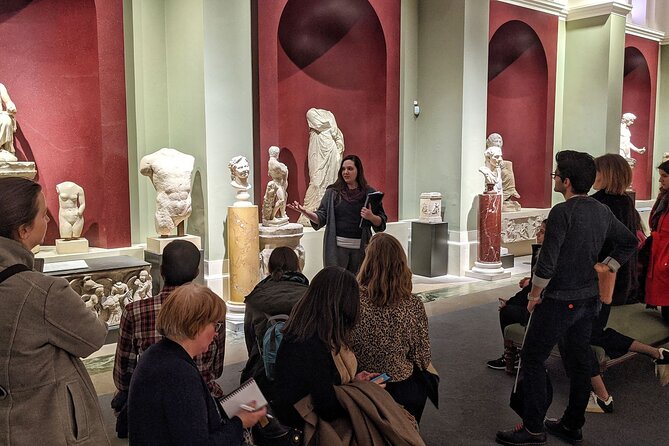
The Cask Gallery receives about 15 minutes. Here, the guide raises questions about the museum’s focus on Greek and Roman culture, the role of enslavement in the ancient world, and the artistic ideals attached to ancient sculpture.
This is where the tour moves from institutional history to the way ancient civilizations are presented. Greek and Roman art has long been treated as the center of classical culture in European museums. The guide asks you to consider what that emphasis suggests, and what it may push to the side.
The discussion of enslavement is especially important. Ancient sculpture is often presented as an expression of beauty and technical skill, but those societies were also shaped by unequal power and forced labor. Looking at art without that context can create a polished but incomplete picture.
You may appreciate this stop most if you enjoy examining the ideas behind museum displays. If you prefer a straightforward explanation of artistic techniques, the discussion can feel less direct. That is not a flaw so much as a question of fit. This is an interpretation-led tour, not an art-class survey.
A few more to weigh up in Oxford
- Oxford University Walking Tour With University Alumni Guide
★ 5.0 · 6,905 reviews - 1.5-hour Oxford City and University Walking Tour
★ 4.5 · 1,383 reviews - Oxford Official University & City Tour
★ 5.0 · 1,134 reviews - City Sightseeing Oxford Hop-On Hop-Off Bus Tour
★ 4.5 · 1,042 reviews
The Hellenistic World and the ethics of excavation
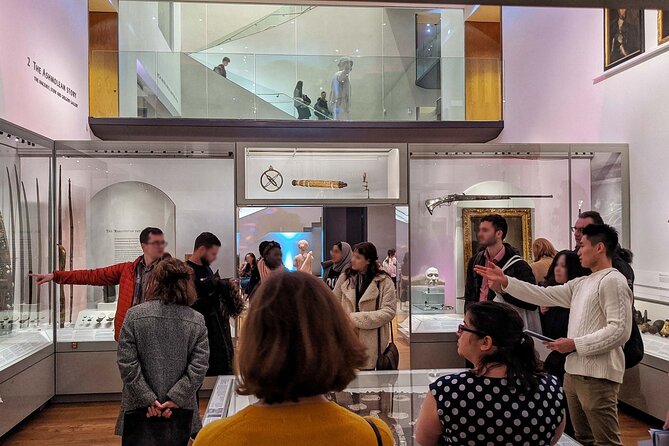
The Hellenistic World section receives about 15 minutes and turns to the ethics of excavation, display, and replicas. This part should appeal to anyone who has wondered how archaeological objects leave the ground and end up behind glass in another country.
Excavation can sound automatically respectable. An object is found, studied, and preserved. But the process also raises questions about ownership, permission, local communities, and the movement of cultural material across borders. The guide uses the gallery to make those questions concrete.
Replicas add another useful layer. A copy can help people see an object, protect a fragile original, or make an exhibit possible when the real item is elsewhere. But a replica also changes what you are experiencing. It asks you to think about authenticity, educational value, and the authority museums attach to the original.
This is a compact part of the tour, so you should not expect a full account of archaeological law or every collecting dispute. Its value is in giving you a set of questions that you can carry into other museums. Afterward, you may find yourself asking where an object was excavated, who removed it, and why it is displayed in Oxford.
Colonialism and repatriation in the museum’s own display
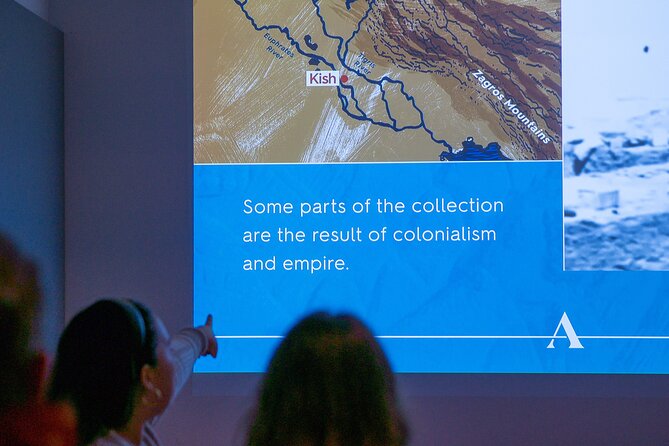
The next 15-minute stop examines a display created by the museum about colonialism and repatriation. This is one of the most useful features of the tour because it lets you consider how the Ashmolean presents its own role.
A museum discussing colonial collecting practices can be uncomfortable, especially when it is examining the institutions and habits that helped build its collections. That discomfort is part of the point. You are not only looking at objects from the past. You are also looking at a present-day institution trying to explain its responsibilities.
Repatriation is the key issue here. In plain terms, it concerns the return of cultural objects or human remains to the people or places from which they were taken. The subject is rarely simple. Questions of legal ownership, cultural identity, research, preservation, and institutional authority can all overlap.
The museum’s display gives the group something specific to examine rather than leaving the conversation at the level of general theory. I find that especially helpful for first-time visitors who may know the word repatriation but want to understand how it applies to a real collection.
The drawback is that 15 minutes cannot settle such a large subject. Think of this stop as an introduction to the debate, not a final judgment on every object or claim.
Egyptian Galleries and the display of human remains
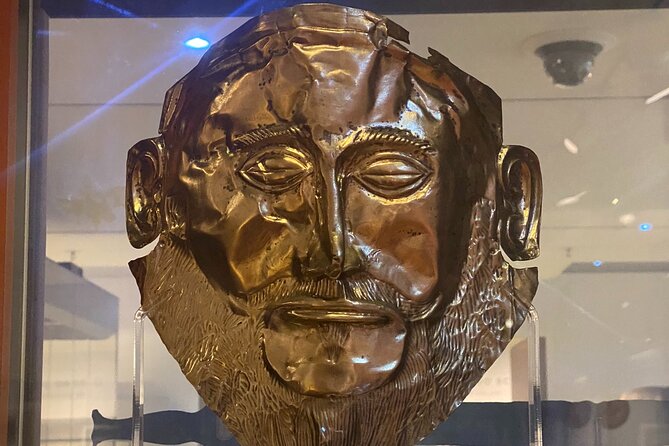
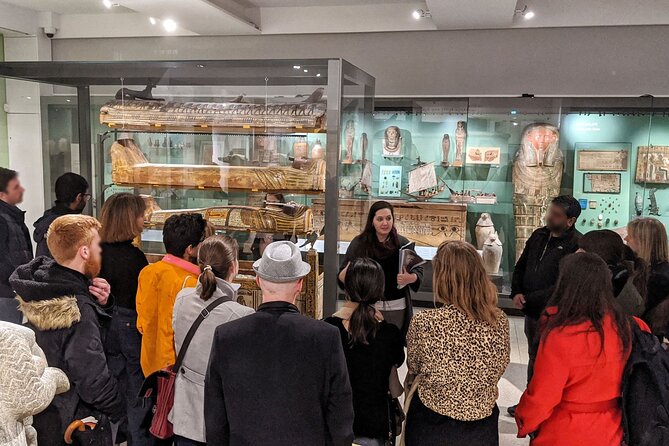
The final 15-minute stop takes place in the Egyptian Galleries, where the guide discusses mummies and human remains as display items. It is a fitting end because it brings the tour’s questions down to the most personal level.
A mummy can be presented as an archaeological object, a scientific resource, or a person who once lived. Those descriptions are not interchangeable. The guide asks you to think about what happens when human remains become part of a public display and how museums should balance education with dignity.
This section may change the way you view Egyptian collections well beyond the Ashmolean. You might notice whether labels use a person’s name, explain how remains were acquired, or treat the body mainly as an object of study. Even a short discussion can make the act of looking feel more considered.
Some people may find this stop emotionally heavier than the earlier galleries. That is worth knowing before you book. The tour is designed to raise ethical questions, and the subject of human remains is the clearest example of that approach.
What you receive for $96.02
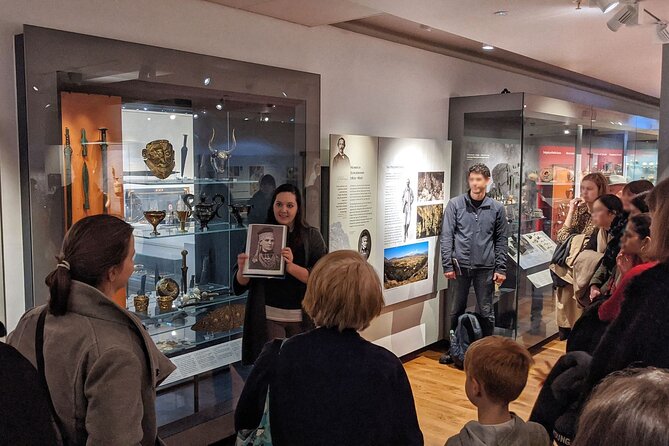
At $96.02 per person, this is not a budget museum orientation. The listed experience lasts roughly 75 minutes, and admission at the tour stops is free. The price therefore reflects the guide’s preparation, the focused route, and the chance to discuss difficult subjects in a small group.
The value depends on what you want from the Ashmolean. If you want to see as many galleries as possible, you may find the cost hard to justify. A self-guided visit will cover more ground and give you more time with individual objects.
If you want a structured way to understand colonial collecting, excavation, replicas, repatriation, and the display of human remains, the calculation looks different. The guide saves you from trying to build that framework while also navigating a large museum. The small group and discussion format add value that a basic admission ticket cannot provide.
Group discounts may help if you are booking with companions. The high rating of 4.9 from nine reviews, along with praise for the guide’s friendly presentation and the museum atmosphere, points to a consistently positive early record. Still, the number of reviews is small, so I would treat that rating as encouraging rather than definitive.
Who should book this experience?
I would recommend the tour to you if you:
- Want to question how museums collect and display objects
- Enjoy guided discussion more than a rapid list of facts
- Are interested in colonialism, repatriation, or the ethics of archaeology
- Have about 75 minutes for a focused museum visit
- Prefer a small group, with no more than 12 people
- Want an English-language experience with a mobile ticket
It may not suit you if your main goal is a broad introduction to the Ashmolean’s finest objects. You may also prefer another tour if you want a long visit, a family-oriented format, or a highly technical account of art and archaeology. The available information does not promise any of those things.
The tour works particularly well as a thoughtful first visit, since it gives you questions to use during a later independent visit. It can also suit returning museum visitors who have already seen the galleries and now want to consider how the institution presents them.
Timing, cancellation, and a few practical cautions
Plan for about 1 hour and 15 minutes. The six stops are tightly timed, with the opening meeting taking about five minutes, followed by five discussion points of roughly 10 to 15 minutes each.
You can cancel for a full refund up to 24 hours before the start time. Changes or cancellations made inside that window are not accepted and are not refunded. The cut-off follows Oxford’s local time.
The experience requires good weather, despite taking place in a museum, according to the supplied booking conditions. If poor weather causes a cancellation, you are offered another date or a full refund. A minimum number of participants is also required, and if that number is not reached, you are offered another date or experience, or a full refund.
Should you book the Ashmolean Museum Tour?
Book it if you want a short, serious, discussion-based visit that questions the systems behind museum collections. The route is focused, the group is small, and the topics build logically from the Ashmolean’s origins to ancient art, archaeology, colonialism, repatriation, and human remains.
Skip it if you mainly want famous sights, broad coverage, or the lowest possible museum cost. At $96.02, the tour is a specialist purchase, but it offers a kind of value that a standard highlights walk cannot: it teaches you how to look at the museum’s objects with sharper questions and better context.
FAQ
Where does the Ashmolean Museum Tour begin?
The tour begins at the Statue Gallery near the Main Entrance of the Ashmolean Museum on Beaumont Street, Oxford OX1 2PH, UK.
Where does the tour finish?
The activity finishes back at the meeting point.
How long does the tour last?
The tour lasts approximately 1 hour and 15 minutes.
How much does the tour cost?
The listed price is $96.02 per person.
How many people can join the tour?
The maximum group size is 12 people.
Is museum admission included?
Admission at each listed stop is marked as free. The supplied details do not state any separate museum admission arrangements beyond that.
What language is the tour offered in?
The tour is offered in English.
Is free cancellation available?
Yes. You can cancel at least 24 hours before the start time for a full refund. Cancellations or changes made less than 24 hours before the start time are not accepted and are not refunded.
What happens if the tour is canceled?
If poor weather causes a cancellation, you are offered a different date or a full refund. If the minimum number of participants is not reached, you are offered a different date or experience, or a full refund.
Just added in Oxford
- Oxford Bike and Walking Tour★ 4.5 · 27 reviews
- Oxford’s Famous Alumni: Self-Guided Story Puzzle Walk★ 4.0 · 2 reviews
- Undiscovered Cotswolds Private Tour★ 5.0 · 87 reviews
- Natural History Museum Tour – by Uncomfortable Oxford™★ 4.5 · 17 reviews
- History of Medicine Tour – by Uncomfortable Oxford™★ 4.5 · 8 reviews
- Tours of Oxford private walking tours for the Discerning Traveler★ 5.0 · 70 reviews
- Women and Queer Histories Tour – by Uncomfortable Oxford™★ 5.0 · 60 reviews
- Multi Day Cotswold Village Trail★ 5.0 · 1 review
Museums, compared.

Tower of London and Crown Jewels Exhibition Ticket
Read our review →

Official tickets: Moco Modern & Contemporary Art Museum
Read our review →
British Museum London Guided Tour Semi-Private 8ppl Max
Read our review →
The British Museum London – Exclusive Guided Museum Tour
Read our review →


Skip the Line: Liverpool Beatles Museum – The perfect tribute to the Beatles
Read our review →Browse the lists this tour appears in