
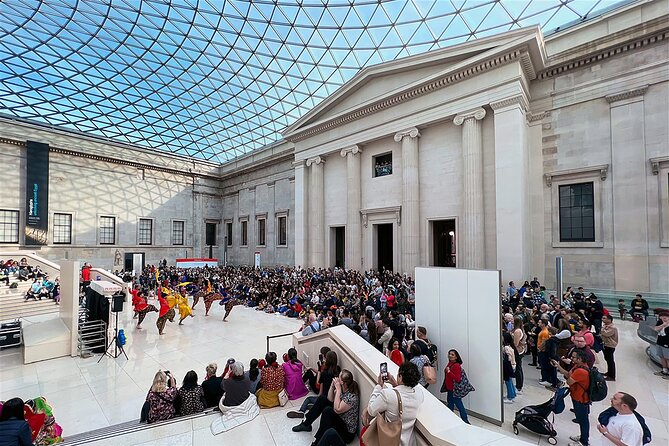
Reviewed · BRITISH MUSEUM TOURS
Marvels at the British Museum: Rosetta Stone, Parthenon, Mummies
Ancient treasures reward a focused plan. This two-hour British Museum tour helps you see major objects without getting lost in the museum’s enormous collection. I like the priority queue and the way the guide adds stories and context beyond the short display labels. I also like the small-group format, capped at 25 people, which makes it easier to ask questions.
The main drawback is the tight schedule. The British Museum holds about eight million objects, so two hours can only cover a carefully chosen route. The tour is also not private, and a requested time may be changed to another slot on the same day if space is unavailable.
In This Review
- Key points at a glance
- Why this British Museum tour works for a short visit
- Priority entry, with one important limitation
- The Rosetta Stone: a small object with a huge role
- Egyptian mummies and the museum’s ancient-world story
- The Parthenon sculptures and the questions they raise
- From Mesopotamia to Anglo-Saxon Britain
- What the guide adds to the experience
- Two hours on foot: plan your energy
- Is $102.43 a fair price?
- Scheduling matters more than usual
- Who should book this experience?
- Should you book the British Museum highlights tour?
- FAQ
- How long does the British Museum tour last?
- Where does the tour start?
- Where does the tour end?
- Is museum admission included?
- Is the tour private?
- What does priority entry mean?
- Can the tour time change after booking?
Key points at a glance
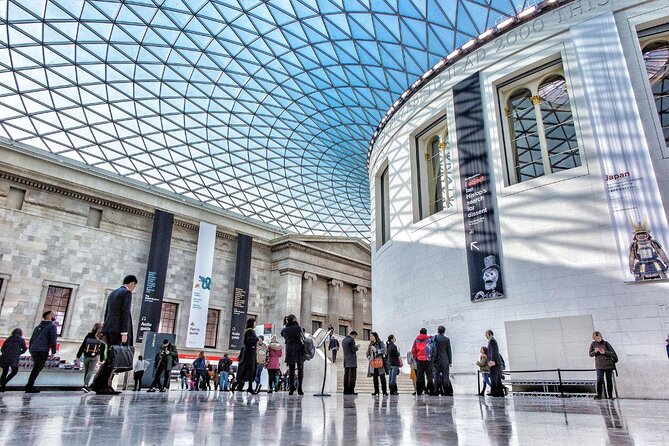
- Rosetta Stone and Parthenon sculptures: See two of the museum’s best-known treasures while learning why they matter.
- Egyptian highlights: The route includes ancient Egyptian objects and mummies, with storytelling designed to make the displays easier to understand.
- Priority entry: You join a faster queue rather than the regular long line, though it is still a shared priority line.
- Two-hour focus: This works well if you want the museum’s main highlights without spending half a day wandering.
- Guide Joe’s strong route management: A past tour included a small group led by Joe, who guided people through the busy museum while explaining key Greek and Egyptian objects.
- Maximum 25 people: The group is limited, but this is still a shared tour rather than a private visit.
Why this British Museum tour works for a short visit
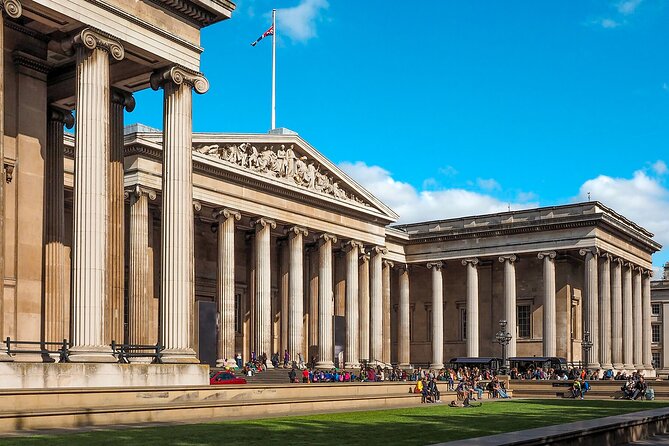
The British Museum can easily swallow an entire day. Its collection reaches across Egypt, Mesopotamia, Greece, Rome, Anglo-Saxon Britain, and many other cultures. Without a plan, you may spend too much time reading one case and miss the objects you most wanted to see.
This tour solves that problem with a clear priority: famous objects and the stories behind them. The goal is not to cover every gallery. It is to give you a useful framework for the museum’s most important ancient treasures in about two hours.
I like that approach. A good guide can explain why an object matters, how it was made, and what question it helped historians answer. That is especially valuable at the British Museum, where display labels can provide facts but cannot always connect one object to the next.
The experience begins at the British Museum on Great Russell Street in central London. You meet at the museum entrance, and the activity ends back there. Hotel pickup is not included, so you need to make your own way to the museum and arrive at least 15 minutes before the scheduled start.
More British Museum visits:
- British Museum London Guided Tour Semi-Private 8ppl Max
★ 5.0 · 984 reviews - The British Museum London – Exclusive Guided Museum Tour
★ 5.0 · 555 reviews - British Museum Guided Tour
★ 4.0 · 470 reviews
Priority entry, with one important limitation
The priority queue is useful, particularly during busy periods. You do not use the normal long line. Instead, you join a faster queue with other people who have also booked priority access.
That distinction matters. Priority entry is not the same as walking straight inside with no wait. The queue can still take time, and entry remains subject to the museum and tour arrangements. Still, avoiding the standard line is a practical benefit when your London schedule is tight.
The mobile ticket keeps the process simple. You receive confirmation when booking, then use the ticket details for the meeting arrangements. Keep your phone charged and have the information ready before you reach the entrance.
You should also take the start time seriously. The operator asks you to arrive 15 minutes early, and that buffer is worth using. The British Museum is near public transportation, but a delayed train, a wrong turn, or a crowded pavement can quickly eat into your arrival time.
The Rosetta Stone: a small object with a huge role
The Rosetta Stone is one of the main reasons people choose this tour. It is not the largest object in the museum, but its importance is enormous because its inscriptions helped scholars understand Egyptian hieroglyphs.
A guide can make the object far more interesting than a quick photograph and a label. You will hear how the different forms of writing on the stone relate to one another and why that made it possible to study ancient Egyptian texts in a new way.
This is where guided access earns its keep. You can look at the stone on your own, but the crowd and the excitement around it may make it hard to pause and think about what you are seeing. A guide gives you a reason to look closely instead of simply checking off a famous name.
The tour’s Egyptian focus also helps place the Rosetta Stone among other objects from the same broad culture. The emphasis is not only on the stone as a celebrity artifact, but on the larger story of how Egypt recorded religion, government, and daily life.
Egyptian mummies and the museum’s ancient-world story
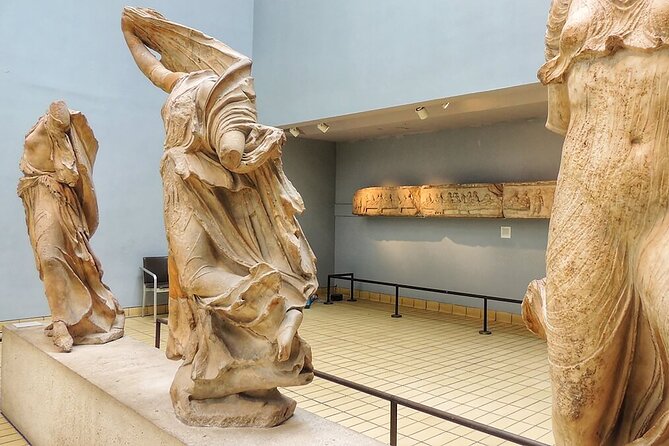
Egyptian galleries are another major part of the experience. The tour title specifically highlights mummies, while the route description points to important ancient Egyptian artifacts. You should expect the guide to use these displays to explain beliefs about death, preservation, and the afterlife.
Mummies can be striking, but the value of a guided visit is the human context. These are not simply old bodies in cases. They reflect ideas about identity, family, ritual, and what people hoped would happen after death.
The guide’s storytelling also helps you connect the mummies with the other Egyptian objects around them. Look for the way objects relate to one another rather than treating each case as a separate stop. You may find that a short explanation about one item changes how you view the next.
The pace will be brisk. The museum is huge, and the tour must move between major displays within two hours. If Egyptian material is your main interest, tell the guide early. The group may have a set route, but a direct question can help you get more from the time available.
More Museums in London:
- Tower of London and Crown Jewels Exhibition Ticket
★ 4.5 · 6,677 reviews - Chelsea FC Stadium Tours and Museum
★ 5.0 · 1,908 reviews - Official tickets: Moco Modern & Contemporary Art Museum
★ 4.5 · 1,157 reviews - The Postal Museum Admission Ticket
★ 4.5 · 347 reviews
The Parthenon sculptures and the questions they raise
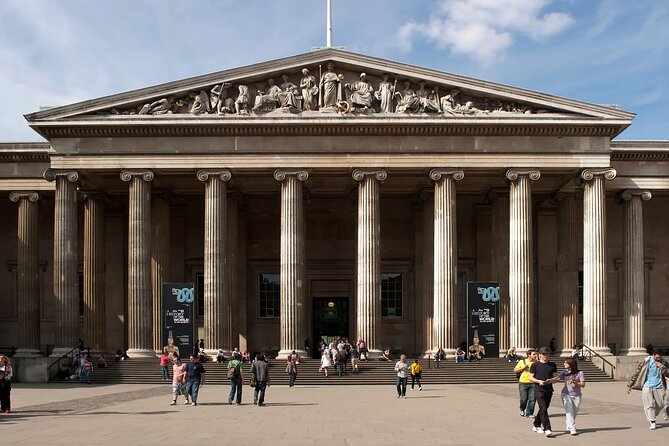
The Parthenon sculptures are another central highlight. These Greek marble works come from the temple on the Acropolis in Athens and are among the British Museum’s most famous holdings.
You will see sculpture rather than a complete ancient temple. That difference is important. The display allows you to study carved figures and architectural decoration up close, while also raising difficult questions about ownership, removal, and where major cultural objects should be kept.
A guide can provide the basic historical setting and explain what the sculptures were designed to do within the Parthenon. This makes the visit more than a quick look at attractive marble figures. You begin to see how the pieces fit into Greek architecture and religious life.
The tour is well suited to visitors who want an introduction to the debate without spending the whole day on it. If this subject is your personal priority, you may still want extra time after the tour to return to the gallery and look again. Two hours is enough for an informed introduction, not a full study of the collection.
From Mesopotamia to Anglo-Saxon Britain

The tour is not limited to Egypt and Greece. The museum’s galleries also cover Mesopotamia, Rome, and Anglo-Saxon Britain, giving you a wider view of how societies changed over time.
This broad range is one of the experience’s strengths. You can compare different ways of recording power, religion, trade, and everyday life. The route helps show that ancient history is not one single story, but many cultures developing alongside one another.
The Anglo-Saxon material adds a British connection to a tour otherwise centered on famous Mediterranean and Egyptian objects. It can be a useful change of pace after the large ancient civilizations. You may find that this section gives the museum’s global collection a stronger connection to the country where you are visiting.
The tradeoff is depth. With only two hours, you will not spend long in each culture. The guide has to choose representative objects and keep the group moving. I would treat this section as a starting point for a later return, not as a complete visit to each gallery.
What the guide adds to the experience
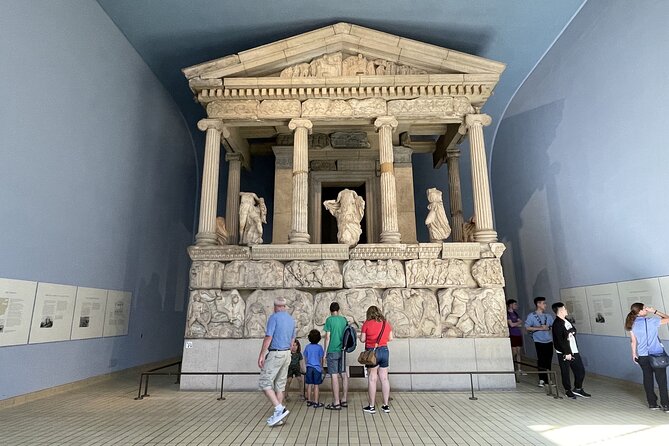
The tour is built around explanation. Display text can tell you an object’s date and origin, but a guide can point out details that are easy to miss and answer questions as they arise.
One particularly positive example comes from a small group led by Joe. He was praised for guiding the group through thousands of people while offering key details about the major ancient Greek and Egyptian objects. That combination matters: clear storytelling is useful, but practical group management is just as important inside a crowded museum.
You are encouraged to test the guide’s knowledge and ask your own questions. Bring the subjects that interest you most. You might ask about the Rosetta Stone’s inscriptions, the Parthenon sculptures, Egyptian burial customs, or how the museum presents objects from different civilizations.
Because the group can include up to 25 people, you should not expect a personal lecture just for you. The smaller format is more manageable than a huge crowd, but the experience remains shared. Stand where you can hear, stay close as the group moves, and speak up when you want clarification.
Two hours on foot: plan your energy
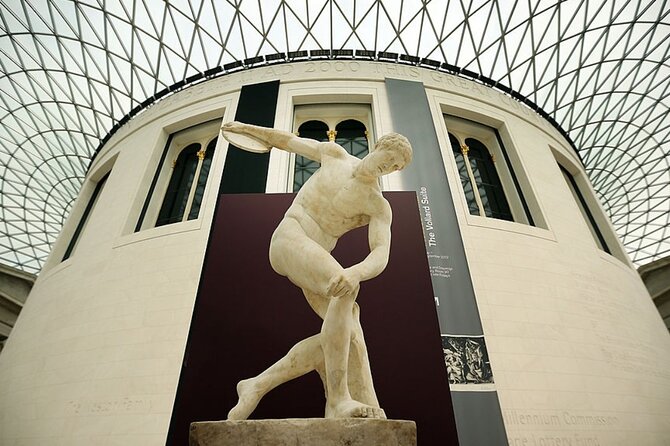
The tour takes place entirely on foot, and the museum’s size means you should expect plenty of walking. Comfortable shoes are a must. This is not a sit-down presentation with occasional stops.
The pace should suit most people who can manage a normal museum visit, and the activity notes say most people can participate. Still, the combination of walking, crowds, and standing can feel tiring, especially if you have already spent the morning sightseeing.
I recommend arriving rested and avoiding an overpacked schedule immediately afterward. The tour ends at the same meeting point, so you can continue exploring on your own if you still have energy. You can also leave after the guided portion without needing a complicated transfer.
Food and drinks are not included. Plan around that. A snack or meal before or after the tour is your responsibility, and no hotel pickup is provided.
Is $102.43 a fair price?
At $102.43 per person, this is not a budget museum entry. The value depends on how much structure and explanation you want.
If you have only a few hours in London, the price can make sense. You are paying for a planned route, a guide, included museum admission, and priority queuing. Those features may save time and help you see the objects you came for rather than spending your visit searching through galleries.
The price is harder to justify if you enjoy exploring museums alone or already know the British Museum well. The museum has a vast amount to offer, and a self-guided visit gives you more freedom to linger. You also avoid being tied to a group schedule.
I would see this as a time-saving and orientation tour, not an inexpensive admission ticket. It offers the most value to someone who wants clear highlights and historical explanation in a short window. If you are planning a longer London stay, you could use the tour as an introduction, then return to the museum on your own.
Scheduling matters more than usual
You can choose a time when booking, but the requested slot is not guaranteed. If that time is unavailable, you may be moved to the first available time on the same day. For example, a requested 10:00 start could become a 14:00 start.
That policy can affect a tightly planned London itinerary. Check your confirmation carefully and leave room in your day for a possible time change. Last-minute bookings carry an additional risk: if there is no space on the booked date, you may be placed on the following day.
The activity is often booked about 60 days in advance, which suggests that planning ahead is sensible. Booking early gives you a better chance of getting a useful time, though the possible same-day change still applies.
Free cancellation is available if you cancel at least 24 hours before the start time. Cancellations or changes made less than 24 hours before the experience are not refunded or accepted, and the cut-off follows London local time.
Who should book this experience?
I would recommend this tour to first-time British Museum visitors who want a firm plan. It suits people who want to see the Rosetta Stone, Parthenon sculptures, and Egyptian highlights without trying to master eight million objects in one afternoon.
It also suits history fans who prefer stories to silent label reading. The chance to ask questions is useful, especially if you want to connect Egypt, Greece, Rome, Mesopotamia, and Anglo-Saxon Britain within one visit.
Families and mixed-interest groups may appreciate the focused route, though the walking and standing should be considered. People who want a quiet, slow examination of one gallery should choose a self-guided visit instead.
I would be cautious about booking if your London schedule cannot tolerate a possible time change. I would also skip it if you strongly prefer private tours, since this is a shared group of up to 25 people.
Should you book the British Museum highlights tour?
Book it if you have limited time and want the museum’s best-known ancient objects explained by a guide. The Rosetta Stone, Parthenon sculptures, Egyptian mummies, and a taste of several other cultures make a strong two-hour introduction.
Skip it if you have plenty of time, enjoy doing your own research, or need a guaranteed start time. For everyone else, the main benefit is simple: you enter through a priority queue, follow a sensible route, and leave with more context than you would get from rushing past labels alone.
FAQ
How long does the British Museum tour last?
The tour lasts approximately two hours.
Where does the tour start?
It starts at the British Museum, Great Russell Street, London WC1B 3DG, UK.
Where does the tour end?
The activity ends back at the British Museum meeting point.
Is museum admission included?
Yes. The guided British Museum tour and admission ticket are included.
Is the tour private?
No. It is a shared tour with a maximum of 25 people.
What does priority entry mean?
Priority entry means you use a faster queue instead of the regular long line. You still join other people who have chosen the priority option.
Can the tour time change after booking?
Yes. If your chosen time is unavailable, you may be transferred to another available time on the same day. For last-minute bookings, you may be placed on the following day if there are no spaces.
Just added in London
- Private Tour: Royal High Tea At Kensington Palace Gardens★ 5.0 · 39 reviews
- Private Tour: Personal Travel Photographer Tour in London★ 4.5 · 27 reviews
- London East End Private Walking Food Tour – Secret Food Tours★ 5.0 · 26 reviews
- Private Tour: Night Photography Tour in London★ 5.0 · 48 reviews
- London Like a Local, Private & Personalized (2-3 hrs)★ 4.5 · 11 reviews
- British Museum & National Gallery of London – Exclusive Guided Combo Tour★ 5.0 · 48 reviews
- Private Tour: Tower of London and St Paul’s Cathedral★ 5.0 · 1 review
- London Soho District – Exclusive Guided Walking Tour★ 5.0 · 2 reviews
British Museum Tours, compared.
British Museum London Guided Tour Semi-Private 8ppl Max
Read our review →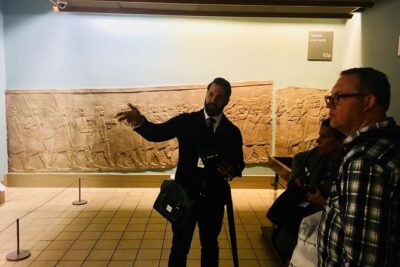
The British Museum London – Exclusive Guided Museum Tour
Read our review →
Private Guided Tour of the British Museum – Tickets Included
Read our review →
British Museum Guided Tour with Priority Timeslots(Small Group)
Read our review →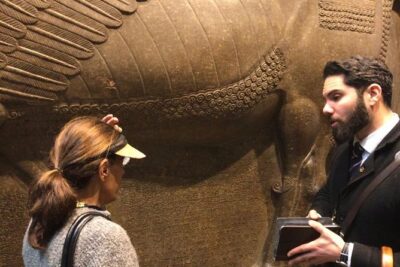
British Museum & National Gallery of London Semi-Private 8ppl Max
Read our review →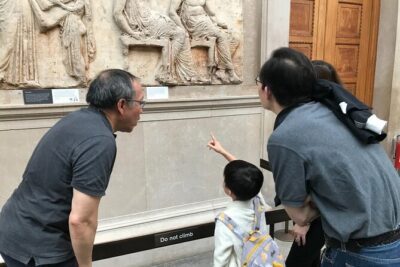
Explore Biblical Artifacts at the British Museum
Read our review →
British Museum Highlights Private Tour in London including the Rosetta Stone
Read our review →Browse the lists this tour appears in