
Reviewed · HISTORICAL TOURS
The History of London City Center Exclusive Guided Walking Tour
London tells its story on the pavement. This 2.5-hour walk links Covent Garden, royal palaces, government offices, and Westminster, giving you a useful first look at the city’s political and royal center. I like the compact route and the chance to shape the conversation with a private guide. I also like that guides such as Lucy, Sheldon, and Jake have been praised for making the past clear and keeping the pace attentive. The main consideration is that you see many landmarks from outside, and the Westminster Abbey visit is not a guided interior tour.
You cover a lot for $59.28 per person, especially if you want context rather than a quick round of photographs. The walk is best for first-time visitors, history fans, and anyone with only a short stay in London. It is less suited to anyone who wants to enter several attractions during the same outing.
In This Review
- Key points to know before booking
- Why this central London walk works
- Starting among performers and old London streets at Covent Garden
- Trafalgar Square and Nelson’s Column
- Admiralty Arch and the ceremonial road toward Whitehall
- 10 Downing Street and the working center of government
- St. James’s Palace and the royal route
- Buckingham Palace and the possibility of royal ceremony
- Churchill War Rooms and the memory of wartime London
- Big Ben and the Houses of Parliament
- Finishing at Westminster Abbey
- Private, semi-private, and group size
- Practical details that affect your day
- Who should book this London walking tour?
- Should you book it?
- FAQ
- How long does the walking tour last?
- Where does the tour begin and end?
- Is this a private tour?
- Are the attractions visited from inside?
- Does the tour include Westminster Abbey admission?
- What should I bring?
Key points to know before booking
- Covent Garden to Westminster in one continuous route: You move from theatreland and market streets to royal residences, government buildings, and Parliament.
- Private or small-group choices: A private booking gives your party its own guide, while the save-money semi-private option does not offer an exclusive guide.
- Strong guide-led storytelling: Lucy tailored the walk for a very small party, while Sheldon timed one visit around the Changing of the Guard.
- Mostly exterior sightseeing: You pass Buckingham Palace, the Churchill War Rooms, Big Ben, and Westminster Abbey without a standard guided interior visit.
- A full 2.5 hours on foot: Comfortable shoes, water, weather protection, and moderate fitness matter.
- A useful final stop at Westminster Abbey: The experience ends there, with tour information indicating that entry may be provided, but the interior visit is unguided. Confirm the exact entry arrangement when booking.
Why this central London walk works
This experience is built around a simple idea: London makes more sense when its sights are connected. Instead of visiting Covent Garden, Buckingham Palace, Whitehall, and Westminster as separate photo stops, you walk between them while a guide explains how monarchy, Parliament, war, ceremony, and public protest fit together.
That connection is the real value. You begin in an old commercial and entertainment quarter, pass through the ceremonial heart of Britain, and finish at one of its great religious and political landmarks. The route gives you a framework for later sightseeing.
The walk lasts about two and a half hours. That is long enough to cover the major sights without turning the outing into an all-day march. Still, you should expect to be on your feet for most of the time. The stops are short, often around ten minutes, so this is a sightseeing and storytelling tour rather than a series of long visits.
The price is $59.28 per person. I consider that fair for a private experience in central London, particularly if you are sharing the guide with only one or two other people. The value is less obvious if you choose a larger semi-private arrangement and prefer to explore independently. In that case, you are mainly paying for historical explanation, route planning, and the ability to ask questions.
More History Tours in London
- London Small Group Tour of Historical Pubs
★ 5.0 · 10,422 reviews - Soho Music & Historic Pubs Tour
★ 5.0 · 1,993 reviews - Royal Historic Pubs Walking Guided Tour in London
★ 5.0 · 803 reviews
Starting among performers and old London streets at Covent Garden
The meeting point is Covent Garden, a practical and lively place to begin. Its story reaches back to a Saxon settlement in the seventh century, though the area you see today is better known for shops, restaurants, bars, theatre, and street performers.
Your guide uses the neighborhood as an opening lesson in how London changes over time. The area is not simply a pretty square for photographs. It shows how an old part of the city can shift from one purpose to another while keeping traces of its past.
You spend about ten minutes here, so do not expect a full neighborhood tour. Arrive ready to walk, and make sure you have your guide’s contact details and mobile number available. The meeting instructions require a mobile phone number with country code, which can be useful if you have trouble locating the group.
Trafalgar Square and Nelson’s Column
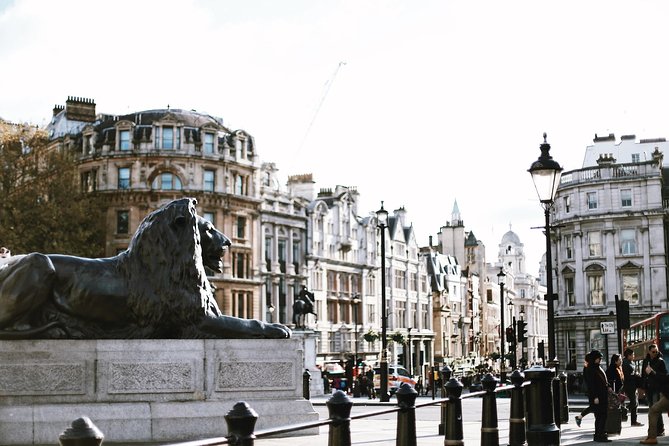
From Covent Garden, the walk continues toward Trafalgar Square. This is one of London’s best-known public spaces, but its importance goes beyond the lions, fountains, and portrait-friendly views.
The square commemorates the British naval victory at the Battle of Trafalgar in 1805. Your guide explains the connection to Admiral Horatio Nelson, whose column dominates the center. You also hear how the square became a place for protests and public demonstrations, a role it still holds.
I like this stop because it introduces the public side of British history. The monuments celebrate military success, while the square itself has become a place where people challenge authority. That contrast gives the setting more life than a quick photograph can provide.
You spend around ten minutes in the square and another ten near Nelson’s Column. The route is open to weather and crowds, so your view may change from one visit to the next. The tour runs in rain or shine, and an umbrella is a sensible part of your kit.
Admiralty Arch and the ceremonial road toward Whitehall
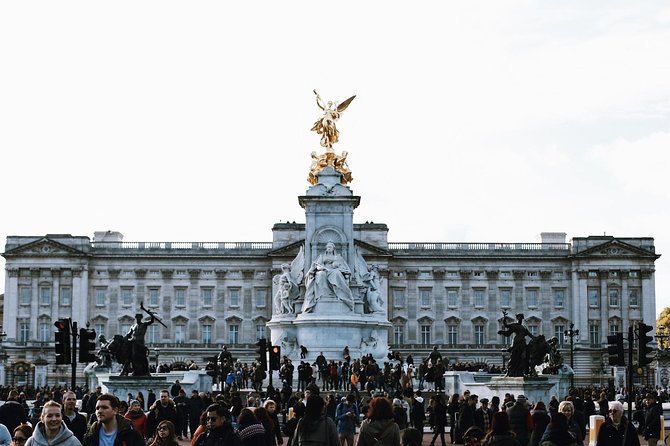
Admiralty Arch connects Trafalgar Square with The Mall, the broad ceremonial route leading toward Buckingham Palace. The building was commissioned by King Edward VII in memory of his mother, Queen Victoria, so it carries both practical and royal meaning.
This is a good example of the tour’s approach. You are not entering a museum. Instead, you are reading the city through buildings, roads, memorials, and the way public space is arranged.
The walk then reaches Whitehall, the government district running between Charing Cross and the Houses of Parliament. Whitehall became a center of government after Henry VIII established his court at Whitehall Palace in the 1530s.
As you walk, you get a clear sense of how close royal power and political power are in London. The street is not just an attractive route between sights. It has been tied to the machinery of government for centuries.
More Walking Tours in London
- Tour for Muggles The Ultimate Harry Potter Walking Tour in London
★ 5.0 · 4,684 reviews - London Jack The Ripper Guided Walking Tour
★ 5.0 · 3,131 reviews - Changing of the Guard Guided Walking Tour in London
★ 5.0 · 1,793 reviews - The Great British Rock and Roll Walking Tour
★ 5.0 · 1,371 reviews
10 Downing Street and the working center of government
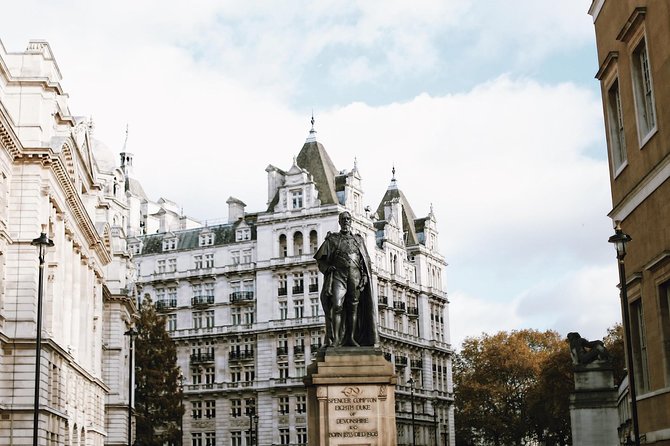
The stop at Downing Street focuses on the official residence and office of the British prime minister. The street dates from the 1680s, while 10 Downing Street has become one of the world’s most recognizable political addresses.
Security measures mean you should not expect to stroll through the front door or examine the interior. The value here is the explanation of how the address became linked with British leadership and how the prime minister’s role fits into the larger system of government.
This part of the walk can be especially useful if you know the names of British prime ministers from the news but have never understood the physical setting around them. The guide can connect the place to leaders such as Winston Churchill and explain the difference between a symbolic address and a working government office.
One unusual advantage of a private tour is flexibility. Lucy reportedly adjusted the emphasis for a very small party and added places beyond the standard route. That does not mean every private booking receives the same additions, but it does show why a small group can make it easier to ask for more detail on subjects that interest you.
St. James’s Palace and the royal route
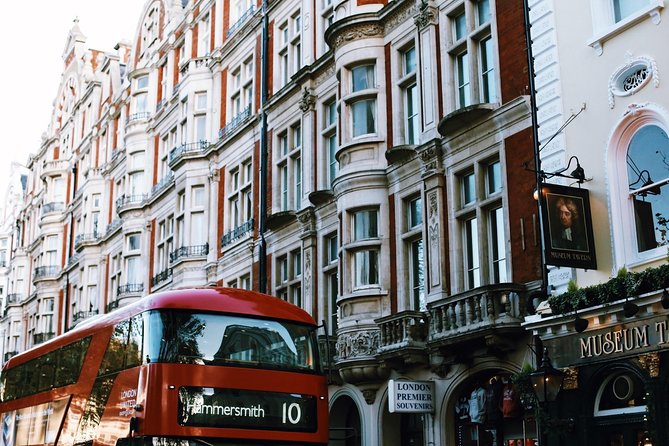
The walk passes St. James’s Palace, described as the most senior royal palace in the United Kingdom. It served as a royal residence for more than 300 years and has hosted major events in royal life.
You see the exterior rather than touring the palace. That may disappoint anyone hoping for rooms, art, or ceremonial interiors, but it keeps the walk moving and lets you cover more ground.
The palace helps explain that Buckingham Palace is not the whole story of the British monarchy. London’s royal identity is spread across several buildings, parks, and ceremonial roads. A guide can point out how these sites relate to one another and help you avoid treating every palace as the same sort of attraction.
Buckingham Palace and the possibility of royal ceremony
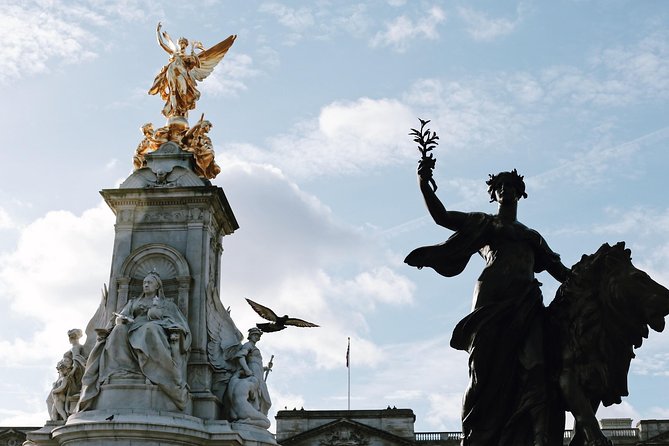
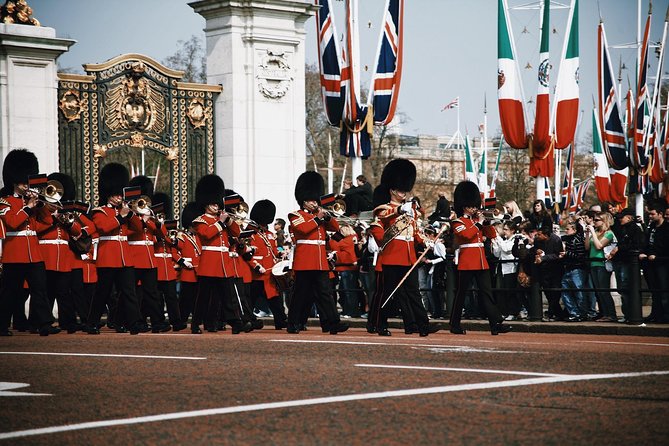
Buckingham Palace is one of the central highlights. You pass the famous frontage and hear about monarchs, including Queen Elizabeth II, as well as the role the palace continues to play in public ceremony.
The palace stop is listed at about ten minutes, so this is a viewpoint and explanation rather than a full visit. Entry is not included in the normal sightseeing stop. You should think of this part as a chance to understand the building’s place in the royal route, not as a palace tour.
Timing can make a real difference here. Sheldon was praised for arranging the walk so the group could see the Changing of the Guard. That event cannot simply be guaranteed for every departure, since ceremonies and national events affect access and timing, but a guide who watches the clock can add something special to the experience.
If the Changing of the Guard matters to you, ask about the schedule before booking. Do not assume the tour always includes it.
Churchill War Rooms and the memory of wartime London
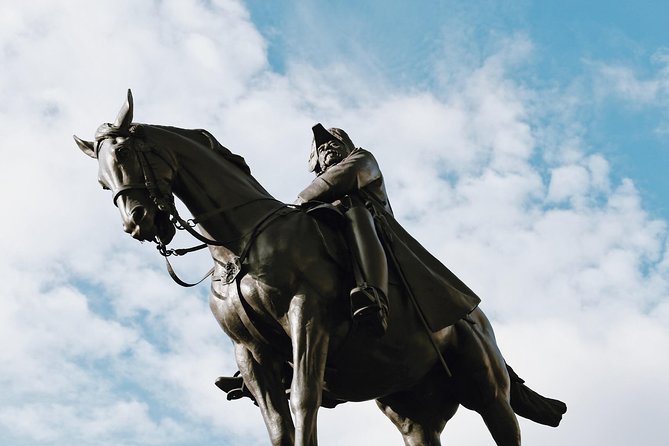
The walk then passes the Churchill War Rooms, part of the Imperial War Museum. The site includes the Cabinet War Rooms, an underground wartime command center, and the Churchill Museum, which focuses on Winston Churchill’s life.
The guided walk does not include a standard interior visit. That distinction matters because the War Rooms are a major attraction in their own right, and many people could easily mistake a pass-by for admission.
I see the exterior stop as a useful preview. If Churchill, the Second World War, or underground government operations interest you, plan a separate visit. The walking tour gives you the setting and the historical link, while the museum provides the rooms, objects, and longer explanations.
This is one of the clearest examples of the tour’s limits. You receive more context than you would walking past alone, but you will not have time to explore every museum along the way.
Big Ben and the Houses of Parliament
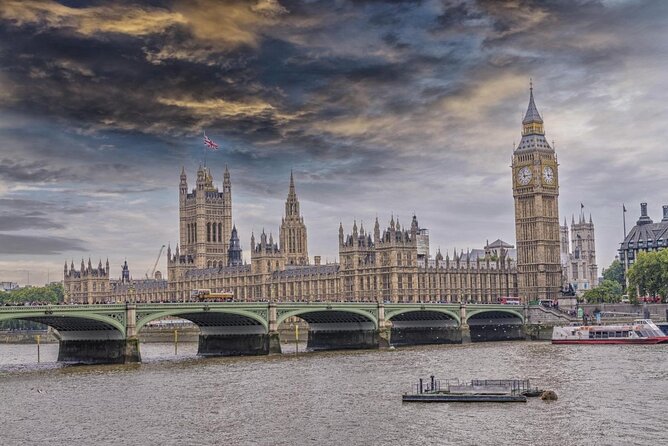
The route finishes its political section with Big Ben and the Houses of Parliament. Big Ben is properly the clock bell, though the name is commonly used for the clock tower. From the outside, it is one of London’s easiest landmarks to recognize.
You then see Westminster Palace, also known as the Houses of Parliament. The Gothic building has more than 900 years of political history and is home to the House of Commons and the House of Lords.
This is a strong place for your guide to explain how Britain’s elected chamber and upper chamber work, along with the difference between the palace as a building and Parliament as an institution. The value of the stop lies in that explanation. Without it, the grand stonework can blur into another impressive London facade.
The tour does not promise an interior Parliament visit. If you want to see the debating chambers, you need to arrange a separate experience.
Finishing at Westminster Abbey
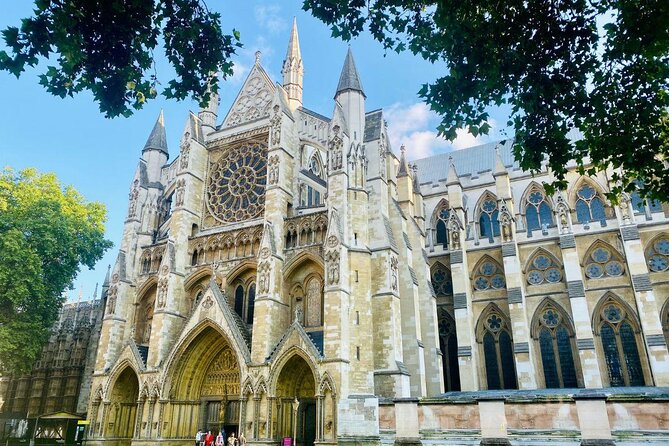
The final stop is the exterior of Westminster Abbey, where you say goodbye to your guide. The abbey connects royal coronations, national ceremonies, religion, literature, and burial traditions in one place. It is also linked to figures such as Geoffrey Chaucer, whose place in English literary history may come up during the walk.
The supplied tour details contain an important distinction. They say that a guided tour of Westminster Abbey is not included, and that the interior visit is unguided. Another note says that entry tickets are provided at the end of the walk. In practical terms, you should expect the walking commentary to end outside, with any included admission allowing you to visit the abbey on your own. Confirm the current ticket arrangement before paying, since the wording is not perfectly consistent.
That arrangement can work well if you want freedom after the walk. You can explore the abbey at your own pace rather than remain with the guide. It is not ideal if you want a detailed explanation of the interior, tombs, chapels, and artwork.
Private, semi-private, and group size
The experience offers a choice between a private tour and a save-money semi-private option. A private tour gives your group its own guide. The exclusive-guide promise does not apply to the semi-private choice, so read the option carefully before booking.
Small numbers can improve the walk in several ways. You can hear more easily, ask questions without holding up a large party, and request more attention to royal history, political history, architecture, or wartime London. One booking for up to 12 people ended up with only two people plus the guide, and the tour still operated. That makes the experience feel more personal, though you should not assume every departure will be that small.
The guides who received the strongest praise were Lucy, Sheldon, and Jake. Lucy was described as warm and flexible, Sheldon as good at timing the route around the Changing of the Guard, and Jake as attentive and well prepared. The common thread is not a theatrical performance. It is clear explanation, friendly contact, and a willingness to respond to the group.
Practical details that affect your day
The route starts at Covent Garden and ends at Westminster Abbey, near London SW1H 0NE. Since the start and finish are in different parts of central London, plan your onward transport from Westminster rather than returning to Covent Garden.
Hotel pickup and drop-off are not included. The information recommends using a taxi or Uber if needed. The start point is near public transportation, so public transit can also be useful, though the exact best route depends on your hotel.
Wear comfortable shoes. You need a moderate level of physical fitness, and the tour operates in all weather. Bring water, an umbrella in wet conditions, and a hat in summer. Large bags and suitcases are not allowed, so this is not a good activity to schedule while carrying luggage between hotels.
National celebrations can change the route. The operator says an alternative route will be used while keeping the major highlights, but refunds or discounts are not offered for these changes. That is worth remembering around major royal, national, or ceremonial events.
The cancellation policy is straightforward. You can receive a full refund if you cancel at least 24 hours before the start time. Changes or cancellations made less than 24 hours before departure are not accepted for a refund.
Who should book this London walking tour?
I would choose this tour if you are visiting London for the first time and want the city’s main royal and political sights explained in one outing. It is also a good fit for a short European break, when you need a fast orientation without spending a full day inside museums.
History fans will get the most from it, especially if you enjoy the links between monarchs, prime ministers, wartime decisions, public squares, and national ceremony. Families and mixed-age groups may also appreciate the steady movement and variety of subjects, though younger children may find the political commentary less engaging.
I would not book it as your only Westminster experience if you want extensive interior visits. Buckingham Palace, the Churchill War Rooms, Parliament, and Westminster Abbey all require more time than this route allows, and several are exterior stops only.
Should you book it?
Book this walk if you want a well-planned introduction to central London with a guide who can connect the sights. The strongest reasons are the private or small-group format, the compact route, and the chance to adjust the discussion to your interests. At $59.28 per person, it offers good value for a private party that wants direction and historical context.
Skip it if you prefer to set your own pace, enter several attractions, or spend an hour at each major landmark. Before booking, confirm whether your chosen option is private or semi-private and clarify the Westminster Abbey admission details. If you are happy with mostly exterior sightseeing and two and a half hours of walking, this is a practical way to get London’s royal and political center under your feet.
FAQ
How long does the walking tour last?
The tour lasts approximately 2 hours and 30 minutes.
Where does the tour begin and end?
The tour begins in Covent Garden and ends at Westminster Abbey in London SW1H 0NE.
Is this a private tour?
A private option is available, and only your group participates when you choose that option. The save-money semi-private choice does not include a guide exclusively for your group.
Are the attractions visited from inside?
Most major sights are viewed from outside. The tour passes Buckingham Palace, the Churchill War Rooms, Big Ben, and the Houses of Parliament. A guided interior visit to Westminster Abbey is not included.
Does the tour include Westminster Abbey admission?
The details state that entry is provided at the end of the tour, but also clarify that the interior visit is unguided. Confirm the current admission arrangement when booking.
What should I bring?
Wear comfortable shoes and bring water. An umbrella is recommended in rain, and a hat is useful in summer. Large bags and suitcases are not allowed.
Just added in London
- Private Tour: Royal High Tea At Kensington Palace Gardens★ 5.0 · 39 reviews
- Private Tour: Personal Travel Photographer Tour in London★ 4.5 · 27 reviews
- London East End Private Walking Food Tour – Secret Food Tours★ 5.0 · 26 reviews
- Private Tour: Night Photography Tour in London★ 5.0 · 48 reviews
- London Like a Local, Private & Personalized (2-3 hrs)★ 4.5 · 11 reviews
- British Museum & National Gallery of London – Exclusive Guided Combo Tour★ 5.0 · 48 reviews
- London Soho District – Exclusive Guided Walking Tour★ 5.0 · 2 reviews
- Private Tour: Tower of London and St Paul’s Cathedral★ 5.0 · 1 review
Historical Tours, compared.

Shadows of York: Ghost Walk and Horrible History.
Read our review →

A Walk Through Time: History of Liverpool Walking Tour
Read our review →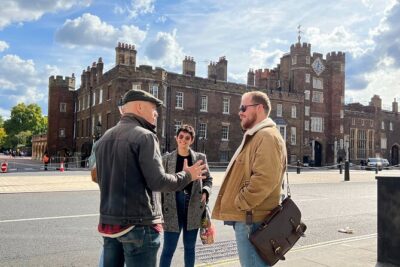
Royal Historic Pubs Walking Guided Tour in London
Read our review →
Private Group: Historical Pub Walking Tour of London
Read our review →
Best Of Liverpool Heritage, History & Culture Guided Walking Tour
Read our review →Browse the lists this tour appears in