
Reviewed · HISTORICAL TOURS
A Walk Through Time: History of Liverpool Walking Tour
Liverpool’s past is hiding in plain sight. This 1-hour-50-minute walk links the Three Graces, medieval Liverpool, Castle Street, Liverpool ONE, the Old Dock, and Royal Albert Dock into one useful introduction to the city. I especially like the focus on Liverpool’s growth as a port and the chance to hear local stories from guides such as John and Julio. The main drawback is that the tour covers a lot in less than two hours, so some sections may feel fast, especially if the guide is speaking quickly.
I also like the low price, about $27.74 per person, for a guided route through so many major landmarks. You get a helpful first look at Liverpool’s maritime, commercial, and political past without paying separate entry fees at most stops. Do wear warm clothing and comfortable shoes: the riverfront can be cold and windy, and one guest found the pace hard to follow.
In This Review
- Key points to know before booking
- Starting beneath the Three Graces
- St. Nicholas’ Church Gardens and Liverpool’s medieval beginning
- Old Hall Street and the hard story of trade
- Liverpool Town Hall and the Georgian city
- Castle Street and the vanished castle
- Liverpool ONE and the city after the docks
- The Old Dock and Liverpool’s commercial breakthrough
- Royal Albert Dock and the nineteenth-century port
- Returning to the waterfront
- The guides make the difference
- How much walking and time should you expect?
- Is $27.74 good value?
- Weather, clothing, and practical comfort
- Who should book this Liverpool walk?
- Should you book A Walk Through Time?
- FAQ
- Where does the tour start?
- Where does the tour end?
- How long does the walking tour last?
- What language is the tour offered in?
- Is admission to the buildings included?
- Can I cancel for a full refund?
Key points to know before booking
- Begins at the Royal Liver Building: You start beside Liverpool’s best-known waterfront landmark and the Three Graces.
- Covers more than Beatles history: The main story is Liverpool’s rise through trade, docks, cotton, commerce, and ocean travel.
- Includes medieval and Georgian Liverpool: St. Nicholas’ Church Gardens, Castle Street, and Liverpool Town Hall connect the modern city to its earliest roots.
- Led by a local history guide: John is praised for his passion, humor, and enormous store of facts, while Julio is noted for his engaging style.
- Good value at $27.74: Nearly two hours of guided sightseeing costs less than many major city attractions.
- Expect an outdoor experience: The route requires walking between stops, and the waterfront weather can change quickly.
Starting beneath the Three Graces
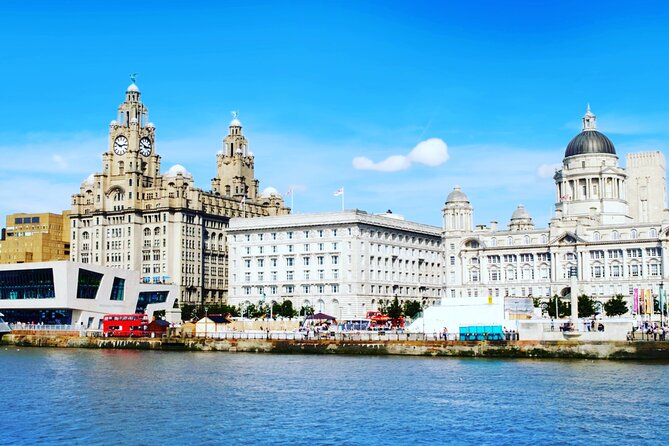
The tour begins at the Liver Building on Pier Head, one of the most recognizable places in Liverpool. The address is Liver Building, Pier Head, Liverpool L3 1HU. This is a sensible starting point because the waterfront immediately gives you the city’s visual identity: grand commercial buildings, open water, and the story of Liverpool’s relationship with global trade.
The opening ten minutes focus on the Royal Liver Building and the other two buildings in the Three Graces, the Cunard Building and the Port of Liverpool Building. The guide sets up the larger story before you walk inland. That matters because the rest of the tour makes more sense once you understand why these waterfront offices were built and what Liverpool’s port meant to the world.
Admission to the building itself is not included. The tour is an exterior history walk, so you should not expect a visit inside the Liver Building or a trip to its tower. You can always arrange a separate visit if you want an indoor attraction, but this walk is mainly about seeing the city as a historical map.
More History Tours in Liverpool
- Best Of Liverpool Heritage, History & Culture Guided Walking Tour
★ 5.0 · 539 reviews - History Guided Tour of Liverpool and the Beatles
★ 5.0 · 408 reviews - Liverpool Hidden History and Dead House Evening Walking Tour
★ 5.0 · 200 reviews
St. Nicholas’ Church Gardens and Liverpool’s medieval beginning
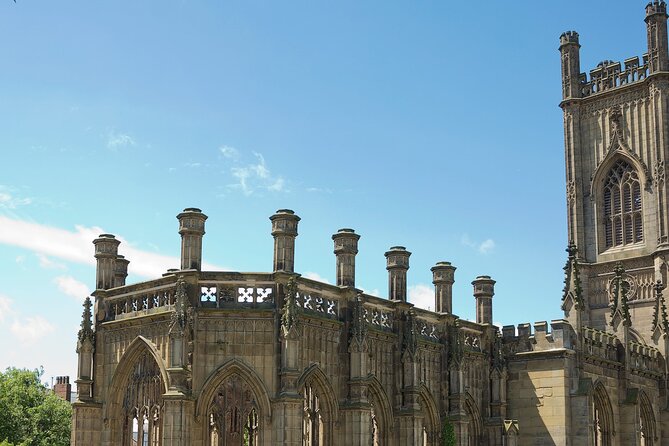
From Pier Head, you cross the Strand toward Liverpool Parish Church Gardens. This section lasts about 15 minutes and introduces Liverpool’s medieval origins, reaching back to the town charter of 1207.
The site was once associated with St. Nicholas’ Church, named for the patron saint of the sea. That name fits Liverpool’s later identity, since the city’s fortunes would depend heavily on ships, ocean routes, and overseas commerce. Here, the guide uses visible remains and the setting itself to explain the city’s earliest foundations.
I like this stop because it gives you a sense of scale. Liverpool is often presented through its grand nineteenth-century buildings, but the city began as a much smaller medieval settlement. The gardens and surviving evidence help bridge the gap between that early town and the huge port Liverpool later became.
This is also one of the more useful parts of the walk for anyone who wants more than a list of famous buildings. You are not simply being shown an old site. You are being shown how a port town developed from a medieval settlement into a global commercial center.
Old Hall Street and the hard story of trade
Old Hall Street brings the tour into Liverpool’s commercial past. The street dates back to the thirteenth century and was connected with the old town hall after Liverpool received its charter. You pass Grade I listed buildings and reach the area associated with the Cotton Exchange.
The cotton trade helped Liverpool grow quickly. By the late eighteenth century, the city had overtaken London in cotton trading. The guide uses this part of the route to explain how goods, money, and power moved through Liverpool.
This is also where the tour faces the city’s less comfortable past. Liverpool’s growth was tied to Atlantic trade, including its role in the transatlantic slave trade. That subject is not treated as a side note. It forms part of the explanation for how the port accumulated influence and wealth.
I consider this an important strength. A useful city walk should not tell only the flattering parts of the story. Liverpool’s commercial success cannot be understood without looking at the systems and human suffering connected to it. The tour’s approach appears direct and historical, while still keeping the subject within the wider story of the port.
Liverpool Town Hall and the Georgian city
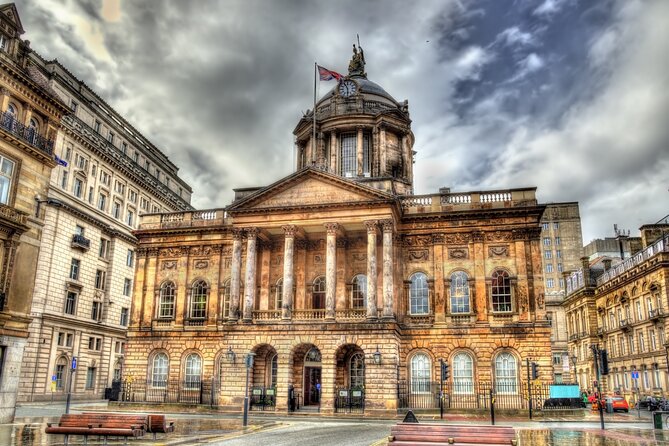
Liverpool Town Hall is the next major stop, with about ten minutes devoted to the building and its role in the city’s development. Built in 1749, it is presented as one of the finest surviving Georgian buildings in Britain.
The focus here is not simply on the exterior. You learn how the town hall reflects Liverpool’s growing wealth and its place as a center of commerce. The building offers a useful contrast with the medieval sites earlier in the walk. Liverpool was no longer a small coastal settlement. It had become a city confident enough to express its power in grand civic architecture.
Admission to the town hall is not included, so the guide discusses it from outside. Ten minutes is enough for an introduction, but not enough for a full architectural visit. If you want to see the interiors, you will need to plan that separately.
More Walking Tours in Liverpool
- Liverpool Ghost Walking Tour
★ 5.0 · 862 reviews - Beatles Famous Walking Tour Of Liverpool- Fully Guided
★ 5.0 · 751 reviews - Downtown Liverpool Walking Tour – In Spanish
★ 5.0 · 591 reviews - Tales from the Necropolis – A Ghost Walk Through St. James Cemetery
★ 5.0 · 263 reviews
Castle Street and the vanished castle
Castle Street provides one of the most visual sections of the walk. The street’s buildings show Liverpool changing through the eighteenth century, and the guide explains the importance of the former Liverpool Castle.
The castle itself is gone, so this is a stop where the historical explanation matters more than what remains in front of you. The street acts as a route through different periods of urban growth. You can look at the architecture while the guide fills in the missing pieces.
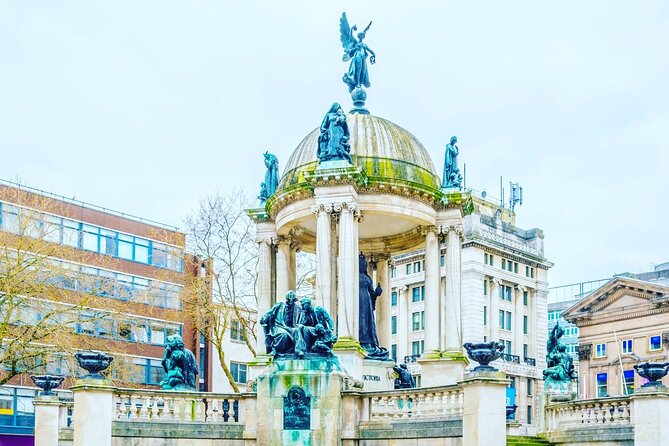
The route then reaches the Queen Victoria Monument near the bottom of Castle Street. This section explores the castle site and Liverpool’s development into one of the world’s major ports by around 1800.
That claim is central to the tour’s theme. Liverpool’s story is not just about attractive old streets. It is about an extraordinary change in scale. A modest medieval town became a major engine of world trade within a few centuries. Castle Street helps show that transition in a compact part of the city.
Liverpool ONE and the city after the docks
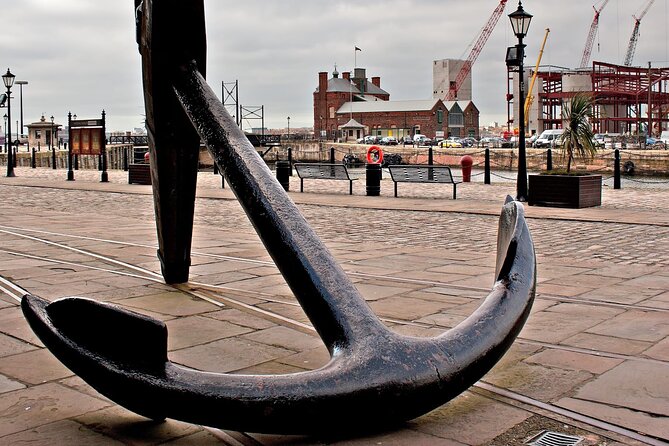
The walk continues through Liverpool ONE, the modern shopping and entertainment district. About ten minutes are spent explaining the area, its shops, and its attractions.
At first, this may seem like an odd stop on a history tour. In fact, it gives the route a useful present-day chapter. Liverpool has not been frozen in its port-city past. Areas once shaped by older commercial activity have been redeveloped for modern retail and leisure.
The guide does not spend the entire walk among old stones and civic buildings. You also see how the city presents itself today. This makes the tour more useful as an orientation walk, especially if you have just arrived and want to understand how the older center connects with the current shopping district.
The trade-off is that Liverpool ONE is less atmospheric than the medieval and dockside sections. If your main interest is historic architecture, this may feel like a short pause before the route returns to older sites.
The Old Dock and Liverpool’s commercial breakthrough
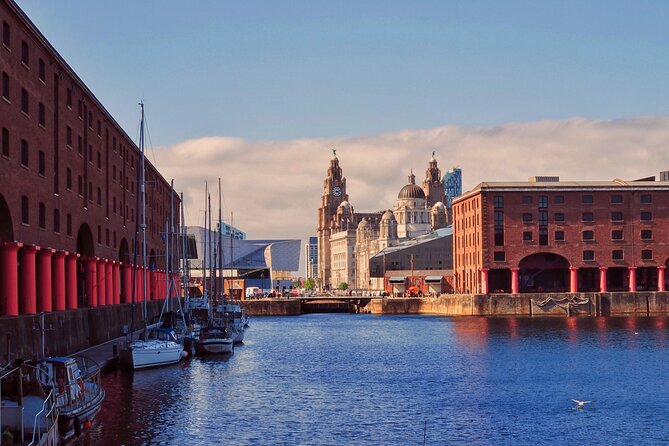
The Old Dock is one of the most important stops on the route. Built in 1715, it is described as the first commercial wet dock on the planet. The guided explanation lasts about ten minutes.
A wet dock allowed ships to remain afloat regardless of the tide. That practical change helped Liverpool handle goods more efficiently and compete with other ports. It is difficult to appreciate the city’s rise without understanding this basic piece of port technology.
The site is especially valuable because the dock itself is not presented as a grand surviving harbor scene. Much of the history must be reconstructed through explanation. A guide can show you where the dock was and why its design changed Liverpool’s prospects.
This is where the walk’s emphasis on commerce pays off. You see that Liverpool’s success did not come only from a favorable location. It also came from investment, organization, dock building, and an ability to move goods on a large scale.
Royal Albert Dock and the nineteenth-century port
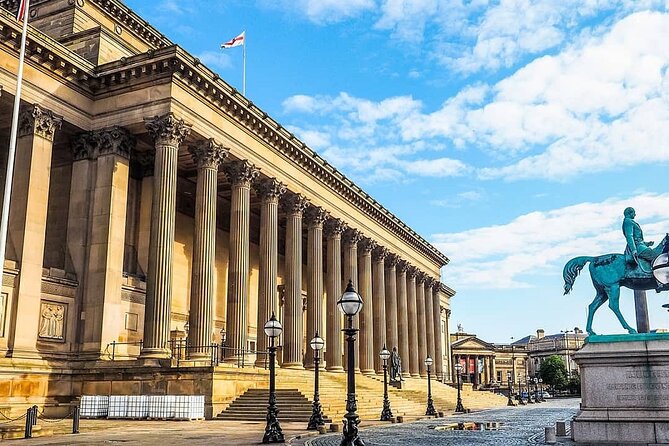
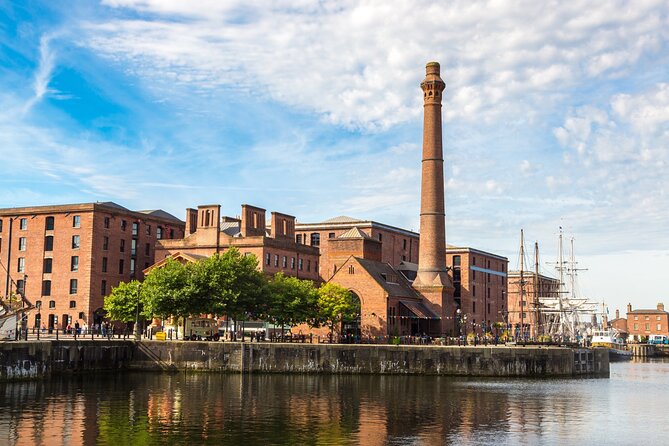
The route then moves to Royal Albert Dock, built in 1846. This is one of Liverpool’s most famous areas and one of the easiest places to picture the city at the height of its commercial power.
The dock’s warehouses and waterfront layout provide a clear setting for a discussion of nineteenth-century trade. The guide explains how the area functioned as a center of commerce and how Liverpool’s maritime role continued to shape the city.
Royal Albert Dock also connects Liverpool’s port to the First and Second World Wars. That adds another layer to the story. The waterfront was not only a place for cargo and business. It also mattered to national transport, military supply, and wartime activity.
You should expect an exterior walking visit rather than entry into every museum or attraction around the dock. The advantage is that the tour keeps moving and gives you a broad sense of the area. The disadvantage is that ten minutes is brief for such a significant complex, especially if you want time for photographs or close architectural study.
Returning to the waterfront
The route description gives two different indications about the finish. The final stop is described as returning to the Royal Liver Building and the Three Graces for about five minutes, while the meeting information says the tour ends at the Queen Victoria Monument at One Derby Square, James Street.
That difference is worth checking when you book or shortly before the start. The Queen Victoria Monument is a central position near Castle Street, Liverpool ONE, and several major sights, so it is a useful end point if that is where the guide finishes. If the walk returns to the Liver Building instead, you will be back at the waterfront.
Either location is well placed for continuing your day. You can reach nearby historic streets, the dock area, shopping districts, and public transport from the center. Still, confirm the endpoint if you have a tight schedule, a restaurant booking, or luggage waiting somewhere.
The guides make the difference
The strongest part of this experience is the guide-led storytelling. John receives repeated praise for his command of Liverpool’s past, his enthusiasm, and his ability to keep the group interested even in cold or windy weather. He is also described as friendly, clear, funny, and willing to answer questions.
Julio is praised for being engaging and well informed, with a style that gave one small group a strong introduction to the city. The exact guide may vary, but the experience clearly depends on having someone who can connect dates, buildings, docks, and trade into one story.
The tone is not designed for people who want only quick photo stops. You will hear a large amount of information, including facts about maritime trade, the docks, cotton, the slave trade, civic buildings, and Liverpool’s rise as a port.
One practical point: the information can come quickly. A guest found the tour fast paced, despite appreciating the guide’s command of the subject. If you prefer a slow walk with long pauses, this may feel demanding. Ask questions when you need clarification, and stay close enough to hear clearly around traffic and waterfront noise.
How much walking and time should you expect?
The advertised duration is about one hour and 50 minutes. The listed stops add up to roughly one hour and 35 minutes, leaving time for movement between sites, group organization, and transitions through the center.
You should be comfortable walking outdoors for most of two hours. The route covers the Pier Head, the Strand, Old Hall Street, the town hall area, Castle Street, Liverpool ONE, the Old Dock, and Royal Albert Dock. The information supplied does not give a total distance or a detailed accessibility rating, so you should contact the provider if you have specific mobility needs.
Most people can take part, and service animals are allowed. The group may have up to 40 people, although one experience was praised for having a smaller group. A larger group can make it harder to hear or ask questions, while a smaller group usually allows more conversation.
The tour is offered in English and uses a mobile ticket. Confirmation is provided when you book. Public transport is nearby, making the central meeting point easy to reach without arranging a private transfer.
Is $27.74 good value?
At $27.74 per person, I consider this a strong value for a first look at Liverpool. You are getting almost two hours with a historian guide and a route that covers several of the city’s major historical areas.
The value is greatest if you are new to Liverpool and want a framework for the rest of your visit. After the walk, you will have a better idea of where the old town began, why the waterfront matters, how the docks changed trade, and which buildings deserve a closer look.
The price is less compelling if you want entry into historic interiors, museums, or the Liver Building. Those are not included. This is a guided orientation walk, not a package of paid attractions.
I also like that most stops have no admission charge. You are paying mainly for the guide’s interpretation, route planning, and ability to connect places that might otherwise seem unrelated. For many people, that is exactly where a walking tour earns its fee.
Weather, clothing, and practical comfort
Liverpool’s waterfront can be cold and windy, even when the rest of the day feels mild. Bring a warm coat or jacket, and wear shoes that are comfortable for nearly two hours of city walking.
The experience requires good weather. If poor weather causes cancellation, you are offered another date or a full refund. For your own plans, avoid booking this as the only fixed event on a tightly packed day, especially during unsettled weather.
You can cancel for a full refund up to 24 hours before the start time. Cancellations or changes made less than 24 hours before the start are not refunded or accepted, based on local time.
There have been rare cases of very late cancellation, including one reported shortly before the start because of a family emergency. A full refund and an alternative date were offered in that case, but the timing made it difficult to arrange another tour. It is sensible to check your messages before leaving for the meeting point.
Who should book this Liverpool walk?
I would choose this tour for a first visit, a short stay, or a day when you want the city’s main story in one sitting. It suits people who enjoy buildings and streets more when they understand the forces that shaped them.
It is also a good pick if you want Liverpool presented as more than the home of the Beatles. The tour gives proper attention to the port, docks, cotton, Atlantic trade, civic power, and maritime commerce. Several local residents have even used it to learn more about their own city.
You may want a different experience if you dislike fast-paced talks, have difficulty walking outdoors for nearly two hours, or want lots of time inside each attraction. This route favors breadth and explanation over long visits at one site.
Should you book A Walk Through Time?
Yes, if you want a clear, affordable introduction to Liverpool’s past. The route connects medieval beginnings, Georgian ambition, Atlantic trade, dock technology, nineteenth-century commerce, wartime importance, and modern redevelopment in a way that helps the city make sense.
Book it early if your dates are fixed, since it is often reserved about 19 days ahead. Check the final meeting details, dress for the riverfront, and allow extra time afterward if you want to visit the museums and buildings near Royal Albert Dock.
The tour’s best feature is its local voice. Guides such as John and Julio appear to bring energy, humor, and serious historical detail to the walk. If you can keep up with the pace, $27.74 buys a useful map of Liverpool’s past and a much better understanding of why this port city mattered so much.
FAQ
Where does the tour start?
The tour starts at the Liver Building, Pier Head, Liverpool L3 1HU, United Kingdom.
Where does the tour end?
The meeting information says the tour ends at the Queen Victoria Monument at One Derby Square, James Street, Liverpool L2 1AB. The route description also refers to a final return to the Royal Liver Building, so confirm the endpoint before booking around other plans.
How long does the walking tour last?
The tour lasts approximately 1 hour and 50 minutes.
What language is the tour offered in?
The tour is offered in English.
Is admission to the buildings included?
No. Admission to the Royal Liver Building and Liverpool Town Hall is not included. The tour mainly provides exterior visits and guided historical explanations, while the listed outdoor stops are free.
Can I cancel for a full refund?
Yes. You can cancel at least 24 hours before the start time for a full refund. Changes or cancellations made less than 24 hours before the start are not accepted or refunded.
Just added in Liverpool
- Scouse Safari private 3 hour authentic Liverpool experience★ 5.0 · 2 reviews
- LIVERPOOL: Yorkshire Adventure – Sightseeing Day Trip Tour★ 5.0 · 13 reviews
- The Story of Liverpool 2-Hour Walking Tour★ 5.0 · 3 reviews
- Half Day Welcome to Liverpool Walking Tour★ 5.0 · 17 reviews
- Liverpool City Scavenger Hunt Excursion by Zombie Scavengers★ 5.0 · 1 review
- Fun, Flexible Treasure Hunt Around Liverpool with Cryptic Clues & Hidden Gems★ 5.0 · 141 reviews
- Beatles Ticket To Ride Half Day Tour Small Groups★ 5.0 · 60 reviews
- Small-Group: Experience Local Food Tour in Liverpool★ 5.0 · 32 reviews
Historical Tours, compared.
Shadows of York: Ghost Walk and Horrible History.
Read our review →
Royal Historic Pubs Walking Guided Tour in London
Read our review →
Private Group: Historical Pub Walking Tour of London
Read our review →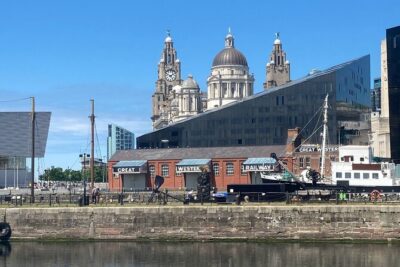
Best Of Liverpool Heritage, History & Culture Guided Walking Tour
Read our review →
Browse the lists this tour appears in