
Reviewed · JACK THE RIPPER TOURS
London Jack The Ripper Guided Walking Tour
Jack the Ripper still shadows East London. This two-hour walk links the notorious murder sites with Victorian streets, old photographs, police reports, and the unanswered questions that keep the case alive. I like the use of original images and the strong attention given to the five victims, not just the killer. I also like that guides such as Jeremy, Angie, Philip, and Jackie bring different personalities to the story.
The main drawback is that some crime scenes have vanished beneath modern buildings, and a group of up to 36 people can make narrow streets hard to manage. Still, the tour earns a remarkable 4.9 rating from 3,131 reviews, with 98 percent recommending it.
In This Review
- Key points before you book
- Why this Jack the Ripper walk works
- Starting at Aldgate East Station
- Spitalfields Market and the first layer of the story
- Christ Church Spitalfields and the Victorian skyline
- Brick Lane and the streets of 1888
- Mitre Square and the end of the route
- The guides make or break the experience
- What you learn beyond the identity puzzle
- Walking conditions, group size, and timing
- Is the listed price a real bargain?
- Who should book this walk?
- Should you book the Jack the Ripper Guided Walking Tour?
- FAQ
- Where does the Jack the Ripper walking tour start?
- Where does the tour finish?
- How long does the tour last?
- What places are included on the route?
- What is included in the tour?
- Are travel costs included?
- How large can the group be?
- Can I cancel for a full refund?
Key points before you book
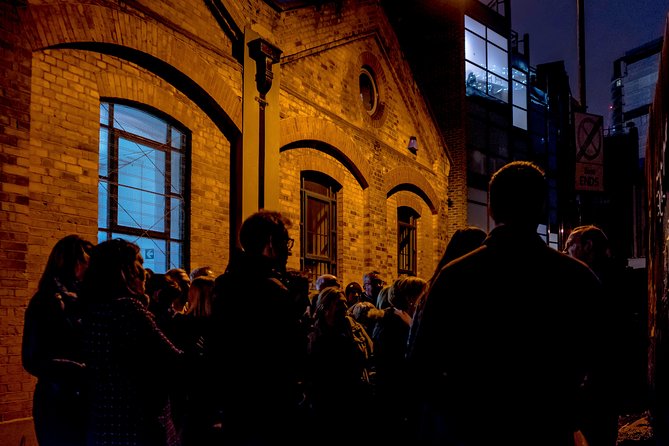
- The route begins at Aldgate East Station and finishes in Mitre Square near Aldgate Underground Station.
- Spitalfields Market, Christ Church, and Brick Lane anchor a walk through the district where the 1888 crimes unfolded.
- Original photographs, police reports, and press accounts help you compare Victorian East London with the streets you see today.
- The guides are the main strength, with Jeremy, Angie, Philip, and Jackie praised for storytelling, humor, care, and command of the subject.
- The walking is manageable but not effortless, lasting about two hours and requiring you to remain with a group in busy streets.
- A free 194-page e-book gives you extra material after the walk.
Why this Jack the Ripper walk works
This is not just a hunt for a shadowy criminal. At its best, the tour uses the Ripper case to explain poverty, policing, journalism, housing, and daily life in Whitechapel in 1888.
I like that balance. The killer draws people in, but the walk has more value when it gives the victims names, stories, and circumstances. Guides also explain the police investigation and the competing suspects, so you are not handed one neat answer to a case that never produced one.
The setting does much of the work. East London has changed, but fragments of the old street plan and surviving buildings help you picture the district as it was. The guide places historic photographs beside present-day streets, showing where the old alleys, houses, yards, and public buildings once shaped the crimes.
Expect a serious subject handled with care, though not without humor. Several guides are praised for adding light moments without losing sight of the victims. That matters. A tour about murder can quickly become tasteless if the guide treats it like a stage show.
More Walking Tours in London
- Tour for Muggles The Ultimate Harry Potter Walking Tour in London
★ 5.0 · 4,684 reviews - Changing of the Guard Guided Walking Tour in London
★ 5.0 · 1,793 reviews - The Great British Rock and Roll Walking Tour
★ 5.0 · 1,371 reviews
Starting at Aldgate East Station
The meeting point is Aldgate East Station in London E1. This is a practical starting place because it puts you close to the historic East End and allows the tour to begin with the setting rather than a long transfer from central London.
You should arrive ready to walk and listen outdoors. The tour has mobile tickets, and confirmation is provided when you book. Your ticket does not include travel to or from the meeting point, so you need to arrange your own transport.
The walk is limited to a maximum of 36 people. That is not a tiny group, and the size can affect how much you hear. One participant found a group of roughly 30 to 35 difficult to manage in tight areas, with the guide needing to raise their voice. If clear audio and close contact with the guide matter to you, this is worth considering before you reserve.
On the other hand, guides are used to keeping groups moving and answering questions along the route. Jeremy received particular praise for handling families and young participants, while Angie was singled out for her passion and long-standing interest in the subject. Your guide may shape the tone of the whole evening.
Spitalfields Market and the first layer of the story
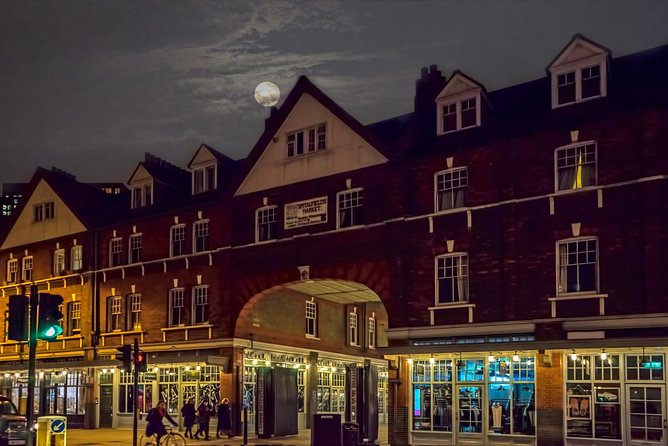
The tour spends about two hours in and around the historic Spitalfields area. Spitalfields Market is not simply a place to gather. It helps orient you within the old East End and sets up the social world behind the murders.
Here, your guide introduces the police investigation, the suspects, the victims, and the main theories. The useful part is the context. You hear not only what happened, but also how the authorities and newspapers dealt with the crimes.
The supplied historical material includes original photographs of the locations as they looked at the time. These images are especially helpful because modern London can hide the shape of the old district. You may be standing beside a changed street or a rebuilt corner while the guide shows you the earlier view.
The tour also uses police and press reports. That gives you a chance to compare official accounts with sensational newspaper coverage. In a case shaped by rumor and public fear, that distinction is important.
I would pay close attention when the guide discusses the five victims. Several comments praise the tour for giving them proper attention, which is one of its strongest features. The case is often presented as a puzzle about the murderer, but the people who died should remain at its center.
Christ Church Spitalfields and the Victorian skyline
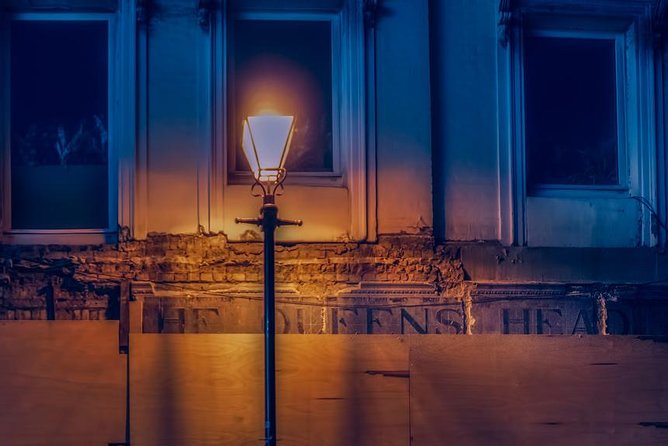
About eight minutes are set aside at Christ Church Spitalfields. The church is easy to recognize because of its soaring spire, which dominates the surrounding streets.
Your guide uses the church as a fixed point in a district that has changed considerably. In 1888, a landmark like this helped define direction and place. The spire also gives you a sense of the scale of the neighborhood, where streets, housing, markets, and institutions stood close together.
This stop is brief, but it adds architectural context. One of the best parts of the walk is learning how surviving buildings and street layouts connect the present city with the Ripper story. The church is not a murder site in itself, so do not expect a dramatic crime reveal here. Its value is visual and geographic.
The stop also gives the group a chance to pause. Two hours on foot can feel long after a full day of sightseeing, especially for families. One family found the duration tiring after a day of touring, so you may want to schedule this as a focused evening activity rather than squeezing it between several other major attractions.
More Jack the Ripper walks:
- London Jack the Ripper Guided Tour with Ripper-Vision
★ 4.5 · 4,840 reviews - Ultimate Jack the Ripper : Guided Tour of London
★ 5.0 · 1,495 reviews - The Original Jack the Ripper : Guided Tour
★ 5.0 · 1,264 reviews - London Jack The Ripper Small-Group Walking Tour
★ 5.0 · 1,013 reviews
Brick Lane and the streets of 1888
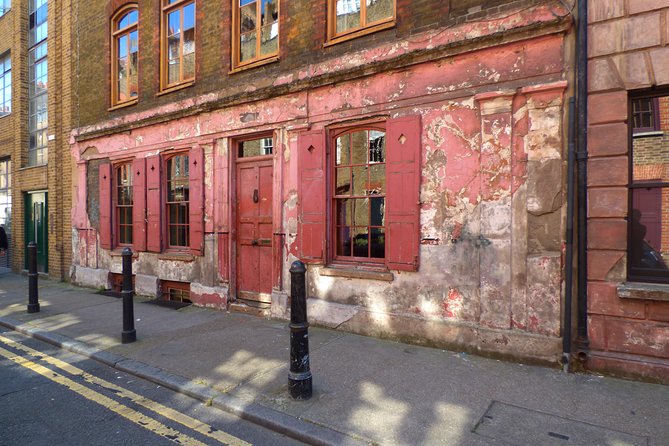
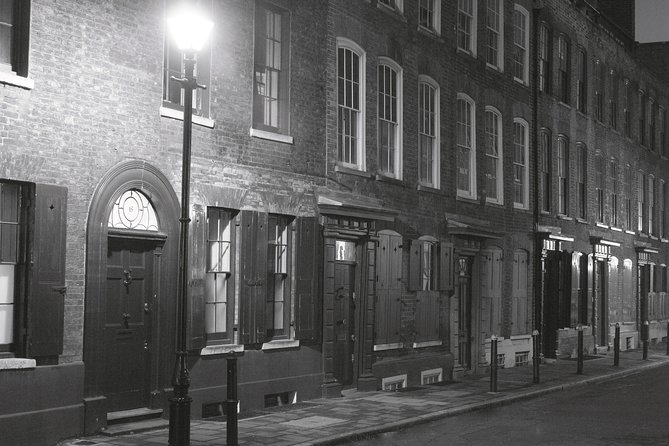
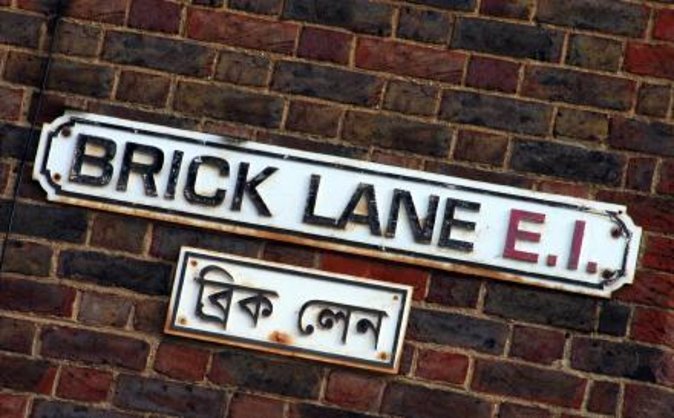
The route spends about 25 minutes around Brick Lane. Today, the area is known for its food, shops, and street life, but the tour focuses on the sturdy 18th-century houses and streets that formed the backdrop to the Ripper crimes.
This is where the walk feels most like a comparison between old and new London. The houses and street patterns help you imagine the built environment of the late Victorian period. Historic photographs make that comparison clearer, particularly where a building has survived but its surroundings have changed.
Brick Lane is also a good place to understand why a walking tour can offer something a bus cannot. You move through side streets and smaller passages rather than viewing the district through a vehicle window. The route reaches places that buses cannot access, though that also means standing on pavements and gathering in public spaces.
The drawback is that the original sites are not all intact. Modern buildings and new infrastructure have replaced some of them. If you want every murder location to look exactly as it did in 1888, you may be disappointed. The guide’s photographs and explanations help fill the gaps, but they cannot restore streets that no longer exist.
Mitre Square and the end of the route
The tour finishes at Mitre Square, near Aldgate Underground Station. Ending here gives the walk a clear geographic finish and makes it easy to continue by public transport.
Mitre Square is not treated as a simple final photo stop. It helps bring together the route’s main themes: the locations, the investigation, the press attention, and the uncertainty surrounding the killer’s identity.
Because the tour ends close to Aldgate Station, you can plan dinner or another East London activity afterward. Some participants enjoyed the option of having a drink after the walk, though that is not part of the included experience. The final location also means you are not returned to Aldgate East Station, so keep the end point in mind when planning your evening.
The guides make or break the experience
The strongest part of this tour is the guide. The most praised names are Jeremy, Angie, Philip, and Jackie, and each appears to bring a slightly different style.
Jeremy is repeatedly praised for being entertaining, friendly, and skilled at telling the story. He handled questions well, kept families engaged, and managed a group with ease. His use of humor, including a small running joke about a scarf, suggests a relaxed style that works for people who want history without a stiff lecture.
Angie is described as highly passionate about the subject. Her long interest in Jack the Ripper comes through in the way she tells the story, and she is especially good at making the period feel real. If you enjoy a guide who clearly cares about the details, she may be a strong match.
Philip is praised for bringing light humor to a grim subject while showing how much the area has changed. Jackie is also praised for enthusiasm and command of the case.
Your guide assignment is not specified in advance here, so you should view these names as examples of the team’s strengths rather than a guarantee. The overall pattern is clear: this experience depends heavily on a lively, prepared guide who can speak clearly and treat the subject with respect.
What you learn beyond the identity puzzle
The Jack the Ripper case has an obvious hook, but the best learning comes from the material around it.
You hear about:
- The five victims and the conditions in which they lived
- The police investigation and its limits
- Suspects and competing theories
- Victorian press coverage
- East London architecture and street layouts
- The gap between historic photographs and modern London
- The wider social setting of Whitechapel in 1888
That mix keeps the tour from becoming a simple list of gruesome events. I especially value the attention to police and press reports. Those records show how evidence was gathered, how information circulated, and how public fear affected the case.
The free 194-page e-book adds value after the walk. It gives you a substantial amount of follow-up reading rather than a thin souvenir. You receive the link during the tour, so you can continue with the case when you have time and revisit details that moved quickly outdoors.
Walking conditions, group size, and timing
The tour lasts about two hours. That is long enough to cover several locations and build a full narrative, but it may feel demanding after a full day on your feet.
You should expect to walk through urban streets and cobbled areas. The information provided does not give a detailed accessibility assessment, so anyone with mobility concerns should ask the provider for current route details before booking. Service animals are allowed, and the activity is near public transportation.
Most people can participate, but the group size matters. A group of 36 can create problems on narrow pavements, especially when the guide stops to show photographs or explain a location. Stay close, keep the guide in view, and avoid drifting behind the group.
A smaller group would likely make the experience easier, but the standard maximum is still useful to know. If you prefer a quiet, intimate walk with plenty of one-to-one questions, this may not be the perfect format.
Is the listed price a real bargain?
The supplied price is listed as $0.00. That makes the experience appear exceptional in value, since it includes a two-hour guided walk, historical images, police and press material, discussion time, and a 194-page e-book.
Still, check the final price and conditions at the time you book. The information provided does not explain why the price is shown as zero, so you should not assume that every date or booking channel will carry no charge.
If the walk is free as listed, its value is obvious. You get access to a specialist guide and a structured route through East London, rather than trying to locate the sites yourself. Even paid admission could be reasonable for someone interested in true crime, Victorian London, or urban history, but the current listed figure makes it especially attractive.
Travel costs to and from Aldgate East Station are not included. You also need to account for your time. The tour is most worthwhile when you are prepared to listen closely and think about the history, not when you are hoping for a quick collection of spooky photo stops.
Who should book this walk?
I would recommend it to you if you enjoy true crime with historical context. It suits adults, older children, and families who can manage two hours of walking and are comfortable discussing murder, poverty, and violence in a factual setting.
It is also a good choice if you want to see East London on foot. The architecture, street plan, and surviving landmarks give the experience value beyond the Ripper case.
You may want to skip it if you dislike dark subject matter, large walking groups, or the fact that some original locations have disappeared. The tour cannot make modern London look exactly like 1888, and the most compelling parts rely on photographs and storytelling.
Should you book the Jack the Ripper Guided Walking Tour?
Yes, if you want a well-told, place-based account of the case rather than a theatrical scare attraction. The guides are the chief reason to book, with Jeremy, Angie, Philip, and Jackie all praised for energy, humor, care, and command of the material.
Go in expecting a thoughtful walk through a changed neighborhood. You will see genuine locations and historic landmarks, but also modern buildings where the old scenes are gone. With a two-hour commitment, a possible group of up to 36, and a listed price of $0.00, this is a strong choice for curious visitors who want the mystery explained without forgetting the people caught inside it.
FAQ
Where does the Jack the Ripper walking tour start?
The tour starts at Aldgate East Station, London E1, UK.
Where does the tour finish?
The walk finishes at Mitre Square, London EC3A 5DE, close to Aldgate Underground Station.
How long does the tour last?
The tour lasts approximately two hours.
What places are included on the route?
The route includes Spitalfields Market, Christ Church Spitalfields, Brick Lane, and the murder locations connected with the case. It finishes in Mitre Square.
What is included in the tour?
The tour includes an expert guide, original photographs of the locations, police and press reports, opportunities to ask questions, and a link to a free 194-page e-book.
Are travel costs included?
No. Travel costs to and from the tour are not included.
How large can the group be?
The activity has a maximum of 36 participants.
Can I cancel for a full refund?
Yes, if you cancel at least 24 hours before the experience start time. Cancellations made less than 24 hours before the start time are not refunded, and changes within 24 hours are not accepted.
Just added in London
- Private Tour: Royal High Tea At Kensington Palace Gardens★ 5.0 · 39 reviews
- Private Tour: Personal Travel Photographer Tour in London★ 4.5 · 27 reviews
- London East End Private Walking Food Tour – Secret Food Tours★ 5.0 · 26 reviews
- Private Tour: Night Photography Tour in London★ 5.0 · 48 reviews
- London Like a Local, Private & Personalized (2-3 hrs)★ 4.5 · 11 reviews
- British Museum & National Gallery of London – Exclusive Guided Combo Tour★ 5.0 · 48 reviews
- Private Tour: Tower of London and St Paul’s Cathedral★ 5.0 · 1 review
- London Soho District – Exclusive Guided Walking Tour★ 5.0 · 2 reviews
Jack the Ripper Tours, compared.
London Jack the Ripper Guided Tour with Ripper-Vision
Read our review →
Ultimate Jack the Ripper : Guided Tour of London
Read our review →
London Jack The Ripper Small-Group Walking Tour
Read our review →

The Original Jack the Ripper Coach Tour of Haunted London
Read our review →
Browse the lists this tour appears in