
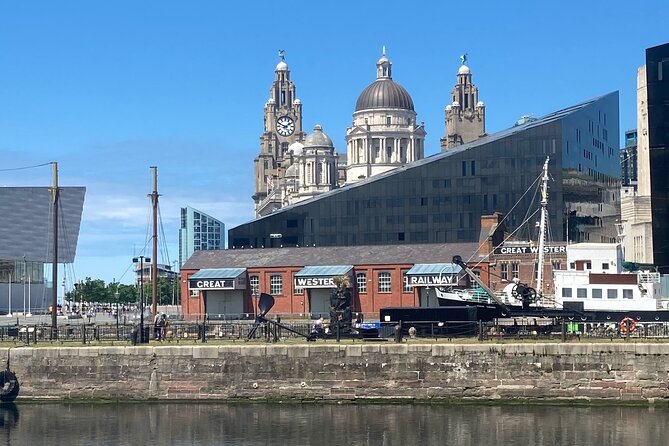
Reviewed · HISTORICAL TOURS
Best Of Liverpool Heritage, History & Culture Guided Walking Tour
Liverpool reveals itself one street at a time. This 2-hour-15-minute walking tour links the city’s maritime past, grand civic buildings, Beatles landmarks, and less obvious corners in one useful route. I like the way it gives first-time visitors a clear sense of place without wasting time in traffic. I also like the local guides, including Mike, Carl, Pam, Allan, Roy, and others praised for their humor and warm approach. The main consideration is pace: you cover a lot of ground, and one visitor found that some planned stops were missed.
The tour costs $31.90 per person, which is fair if you want a strong first look at central Liverpool rather than a single-theme Beatles walk. You will not go inside major paid attractions, and food and drinks are not included. Still, the route packs in the waterfront, old commercial streets, city landmarks, and Beatles connections before ending near Mathew Street.
In This Review
- Key points
- Starting at the Bluecoat in Liverpool’s old center
- Golden Liver birds and the sailors’ gateway
- Ropewalks, Henry Street, and the old work of the port
- Campbell Square and the converted Victorian gaol
- Thomas Steers Way and Liverpool’s buried dock story
- Royal Albert Dock and the city’s maritime heart
- Meeting the Beatles at the waterfront statue
- The Three Graces and Liverpool’s grand waterfront face
- Castle Street and the route into the civic quarter
- Liverpool Town Hall and the city’s changing government
- Exchange Flags and wartime Liverpool
- Derby Square, Liverpool Castle, and Queen Victoria
- Mathew Street and the Cavern Quarter finish
- Guides, group size, and the feel of the walk
- Price, weather, and who should book
- FAQ
- Where does the Liverpool walking tour begin?
- Where does the tour end?
- How long does the walking tour last?
- Is the Beatles Statue included?
- How large is the tour group?
- What should I bring and wear?
Key points
- A useful first look at Liverpool: The route connects the Bluecoat, Ropewalks, Royal Albert Dock, Three Graces, Town Hall, and Mathew Street.
- Liverpool beyond the Beatles: Maritime trade, old docks, wartime history, medieval connections, and civic architecture receive real attention.
- Strong local guiding: Guides such as Mike, Carl, Pam, Allan, and Roy are praised for clear explanations, humor, and affection for the city.
- Small-group feel: The maximum group size is 20, and quiet days may produce a much smaller group, sometimes nearly private.
- Easy city-center finish: You end at Mathew Street, close to the Cavern Club and the Cavern Quarter.
- Prepare for wet weather and cobbles: There are no hills or stairs, but comfortable shoes and a bottle of water will help.
Starting at the Bluecoat in Liverpool’s old center
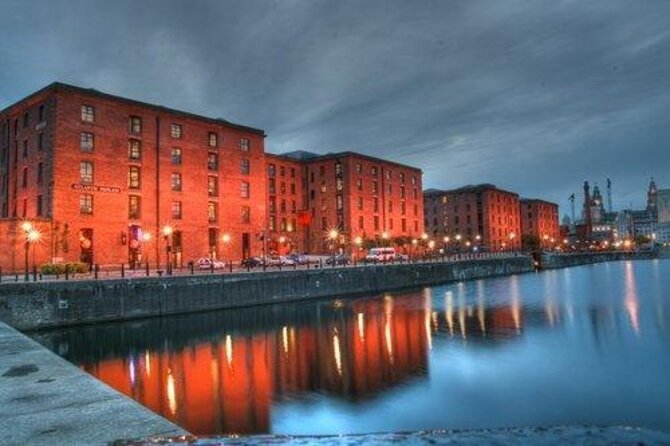
Meet your guide in front of the gates of the Bluecoat on School Lane. This is a practical starting point because the building places you near the center of Liverpool, with the route quickly moving through streets that mix old commerce, culture, and modern city life.
The first stop is brief, but the opening location helps set the tone. You are not being driven past Liverpool’s sights with a commentary running in the background. You walk from one piece of the city to the next, giving the guide room to point out details you could easily miss from a bus or taxi.
The route is designed for a moderate level of fitness. It lasts about two hours and fifteen minutes, with no hills or stairs, but you will cross uneven surfaces and cobbles. Wear shoes with a good grip. Liverpool weather can also be wet and windy, so a rainproof layer is sensible.
More History Tours in Liverpool
- A Walk Through Time: History of Liverpool Walking Tour
★ 5.0 · 911 reviews - History Guided Tour of Liverpool and the Beatles
★ 5.0 · 408 reviews - Liverpool Hidden History and Dead House Evening Walking Tour
★ 5.0 · 200 reviews
Golden Liver birds and the sailors’ gateway
The Liverpool Sailors Home Gateway offers an early photo stop and a quick lesson in the city’s connection to the sea. The monument honors the Sailors Home, an institution that served the maritime community.
The golden Liver bird is the visual prize here. Liverpool’s Liver birds are more than decorative symbols. They appear throughout the city and help connect the waterfront to local identity. Your guide can give this familiar emblem some meaning before you reach the better-known Three Graces later in the walk.
This is one of the shorter stops, so do not expect a long visit. Its value comes from placing Liverpool’s maritime story near the beginning, before the route reaches the docks themselves.
Ropewalks, Henry Street, and the old work of the port
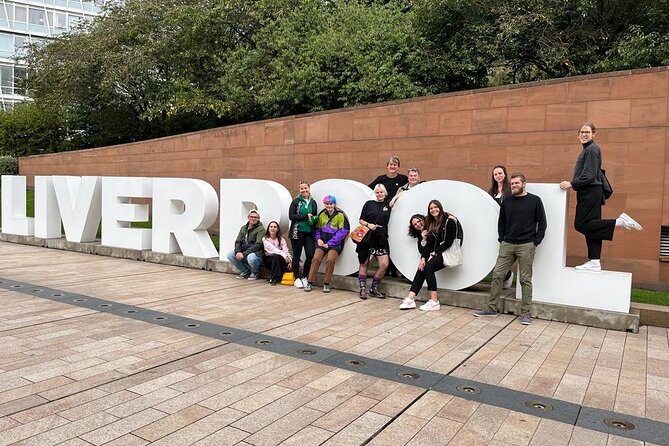
At Henry Street, you enter the Ropewalks district. The name refers to the rope-making once carried out here for sailing ships. That small fact changes how you see the area. What may first look like a collection of city streets becomes part of the infrastructure that allowed Liverpool’s ships to operate.
The area also shows how Liverpool’s past has been folded into its modern center. You may find a mix of older buildings, newer uses, and traces of industrial work. The guide’s role matters here because the history is not always obvious from the street.
Allow about fifteen minutes in this part of the walk. The guide may pause to explain how rope-making fitted into the wider port economy and how the city grew around maritime trade. This is a good example of why a walking tour can offer more than a checklist of famous buildings.
Campbell Square and the converted Victorian gaol
Campbell Square sits close to Ropewalks and brings a darker, more unusual note to the route. The Bridewell, a former Victorian gaol, has been converted for modern use. You may even get a look inside one of the original cells.
That possibility is worth noting carefully. Access inside is not guaranteed, so treat it as an extra rather than a promised feature. Even from outside, the building gives the tour a useful change of mood. Liverpool’s story is not only about wealth from shipping and grand architecture. It also includes law, punishment, and the less comfortable parts of urban life.
One guide praised for taking people to unexpected places is Allan, who was described as clear, funny, and considerate about photo stops. A converted jail fits the kind of offbeat detail that can make a city walk memorable.
More Walking Tours in Liverpool
- Liverpool Ghost Walking Tour
★ 5.0 · 862 reviews - Beatles Famous Walking Tour Of Liverpool- Fully Guided
★ 5.0 · 751 reviews - Downtown Liverpool Walking Tour – In Spanish
★ 5.0 · 591 reviews - Tales from the Necropolis – A Ghost Walk Through St. James Cemetery
★ 5.0 · 263 reviews
Thomas Steers Way and Liverpool’s buried dock story
Thomas Steers Way occupies the site of Liverpool’s first dry dock. This is an important pause because the dock is no longer presented in the same way as it once was. The route uses the fountain and a porthole view to help you picture the maritime activity that shaped the area.
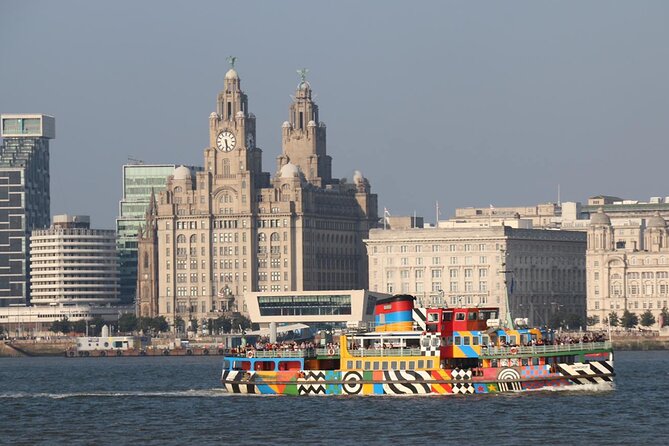
You will also see the large LIVERPOOL sign, whose colors change with seasons or events. It is an obvious photo stop, but it is also a useful marker of modern Liverpool. The tour keeps moving between older port history and present-day city life instead of treating the past as something sealed away.
The stop lasts around ten minutes. That is enough for an explanation and a quick photograph, but not for a long break. If you want posed pictures at every landmark, this may feel brisk.
Royal Albert Dock and the city’s maritime heart
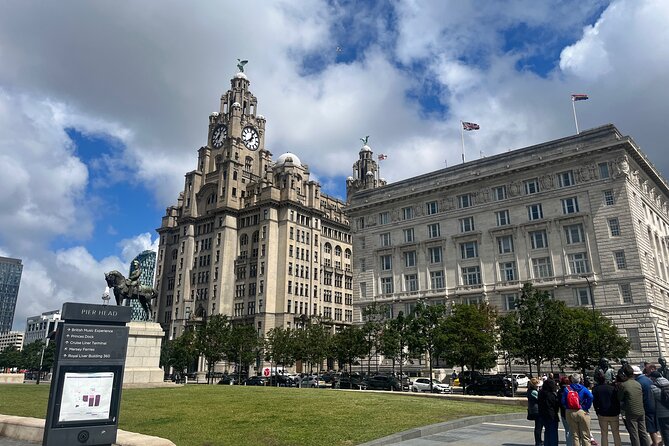
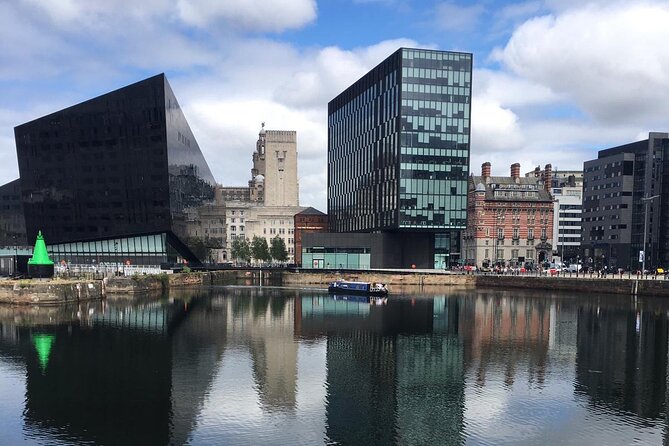
Royal Albert Dock receives about twenty minutes, making it one of the longer stops. Here the guide connects the dock to Liverpool’s growth, trade, and architecture. You will see old and new buildings together, which helps explain how the waterfront has changed over time.
The Titanic story also enters the tour here. Liverpool’s connection with the ship is part of the city’s maritime identity, and the guide explains how that story fits into the wider history of the port. This is not presented as a separate museum visit, so you should expect context rather than an indoor exhibition.
The waterfront also includes a bronze statue of Bill Fury, which has become a place for fans to pay tribute. It is a reminder that Liverpool’s public spaces carry more than official history. Music, sporting culture, working life, and local affection all appear along the route.
You may want to spend extra time at Royal Albert Dock after the tour. The walking tour gives you an orientation, but it does not include food, drinks, or admission to attractions. Save your museum visits and waterfront cafés for later.
Meeting the Beatles at the waterfront statue
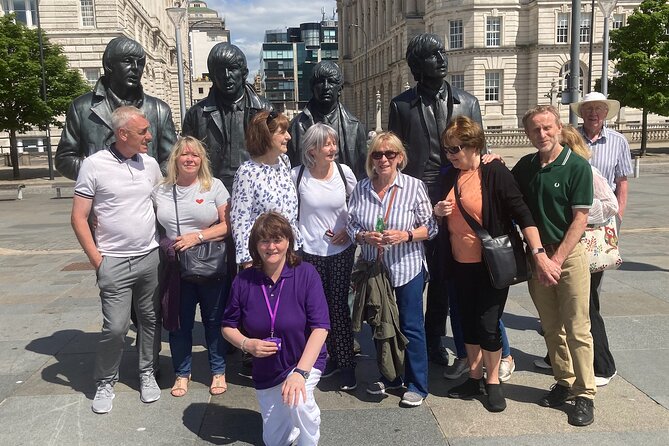
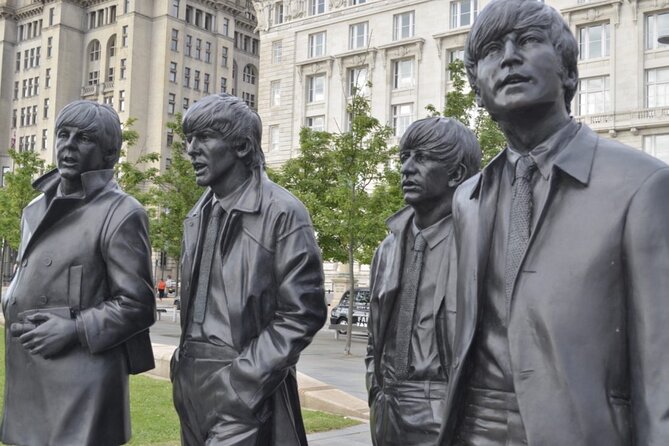
The Beatles Statue is a natural highlight for many people. Sculpted by Andrew Edwards, it gives you a chance to take a photograph with the four musicians before the tour reaches Mathew Street and the Cavern Quarter.
The Beatles receive attention here, but this is not a full Beatles tour. That distinction matters. If you want recording history, band biographies, or a detailed account of how the Fab Four became famous, you will need a dedicated Beatles walking tour or your own follow-up visit.
Access to the statue can occasionally be restricted. If that happens, the route may use alternative statues. This is one of the few points where the experience can differ from the expected plan, so keep your expectations flexible.
The Three Graces and Liverpool’s grand waterfront face
The Three Graces are the Cunard Building, the Port of Liverpool Building, and the Liver Building. Together, they create Liverpool’s most recognizable architectural group and offer one of the strongest visual moments of the walk.
The guide explains the history and heritage of all three Grade II listed buildings, including the iconic Liver Building. The golden Liver birds you saw earlier now have a grander setting, and the city’s maritime ambitions become visible in stone, scale, and decoration.
This is a good place to slow down and look up. A guide can help you notice how the buildings relate to Liverpool’s former role as a major port. You are not simply photographing impressive façades. You are seeing the civic image of a city built around ships, trade, and international links.
One particularly useful theme from the guiding is Liverpool’s connection with the United States. The city’s international role included the first US foreign consulate, a detail that helps you see Liverpool as more than a local English port.
Castle Street and the route into the civic quarter
Castle Street carries the walk away from the docks and back toward the city’s older center. Its history reaches toward medieval Liverpool, and the street is framed by handsome buildings and formal architecture.
This transition is one of the tour’s strengths. You see how the port, commercial center, and civic quarter fit together rather than visiting each in isolation. Liverpool’s story becomes easier to follow because the route physically connects the places where trade happened with the places where the city was governed.
The stop is listed at about ten minutes. You will likely spend much of it listening while walking, so stay close to the guide and watch for traffic and uneven paving.
Liverpool Town Hall and the city’s changing government
Liverpool Town Hall is a Grade I listed building recognized as one of England’s finest surviving eighteenth-century town halls. As you approach it, the guide also discusses earlier town halls dating back to the 1500s.
This is a useful history lesson because it shows that Liverpool’s civic story did not begin with the grand buildings you see today. The town developed through several stages, and its public buildings reflect changing wealth, administration, and ambition.
The tour does not include entry into the Town Hall. You will view it from the street and hear its story as part of the wider route. If you want interiors, check separately for visiting arrangements, since that is outside this experience.
Exchange Flags and wartime Liverpool
Exchange Flags forms a courtyard opposite the Town Hall and is Grade II listed. It also carries a Second World War connection, adding another layer to the city’s past.
The Nelson Monument here dates from the early 1800s and provides another chance to connect Liverpool with Britain’s maritime power. The setting is more formal than Ropewalks or the waterfront, but that variety keeps the walk from becoming a single-note port tour.
About ten minutes are allowed. Your guide may use the space to answer questions, and that personal exchange is part of the tour’s appeal. Several guides, including Carl, Pam, Mike, and Paul, have been praised for explaining history clearly and tailoring discussion to the group’s interests.
Derby Square, Liverpool Castle, and Queen Victoria
At Derby Square, you hear about Liverpool Castle, which once stood here. The castle has gone, but its former location still gives the city center a medieval thread. The square is now marked by an imposing monument to Queen Victoria.
This is another place where the city’s layers are easy to miss without help. You see a modern urban space, but beneath it are older defensive and civic stories. The statue also prompted one particularly memorable moment for a guide named Mathew, whose humorous explanation became a highlight of the walk.
There is a practical wrinkle here. One person found that Derby Square and the Queen Victoria monument were not covered, along with Mathew Street and the Eleanor Rigby statue. The operator acknowledged the issue and said guides would be reminded to cover the full route. I would treat the listed stops as the intended plan, while recognizing that timing, distractions, access, or route changes can affect the day.
Mathew Street and the Cavern Quarter finish
The tour ends at the entrance to Mathew Street, a convenient central location. From here, you can explore the Cavern Quarter on your own and visit the Cavern Club area.
Ending here is smart. You finish close to one of Liverpool’s best-known music districts, with the choice to continue independently or book a separate Beatles-focused walk. The heritage tour gives you the city’s wider frame first, so the Beatles landmarks do not eclipse everything else.
The guide may not cover every Beatles detail you hoped for, especially if you already know the band’s story. For first-time visitors, though, the statue and final location provide a satisfying link between Liverpool’s port identity and its modern music fame.
Guides, group size, and the feel of the walk
The maximum group size is 20, which should keep the experience more personal than a large city tour. On quieter dates, you might find yourself in a very small group. Some departures have felt almost private, giving the guide time to answer questions and adapt the discussion.
The strongest praise is aimed at the guides. Mike is described as passionate, witty, and engaging, even in wet and windy weather. Carl is praised for a friendly style and quick answers. Pam is known for her enthusiasm and strong command of local history. Allan brings humor, photos, and a thoughtful pace. Roy adds local character and Scouse humor.
Other named guides include Chris, Rob, Paul, and Mathew. The common thread is not a scripted performance but a clear affection for Liverpool. That matters on a walking tour because the city’s history can otherwise feel like a string of dates and buildings.
One useful criticism concerned hearing questions in the group. Earphones were suggested for larger groups, though they are not listed as part of the experience. Stay near the guide if you want to catch every explanation.
Price, weather, and who should book
At $31.90 per person, I see this as good value for a first visit, especially if your time in Liverpool is limited. You receive more than two hours with a local guide and cover many central landmarks without paying separate admission fees.
The value is weaker if you want interior visits, food, drinks, or a specialist Beatles history. Those are not included. You are paying for orientation, stories, local perspective, and the ability to connect districts that may seem unrelated when explored alone.
The tour requires decent weather. If poor weather cancels it, you are offered another date or a full refund. You can also cancel for a full refund up to 24 hours before the start time. Children under 16 must be with a responsible adult, service animals are allowed, and well-behaved dogs are welcome, though busy streets and group walking may not suit every dog.
Book this tour if you want a broad introduction to Liverpool, enjoy learning outdoors, and like history delivered with humor. It suits first-time visitors, people with only a short stay, and even locals who want to connect familiar streets with stories they have missed.
Skip it if you prefer a slow museum visit, a fully dedicated Beatles experience, or guaranteed access to every stop. For most people seeking a practical first look, though, this walk gives Liverpool proper context before you set off to explore on your own.
FAQ
Where does the Liverpool walking tour begin?
It begins in front of the main gates of the Bluecoat building on School Lane, Liverpool L1 3BX.
Where does the tour end?
The tour ends at the entrance to Mathew Street in Liverpool city center, near the Cavern Quarter and Cavern Club.
How long does the walking tour last?
The tour lasts approximately 2 hours and 15 minutes.
Is the Beatles Statue included?
The route includes a stop at the Beatles Statue when access is available. On occasion, access may be restricted, and the tour may visit alternative statues instead.
How large is the tour group?
The maximum group size is 20 people.
What should I bring and wear?
Bring a bottle of water and wear comfortable shoes with good grip. The route has no hills or stairs, but some areas have uneven surfaces and cobbles.
Just added in Liverpool
- Scouse Safari private 3 hour authentic Liverpool experience★ 5.0 · 2 reviews
- LIVERPOOL: Yorkshire Adventure – Sightseeing Day Trip Tour★ 5.0 · 13 reviews
- The Story of Liverpool 2-Hour Walking Tour★ 5.0 · 3 reviews
- Half Day Welcome to Liverpool Walking Tour★ 5.0 · 17 reviews
- Liverpool City Scavenger Hunt Excursion by Zombie Scavengers★ 5.0 · 1 review
- Fun, Flexible Treasure Hunt Around Liverpool with Cryptic Clues & Hidden Gems★ 5.0 · 141 reviews
- Beatles Ticket To Ride Half Day Tour Small Groups★ 5.0 · 60 reviews
- Small-Group: Experience Local Food Tour in Liverpool★ 5.0 · 32 reviews
Historical Tours, compared.
Shadows of York: Ghost Walk and Horrible History.
Read our review →
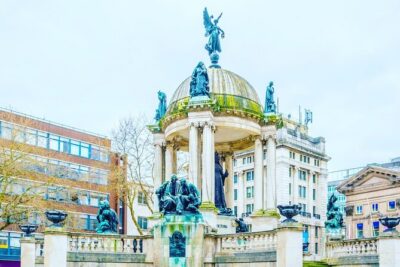
A Walk Through Time: History of Liverpool Walking Tour
Read our review →
Royal Historic Pubs Walking Guided Tour in London
Read our review →
Private Group: Historical Pub Walking Tour of London
Read our review →
Browse the lists this tour appears in