
Reviewed · HISTORICAL TOURS
Roman Ruins to Blitz Bombings: A Walking Tour of London’s Fiery History
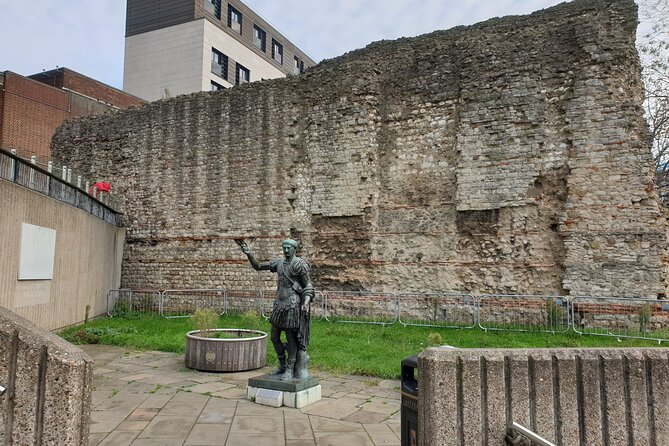
London hides its oldest stories in plain sight. This two-hour walk links Roman traces, medieval buildings, the Great Fire, and wartime ruins in one compact route through the City.
I like the small group of no more than 15, which gives you a better chance to ask questions. I also like the way guide Tom turns ordinary streets into history lessons, with useful suggestions for other places to see afterward. The main drawback is the amount of walking. One account calls it an extremely long walk, so it may not suit you if you have mobility issues.
The tour costs $27.78 per person, a fair price if you want context rather than a quick photo stop. You visit seven major sites, but admission tickets to places such as the Tower of London, the Monument, the Bank of England Museum, Guildhall, and St. Paul’s Cathedral are not included.
In This Review
- Key points at a glance
- Why this City of London walk works
- Starting at the Tower of London
- St. Dunstan in the East and the scars of war
- The Monument and the Great Fire of 1666
- The London Stone and London’s oldest legends
- The Bank of England Museum and the City’s working power
- Guildhall and the medieval City
- St. Paul’s Cathedral and the walk’s grand finish
- What the guide adds to the experience
- Group size, walking pace, and comfort
- Is $27.78 a fair price?
- Who should book this walk?
- Should you book Roman Ruins to Blitz Bombings?
- FAQ
- How long does the walking tour last?
- What language is the tour offered in?
- How much does the tour cost?
- Where does the tour start?
- Where does the tour end?
- How many people can join the tour?
- Are admission tickets included?
- Is the tour suitable for people with mobility issues?
- Can I cancel for a refund?
Key points at a glance
- Seven major City of London sights: The route runs from the Tower of London to St. Paul’s Cathedral, with several stops tied to fire, war, royalty, and Roman London.
- Tom’s storytelling: Tom receives repeated praise for making history clear, lively, and easy to follow without burying you in facts.
- A small walking group: The maximum group size is 15, useful for questions and personal attention.
- A strong value for history fans: At $27.78, the tour offers a guided introduction to a dense part of London without charging admission to the sights.
- A route with difficult subject matter: You will discuss destruction from the Great Fire of 1666 and the Second World War, not just royal ceremony and grand buildings.
- Plan for steady walking: The experience lasts about two hours and finishes at Ye Olde Cheshire Cheese on Fleet Street, not at the starting point.
Why this City of London walk works
This is not a tour built around one famous monument. It is a connected story about how London was damaged, rebuilt, and altered over centuries.
You begin near the Tower of London, then move through a part of the City where royal power, commerce, religion, and government have long sat close together. The route helps explain why a modern office street may contain a medieval church garden, a Roman fragment, or a building tied to the Great Fire.
I like that balance. You get headline sights, but you also get the stories behind places you might otherwise pass without a second thought. One of the strongest comments about the experience points out that the guide identifies side attractions, free museums, Roman ruins, and artifacts along the way.
That matters in London. The city can feel like a stack of unrelated buildings unless someone gives you the links. Here, the guide’s job is to connect the dates and disasters so the route feels like one story.
The tour is offered in English and uses a mobile ticket. Confirmation arrives at booking, which keeps the practical side simple. Public transport is nearby, and the starting point is easy to identify at 38 Trinity Square.
More History Tours in London
- London Small Group Tour of Historical Pubs
★ 5.0 · 10,422 reviews - Soho Music & Historic Pubs Tour
★ 5.0 · 1,993 reviews - Royal Historic Pubs Walking Guided Tour in London
★ 5.0 · 803 reviews
Starting at the Tower of London
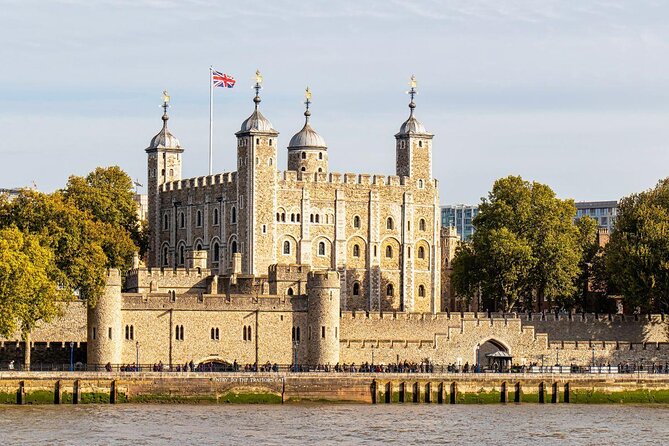
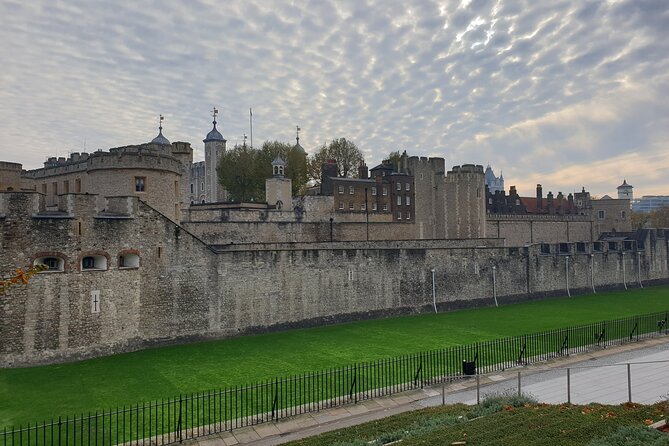
The Tower of London is the grand opening, and it sets the tone well. It is described as Europe’s oldest surviving royal palace, a phrase that gives you a sense of the site’s age and importance before the walk moves into the surrounding streets.
You only spend about five minutes at this stop, and admission is not included. That means you should think of this as an exterior introduction rather than a full Tower visit. If you want to see the interiors, exhibitions, and famous collections, plan a separate visit and buy entry on your own.
Even with a short stop, the Tower works as a useful starting point. It represents royal authority and the older London that existed before later fires and wartime bombing reshaped the City.
Do not arrive expecting two hours inside the Tower complex. The tour uses it as one chapter in a larger route.
St. Dunstan in the East and the scars of war
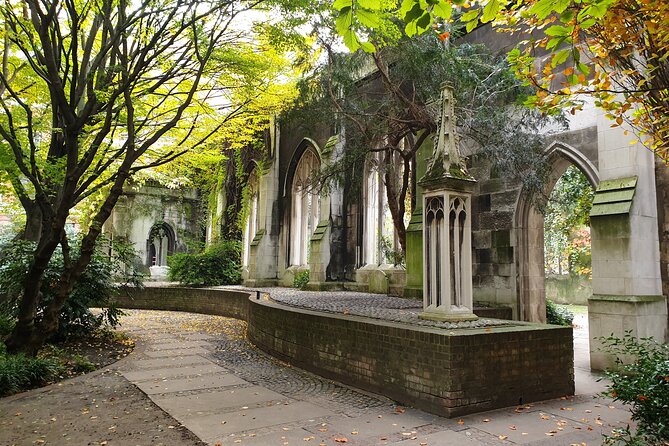
St. Dunstan in the East offers one of the most striking changes in mood. This medieval church was destroyed during the Second World War, and its remains now form a garden.
The stop is free and lasts about five minutes. That is enough for the guide to explain what happened and point out the relationship between surviving stonework and the open garden around it.
This is where the tour’s title becomes more than a clever phrase. You are not only hearing about London’s past in books or museums. You are looking at a place where wartime destruction changed the use of a building permanently.
The short visit also shows why a guide helps. Without context, you might see an attractive ruin and move on. With the history explained, you can read it as evidence of the Blitz and of the way London adapted after the war.
The Monument and the Great Fire of 1666
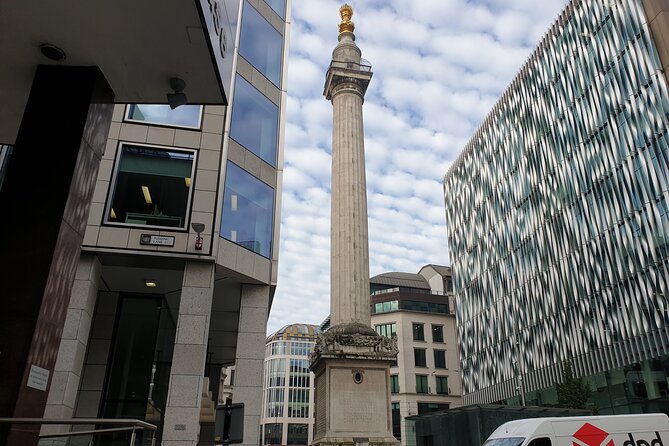
The Monument to the Great Fire of London marks the 1666 disaster that burned a large part of the City. The stop takes about five minutes, and entry is not included.
You should not confuse this with a full visit inside the Monument. The tour is focused on the story and the setting. If you want to climb or explore the interior, you will need to arrange that separately.
The Monument is especially useful in this route because it gives you a second major disaster to compare with the destruction at St. Dunstan in the East. One event came from war. The other came from a city fire. Together, they show how often London has had to rebuild itself.
I like this part of the walk because it gives a clear reason to look beyond the monument’s column. The important question is not only what it commemorates, but how the fire changed the City that grew around it.
More Walking Tours in London
- Tour for Muggles The Ultimate Harry Potter Walking Tour in London
★ 5.0 · 4,684 reviews - London Jack The Ripper Guided Walking Tour
★ 5.0 · 3,131 reviews - Changing of the Guard Guided Walking Tour in London
★ 5.0 · 1,793 reviews - The Great British Rock and Roll Walking Tour
★ 5.0 · 1,371 reviews
The London Stone and London’s oldest legends
The London Stone is a brief stop with a different feel. Rather than marking a fire or a war, it carries a collection of legends.
The stop is free and lasts about five minutes. The information provided does not promise a full archaeological presentation, so you should expect a concise explanation rather than a museum visit.
That brevity can work in your favor. A walking tour with too many long stops quickly becomes tiring. Here, the London Stone gives you a short pause for local lore before the route continues to institutions and grander buildings.
It is also a good example of the sort of object that is easy to overlook. The stone does not announce itself with the scale of the Tower or St. Paul’s. The guide’s role is to explain why it has attracted stories and attention.
The Bank of England Museum and the City’s working power
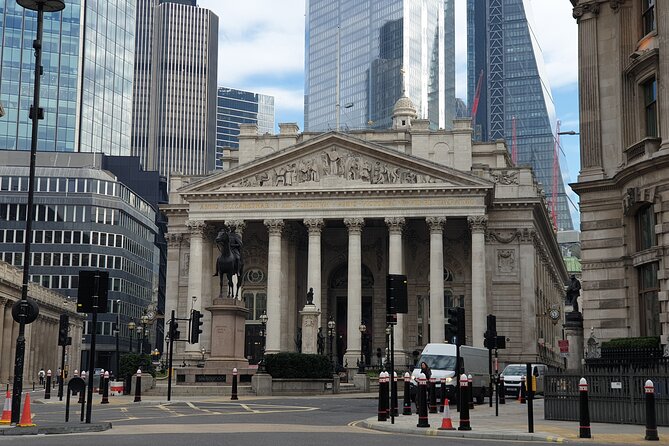
The Bank of England Museum adds a financial chapter to the walk. The Bank of England is the United Kingdom’s central bank, so this stop shifts the focus from royal buildings and religious ruins to money and national institutions.
The listed visit lasts about five minutes, and admission is not included. That makes it a quick orientation rather than a full museum visit. If the subject interests you, treat the museum as a possible extra stop after the tour.
This part of the route helps you understand the City as more than an old quarter filled with monuments. It is also a place where banking and government have shaped London’s daily life.
The tour’s value comes from these changes in subject. You move from palace to church ruin, from fire memorial to legend, then into the machinery of national finance. That variety keeps the walk from becoming one long lecture about dates.
Guildhall and the medieval City
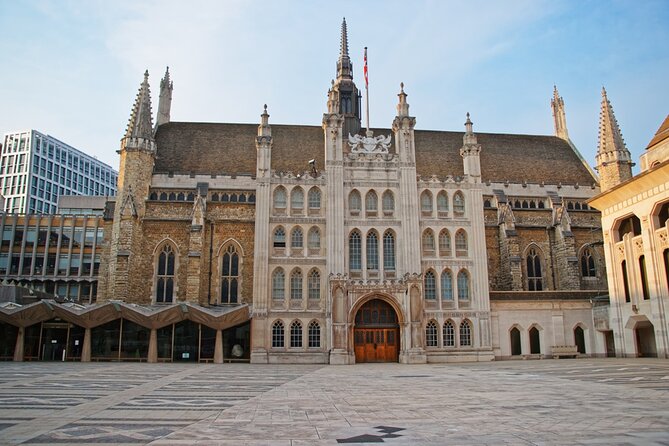
Guildhall is a fifteenth-century hall and the home of the Corporation of London. The stop lasts around five minutes, and entry is not included.
The building represents civic power rather than royal power. That distinction is useful. London’s story was shaped not only by monarchs, but also by the officials and institutions that governed the City.
Guildhall also fits the tour’s theme of survival. The route asks you to look at what endured, what was destroyed, and what was rebuilt. A medieval hall in the middle of the modern City makes that question easy to grasp.
Because the visit is short, you should not expect a detailed interior tour. Still, the exterior setting and the guide’s explanation can give you enough context to recognize Guildhall later if you return on your own.
St. Paul’s Cathedral and the walk’s grand finish
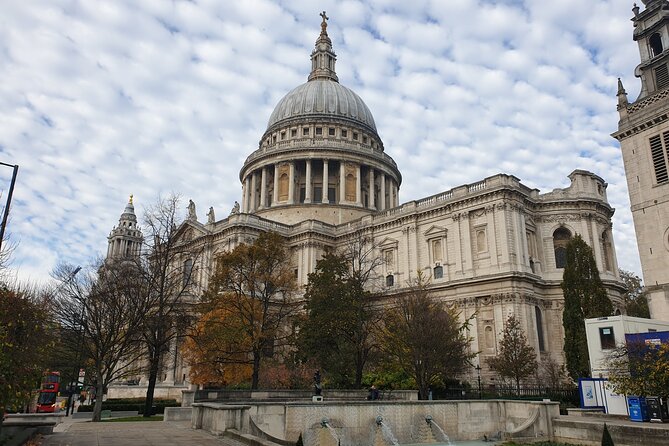
St. Paul’s Cathedral is the final major sight, and it gives the route a strong finish. Designed by Christopher Wren in the seventeenth century, it is one of the clearest symbols of London’s rebuilding after the Great Fire.
The stop is listed at about five minutes, and admission is not included. You will not be taking a full cathedral tour as part of the $27.78 fee. If you want to see the interior, crypt, or dome areas, plan a separate visit.
Ending here makes good historical sense. The cathedral is tied to the city’s recovery after fire, and it gives you a large architectural conclusion after a route filled with fragments, ruins, legends, and institutions.
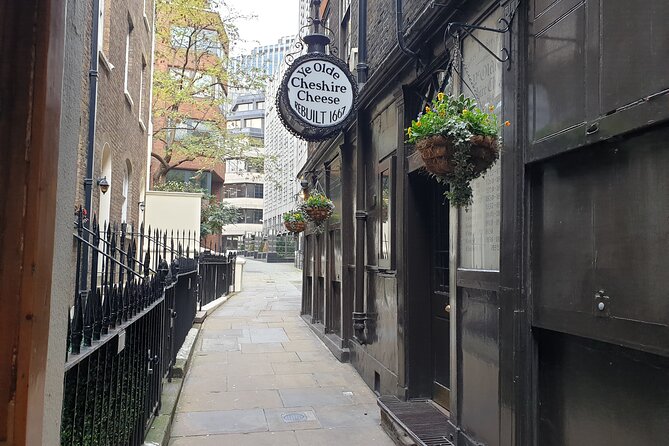
You also finish near Fleet Street, a useful central location for continuing your day. The official endpoint is outside Ye Olde Cheshire Cheese at 145 Fleet Street, not far from Blackfriars Station. You can stop for food or a drink there, or use public transport to move on.
What the guide adds to the experience
Tom is the name most closely linked with the praise for this experience. His strengths are clear: strong command of London’s past, an easy way with people, and a habit of answering questions with enthusiasm.
That last point is important on a small-group walk. You are not simply following a script from one landmark to the next. You can ask about a detail, request a suggestion, or follow up when a story catches your interest.
Tom also gives practical ideas for other places to visit and local spots to enjoy after the walk. That can make the tour useful beyond its two-hour route, especially if you are building a first visit around the City of London.
The best guide-led walks do not make every stop feel equally important. They show you how the pieces fit. Here, the repeated praise focuses on history being made clear, engaging, and enjoyable, with no sense that you are being buried under too much information.
Group size, walking pace, and comfort
The maximum group size is 15 people. That is small enough for a more personal feel, while still being large enough that the guide must keep the route moving.
The tour lasts approximately two hours, but the walking may feel demanding. The route has seven stops, and the listed stop time is about five minutes at each location. The rest of the time is spent moving through the City and listening as the guide explains nearby sights.
You should wear comfortable shoes and be ready to remain on foot for the duration. The available information specifically warns that the experience may not suit people with mobility issues. Most people can participate, and service animals are allowed, but that does not remove the need to judge your own walking ability.
The starting and ending points are different, so plan for that. You meet at 38 Trinity Square near the Tower of London and finish outside Ye Olde Cheshire Cheese on Fleet Street. Blackfriars Station is nearby at the end, and the route is also close to public transport.
Is $27.78 a fair price?
At $27.78 per person, you are paying for the guide and the structure of the walk. The fee does not include admission to the Tower of London, the Monument, the Bank of England Museum, Guildhall, or St. Paul’s Cathedral.
That can still be good value. These places charge for their own interiors, and a full visit to even one major attraction can cost more than the walking tour. The tour lets you understand several sites in a single outing before deciding where you want to spend extra time and money.
I would book it for the interpretation, not for entry to attractions. If you want an all-inclusive sightseeing package, this is not that. If you want a sharp introduction to the City and ideas for follow-up visits, the price is sensible.
Free cancellation is available if you cancel at least 24 hours before the start time. Changes or cancellations made less than 24 hours ahead are not accepted for a refund.
Who should book this walk?
I would choose this tour if you enjoy history, old buildings, urban legends, and the story of how cities recover from disaster. It suits someone who wants more than a list of photo stops and likes asking questions along the way.
It is also a good first-day activity if you want a working map of the City. The route touches royal London, wartime London, fire-damaged London, financial London, civic London, and Wren’s London in one outing.
You may want to skip it if you dislike walking or prefer long visits inside each attraction. The short stops offer context, not full admission-based tours. Families and most able walkers can participate, but anyone with mobility concerns should think carefully about the pace and distance.
The perfect audience is a curious history fan who wants the City explained by someone who can make everyday streets feel worth noticing.
Should you book Roman Ruins to Blitz Bombings?
Book it if you want an engaging, small-group walk that connects London’s Roman, medieval, royal, civic, financial, fire, and wartime stories. Tom’s clear explanations and personal approach are the strongest reasons to choose it.
Skip it if you need an accessible, low-walking outing or if you want full entry to the Tower, St. Paul’s, and the other paid sights. For everyone else, $27.78 buys a useful framework for exploring the City on your own afterward.
FAQ
How long does the walking tour last?
The tour lasts approximately two hours.
What language is the tour offered in?
The tour is offered in English.
How much does the tour cost?
The price is $27.78 per person.
Where does the tour start?
The tour starts at 38 Trinity Square, London EC3N 4DJ, UK.
Where does the tour end?
The tour ends outside Ye Olde Cheshire Cheese at 145 Fleet Street, London EC4A 2BP, near Blackfriars Station.
How many people can join the tour?
The group has a maximum of 15 participants.
Are admission tickets included?
No. Admission is not included for the Tower of London, the Monument, the Bank of England Museum, Guildhall, or St. Paul’s Cathedral. Entry is free at St. Dunstan in the East and the London Stone.
Is the tour suitable for people with mobility issues?
Most people can participate, but the walk may not suit anyone with mobility issues because it involves substantial walking.
Can I cancel for a refund?
Yes. You can receive a full refund if you cancel at least 24 hours before the experience start time. Cancellations made less than 24 hours before the start are not refunded.
Just added in London
- Private Tour: Royal High Tea At Kensington Palace Gardens★ 5.0 · 39 reviews
- Private Tour: Personal Travel Photographer Tour in London★ 4.5 · 27 reviews
- London East End Private Walking Food Tour – Secret Food Tours★ 5.0 · 26 reviews
- Private Tour: Night Photography Tour in London★ 5.0 · 48 reviews
- London Like a Local, Private & Personalized (2-3 hrs)★ 4.5 · 11 reviews
- British Museum & National Gallery of London – Exclusive Guided Combo Tour★ 5.0 · 48 reviews
- London Soho District – Exclusive Guided Walking Tour★ 5.0 · 2 reviews
- Private Tour: Tower of London and St Paul’s Cathedral★ 5.0 · 1 review
Historical Tours, compared.

Shadows of York: Ghost Walk and Horrible History.
Read our review →

A Walk Through Time: History of Liverpool Walking Tour
Read our review →
Royal Historic Pubs Walking Guided Tour in London
Read our review →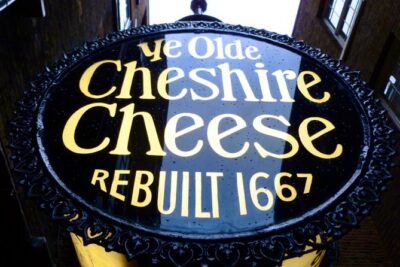
Private Group: Historical Pub Walking Tour of London
Read our review →
Best Of Liverpool Heritage, History & Culture Guided Walking Tour
Read our review →Browse the lists this tour appears in