
Reviewed · MUSEUMS
Private Tour, Highlights of The National Gallery, popular with families
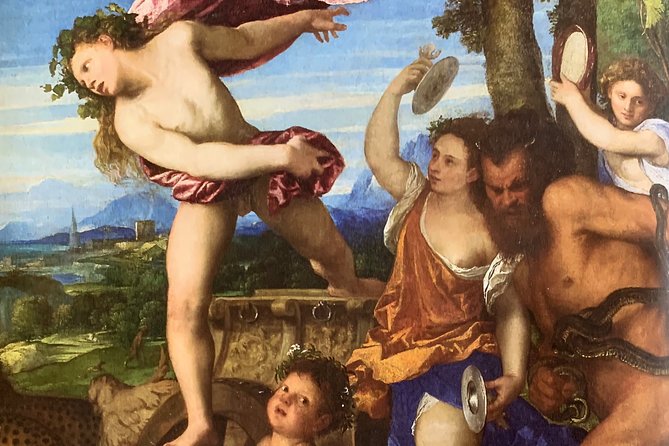
Art gets easier when someone knows where to begin. This private National Gallery tour gives you a clear route through centuries of Western art, starting with 13th-century paintings before moving toward Botticelli, da Vinci, Rembrandt, Titian, Van Gogh, and other major names. I especially like the chronological flow, which helps you see how styles changed, and the family-friendly option, with games and quizzes for children.
The main drawback is the price: $288.71 per person is a serious outlay for about two hours, especially for a small group. You are paying for a private Blue Badge guide and a focused visit, not simply entry to the museum, so the value is strongest if this is your first visit or if your group wants personal attention.
In This Review
- Key points to know before booking
- Why a private National Gallery tour can be worth it
- Starting in the Sainsbury Wing with 13th-century paintings
- Following the chronological route into the main building
- Seeing Rembrandt’s two self-portraits
- Moving toward Van Gogh and more recent painting
- A family visit with games instead of a lecture
- What the $288.71 price really buys
- Meeting at Trafalgar Square and finishing at the gallery
- Who should book this private visit
- Should you book the National Gallery highlights tour?
- FAQ
- Where does the National Gallery tour begin?
- Where does the tour end?
- How long does the experience last?
- Is admission included?
- Is the tour suitable for children?
- Can I cancel for a full refund?
Key points to know before booking
- 13th-century art begins the story: You start in the Sainsbury Wing, where early European paintings make later works easier to understand.
- The route follows artistic change: The tour moves from early religious art through the Renaissance, Dutch painting, and more recent masterpieces.
- Families can get an adapted visit: The guide can add interactive games and quizzes to keep children involved.
- Private means personal: Only your own group takes part, allowing the guide to adjust the pace and explanations.
- Two hours saves museum time: You can see key works without wandering through thousands of paintings on your own.
- The guide received strong praise: The available feedback highlights an attentive, well-informed guide and recommends guided help for a first National Gallery visit.
Why a private National Gallery tour can be worth it
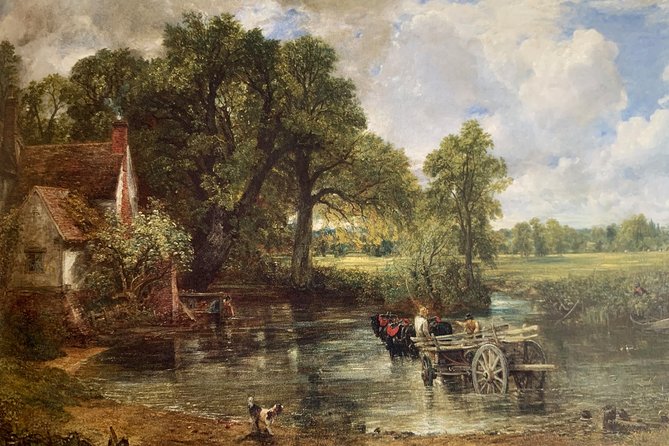
The National Gallery is free to enter, yet free admission does not make it simple. Thousands of paintings fill the building, and the collection covers hundreds of years of Western art. Without a plan, you can spend a lot of time checking labels and still miss the works you most wanted to see.
This tour gives you a route and a person to explain why the paintings matter. I like that the visit is not framed as a random list of famous names. It begins with early European art, then follows the collection as painting changes over time. That structure gives you a basic map of art history without requiring a lecture hall or a long academic background.
The private format matters. Your own group takes part, so the guide can adapt the pace, answer questions, and spend more time on a painting that catches your attention. If one member of your group is fascinated by Rembrandt while another wants to reach Van Gogh, a private visit offers more room to adjust than a large scheduled group.
There is also a practical benefit. Two hours is short enough to fit into a busy London day, but long enough to cover a useful set of major works. You will not see everything. That is the point. You leave with a manageable first impression rather than a museum-shaped headache.
More Museums in London:
- Tower of London and Crown Jewels Exhibition Ticket
★ 4.5 · 6,677 reviews - Chelsea FC Stadium Tours and Museum
★ 5.0 · 1,908 reviews - Official tickets: Moco Modern & Contemporary Art Museum
★ 4.5 · 1,157 reviews
Starting in the Sainsbury Wing with 13th-century paintings
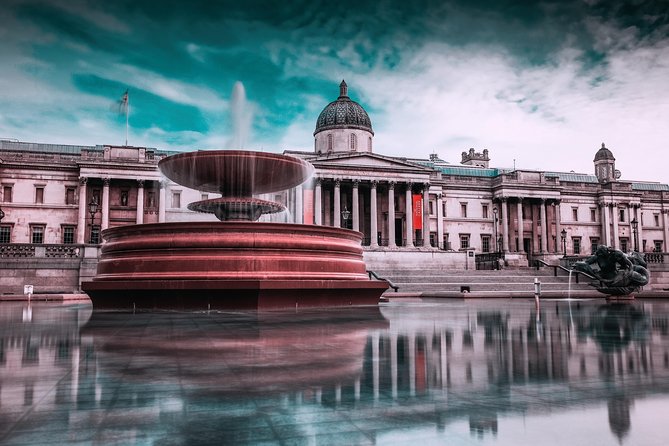
The meeting point is the National Gallery at Trafalgar Square, and the tour begins in the Sainsbury Wing. This newer part of the building contains some of the oldest paintings in the collection, including a work dating from the 13th century.
That is a good place to start because early European painting can look unfamiliar if you encounter it without context. You might notice formal poses, strong religious themes, and a different approach to space and expression. The guide’s job is to help you see those features as part of their time, not as flaws when measured against later art.
The tour then encourages comparison. How does a 13th-century painting differ from a work by Botticelli or da Vinci? What changed in the handling of the human figure, the use of space, or the treatment of light? Those questions turn the visit into a visual story. You are not just checking famous names off a list.
I find this early section particularly useful for families. Children may not respond immediately to a solemn medieval panel, but a simple comparison can give them something concrete to look for. The family version may include games and quizzes, so younger members can take part rather than trail behind the adults.
The limitation is that two hours does not allow for a slow study of each painting. If you already know the Sainsbury Wing well or want to focus on one period, tell the guide at the start. The private setting should make that request easier.
Following the chronological route into the main building
After the Sainsbury Wing, you move into the main building. The collection is arranged more or less chronologically, so the route picks up where the opening section ends.
This layout does much of the teaching for you. You can watch painting change across the rooms instead of jumping from one century to another. The guide adds the connections, pointing out how artists borrowed ideas, solved visual problems, or moved in new directions.
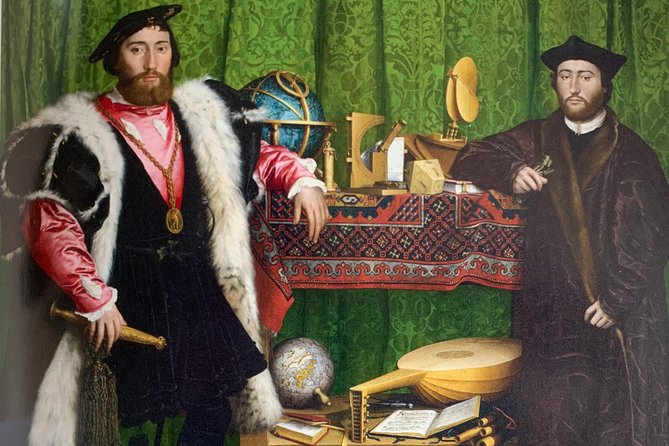
The tour includes major Renaissance names such as Raphael, Titian, and Holbein. Each artist offers a different way into the period. Raphael can lead you toward balance and idealized figures, Titian toward color and presence, and Holbein toward precise portraiture. The value here is not just seeing a famous canvas. It is learning what to look for when you stand in front of it.
I like this part because it gives the museum a sense of order. A first visit can otherwise feel like a parade of grand names, all competing for your attention. A guide who connects the rooms helps you understand that the collection is not merely a greatest-hits display. It records changing ideas about people, power, religion, and beauty.
Still, the chronological arrangement is only approximate. The guide may need to make choices based on room access, crowd levels, or your interests. Do not expect a rigid march through every century. The tour is best understood as a guided highlight route, not a complete course in European art.
Seeing Rembrandt’s two self-portraits

One of the most useful comparisons comes with Rembrandt. Two of his self-portraits are on display near one another, yet they show changes in his appearance across three decades.
This is exactly the kind of detail that can get lost when you walk alone. You may recognize Rembrandt’s name, admire the brushwork, and move on. With the two portraits together, you get a direct look at time passing across an artist’s face and style.
For children and first-time museum visitors, self-portraits are an easy way into serious art. You can ask what has changed, how the expression feels, and why an artist might choose to paint himself again and again. For adults, the comparison offers a compact lesson in both biography and technique.
The guide can also help you slow down. The two paintings may be close together, but they are not identical statements. Their relationship becomes the point. I would consider this one of the tour’s best examples of why a personal guide can add value: the museum provides the paintings, while the guide helps you notice the conversation between them.
The supplied feedback gives the guide’s attentiveness particular praise. That matters in a room like this. You want someone who notices when your group is interested, answers without rushing, and keeps the explanation tied to what you can actually see.
A few more to weigh up in London
- Stonehenge, Windsor Castle, and Bath from London
★ 4.5 · 18,662 reviews - London Big Bus Hop-On Hop-Off Tour with Optional River Cruise
★ 3.5 · 10,803 reviews - London Small Group Tour of Historical Pubs
★ 5.0 · 10,422 reviews - Stonehenge, Windsor Castle and Bath with Pub Lunch in Lacock
★ 4.5 · 7,402 reviews
Moving toward Van Gogh and more recent painting
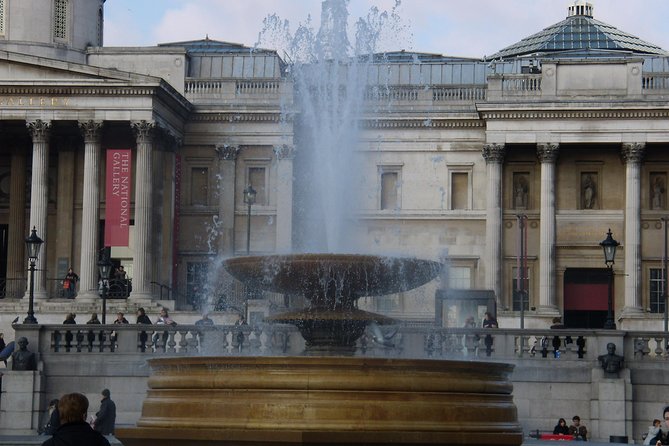
The route continues toward more recent works, including Van Gogh. This gives you a chance to see how the visual language of painting changes again after the Renaissance and Dutch Golden Age sections.
Van Gogh is often the name children and adults already know, so his work can provide a lively later point in the tour. You might find it useful to compare his handling of paint with the earlier artists you have just seen. The guide can help you think about brushwork, color, and emotional force without turning the visit into a technical class.
The exact selection of later paintings can depend on the guide’s route and the time available. The information provided identifies Van Gogh but does not promise a fixed list of every painting or modern artist. If there is one particular work you hope to see, ask about it when you meet the guide.
This is also where the two-hour limit becomes most noticeable. The National Gallery rewards lingering, and you could easily spend the entire visit in one room. This experience favors breadth and orientation. You see a series of important works, understand their place in a larger sequence, and can return later to study favorites at your own pace.
A family visit with games instead of a lecture
The family option is one of the strongest reasons to consider this tour. The commentary can be adapted for children with interactive games and quizzes, which gives younger visitors an active role.
That does not guarantee every child will be captivated for two hours. Age, attention span, and interest still matter. But a quiz about a painting or a game based on spotting visual details can make a formal gallery feel more approachable than a long stream of dates and names.
I would choose this format for a family visiting the National Gallery for the first time, especially if the adults want meaningful art discussion but do not want to spend the whole visit managing bored children. The private setup also means the guide can adjust explanations for mixed ages.
Children must be accompanied by an adult. Service animals are allowed, and the meeting point is near public transportation. Most people can take part, but the supplied information does not provide detailed guidance about every mobility need, so you should check directly if your group has specific access requirements.
What the $288.71 price really buys
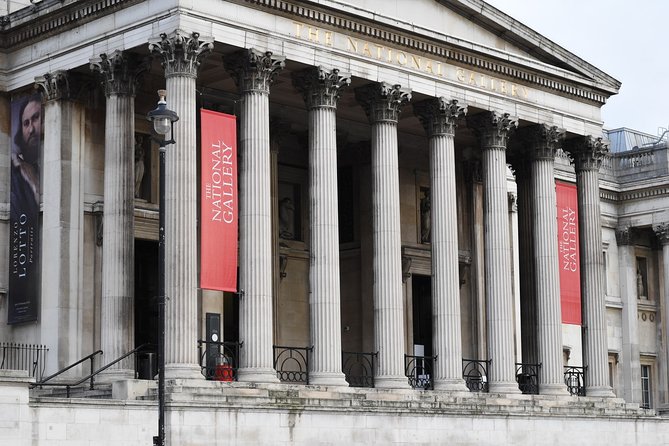
At $288.71 per person, this is not a budget museum visit. Since the National Gallery itself does not require ordinary admission, the cost is mainly for the private guide, the planning, the focused route, and the chance to shape the experience around your group.
The price makes more sense for several people sharing the attention of one guide, particularly if a group discount applies. It is harder to justify for one or two people who are comfortable reading labels and choosing their own route. You should compare the cost with how much you value time, explanation, and a private pace.
I see the strongest value in three situations:
- You have only a short window in London.
- This is your first visit to the National Gallery.
- Your group includes children or adults with different levels of interest in art.
The tour is booked, on average, about 95 days ahead. That suggests you should plan early if your London dates are fixed, especially if you need a particular day or are arranging a family schedule. Confirmation is provided at booking, and free cancellation is available up to 24 hours before the start time. Changes or cancellations inside that window are not accepted for a refund.
Meeting at Trafalgar Square and finishing at the gallery
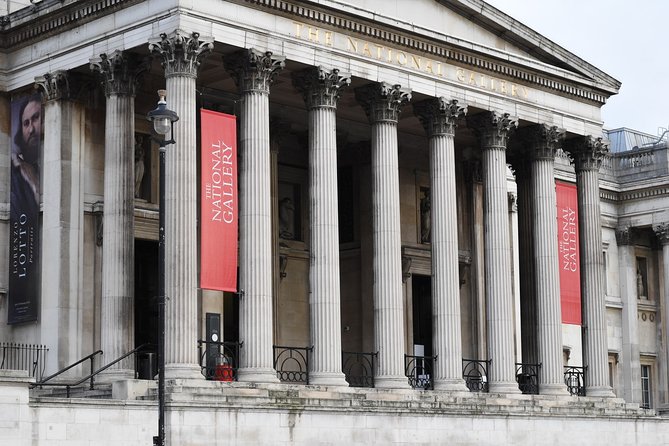
You meet at the National Gallery, Trafalgar Square, London WC2N 5DN. The activity ends back at the same meeting point, so you are not left at another part of London after the visit.
That return to the starting point is convenient if you have plans nearby. Trafalgar Square also makes the tour easy to pair with other central London activities, though the experience itself does not include food or drinks. Plan to eat before or after rather than expecting a refreshment break during the two-hour visit.
A mobile ticket is provided, and the booking includes a Blue Badge guide, a local guide, and a professional guide. Those labels point to a formally qualified guide rather than an audio tour or a self-guided walk. The strongest praise available focuses on the guide being attentive and well informed, with a direct recommendation for using a guide on a first National Gallery visit.
Who should book this private visit
I would recommend it most strongly to first-time visitors who want a clear introduction without spending half a day wandering. You will get a useful sequence of major artists and enough explanation to understand how the collection fits together.
Families are another good match. The option for games and quizzes gives the guide tools to keep children involved, and a private group is less awkward when the pace needs to change.
Art students, repeat visitors, and serious museum fans may want something more specialized. This tour is built around highlights across centuries, not a narrow study of one painter, movement, or room. You can ask for adjustments, but the supplied details do not promise a specialist focus.
It is less appealing if your main goal is to explore alone, move very slowly, or spend an hour with a single painting. You are paying for direction and company. If you prefer complete freedom, the admission savings of visiting independently may matter more.
Should you book the National Gallery highlights tour?
Book it if you want to get your bearings fast, see major works in a sensible order, and have a guide shape the visit to your group. The Sainsbury Wing opening, the comparison between early and Renaissance art, Rembrandt’s changing self-portraits, and the move toward Van Gogh give the two hours a clear purpose.
I would hesitate only if the price feels too high for a museum that you can otherwise enter on your own. For a first visit, a family with limited time, or a group that values personal explanations, the private format can justify the cost. The attentive guide praised in the available feedback is an encouraging sign, but remember that the experience lasts about two hours and cannot cover the whole collection.
FAQ
Where does the National Gallery tour begin?
It begins at the National Gallery, Trafalgar Square, London WC2N 5DN, UK. The tour starts in the Sainsbury Wing.
Where does the tour end?
The activity ends back at the meeting point at the National Gallery.
How long does the experience last?
The tour lasts approximately two hours.
Is admission included?
Yes. An admission ticket is included with the experience.
Is the tour suitable for children?
Yes. Children must be accompanied by an adult, and the guide can adapt the visit for families with interactive games and quizzes.
Can I cancel for a full refund?
Yes, if you cancel at least 24 hours before the experience start time. Cancellations or changes made less than 24 hours before the start are not accepted for a refund.
Just added in London
- Private Transfer From London to Southampton Cruise Terminal★ 4.0 · 2 reviews
- Layover Tour of London from LHR Executive Luxurious Vehicle Private Tour 6 hour★ 4.5 · 9 reviews
- Pub & History Tour London (History & Beers)★ 5.0 · 3 reviews
- eSIM for UK (34 EU countries) | 3 to 30 days. Up to 40GB of data★ 4.0 · 18 reviews
- Young Victoria’s London: Windsor Castle & Kensington Palace★ 5.0 · 1 review
- Zombie Scavengers Game – Southend-on-Sea, UK★ 4.5 · 2 reviews
- Women of Whitechapel 2 hour Walking Tour★ 5.0 · 15 reviews
- Working Women of the East End Walking Tour★ 5.0 · 85 reviews
Museums, compared.

Tower of London and Crown Jewels Exhibition Ticket
Read our review →

Official tickets: Moco Modern & Contemporary Art Museum
Read our review →
British Museum London Guided Tour Semi-Private 8ppl Max
Read our review →
The British Museum London – Exclusive Guided Museum Tour
Read our review →

Skip the Line: Liverpool Beatles Museum – The perfect tribute to the Beatles
Read our review →Browse the lists this tour appears in