
Reviewed · WALKING TOURS
Women of Whitechapel 2 hour Walking Tour
London’s overlooked stories are often its best. The Women of Whitechapel walking tour follows the East End’s streets through the lives of women who resisted, organized, worked, campaigned, and quietly changed their communities. Over roughly two to three hours, you walk from Whitechapel Road to Liverpool Street Station with guide Mandy, stopping around Brick Lane, Princelet Street, Spitalfields Market, and Stepney Green.
I like the tour’s clear focus on women’s lives, rather than offering another general walk through Jack the Ripper territory. I also like the route’s mix of famous names, immigrant communities, old houses, markets, and lesser-known local stories. The main consideration is physical: you need good walking shoes, weather-ready clothing, and a moderate level of fitness.
At $27.53 per person, this is a fair price for a small-scale guided walk lasting up to three hours. The group can include as many as 30 people, so it may feel more like a public walk than a private conversation on a busy day. Still, the 4.9 rating from 15 reviews and a 100 percent recommendation record point to a guide who makes the subject lively and personal.
In This Review
- Key points about the Whitechapel walk
- Why this women’s history tour feels different
- Whitechapel Road: protest, charity, and old neighborhoods
- Brick Lane: migration and quiet revolution
- Princelet Street: quiet houses and unusual lives
- Spitalfields Market: women and three centuries of change
- Stepney Green: anarchists, working women, and television connections
- From East London streets to Liverpool Street Station
- Is $27.53 a fair price?
- Practical advice before you book
- Who should take this Whitechapel tour?
- Should you book the Women of Whitechapel walk?
- FAQ
- How long does the Women of Whitechapel walking tour last?
- Where does the tour begin?
- Where does the tour finish?
- What language is the tour offered in?
- How much does the tour cost?
- What locations does the route visit?
- Is food or drink included?
- How large can the group be?
- Are service animals allowed?
- Can I cancel for a full refund?
Key points about the Whitechapel walk
- Women take center stage: Learn about female philanthropists, resistance workers, anarchists, campaigners, writers, and working women.
- Five East London stops: The route links Whitechapel Road, Brick Lane, Princelet Street, Spitalfields Market, and Stepney Green.
- Guide Mandy earns warm praise: Her friendly, engaging style is a major part of the experience.
- A useful route through East London: The walk begins at 277 Whitechapel Road and finishes at Liverpool Street Station.
- Tea is available, but not included: The group stops at a Huguenot tea or coffee shop, with drinks paid for separately.
- Plan for the weather: The experience requires good weather and may be rescheduled or refunded if conditions are poor.
Why this women’s history tour feels different
Many London walks concentrate on kings, churches, battles, or crime. This one asks a different question: what did women do here, and why were their actions easy to miss?
That approach changes the way you look at the East End. A street becomes more than an old row of buildings. A market becomes a place where campaigns, businesses, families, and political ideas crossed paths. A house may bring up questions about women living alone in the 1700s, while another location recalls political activism or the difficult lives of working women.
The tour covers a broad period, from Huguenot settlement in the 1700s to political movements of the 1800s and 1900s. You also hear about the East End’s changing immigrant communities, including Huguenot weavers, Jewish tailors, and Bangladeshi restaurant owners.
I especially like that the tour does not treat women as one single group. You hear about women with money and social influence, women who worked in shops or trades, women involved in political resistance, and women whose lives were far less secure. That range gives the walk more substance than a simple list of famous names.
The guide is Mandy, whose manner has been praised for being kind, fun, and engaging. That matters here. A subject involving poverty, protest, prostitution, and political conflict can become heavy if presented as a lecture. Mandy appears to keep the pace approachable while still giving the stories proper weight.
More Walking Tours in London
- Tour for Muggles The Ultimate Harry Potter Walking Tour in London
★ 5.0 · 4,684 reviews - London Jack The Ripper Guided Walking Tour
★ 5.0 · 3,131 reviews - Changing of the Guard Guided Walking Tour in London
★ 5.0 · 1,793 reviews
Whitechapel Road: protest, charity, and old neighborhoods
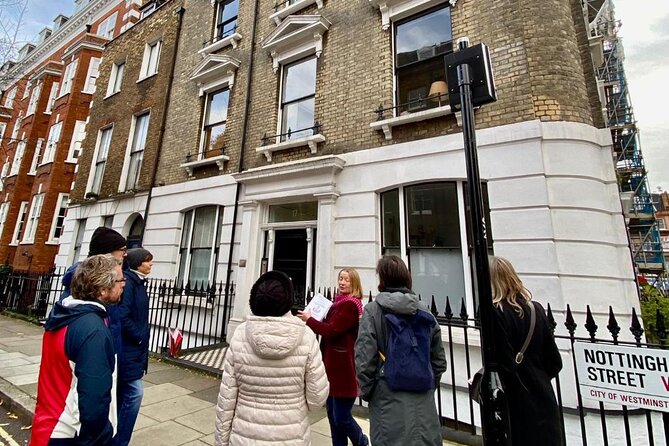
The walk begins at 277 Whitechapel Road, close to public transportation. That is useful in a large city where a hard-to-find meeting point can sour the first few minutes of a tour. You meet at the door, then set off along Whitechapel Road.
The opening section lasts about an hour, making it the longest part of the walk. You pass grade II listed houses, mosques, and churches while hearing about women connected with the area’s social and political life.
One theme is the work of female philanthropists in the late 1800s. Philanthropy was not simply a matter of wealthy women handing out charity. It could involve organizing services, responding to poverty, supporting vulnerable families, and using social position to push for change. This part helps you see how women shaped urban life outside formal political office.
You also hear about women involved in resistance during the First World War. The word resistance can cover many forms of action, and the tour’s focus is on the courage behind those efforts. This gives the opening section a political edge, rather than keeping the story limited to domestic life or charitable work.
The final theme here is the anarchist movement of the 1890s. Whitechapel was an important setting for radical ideas, and the tour connects women with that wider political world. This is one of the most useful elements for anyone who wants to understand East London as a place of argument and activism, not only deprivation.
Because this is a walking tour, you should not expect long indoor visits or formal exhibits. The streets are the setting. Look closely at the buildings and listen for the small details that are easy to miss when you explore Whitechapel alone.
Brick Lane: migration and quiet revolution
From Whitechapel Road, the route continues to Brick Lane, a short section lasting about 20 minutes. Brick Lane is often associated with food, street art, markets, and nightlife, but this walk gives you a longer view of the street.
The area was highlighted by Monica Ali in her novel Brick Lane. Its communities changed over time, from Huguenot weavers to Jewish tailors and later Bangladeshi restaurant owners. The succession of communities is central to understanding the street today.
The tour keeps its attention on women who acted as quiet revolutionaries. That phrase suggests a focus on everyday change rather than only headline-making figures. Women helped families settle, supported businesses, kept cultural traditions alive, and made a place for themselves in a district shaped by migration.
You may find this stop especially useful if you have seen Brick Lane as a food destination but have not considered how much labor and adaptation lie behind its identity. The section is brief, so Mandy’s commentary has to make the most of the street itself. If you want a long explanation of every community, you may find the 20-minute stop too short. As part of a wider route, however, it gives the walk a strong sense of place.
Princelet Street: quiet houses and unusual lives
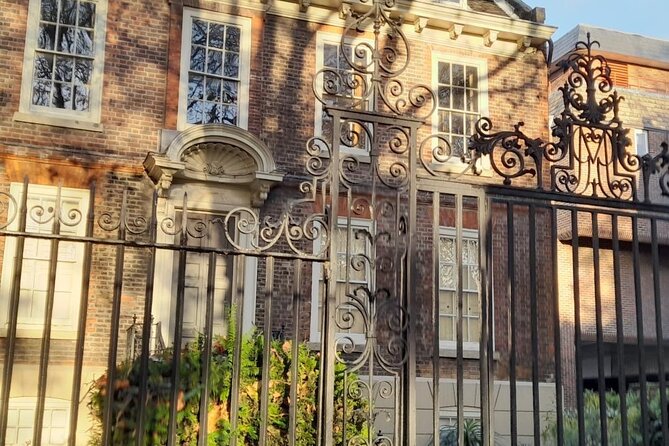
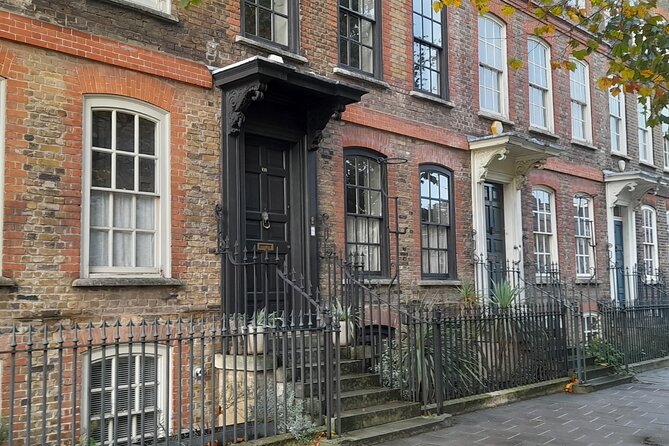
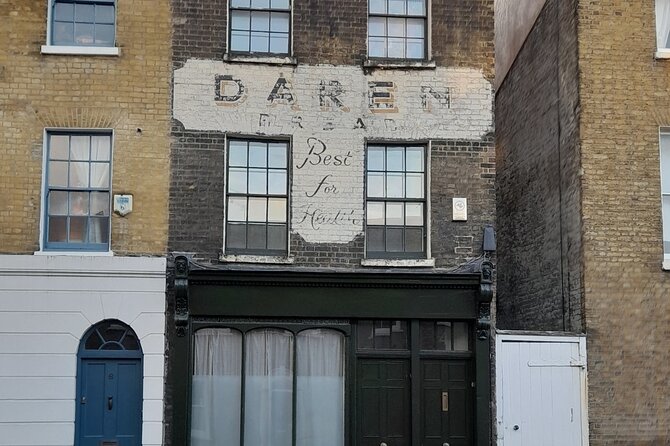
Princelet Street is a short 10-minute stop, but it offers a change of mood. The street has appeared in several films and retains an older appearance, with pretty houses and wooden shutters linked to its Huguenot past.
The buildings are important here because they help you picture an earlier East End without needing a museum reconstruction. Their scale and details make the past feel close at hand, though the tour still depends on Mandy to explain what you are seeing.
A striking detail is that several women lived alone in this area during the 1700s. That challenges the easy assumption that women in that period always lived under the protection or control of a husband or large family household. The stories may raise questions about work, independence, status, and how women managed daily life in an earlier London.
This stop is a good example of the tour’s method. It does not only point to a grand monument. It uses ordinary houses to open up questions about people who once lived there. Keep your expectations realistic, though. Princelet Street is a brief outdoor stop, not a house tour.
A completely different sort of day out:
- Stonehenge, Windsor Castle, and Bath from London
★ 4.5 · 18,662 reviews - London Big Bus Hop-On Hop-Off Tour with Optional River Cruise
★ 3.5 · 10,803 reviews - London Small Group Tour of Historical Pubs
★ 5.0 · 10,422 reviews - Stonehenge, Windsor Castle and Bath with Pub Lunch in Lacock
★ 4.5 · 7,402 reviews
Spitalfields Market: women and three centuries of change
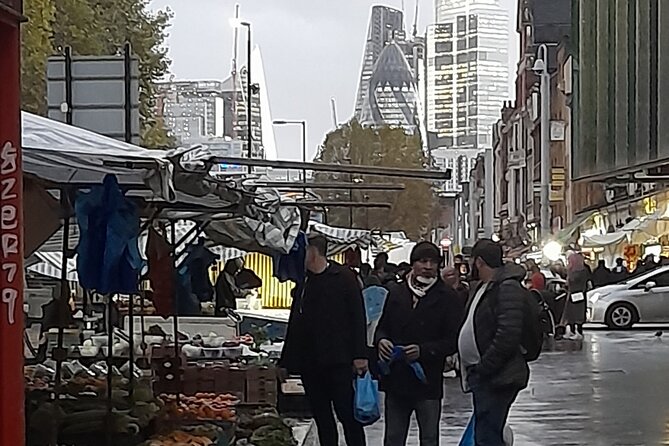
The route then reaches Spitalfields Market, with about 30 minutes set aside for the area. The market was opened by Queen Victoria, and the surrounding streets connect to several women associated with political and social change.
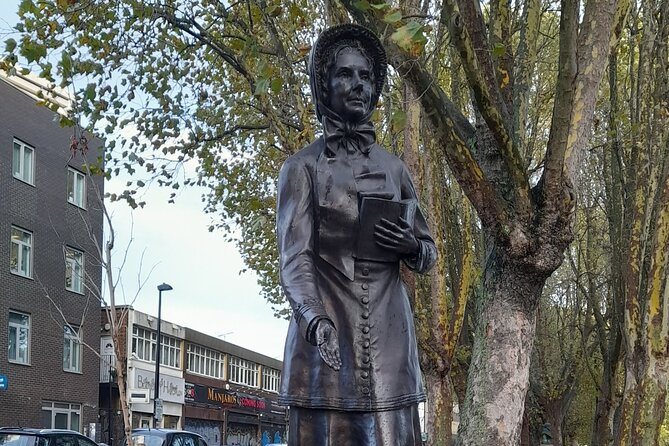
Names discussed here include Sylvia Pankhurst, Mary Wollstonecraft, and Sara Wesker. They represent different periods and different kinds of activism, which allows Mandy to trace ideas of women’s rights and social reform across roughly three centuries.
Mary Wollstonecraft is linked with early arguments for women’s education and independence. Sylvia Pankhurst is associated with the British suffrage movement and political organizing in East London. Sara Wesker brings another period and another set of working-class concerns into the story. Together, these figures help show that women’s political activity was not limited to one campaign or one generation.
Spitalfields Market also gives the tour a lively public setting. You are not walking through a sealed historic site. Shops, food, shoppers, and modern city life surround the old streets. That contrast can be useful: it shows how places connected with protest and reform have been absorbed into the modern city.
The market may be one of the more crowded parts of the route, depending on the day and time. Since the listed schedule is Monday from 2:00 to 4:00 p.m., conditions should be easier than on a major weekend market day, but you should still stay close to the guide and listen carefully.
Stepney Green: anarchists, working women, and television connections
The last historical stop is Stepney Green, with about 10 minutes devoted to the area. It is a short visit, but the stories cover several sharply different lives.
You hear about a house connected with the widow of an East India employee. That story brings imperial London into the walk and hints at the links between East End streets and Britain’s overseas commercial world.
The tour also tells the story of a prostitute who made a name for herself. Her life offers a different view of women’s survival and public identity. It is a reminder that the women of Whitechapel were not all campaigners or philanthropists. Some had to make difficult choices in a city where security depended heavily on class, money, and circumstance.
Stepney Green was also home to anarchist activity and served as an anarchist headquarters. This returns the walk to the political themes introduced on Whitechapel Road, while showing how ideas moved through local neighborhoods rather than remaining confined to Parliament or university halls.
The area has also appeared in the television series Call the Midwife. That connection may appeal to fans of the show, but the tour’s main purpose remains the real people and events linked to the streets.
From East London streets to Liverpool Street Station
The walk ends at Liverpool Street Station, a practical finish for anyone continuing across London. It gives you an easy onward connection after the tour rather than leaving you in an unfamiliar side street.
The route is not simply a loop back to the starting point. You move through several distinct East London districts and finish near one of the city’s major transport hubs. That makes the tour useful as part of a wider sightseeing day.
The total duration is advertised as two to three hours, while the title describes it as a two-hour walk. The listed stop times add up to about two hours and 10 minutes, before allowing for walking between locations. Plan for closer to two and a half hours if you do not want to rush your next appointment.
Is $27.53 a fair price?
At $27.53 per person, the tour offers good value if you want interpretation rather than a self-guided walk. You could visit Brick Lane, Spitalfields, and Stepney Green for free, but you would need to research the women, connect the locations, and identify the details worth noticing.
The price also pays for a human guide who can adjust explanations and answer questions. Mandy’s warm style is frequently praised, and that personal element seems to be one of the tour’s strongest features.
The value is less obvious if you prefer museums, private tours, or a fast overview of London landmarks. This is a local-history walk with a specific theme. You are paying for stories and connections, not entry to a major attraction.
The stop at a Huguenot tea and coffee shop adds a pleasant pause, but your drink is not included. Bring enough money if you want coffee or tea there.
Practical advice before you book
Wear shoes that can handle two to three hours of city walking. The route is not described as strenuous, but you should have a moderate level of physical fitness and be ready to remain on your feet.
Dress for London weather. The experience requires good weather, and poor conditions can lead to a different date or a full refund. An umbrella or waterproof layer is sensible, even when the forecast looks promising.
The tour is offered in English and includes a mobile ticket. Service animals are allowed. The maximum group size is 30, so you may want to stay near Mandy when the route reaches crowded areas such as Brick Lane or Spitalfields.
You can cancel free of charge up to 24 hours before the start time for a full refund. Changes or cancellations made inside that 24-hour window are not accepted for a refund. The tour also requires a minimum number of participants, so a cancellation for that reason brings the choice of another date, another experience, or a full refund.
Who should take this Whitechapel tour?
I would choose this walk if you want to understand East London through people whose work is often left out of standard sightseeing. It suits visitors interested in women’s rights, migration, social reform, political movements, working-class life, and the history of London neighborhoods.
It is also a good fit if you have already seen the main sights and want a more focused afternoon. The convenient start near Whitechapel and finish at Liverpool Street make it easy to add before or after other plans.
Families with older children may enjoy it if they can manage the walking and follow stories about politics and social change. It may be less suitable for very young children who need constant activity or for anyone looking for a major indoor attraction.
Should you book the Women of Whitechapel walk?
Book it if you want a friendly, detailed introduction to women’s lives in Whitechapel and the surrounding East End. Mandy’s praised presentation, the thoughtful route, and the mix of famous campaigners with ordinary working women give the experience real purpose.
Skip it if you want a broad tour of London’s top landmarks, a private group, or guaranteed shelter from the weather. For everyone else, $27.53 is a reasonable price for a walk that helps you see Whitechapel with sharper eyes and a fuller sense of who shaped it.
FAQ
How long does the Women of Whitechapel walking tour last?
The experience lasts approximately two to three hours. The listed stop times total about two hours and 10 minutes, before walking between locations.
Where does the tour begin?
The tour begins at 277 Whitechapel Road, London E1 1BY, at the door.
Where does the tour finish?
The walk ends at Liverpool Street Station, London EC2M 7QA.
What language is the tour offered in?
The tour is offered in English.
How much does the tour cost?
The listed price is $27.53 per person.
What locations does the route visit?
The route includes Whitechapel Road, Brick Lane, Princelet Street, Spitalfields Market, and Stepney Green.
Is food or drink included?
No. The group stops at a Huguenot tea and coffee shop, but drinks are available at your own cost.
How large can the group be?
The tour can have a maximum of 30 participants.
Are service animals allowed?
Yes, service animals are allowed.
Can I cancel for a full refund?
Yes. You can cancel at least 24 hours before the start time for a full refund. Poor weather or failure to meet the minimum number of participants may also result in another date or a full refund.
Just added in London
- Private Transfer From London to Southampton Cruise Terminal★ 4.0 · 2 reviews
- Layover Tour of London from LHR Executive Luxurious Vehicle Private Tour 6 hour★ 4.5 · 9 reviews
- Pub & History Tour London (History & Beers)★ 5.0 · 3 reviews
- eSIM for UK (34 EU countries) | 3 to 30 days. Up to 40GB of data★ 4.0 · 18 reviews
- Young Victoria’s London: Windsor Castle & Kensington Palace★ 5.0 · 1 review
- Zombie Scavengers Game – Southend-on-Sea, UK★ 4.5 · 2 reviews
- Working Women of the East End Walking Tour★ 5.0 · 85 reviews
- Crash course in archaeology at the British Museum★ 5.0 · 96 reviews
Walking Tours, compared.
Oxford University Walking Tour With University Alumni Guide
Read our review →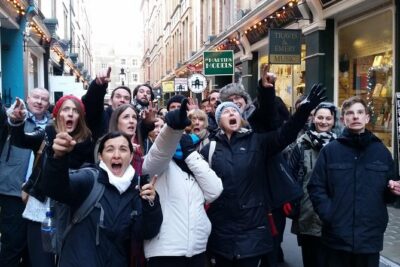
Tour for Muggles The Ultimate Harry Potter Walking Tour in London
Read our review →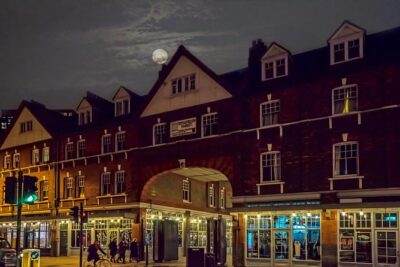
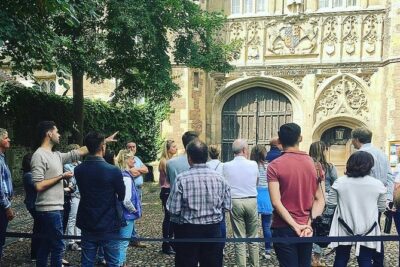
Cambridge University Walking Tour by Alumni™ Kings College Option
Read our review →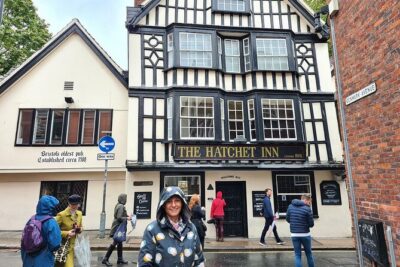
Blackbeard to Banksy – The Ultimate Walking Tour of Bristol
Read our review →
Air Raid Shelter + St. Nicholas Market Walking Tour
Read our review →
Walking Tour of Bath with Blue Badge Tourist Guide
Read our review →
Changing of the Guard Guided Walking Tour in London
Read our review →Browse the lists this tour appears in