
Reviewed · MUSEUMS
Private Tour : 3 Amazing London Art Galleries 1 tour 1 guide
Three galleries, one guide, one fast art lesson. This private London tour links the National Gallery, National Portrait Gallery, and Tate Modern in about three hours, giving you a human voice instead of an audio guide and a clear route through some of the city’s best-known art spaces. I like the private format, which lets your group ask questions, and I like the guide’s personal connection to painting and London’s galleries.
The strongest part is the chance to see Botticelli, Leonardo da Vinci, Rembrandt, Van Gogh, Holbein, Hockney, Picasso, Rothko, Warhol, and others in one outing. The main drawback is the pace: one hour per gallery is brisk, and you must pay for transport between them. There is also a confusing detail in the description, which names both Tate Modern and Tate Britain, so confirm the final stop before you go.
In This Review
- Key points to know before booking
- Why this three-gallery route works
- Starting with Botticelli and Leonardo at the National Gallery
- Meeting monarchs and famous faces at the National Portrait Gallery
- Crossing London for Tate Modern’s Turbine Hall
- The practical value of a private guide
- Timing, access, and the pace of the day
- The main weakness: three major museums in three hours
- Who should book this London art tour?
- FAQ
- How long does the private London art tour last?
- Which galleries are included?
- Where does the tour begin?
- Where does the activity end?
- Is transportation between galleries included?
- Is the tour private?
- Is the tour wheelchair accessible?
- Can I cancel for a full refund?
- Should you book it?
Key points to know before booking
- Three major galleries in roughly three hours: You get about one hour at the National Gallery, one hour at the National Portrait Gallery, and one hour at Tate Modern.
- A private guide for your group: Only your party participates, with no larger group setting the pace.
- A personal art background: The guide is a British-born painter who began painting at age five and studied at Wimbledon School of Art.
- Transport is not included: Bring a topped-up Oyster card, Travelcard, or contactless debit or credit card for the journey between galleries.
- The Tate stop needs clarification: The description refers to the Tate Modern building and Turbine Hall, but one itinerary heading says Tate Britain.
- Good access and flexible timing: The galleries are wheelchair accessible, and you can request a morning or afternoon departure.
Why this three-gallery route works
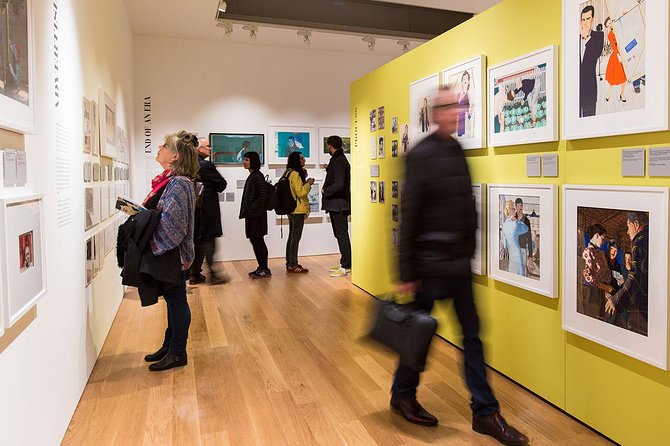
London gives you an embarrassment of art riches, but that can create a problem. You can wander into a huge gallery, see hundreds of paintings, and leave remembering very little. This tour gives your visit a simple shape: old masters first, British faces and power next, then modern and contemporary art.
That structure is useful if you are short on time or if art museums usually leave you cold. A guide can point out what deserves your attention, explain why a painting matters, and help you connect one work to another. You are not left trying to decode a wall label while a school group flows around you.
The private setup matters here. Your guide can slow down when you are interested and move on when a particular artist does not speak to you. You can ask basic questions without feeling self-conscious, or ask for more detail if you already know your Rembrandt from your Rothko.
The guide’s own background adds a personal layer. This is a British-born painter who attended Wimbledon School of Art and has exhibited around London since 2011. The stated enthusiasm is clear: the guide considers these three museums personal favorites and spends time in them regularly. That passion can turn a standard museum visit into a conversation about how artists make choices, not just a march through famous names.
A strong experience will depend heavily on the individual guide. One especially positive account praises Kathy for vivid descriptions of the art, its framing, and its setting. That is the sort of explanation you want in a gallery: not just who painted the work, but how the image is built and why it catches your eye.
More Museums in London:
- Tower of London and Crown Jewels Exhibition Ticket
★ 4.5 · 6,677 reviews - Chelsea FC Stadium Tours and Museum
★ 5.0 · 1,908 reviews - Official tickets: Moco Modern & Contemporary Art Museum
★ 4.5 · 1,157 reviews
Starting with Botticelli and Leonardo at the National Gallery
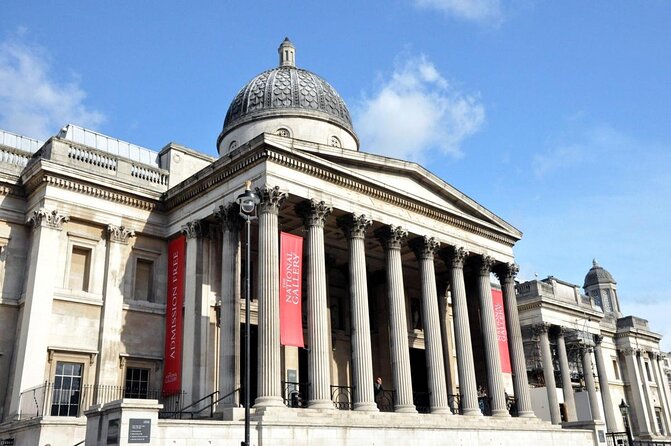
The tour begins at the National Gallery in Trafalgar Square, a convenient central meeting point with access to buses, taxis, and the London Tube. This is the natural place to begin because its collection gives you a broad introduction to European painting.
You can expect attention on works by Botticelli, Leonardo da Vinci, Rembrandt, and Van Gogh, among others. Those names alone cover a wide stretch of artistic change, from carefully arranged Renaissance scenes to the direct emotional force of later painting.
The value of a guide becomes obvious here. A famous painting can look simple until someone draws your eye to the small decisions inside it: the pose of a figure, the direction of a glance, the balance of light and dark, or the way the frame affects the work. The guide’s promise to discuss the stories behind historic works should help you see the paintings as more than decorative objects.
One hour is enough for a focused introduction, but not enough for a full survey of the museum. That is both a strength and a limit. You will not get lost in room after room, but you should not expect to see every important painting or spend long periods with your favorites.
If you already have a must-see work at the National Gallery, tell your guide early. The private format gives you a better chance of shaping the visit around your interests, although the supplied details do not promise a custom list of paintings.
The museum is free to enter in the usual public-gallery sense, but this tour charges for the guide’s time and planning. You are paying for interpretation and structure, not simply admission.
Meeting monarchs and famous faces at the National Portrait Gallery
The second stop is the National Portrait Gallery, where the focus shifts from artistic subjects in general to identifiable people. Its collection covers personalities and faces from the late Middle Ages to the present day, with works ranging from Holbein to Hockney.
This change of subject keeps the three-hour route from feeling repetitive. At the National Gallery, you study scenes, religious subjects, landscapes, and still lifes. Here, you look at how artists present a person and how a portrait can shape public memory.
The British monarchy receives particular attention, including portraits dating back 500 years. That makes this stop useful even if you are not a dedicated portrait fan. You can see how clothing, posture, symbols, and setting communicate rank and authority. A guide can also explain the people behind the faces, helping you connect the portrait to its period.
The gallery’s collection runs from the late Middle Ages to modern Britain, so you get a clear sense of changing ideas about identity. Holbein and Hockney represent very different approaches, and the contrast is likely to be one of the stop’s most useful lessons.
Again, the one-hour schedule calls for discipline. You will need to accept that the guide chooses the main works rather than attempting to cover the entire building. If you want a long, quiet look at portraits, this tour may feel too quick. If you want an introduction that gives you a map for a later solo visit, the format makes good sense.
Crossing London for Tate Modern’s Turbine Hall
The final gallery is described mainly as Tate Modern, the former Bankside Power Station on the Thames. Its Turbine Hall runs the length of the building and provides a dramatic change of scale after the more traditional rooms at the first two museums.
The modern and contemporary selection includes Cézanne, Bonnard, Matisse, Picasso, Rothko, Dalí, Pollock, Warhol, and Bourgeois. That is a wide range of styles and ideas, so your guide’s explanations are especially useful. Modern art can seem baffling when you encounter it without context. A few clear points about color, materials, movement, or artistic intention can make the work more approachable.
The Turbine Hall itself is part of the experience. It is large, industrial, and unlike the conventional gallery rooms at the National Gallery and National Portrait Gallery. After two museums organized around individual paintings and faces, the space gives the tour a strong visual finish.
There is an important planning issue here. The stop heading says Tate Britain, while the description talks about Tate Modern, the Bankside Power Station, and the Turbine Hall. Those details point to Tate Modern, but you should contact the provider and confirm the exact museum before booking or before the day of the tour. The two galleries are not interchangeable, and the route, travel time, and collection would change.
The Tate section is also the place where the schedule may feel tightest. Contemporary art often benefits from time to look, compare, and form your own opinion. One hour can give you a guided sample, but not a leisurely visit to a large museum.
A few more to weigh up in London
- Stonehenge, Windsor Castle, and Bath from London
★ 4.5 · 18,662 reviews - London Big Bus Hop-On Hop-Off Tour with Optional River Cruise
★ 3.5 · 10,803 reviews - London Small Group Tour of Historical Pubs
★ 5.0 · 10,422 reviews - Stonehenge, Windsor Castle and Bath with Pub Lunch in Lacock
★ 4.5 · 7,402 reviews
The practical value of a private guide
The advertised price is $307.96 for a group of up to four people. Split four ways, that works out to about $77 per person for the guide-led experience. For two people, the effective cost is about $154 each, so the value depends strongly on your group size and your interest in guided art.
For a family or group of four, the price is easier to justify. You receive a private guide for three hours, and the cost does not rise with each person up to the stated limit. A solo visitor or couple may prefer a less expensive group tour or a self-guided visit, especially since the museums themselves do not require you to buy a standard admission ticket for this experience.
I would book this for the interpretation, not for speed or convenience. The guide’s time is the product. You are paying to have someone select key works, explain them in plain language, answer questions, and keep the visit moving.
The tour does not include travel to or from your hotel. It also does not cover the journeys between galleries, so you need a topped-up Oyster card, Travelcard, or contactless debit or credit card. Food and snacks are not included either. Three hours is short, but you should still eat beforehand or carry what you need.
The meeting point is outside the National Gallery at Trafalgar Square. The activity is listed as ending back at the meeting point, which makes the final logistics worth checking, particularly because Tate Modern is across the Thames from the first two galleries. The supplied details do not explain how the return journey is handled, so ask the guide for the exact plan.
Timing, access, and the pace of the day
You can choose a morning or afternoon tour, which lets you fit the experience around other London plans. A morning start may leave the rest of the day open for Westminster, Covent Garden, or a separate museum visit. An afternoon start may work better if you want a slower morning.
The tour lasts approximately three hours, with one hour assigned to each gallery. That timetable is clear and easy to understand, but it leaves little room for delays, long questions, or extended stops at a favorite painting.
Wear comfortable shoes. You will be on your feet in large museums and will also need to move between them using public transport, a taxi, or a bus. The tour does not include those fares, and the guide does not provide hotel transfers.
Each gallery is accessible to wheelchair users. Service animals are allowed, and the experience is near public transportation. Most people can participate, though anyone who finds extended standing difficult should discuss needs with the provider before booking.
Pre-tour updates from the guide are another useful feature. Since the meeting point, gallery sequence, and travel between museums matter, read those updates carefully. They may also help resolve the Tate Modern and Tate Britain wording before you set out.
The main weakness: three major museums in three hours
The tour’s biggest strength and weakness are the same thing: its compact design. You get a strong introduction to three major London collections, but you do not get time for a slow museum day.
I think this works best when you treat it as an orientation. Let the guide introduce artists and show you the works that deserve attention. Then return on your own to the museum that interests you most. The National Gallery, National Portrait Gallery, and Tate Modern each warrant much more than an hour.
The experience may disappoint you if you want to read every label, sketch in front of paintings, or linger in silence. It may also feel rushed if the group has different interests. A private guide helps with that problem, but the clock still governs the route.
There is also a service concern to take seriously. One poor account describes arriving at the meeting point and finding no guide because the tour had been canceled without advance notice. Customer service provided a refund, but the communication failure is a real warning. Confirm the tour shortly before departure, keep the provider’s contact details handy, and do not assume that a booking confirmation alone guarantees the day’s operation.
At the other end of the scale, the most positive account praises the guide’s communication and vivid descriptions of the art, framing, and setting. That contrast tells you what matters most: the quality and reliability of the guide, not simply the names of the museums.
Who should book this London art tour?
I would recommend it to a small group of up to four people who want a guided introduction rather than an exhaustive museum visit. It suits first-time London visitors, families with different levels of art interest, and anyone who likes asking questions as they go.
It is also a good choice if you want to compare very different kinds of art in one day. The National Gallery gives you old masters, the National Portrait Gallery brings in British public life and identity, and Tate Modern shifts the mood toward modern and contemporary work.
I would hesitate if you are an experienced museum visitor who already knows what you want to see. You may get better value by visiting one gallery for several hours and using your own plan. I would also hesitate until the provider confirms whether the final stop is Tate Modern or Tate Britain.
The $307.96 price makes the most sense for four people sharing the fee. For a couple, the private attention may still be worth it, especially if one of you is new to art museums and wants clear explanations. For a solo visitor, compare the cost with a self-guided day and decide how much personal instruction matters to you.
FAQ
How long does the private London art tour last?
The tour lasts approximately three hours, with about one hour allocated to each of the three galleries.
Which galleries are included?
The route includes the National Gallery, the National Portrait Gallery, and a Tate gallery. The description identifies the final stop as Tate Modern, but one itinerary heading says Tate Britain, so confirm the exact venue before the tour.
Where does the tour begin?
It begins at the National Gallery, Trafalgar Square, London WC2N 5DN, United Kingdom.
Where does the activity end?
The activity is listed as ending back at the meeting point.
Is transportation between galleries included?
No. You must pay for travel between galleries and should bring a topped-up Oyster card, Travelcard, or debit or credit card for payment.
Is the tour private?
Yes. Only your group participates, with a maximum of four people.
Is the tour wheelchair accessible?
Each gallery is described as accessible to wheelchair users. Service animals are also allowed.
Can I cancel for a full refund?
Yes. You can cancel at least 24 hours before the start time for a full refund. Cancellations or changes made less than 24 hours before the start time are not accepted for a refund.
Should you book it?
Book this tour if you want a friendly, focused introduction to three major London art museums and you are happy to pay for personal guidance. It offers the most value to a group of four, and the guide’s painting background could make the difference between simply looking at famous works and understanding what you are seeing.
Before paying, confirm two things: the exact Tate gallery and the plan for returning to Trafalgar Square. Then reconfirm the tour shortly before the day, given the cancellation communication problem described above. If those details are clear, this is a lively way to get your bearings in London’s art world. If you want long, quiet museum visits, choose one gallery and give it the afternoon.
Just added in London
- Private Tour: Royal High Tea At Kensington Palace Gardens★ 5.0 · 39 reviews
- Private Tour: Personal Travel Photographer Tour in London★ 4.5 · 27 reviews
- London East End Private Walking Food Tour – Secret Food Tours★ 5.0 · 26 reviews
- Private Tour: Night Photography Tour in London★ 5.0 · 48 reviews
- London Like a Local, Private & Personalized (2-3 hrs)★ 4.5 · 11 reviews
- British Museum & National Gallery of London – Exclusive Guided Combo Tour★ 5.0 · 48 reviews
- Private Tour: Tower of London and St Paul’s Cathedral★ 5.0 · 1 review
- London Soho District – Exclusive Guided Walking Tour★ 5.0 · 2 reviews
Museums, compared.
Tower of London and Crown Jewels Exhibition Ticket
Read our review →

Official tickets: Moco Modern & Contemporary Art Museum
Read our review →
British Museum London Guided Tour Semi-Private 8ppl Max
Read our review →
The British Museum London – Exclusive Guided Museum Tour
Read our review →

Skip the Line: Liverpool Beatles Museum – The perfect tribute to the Beatles
Read our review →Browse the lists this tour appears in