
Reviewed · MUSEUMS
National Maritime Museum Private Tour
Ships tell stories better than textbooks. This private Greenwich tour brings those stories to life through Turner’s Battle of Trafalgar, Nelson’s fatal jacket, maritime trade, slavery, and the Armada Portrait. I like the personal format and the mix of famous objects with harder, more honest chapters of British history. The main drawback is pace: three and a half hours can feel short in a museum this large.
I also like that the tour includes Queen’s House, not just the National Maritime Museum. The chance to pause for coffee or tea helps, too. Still, admission to much of the museum is free, so the $237.59 per-person price makes sense mainly if you want a guide’s stories, a private group, and a planned route rather than simple entry.
In This Review
- Key points at a glance
- Starting beside Nelson’s Ship in a Bottle
- Turner’s Battle of Trafalgar sets the tone
- Nelson, Navy, Nation and the jacket of HMS Victory
- Trade, the East India Company, and Britain’s wider reach
- A necessary stop at the Atlantic Slavery gallery
- Lighthouses and the practical side of the sea
- The café break and the practical rhythm of the visit
- Queen’s House and the Armada Portrait
- What the private format is worth at $237.59
- Who should book this Greenwich tour?
- Should you book it?
- FAQ
- How long does the National Maritime Museum private tour last?
- What time does the tour start?
- Where does the tour meet?
- Is the tour private?
- Is Queen’s House included?
- Are food and drinks included?
Key points at a glance
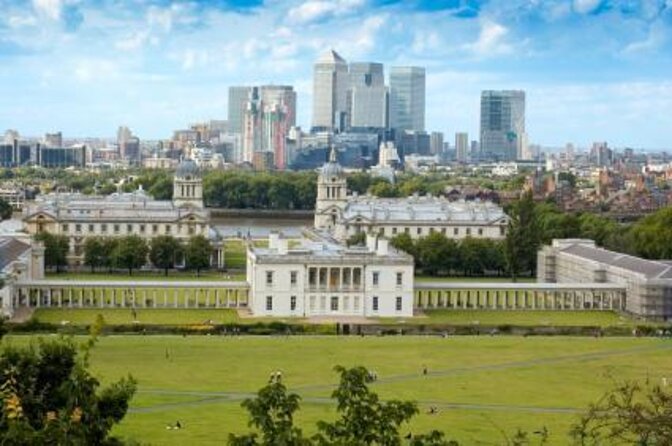
- Nelson’s bloodstained jacket: See the coat worn by Admiral Nelson when he was mortally wounded aboard HMS Victory.
- Turner’s Battle of Trafalgar: Start with one of Britain’s best-known naval paintings, created in the early 1820s.
- A frank look at slavery: The Atlantic Slavery gallery addresses England’s role in the slave trade without softening the subject.
- Queen’s House included: Spend about 45 minutes with the famous Armada Portrait of Elizabeth I.
- Private for your group: You get a more tailored experience than with a large public tour.
- A useful coffee break: Halfway through, you can stop at the museum café, with fish and chips also noted as a worthwhile option.
Starting beside Nelson’s Ship in a Bottle
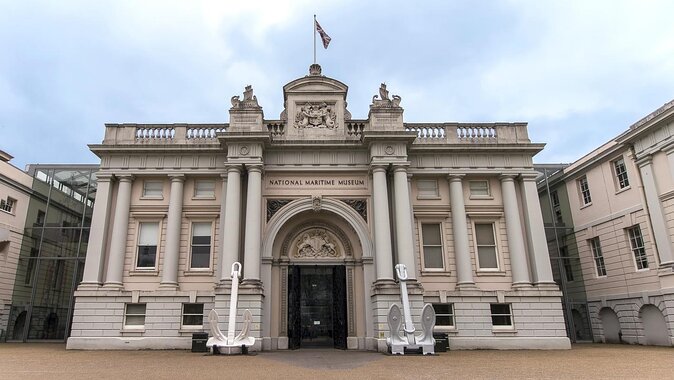
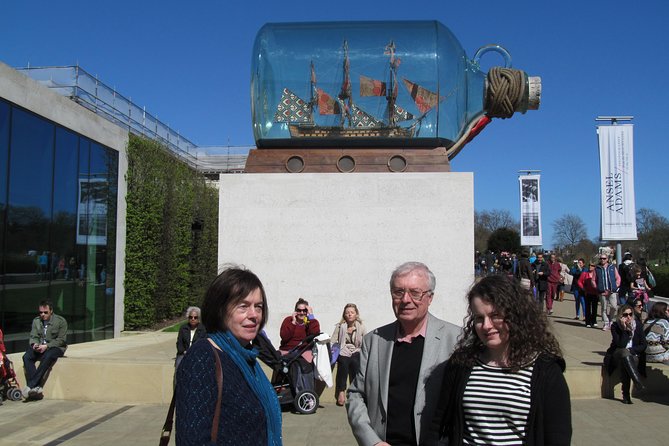
The tour begins at Nelson’s Ship in a Bottle, at the southern entrance to the National Maritime Museum on the observatory side. The meeting point is in Herbaceous Border, London SE10 8QY, and the scheduled start is 12:30 pm.
That clear landmark matters. Greenwich has several major sights close together, so meeting at a recognizable sculpture helps you avoid wandering around the wrong entrance. The tour ends back at the same meeting point.
Because this is a private activity, only your own group takes part. That is a real advantage if you are traveling with family or friends who want to ask questions, move at a particular pace, or spend longer with one object. A private guide can also adjust the explanation for children, first-time museum visitors, or serious naval-history fans.
You should arrive ready to walk and stand for much of the afternoon. The tour asks for a moderate level of physical fitness, and children must be accompanied by an adult. The museum is near public transportation, which makes Greenwich fairly easy to reach, though the exact route depends on where you are staying in London.
More Museums in London:
- Tower of London and Crown Jewels Exhibition Ticket
★ 4.5 · 6,677 reviews - Chelsea FC Stadium Tours and Museum
★ 5.0 · 1,908 reviews - Official tickets: Moco Modern & Contemporary Art Museum
★ 4.5 · 1,157 reviews
Turner’s Battle of Trafalgar sets the tone
The first major artwork is J. M. W. Turner’s Battle of Trafalgar, painted in the early 1820s. This is a strong opening because it gives you a dramatic image of naval power before the tour moves into the personal story of Nelson.
A guide’s narration is useful here. A large historical painting can seem impressive but distant if you only read the label. With a private guide, you can ask about what Turner chose to show and how the painting fits into Britain’s memory of the battle.
The tour does not treat the museum as a quick parade of famous items. It links art, people, ships, trade, and national identity. That makes the first section especially good for anyone who wants context rather than a list of dates.
The museum’s scale can also work against you. One account described arriving late and running out of time, which is a useful warning. Get to the meeting point early and resist the temptation to roam before the tour begins. You will have much more time after the guided visit if you want to return to favorite displays.
Nelson, Navy, Nation and the jacket of HMS Victory
From Turner, the route continues to the Nelson, Navy, Nation gallery. Its star object is the jacket Nelson wore when he was mortally wounded aboard HMS Victory.
This is the sort of small, direct object that can make a museum visit memorable. The painting gives you the grand public version of Trafalgar. The jacket brings the event down to one person, one ship, and one fatal moment.
I like this pairing because it gives the tour an emotional center without turning Nelson into a simple hero figure. You see the national story and the physical reminder of its cost. For families, this may be a better way to discuss naval warfare than beginning with a long lecture.
For younger children, the jacket may be more striking than the surrounding written material. Older children and teenagers who enjoy military history will likely get more from the gallery’s wider naval setting. The private format lets you ask for extra detail, although the total time still requires the guide to keep moving.
The tour is a good fit for a parent and teenager with different interests. One person can focus on Nelson and ships, while another can ask about art, politics, trade, or daily life at sea.
Trade, the East India Company, and Britain’s wider reach
The Trade Gallery shifts the story from battle to commerce. Here you learn about Britain’s trade with the Far East and the origins of that trade through the East India Company.
This part is important because maritime power was not only about warships. Ships carried goods, connected ports, and helped build commercial networks that changed Britain and the countries linked to it. The gallery gives the tour a wider frame, showing how naval history and business history overlap.
A guide is particularly useful in this section because the subject can become complicated quickly. You may find that one display raises questions about shipping, empire, or the East India Company that are difficult to answer from labels alone. A private tour lets you pause for a plain-English explanation instead of trying to piece everything together yourself.
The value here depends on your expectations. If you want only dramatic objects, this gallery may feel slower than the Nelson section. If you want to understand how Britain’s maritime power operated beyond the battlefield, it is one of the more useful stops.
You may also want to ask your guide how the museum presents trade alongside the later Atlantic Slavery gallery. The tour’s sequence gives you a chance to think about both subjects together, rather than treating maritime success as a purely celebratory story.
A few more to weigh up in London
- Stonehenge, Windsor Castle, and Bath from London
★ 4.5 · 18,662 reviews - London Big Bus Hop-On Hop-Off Tour with Optional River Cruise
★ 3.5 · 10,803 reviews - London Small Group Tour of Historical Pubs
★ 5.0 · 10,422 reviews - Stonehenge, Windsor Castle and Bath with Pub Lunch in Lacock
★ 4.5 · 7,402 reviews
A necessary stop at the Atlantic Slavery gallery
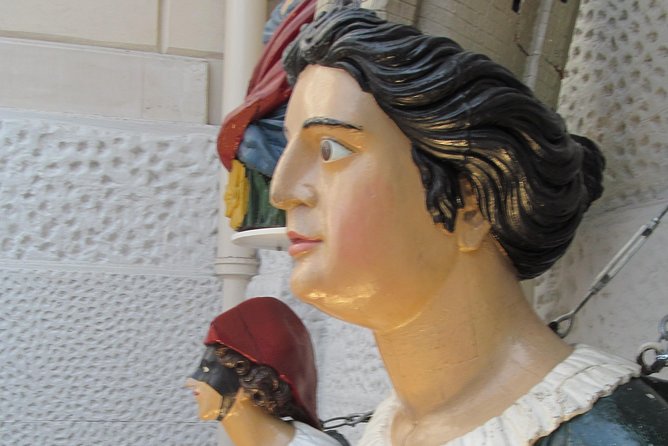
The Atlantic Slavery gallery presents the slave trade and England’s role in it. This is one of the most important parts of the visit, and it changes the mood sharply.
The subject is brutal. That is appropriate. A museum about ships, trade, and naval power should not leave out the people who suffered through the systems those ships helped support. The tour makes room for that difficult history rather than presenting Britain’s maritime past as a tidy story of exploration and invention.
I would give this section time and attention. It may not be comfortable, but it adds moral and historical weight to the earlier discussion of trade. It also helps explain why a tour focused on maritime Britain needs to cover more than admirals and famous vessels.
The quality of a visit here will depend partly on the guide’s tone. The description promises a brutally honest account, and that is the right approach. You should expect serious material, not a light family attraction. Families with older children and teenagers may find it valuable, but adults should decide how much detail is suitable for younger children.
The museum has received mixed reactions about presentation. Some people find the displays thoughtful and well made, while others find sections too sterile or too dependent on glass cases. That difference in response is worth keeping in mind. The objects and subjects are strong, but you should not expect every gallery to use dramatic sound, film, or theatrical effects.
Lighthouses and the practical side of the sea
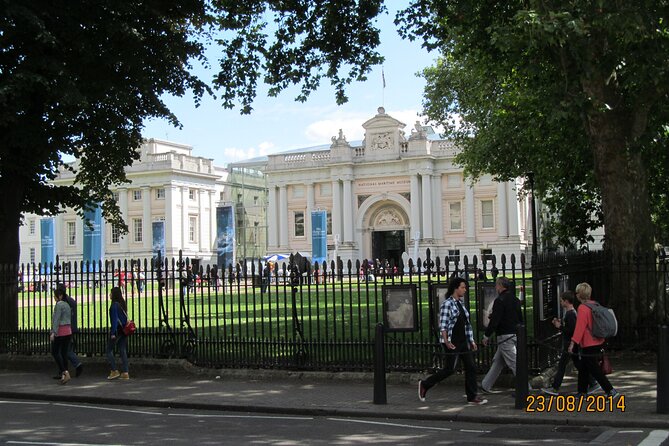
The tour also covers lighthouses and their history in the United Kingdom. This is a welcome change of scale after the weight of slavery and the drama of Trafalgar.
Lighthouses connect maritime history to everyday safety. They are less about famous commanders and more about the practical systems that helped ships find their way and avoid danger. If you enjoy engineering, coastal life, or the working side of the sea, this may be one of your favorite parts.
The lighthouse section also helps keep the tour from becoming too narrow. You see war, art, trade, exploitation, and technology within one afternoon. That variety is a major reason to choose a guided visit rather than spending three hours wandering without a plan.
At the same time, the tour cannot give every topic equal attention. The supplied schedule repeats the museum route in two places, so the practical expectation is a single museum visit followed by Queen’s House, not two separate museum tours. Ask your guide at the start how much time will be given to each gallery if one subject matters most to you.
The café break and the practical rhythm of the visit
Halfway through the tour, you have a chance to stop at the museum café for coffee or tea. Food and drinks are not included, so bring a payment method and treat this as a pause rather than part of the tour price.
This break is useful. Three and a half hours is a long stretch for a museum visit, especially with children. A short sit-down gives you time to absorb what you have seen and decide which questions you want to ask next.
Fish and chips at the café have also been singled out as worth trying. That does not mean you should build your whole lunch plan around it, but it is a handy option if you want to keep the afternoon simple.
Do not spend too long at the café if you want a full look at Queen’s House. The tour duration is approximate, and the museum contains more material than any one route can cover. If you arrive early, eat before the 12:30 start or save a proper meal for after the tour.
Queen’s House and the Armada Portrait
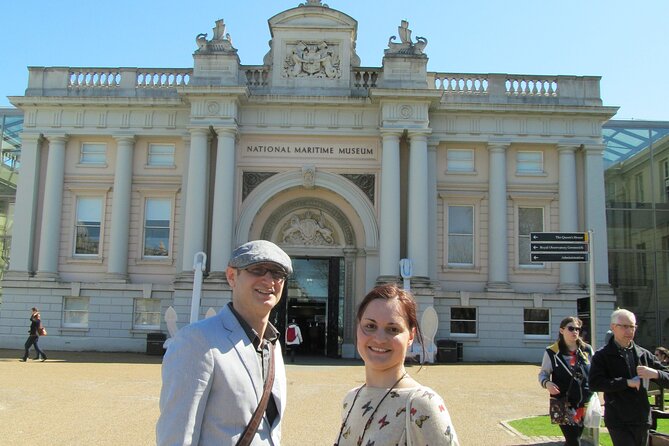
The final listed stop is Queen’s House, with about 45 minutes devoted to the building and its art. The key work is the world-famous Armada Portrait of Queen Elizabeth I.
This makes a good closing stop because it changes the subject from naval objects and galleries to royal portraiture. The Armada Portrait connects Elizabeth I to the defeat of the Spanish Armada and to the way rulers use art to shape public memory.
Forty-five minutes is enough for a focused visit, but not enough for an exhaustive look at everything in Queen’s House. That is not a flaw if you see the stop as a carefully chosen highlight. It would be disappointing only if you expected a full art tour.
The combination of the National Maritime Museum and Queen’s House is one of the tour’s best features. You get ships, trade, war, empire, technology, and royal art in one planned outing. Families can enjoy the variety, while history buffs get several different ways to think about Britain’s relationship with the sea.
The tour does not list a visit to the Royal Observatory, Cutty Sark, or the Meridian as part of this specific three-and-a-half-hour route. Greenwich has plenty of other sights, but you should not assume they are included. Plan separate time if those are priorities.
What the private format is worth at $237.59
At $237.59 per person, this is not a budget museum visit. Much of the National Maritime Museum is free to enter, so the price is paying for the private guide, the structured route, and the included Queen’s House visit rather than simple access to every display.
The value improves if you have a small group that would otherwise book several separate tours. It also improves if you care about interpretation. A guide can connect Turner, Nelson, the East India Company, slavery, lighthouses, and Elizabeth I in a way that a self-guided visit may not.
The value is weaker if you are happy to read labels, wander at your own speed, and return another day. The museum’s large space gives independent visitors freedom, and some people may prefer that over a fixed three-and-a-half-hour schedule.
Group size matters. Since the activity is private, you are not sharing the guide with strangers. That usually makes questions easier and can help children stay engaged. It also means the cost is tied to the number of people booked, with a minimum of two people per reservation.
The guide quality will shape the experience. Past feedback gives useful examples: Graham is praised for clear stories and helpful explanations during a family day, while Wendy is described as covering several Greenwich sights in a shorter 90-minute visit. Those accounts show the difference a lively guide can make, but they do not guarantee who will lead your tour or exactly how the narration will sound.
Who should book this Greenwich tour?
I would recommend it most strongly to:
- Families who want a planned museum visit with stories and a built-in break.
- First-time visitors to Greenwich who do not know which galleries deserve attention.
- History buffs interested in naval power, trade, empire, slavery, and royal symbolism.
- Couples or small groups who prefer a private guide to a large scheduled group.
- Visitors with limited time who want the museum’s major themes organized for them.
I would be more cautious if you dislike guided pacing or want to inspect every case. The museum is too large for this tour to cover fully, and a few hours can pass quickly.
It is also not the right choice if your main goal is the Cutty Sark, Royal Observatory, or the Prime Meridian. Those sights are associated with Greenwich but are not listed as stops on this route.
The tour is offered in English only. Children must have an adult with them, and you should be comfortable with a moderate amount of walking and standing. Confirmation is provided when you book, and free cancellation is available up to 24 hours before the local start time. Inside that final 24-hour window, refunds are not available and changes are not accepted.
Should you book it?
Book this tour if you want a private, guided introduction to Greenwich’s maritime story, especially if the Atlantic Slavery gallery, Nelson, Turner, and Queen’s House all appeal to you. The strongest parts are the thoughtful range of subjects, the personal group format, and the chance to hear stories that make individual objects matter.
Skip it if you mainly want free museum access or a slow, independent afternoon. At this price, you are buying structure and interpretation. For the right group, that can be worthwhile. For an experienced museum visitor who already knows the subject, it may feel expensive for a route that still cannot show everything.
FAQ
How long does the National Maritime Museum private tour last?
The tour lasts approximately 3 hours and 30 minutes.
What time does the tour start?
The scheduled start time is 12:30 pm.
Where does the tour meet?
The meeting point is Nelson’s Ship in a Bottle at Herbaceous Border, London SE10 8QY, beside the southern, observatory-side entrance to the National Maritime Museum.
Is the tour private?
Yes. Only your own group participates in this private activity.
Is Queen’s House included?
Yes. The tour includes a visit to Queen’s House, with about 45 minutes allocated to the stop and the Armada Portrait of Queen Elizabeth.
Are food and drinks included?
No. Food and drinks are not included, although the tour allows a coffee or tea break at the museum café.
Just added in London
- Private Transfer From London to Southampton Cruise Terminal★ 4.0 · 2 reviews
- Layover Tour of London from LHR Executive Luxurious Vehicle Private Tour 6 hour★ 4.5 · 9 reviews
- Pub & History Tour London (History & Beers)★ 5.0 · 3 reviews
- eSIM for UK (34 EU countries) | 3 to 30 days. Up to 40GB of data★ 4.0 · 18 reviews
- Young Victoria’s London: Windsor Castle & Kensington Palace★ 5.0 · 1 review
- Zombie Scavengers Game – Southend-on-Sea, UK★ 4.5 · 2 reviews
- Women of Whitechapel 2 hour Walking Tour★ 5.0 · 15 reviews
- Working Women of the East End Walking Tour★ 5.0 · 85 reviews
Museums, compared.
Tower of London and Crown Jewels Exhibition Ticket
Read our review →

Official tickets: Moco Modern & Contemporary Art Museum
Read our review →
British Museum London Guided Tour Semi-Private 8ppl Max
Read our review →
The British Museum London – Exclusive Guided Museum Tour
Read our review →

Skip the Line: Liverpool Beatles Museum – The perfect tribute to the Beatles
Read our review →Browse the lists this tour appears in