
Reviewed · MUSEUMS
National Gallery Tour in Spanish
Great art needs a little guidance. This Spanish-language tour makes the National Gallery easier to read, with a focused route through European painting from 1250 to the early 20th century. I like the carefully chosen masterpieces, especially the chance to see Van Eyck, Botticelli, Leonardo da Vinci, Velázquez, and Van Gogh in one visit. I also like the small group limit of 20 people, which should make it easier to hear and ask questions.
The main consideration is practical: no wireless listening system is included. In a busy gallery, you may need to stay close to the guide, and the group’s experience will depend partly on how clearly everyone can gather around each painting.
In This Review
- Key points to know before you book
- Why a Spanish tour can change the National Gallery
- Meeting at the National Gallery Shop at 4:00 pm
- The opening stretch: European painting from 1250 onward
- Jan van Eyck’s Arnolfini Marriage
- Botticelli’s Venus and Mars
- Leonardo da Vinci’s Virgin of the Rocks
- Velázquez’s Venus in the Mirror
- Van Gogh’s Sunflowers and the move toward modern painting
- What the two-and-a-half-hour format really offers
- Is $25.98 good value?
- The Spanish guide is the heart of the experience
- Booking, cancellation, and who should choose it
- Should you book the National Gallery Tour in Spanish?
- FAQ
- Where does the tour begin?
- What time does the tour start?
- How long does the tour last?
- Where does the tour finish?
- Is the tour conducted in Spanish?
- Are museum tickets included?
- Is an audio guide included?
- Is a wireless listening system included?
- How many people can join the tour?
- Can I cancel for a full refund?
Key points to know before you book
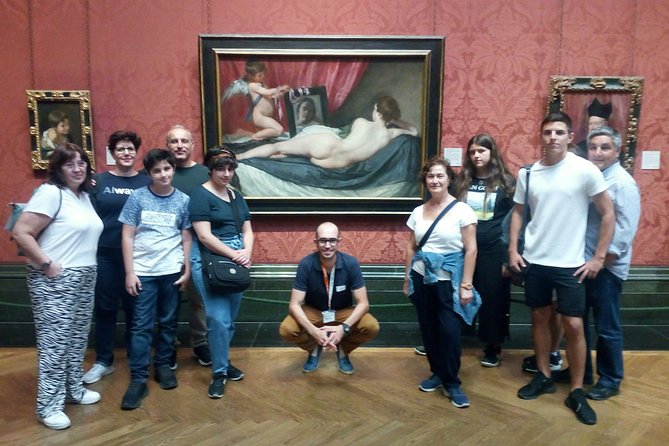
- Spanish guidance at 4:00 pm: The tour begins at the National Gallery Shop and lasts about two and a half hours.
- A strong lineup of masterpieces: The route includes Van Eyck’s Arnolfini Marriage, Botticelli’s Venus and Mars, Leonardo’s Virgin of the Rocks, Velázquez’s Venus in the Mirror, and Van Gogh’s Sunflowers.
- A clear sweep of European art: You move from the 13th century to the beginning of the 20th century rather than focusing on only one artist or period.
- Small maximum group: No more than 20 people can join, a useful limit in galleries where large groups can be hard to follow.
- Tickets included: The $25.98 price covers museum admission and the Spanish-speaking guide.
- Flexible booking terms: You can cancel for a full refund up to 24 hours before the start time, subject to the minimum group requirement.
Why a Spanish tour can change the National Gallery
The National Gallery is easy to enter and easy to underestimate. You can walk through its rooms alone, admire famous paintings, and still miss the clues that make them memorable. A guide can point out a hand gesture, a mirror, a flower, or a strange object that changes the whole picture.
That matters even more when you are looking at art from several centuries. Medieval religious paintings use symbols in ways that may not be obvious today. Renaissance artists played with perspective, anatomy, mythology, and mathematics. Later painters pushed color and brushwork in new directions. A Spanish-speaking guide can explain those shifts without making you pause to translate labels in your head.
I like the stated time span, from 1250 to the early 20th century. It gives you a useful framework for seeing European art as a changing conversation rather than a row of unrelated famous names. You are not just checking off Leonardo and Van Gogh. You are seeing how the purpose, style, and language of painting changed over time.
The tour is also a good choice if you want more than a quick photo beside a celebrated canvas. The guides connected with this company have been praised for making museum visits lively and easy to follow. Names that appear in the company’s feedback include Juan Carlos, Damián, Mario, Belén, María, Manel, and Emilio. The assigned guide for your National Gallery date is not specified, so you should not book expecting one particular person. Still, the repeated praise for Spanish explanations, passion, and a friendly manner is encouraging.
More Museums in London:
- Tower of London and Crown Jewels Exhibition Ticket
★ 4.5 · 6,677 reviews - Chelsea FC Stadium Tours and Museum
★ 5.0 · 1,908 reviews - Official tickets: Moco Modern & Contemporary Art Museum
★ 4.5 · 1,157 reviews
Meeting at the National Gallery Shop at 4:00 pm
The meeting point is the National Gallery Shop, at The National Gallery, London WC2N 5DN. The tour begins at 4:00 pm and finishes back at the meeting point.
That afternoon start can work well in a London sightseeing plan. You can use the earlier part of the day for Westminster, Trafalgar Square, or another central attraction, then finish with art indoors. It also gives you a fixed appointment, which helps prevent a museum visit from drifting into an unfocused wander.
You should allow enough time to locate the shop and gather before the start. The information provided does not give a detailed arrival procedure, a room number, or a late-arrival policy, so arriving early is the sensible move. The National Gallery is near public transportation, which makes the meeting point practical for most visitors.
The tour ends where it starts. That is useful if you want to continue around Trafalgar Square afterward, meet someone nearby, or use public transportation from the same central area. The end time should be around 6:30 pm, though the published duration is approximate.
The opening stretch: European painting from 1250 onward
The tour’s broad period range is one of its best features. European art from 1250 onward covers a huge change in subject, technique, and purpose. Early works often served religious settings and asked viewers to focus on sacred stories. By the Renaissance, artists were studying the physical world with new interest, creating more convincing space and human form.
A two-and-a-half-hour visit cannot cover every major movement or artist in the gallery. That is not a flaw, as long as you understand what you are getting. This is a guided highlights route, not a complete museum survey. The selected pictures give you anchor points, and the guide’s explanation should help connect them.
The route is especially useful for first-time visitors who find large museums tiring or confusing. Instead of trying to understand every room, you can focus on a manageable group of works. I would treat the tour as an introduction, then return on your own later if one artist or period catches your interest.
Jan van Eyck’s Arnolfini Marriage
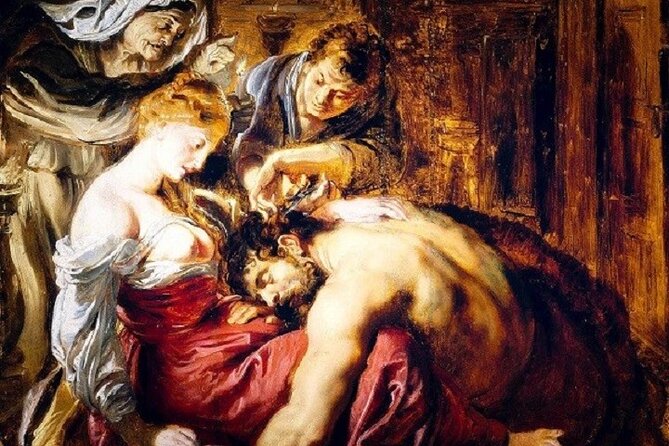
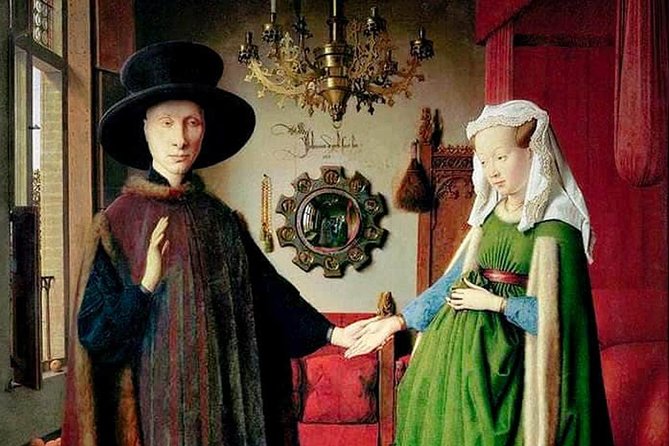
Jan van Eyck’s Arnolfini Marriage is a strong early stop because it rewards close looking. The picture is famous for its careful detail and for the questions hidden in its setting, objects, gestures, and reflection.
You might find yourself looking at the clothing, the room, the dog, the chandelier, and the small mirror at the back. Each detail invites a question about identity, marriage, wealth, and symbolism. This is exactly the kind of painting that benefits from a guide. Without context, it can appear to be a finely painted domestic scene. With context, the room becomes a puzzle.
The painting also gives the tour a useful starting point for discussing Northern European technique. Van Eyck’s attention to surfaces and tiny details contrasts with the different priorities you will see in later Italian works. A good explanation here can teach you how to look closely for evidence rather than simply admire technical skill.
A few more to weigh up in London
- Stonehenge, Windsor Castle, and Bath from London
★ 4.5 · 18,662 reviews - London Big Bus Hop-On Hop-Off Tour with Optional River Cruise
★ 3.5 · 10,803 reviews - London Small Group Tour of Historical Pubs
★ 5.0 · 10,422 reviews - Stonehenge, Windsor Castle and Bath with Pub Lunch in Lacock
★ 4.5 · 7,402 reviews
Botticelli’s Venus and Mars
Botticelli’s Venus and Mars shifts the mood from domestic portraiture to classical mythology. The picture shows Venus beside the sleeping Mars, with playful figures around them. Its subject opens the door to Renaissance interest in ancient Greece and Rome, as well as ideas about love, conflict, and power.
This is a good place to notice how an artist can suggest a story through posture and expression rather than through a crowded scene. Mars is vulnerable in sleep, while Venus remains alert. The contrast gives the composition its tension.
The painting also helps you see why a museum tour is more than a list of famous works. If the guide connects Botticelli’s mythological subject to the period’s wider interest in the ancient world, you gain a clearer sense of what Renaissance artists were trying to recover and reinvent.
Leonardo da Vinci’s Virgin of the Rocks
Leonardo’s Virgin of the Rocks is likely to be one of the most anticipated stops. Leonardo is often reduced to a few famous names, but this painting gives you a chance to study his handling of atmosphere, faces, gestures, and shadow.
The scene is religious, yet it does not feel stiff or purely formal. The figures relate to one another through their hands and glances, while the rocky setting creates a mysterious frame. Leonardo’s soft transitions between light and dark make the faces seem to emerge gradually from the surrounding space.
This painting is also useful for understanding why Leonardo had such an impact on European art. The guide can draw your attention to how he softened outlines and used subtle shifts in tone to create depth. You may find that the painting looks different once you stop searching for one obvious focal point and begin following the relationships between the figures.
Velázquez’s Venus in the Mirror
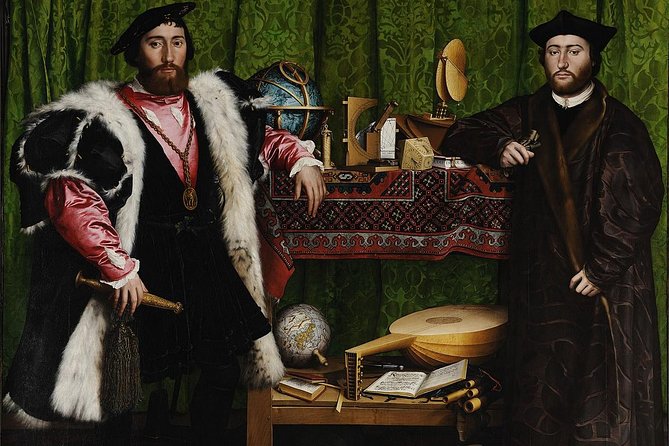
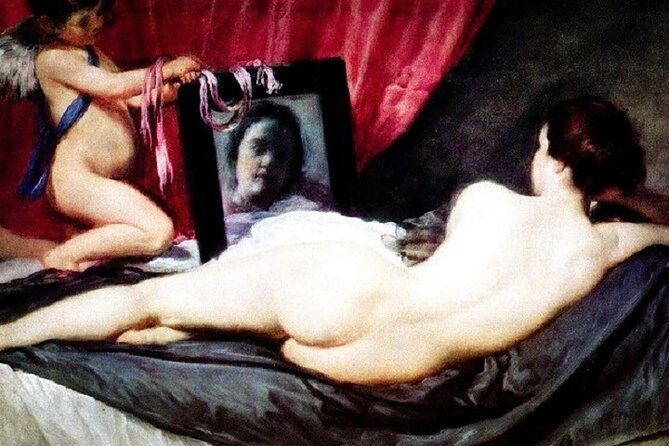
Velázquez brings a different kind of visual problem. Venus in the Mirror shows the figure from behind, while her face appears only in a mirror. That arrangement forces you to think about what you are allowed to see and what remains hidden.
The picture is elegant but not simple. The mirror does not provide a fully clear reflection, and the placement of Cupid adds another layer to the scene. A guide can help you consider how the painting plays with beauty, distance, and the act of looking.
This stop also shows the range of the National Gallery’s collection. You have moved from the precise details of Van Eyck to Botticelli’s graceful mythology, Leonardo’s soft modeling, and Velázquez’s controlled ambiguity. The works are not just individually famous. Together, they show different answers to the same basic question: how can paint make an image feel alive?
Van Gogh’s Sunflowers and the move toward modern painting
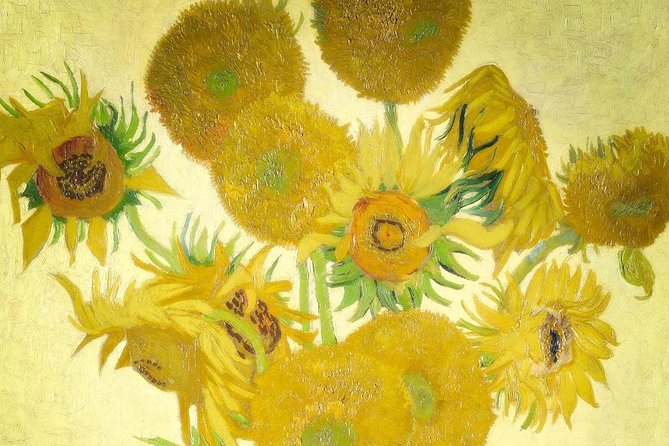
Vincent van Gogh’s Sunflowers brings the route close to the beginning of the 20th century. Compared with the earlier works, the painting can feel direct and almost startling. Its thick paint, intense color, and repeated flowers make the surface part of the subject.
You may already know the image well from reproductions, but seeing the original lets you notice the paint itself. The surface carries energy that a printed image cannot fully convey. A guide can also explain how Van Gogh used color and brushwork as expressive tools rather than treating them only as ways to copy the visible world.
The placement of Van Gogh near the end of the historical route makes sense. By this point, painting is no longer being judged only by how accurately it represents people, objects, or space. The artist’s touch and emotional response have become central. That gives the tour a satisfying endpoint, even if the route includes many other works along the way.
What the two-and-a-half-hour format really offers
At around 2 hours and 30 minutes, this is long enough for real explanation but short enough to fit into a full day in London. You should expect a steady museum visit, not a quick introduction. The exact number of paintings is not specified, but the named works are presented as part of a wider selection.
The length has both strengths and limits. You get time to examine major paintings and hear the ideas behind them, but you will not have unlimited time at each one. If you want to study a single canvas for 20 minutes, the group schedule may feel restrictive.
I would bring a short list of personal priorities. If Leonardo or Van Gogh matters most to you, keep those works in mind and ask the guide a question when the group reaches them. The smaller group limit should help, although the lack of a wireless system means you should stay near the guide during explanations.
The tour is suitable for most people, according to the available participation information. It is near public transportation, includes museum admission, and has a maximum of 20 participants. The data does not provide specific accessibility details, so anyone with mobility or other access needs should confirm those arrangements before booking.
Is $25.98 good value?
At $25.98 per person, the price includes the museum ticket and a Spanish-speaking guide. That makes the value fairly easy to judge. If you would otherwise enter the gallery and wander without knowing where to focus, the guided interpretation may justify the added cost.
You are paying for selection and explanation, not simply entry. The National Gallery’s collection is large enough to overwhelm a first visit. A guide who keeps the group moving and gives you a story for each major work can save time and make the experience more rewarding.
The value is strongest for Spanish-speaking visitors who want live explanations rather than an audio guide. An audio guide is not included, and neither is a wireless listening system. If you prefer complete independence, silence, and your own pace, a self-guided visit may suit you better.
The group cap also matters. Twenty people is not an intimate private tour, but it is more manageable than a large coach group. At this price, that balance is reasonable, especially if the guide is as engaging as the company’s strongest guides, including Belén, María, Juan Carlos, and Damián, have been described.
The Spanish guide is the heart of the experience
The most praised feature across the company’s feedback is the quality of the guides. The language is important, but so is the way information is delivered. Damián was praised for making subjects from Mesopotamia, Egypt, and Greece easy to picture, while Mario was described as both interesting and fun. Belén was praised for her friendly manner, and María for explaining the museum clearly.
Those comments concern the company’s wider museum work, not a guarantee about your specific National Gallery guide. Still, they point to the kind of experience you should hope for: clear Spanish, a sense of enthusiasm, and explanations that connect individual objects to larger ideas.
I would choose this tour if you learn best through stories and conversation. I would be less inclined to book it if you want to move quickly, avoid groups, or spend most of your time with paintings outside the selected route.
Booking, cancellation, and who should choose it
Confirmation is provided at the time of booking, and the tour is often reserved about 14 days ahead. That booking pattern suggests you should avoid leaving it until the last moment if the 4:00 pm Spanish-language slot is important to your plans.
Free cancellation is available if you cancel at least 24 hours before the start time. Cancellations or changes made inside that 24-hour window are not refunded or accepted, and the cut-off follows London local time. The tour also needs a minimum number of participants. If that minimum is not reached, you are offered another date or experience, or a full refund.
I think this tour is best for first-time National Gallery visitors, Spanish-speaking couples and families, and anyone who wants a clear route through major European art. It is also a good rainy-day choice, since the main experience takes place indoors.
Should you book the National Gallery Tour in Spanish?
Book it if you want the National Gallery’s greatest hits explained in Spanish, with admission included and a manageable group size. The selection is strong, the price is reasonable for a live museum tour, and the 2:30 duration gives you a useful introduction without taking your whole day.
Skip it if you prefer complete freedom or need a wireless system to hear comfortably. Otherwise, this is a sensible way to meet Van Eyck, Botticelli, Leonardo, Velázquez, and Van Gogh without feeling lost among the gallery’s many rooms.
FAQ
Where does the tour begin?
The tour begins at the National Gallery Shop, The National Gallery, London WC2N 5DN, United Kingdom.
What time does the tour start?
The start time is 4:00 pm.
How long does the tour last?
The tour lasts approximately 2 hours and 30 minutes.
Where does the tour finish?
The activity ends back at the meeting point.
Is the tour conducted in Spanish?
Yes. A guide in Spanish is included.
Are museum tickets included?
Yes. Museum admission is included in the tour price.
Is an audio guide included?
No. An audio guide is not included.
Is a wireless listening system included?
No. The tour does not include a wireless system.
How many people can join the tour?
The maximum group size is 20 participants.
Can I cancel for a full refund?
Yes. You can cancel up to 24 hours before the experience start time for a full refund. If you cancel less than 24 hours before the start time, the amount paid is not refunded.
Just added in London
- Private Tour: Royal High Tea At Kensington Palace Gardens★ 5.0 · 39 reviews
- Private Tour: Personal Travel Photographer Tour in London★ 4.5 · 27 reviews
- London East End Private Walking Food Tour – Secret Food Tours★ 5.0 · 26 reviews
- London Like a Local, Private & Personalized (2-3 hrs)★ 4.5 · 11 reviews
- British Museum & National Gallery of London – Exclusive Guided Combo Tour★ 5.0 · 48 reviews
- Private Tour: Night Photography Tour in London★ 5.0 · 48 reviews
- Private Tour: Tower of London and St Paul’s Cathedral★ 5.0 · 1 review
- London Soho District – Exclusive Guided Walking Tour★ 5.0 · 2 reviews
Museums, compared.

Tower of London and Crown Jewels Exhibition Ticket
Read our review →

Official tickets: Moco Modern & Contemporary Art Museum
Read our review →
British Museum London Guided Tour Semi-Private 8ppl Max
Read our review →
The British Museum London – Exclusive Guided Museum Tour
Read our review →

Skip the Line: Liverpool Beatles Museum – The perfect tribute to the Beatles
Read our review →Browse the lists this tour appears in