
Reviewed · HISTORICAL TOURS
London’s Millennia of Medical Progress Private Historical Tour
Medical history gets personal in London. This four-hour private tour links hospitals, plague sites, old remedies, and pioneering doctors across the city, turning familiar streets into a story about survival and science. I especially like the stops at the Old Operating Theatre and Aldgate Pump, where medicine feels tangible rather than trapped in a textbook. Guide Stephen also brings a lively grasp of East London’s past, according to the detailed feedback available.
I like the mix of walking and public transport, since you see how medical landmarks fit into the modern city. I also like the private format, which gives your group room to ask questions and set a sensible pace. The main drawback is the sheer number of stops: 26 places in about four hours means many visits are brief, and the tour requires moderate physical fitness.
In This Review
- Key points to know before you book
- Why London works so well for a medical history tour
- Bloomsbury, foundlings, and the care of children
- Plague, Mary Seacole, and the streets of Soho
- Jenner, vaccines, and the first antibiotics
- The Old Operating Theatre and London Bridge
- Churches, water, plague burial, and Jewish charity
- Bedlam, medieval hospitals, and body snatchers
- Finishing at St Bartholomew the Great
- Pace, walking, and what to bring
- Is $177.93 per person good value?
- Who should book this tour?
- FAQ
- How long is the medical history tour?
- Where does the tour begin?
- Where does the tour end?
- Is this a private tour?
- Is public transport included?
- Is admission to the Old Operating Theatre included?
- Can I visit the Foundling Museum?
- Can I cancel for a full refund?
Key points to know before you book
- A 26-stop medical story: You move from Bloomsbury and the Foundling Museum through Soho, Hyde Park, London Bridge, Aldgate, Spitalfields, and Smithfield.
- Stephen is a major part of the experience: His entertaining delivery and strong grasp of East London’s past received especially warm praise.
- The Old Operating Theatre gives the tour its strongest indoor visit: It is described as the oldest surviving operating theatre in the world.
- Several admissions depend on the option you choose: The Foundling Museum, Old Operating Theatre, and Saint Bartholomew’s Hospital Museum may require paid entry.
- Public transport is part of the plan: Underground fare is not included, with an indicated adult cost of £7.40.
- The tour costs $177.93 per person: That is easier to justify for a private group that values a specialist guide, but less attractive if you prefer long museum visits.
Why London works so well for a medical history tour
London’s medical past is not confined to one museum. It is spread through churches, squares, pubs, hospitals, market streets, water pumps, and public monuments. That makes this experience feel like a city walk with a medical theme, rather than a standard museum tour.
You begin in Bloomsbury at 10:00 a.m., a useful meeting point near Russell Square. The area is known for garden squares, creative life, and a tradition of philanthropy. That first stop sets up one of the tour’s main ideas: medical progress is tied not only to doctors and discoveries, but also to charity, poverty, children, housing, and public welfare.
The private arrangement matters here. With only your own group taking part, you can ask why a particular church mattered, how a hospital served its neighborhood, or what a strange old pump has to do with public health. The tradeoff is cost. At $177.93 per person, this is a specialist experience rather than a cheap sightseeing walk.
More History Tours in London
- London Small Group Tour of Historical Pubs
★ 5.0 · 10,422 reviews - Soho Music & Historic Pubs Tour
★ 5.0 · 1,993 reviews - Royal Historic Pubs Walking Guided Tour in London
★ 5.0 · 803 reviews
Bloomsbury, foundlings, and the care of children
The opening section moves through Bloomsbury and toward the Foundling Museum. The museum tells the story of an early children’s institution created by Thomas Coram, a Yorkshire sailor whose efforts helped establish a pioneering facility for abandoned children.
The museum is not automatically part of every booking. Entry is available if you select the relevant option, so check carefully before paying. The stated visit here is only five minutes, which suggests that the guide’s explanation is central and that you should not expect a long museum visit unless your chosen arrangement allows more time.
You then pass Great Ormond Street, one of the world’s leading children’s hospitals. Its connection to Peter Pan adds a familiar cultural thread to the medical theme. The stop is short, but it helps show how London’s institutions have combined treatment, fundraising, children’s welfare, and public imagination.
At Queen Square, you hear about Florence Nightingale and the nursing company she established before the Crimean War. The small garden square provides a calmer setting after the busy opening streets. It also adds an important point: medical progress is not only about new operations or medicines. Better nursing and organized care changed outcomes too.
Plague, Mary Seacole, and the streets of Soho
St Giles-in-the-Fields Church brings the darker side of London’s past into view. The church sits in an area once known as a terrible rookery, and the first recorded London cases of the Plague were associated with this district. The church admission is included, although the scheduled stop is still only about ten minutes.
Soho Square changes the tone. Alongside its links to Paul McCartney and show business offices, the square is connected with Mary Seacole. Her story broadens the tour beyond the usual list of famous British doctors and inventors. You get a reminder that medical service also involved people working directly with patients in difficult conditions.
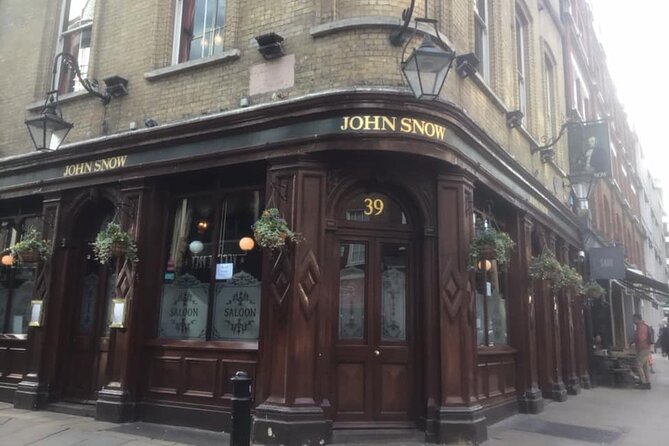
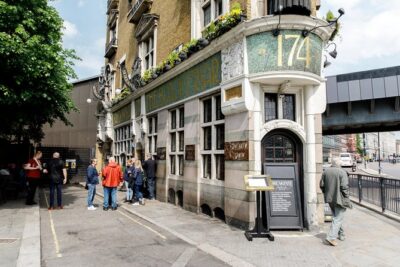
The John Snow Saloon is one of the more memorable stops because it ties a pub to a major public health breakthrough. John Snow worked out that disease was spreading through contaminated water, and the famous water pump connected to his investigation survives in the street.
This is the sort of stop I value most on a city tour. You are not simply told that public health changed. You are shown a surviving object in an ordinary London setting, then given the story that makes it matter. The pub itself is free to visit from the tour’s point of view, but you should not assume food or drinks are included.
Carnaby Street provides a cultural pause as you move to the next part of the route. Its 1960s identity may seem unrelated to medicine, but it gives the walk a welcome change of subject and helps you experience London as a living city rather than a series of historical sites.
Jenner, vaccines, and the first antibiotics
The tour next reaches the statue of Edward Jenner in the Italian gardens of Hyde Park. Jenner is remembered for developing the world’s first vaccine, so the statue gives the medical story one of its clearest links to modern life.
This was a favorite part of the experience for one guest, who especially liked the peaceful setting, pond, and swans around the statue. That reaction makes sense. After plague stories, overcrowded districts, and grim hospital practices, a garden setting offers a quiet place to consider how one medical idea could affect millions of people.
The route then continues through Paddington to the place associated with the discovery of the first antibiotics. The stop lasts about 15 minutes, longer than several of the brief church and statue visits. It is a useful reminder that the history of medicine did not end with vaccines or Victorian sanitation. The tour connects older public health crises with discoveries that changed treatment in the modern era.
You should keep your expectations measured here. The supplied details do not promise a laboratory visit or a full museum display. This is primarily a guide-led explanation at significant locations.
A completely different sort of day out:
- Stonehenge, Windsor Castle, and Bath from London
★ 4.5 · 18,662 reviews - London Big Bus Hop-On Hop-Off Tour with Optional River Cruise
★ 3.5 · 10,803 reviews - Stonehenge, Windsor Castle and Bath with Pub Lunch in Lacock
★ 4.5 · 7,402 reviews - Tower of London and Crown Jewels Exhibition Ticket
★ 4.5 · 6,677 reviews
The Old Operating Theatre and London Bridge
The Old Operating Theatre Museum and Herb Garret is likely to be the tour’s most atmospheric indoor stop. It is described as the oldest surviving operating theatre in the world and the remaining part of an old hospital.
The name tells you what makes the visit unusual. You are not entering a polished modern medical center. You are seeing an old operating space, along with a herb garret that reflects the period before today’s hospital systems and pharmaceutical supply chains.
Admission is not included unless you book the relevant option. The stated stop is five minutes, so check the entry arrangement before booking if this museum is your main reason for taking the tour. A short visit can introduce the site, but it may not allow much time for close examination.
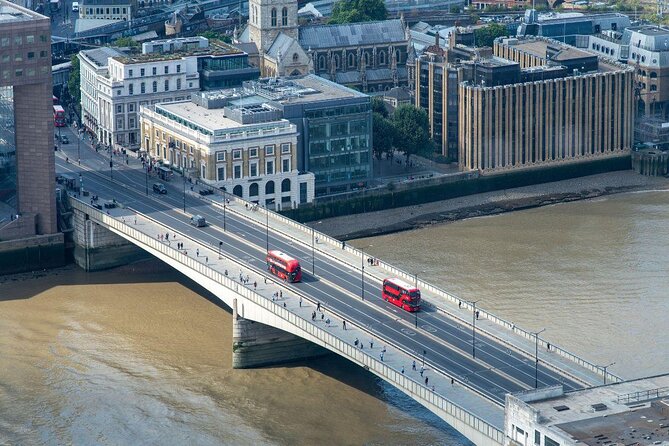
From there, London Bridge gives you a broad view of the City of London as the tour shifts east. The bridge stop is free and brief. Its value is mainly geographical: you see how the route moves between the South Bank, the City, and the East End.
The Monument to the Great Fire of London is another passing point. Entry is not included, and the stop lasts around five minutes. You will hear about one of London’s greatest disasters, but this is not a climb or a full monument visit.
Churches, water, plague burial, and Jewish charity
St Olave’s Church offers a small garden filled with medicinal herbs used before modern hospitals. It also sits in an area hit hard by plague. This stop brings together two themes that run through the tour: illness was part of daily urban life, and treatment often depended on plants, folk practice, charity, and faith.
Aldgate Pump is one of the most distinctive sights on the route. The old pump has an infamous connection with a Victorian public health crisis. It is easy to walk past without knowing its story, which is exactly why the stop works well with a guide.
Aldgate Square looks pleasant today, but the ground below is associated with countless plague victims. The contrast is stark. Modern gardens can cover the physical traces of disease, yet the street plan still carries the memory.
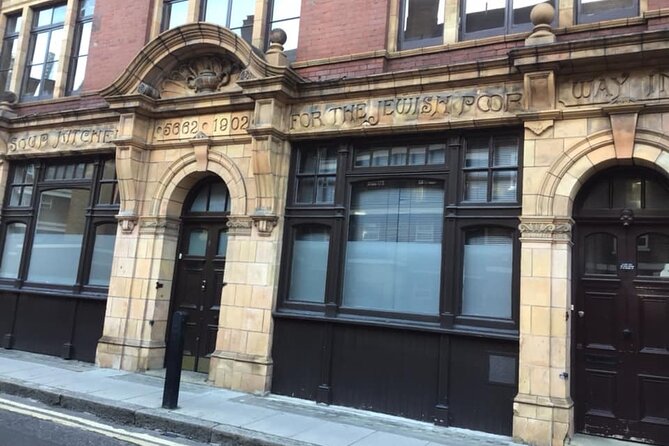
In the East End, you visit the outside of the Soup Kitchen for the Jewish Poor. The stop is brief, and admission is not included. Even from outside, it adds a social dimension to the medical story. Hunger, crowded housing, disease, and charity were closely linked in working-class London.
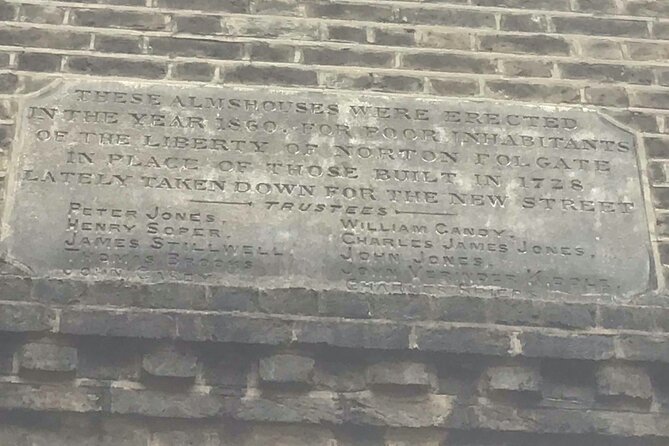
The Norton Folgate Alms Houses continue the same theme. These old almshouses are still operating and helping people in need, just as they have done for centuries. You should expect an exterior visit rather than a full interior tour, since admission is listed as not included.
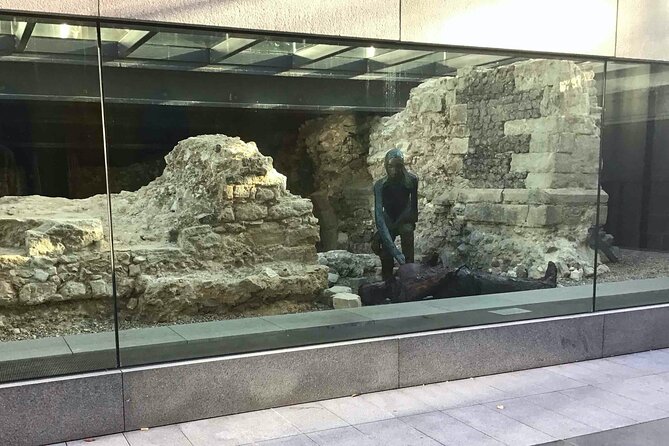
Spitalfields Charnel House provides another somber moment. The underground ruins were discovered only a few years ago and once held the bones of thousands of famine victims. Nearby Old Spitalfields Market has a livelier present-day identity, but the area was once connected with medical recuperation.
This part of the walk may be especially useful if you want to understand medicine as a response to social conditions. Doctors could not solve every problem with a new treatment. Food, clean water, shelter, and organized relief mattered just as much.
Bedlam, medieval hospitals, and body snatchers
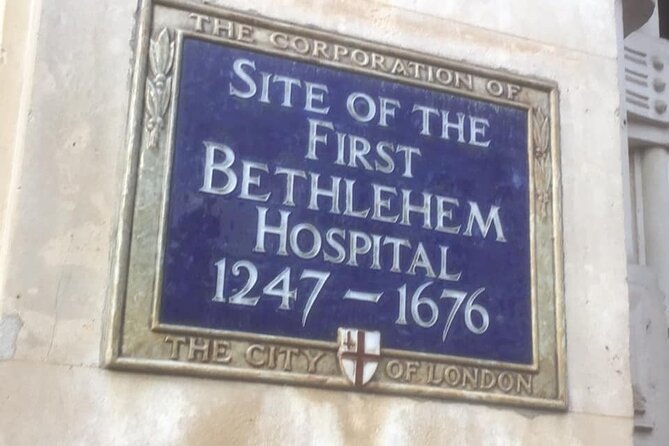
At Liverpool Street Station, the tour pauses at the site of the first hospital for people suffering from mental illness. The old term Bedlam has entered everyday language, but this stop puts it back into a medical and institutional setting.
The next section includes a tube journey, and the fare is extra. The indicated cost is £7.40 per adult. Bring a valid payment method or travel pass and expect the tour to feel like a local outing rather than a sealed coach excursion.
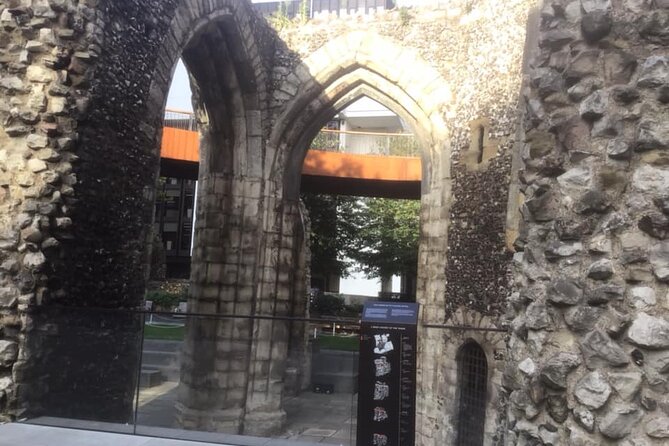
Cripplegate Street recalls a place where sick and infirm people gathered in the belief that divine power could heal them. You also see the ruins of the Tower of St Elsyng Spital, an early medieval hospital. This is one of the more unusual stops because it connects religious belief, medieval care, and the physical remains of an early hospital.
Postman’s Park offers a short, quiet walk before the final group of sites. It is described as beautiful and melancholic, so it works as a breathing space after the heavier plague and poverty stories.
Near Smithfield, the tour reaches Saint Bartholomew’s Hospital, one of the oldest hospitals in the Western world. The museum can be visited with optional entry, and opening is limited to some days. If you specifically want the museum, verify availability rather than assuming it will be open.
The William Wallace Memorial introduces the trade in body snatching. The practice was illegal, but the bodies supplied to doctors helped advance medical study. It is an uncomfortable topic, and the tour is right to include it. Progress often came with ethical failures, and a useful medical history should not hide that fact.
Finishing at St Bartholomew the Great
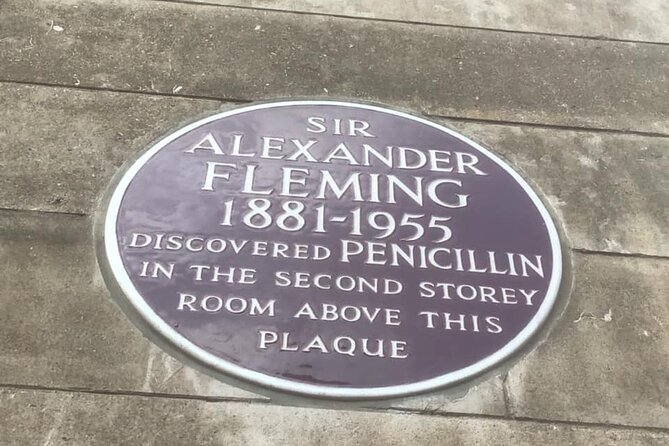
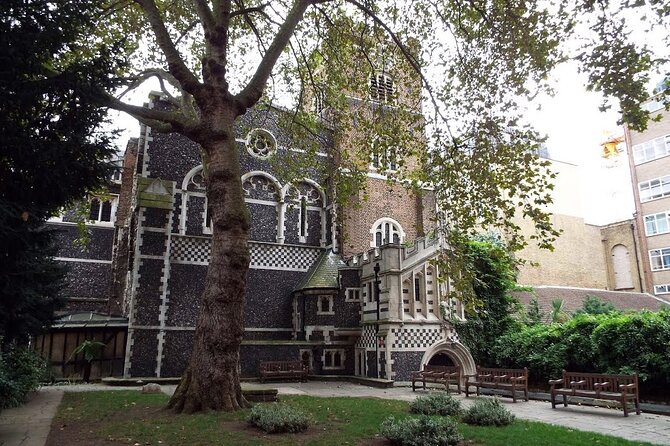
The final stop is the Church of St Bartholomew the Great, a genuinely old and impressive church. Here you learn about Rahere, who nearly died while traveling, had a vision of Saint Bartholomew, and returned to London to found both the church and the hospital associated with it.
The church contains Rahere’s tomb, giving the tour a strong ending. After four hours of disease, hospitals, nursing, vaccines, water supplies, poverty, and medical experimentation, you arrive at a place where religion and healthcare were once part of the same foundation.
The finish is near the oldest hospital in the Western world and has onward connections by Underground or bus. The stated end point is by the Great Rising of 1381 Memorial near Smithfield, so confirm the exact final meeting point with the operator after booking.
Pace, walking, and what to bring
This is an active tour. You walk through several central districts, use public transport, and make many short stops. The tour data calls for moderate physical fitness, which is important because four hours can pass quickly when the route keeps changing.
The 26 stops are a strength if you like variety. You will rarely spend long enough in one place to get bored. They can also feel rushed if you want time for photographs, church interiors, museum displays, or quiet reflection.
I would wear comfortable shoes and plan for changing weather. That is practical advice for any long London walk, and this route has no single indoor base where you can wait out rain. Keep your schedule clear around the four-hour duration, since the public transport leg and the number of stops make a tight connection afterward unwise.
The tour begins at Russell Square at 10:00 a.m. Pickup is offered, though the listed meeting point is Russell Square. Ask about pickup when booking if hotel collection matters to you.
Is $177.93 per person good value?
At $177.93 per person, the tour is expensive compared with a general London walking tour. The price includes a private guide, but not Underground tickets or every museum admission.
The value improves if you are traveling as a small group and want a custom conversation about medicine, social history, and London neighborhoods. A private guide can connect the John Snow pump to public health, the Foundling Museum to charity, and Saint Bartholomew’s Hospital to medieval religious life without forcing you into a large group’s schedule.
The value is weaker if you mainly want extended time inside museums. Several scheduled stops last only five or ten minutes, and the route covers a great deal of ground. You are paying for the guide’s storytelling and the connections between places, not for a long museum program.
The two detailed comments available are strongly positive about Stephen. One praised his entertaining delivery, steady walking pace, and extensive understanding of East London. Another found the medical theme fascinating and singled out Edward Jenner’s statue as a favorite. Those points matter because the quality of this experience depends heavily on the person leading it.
Free cancellation is available if you cancel at least 24 hours before the start time. Changes or cancellations within 24 hours are not refunded.
Who should book this tour?
I would recommend it to history-minded visitors, medical professionals, students, and repeat London visitors who want a subject-led walk beyond the usual royal palaces and famous galleries. It also suits a private group that enjoys asking questions and moving through real neighborhoods.
You may want another tour if you dislike walking, want a slow museum day, or prefer a simple route with just three or four major attractions. The number of stops is impressive, but it demands energy and attention.
Book the Foundling Museum, Old Operating Theatre, and Saint Bartholomew’s Hospital Museum options only if those interiors matter to you, and check opening limitations for the hospital museum. Otherwise, the outdoor route still offers plenty: old churches, a plague burial site, John Snow’s pump, Jenner’s statue, Aldgate Pump, and the streets where London’s medical story unfolded.
FAQ
How long is the medical history tour?
The tour lasts approximately four hours.
Where does the tour begin?
It begins at Russell Square, Bernard Street, London WC1N 1LJ, at 10:00 a.m. Pickup is also offered.
Where does the tour end?
It ends near Saint Bartholomew’s Hospital, with onward connections by London Underground or bus. The listed end point is near the Great Rising of 1381 Memorial on West Smithfield.
Is this a private tour?
Yes. Only your group participates in the activity.
Is public transport included?
No. Underground tickets are not included. The stated adult Underground cost is £7.40.
Is admission to the Old Operating Theatre included?
Admission is not included unless you select the relevant booking option.
Can I visit the Foundling Museum?
Entry is available if you choose the relevant option when booking. It is not automatically included.
Can I cancel for a full refund?
Yes. You can receive a full refund if you cancel at least 24 hours before the experience start time. Cancellations within 24 hours are not refunded.
Just added in London
- Private Tour: Royal High Tea At Kensington Palace Gardens★ 5.0 · 39 reviews
- Private Tour: Personal Travel Photographer Tour in London★ 4.5 · 27 reviews
- London East End Private Walking Food Tour – Secret Food Tours★ 5.0 · 26 reviews
- Private Tour: Night Photography Tour in London★ 5.0 · 48 reviews
- London Like a Local, Private & Personalized (2-3 hrs)★ 4.5 · 11 reviews
- British Museum & National Gallery of London – Exclusive Guided Combo Tour★ 5.0 · 48 reviews
- Private Tour: Tower of London and St Paul’s Cathedral★ 5.0 · 1 review
- London Soho District – Exclusive Guided Walking Tour★ 5.0 · 2 reviews
Historical Tours, compared.
Shadows of York: Ghost Walk and Horrible History.
Read our review →
A Walk Through Time: History of Liverpool Walking Tour
Read our review →
Royal Historic Pubs Walking Guided Tour in London
Read our review →
Private Group: Historical Pub Walking Tour of London
Read our review →
Best Of Liverpool Heritage, History & Culture Guided Walking Tour
Read our review →Browse the lists this tour appears in