
Reviewed · MUSEUMS
London Transport Museum One Day Ticket
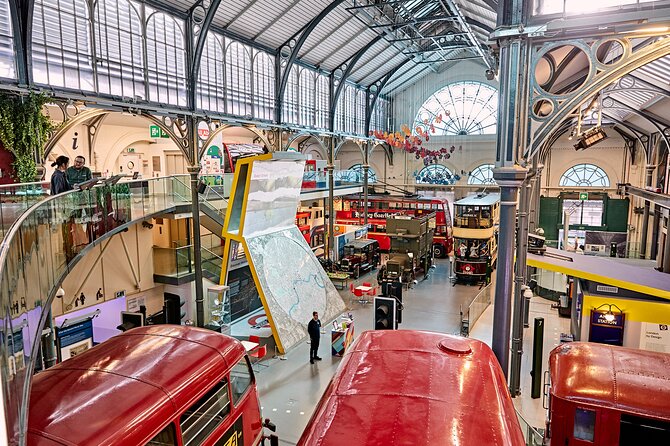
London’s transport story is full of surprises. At the London Transport Museum, old buses, early Tube trains, trams, posters, and hands-on displays show how public transport helped London grow. I like the beautifully restored vehicles, and I like that children can play conductor, driver, or mechanic instead of simply looking at glass cases. The main drawback is noise and crowding during school breaks, when the museum can be harder to enjoy at a relaxed pace.
This is an easy Covent Garden stop that works well in a busy sightseeing day. You choose a time slot, enter with a mobile ticket, and explore at your own speed. Two hours is a sensible visit, though families may stay longer. At $33.76 per person, it is not a cheap museum visit, but the amount of hands-on activity and the central location can make the price worthwhile.
In This Review
- Key points to know before you go
- Why London’s transport story belongs in a museum
- What you see inside the Covent Garden building
- The old trains and the birth of the Underground
- Buses, trams, taxis, and the London you recognize
- All Aboard playzone: the main family draw
- How long should you spend here?
- Is the $33.76 ticket good value?
- Tickets, timing, and practical planning
- Who will enjoy the museum most?
- My final take on the London Transport Museum
- FAQ
- Where is the London Transport Museum?
- How long does a visit take?
- Is the ticket mobile?
- What language is the experience offered in?
- What transport can I see at the museum?
- Is the museum suitable for children?
- Is food included in the ticket?
- Are service animals allowed?
- Can I cancel the ticket for a refund?
Key points to know before you go
- London in motion: Follow the city’s development through horse-drawn buses, early underground trains, classic buses, trams, black cabs, and the famous Tube map.
- A former flower market: The museum occupies a charming old market building in The Piazza, Covent Garden.
- Strong choice for families: The All Aboard playzone lets children take on transport jobs and interact with child-sized vehicles and activities.
- Self-guided freedom: Your ticket gives you time to explore without a fixed tour group or strict route.
- Plan around school holidays: The museum can become loud and difficult to concentrate in during busy school breaks.
- Allow time for extras: The Canteen cafe-bar and transport-themed shop add useful breaks to the visit, though food and drinks cost extra.
Why London’s transport story belongs in a museum
London is often understood through its transport. Red buses, black cabs, and the Underground are not just ways to get around. They are part of the city’s image, daily rhythm, and growth.
This museum explains that connection in a clear, physical way. You see how London moved from horse-drawn buses in the 18th century to a pioneering underground railway and the modern Tube network. The vehicles make the story easy to grasp because you are looking at the machines that carried people, not just reading dates on a wall.
I especially like the way the displays connect transport with city life. A bus or train can tell you about engineering, but it can also show how people worked, shopped, commuted, and spread into new parts of London. The museum gives you that wider picture without requiring a long guided lecture.
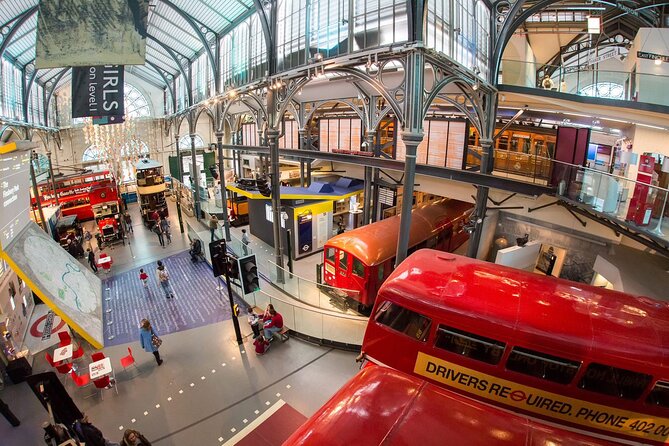
The setting helps, too. The museum is housed in a refurbished old flower market in Covent Garden. That gives the visit a sense of place before you even begin looking at the exhibits. You are not entering an anonymous exhibition hall. You are visiting a building with its own link to London’s past.
More Museums in London:
- Tower of London and Crown Jewels Exhibition Ticket
★ 4.5 · 6,677 reviews - Chelsea FC Stadium Tours and Museum
★ 5.0 · 1,908 reviews - Official tickets: Moco Modern & Contemporary Art Museum
★ 4.5 · 1,157 reviews
What you see inside the Covent Garden building
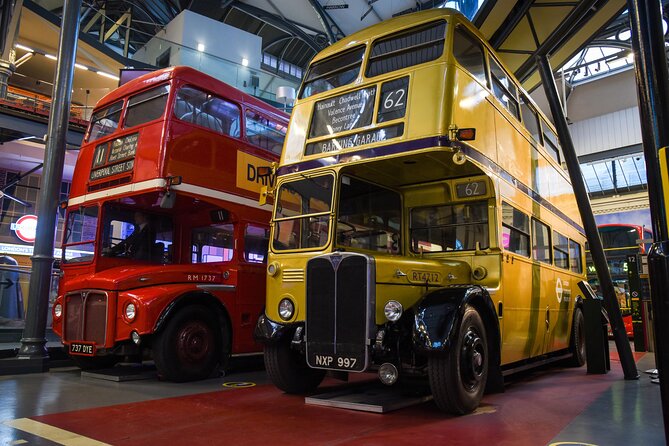
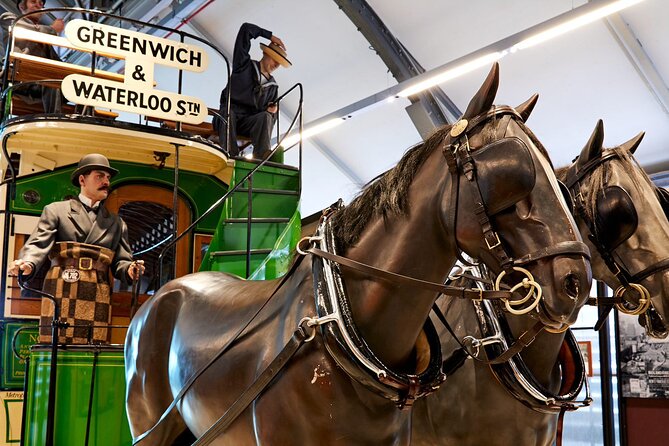
The main attraction is the collection of restored transport vehicles. You can see examples of London’s classic red buses, trams, black cabs, and Tube trains. The displays also include the world’s first underground steam and electric trains, which give the Underground story a strong starting point.
The vehicles are the museum’s biggest strength. Large machines make an immediate impression, especially for children. You can see the shape of the buses, the details of the interiors, and the changes in design over time. A transport fan can focus on construction and function, while a casual visitor can simply enjoy the familiar London forms.
The exhibit route covers three floors, according to the practical experience described by families who have spent time there. A lift provides access between floors, which is useful for anyone using a buggy or needing step-free movement. The building can feel a little confusing at first, so take a moment to get your bearings before rushing from one display to the next.
The museum uses interactive displays, colourful exhibits, and historic posters to break up the vehicle collection. The posters are particularly useful for showing how London transport was presented to the public. They add colour and design to a subject that could otherwise become a long run of technical information.
You may also find small details that connect transport to major events in London’s past, including wartime life. Much of the written information is in English, so readers who are less comfortable with English may find some sections slower to follow. The vehicles and visual displays still communicate a great deal without requiring you to read every panel.
The old trains and the birth of the Underground
The early underground trains deserve careful attention. London’s Underground system is one of the city’s defining features, and seeing the first steam and electric trains makes its early development more real.
The steam trains show the practical problems of building a railway below a crowded city. The electric trains show the shift toward a cleaner and more workable system. You do not need to be a railway expert to understand why these changes mattered. The vehicles provide a straightforward lesson in how engineering shaped everyday travel.
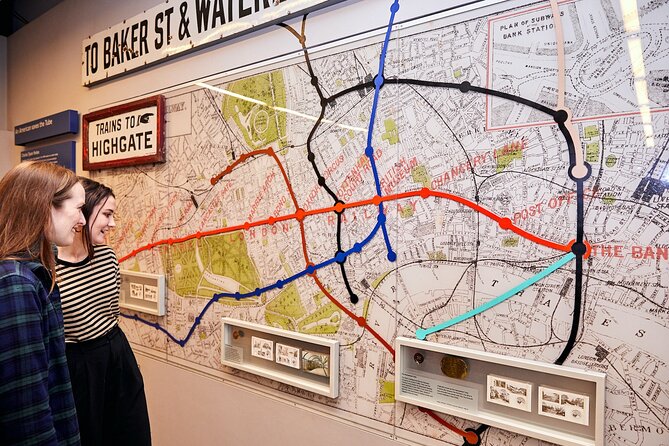
The Tube map is another major part of the story. Its familiar coloured lines and simplified layout have become one of London’s best-known designs. The museum shows the map as more than a route-planning tool. It is an example of how good design can make a complicated city easier to understand.
I would give the Underground displays more time than a quick glance. They explain why the Tube became so important to London and how public transport helped the city function on a much larger scale. This is one of the areas that gives the museum value beyond a collection of old vehicles.
Buses, trams, taxis, and the London you recognize

The red double-decker bus is the star many people expect, and the museum gives it plenty of attention. You can compare older designs with the buses that became familiar symbols of London. The same is true of the trams and black cabs, each showing a different answer to the problem of moving people through busy streets.
I like this part because it feels close to ordinary London life. The Underground can seem like a world below the city, but buses and taxis connect directly with streets, neighbourhoods, and public spaces. Together, the vehicles show that London has never relied on one transport solution.
The collection also helps you notice how design changes for passengers. Seating, entrances, driving positions, and vehicle layouts all reflect different needs. Even if you only spend a few minutes inside each display, you gain a better sense of how London transport changed across roughly two centuries.
The museum does not require you to follow a strict guided route. You can focus on buses, stay with the Underground story, or move between the displays according to your interests. That freedom matters because adults and children often want different things from the same visit.
A few more to weigh up in London
- Stonehenge, Windsor Castle, and Bath from London
★ 4.5 · 18,662 reviews - London Big Bus Hop-On Hop-Off Tour with Optional River Cruise
★ 3.5 · 10,803 reviews - London Small Group Tour of Historical Pubs
★ 5.0 · 10,422 reviews - Stonehenge, Windsor Castle and Bath with Pub Lunch in Lacock
★ 4.5 · 7,402 reviews
All Aboard playzone: the main family draw
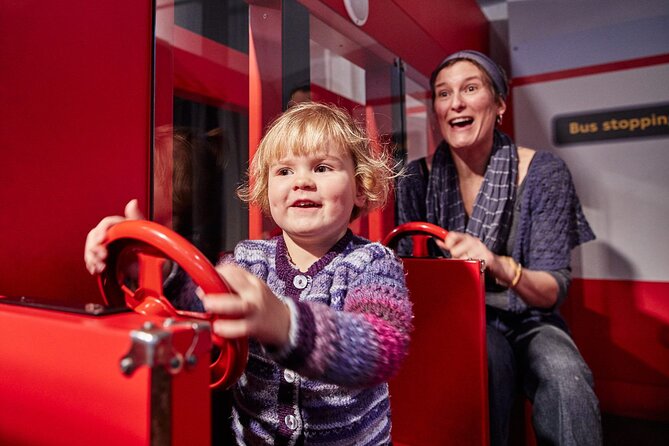
For families, the All Aboard playzone may be the reason to choose this museum over a more traditional transport collection. Children can take on roles such as conductor, mechanic, or driver and interact with transport-themed vehicles and activities.
This play area changes the pace of the visit. Instead of asking children to remain quiet beside every exhibit, you give them a place to act out how the system works. A child can connect the job of driving or repairing a vehicle with the larger story displayed throughout the museum.
Families also describe activities such as getting a card stamped and being able to drive vehicles. These small tasks can make the visit memorable for younger children, particularly those who ask lots of questions and want to touch everything.
The playzone is not just a bonus tucked onto the end of the museum. It helps parents manage a visit that could otherwise become tiring. I would plan time for it rather than treating it as a quick stop. The museum’s family appeal comes from this mix of real vehicles, simple facts, and active play.
There is a tradeoff. The same child-friendly design that makes the museum enjoyable can make it noisy. During school holidays, the sound and activity may make it difficult to concentrate on the written displays. If you want a quiet, careful look at the transport collection, choose a less busy period if your schedule allows.
How long should you spend here?
The advertised visit takes about two hours, and that is a reasonable target for a general visit. In two hours, you can see the main vehicles, follow the major transport story, spend time with interactive displays, and visit the playzone without racing through the building.
You may need longer with young children. The All Aboard activities can add time, and children who enjoy buses and trains may want to repeat certain parts. A family visit can easily become an afternoon stop, especially if you include the Canteen cafe-bar and shop.
Adults with a strong interest in transport could also stay beyond two hours. The posters, Tube map, early trains, and restored vehicles reward a slower pace. You do not have to complete every panel for the museum to work, so choose the level of detail that suits your day.
The central location makes this flexible. You can visit the museum as a main activity or fit it between other Covent Garden plans. The ticket offers a time slot, but once inside you can explore at your own pace and spend as much time as you like.
Is the $33.76 ticket good value?

At $33.76 per person, this is a fairly serious admission price for a museum visit. The value depends on how you use it.
I think the price is easier to justify for families who will use the playzone, climb aboard the vehicles, and stay for several hours. Children are not limited to reading labels, and the museum gives adults enough history and design to keep the visit worthwhile. For a child who loves buses, trains, or role-play, the hands-on parts can make the admission feel well spent.
The ticket is less compelling if you want only a quick look at one famous red bus or a single Tube display. In that case, two hours may feel longer than necessary, and the cost per person becomes harder to defend.
Location adds some value. You are already in Covent Garden, a convenient central area, and the museum fits neatly into a day of sightseeing. You do not need to give it an entire day unless you want to read closely or spend extended time with the children.
Food and drinks are not included. The Canteen cafe-bar is available inside, but remember to treat it as an extra expense. The shop sells transport-inspired gifts, including items linked to London’s buses and Underground, so leave a little time if you want to browse.
Tickets, timing, and practical planning
The ticket is delivered for mobile use, and confirmation is provided at booking. I recommend checking that you can open the ticket on your phone before arriving. One reported booking problem involved difficulty accessing a mobile ticket and having to pay again at the museum, so a charged phone and a ready-to-display confirmation are sensible precautions.
Multiple time slots are available. Pick one that gives you enough breathing room, especially if you are visiting with children. The museum is near public transport, and its Covent Garden address is The Piazza, London, WC2E 7BB.
The experience is offered in English. Much of the museum’s story comes through vehicles, posters, and interactive displays, but some written information may take extra effort for anyone who does not read English comfortably.
Service animals are allowed, and most people can participate. Buggy access and a lift to the other floors make the museum more practical for families with small children. These details matter in an older building, where moving between displays might otherwise be awkward.
Free cancellation is available if you cancel at least 24 hours before the experience start time. Changes made less than 24 hours before the start time are not accepted, and cancellations inside that period are not refunded. The cut-off uses London local time.
Who will enjoy the museum most?
This is a strong choice for families with children, particularly those around the primary school age range. The playzone, interactive vehicles, stamping activity, and chances to pretend to drive or work on transport give children clear reasons to stay engaged.
It also works for adults who want a manageable introduction to London’s transport story. You do not need specialist knowledge to appreciate the collection, and the museum links the vehicles to the city’s growth in a way that makes the subject useful for first-time visitors.
Transport enthusiasts will find plenty to enjoy in the restored buses, trams, taxis, early trains, and Tube map. Still, the museum is not a quiet specialist archive. If you dislike noise, child-focused activities, or a slightly confusing layout, plan your timing carefully.
I would be cautious about booking it as a peaceful indoor escape during a school holiday. The museum’s strengths become its weaknesses at peak family times. The same interactive energy that delights children can make it hard for adults to read every display.
My final take on the London Transport Museum
You should book this ticket if you want a central London attraction that combines real vehicles with hands-on family activities. I particularly like the restored transport, the old flower market setting, and the way the Underground story connects engineering with the growth of the city.
You should think twice if you only have a short visit, dislike busy family spaces, or expect admission to include food and drinks. For the best experience, choose a quieter time, confirm your mobile ticket before setting out, and allow at least two hours.
For families, the All Aboard playzone can make the $33.76 price worthwhile. For adults, the early Underground trains, Tube map, posters, and London transport story provide the strongest reasons to visit. It is an informative and entertaining Covent Garden stop, with enough substance to please parents and enough action to keep children moving.
FAQ
Where is the London Transport Museum?
The museum is at The Piazza, London, WC2E 7BB, in Covent Garden.
How long does a visit take?
The visit lasts approximately two hours, but you can spend as much time inside as you like.
Is the ticket mobile?
Yes. The experience includes a mobile ticket, and confirmation is provided at the time of booking.
What language is the experience offered in?
The experience is offered in English.
What transport can I see at the museum?
You can see horse-drawn buses, underground steam and electric trains, classic London buses, trams, black cabs, vintage vehicles, and displays about the Tube map.
Is the museum suitable for children?
Yes. It includes the All Aboard playzone, where children can take on roles such as conductors, mechanics, and drivers. Interactive vehicles and activities are also available.
Is food included in the ticket?
No. Food and drinks are not included. The museum has a cafe-bar called Canteen.
Are service animals allowed?
Yes. Service animals are allowed.
Can I cancel the ticket for a refund?
Yes. You can cancel for a full refund if you cancel at least 24 hours before the experience start time. Cancellations or changes made less than 24 hours before the start time are not accepted, and the amount paid is not refunded.
Just added in London
- Private Tour: Royal High Tea At Kensington Palace Gardens★ 5.0 · 39 reviews
- Private Tour: Personal Travel Photographer Tour in London★ 4.5 · 27 reviews
- London East End Private Walking Food Tour – Secret Food Tours★ 5.0 · 26 reviews
- Private Tour: Night Photography Tour in London★ 5.0 · 48 reviews
- London Like a Local, Private & Personalized (2-3 hrs)★ 4.5 · 11 reviews
- British Museum & National Gallery of London – Exclusive Guided Combo Tour★ 5.0 · 48 reviews
- Private Tour: Tower of London and St Paul’s Cathedral★ 5.0 · 1 review
- London Soho District – Exclusive Guided Walking Tour★ 5.0 · 2 reviews
Museums, compared.

Tower of London and Crown Jewels Exhibition Ticket
Read our review →

Official tickets: Moco Modern & Contemporary Art Museum
Read our review →
British Museum London Guided Tour Semi-Private 8ppl Max
Read our review →
The British Museum London – Exclusive Guided Museum Tour
Read our review →


Skip the Line: Liverpool Beatles Museum – The perfect tribute to the Beatles
Read our review →Browse the lists this tour appears in