
Reviewed · JACK THE RIPPER TOURS
London – Jack the Ripper Small Group Tour
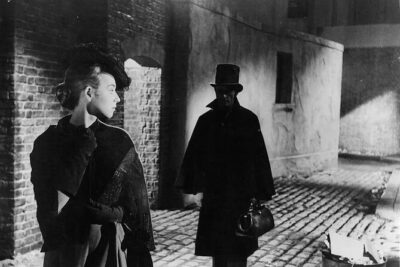
The killer is not the whole story. This small-group night walk through Whitechapel follows the murder sites while giving equal weight to the women who died, the streets they knew, and the harsh Victorian world around them. I like that guide Richard Walker questions easy assumptions instead of simply repeating the usual top-hatted villain tale. I also like the radio microphone, earphones, and iPad images, which make it far easier to follow a talk on noisy London streets.
The main drawback is that this is a serious, educational walking tour, not a spooky ghost walk. You spend long stretches standing, cover about 1.5 miles, and hear more about evidence, victims, and competing theories than graphic murder details. That is a strength for some people, but a mismatch if you want theatrical scares.
In This Review
- Key points to know before booking
- What this Whitechapel walk is really about
- Meeting Richard at Whitechapel Road
- Buck’s Row and Polly Nichols
- Brick Lane, lodging houses, and the geographical clue
- Christ Church Spitalfields and the Ten Bells
- Old Spitalfields Market and Victorian poverty
- Spitalfields, Dorset Street, and the final suspect
- Richard Walker’s style and the small-group advantage
- Price, timing, and practical value
- Who will enjoy this tour most
- Should you book the Whitechapel Jack the Ripper tour?
- FAQ
- Where does the tour begin?
- What time does the tour start?
- Where does the tour finish?
- How long does the tour last?
- How large is the group?
- Is the tour conducted in English?
- What equipment is included?
- Is the tour suitable for people with walking difficulties?
Key points to know before booking
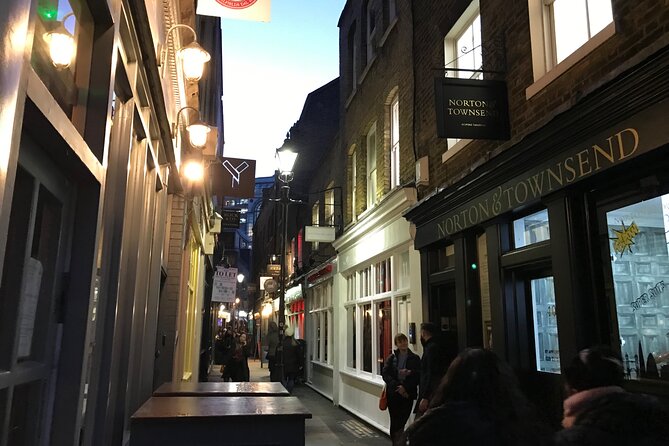
- Victim-focused storytelling: Emma Smith, Polly Nichols, Annie Chapman, Elizabeth Stride, Catherine Eddowes, and Mary Kelly are treated as real people, not just names in a crime story.
- Richard Walker’s theory-led approach: He uses Scotland Yard’s geographical profile and an FBI profile by Special Agent John Douglas to examine suspects and locations.
- Small group, capped at 15: The group is far more personal than the large Jack the Ripper walks that can gather 30 or 40 people.
- Clear audio after dark: A radio microphone and earphones help you hear the guide despite traffic, crowds, and city noise.
- Historic East London setting: Whitechapel Road, Brick Lane, Christ Church Spitalfields, Old Spitalfields Market, and Liverpool Street all form part of the route.
- Best for a fit walker: The tour lasts about 2 hours and 15 minutes, with long periods on your feet and little opportunity to sit.
What this Whitechapel walk is really about
Jack the Ripper tours can take several forms. Some lean into fog, blood, and theatrical suspense. This one takes a more investigative route. Richard Walker presents the known facts, revisits the accepted story of the murders, and asks how much of it rests on evidence and how much rests on assumption.
That distinction matters. The five women usually grouped together as the canonical victims are often reduced to labels such as prostitute or pauper. This tour tries to restore some of their individuality. You hear about where they lived, how they survived, and how the streets shaped the choices available to them.
I especially like that the tour does not treat the women as props in a murder mystery. It still examines the killings and suspects, but the tone is more thoughtful than lurid. One past participant who had experience in criminal investigation praised Walker for challenging the idea that all the women were definitively working as prostitutes, along with the certainty often attached to witness accounts.
The guide also brings a clear personal point of view. He does not pretend the case is solved. Instead, he lays out several suspects, including theories built around geography, timing, and the likely behavior of the murderer. You may not agree with his favored theory, but the presentation gives you something to assess rather than a tidy answer.
More Jack the Ripper walks:
- London Jack the Ripper Guided Tour with Ripper-Vision
★ 4.5 · 4,840 reviews - London Jack The Ripper Guided Walking Tour
★ 5.0 · 3,131 reviews - Ultimate Jack the Ripper : Guided Tour of London
★ 5.0 · 1,495 reviews
Meeting Richard at Whitechapel Road
The tour begins at 7:00 pm at 279 Whitechapel Road, opposite the London Hospital. This is a useful starting point because it puts you immediately into the district connected with the 1888 murders, rather than spending the first part of the evening on general London sightseeing.
The opening story concerns Emma Elizabeth Smith, who died at the hospital after being brutally attacked on April 3, 1888. She is described as the first victim of the Whitechapel Murders, although she is not always included among the five canonical victims associated with Jack the Ripper.
That distinction is one of the tour’s early lessons. The phrase Jack the Ripper can make the case sound cleaner and more certain than it really was. The crimes took place amid a wider series of attacks, rumors, police failures, newspaper sensationalism, and public fear. Starting with Smith helps set up that wider context.
Richard is easy to identify by his Indiana Jones-style hat, a practical detail at a crowded meeting point. The supplied equipment includes a radio microphone and earphones, plus an iPad for period images. Those tools are not gimmicks. They solve two real problems: you can hear the talk without standing shoulder to shoulder around the guide, and you can compare modern streets with images of the area during the murders.
Buck’s Row and Polly Nichols
The first major crime-scene stop is Buck’s Row in Whitechapel, where Mary Ann Nichols, known as Polly, was found. Here Richard reconstructs when, where, and how the first murder attributed to Jack the Ripper took place.
This is where the investigative structure becomes clear. Rather than rushing from one grim location to another, the guide asks you to consider the physical setting, the speed of the attack, the lack of dependable witnesses, and the assumptions made afterward. He also introduces the first suspect.
You should expect a fair amount of listening at each stop. The tour is not built around constant movement or staged audience participation. Richard welcomes questions, but the level of interaction can depend on how talkative the group is.
The site itself is also a reminder that modern London has changed. You are not walking into a preserved crime scene. You are tracing an old street pattern through a living neighborhood, with present-day shops, traffic, and residents around you. That contrast can be more effective than a recreated set.
Brick Lane, lodging houses, and the geographical clue
The walk continues to Brick Lane, now famous for its curry restaurants and food scene. Here the modern setting clashes sharply with the poverty that shaped the area in the late nineteenth century.
Richard explains that Brick Lane marked the eastern boundary of the area where all five canonical victims lived at the time of the murders. You hear about Thrawl Street, which ran toward Commercial Street and included Wilmott’s Lodging House, where Polly Nichols stayed. Flower and Dean Street also enters the story, since two of the victims lived there and Scotland Yard believed Jack the Ripper might have lived nearby.
Annie Chapman’s murder site is close to this part of the route. The stop includes another reconstruction of the crime and introduces a second suspect. This suspect is presented as fitting both Scotland Yard’s geographical profile and a profile developed by FBI Special Agent John Douglas.
That use of profiling gives the walk a different feel from a standard sightseeing talk. You are asked to think about where a person might live, how far he might travel, and why the concentration of murders in one district could matter. Profiling is not proof, and the tour does not turn it into proof. It is one way to test a theory against the surviving facts.
Brick Lane is also one of the liveliest parts of the walk. You may find it harder to concentrate here than in a quiet side street, which is exactly where the earphones help. The trade-off is that the neighborhood remains active and authentic rather than being presented as a silent stage for a Victorian drama.
A few more to weigh up in London
- Stonehenge, Windsor Castle, and Bath from London
★ 4.5 · 18,662 reviews - London Big Bus Hop-On Hop-Off Tour with Optional River Cruise
★ 3.5 · 10,803 reviews - London Small Group Tour of Historical Pubs
★ 5.0 · 10,422 reviews - Stonehenge, Windsor Castle and Bath with Pub Lunch in Lacock
★ 4.5 · 7,402 reviews
Christ Church Spitalfields and the Ten Bells
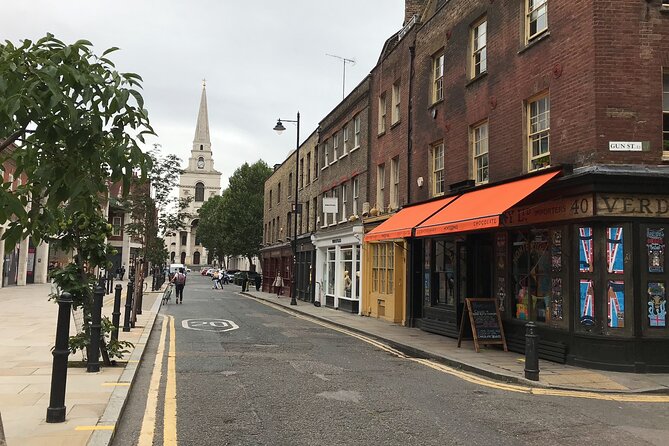
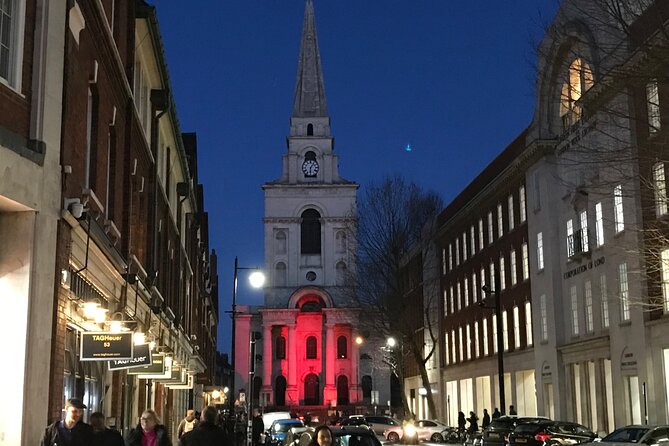
Christ Church Spitalfields gives the route one of its strongest architectural pauses. Designed by Nicholas Hawksmoor, the church is a grand landmark in a district better known for cramped streets, cheap lodging houses, and poverty.
Across from the church is the Ten Bells pub. The pub’s name refers to the church bells, and the women connected with the case are associated with drinking there. The building is not included as an interior visit, and admission is not part of the tour, but its location helps connect the surviving city with the people in the story.
This stop works well because it widens the subject beyond murder. Church towers, pubs, markets, lodging houses, and streets all formed the daily world of Whitechapel. You get a stronger sense of how close together work, shelter, drinking, worship, and danger could be.
The church and pub are also reminders that not every point on the route is a preserved crime scene. Some places survive as buildings or street alignments. Others are remembered mainly through documents and maps. Richard uses the setting as a prompt for evidence, not as a promise that every paving stone is original.
Old Spitalfields Market and Victorian poverty
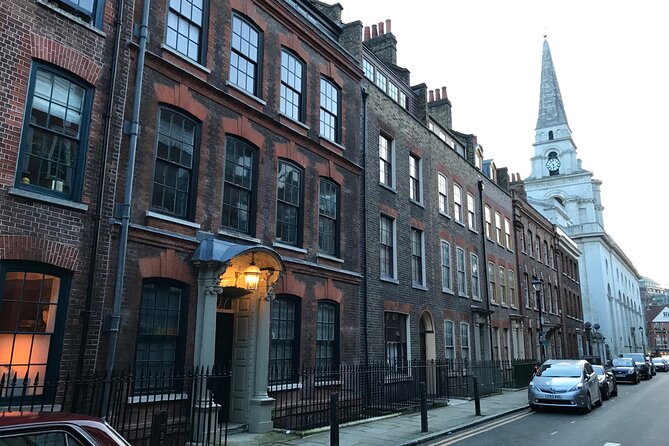
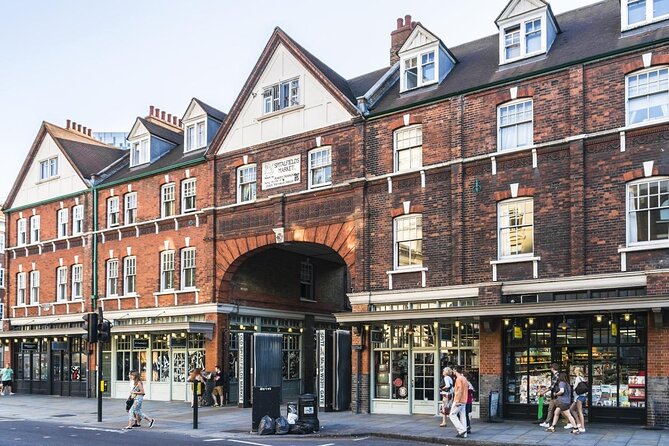
Old Spitalfields Market has served as a community center for centuries, and it provides another change of pace. The market is tied to the neighborhood’s working life, trade, and social conditions.
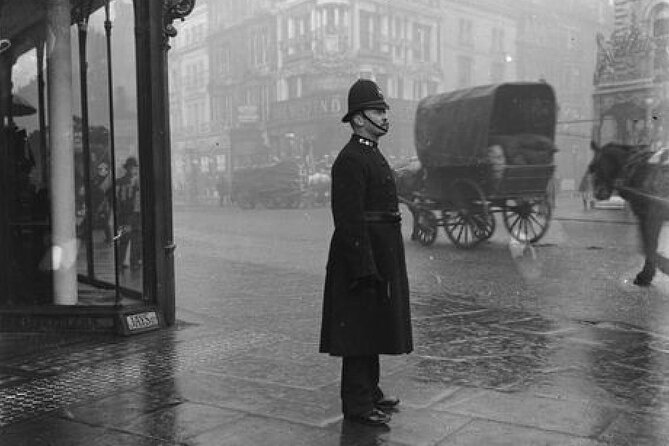
Richard brings in the American writer Jack London, who witnessed severe poverty in Victorian London. That detail helps explain why the Ripper story cannot be separated from housing, employment, alcohol, hunger, and the lack of a reliable safety net.
I find this part valuable because it gives the murders a setting with causes and pressures, not just atmospheric decoration. You begin to understand why lodging houses mattered, why people moved between streets, and why police work in the area was difficult.
Still, this is not a museum visit with time to browse displays. It is an outdoor walking stop, and the market may be busy or open depending on the evening. Keep your attention on the guide rather than expecting a long independent visit.
Spitalfields, Dorset Street, and the final suspect
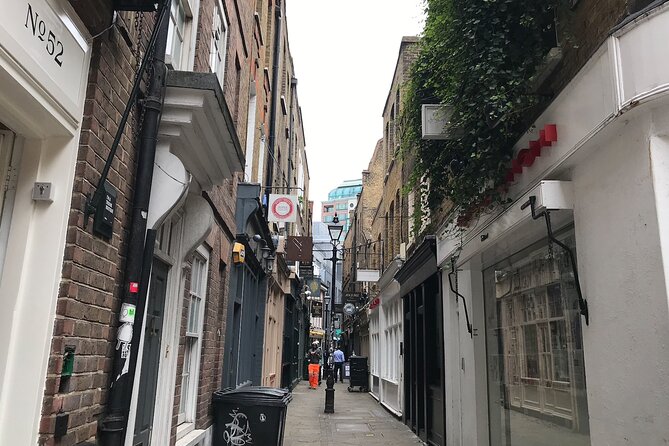
The final section takes you into Spitalfields, including the area where one of London’s worst streets once stood. Annie Chapman lived here until the night she was murdered, and Mary Kelly also lived and died in this part of the district.
Mary Kelly receives special attention because her circumstances differed from those of the other victims. Her story leads to a third convincing suspect and gives Richard another chance to examine how the women’s lives have been described over time.
This last section is likely to be the most intense, even though the tour avoids a horror-show presentation. The subject matter is grim, and the discussion of Kelly’s murder is not light entertainment. Richard’s approach is to explain the evidence and the theories while keeping the victims at the center.
The walk ends at 126A Middlesex Street, near Liverpool Street Station. That is convenient after a night tour. Liverpool Street serves the Central, Circle, Hammersmith and City, Metropolitan, and Elizabeth lines, so you can continue to another part of London without arranging a separate taxi or long walk.
Richard Walker’s style and the small-group advantage
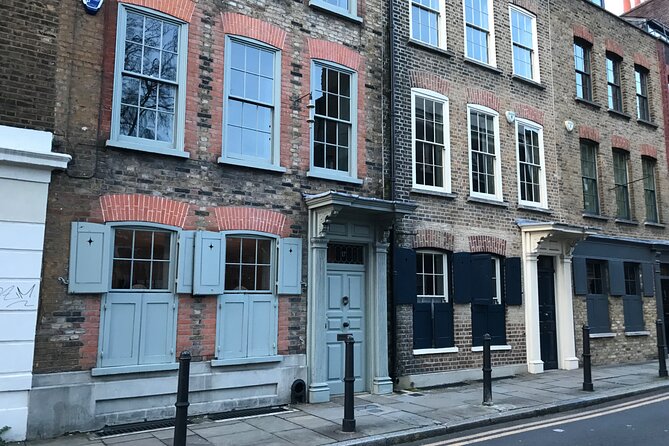
Richard Walker is the key reason to choose this particular tour. He has a strong command of the case, speaks with energy, and clearly enjoys testing theories. Many of the strongest comments about the experience praise his passion, preparation, humor, and ability to keep a talk going for more than two hours.
The iPad images are especially useful for people who do not already know the streets. Historical photographs and illustrations can show how much has changed, while the guide explains what remains tied to the original story.
The group limit is also important. The maximum listed size is 15 people, and some departures have been much smaller, even as few as two or four participants. A small group makes it easier to hear, ask questions, and stay close to the guide. It also feels less like following a flag through East London.
There is one fair criticism to consider. Richard can speak for long periods in one spot. One person found the walk less interactive than expected and wished for more chances to sit. That concern is consistent with the tour’s physical demands, so take the warning seriously: this is not a gentle stroll with frequent café breaks.
Price, timing, and practical value
At $41.67 per person, the tour costs more than a casual self-guided walk, but the price buys interpretation rather than entry tickets. The main locations are viewed from public streets, and most admission is free. You are paying for Richard’s research, route planning, period images, audio equipment, and the ability to connect scattered places into one coherent story.
For someone already interested in true crime, Victorian London, or unsolved cases, that can be good value. You could walk these streets alone, but you would need to research the addresses, understand the changing names, sort fact from legend, and carry your own visual references. The guide does that work for you.
The tour lasts about 2 hours and 15 minutes. Since the listed stops account for much of that time, expect walking between locations as well as long talks at the main points. Wear comfortable shoes and plan for cool or wet weather, since the experience takes place outdoors at night.
A mobile ticket is provided, and the tour is offered in English. Confirmation arrives at booking, and the experience is near public transportation. The cancellation terms are strict: the booking is non-refundable and cannot be changed, so choose your date carefully.
Who will enjoy this tour most
You are a good match if you:
- Enjoy true crime presented through evidence and competing theories
- Want the victims’ lives treated with care
- Prefer a small group to a 30 or 40-person crowd
- Like local history as much as the central mystery
- Are comfortable walking and standing for more than two hours
- Appreciate a guide with a clear argument, even if you do not accept every conclusion
Families with older children may also find it suitable because the tour is not designed as a scare attraction. One family described it as interesting rather than frightening. Even so, the subject is murder, so parents should decide if the material fits their children.
You may want another kind of tour if you want graphic detail, jump scares, actors, ghost stories, or a theatrical Jack the Ripper character. This experience is closer to an outdoor case study with local history woven through it.
Should you book the Whitechapel Jack the Ripper tour?
Book it if you want a focused, victim-aware look at the Whitechapel murders, led by Richard Walker in a group capped at 15. The 4.9 rating from 208 reviews and recommendation by 99 percent of participants fit the tour’s strongest qualities: clear sound, careful research, strong storytelling, and a more personal feel than the big group walks.
Skip it if your main goal is to be frightened or hear the bloodiest version of the case. You will get theories, locations, Victorian poverty, and questions about unreliable assumptions. That is exactly why I would recommend it to a history-minded true-crime fan, but not to someone seeking a haunted-house experience on London streets.
FAQ
Where does the tour begin?
It begins at 279 Whitechapel Road, London E1 1BY, opposite the London Hospital.
What time does the tour start?
The tour starts at 7:00 pm.
Where does the tour finish?
It finishes at 126A Middlesex Street, near Liverpool Street Station.
How long does the tour last?
The tour lasts approximately 2 hours and 15 minutes.
How large is the group?
The maximum listed group size is 15 people.
Is the tour conducted in English?
Yes. The tour is offered in English.
What equipment is included?
A radio microphone with earphones and an iPad used to display historical images are included.
Is the tour suitable for people with walking difficulties?
No. The experience requires a moderate level of physical fitness, includes about 1.5 miles of walking, and involves standing for extended periods.
Just added in London
- Private Tour: Royal High Tea At Kensington Palace Gardens★ 5.0 · 39 reviews
- Private Tour: Personal Travel Photographer Tour in London★ 4.5 · 27 reviews
- London East End Private Walking Food Tour – Secret Food Tours★ 5.0 · 26 reviews
- Private Tour: Night Photography Tour in London★ 5.0 · 48 reviews
- London Like a Local, Private & Personalized (2-3 hrs)★ 4.5 · 11 reviews
- British Museum & National Gallery of London – Exclusive Guided Combo Tour★ 5.0 · 48 reviews
- Private Tour: Tower of London and St Paul’s Cathedral★ 5.0 · 1 review
- London Soho District – Exclusive Guided Walking Tour★ 5.0 · 2 reviews
Jack the Ripper Tours, compared.
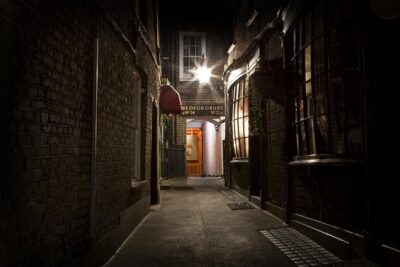
London Jack the Ripper Guided Tour with Ripper-Vision
Read our review →
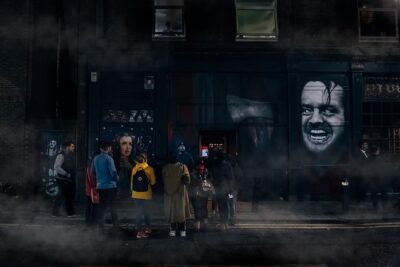
Ultimate Jack the Ripper : Guided Tour of London
Read our review →
London Jack The Ripper Small-Group Walking Tour
Read our review →
The Original Jack the Ripper Coach Tour of Haunted London
Read our review →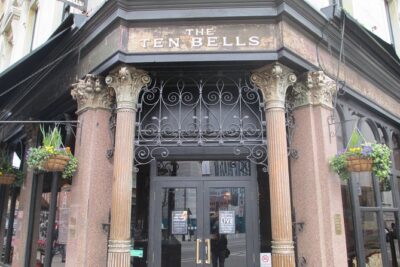
Browse the lists this tour appears in