
Reviewed · JACK THE RIPPER TOURS
Jack the Ripper Tour in Spanish
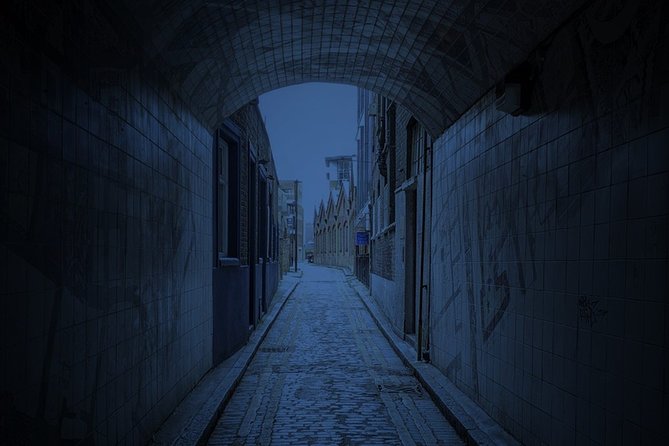
Victorian London gets dark fast. This two-hour walk through Whitechapel brings Jack the Ripper’s story to the streets where the crimes unfolded, rather than leaving it on a museum panel. I especially like the after-dark timing, which gives the tour the right mood, and the way the guide uses old photographs and visual material to make the story easier to follow. The main drawback is that the subject is grim, and the walk may feel more sensational than historical if you prefer lighter sightseeing.
The tour is led in Spanish and begins outside Whitechapel Gallery at 6:00 pm, ending near Old Spitalfields Market. Carmen receives especially warm praise for her energy, detail, kindness, and ability to place you in 1888. One practical point deserves attention: the tour information describes Spanish guiding, but another detail refers to English commentary, so I would confirm the language before booking if that matters to you.
In This Review
- Key points to know before you book
- Why Whitechapel makes the story feel different
- Meeting at Whitechapel Gallery at 6:00 pm
- Gunthorpe Street and Whitechapel High Street
- Saint Botolph Without Aldgate and the Victorian setting
- Miter Square, one of the case’s central locations
- Goulston Street and the problem of the unsolved case
- Lilian Knowles House and what remains of old Whitechapel
- The Ten Bells and Spitalfields Market
- Carmen’s storytelling is the main attraction
- Is $17.16 a good price for two hours?
- Who should book this Whitechapel walk?
- Should you book the Jack the Ripper Tour in Spanish?
- FAQ
- Where does the Jack the Ripper tour begin?
- What time does the tour start?
- How long does the tour last?
- Where does the tour end?
- Is the tour conducted in Spanish?
- What locations are included?
- How many people can join the tour?
- Can I cancel for a full refund?
Key points to know before you book
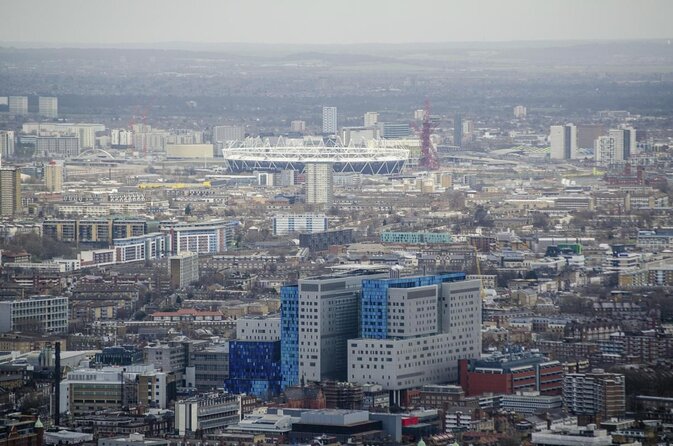
- Whitechapel after sunset: The evening setting adds atmosphere to streets connected with the Jack the Ripper case.
- Seven meaningful stops: The route includes Gunthorpe Street, Miter Square, Goulston Street, The Ten Bells, and other important locations.
- Carmen is a major part of the experience: Her storytelling, humor, visual material, and personal attention receive repeated praise.
- Good use of sightseeing time: The tour starts at 6:00 pm, leaving most of your day free for museums, markets, and central London sights.
- Small maximum group: The group is limited to 25 people, a useful size for a walking tour with frequent stops.
- Strong value at $17.16: For two hours of guided sightseeing in London, the price is modest, especially if you want a focused evening activity.
Why Whitechapel makes the story feel different
Jack the Ripper tours work best when they explain more than the crimes. The useful question is not only who may have committed them, but also what Whitechapel was like for the people who lived there.
This route places the murders within Victorian daily life. You hear about the conditions faced by the women who became victims, the streets they knew, and the difficulty of solving crimes in a city where policing, communication, and forensic work were far less developed than they are today. The killer was never identified, which gives the story its lasting mystery, but the tour also points you toward the real people behind the case.
That balance matters. A tour focused only on gruesome details can become cheap entertainment. Here, the guide’s use of context and period images helps move the experience toward social history, even though the subject remains unsettling.
Whitechapel is also a practical area for an evening walk. The route begins near public transportation at Whitechapel Gallery and ends at Old Spitalfields Market, so you are not left in an isolated location after the tour. The final stop gives you a convenient place to continue your evening.
More Jack the Ripper walks:
- London Jack the Ripper Guided Tour with Ripper-Vision
★ 4.5 · 4,840 reviews - London Jack The Ripper Guided Walking Tour
★ 5.0 · 3,131 reviews - Ultimate Jack the Ripper : Guided Tour of London
★ 5.0 · 1,495 reviews
Meeting at Whitechapel Gallery at 6:00 pm
Your starting point is Whitechapel Gallery, at 77 to 82 Whitechapel High Street. This is an easy landmark to find, and the nearby public transportation makes the meeting point less stressful than a random corner or unnamed street entrance.
Arrive with enough time to locate the gallery and gather before the 6:00 pm start. The tour lasts about two hours, so you should finish near 8:00 pm at Old Spitalfields Market.
The timing is one of the smartest parts of the experience. You can spend the afternoon at the Tower of London, the British Museum, the National Gallery, or another part of London, then take part in a very different kind of sightseeing after dinner or before it. Since the route ends at Spitalfields, you can also make your own plans nearby instead of crossing the city at the end.
This is a walking experience, so comfortable shoes matter. The information provided does not give a precise distance or an accessibility rating, but most people can participate. You should still be comfortable walking between several stops for roughly two hours.
Gunthorpe Street and Whitechapel High Street
The early part of the walk takes you through Gunthorpe Street and along Whitechapel High Street. These first stops help set the physical scene before the tour reaches the better-known crime locations.
Whitechapel High Street is especially useful as an orientation point. It connects the modern district with the older streets and buildings that help explain how the area looked and functioned in the late nineteenth century. You may find some of the surroundings changed, but the route shows how the case remains tied to an ordinary part of London rather than a sealed historic site.
This opening section is also where a good guide earns your attention. Carmen is praised for making the setting clear and adding humor and energy without losing the thread of the story. That skill matters because the case has many names, dates, theories, and competing claims. A well-paced introduction keeps the details from becoming a blur.
You should expect to spend time standing while listening. These are street-based explanations, not indoor exhibits with seats and displays. The reward is a direct connection between the story and the city around you, but the tradeoff is that weather and street noise can affect your comfort.
Saint Botolph Without Aldgate and the Victorian setting
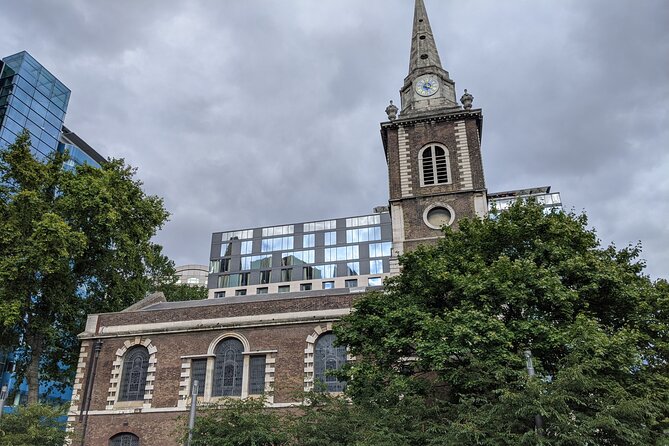
The next stop is Saint Botolph Without Aldgate. Its inclusion broadens the tour beyond a list of murder sites and places the case within the wider East End.
The church and the surrounding area help explain the social setting of Victorian Whitechapel. The tour looks at daily life and the circumstances faced by the victims, giving you a clearer sense of why the area became associated with poverty, overcrowding, and fear in the public imagination.
This is one of the more valuable parts of the route for anyone who wants context. Jack the Ripper is often treated as a puzzle to solve, but the people affected by the crimes were living difficult lives long before the murders drew international attention. Learning about that setting gives the tour more weight.
Carmen’s approach appears to be especially effective here. Her storytelling is described as warm, attentive, and full of detail. She also uses photographs and other material during the walk, which can help you connect modern streets with the way they appeared in 1888.
Do not expect a grand interior visit at each stop. The attraction is the location and the explanation, not admission to a church or another building. The tour includes free admission to the route itself, but it is not presented as an indoor museum tour.
A few more to weigh up in London
- Stonehenge, Windsor Castle, and Bath from London
★ 4.5 · 18,662 reviews - London Big Bus Hop-On Hop-Off Tour with Optional River Cruise
★ 3.5 · 10,803 reviews - London Small Group Tour of Historical Pubs
★ 5.0 · 10,422 reviews - Stonehenge, Windsor Castle and Bath with Pub Lunch in Lacock
★ 4.5 · 7,402 reviews
Miter Square, one of the case’s central locations
Miter Square is a key stop and one of the places most closely tied to the Jack the Ripper story. Here, the guide can explain what happened, how the police viewed the case, and why the location remains important in discussions of the murders.
The value of standing at Miter Square is not that the modern setting looks exactly as it did in the Victorian era. It is that the location gives shape to events that can otherwise feel abstract. You are no longer just hearing a name in a book. You are looking at the kind of urban space where the case unfolded.
This is also a point where the tour’s visual material can help. Period photographs and illustrations give you a way to compare the old district with the present streets. The supplied comments about Carmen repeatedly praise this use of images, along with her ability to hold attention and explain the story clearly.
The subject becomes more graphic at locations such as this. If you are sensitive to descriptions of violence, you may want to think carefully before booking. The tour is designed around an unsolved series of murders, so disturbing material is part of the experience rather than an occasional aside.
Goulston Street and the problem of the unsolved case
Goulston Street adds another piece to the mystery. It is linked with evidence and police activity surrounding the murders, making it an important stop for understanding why the investigation became so difficult.
The story of Jack the Ripper has produced countless theories, but the central fact remains simple: the killer was never unmasked. A good guide needs to separate known details from speculation. The appeal of this tour comes partly from the mystery, but you should listen for the difference between documented events, later theories, and popular legend.
That distinction is particularly important on a Jack the Ripper tour. The case has been retold so many times that fact and fiction can easily blur. Carmen’s repeated praise for her command of the subject and careful attention to detail suggests that the tour is aimed at explaining the case, not just repeating a collection of frightening stories.
The street setting can also make this section feel less theatrical. You are moving through a functioning part of London, with modern shops, traffic, and daily activity around you. That contrast reminds you that the case belongs to the city’s past, even though its reputation still shapes the area’s tourism.
Lilian Knowles House and what remains of old Whitechapel
Lilian Knowles House is another stop on the route. The itinerary does not provide a detailed description of the building’s role, so you should not expect a large exhibition or a long indoor visit there. Its value comes from seeing a surviving structure connected with the older district and hearing the guide explain its place in the story.
One strength of the walk is that it includes buildings and streets that help you picture the period. The route is not simply a parade of crime scenes. It uses the remaining architecture to show how much of the area’s character can still be read from its streets, even after major changes.
The walk’s pace seems suited to people who enjoy stopping often for explanation. You will not rush from one address to the next. Instead, you move in short sections, hear the story, look at the surroundings, and continue.
The Ten Bells and Spitalfields Market
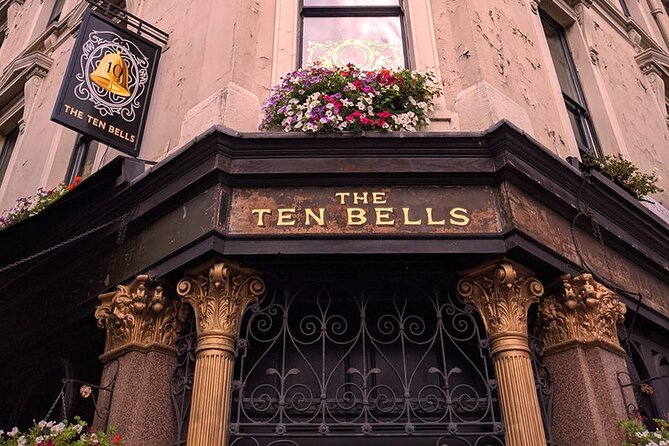
The final part of the tour brings you to The Ten Bells and Spitalfields Market. The Ten Bells is one of the most famous names associated with the Jack the Ripper story, and it gives the ending a strong sense of place.
This stop also works well because it is more than a crime location. A pub and market area help you think about the social world around the victims, rather than seeing them only through the lens of the murders. The experience finishes at Old Spitalfields Market, at 59 Brushfield Street, where you can continue exploring after the guide says goodbye.
Ending at a market is practical. You have options for food, drinks, and further sightseeing, although the tour information does not promise any meal, pub entry, or market activity as part of the price. The route finishes there, so plan anything afterward on your own.
For me, this is a better ending than returning to the starting point. You finish in an area with character and choices, and you can decide if you want to keep the evening focused on historic East London or move on to another part of the city.
Carmen’s storytelling is the main attraction
The strongest praise is directed at Carmen. She is repeatedly described as professional, attentive, lively, and able to make the period feel close. Several comments highlight her humor, energy, kindness, and use of photographs and curious details.
That praise is important because a walking tour depends heavily on its guide. The same streets can feel flat with a weak explanation and absorbing with a strong one. Carmen appears to add structure to a complicated story while keeping the group engaged for two hours.
Her communication style also seems to suit people who want more than a lecture. The comments describe an experience that is entertaining as well as informative, with a friendly guide who helps from the beginning to the end. One especially useful detail is her effort to place you in the year 1888, allowing the social setting to support the crime story.
The tour has a maximum of 25 people. That is not a private walk, but it is manageable for a street tour with several stops. A smaller group can make it easier to hear the guide and see the photographs she shows, though the experience may still feel less personal when the group reaches its full size.
Is $17.16 a good price for two hours?
At $17.16 per person, this is a low-cost way to add a guided evening activity in London. Two hours of explanation, several connected locations, and a Spanish-speaking guide make the price attractive, especially in a city where many paid attractions cost far more.
The value depends on what you want. If you enjoy true crime, Victorian London, unsolved cases, and guided walks, you receive a focused experience for a modest sum. If you want entry to historic interiors, a meal, transport, or a dramatic theatrical production, this tour does not provide those extras.
The price covers the guided tour in Spanish. Tips are optional, and the tour does not include other stated admissions or services. I would think of it as a compact walking lecture with atmospheric streets, not as a full attraction with exhibits.
The strong rating and 100 percent recommendation are encouraging, but I would still base your decision on the subject. The tour is popular because the guide and storytelling are well received, not because the route removes the darker parts of the case.
Who should book this Whitechapel walk?
I would recommend it to adults and older teenagers who enjoy crime history, old photographs, urban stories, and unsolved mysteries. It is also a good choice if you have already seen London’s major sights and want to explore a less conventional part of the city.
Spanish-speaking visitors are the clearest audience, since the experience is described as guided in Spanish. Families should consider the subject carefully. The information says most people can participate, but the murders and their circumstances may not suit young children.
You should also book if you want an activity that fits around a full sightseeing day. The 6:00 pm start leaves the morning and afternoon open, and the ending near Spitalfields gives you a useful base for the rest of the evening.
I would skip it if you dislike crime stories, graphic subjects, or standing outdoors after dark. I would also confirm the tour language before paying, since the information contains both a Spanish-language description and a reference to English commentary.
Should you book the Jack the Ripper Tour in Spanish?
Book it if you want a reasonably priced, atmospheric walk led by a guide who brings strong energy and detail to a difficult subject. Carmen’s storytelling, visual material, and personal warmth appear to be the main reasons this tour works so well.
The route is easy to fit into a London itinerary, the group size is limited to 25, and the ending at Spitalfields Market is convenient. Just remember that you are booking a serious crime-history experience, not a general Whitechapel sightseeing tour. Confirm the language, wear comfortable shoes, and choose it only if the subject suits you.
FAQ
Where does the Jack the Ripper tour begin?
The tour begins at Whitechapel Gallery, located at 77 to 82 Whitechapel High Street in London.
What time does the tour start?
The stated start time is 6:00 pm.
How long does the tour last?
The tour lasts approximately two hours.
Where does the tour end?
The walk ends at Old Spitalfields Market, at 59 Brushfield Street, London.
Is the tour conducted in Spanish?
The experience is described as a guided tour in Spanish. One additional detail refers to English commentary, so confirm the language before booking if this is important to you.
What locations are included?
The route includes Gunthorpe Street, Whitechapel High Street, Saint Botolph Without Aldgate, Miter Square, Goulston Street, Lilian Knowles House, The Ten Bells, and Spitalfields Market.
How many people can join the tour?
The maximum group size is 25 people.
Can I cancel for a full refund?
Yes. You can cancel at least 24 hours before the local start time for a full refund. Cancellations or changes made less than 24 hours before the start are not accepted for a refund.
Just added in London
- Private Tour: Royal High Tea At Kensington Palace Gardens★ 5.0 · 39 reviews
- Private Tour: Personal Travel Photographer Tour in London★ 4.5 · 27 reviews
- London East End Private Walking Food Tour – Secret Food Tours★ 5.0 · 26 reviews
- Private Tour: Night Photography Tour in London★ 5.0 · 48 reviews
- London Like a Local, Private & Personalized (2-3 hrs)★ 4.5 · 11 reviews
- British Museum & National Gallery of London – Exclusive Guided Combo Tour★ 5.0 · 48 reviews
- Private Tour: Tower of London and St Paul’s Cathedral★ 5.0 · 1 review
- London Soho District – Exclusive Guided Walking Tour★ 5.0 · 2 reviews
Jack the Ripper Tours, compared.
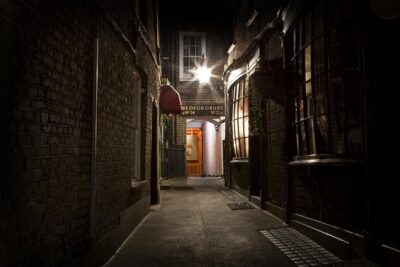
London Jack the Ripper Guided Tour with Ripper-Vision
Read our review →
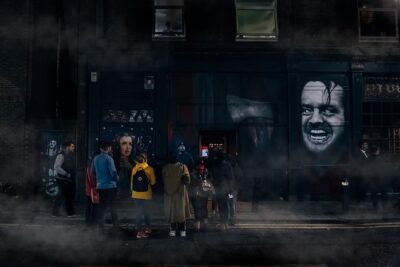
Ultimate Jack the Ripper : Guided Tour of London
Read our review →
London Jack The Ripper Small-Group Walking Tour
Read our review →
The Original Jack the Ripper Coach Tour of Haunted London
Read our review →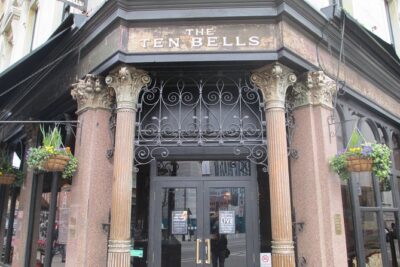
Browse the lists this tour appears in