
Reviewed · JACK THE RIPPER TOURS
Jack The Ripper Walking Tour of London
Dark stories make old streets feel different. This Whitechapel walking tour connects the Jack the Ripper sites with the social conditions of Victorian London, so you get more than a parade of gruesome crime scenes. I especially like the respectful focus on the victims and the way the walk brings in real clues, competing theories, and nearby landmarks such as Brick Lane and Spitalfields Market.
I also like the guides’ storytelling style. Carolina is praised for keeping a quick but easy-to-follow pace, while Adam brings friendly humor, useful context, and lesser-known facts. The main drawback is clear: this is a serious, mature subject, and the two-to-three-hour walk is not suitable for anyone with walking or mobility difficulties, prams, buggies, or strollers.
At about $19.41 per person, the tour offers a good-value introduction to one of London’s most famous unsolved cases. It is best for mystery fans, first-time visitors to the East End, and anyone who wants history with a darker edge.
In This Review
- Key points to know before booking
- Why Whitechapel is the right place for this tour
- Meeting at Aldgate Station
- Walking through Whitechapel’s grim setting
- The Ten Bells and the case’s most famous pub
- Goulston Street and the apron clue
- Brick Lane and the East End beyond the murders
- Spitalfields Market and the lives behind the headlines
- Christ Church Spitalfields in the shadow of 1888
- St Botolph’s Aldgate and the women of the East End
- What the guides do best
- Is $19.41 good value?
- Who should book this walk?
- Final recommendation
- FAQ
- Where does the Jack the Ripper Walking Tour begin?
- How do I find the guide?
- Where does the tour end?
- How long does the tour last?
- Is the tour suitable for children?
- Is the tour suitable for people with mobility difficulties or strollers?
- What happens if I need to cancel?
Key points to know before booking
- The walk begins at Aldgate Station, not Aldgate East, and ends at The Ten Bells pub.
- The victims receive real attention, with the tour placing the murders in the harsh setting of Victorian Whitechapel.
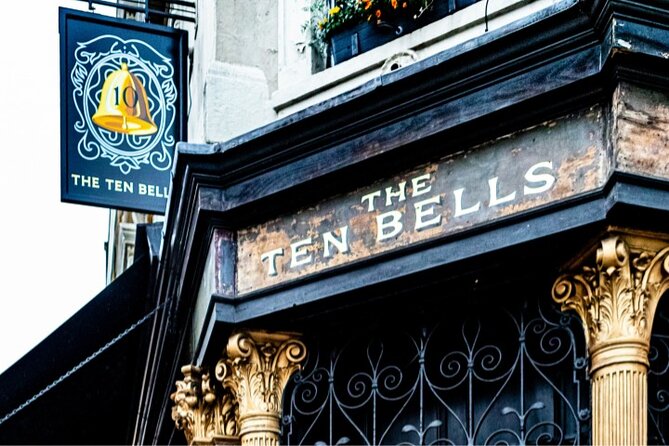
- The Ten Bells is the atmospheric finale, linked to several victims and one of the case’s enduring questions.
- Brick Lane, Spitalfields Market, and historic churches add wider London context beyond the murders.
- Guides such as Carolina and Adam are a major strength, combining facts, photos, humor, and thoughtful storytelling.
- The tour covers mature material, including murder, prostitution, poverty, and social unrest, so it is recommended for ages 14 and older.
Why Whitechapel is the right place for this tour
Jack the Ripper is often treated as a puzzle about an unknown killer. That is part of the appeal, but it can also reduce real people to clues in a mystery game. This walk is better when it keeps both sides in view: the unsolved case and the lives of the women who were killed.
In 1888, Whitechapel was crowded, poor, and marked by social strain. Many people lived close together in difficult conditions, and the area had a reputation that made it easy for newspapers and later storytellers to turn it into a backdrop of fear.
The walk uses Whitechapel to explain that setting. You are not simply shown a doorway and told a date. You hear how poverty, overcrowding, prostitution, and limited protection shaped daily life in the East End.
That context matters. It helps you understand why the murders caused such panic, why the police investigation became a public obsession, and why the case still attracts so much attention. I appreciate that the tour treats the victims as people rather than props in a horror story.
The group can include up to 25 people. That is large enough to create a social feel, but still small enough for a guide to lead a coherent walk. The guide’s voice and presentation style matter here. Carolina is praised for using photos and speaking quickly without becoming hard to follow. Adam receives similar praise for clear explanations, humor, and a friendly way of chatting between stops.
More Walking Tours in London
- Tour for Muggles The Ultimate Harry Potter Walking Tour in London
★ 5.0 · 4,684 reviews - London Jack The Ripper Guided Walking Tour
★ 5.0 · 3,131 reviews - Changing of the Guard Guided Walking Tour in London
★ 5.0 · 1,793 reviews
Meeting at Aldgate Station
The meeting point is Aldgate Station on Aldgate High Street. Take care here: the tour starts at Aldgate Station, not Aldgate East.
As you leave the station, look for Hotel Saint on the right. The meeting address is 9 Aldgate High Street, London, EC3N 1AH. Your guide will be holding a yellow umbrella, which should make the group easier to spot.
This is a useful starting point because Aldgate places you close to the historic East End and within easy reach of the main sites. The tour ends at The Ten Bells, so you do not return to the station. Plan your onward route before you begin, especially if you have a dinner reservation or a timed attraction elsewhere in London.
The tour lasts roughly two to three hours. Much of the time is spent walking and listening outdoors. Wear comfortable shoes, and remember that London weather can change quickly. The operator notes that poor weather can lead to a cancellation, with a different date or a full refund offered.
Walking through Whitechapel’s grim setting
Whitechapel is the main stage for the first and longest part of the walk. The area gained lasting notoriety during the 1888 murders, when an unidentified killer brutally murdered at least five women.
This portion lasts about two hours, including the movement between locations and the guide’s explanations. That length gives the subject room to breathe. You hear about the crimes, but also about the streets, poverty, fear, and social unrest that shaped the area at the time.
A good guide has to manage the tone carefully. Too much theatrical horror can feel cheap. Too much police detail can become dry. The strongest approach, reflected in the praise for Carolina and Adam, is to explain the evidence while keeping the victims in view.
Expect theories about the killer’s identity, clues from the investigation, and discussion of why the case remains unresolved. The tour does not present a neat answer. That is important. Jack the Ripper’s identity has never been established, so a responsible walk should separate evidence from speculation.
The guide also helps you understand how the crimes became a public sensation. Newspapers, rumor, and fear gave the case a reach far beyond Whitechapel. You can discuss theories as you walk, but the experience is not just a guessing game.
The Ten Bells and the case’s most famous pub
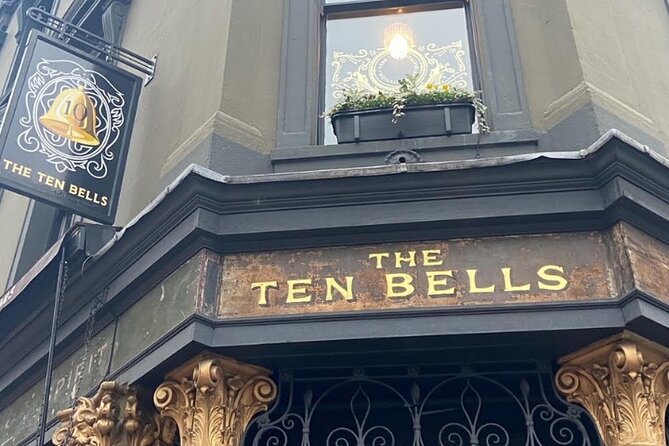
The Ten Bells is the best-known Jack the Ripper location on the route. The stop lasts around 10 minutes, though you may want to stay afterward for a drink.
The pub is linked to victims who visited it in the hours before their deaths. That connection gives the place an uneasy importance. The guide also raises the question that has haunted the case for generations: did Jack the Ripper visit the pub too?
The tour ends here, which is a sensible choice. The Ten Bells is not presented only as a spooky relic. It remains a working pub with a warm, lively atmosphere. That contrast can be welcome after two hours of murder stories. A drink afterward gives you time to process what you have heard and enjoy the East End in its present-day form.
One useful tip is to keep the rest of your evening flexible. The pub is an easy place to pause, and Artillery Lane is nearby. Carolina specifically recommended Artillery Lane for Asian food, making it a practical area for a meal after the walk.
More Jack the Ripper walks:
- London Jack the Ripper Guided Tour with Ripper-Vision
★ 4.5 · 4,840 reviews - Ultimate Jack the Ripper : Guided Tour of London
★ 5.0 · 1,495 reviews - The Original Jack the Ripper : Guided Tour
★ 5.0 · 1,264 reviews - London Jack The Ripper Small-Group Walking Tour
★ 5.0 · 1,013 reviews
Goulston Street and the apron clue
Goulston Street is a short stop, about 10 minutes, but it carries major importance in the story. After the murder of Catherine Eddowes in 1888, part of her bloodied apron was found in a doorway here.
That fragment became a central piece of evidence. Its meaning has been argued over for years, and its connection to the killer remains uncertain. This is a good example of how the tour handles the case: one physical clue can raise several questions without providing a final answer.
The stop also shows why a guided walk is useful. It can be hard to identify the right locations on your own, especially when modern streets have changed and the sites do not always look dramatic. A guide provides the link between the present-day street and the events being discussed.
Brick Lane and the East End beyond the murders
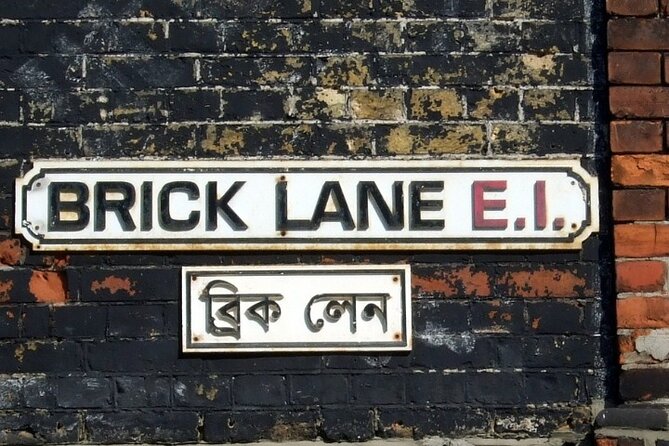
Brick Lane is one of the East End’s best-known streets today, but during the Ripper’s 1888 reign of terror it formed part of a poorer district closely tied to the victims’ daily lives.
The stop lasts about 10 minutes. You learn about the street’s connection to the women who lived and moved through the area, and about its place in the wider setting of the murders.
This is one of the tour’s more useful shifts in focus. Brick Lane is not only a crime-scene reference. It helps show that the victims had routines, neighborhoods, workplaces, and familiar streets. That makes the story more human and less like a collection of isolated incidents.
You also get a glimpse of a modern East End landmark while hearing about its darker past. The present-day street and the Victorian story sit side by side, which gives the walk a stronger sense of place than a lecture indoors.
Spitalfields Market and the lives behind the headlines
Spitalfields Market is another short stop of about 10 minutes. It was close to streets where several victims lived or were last seen before their deaths.
The market’s proximity to Whitechapel makes it part of the wider setting rather than a single confirmed crime scene. That distinction is worth noting. Not every place connected with the Ripper story was the site of a murder, and a careful guide should explain the difference.
The market also helps you picture how movement through the East End worked. People passed through commercial streets, public houses, and crowded neighborhoods as part of ordinary life. The route uses those connections to place the victims within a working community.
Today, the market is a major London stop in its own right. The tour gives you a reason to return later if you want more time there, since the short visit is mainly about its connection to the case.
Christ Church Spitalfields in the shadow of 1888
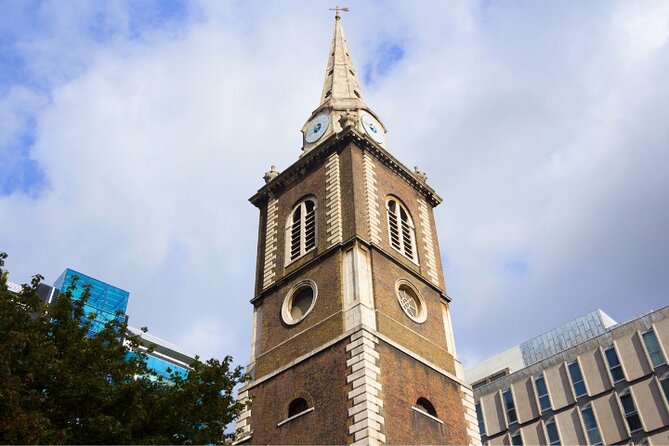
Christ Church Spitalfields provides a striking visual marker along the route. The church was close to the streets where the murders took place, and its presence would have been familiar to people living in the area.
Some victims were last seen nearby, adding to the church’s connection with the Ripper story. The building’s historic character also helps create the atmosphere of the walk without requiring exaggerated storytelling.
This is a brief stop, around 10 minutes. You should not expect an extended church visit or a full architectural tour. Instead, the guide uses the church to explain the setting and the way major buildings could loom over poorer surrounding streets.
I like this kind of stop because it widens the subject. The tour is about crime, but it is also about Victorian London, its institutions, its social divisions, and the physical places people saw every day.
St Botolph’s Aldgate and the women of the East End
St Botolph’s Aldgate is closely linked to the case because of its location near the Whitechapel crime scenes. It is also associated with women who gathered nearby for safety, leading to the grim nickname the Church of Prostitutes.
Several of the Ripper’s victims were known to frequent the area. The stop gives the guide another chance to discuss the dangers and limited choices faced by women living in poverty at the time.
This is where the tour’s respectful tone matters most. The women should not be defined only by their deaths or by the work they did to survive. The best moments of the walk bring attention to their circumstances and restore some human detail to stories often told only through the killer’s name.
St Botolph’s is another short stop, about 10 minutes. It works well near the beginning or middle of the route because it ties the crime story to the social history of the neighborhood.
What the guides do best
The strongest praise for this experience goes to the guides. Carolina is described as focused, respectful, and engaging, with a quick delivery that keeps the walk moving. She uses photos to help connect the present-day streets with the historical story.
Adam is praised for adding facts that are not widely known, explaining the period clearly, and using humor without losing respect for the victims. His friendly manner between stops also helps the walk feel less like a formal lecture.
Those qualities matter on a subject that can become repetitive. There are many names, dates, suspects, and theories. A guide who adds context and keeps the group involved makes the information easier to remember.
The tour is offered in English. If English is not your first language, a guide who speaks quickly may require extra concentration. Carolina’s pace was specifically appreciated by some participants, but it may not suit every listener.
Is $19.41 good value?
At $19.41 per person, this is an inexpensive London walking tour. You are paying mainly for the guide’s research, organization, storytelling, and ability to connect scattered sites that would be easy to miss on your own.
There are no admission fees for the listed stops. That keeps the price simple, though you should budget separately for food or a drink at The Ten Bells and any time you spend at nearby markets or restaurants.
I think the value is strongest if you know little about Jack the Ripper or want a clear introduction before exploring the East End independently. If you already know the case in great detail, the quality of the guide becomes more important. Carolina and Adam appear to add enough context and lesser-known information to keep the walk worthwhile, but the appeal will still depend on how much of the subject you have already studied.
The tour has a five-star rating from 246 ratings, with 100 percent recommending it. That lines up with the main strengths: strong guiding, a respectful tone, and a good balance between mystery and social history.
Who should book this walk?
I would recommend it to adults and older teenagers who enjoy unsolved crimes, London history, and guided walks with a serious edge. The operator recommends children be at least 14, and parents or guardians should decide carefully because the guide will not change the content for younger participants.
It is also a good choice if you want to explore the East End but do not want to spend time locating every site yourself. The mobile ticket makes booking simple, and the route stays near public transportation.
I would skip it if murder and prostitution are not subjects you want during your holiday. I would also avoid it if walking for up to three hours is difficult, since the tour is not suitable for people with mobility difficulties or for prams and strollers.
Free cancellation is available if you cancel at least 24 hours before the start time. Changes or cancellations inside that window are not accepted for a refund, so keep the cutoff in mind when making plans.
Final recommendation
I recommend the Jack the Ripper Walking Tour if you want a low-cost, well-organized introduction to Whitechapel’s most famous mystery. Its best feature is not the shock value. It is the way a guide such as Carolina or Adam can connect crime-scene evidence with the lives of the victims and the hard conditions of Victorian East London.
Book it for an evening or afternoon when you can linger at The Ten Bells afterward. Add a meal around Artillery Lane if that appeals to you, and arrive at the correct Aldgate station with comfortable shoes. If you prefer serious history, real locations, and open questions over theatrical gore, this walk is a strong choice.
FAQ
Where does the Jack the Ripper Walking Tour begin?
The tour begins at Aldgate Station on Aldgate High Street in London. Meet beside Hotel Saint, which is on the right as you exit the station. Do not go to Aldgate East.
How do I find the guide?
The guide will be holding a yellow umbrella at the meeting point near Aldgate Station and Hotel Saint.
Where does the tour end?
The walk ends at The Ten Bells pub at 84 Commercial Street, London E1 6LY.
How long does the tour last?
The tour lasts approximately two to three hours. The Whitechapel portion takes about two hours, with shorter stops at the other listed locations.
Is the tour suitable for children?
The tour includes mature themes such as murder and prostitution. Participation is at a parent or guardian’s discretion, but children are recommended to be at least 14 years old. The guide will not alter the tour for children.
Is the tour suitable for people with mobility difficulties or strollers?
No. The tour is not suitable for people with walking or mobility difficulties, or for prams, buggies, and strollers.
What happens if I need to cancel?
You can receive a full refund if you cancel at least 24 hours before the experience start time. Cancellations or changes made less than 24 hours before the start time are not refunded or accepted. If poor weather or insufficient bookings cancel the tour, you will be offered another date or experience, or a full refund.
Just added in London
- Private Tour: Royal High Tea At Kensington Palace Gardens★ 5.0 · 39 reviews
- Private Tour: Personal Travel Photographer Tour in London★ 4.5 · 27 reviews
- London East End Private Walking Food Tour – Secret Food Tours★ 5.0 · 26 reviews
- Private Tour: Night Photography Tour in London★ 5.0 · 48 reviews
- London Like a Local, Private & Personalized (2-3 hrs)★ 4.5 · 11 reviews
- British Museum & National Gallery of London – Exclusive Guided Combo Tour★ 5.0 · 48 reviews
- Private Tour: Tower of London and St Paul’s Cathedral★ 5.0 · 1 review
- London Soho District – Exclusive Guided Walking Tour★ 5.0 · 2 reviews
Jack the Ripper Tours, compared.
London Jack the Ripper Guided Tour with Ripper-Vision
Read our review →
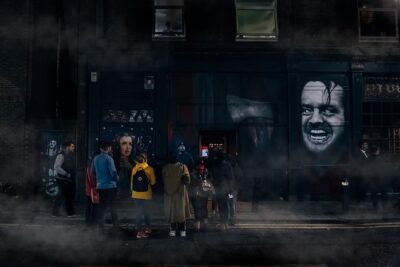
Ultimate Jack the Ripper : Guided Tour of London
Read our review →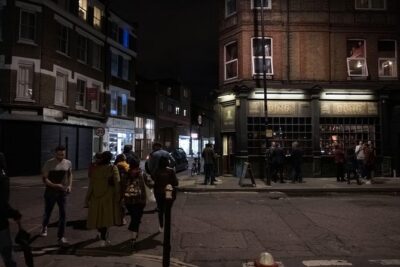
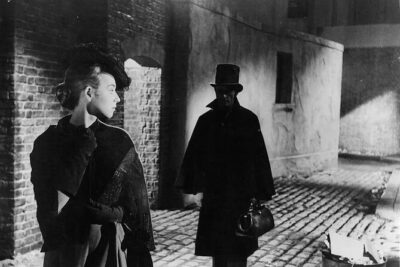
London Jack The Ripper Small-Group Walking Tour
Read our review →

The Original Jack the Ripper Coach Tour of Haunted London
Read our review →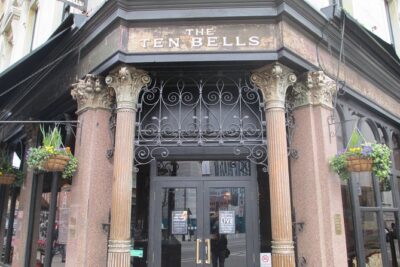
Browse the lists this tour appears in