
Reviewed · JACK THE RIPPER TOURS
Jack the Ripper Private Immersive Tour
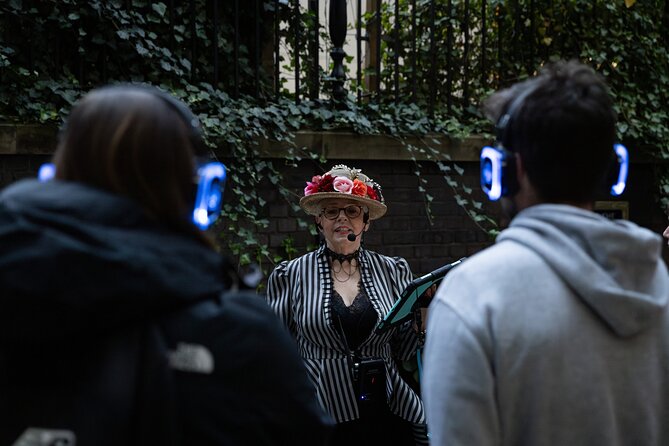
Step into Victorian Whitechapel after dark. This private Jack the Ripper tour turns a 2.5-hour walk through Aldgate, Whitechapel, and Spitalfields into a guided crime story, supported by period photographs, sound effects, and a tablet display. I like the way it connects the murders to poverty, lodging houses, workhouses, policing, and newspaper panic. I also like that your own guide, Jenny, can answer as many questions as you wish.
The main caution is the long stretch of walking and standing with no planned break. There has also been confusion between the standard private walk and a separate immersive format, so you should confirm exactly what equipment and experience your booking includes before setting off.
At $47.52 per person, the tour is priced sensibly if you want a private guide rather than a large group walk. It is best for true crime fans, history-minded visitors, and Londoners who want to see the East End away from the usual sightseeing circuit. It is less suitable if you have difficulty walking, dislike grisly details, or want a short, lighthearted evening activity.
In This Review
- Key points before you book
- Why this private Whitechapel walk is different
- Aldgate sets the scene in 1888
- Mitre Street and Mitre Square reveal the police problem
- Goulston Street and the case’s most debated clue
- Brick Lane brings sound, pubs, and Polly Nichols
- Hanbury Street tells Annie Chapman’s story
- Wilkes Street and Puma Court show how panic spread
- Commercial Street and the Ten Bells connection
- Mary Kelly’s final stop is the most graphic
- Is $47.52 per person good value?
- Who should choose Jenny’s tour?
- Should you book the Jack the Ripper Private Immersive Tour?
- FAQ
- Where does the Jack the Ripper tour start?
- Where does the tour finish?
- How long does the tour last?
- Are headphones included?
- Is the tour suitable for people with walking difficulties?
- Can I cancel for a refund?
Key points before you book
- Aldgate to Spitalfields in 2.5 hours: The route covers several murder sites and ends near Liverpool Street Station.
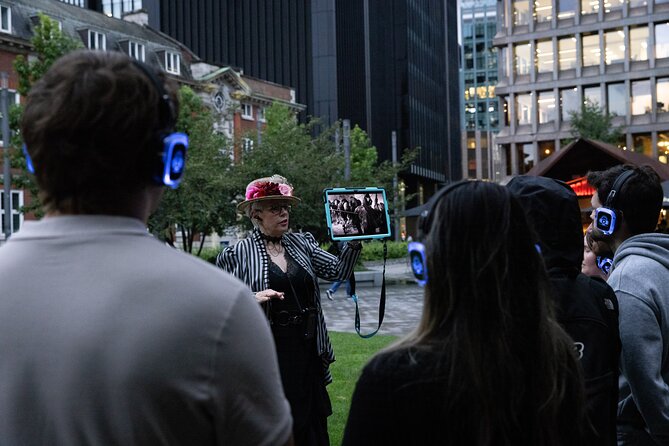
- Jenny’s personal storytelling: The guide uses photos, theories, local context, and sound to keep the story moving.
- The five canonical victims plus Alice McKenzie: The route also discusses a victim recently argued to be connected to the case by criminologist Professor David Wilson.
- The only famous physical clue: You will hear about the Goulston Street writing and the Lusk letter, including the grisly item sent with it.
- High-tech audio, but confirm the format: Headphones are included in the tour details, yet one booking had a microphone and speaker instead of individual headphones.
- No break during the walk: Wear comfortable shoes, dress for London weather, and bring water.
Why this private Whitechapel walk is different
Many Jack the Ripper walks focus almost entirely on murder scenes. This one tries to explain the world in which the crimes happened. At St Botolph’s Aldgate, you hear about homelessness, common lodging houses, workhouses, and scarce employment. That matters because the victims were not simply names in a detective puzzle. Their poverty and limited choices shaped the danger around them.
I appreciate that wider setting. The tour treats Victorian Whitechapel as a working district filled with people trying to earn enough for food and a bed. At several points, you hear how a small amount of money could determine where someone slept that night.
The private format is another strength. Your group gets one guide, rather than being folded into a large public crowd. Jenny can take questions throughout, and that is useful here because the case has disputed evidence, competing suspects, and plenty of popular myths.
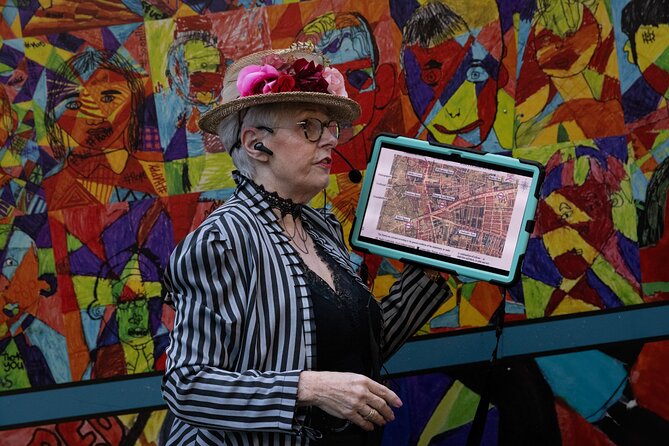
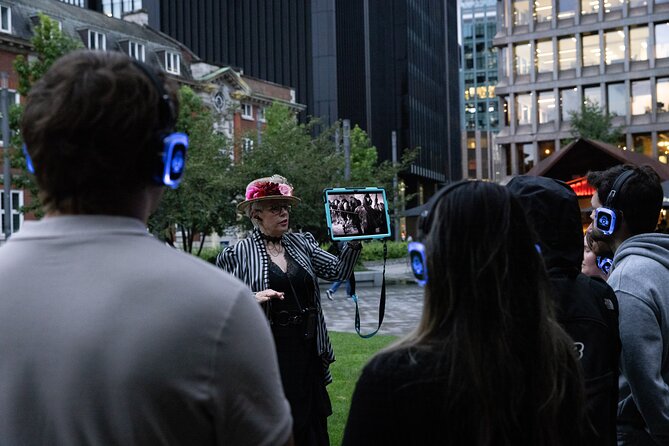
The experience is described as immersive because it combines a walk with photographs and audio. A 14-inch tablet makes the images easier to see in the dark, while period music, street cries, and newspaper headlines help create the mood. Still, do not assume the format is identical for every booking. A booking-confirmation problem once described a separate immersive product, and one participant received a guide’s microphone and speaker rather than private headphones. Confirm this point if sound quality matters to you.
More Jack the Ripper walks:
- London Jack the Ripper Guided Tour with Ripper-Vision
★ 4.5 · 4,840 reviews - London Jack The Ripper Guided Walking Tour
★ 5.0 · 3,131 reviews - Ultimate Jack the Ripper : Guided Tour of London
★ 5.0 · 1,495 reviews
Aldgate sets the scene in 1888
The meeting point is Aldgate Station, which makes the beginning easy to reach by public transport. The first stop is outside Dorsett City Hotel, where Jenny introduces the murders and explains what this part of London was like in 1888.
This opening lasts only about six minutes, but it gives you the basic setting before the case becomes more complicated. The modern hotel and surrounding streets can make the past feel distant, so the introduction helps you picture the area as it was when the murders began.
At St Botolph’s Aldgate, the social background receives more attention. On the green beside the church, the guide explains common lodging houses, workhouses, unemployment, and the number of people living without a stable home. The tablet photographs are useful here, especially after sunset, when printed handouts would be hard to read.
This is one of the most worthwhile sections for anyone who already knows the basic Jack the Ripper story. You get more than a sequence of bodies and suspects. You get a sense of why the streets were crowded at night and why the police struggled to identify people moving through them.
Mitre Street and Mitre Square reveal the police problem
Mitre Street brings you to the murder of Elizabeth Stride. Jenny explains the evening leading to the killing and how Louis Diemschütz discovered her body at the entrance to Dutfield’s Yard. Photographs of the victim and the location help connect the account to the street around you.
The story becomes especially tense at Mitre Square, where Catherine Eddowes was found dead and mutilated on August 30, 1888. Her murder came within an hour of Stride’s, creating a major police crisis. PC Edward Watkins discovered Eddowes during his beat, and the guide follows the route officers searched as they tried to find the killer.
The attraction here is not just the crime detail. It is the confusion created by two murders in separate police jurisdictions. The City of London Police and the Metropolitan Police were, and remain, separate forces. That division becomes important later when the Goulston Street clue appears.
If you are sensitive to graphic descriptions, Mitre Square is one of the points where you may want to listen from the edge of the group. The tour does not soften the killings, and Mary Kelly’s story at the end is still more disturbing.
Goulston Street and the case’s most debated clue
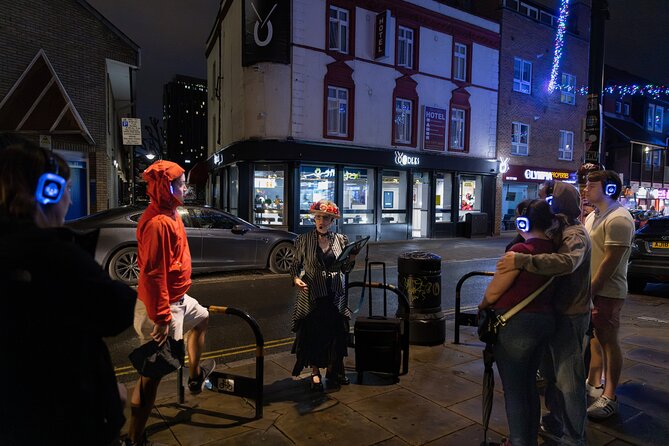
At Goulston Street, you stop opposite numbers 108 to 119 and look toward the doorway where the famous writing was found. The guide explains what happened after police discovered it and why the wording created a problem for officers.
This is a short stop, but it carries a lot of investigative weight. The clue was not a clear identification, and the two police forces had different responsibilities. The guide uses it to show how limited the evidence really was. The public often expects a dramatic answer in a famous murder case, but this story is full of uncertainty and missed chances.
The walk then returns to the beginning of the murder series at Wentworth Street. Here, Jenny discusses a victim outside the traditional five, a woman whose death has recently been considered a likely Ripper crime by Professor David Wilson. You hear the account of the killing, the discussion that followed, and see photographs of the location and victim.
This addition gives the route a more current angle. The accepted victim list is not as fixed as many popular accounts suggest. If you know the usual five names, this stop offers something new rather than repeating the same familiar material.
A few more to weigh up in London
- Stonehenge, Windsor Castle, and Bath from London
★ 4.5 · 18,662 reviews - London Big Bus Hop-On Hop-Off Tour with Optional River Cruise
★ 3.5 · 10,803 reviews - London Small Group Tour of Historical Pubs
★ 5.0 · 10,422 reviews - Stonehenge, Windsor Castle and Bath with Pub Lunch in Lacock
★ 4.5 · 7,402 reviews
Brick Lane brings sound, pubs, and Polly Nichols
As the group turns into Osborn Street and Brick Lane, the audio changes tone. Music is used to suggest what might have been heard from pubs and music halls in 1888. It is a small touch, but it helps you think about the area as a place where people worked, drank, sold goods, and searched for company.
Opposite the Frying Pan pub, the guide tells the story of Polly Nichols. This location is presented as the last place where she had a drink. Her need to find money for lodging forms an important part of the explanation, showing again how poverty shaped the victims’ choices.
You hear about the men who found her body in Berner’s Street and sent for the police. Photographs on the tablet show the victim and the murder site. The next Brick Lane stop adds the sound of street sellers and the early police effort to question local people about suspicious men.
I like the way these two short stops work together. One focuses on Polly’s final hours, while the next gives a sense of the street waking up to fear and police attention. The sound effects are most useful when they support the history rather than simply try to startle you.
Hanbury Street tells Annie Chapman’s story
Hanbury Street is the site connected with Annie Chapman, who was murdered on September 8, 1888. Jenny explains Annie’s life and the events before her death, including her sighting by Mrs Long less than an hour earlier.
The account says Annie was seen outside number 27 with a man who enticed her toward the backyard of number 29 by promising money. You then hear how she was killed and how one prominent suspect was later discounted. Photographs show the victim and the murder site.
This stop lasts about ten minutes and is one of the fuller sections of the walk. It makes clear how little time there was between a possible sighting and the discovery of a body. That narrow window is one reason the case has produced so many theories, but the guide distinguishes between a suspect and proof of guilt.
The graphic detail is substantial. I would not choose this tour for young children, and I would think twice if you know that violent crime stories stay with you. The private setting does at least make it easier to step back, ask a question, or tell the guide that you need a moment.
Wilkes Street and Puma Court show how panic spread
Walking along Wilkes Street, you hear about the growing anger in the local community. Newspapers were printing lurid reports, and the fear around the murders was spreading beyond the immediate scenes.
The buildings on Wilkes Street also provide a break from the crime narrative. Some date from the 1700s, and the guide explains who built them and why. That architectural detail helps you see the street as more than a backdrop for a murder.
At Puma Court, the subject turns to one of the letters sent to the press. More than 1,000 letters connected to the case were sent to police or newspapers, but only a small number are treated as especially important. The guide examines one of those letters and then uses the sound of newspaper sellers shouting lurid headlines to show how the press fed public alarm.
The audio effects are a good match for this section. They help explain the growth of the Ripper legend, not just the murders themselves. You also get a useful reminder that many letters were hoaxes, making it difficult to separate real evidence from publicity seeking.
Commercial Street and the Ten Bells connection
On Commercial Street, you stop opposite the Ten Bells, known as Mary Kelly’s favorite pub. The guide describes the area, Spitalfields Market, and the way the Jack the Ripper story has caused controversy over the years.
Christ Church Graveyard receives special attention because it was important to homeless people at the time. The tour explains how ordinary needs, including access to sleeping places and basic facilities, could lead to arguments and fights. That detail may seem small, but it brings the daily struggle of the district into sharper focus.
This stop works well for anyone interested in social history. The pub and market connections are easy to remember, while the graveyard story shows how desperate life could be for people with no secure home.
At Brushfield Street, you stand in the entrance to the London Fruit and Wool Exchange building and hear about the Lusk letter. It arrived in a box with a piece of human tissue that may have come from one of the victims. The guide uses photographs of the letter and the recipient to explain why it remains important in the case.
The letter is disturbing, but it is also a useful example of how evidence was handled in 1888. The tour does not treat every message as genuine. Instead, it focuses on the few items that have kept historians and crime specialists arguing.
Mary Kelly’s final stop is the most graphic
The last major stop is in the central courtyard of the London Fruit and Wool Exchange. It is the closest point on the route to the room where Mary Kelly was killed.
Mary was the youngest of the commonly accepted victims and the only one murdered indoors. That setting makes her case different from the others. Jenny explains the events leading up to her death, then gives a detailed account of the murder itself.
This is the most graphic part of the tour. If you want the full crime story, it provides the grim detail you came for. If you prefer a lighter historical walk, you may find this section too much.
The stop ends with discussion of suspects, both historical and modern, along with Jenny’s own theory about the killer’s identity. I like that the guide clearly presents it as a theory. You leave with a possible explanation, not a false sense that the case has been solved.
From here, Jenny directs you toward the shortest route to Liverpool Street Station. That is practical, especially because the walk finishes in the evening and the route has already taken you across a large part of East London.
Is $47.52 per person good value?
At $47.52 per person, I consider this fair value for a private, specialist walk lasting about two and a half hours. You are paying for the guide’s preparation, a tailored conversation, visual material, audio equipment, and a route that covers far more than one or two famous sites.
The value improves if you are in a small private group and plan to ask questions. A person who already knows the basic case can use the time to discuss disputed victims, police divisions, suspects, letters, and the difference between evidence and legend.
The value is weaker if you mainly want a quick introduction. Some stops last only three to six minutes, while the overall walk continues without a break. You are also paying for a private experience when a standard group walk may cost less.
Water is not included, so bring your own bottle. Wear shoes suited to steady walking and standing. The tour is offered Monday through Thursday from 3:00 PM to 9:00 PM during the stated operating period, making it particularly suited to an evening itinerary.
Who should choose Jenny’s tour?
I would recommend it to:
- True crime fans who want the full sequence of the case
- Visitors interested in Victorian poverty and East End life
- People who enjoy photographs, theories, and guided discussion
- London residents looking for a different view of Aldgate and Spitalfields
- Private groups that want to control the questions and pace of conversation
I would be cautious if you have walking or standing difficulties. The tour specifically warns that it lasts 2.5 hours with no break. Service animals are allowed, and the route is near public transport, but the physical demands remain significant.
Sound is another practical point. The listed equipment includes hi-tech headphones, and several positive accounts praise the audio for helping everyone stay connected while walking. Yet one participant who was hard of hearing struggled because a microphone and speaker were used instead. If you have hearing loss, tell Jenny at the start and ask to stand near the front. Also confirm whether your booking includes individual headphones.
The tour requires good weather and may be moved or refunded if conditions are poor or the minimum number of participants is not reached. You can cancel for a full refund up to 24 hours before the start time. Last-minute changes and cancellations are not accepted for a refund.
Should you book the Jack the Ripper Private Immersive Tour?
Book it if you want a focused, graphic, question-friendly walk through the East End and you value context as much as crime clues. The strongest features are Jenny’s animated delivery, the photographs, the sound effects, and the attention to homelessness, workhouses, newspapers, and police organization.
Before paying, confirm two things: the exact audio setup and whether you are receiving the private immersive format rather than a different public walk description. That small piece of preparation matters, especially if you are hard of hearing or booking because of the headphone experience.
If you can walk and stand for 2.5 hours, and the subject suits your taste, this is a strong way to see a less polished but more revealing side of London. If you want a gentle stroll or a tidy historical answer to the Ripper mystery, choose another activity.
FAQ
Where does the Jack the Ripper tour start?
The tour starts at Aldgate Station in London, at Aldgate, London EC3A, UK.
Where does the tour finish?
The listed end point is Bell Lane in London E1. At the final stop, the guide also directs you along the shortest route to Liverpool Street Station.
How long does the tour last?
The tour lasts approximately 2 hours and 30 minutes. It includes walking and standing with no planned break.
Are headphones included?
Hi-tech headphones are included in the tour details. However, the audio arrangement may not always be the same, so confirm the equipment when booking if private headphones are important to you.
Is the tour suitable for people with walking difficulties?
No. The tour is not recommended for people with walking or standing difficulties because it lasts about 2.5 hours without a break. A moderate level of physical fitness is advised.
Can I cancel for a refund?
Yes. You can cancel at least 24 hours before the start time for a full refund. Cancellations or changes made less than 24 hours before the experience are not refunded. If bad weather or insufficient numbers cause the tour to be canceled, you will be offered another date or a full refund.
Just added in London
- Private Tour: Royal High Tea At Kensington Palace Gardens★ 5.0 · 39 reviews
- Private Tour: Personal Travel Photographer Tour in London★ 4.5 · 27 reviews
- London East End Private Walking Food Tour – Secret Food Tours★ 5.0 · 26 reviews
- Private Tour: Night Photography Tour in London★ 5.0 · 48 reviews
- London Like a Local, Private & Personalized (2-3 hrs)★ 4.5 · 11 reviews
- British Museum & National Gallery of London – Exclusive Guided Combo Tour★ 5.0 · 48 reviews
- Private Tour: Tower of London and St Paul’s Cathedral★ 5.0 · 1 review
- London Soho District – Exclusive Guided Walking Tour★ 5.0 · 2 reviews
Jack the Ripper Tours, compared.
London Jack the Ripper Guided Tour with Ripper-Vision
Read our review →
Ultimate Jack the Ripper : Guided Tour of London
Read our review →
London Jack The Ripper Small-Group Walking Tour
Read our review →
The Original Jack the Ripper Coach Tour of Haunted London
Read our review →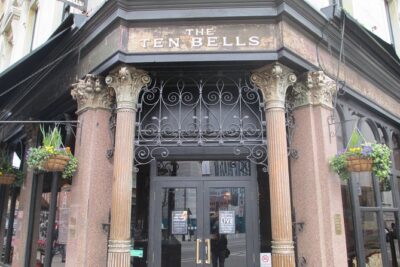
Browse the lists this tour appears in