
Reviewed · JACK THE RIPPER TOURS
Interactive Jack the Ripper Night Walk: London’s Murder Mystery
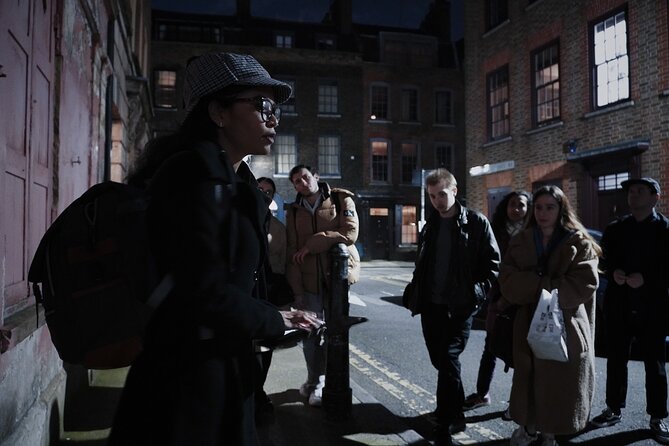
Dark streets tell darker stories. This Whitechapel night walk links crime scenes, old pubs, church shelter, and disputed clues while you try to work out who Jack the Ripper may have been. I like the route’s strong sense of place, and I like that it gives attention to the women caught in the story, not just the killer.
The roughly 2.5-hour walk costs $22.99 per person, which is fair for a guided evening outing in central London. The main drawback is practical: you finish at Mitre Square rather than returning to the starting point, and one past participant found it hard to hear the guide at times.
In This Review
- Key points to know before you book
- Why this night walk works
- Starting at St Mary’s Whitechapel Church
- Brick Lane: from slum to street art
- Princelet Street and the world of Annie Chapman
- Puma Court: fear in a narrow alley
- The Ten Bells and the last known hours
- Gunthorpe Street and the disputed Martha Tabram link
- Goulston Street and the apron fragment
- St Botolph’s Aldgate: shelter beside danger
- Mitre Square: ending at Catherine Eddowes’s crime scene
- Guide quality makes a real difference
- Is $22.99 good value?
- Who should book this experience?
- FAQ
- How long does the Jack the Ripper night walk last?
- How much does the tour cost?
- Where does the tour begin?
- Where does the tour end?
- Does the tour return to its starting point?
- What language is the tour offered in?
- How large is the group?
- Can I cancel for a full refund?
- Should you book the Whitechapel night walk?
Key points to know before you book
- Seven Whitechapel-area stops connect famous locations with lesser-known streets and alleys.
- Brick Lane and Princelet Street add social history about poverty, immigration, crime, and daily life in Victorian East London.
- The Ten Bells and Mitre Square provide the most direct links to the murders.
- Guides such as Tyson, Lisa, Jess, and Sadie have been praised for humor, preparation, storytelling, and personal attention.
- Groups are capped at 25 people, with group discounts and a private-tour upgrade available.
- The route ends away from the start, so plan your onward journey before setting out.
Why this night walk works
Jack the Ripper tours can easily become a parade of grim tales. This one has a better shape. It uses the streets of Whitechapel to explain the conditions that made the area so vulnerable in the late 1800s, then layers in the murders, police clues, disputed theories, and the lives of the women involved.
That broader view matters. You are not simply moving from one crime scene to another. You are also hearing about slum housing, poverty, desperation, and the limited protection available to women in Victorian East London. The account of St Botolph’s Aldgate, for instance, shows a place of shelter only a short walk from streets where danger was close at hand.
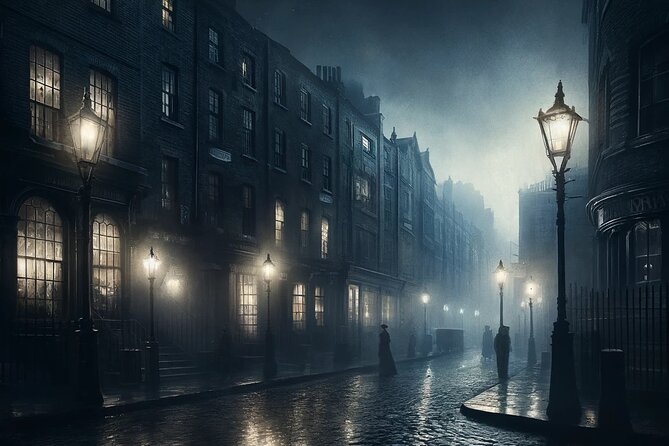
The night setting adds atmosphere without requiring any special effects. Narrow passages, cobbled streets, and old buildings give the guide something real to point toward. You can picture how vulnerable a person would have been in a dim alley, though you should remember that modern London has changed greatly since 1888.
The interactive angle gives you more to do than listen. You follow the evidence and consider the competing clues as the walk progresses. The final question remains open: who was Jack the Ripper? The tour does not pretend that the mystery has a neat answer.
More Walking Tours in London
- Tour for Muggles The Ultimate Harry Potter Walking Tour in London
★ 5.0 · 4,684 reviews - London Jack The Ripper Guided Walking Tour
★ 5.0 · 3,131 reviews - Changing of the Guard Guided Walking Tour in London
★ 5.0 · 1,793 reviews
Starting at St Mary’s Whitechapel Church
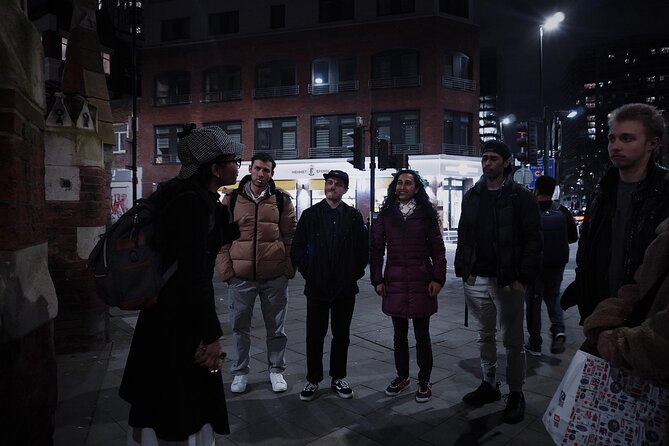
The meeting point is the St Mary’s Whitechapel Church Memorial on Unnamed Road, London E1 1FE. Check the exact map location before you leave, since an evening meeting point is not the place to rely on a last-minute search.
The route then moves through Whitechapel and Spitalfields. You should expect a continuous walking experience lasting about two hours and 30 minutes, with each listed stop taking roughly 17 minutes. The stops are free to enter, and the price covers the guided experience rather than admission to indoor attractions.
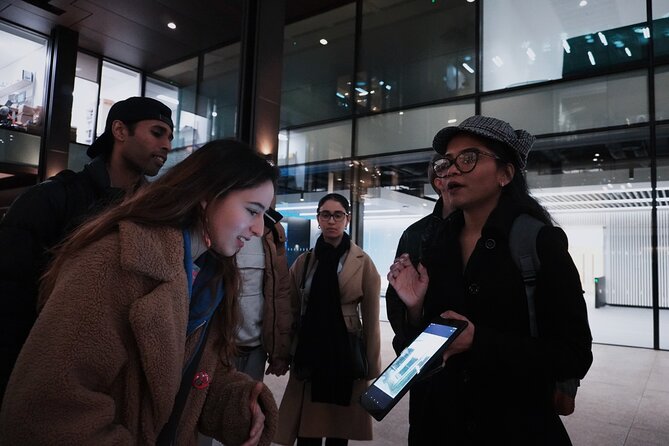
The group limit is 25 people. That is large enough to create some energy but small enough for a guide to keep an eye on the group. The strongest guide feedback focuses on personal engagement. Tyson reportedly remembered everyone’s name and used that information to keep the group involved. Lisa was praised for helping with practical questions as well as the historical material.
The tour is offered in English and uses a mobile ticket. Confirmation arrives when you book. Most people can participate, though the supplied details do not promise a fully step-free route, so contact the operator if that point is important to you.
Brick Lane: from slum to street art
Brick Lane is now associated with street art and curry houses, but the walk begins by looking behind that modern image. In the Victorian period, this area formed part of one of London’s most notorious slums.
The guide uses the street to explain how crime, poverty, and desperation shaped local life. This is useful context because the Ripper case did not happen in a vacuum. The victims lived and worked in an area marked by overcrowding and insecurity, where many people had very little money or protection.
I like this opening because it starts with the neighborhood rather than the murderer. You get a sense of the social setting before the tour turns to individual crimes. It also gives you a reason to look carefully at the contrast between today’s shops, restaurants, murals, and the hard conditions that once defined the area.
You spend about 17 minutes here. Brick Lane can be lively, so keep close to the guide and listen carefully when the group is near traffic or other evening activity.
Princelet Street and the world of Annie Chapman
Princelet Street offers a sharp change of mood. Its cobbled surface and old-looking buildings help you imagine East London in the 1880s. The street connects to Jack the Ripper’s movements and to the life of Annie Chapman.
This part of the walk is less about a single dramatic clue and more about putting a human face on the case. Annie Chapman was not just a name in a crime file. The guide uses the location to discuss her life and the setting in which she lived.
That personal focus is one of the tour’s strongest features. Sadie, one of the guides, was praised for telling the women’s stories in a spirited and empowering way. That approach can make the evening feel more respectful and less like entertainment built only around horror.
Princelet Street is also a good place to pay attention to the physical scale of the area. The narrow street and close buildings help explain how quickly people could disappear from view. The tour spends around 17 minutes here, enough for context without turning the stop into a lecture.
More Jack the Ripper walks:
- London Jack the Ripper Guided Tour with Ripper-Vision
★ 4.5 · 4,840 reviews - Ultimate Jack the Ripper : Guided Tour of London
★ 5.0 · 1,495 reviews - The Original Jack the Ripper : Guided Tour
★ 5.0 · 1,264 reviews - London Jack The Ripper Small-Group Walking Tour
★ 5.0 · 1,013 reviews
Puma Court: fear in a narrow alley
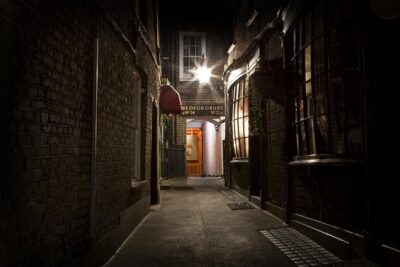
Puma Court is described as one of the eeriest alleys in Spitalfields. Its importance comes less from a confirmed murder than from what it helps you imagine: the danger of quiet, poorly lit passages where a person could be isolated within a busy district.
The guide asks you to consider how exposed the victims were in places like this. That is a worthwhile pause because the case involved not only famous locations but also the ordinary streets where people tried to earn a living, find shelter, or get home.
Atmosphere does much of the work here. If you prefer a tour based only on firmly documented facts, this stop may feel more reflective than evidential. If you enjoy historical storytelling tied to the built environment, Puma Court should be one of the more memorable sections.
Again, allow about 17 minutes. Narrow alleys can make it harder for everyone to stand close enough to hear, so move into position promptly when the guide gathers the group.
The Ten Bells and the last known hours
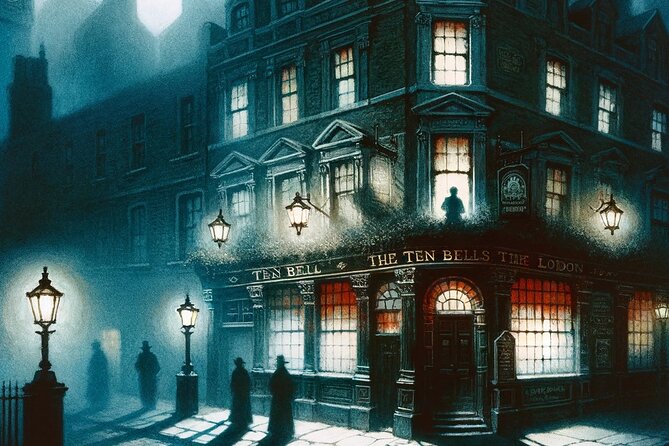
The Ten Bells is the tour’s most recognizable pub stop. The historic pub is linked to several victims who were last seen alive there, and the guide recounts what happened in their final hours.
The group gathers outside, so you should not expect a pub visit or a drink to be part of the tour. That is worth knowing if you picture this as a stop inside a historic tavern. The value is in the location and the story told around it.
This can be an emotionally heavy section. The guide’s job is to explain the circumstances without turning the women’s deaths into cheap spectacle. The best feedback about Sadie’s approach suggests that the tour can handle this balance well, giving the women more dignity and attention than many Ripper walks do.
The Ten Bells also helps connect separate parts of the case. You begin to see how the victims’ movements, local businesses, alleys, and police investigations fit together. After about 17 minutes, the group continues toward Gunthorpe Street.
Gunthorpe Street and the disputed Martha Tabram link
Gunthorpe Street is a narrow passage associated with Martha Tabram’s murder. She is not officially listed among the confirmed Ripper victims, but many people believe she may have been the killer’s first victim.
This is where the interactive mystery becomes useful. The tour does not need to force every crime into one tidy pattern. Instead, you can consider why some historians connect Tabram to the Ripper and why the evidence remains uncertain.
I appreciate that distinction. A good crime-history tour should tell you what is documented, what is disputed, and what is based on later theory. Gunthorpe Street gives the guide a natural chance to explain that not every claim carries the same weight.
The passage also reinforces the physical vulnerability of the area. Standing in a confined street makes the story feel close, but you should keep the historical distance in mind. Today’s lighting, population, policing, and street life are not the same as they were in the 1880s.
Goulston Street and the apron fragment
Goulston Street brings one of the case’s most famous clues into focus. After the double murder, investigators found a bloodied fragment of apron and a chalk message. Those details caused fierce argument among police, historians, and later researchers.
This is a strong point for an interactive tour because the evidence invites questions. Was the message connected to the killer? Was it written by someone else? Did the apron fragment tell investigators anything useful, or did it simply create more confusion?
You are not handed a simple solution. Instead, the guide uses the location to show how incomplete evidence can shape a case for generations. The mystery survives partly because the clues are so suggestive and so difficult to prove.
If you enjoy detective stories, this may be your favorite stop. If you want a clear identification of the murderer, it may frustrate you. That uncertainty is not a flaw in the tour. It is the central fact of the case.
St Botolph’s Aldgate: shelter beside danger
St Botolph’s Aldgate offers a quieter and more human pause. The church stood at the edge of Whitechapel and provided shelter to many women during the Victorian period.
The important detail is the closeness of safety and danger. A woman could find help at the church, yet only steps away were streets where she might be at serious risk. That contrast adds needed context to the lives of women who had few dependable options.
This stop also helps prevent the tour from becoming a narrow search for a male villain. The case was shaped by poverty, housing, work, gender, and the limited services available to people in crisis. St Botolph’s makes those pressures easier to understand.
The church section is about 17 minutes. It may feel less dramatic than the crime scenes, but it gives the walk a better moral balance.
Mitre Square: ending at Catherine Eddowes’s crime scene
The tour ends at Mitre Square, London EC3A 5DE. This is where Catherine Eddowes was brutally murdered, and the violence of the crime shocked the city.
Mitre Square provides a strong final stop because it brings together the tour’s main threads: the vulnerable streets of East London, the limits of the investigation, the physical evidence, and the mystery of the killer’s identity. The guide can close by asking you to weigh what you have heard rather than simply announcing a suspect.
The ending point creates one practical issue. You do not return to St Mary’s Whitechapel Church. Plan your route onward before the walk begins, and make sure you know how you will orient yourself from Mitre Square. This is especially important if you are tired, unfamiliar with London, or traveling with children.
Guide quality makes a real difference
The subject matter is strong, but the guide determines how much you get from it. Tyson has been praised for entertaining delivery, detailed preparation, quick answers, and remembering participants’ names. Jess was described as funny, smart, patient, and willing to discuss every scene.
Sadie’s storytelling style is especially appealing if you want the women’s experiences treated with care. Lisa has also received praise for helping with practical matters as well as sharing historical information.
There is one clear caution. One person found the guide difficult to hear and suggested more volume. On a walking tour, traffic, wind, and group spacing can affect sound. Stay near the guide, avoid chatting while the story is being told, and consider asking the guide to repeat anything you miss.
The overall rating is 4.9 from 171 ratings, with 97 percent recommending the experience. Those figures point to a consistently strong outing, but they do not remove the normal risks of any live walking tour. Guide style can vary, and your enjoyment will depend partly on how much you like dramatic crime history.
Is $22.99 good value?
At $22.99 per person, this is a reasonable price for a 2.5-hour guided walk with seven stops. You are paying for research, narration, route planning, and access to material the guide may not find in a standard London guidebook.
The value is best if you want context and storytelling rather than a quick photo stop. You also receive a useful download of old photographs and reports, according to one account of the experience. That extra material can help you revisit the clues after the walk.
Group discounts may lower the per-person cost, and a private-tour upgrade is available if you want more control over the pace and discussion. The standard group has a maximum of 25 people, so it is not an intimate private walk, but it is also not an enormous crowd.
The tour is often booked about 36 days ahead. That timing suggests you should reserve early for a particular evening, especially if your London schedule is tight. Free cancellation is allowed up to 24 hours before the start time for a full refund. Inside that window, the payment is not refunded and changes are not accepted.
Who should book this experience?
I would choose this walk if you like London social history, unsolved crimes, atmospheric evening routes, and stories that leave room for debate. It suits adults and older children who can handle murder-related subject matter and a long walk after dark.
It is also a good fit if you have already seen central London’s major sights and want a different side of the city. Brick Lane, Spitalfields, and Whitechapel provide a strong sense of place, even for someone who knows little about the case.
I would hesitate if you dislike grim subject matter, need a quiet indoor setting, or want a tour that begins and ends at the same location. I would also think twice if hearing every word is essential and you are uncomfortable asking a guide to speak up.
FAQ
How long does the Jack the Ripper night walk last?
The walk lasts approximately two hours and 30 minutes.
How much does the tour cost?
The listed price is $22.99 per person.
Where does the tour begin?
It begins at the St Mary’s Whitechapel Church Memorial on Unnamed Road, London E1 1FE, UK.
Where does the tour end?
The final stop is Mitre Square, London EC3A 5DE, UK.
Does the tour return to its starting point?
No. The walk ends at Mitre Square, so you need to plan your onward route.
What language is the tour offered in?
The tour is offered in English.
How large is the group?
The activity has a maximum group size of 25 people.
Can I cancel for a full refund?
Yes. You can cancel at least 24 hours before the start time for a full refund. Cancellations or changes made within 24 hours are not accepted, and the amount paid is not refunded.
Should you book the Whitechapel night walk?
I would book it if you want a well-priced, atmospheric walk that treats the Jack the Ripper case as both a crime mystery and a story about Victorian poverty and women’s lives. The route has enough famous names to satisfy true-crime fans, while Princelet Street, St Botolph’s Aldgate, and the social context give it more substance.
Choose a private upgrade if personal questions and a slower pace matter to you. For the regular group, stay close to the guide, wear comfortable shoes, and plan your route home from Mitre Square. If you can accept the grim subject and the unanswered final question, this is a thoughtful way to explore one of London’s most unsettling neighborhoods after dark.
Just added in London
- Private Tour: Royal High Tea At Kensington Palace Gardens★ 5.0 · 39 reviews
- Private Tour: Personal Travel Photographer Tour in London★ 4.5 · 27 reviews
- London East End Private Walking Food Tour – Secret Food Tours★ 5.0 · 26 reviews
- Private Tour: Night Photography Tour in London★ 5.0 · 48 reviews
- London Like a Local, Private & Personalized (2-3 hrs)★ 4.5 · 11 reviews
- British Museum & National Gallery of London – Exclusive Guided Combo Tour★ 5.0 · 48 reviews
- Private Tour: Tower of London and St Paul’s Cathedral★ 5.0 · 1 review
- London Soho District – Exclusive Guided Walking Tour★ 5.0 · 2 reviews
Jack the Ripper Tours, compared.
London Jack the Ripper Guided Tour with Ripper-Vision
Read our review →
Ultimate Jack the Ripper : Guided Tour of London
Read our review →
London Jack The Ripper Small-Group Walking Tour
Read our review →
The Original Jack the Ripper Coach Tour of Haunted London
Read our review →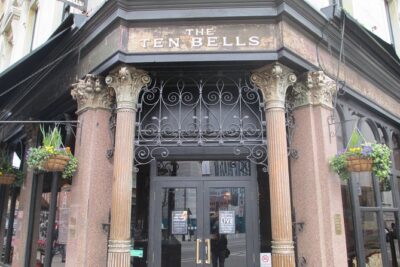
Browse the lists this tour appears in