
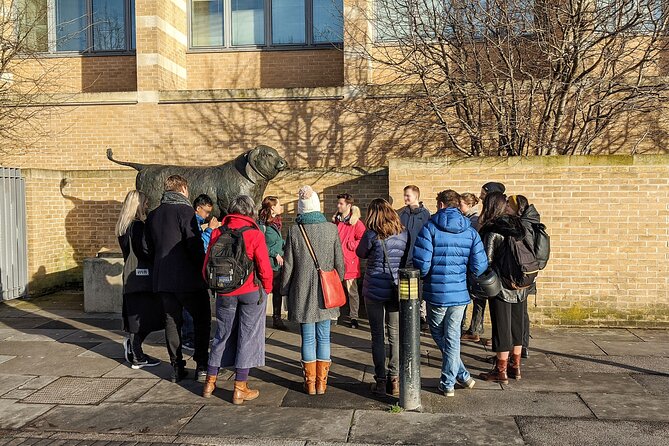
Reviewed · OXFORD TOURS
Follow the Money Tour – by Uncomfortable Oxford™
Oxford has more than old stones. This 90-minute walk shows how money, donors, and moral choices shaped the university you see today. I like its clear-eyed look at funding and the way guides turn each stop into a conversation rather than a lecture. The small group limit of 15 also gives the tour room to breathe. The main drawback is its serious subject matter. If you want medieval legends, famous scholars, and pretty college courtyards, this is not that kind of walk.
I also like the route itself. It links major modern university buildings with less polished parts of Oxford, including a former workhouse site and a public garden affected by the housing crisis. You should come ready to think, not simply take photographs. The tour may leave you with more questions than answers, which is part of its value.
In This Review
- Key points to know before you book
- Why this Oxford walk takes a different route
- Saïd Business School and the question of donor influence
- Middle Fisher Row Gardens and Oxford’s housing crisis
- Nuffield College and the problem of public memory
- The Sackler name at the Bodleian library
- Wellington Square and the former Oxford Workhouse
- Blavatnik and Schwarzman at the final stop
- What $89.12 buys you in Oxford
- Who will get the most from this experience
- Timing, meeting points, and cancellation advice
- The call: should you book Follow the Money?
- FAQ
- How long is the Follow the Money Tour?
- How much does the tour cost?
- Where does the tour begin?
- Where does the tour end?
- How many stops are included?
- What subjects does the tour cover?
- Is the tour offered in English?
- How large is the group?
- Are service animals allowed?
- Can I cancel for a full refund?
- Is public transportation nearby?
Key points to know before you book
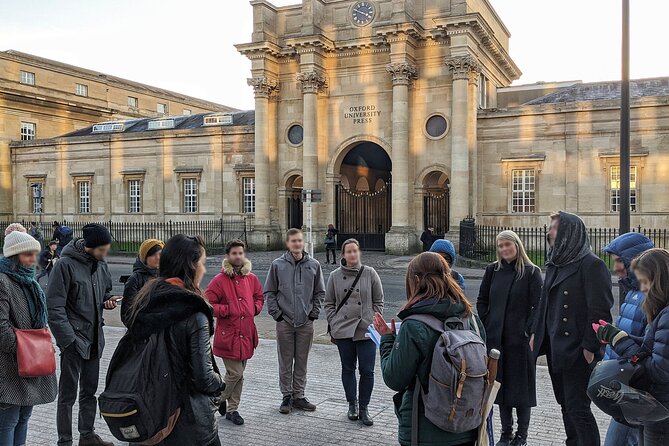
- Six stops in 90 minutes: The route moves from Saïd Business School to the Blavatnik School of Government.
- Oxford funding takes center stage: You examine donations connected with Wafiq Said, the Sackler family, Len Lord Nuffield, Leonard Blavatnik, and Stephen A. Schwarzman.
- Discussion matters as much as facts: Guides such as Hera Jay and Julie have been praised for encouraging debate without forcing a single view.
- A maximum of 15 people: The small group size suits a topic that works best when you can hear and participate.
- The route covers housing and social history too: Middle Fisher Row Gardens and Wellington Square widen the conversation beyond university buildings.
- It costs $89.12 per person: That is a serious price for 90 minutes, but the value rests in the research, access to difficult questions, and focused interpretation.
Why this Oxford walk takes a different route
Most Oxford sightseeing walks point you toward medieval colleges, famous writers, grand libraries, and university traditions. Follow the Money asks a less comfortable question: who paid for the institution, and what should Oxford do when a donor’s money carries political, ethical, or personal baggage?
That question gives the tour a clear purpose. You are not simply learning that a building has a benefactor’s name on it. You are asked to consider how names enter public life, how universities judge donors, and how a city lives with wealth that may be admired by some people and questioned by others.
I appreciate the format because it does not reduce every donor to a hero or villain. The strongest part of the experience appears to be the discussion. Guides have been praised for giving well-researched information, then asking the group to decide what they think. Hera Jay has been singled out for strong storytelling and discussion skills, while Julie has been praised for creating a safe space for debate.
That approach suits Oxford. The university’s buildings can look permanent and unquestionable, but the names on them and the money behind them are not simple. You may leave considering how far you would go along an ethical line to secure funding for education.
A few more to weigh up in Oxford
- Oxford University Walking Tour With University Alumni Guide
★ 5.0 · 6,905 reviews - 1.5-hour Oxford City and University Walking Tour
★ 4.5 · 1,383 reviews - Oxford Official University & City Tour
★ 5.0 · 1,134 reviews
Saïd Business School and the question of donor influence
The tour begins outside Saïd Business School on Park End Street. This is a useful starting point because the building immediately puts business and money in front of you. From there, the guide introduces Wafiq Said and the controversies surrounding his large donations to the University of Oxford.
You should expect this stop to focus on the relationship between private wealth and public institutions. A donation can fund teaching, research, buildings, and scholarships. It can also attach a donor’s name to a place that serves a much wider community. The tour asks you to think about where gratitude ends and scrutiny begins.
This first stop lasts about 15 minutes. That is enough time to establish the central question without turning the opening into a long speech. Since the tour starts outside the business school, you should arrive a few minutes early and make sure you are at the Park End Street location, Oxford OX1 1HP.
The building is not simply a backdrop. It sets up the tension running through the whole walk: universities need money, but money rarely arrives without a story attached to it.
Middle Fisher Row Gardens and Oxford’s housing crisis
The second stop moves to Middle Fisher Row Gardens, a small green space where the conversation turns from wealthy donors to housing pressure in Oxford.
This shift is important. A discussion about university money can easily become an exercise in looking up at impressive buildings and discussing famous names. The garden brings the issue down to street level. You are invited to think about how Oxford’s institutions affect the people who live around them, especially in a city where housing remains a major concern.
The stop lasts about 15 minutes and includes time to enjoy the garden. Do not expect a formal attraction with an admission desk or a long list of displays. Its value comes from the contrast between a peaceful public place and the difficult social question being discussed there.
I like this part of the route because it keeps the tour from becoming a narrow study of university donors. Oxford is not only a collection of colleges and libraries. It is also a working city, and the cost of living matters just as much as the prestige of a new academic building.
Nuffield College and the problem of public memory
At Nuffield College, the guide introduces Lord Nuffield and the tensions surrounding his memory in Oxford.
This stop gives you another angle on philanthropy. Donors are remembered through buildings, plaques, institutions, and public stories. Over time, those stories can become polished. The difficult parts may receive less attention, or different groups may remember the same person in very different ways.
The tour does not treat memory as fixed. Instead, it asks how a city should handle a benefactor whose legacy is complicated. Should a building keep a donor’s name? Can useful work funded by a donation be separated from the donor’s wider record? These are not questions with tidy answers, and the guide’s discussion-based style is well suited to them.
Nuffield College is also a good place to pause because the setting carries the visual weight of Oxford. You may feel the pull of the traditional university story here, then see how the tour gently questions it. The stop lasts 15 minutes, so the guide has to keep the discussion focused.
A completely different sort of day out:
- City Sightseeing Oxford Hop-On Hop-Off Bus Tour
★ 4.5 · 1,042 reviews - Harry Potter Walking Tour of Oxford Including New College
★ 4.5 · 930 reviews - Oxford Sightseeing River Cruise Along The University Regatta Course
★ 4.5 · 652 reviews - Afternoon Tea Sightseeing River Cruise in Oxford
★ 5.0 · 583 reviews
The Sackler name at the Bodleian library
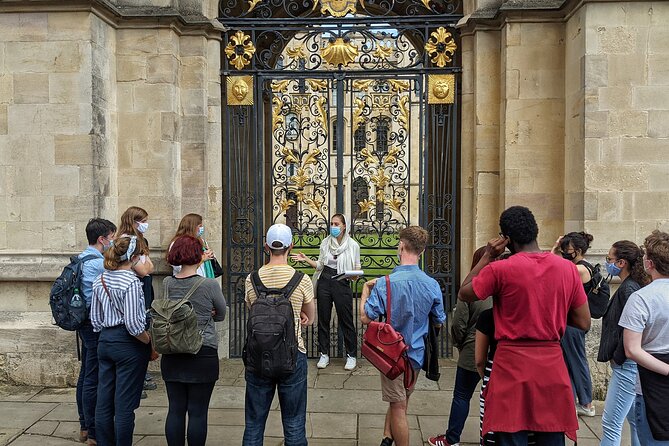
The fourth stop is the Bodleian Art, Archaeology and Ancient World Library, a Romanesque building named after the Sackler family.
This is likely one of the most visually memorable points on the route. You get time to admire the architecture while considering the controversy around the family name and donations. That combination is central to the tour’s method: look carefully at the building, then ask what its name means and how institutions respond when a benefactor becomes controversial.
The stop is listed as free admission, but the experience is not built around an interior visit or a guided tour of the library’s collections. You should think of it as a pause outside or around the building, with the architecture serving as evidence in a wider discussion.
The Romanesque style can make the library feel old, settled, and almost beyond argument. The donor story does the opposite. It reminds you that even a building that seems firmly rooted in Oxford’s identity can become part of a modern ethical debate.
This is a useful moment to ask yourself a practical question: if a donation funded a beautiful and useful building, would you want the donor’s name removed after later controversy? The guide may not give you a final answer, but you will have the facts and the setting to form your own view.
Wellington Square and the former Oxford Workhouse
The fifth stop takes you into the peaceful garden at Wellington Square. This site was formerly home to the Oxford Workhouse.
The contrast is striking. A quiet garden can hide a difficult past, and that makes Wellington Square a fitting location for a tour about money and institutions. Here, the discussion moves beyond named donors and modern university buildings toward poverty, public responsibility, and the people who have often been left out of Oxford’s celebrated story.
The stop lasts about 15 minutes. You may find this section less immediately dramatic than the donor stories, but it gives the tour needed balance. Wealth at Oxford cannot be understood without considering the city’s social divisions and the role of institutions in addressing them.
One particularly interesting thread mentioned during the tour’s wider discussions is Oxford’s Jewish past and the way colleges benefited from lands that became vacant after Jewish communities were expelled from England in the 1300s. That connection adds an older historical layer to the modern funding debate. It also shows how property, power, and institutional wealth can move across centuries, even when the original circumstances are no longer widely remembered.
If that subject matters to you, listen closely and ask questions. It is the sort of connection that can change how you read Oxford’s buildings after the walk.
Blavatnik and Schwarzman at the final stop
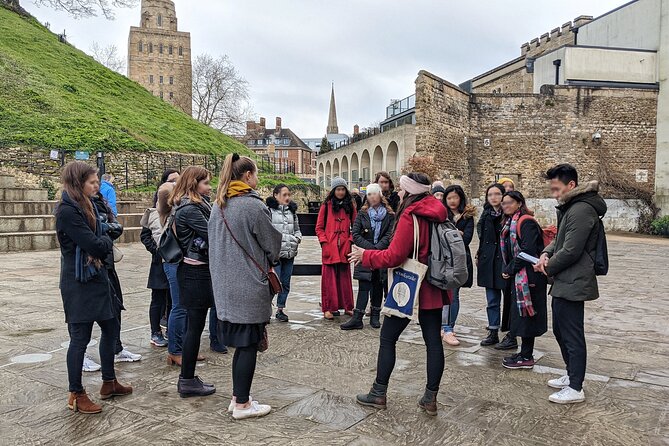
The tour finishes beside two modern projects funded by controversial billionaires: the Blavatnik School of Government and the future Stephen A. Schwarzman Centre for the Humanities.
This closing stop brings the tour back to the present. You have already considered older forms of philanthropy, disputed legacies, housing, and social inequality. Now you look at current and planned university projects, along with the questions raised by very large gifts from extremely wealthy individuals.
The Blavatnik School of Government is at 120 Walton Street, Oxford OX2 6GG. The tour ends there, so you should plan your next activity from this side of central Oxford rather than assuming you will return to the starting point.
Ending here works well. It leaves you with an active debate rather than a sealed historical package. You may ask what standards Oxford should apply to donors today, how transparent those decisions are, and who gets to decide when a gift is acceptable.
The closing discussion also makes clear why this is not a simple anti-donor tour. Universities need funding. New buildings and academic programs cost money. The real issue is how an institution weighs educational benefit against the donor’s record, political influence, and public reputation.
What $89.12 buys you in Oxford
At $89.12 per person, this is not a bargain walking tour in the usual sense. You are paying far more than you would for a casual orientation walk or a self-guided route through Oxford’s streets.
The value comes from a different place. You get 90 minutes of focused research, a route built around difficult subjects, and a guide who can connect buildings, donors, housing, social history, and ethical decision-making. If you enjoy serious discussion, the price may feel justified. If you mainly want a broad introduction to Oxford, you may find it expensive and too specialized.
The maximum group size of 15 helps. A smaller group makes it easier to hear the guide and gives you a better chance to take part in discussion. It also keeps the experience from becoming a crowded procession through the city.
Group discounts are available, which may improve the price for people booking together. The tour is offered in English and uses a mobile ticket. It is booked, on average, 11 days ahead, so you should not leave it until the last minute if the subject is central to your Oxford plans.
Who will get the most from this experience
I would choose this tour if you have already seen some of Oxford’s famous sights and want to understand the forces behind them. It is also a strong choice if you study politics, history, ethics, economics, urban planning, or higher education.
You will probably enjoy it most if you:
- Like asking hard questions about institutions and public money.
- Prefer discussion to a steady stream of memorized facts.
- Want Oxford history that includes poverty, housing, exclusion, and contested memory.
- Are comfortable leaving with an unresolved question.
- Appreciate a small group and a guide who does not push one answer.
You may want another tour if you are visiting Oxford for medieval architecture, literary stories, or a traditional introduction to the colleges. Follow the Money has attractive buildings along the route, but the architecture is there to support the argument, not to be the whole show.
Most people can participate, and service animals are allowed. The route is near public transportation. The supplied information does not give a detailed accessibility description, so you should check with Uncomfortable Oxford if you have specific mobility needs.
Timing, meeting points, and cancellation advice
The full experience lasts about 1 hour and 30 minutes, with roughly 15 minutes at each of six stops. It starts outside Saïd Business School on Park End Street and ends at the Blavatnik School of Government on Walton Street.
Because the tour does not return to its starting point, you should note the finishing address before booking dinner, a museum visit, or transport. A mobile ticket is provided, and confirmation arrives when you book.
You can cancel for a full refund up to 24 hours before the start time. Cancellations or changes made within 24 hours are not accepted for a refund, and the cut-off follows Oxford’s local time.
The call: should you book Follow the Money?
Book it if you want an Oxford tour that questions the official story instead of simply repeating it. The best parts are the small group, the carefully connected stops, and the open discussion about donor power, public memory, housing, and university ethics.
I would not book it as your only Oxford sightseeing experience if you have never seen the city before. Pair it with a more traditional history or architecture walk, then use Follow the Money to look at familiar buildings with sharper eyes.
For the right audience, $89.12 buys an unusual kind of sightseeing: not more facts to collect, but better questions to carry with you.
FAQ
How long is the Follow the Money Tour?
The tour lasts approximately 1 hour and 30 minutes.
How much does the tour cost?
The listed price is $89.12 per person.
Where does the tour begin?
It begins outside Saïd Business School on Park End Street, Oxford OX1 1HP, United Kingdom.
Where does the tour end?
The tour ends at the Blavatnik School of Government, 120 Walton Street, Oxford OX2 6GG, United Kingdom.
How many stops are included?
The route includes six stops, with approximately 15 minutes at each one.
What subjects does the tour cover?
It covers university donors and funding, Oxford’s housing crisis, contested public memory, the former Oxford Workhouse, and historical and modern links between wealth and the university.
Is the tour offered in English?
Yes. The tour is offered in English.
How large is the group?
The activity has a maximum of 15 participants.
Are service animals allowed?
Yes, service animals are allowed.
Can I cancel for a full refund?
Yes, if you cancel at least 24 hours before the experience starts. Cancellations made less than 24 hours before the start time are not refundable.
Is public transportation nearby?
Yes, the tour is near public transportation.
Just added in Oxford
- Oxford Bike and Walking Tour★ 4.5 · 27 reviews
- Oxford’s Famous Alumni: Self-Guided Story Puzzle Walk★ 4.0 · 2 reviews
- Undiscovered Cotswolds Private Tour★ 5.0 · 87 reviews
- History of Medicine Tour – by Uncomfortable Oxford™★ 4.5 · 8 reviews
- Natural History Museum Tour – by Uncomfortable Oxford™★ 4.5 · 17 reviews
- Tours of Oxford private walking tours for the Discerning Traveler★ 5.0 · 70 reviews
- Women and Queer Histories Tour – by Uncomfortable Oxford™★ 5.0 · 60 reviews
- Multi Day Cotswold Village Trail★ 5.0 · 1 review
Oxford Tours, compared.
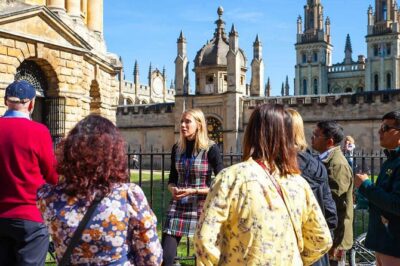
Oxford University Walking Tour With University Alumni Guide
Read our review →
1.5-hour Oxford City and University Walking Tour
Read our review →
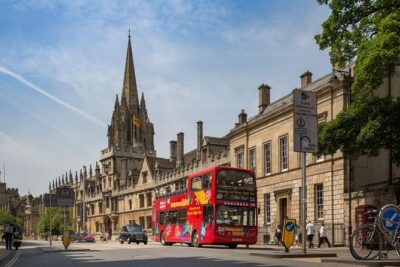
City Sightseeing Oxford Hop-On Hop-Off Bus Tour
Read our review →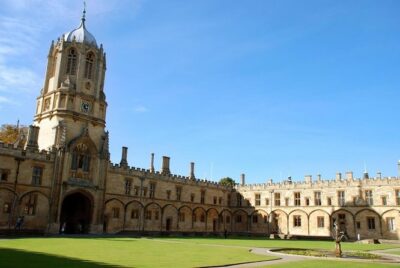
Harry Potter Walking Tour of Oxford Including New College
Read our review →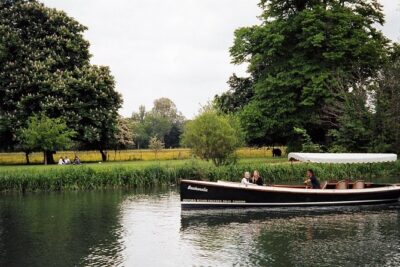
Oxford Sightseeing River Cruise Along The University Regatta Course
Read our review →
Afternoon Tea Sightseeing River Cruise in Oxford
Read our review →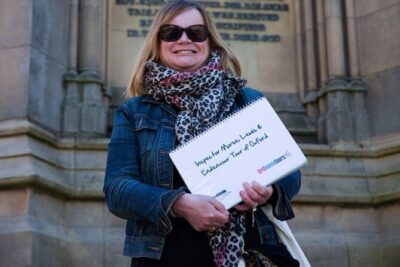
Inspector Morse, Lewis and Endeavour Oxford Walking Tour
Read our review →Browse the lists this tour appears in