
Reviewed · WORKSHOPS
Wildlife Photography Workshop in Richmond Park in London
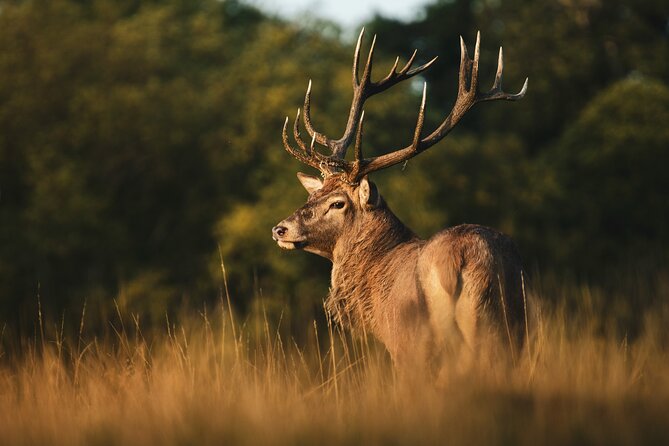
Wildlife photography starts with patience. This three-hour Richmond Park workshop gives you a quick escape from central London, plus practical tuition beside the park’s Red and Fallow deer. I like the small group of up to eight and the way the session combines camera settings with composition, rather than treating photography as a list of buttons. I also like the evening timing, when softer light can make ordinary scenes look far more appealing.
The main drawback is that wildlife never follows a timetable. You may see deer, birds, or other park life, but no animal encounter can be promised. You also need to pay close attention to the park’s gates and closing times, since one participant had difficulty finding a way out after gates were locked.
In This Review
- Key points to know before booking
- A three-hour photography lesson inside Richmond Park
- Meeting the deer and finding the right frame
- Camera lessons for beginners and experienced photographers
- Why the evening timing matters
- A close look at the route and meeting point
- What the small group adds to the lesson
- Birds, deer, and the limits of a wildlife outing
- Is $161.56 a fair price?
- Who should book this Richmond Park workshop?
- My verdict on the three-hour evening session
- FAQ
- Where does the wildlife photography workshop start?
- Where does the activity finish?
- How long does the workshop last?
- What park does the workshop visit?
- What animals might I photograph?
- Is the workshop offered in English?
- How many people can join the group?
- Do I need advanced photography skills?
- Is the workshop suitable for people with limited fitness?
- What happens if bad weather cancels the workshop?
Key points to know before booking
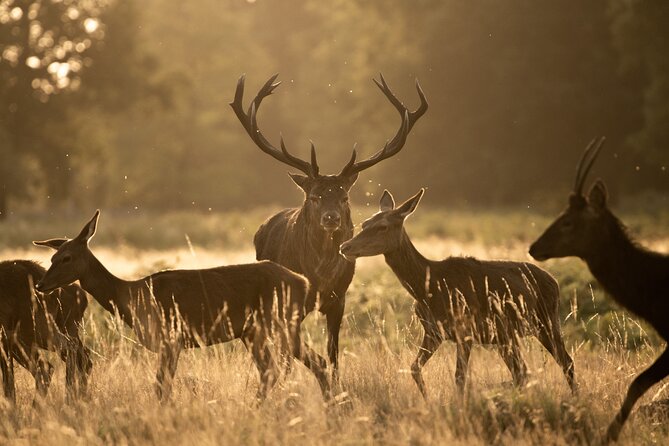
- Evening light improves your photographs: The session is timed for the best light, giving you more attractive conditions for deer, trees, birds, and lakes.
- Matthew Williams-Ellis teaches in the field: You learn beside the subject, with help on camera settings, framing, lighting, and composition.
- The group is limited to eight people: This gives the guide a better chance to offer personal advice across different skill levels.
- Richmond Park offers varied backdrops: Silver birch copses, lone oak trees, ferns, lakes, and open areas give you more than one type of photograph to pursue.
- You can attend as a beginner: The workshop covers photography basics, while experienced photographers can work on more creative choices and manual settings.
- You must make your own way to Queen’s Road: The meeting point is at Queen’s Rd, Richmond TW10 6JJ, and the activity finishes there.
A three-hour photography lesson inside Richmond Park
This is a focused half-day outing rather than a sightseeing tour of London. You meet your guide at Queen’s Road, enter Richmond Park, and spend about three hours moving through suitable areas for wildlife photography.
The appeal is simple. You do not need to leave London for a full day in the countryside, yet the setting gives you trees, water, open ground, and wild animals to photograph. That change of pace can be valuable if your London schedule is full of museums, churches, and crowded streets.
The session is built around in-field teaching. Instead of sitting in a classroom and trying to remember camera theory later, you can make adjustments while looking at a real subject. If a deer moves, light changes, or a bird appears, the lesson can shift with the moment.
That format suits people who learn by doing. You can ask why a setting is useful, try it yourself, and then see what changes in the image. The workshop also deals with the thinking behind a good photograph: where you stand, what you leave out, how you use light, and why one frame feels stronger than another.
More Workshops in London
- London Traditional English Scone Making and Tea Workshop
★ 5.0 · 271 reviews - Street Art Tour and Spray Painting Workshop in London
★ 5.0 · 98 reviews - Street Art Walking Tour and Workshop in London
★ 5.0 · 58 reviews
Meeting the deer and finding the right frame
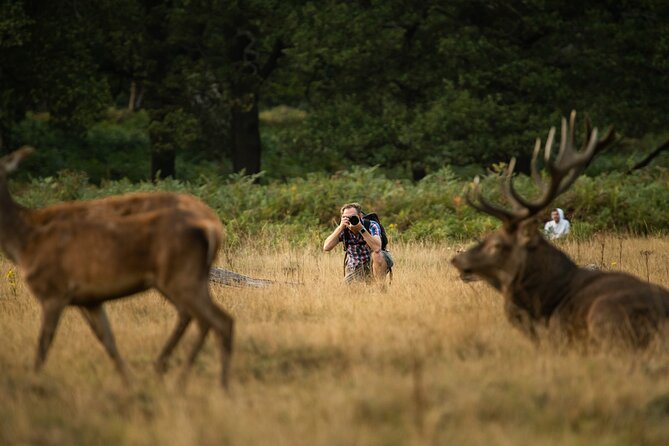
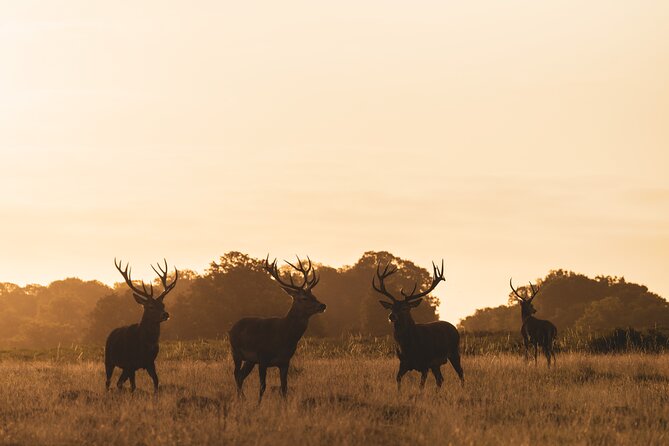
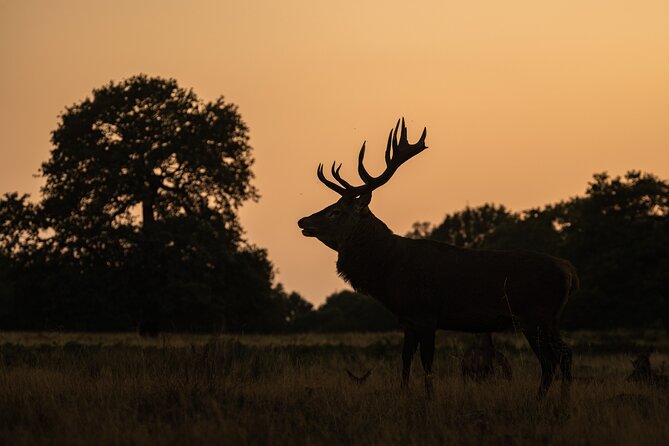
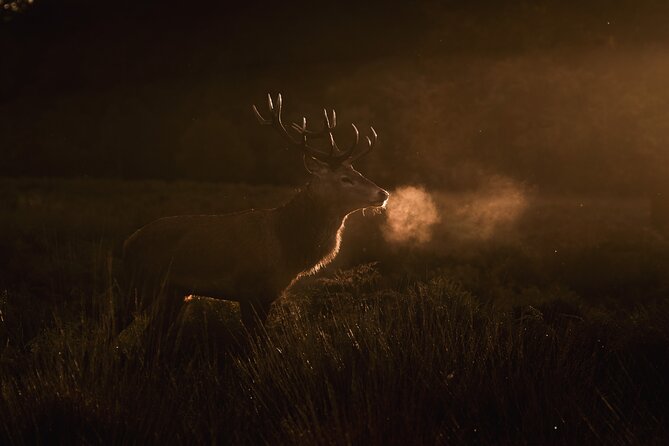
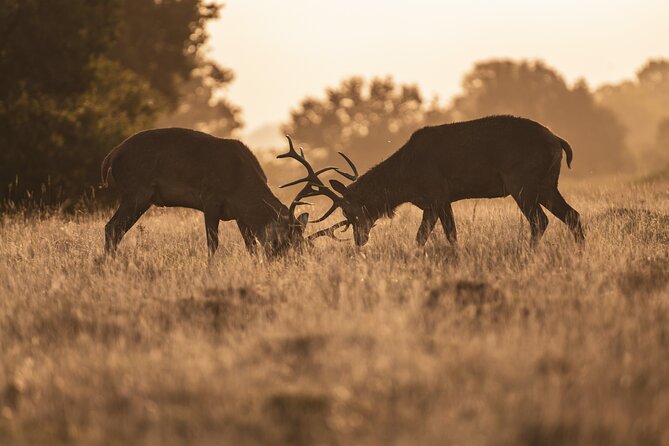
Richmond Park’s Red and Fallow deer are the main attraction, but the animals are only part of the lesson. The guide uses them as moving subjects for work on focus, timing, distance, and composition.
You may be asked to think beyond simply recording a deer. A picture can include the surrounding trees, a strip of water, or open space around the animal. The aim is to help you create a photograph with a clear point of interest, not just point the camera and press the shutter.
The park offers several useful settings:
- Silver birch tree copses can provide pale trunks and repeated vertical lines.
- Lone oak trees can give a single strong shape against more open surroundings.
- Ferns can add texture in the foreground.
- Lakes can bring reflections and a calmer background.
- Deer give you a living subject that changes position and posture.
This variety matters because wildlife photography is rarely just about finding an animal. A good subject can still produce a dull photograph if the background is messy or the light is flat. I like that the workshop pays attention to the whole frame, helping you notice the relationship between animal, setting, light, and empty space.
The guide, Matthew Williams-Ellis, is also familiar with the park and its animals. His local knowledge can save time, especially during a short three-hour session when you do not want to wander without a plan.
Camera lessons for beginners and experienced photographers
The workshop is suitable for a wide range of abilities. A first-time wildlife photographer can work on the basics, while someone who already uses a camera can refine technique and make more deliberate choices.
The teaching covers technical matters such as settings for different situations. One particularly useful example is help programming manual settings for birds in flight. That is a more advanced task than photographing a stationary tree, and it shows the practical direction of the tuition.
You may work on:
- Choosing settings for moving animals
- Adjusting for changing evening light
- Framing a subject cleanly
- Finding stronger compositions
- Thinking ahead before taking a photograph
- Using manual settings for birds in flight
- Applying the same ideas in other locations
I especially like the focus on a proactive photography mindset. That means looking for possibilities before the action happens. You start to ask where the light is falling, how the animal might move, and which background will help the subject.
This approach has value long after the workshop ends. A camera course that only explains shutter speed or aperture can leave you technically informed but visually uncertain. Here, the stated goal is to help you make choices in any future setting, not only in Richmond Park.
The mixed ability level should not put you off. Matthew has handled groups with different experience levels, combining technical instruction with advice on light, framing, and composition. The maximum group size of eight should also help keep the teaching manageable.
Why the evening timing matters
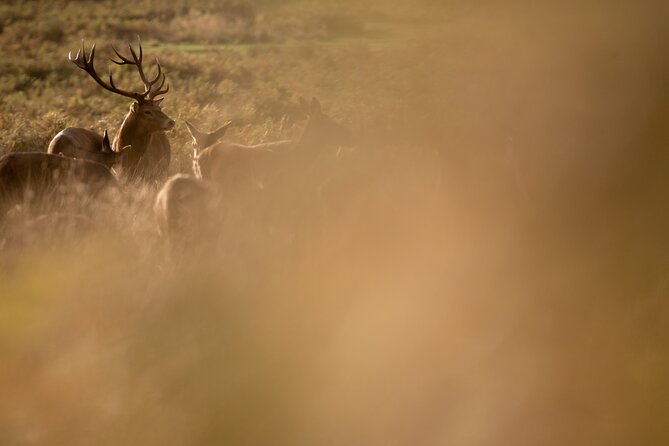
The evening schedule is one of the strongest reasons to book this particular session. The workshop is designed around the best light, which can make a major difference to wildlife photographs.
Softer light is often kinder to subjects than harsh midday sun. It can reduce distracting contrast and give trees, ferns, and deer a more pleasing appearance. It also gives you a chance to look for backlighting, gentle shadows, or warm color in the scene.
The exact conditions depend on the day. This is an outdoor activity, and the provider requires good weather. If poor weather causes a cancellation, you are offered another date or a full refund.
That policy is useful, but the weather requirement also affects your planning. Keep some flexibility in your London schedule if possible. The workshop may be less comfortable or less productive in bad conditions, and the guide cannot control either the light or the animals.
The evening timing can create a practical issue too. You should check how the park’s gates operate before setting off. One participant had trouble leaving after finding several gates locked, despite having asked about closing times. I would treat this as an important planning point, especially if you are unfamiliar with Richmond Park.
More Photo Tours in London:
- Professional Photoshoot in London Photographer
★ 5.0 · 102 reviews - Private landmarks photoshoot for families and couples
★ 5.0 · 92 reviews - Professional Private Photoshoot in London
★ 5.0 · 63 reviews - 30 Major London Attractions Walking Tour With Photos
★ 4.5 · 51 reviews
A close look at the route and meeting point
The experience begins at Queen’s Rd, Richmond TW10 6JJ, and finishes back at the same meeting point. There is no hotel pickup, so you must arrange your own way to the park entrance.
That arrangement keeps the activity simple and focused, but it puts the transport planning in your hands. The meeting point is near public transportation, which helps if you are coming from another part of London. You should still allow time to reach Queen’s Road without rushing, since a photography session works best when you arrive ready to start.
The itinerary lists Richmond Park as the only stop. That does not mean the session is static. You can expect to move through different parts of the park to find useful subjects and backgrounds. The guide’s job is to make the most of the available wildlife and light within the three-hour window.
The walk requires a moderate level of physical fitness. Exact distance and pace are not specified, so you should be comfortable being outdoors and moving around the park for the duration. Wear practical clothing and footwear suited to an outdoor photography session, though the available information does not specify a dress code.
The end point being the same as the start is convenient for collecting your belongings and continuing your evening. It also makes the experience easier to fit into a wider London plan, provided you leave enough time for the return to your next activity.
What the small group adds to the lesson
A maximum of eight people is a sensible size for a practical workshop. Photography tuition can become frustrating when one guide has to divide attention among a large crowd, particularly when a subject appears briefly.
A small group lets you ask about your own camera and show the guide what you are trying to achieve. It also gives Matthew more opportunity to adjust his explanations for different levels of experience.
The group is not private, so you will share the session with other people. That can be useful if you enjoy seeing how others approach the same scene. It may be less appealing if you want uninterrupted one-to-one tuition.
One of the strongest impressions from the feedback is the praise for Matthew’s teaching style. He has been described as generous with tips and able to work well with a wide range of abilities. People have found the session enjoyable as well as useful, which is important for a lesson that lasts three hours.
The group size also has a social side. A gift recipient enjoyed both the photography instruction and the company during the session. If you are booking for a partner, daughter, or friend, the workshop can work as a shared activity rather than a solitary camera class.
Birds, deer, and the limits of a wildlife outing
The Red and Fallow deer are the most obvious subjects, but the park can offer more. Specific sightings have included kestrels, woodpeckers, and a little owl.
Those sightings show the range of possible subjects, but they should not be treated as a guarantee. Wildlife photography depends on weather, season, animal movement, and luck. You could come away with a strong deer portrait, a bird photograph, or a useful lesson in how to work with an ordinary scene.
That uncertainty is part of the point. The guide can help you respond to what appears, but no workshop can arrange a perfect encounter on demand. If your main goal is one particular animal or a large number of photographs, you may find the experience unpredictable.
If your goal is to improve your eye and camera control, the uncertainty is less of a problem. You can practice on birds, deer, trees, reflections, and changing light. Even a quiet period can become a lesson in composition and patience.
I would bring realistic expectations. You are paying for guided instruction in a wildlife setting, not a guaranteed collection of prize photographs.
Is $161.56 a fair price?
At $161.56 per person, this is not a cheap walk in the park. The value depends on how much you want personal photography help and how well you use the three hours.
The price includes a small-group session with an experienced guide, practical instruction, access to a varied natural setting, and help with both technical and creative decisions. For someone who owns a camera but feels unsure how to use it for wildlife, that can be worthwhile.
It is also good value for a visitor who wants a London activity with a clear purpose. You get out of the city center without committing to a full-day excursion, and you can leave with skills that apply to future photography.
The price is harder to justify if you are simply looking for a casual park walk. You may see wildlife without taking the workshop, but the instruction is the product here. It makes sense to book only if you want to learn or improve.
A gift buyer should consider the recipient’s interest in photography. The experience has worked well as a present, especially for someone keen to learn new methods and get more from their camera. It is less suitable for someone who prefers passive sightseeing or does not want to carry and use photography equipment.
Who should book this Richmond Park workshop?
I would recommend it to:
- Beginners who want guidance beyond basic camera controls
- Camera owners who struggle with wildlife settings
- Photographers who want help with composition and framing
- Couples, parents, and children who want a shared outdoor activity
- Visitors seeking a short nature break from London
- People interested in learning from a guide familiar with Richmond Park
You should think twice if you need guaranteed animal sightings, a private lesson, or a very gentle, stationary activity. The moderate fitness requirement and outdoor setting also make it less suitable for anyone who finds walking around a park difficult.
The workshop is offered in English. Mobile ticketing makes the booking side easy, but you still need to make your own way to Queen’s Road and plan carefully for the park’s closing arrangements.
Free cancellation is available up to 24 hours before the start time for a full refund. Changes or cancellations made less than 24 hours before the start are not refunded, and late changes are not accepted. The weather policy offers a new date or full refund if poor conditions cause the session to be canceled.
My verdict on the three-hour evening session
I like this workshop because it teaches you to make photographs, not merely collect them. The best parts are the small group, Matthew Williams-Ellis’s practical guidance, the evening light, and the chance to work with both deer and birds in a setting close to London.
The biggest caution is the unpredictability of wildlife and park access after the session. You should also be comfortable paying a premium for instruction rather than a standard sightseeing outing.
Book it if you want to improve your wildlife photography and value direct help with settings, composition, and creative choices. Skip it if you only want guaranteed close-up animal sightings. With the right expectations, this is a useful and enjoyable way to spend an evening outside the city center.
FAQ
Where does the wildlife photography workshop start?
It starts at Queen’s Rd, Richmond TW10 6JJ, UK.
Where does the activity finish?
The activity ends back at the meeting point.
How long does the workshop last?
The workshop lasts approximately three hours.
What park does the workshop visit?
The workshop takes place in Richmond Park in London.
What animals might I photograph?
The park is home to Red and Fallow deer. Other sightings during a session have included kestrels, woodpeckers, and a little owl, but specific sightings are not guaranteed.
Is the workshop offered in English?
Yes. The workshop is offered in English.
How many people can join the group?
The maximum group size is eight people.
Do I need advanced photography skills?
No. The workshop is designed for people learning photography basics as well as those who want to improve existing skills.
Is the workshop suitable for people with limited fitness?
Participants should have a moderate level of physical fitness.
What happens if bad weather cancels the workshop?
If poor weather causes a cancellation, you are offered a different date or a full refund.
Just added in London
- Private Transfer From London to Southampton Cruise Terminal★ 4.0 · 2 reviews
- Layover Tour of London from LHR Executive Luxurious Vehicle Private Tour 6 hour★ 4.5 · 9 reviews
- Pub & History Tour London (History & Beers)★ 5.0 · 3 reviews
- eSIM for UK (34 EU countries) | 3 to 30 days. Up to 40GB of data★ 4.0 · 18 reviews
- Young Victoria’s London: Windsor Castle & Kensington Palace★ 5.0 · 1 review
- Zombie Scavengers Game – Southend-on-Sea, UK★ 4.5 · 2 reviews
- Working Women of the East End Walking Tour★ 5.0 · 85 reviews
- Crash course in archaeology at the British Museum★ 5.0 · 96 reviews
Workshops, compared.
London Traditional English Scone Making and Tea Workshop
Read our review →
Chocolate Bar Making Workshop – York Cocoa Works
Read our review →

Browse the lists this tour appears in