
Reviewed · WORKSHOPS
Silver Ring Workshop in Kent, England
Make something you can wear home. This private Canterbury workshop turns a plain length of silver into a personal ring, with Annie guiding you through sawing, texturing, annealing, forging, soldering, filing, and polishing. I like the fact that you do the actual hands-on work, rather than watching a craftsperson make the important parts. I also like the calm, friendly teaching style, plus the welcome coffee or tea. The main catch is simple: materials cost extra, usually £10 to £30 per ring, so the advertised price is not the full cost.
You meet at 10am at 76 Castle Street, close to the centre of Canterbury. The session is private, so you work only with your own group. That makes this a strong choice for couples, friends, family members, or anyone who wants a quiet creative morning rather than a large class.
The workshop runs on Thursdays, Fridays, and Saturdays, usually for two to three hours. Designs stay simple because this is a beginner class, so do not arrive expecting to make a signet ring or a complex piece with stones. You are making a real ring, but you are also learning the basic skills behind it.
In This Review
- Key points before you book
- Starting at 76 Castle Street in Canterbury
- Choosing a simple ring design
- Sawing and marking the silver
- Using heat to anneal the metal
- Forging the band into shape
- Soldering the join with a torch
- Filing, buffing, and polishing the finished ring
- What the $131.95 price really covers
- Who will enjoy this Canterbury workshop
- Practical timing and booking advice
- Should you book the Silver Ring Workshop?
- FAQ
- Where does the Silver Ring Workshop take place?
- How long does the workshop last?
- On which days is the workshop available?
- What is included in the workshop price?
- Are the silver materials included?
- What is the minimum materials charge?
- Can beginners take part?
- Can I make a signet ring?
- Will I take the ring home?
- Is this a private activity?
- Is the workshop available in English?
- Can I cancel for a full refund?
Key points before you book
- You make the ring yourself: Annie demonstrates each stage, then you repeat it on your own piece.
- The workshop is private: Only your group takes part, which allows for patient, personal guidance.
- The finished design stays simple: You can pattern, texture, or stamp the silver, but signet rings are not part of the class.
- Expect hands-on metalwork: You will saw, use a torch, forge the band into shape, solder the join, file, buff, and polish.
- Budget for materials: The workshop fee is $131.95 per person, with an additional £10 to £30 per ring based on its finished weight.
- It makes a memorable gift: Couples have used the class to create anniversary and wedding rings, while others come for a special treat or a creative morning in Canterbury.
Starting at 76 Castle Street in Canterbury
The workshop begins at 10am at 76 Castle Street, Canterbury CT1 2QD. The studio is in a gallery in an old Canterbury building, giving the session a sense of place that a standard craft classroom would lack. You are not simply sitting in a rented meeting room with a few tools. You are working in a proper creative setting.
The location is near public transportation and close to a multi-storey car park, which helps if you are arriving for a short break in Canterbury. I would still allow time to find the address and settle in, particularly if you have booked the morning around other plans. The activity finishes back at the same meeting point.
Annie welcomes you, offers coffee or tea, and provides an apron before you take a seat at the workbench. That small start matters. You are about to handle a saw, files, and a torch, so having time to get comfortable and hear the plan makes the process feel less daunting.
The private format is one of the workshop’s biggest advantages. You do not need to keep pace with a large group, and you can ask questions as they come up. This also suits couples who want to make matching or complementary rings together, though the rings do not have to look alike.
A few more to weigh up in England
- Official Canterbury Guided Walking Tour – 11.00 Tour
★ 5.0 · 422 reviews - Official Canterbury Guided Walking Tour – 14.00 Tour
★ 5.0 · 214 reviews - The Canterbury Classic Tour
★ 5.0 · 100 reviews
Choosing a simple ring design
The first practical step is talking through basic designs and measuring your finger. This is where you decide how plain or personal you want the finished band to be. You can add texture, pattern, or stamped details, giving a simple ring a mark of your own.
Keep your ambitions realistic. The class is designed for beginners, and complex designs are not part of the session. There are no signet rings, and the format is not intended for advanced stone setting or elaborate construction. That limit is useful rather than disappointing: you have enough time to learn the process and finish the ring properly.
I would think about what kind of ring you want before arriving, but I would not lock yourself into a detailed plan. Annie gives you choices during the process, and the final look develops as you work the metal. A plain band with a textured surface may have more character than a design that is too ambitious for a first attempt.
Finger measurement is also an important part of the opening. A ring that looks good but fits badly will not be much use, so take this stage seriously. If you are making a ring as a gift, make sure you know the correct size before booking.
Sawing and marking the silver
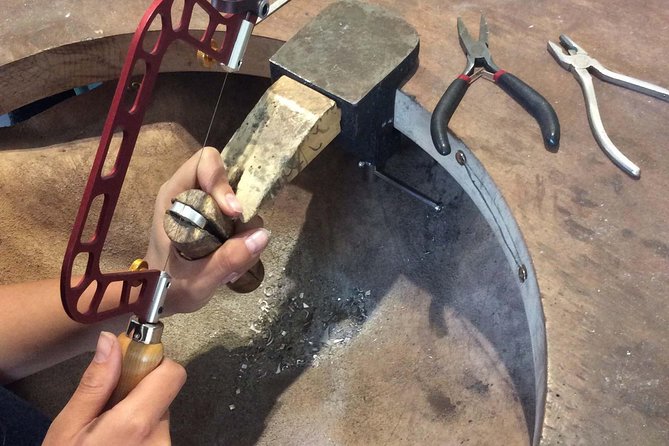
Once the design is settled, you saw the silver to length. This is the first moment when the workshop feels like real bench work rather than a demonstration. You are handling the material, controlling the tool, and creating the starting point for the ring.
Annie explains how to use the equipment and demonstrates each technique before you try it. Her teaching style is patient and encouraging, which is especially helpful if you have never used a jeweller’s saw or worked with metal. You are not expected to arrive with craft experience.
Next comes the chance to pattern, texturise, or stamp the silver. This stage gives the ring its personal character. A mark made by hand may not be perfectly uniform, and that is part of the appeal. The ring should look like something you made, not a factory-produced band.
You should expect to work carefully rather than quickly. The process involves several stages, and a rushed cut or uneven mark can affect what follows. Annie’s role is to help you understand the choices and correct problems before they become harder to fix.
Using heat to anneal the metal
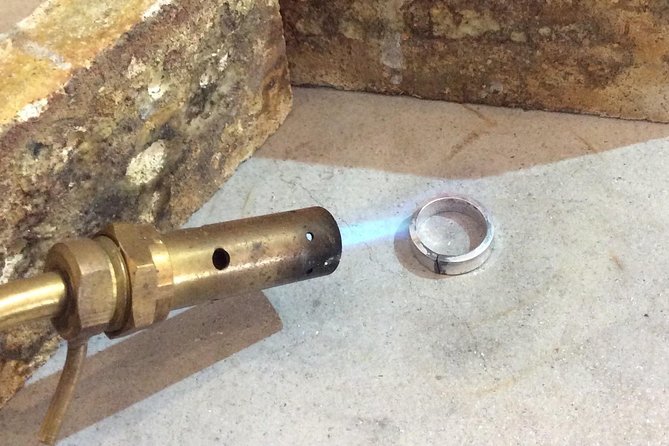
The silver must be annealed as the work progresses. Annie explains why this is needed and shows you how to use the torch. In practical terms, this prepares the metal so it can be shaped without becoming too difficult to work.
For a beginner, using a torch may sound like the most intimidating part of the morning. The private setting helps here. You receive a demonstration, then try the process with guidance close at hand. You are learning an actual jewellery-making technique, not simply pressing a pre-cut piece into a mould.
This is one of the parts that gives the workshop lasting value. Once you understand that the metal needs preparation between stages, the finished ring makes more sense. You begin to see why handmade jewellery takes time and why a simple band still involves skill.
The class is structured so that Annie works through the process with you. She demonstrates on her own piece, then you follow the same stage on yours. That method lets you see the movement and result before committing to your ring.
A completely different sort of day out:
- Stonehenge, Windsor Castle, and Bath from London
★ 4.5 · 18,662 reviews - London Big Bus Hop-On Hop-Off Tour with Optional River Cruise
★ 3.5 · 10,803 reviews - London Small Group Tour of Historical Pubs
★ 5.0 · 10,422 reviews - Beatles Magical Mystery Tour
★ 5.0 · 9,266 reviews
Forging the band into shape
After the silver has been prepared, you forge it into a ring shape and saw it to size. The band changes from a flat strip into something recognisable as jewellery. This is a satisfying turning point because the final object begins to appear in your hands.
Forging is not the same as simply bending the silver and calling it finished. The metal needs to be shaped with care, and the ends must meet properly for the soldering stage. You will have Annie’s guidance, but you still do the work yourself.
This is also where your earlier finger measurement becomes practical. The ring has to be shaped and sized for the intended wearer. If your group is making rings for each other, pay attention to the measurements at the beginning and ask questions if anything feels unclear.
The pace can vary. Some people will move quickly through the shaping, while others will want more time to check the form. The workshop is generally two to three hours for one or two people, so you have room to work steadily, but this is not a place for a long lunch break in the middle.
Soldering the join with a torch
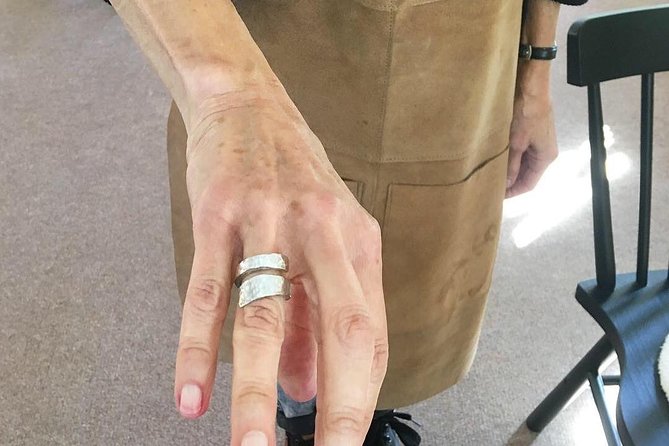
With the ring shaped and cut to size, you are ready to solder the join. Annie explains the process, then you use the torch to connect the two ends of the band.
This is a key stage, and it is also one reason the private teaching matters. Soldering needs care and accuracy, but beginners can manage it when the steps are clearly shown. Annie’s calm approach lets you focus on the job instead of worrying about getting everything perfect on the first try.
The join will not look like a finished piece immediately. It needs cleaning and refining, which is why the next stages are just as important. I like this part of the session because it gives you an honest view of jewellery making. The ring does not magically appear after one dramatic torch moment. It is built through a series of small corrections.
Couples have used this workshop to make wedding or replacement wedding rings together. That can give the soldering stage extra meaning, but you do not need a major life event to enjoy it. A ring made for an anniversary, birthday, friendship, or personal milestone can be just as worthwhile.
Filing, buffing, and polishing the finished ring
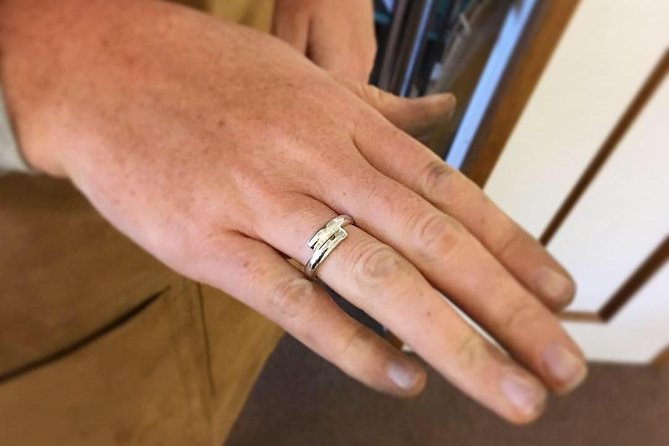
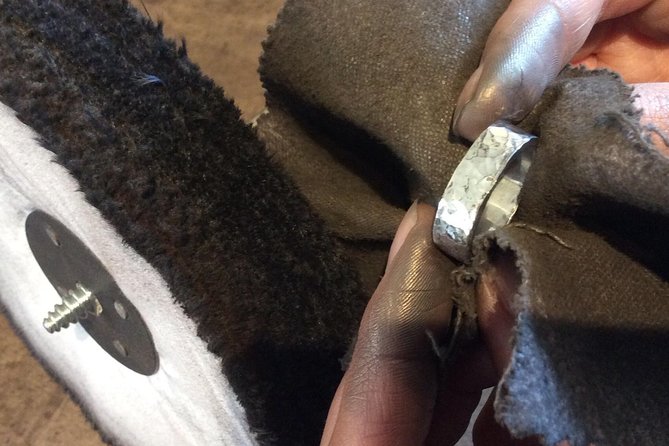
After soldering, you use metal files to clean the join. You then buff away scratches and polish the entire ring until it is ready to wear. This final work can take patience, but it is where the rough band becomes a finished piece.
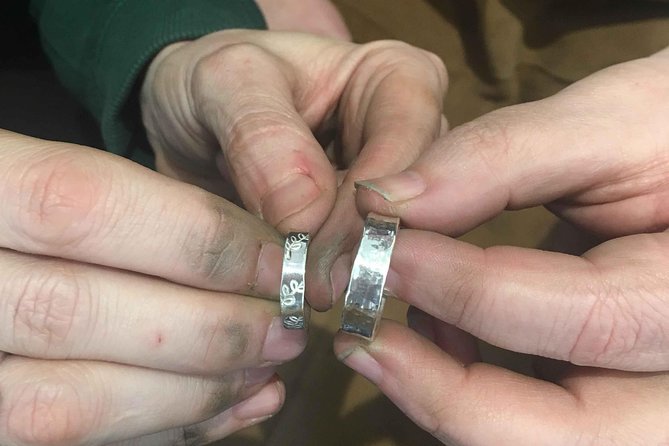
Do not underestimate the satisfaction of this stage. The ring begins as what one participant described as a scrappy piece of metal and ends as a shiny band on your finger. You can see the result of every earlier choice, including the texture or stamped detail you added.
The finishing process also teaches you to look closely. A ring may appear complete from a distance while still showing scratches or an uneven join. Filing and polishing help you understand the difference between a piece that is merely formed and one that is ready to wear.
The ring is yours to keep. That is the central value of the workshop. You are not taking home a souvenir bought from a shelf. You are taking home a usable object tied to the time you spent making it.
What the $131.95 price really covers
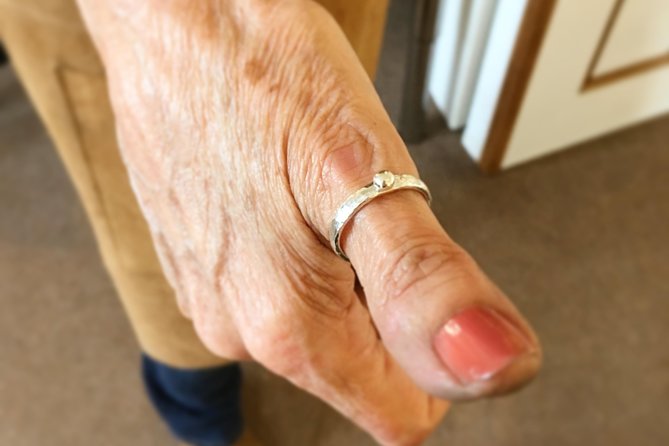
The workshop costs $131.95 per person, with the session lasting about three hours. Coffee or tea, an apron, instruction, and the private use of the workshop are included. The silver itself is not included.
You should add £10 to £30 per ring for materials, depending on the finished weight. The minimum £10 charge covers a basic ring. This extra cost is clearly worth allowing for when you compare the experience with other Canterbury activities.
The price is not low for a morning activity, but you are paying for more than a short craft demonstration. You receive individual instruction, use workshop tools, learn several traditional metalworking techniques, and leave with a ring you made yourself. The private format adds value, especially for two people who want plenty of help and a relaxed pace.
I would book this for the experience rather than for the raw value of the silver. If your only goal is to buy the cheapest ring, a shop will be the better choice. If you want the story behind the ring and the satisfaction of making it, the cost is easier to justify.
Who will enjoy this Canterbury workshop
This is a good fit for beginners, couples, siblings, friends, and solo visitors who like practical creative activities. It has also worked well as a Christmas present and as a way to mark an anniversary. You do not need jewellery-making experience, and most people can take part.
It suits people who enjoy patient, guided work. You will not simply watch Annie make a ring while you decorate a pre-made item. You will handle the tools and complete the main stages yourself.
The workshop can also suit left-handed participants. One left-handed maker needed to move to Annie’s workbench for one process, but this was handled without fuss. If you have a particular physical concern, it is sensible to raise it when booking, though the supplied information says service animals are allowed and most people can participate.
I would be cautious about booking it for a very young child or anyone who dislikes close, careful handwork. The session includes sawing, filing, heat, and repeated finishing. It rewards focus more than speed.
Practical timing and booking advice
Sessions are offered Thursday through Saturday from 10am to 1pm, with the actual workshop lasting roughly two to three hours. Since the activity can be booked around 80 days ahead on average, popular dates may require planning, especially for weekends or gift occasions.
Confirmation is sent within 48 hours of booking, subject to availability. The experience is offered in English, and the ticket is mobile, so you can keep the booking on your phone.
Free cancellation is available if you cancel at least 24 hours before the local start time. Changes or cancellations inside that 24-hour window are not accepted for a refund. I would avoid placing this directly before an important train or timed visit, since the finishing stages can take a little patience.
Should you book the Silver Ring Workshop?
I would book this if you want a personal Canterbury activity with a lasting result. Annie’s patient teaching, the private setting, and the chance to perform every main stage make it far more rewarding than a quick souvenir-making class.
You should skip it if you want an advanced jewellery course, a signet ring, or a fully finished piece with no extra material charge. You should also allow a full morning and arrive ready to work carefully.
For couples, it can be a thoughtful anniversary or wedding activity. For solo visitors, it offers a creative break from sightseeing. And for anyone who likes knowing how things are made, the transformation from flat silver to polished ring is reason enough to book.
FAQ
Where does the Silver Ring Workshop take place?
The workshop starts and ends at 76 Castle Street, Canterbury CT1 2QD, England.
How long does the workshop last?
Sessions for one or two people last approximately two to three hours. The listed schedule runs from 10am to 1pm.
On which days is the workshop available?
The workshop is offered on Thursdays, Fridays, and Saturdays.
What is included in the workshop price?
The experience includes a guide, an apron, and coffee or tea.
Are the silver materials included?
No. Materials cost extra. You should expect to pay £10 to £30 per ring, depending on the finished weight.
What is the minimum materials charge?
The minimum materials charge is £10, which covers a basic ring.
Can beginners take part?
Yes. This is a beginner workshop, and Annie demonstrates each step before you try it.
Can I make a signet ring?
No. Ring designs are kept simple for this beginners workshop, and signet rings are not included.
Will I take the ring home?
Yes. You make the ring during the session and keep the finished piece to wear.
Is this a private activity?
Yes. Only your own group participates in the private workshop.
Is the workshop available in English?
Yes. The workshop is offered in English.
Can I cancel for a full refund?
Yes, if you cancel at least 24 hours before the experience start time. Cancellations or changes made less than 24 hours in advance are not refunded or accepted.
Just added in England
- Private Tour: Royal High Tea At Kensington Palace Gardens★ 5.0 · 39 reviews
- Private Tour: Personal Travel Photographer Tour in London★ 4.5 · 27 reviews
- London East End Private Walking Food Tour – Secret Food Tours★ 5.0 · 26 reviews
- Private Tour: Night Photography Tour in London★ 5.0 · 48 reviews
- London Like a Local, Private & Personalized (2-3 hrs)★ 4.5 · 11 reviews
- British Museum & National Gallery of London – Exclusive Guided Combo Tour★ 5.0 · 48 reviews
- Private Tour: Tower of London and St Paul’s Cathedral★ 5.0 · 1 review
- London Soho District – Exclusive Guided Walking Tour★ 5.0 · 2 reviews
Workshops, compared.

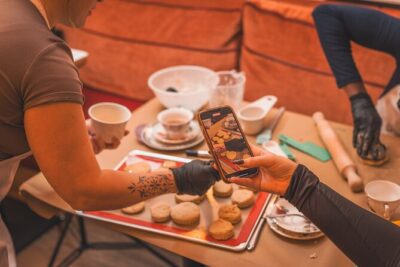
London Traditional English Scone Making and Tea Workshop
Read our review →



Street Art Tour and Spray Painting Workshop in London
Read our review →
Browse the lists this tour appears in