
Reviewed · WALKING TOURS
West End and South Bank Theatre Walking Tour in London
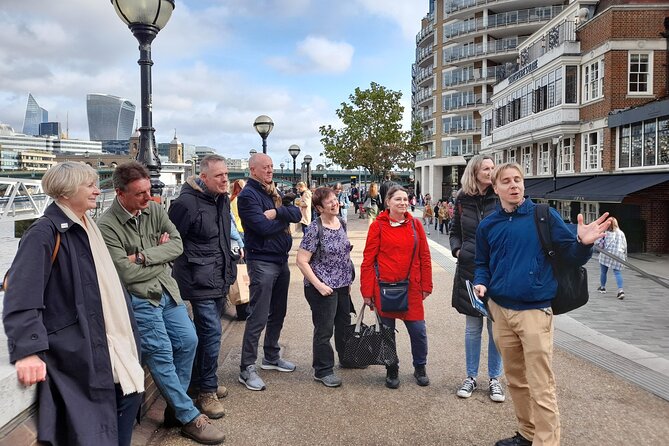
Theatre is everywhere in London. This 3.5-hour walk links 25 major stage landmarks from the Oscar Wilde statue to Shakespeare’s Globe, with guide Charlie Tantam supplying the stories that turn grand façades into living theatre. I like the small group, capped at 12 people, and the route’s sweep from the West End to South Bank. I also like that it goes beyond musicals to actors, old music halls, scandals, ghosts, and Shakespeare.
The main drawback is simple: this is a long outdoor walk. The posted time is about three and a half hours, but you should allow closer to four if the commentary runs at the pace described. You will see theatres from the street rather than sit inside them, and comfortable shoes are essential.
In This Review
- Key points before you book
- Why this London theatre walk is different
- From the Coliseum to Leicester Square
- Haymarket, His Majesty’s, and the famous musical houses
- Shaftesbury Avenue, the heart of the route
- Small playhouses and Covent Garden
- Royal Opera House, Drury Lane, and the Lyceum
- Crossing to South Bank and Shakespeare’s Globe
- What the $38.39 price really buys you
- Timing, fitness, and the practical side
- Who will enjoy this walk most?
- Should you book the West End and South Bank Theatre Walk?
- FAQ
- Where does the theatre walking tour begin?
- Where does the tour finish?
- What time does the tour start?
- How long does the tour last?
- How many people can join the tour?
- Are theatre admission tickets included?
Key points before you book
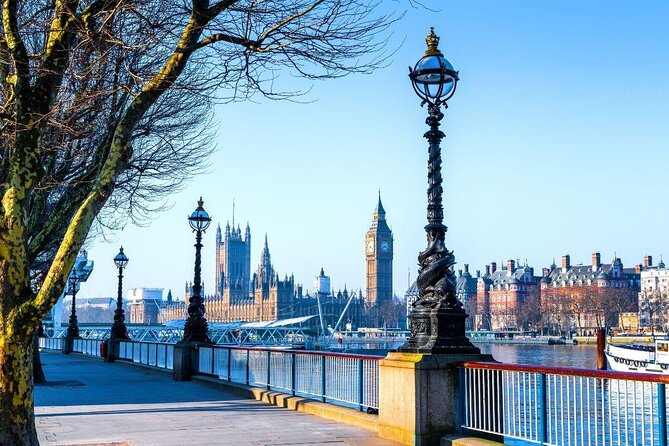
- Twenty-five theatre stops in one walk: You pass the Coliseum, Theatre Royal Drury Lane, the Royal Opera House, the National Theatre, Shakespeare’s Globe, and many more.
- Charlie Tantam leads the tour: His detailed commentary covers actors, productions, theatre buildings, scandals, debuts, and the odd ghost story.
- A genuinely small group: With no more than 12 people, it should be easier to hear the guide and ask questions.
- The route crosses central London: You begin near Trafalgar Square and finish at Shakespeare’s Globe on Bankside, close to London Bridge and Blackfriars.
- Good for theatre and history fans: The tour includes West End musicals, old music halls, Shakespeare, Victorian performers, and London theatrical traditions.
- Budget for time and footwear: The $38.39 price is fair for a long guided walk, but the value depends on your interest in theatre and your comfort with several hours on foot.
Why this London theatre walk is different
Many London sightseeing walks give you a quick look at a few famous buildings. This one makes the theatres the main event. You are not simply ticking off the West End. You are hearing how venues changed names, which performers began their careers on certain stages, and why some buildings still matter.
I especially like the route’s range. You see grand opera houses, compact playhouses, musical theatres, Victorian survivors, and venues known for comedy or horror. The guide also points out places that are easy to miss if you walk through the West End alone.
The group limit matters here. Theatre history can become hard to follow when a guide is speaking to a crowd spread across a pavement. A maximum of 12 gives this tour a more personal feel and should make it easier to hear Charlie’s commentary.
The 10:30 a.m. start is useful if you want to pair the walk with a matinee, museum visit, or meal later in the day. Still, the route covers a lot of ground. I would not schedule a theatre performance immediately after the advertised finish unless you leave a generous cushion.
More Walking Tours in London
- Tour for Muggles The Ultimate Harry Potter Walking Tour in London
★ 5.0 · 4,684 reviews - London Jack The Ripper Guided Walking Tour
★ 5.0 · 3,131 reviews - Changing of the Guard Guided Walking Tour in London
★ 5.0 · 1,793 reviews
From the Coliseum to Leicester Square
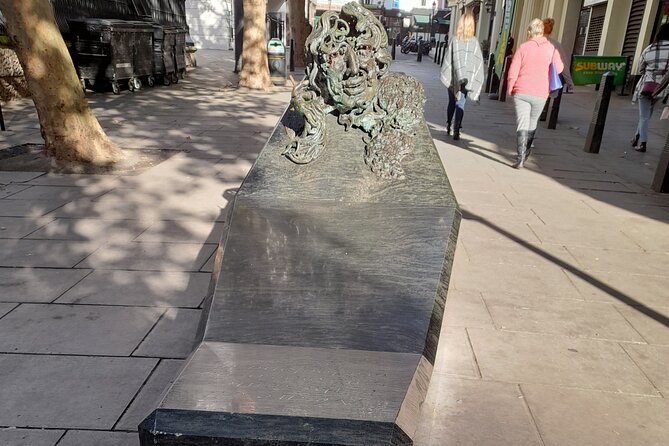
The meeting point is the Oscar Wilde statue at 3 Adelaide Street. From there, the opening stop is the London Coliseum, described as the largest theatre in the West End. Five minutes may sound brief, but the walk is built around short, focused introductions rather than extended visits inside each building.
Next comes the Duke of York Theatre, where you hear about stars who made their debuts there, including Peter Pan. The Noel Coward Theatre follows, with stories of major productions and the unusual occasion when two significant theatre figures shared its stage.
At Wyndham’s Theatre, look for the bust of Shakespeare on the front. It is identified as the only Shakespeare bust on a West End theatre, a small detail that gives you something specific to spot rather than just another ornate façade.
Leicester Square changes the subject from buildings to the business of seeing a show. You learn about the discount ticket booth and ways to find West End seats at lower prices. The guide also covers earlier music hall venues, including The Alhambra and The Empire.
This first section gives you a useful base. You see how theatre, celebrity, ticket buying, and London entertainment have long been tied together. If you already know a great deal about the West End, you may appreciate the extra names and stage anecdotes. If you are new to theatre history, the steady pace helps you build a picture without needing prior knowledge.
Haymarket, His Majesty’s, and the famous musical houses
The Haymarket Theatre Royal brings in two celebrated performers, Sir Ian McKellen and Dame Judi Dench. There is also a rumour of a haunting, which adds a lighter note to the architectural and theatrical detail.
His Majesty’s Theatre is one of the oldest active theatre sites in London and the home of The Phantom of the Opera, the second-longest-running musical. This is one of the clearest examples of how the route connects an old building with a production many people already know.
At the Harold Pinter Theatre, opened in 1881, the focus shifts to performers and sensation. Marilyn Monroe is among the names linked with the venue. The building may not mean much to you before the tour, but the stories give it a place in the wider West End story.
The Prince of Wales Theatre is now home to The Book of Mormon. Its past includes comedy and musical spectacles, with names such as The Beatles, Peter Sellers, and Barbra Streisand associated with the stage. This stop shows how theatres can move between very different kinds of entertainment over time.
You should expect a lot of names in this part of the walk. That is a strength if you enjoy actors and productions, but it can be a lot to absorb. I would take a few notes in your phone if a particular theatre or performer catches your interest.
Shaftesbury Avenue, the heart of the route
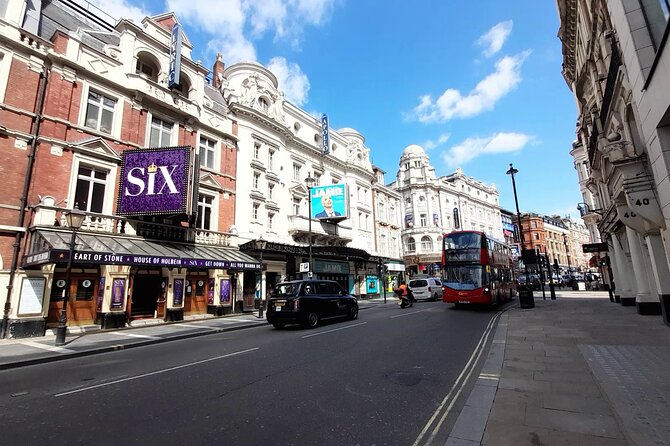
Shaftesbury Avenue is the central stretch of the walk. It has more theatres than any other road in the West End, and the tour uses it to explain several major venues, including the Lyric, Apollo, Gielgud, Sondheim, and Palace theatres.
The Lyric Theatre is the oldest surviving theatre on Shaftesbury Avenue. You also hear about the tragic death of a British comedy icon connected with the building. This is a good example of the tour’s tone: not every story is a celebration, and the past of London theatre includes loss as well as glamour.
The Apollo Theatre opened in 1901 as the first Edwardian theatre. Its story includes a legendary production that once made the venue a major part of theatre life. At the Gielgud Theatre, named for Sir John Gielgud, you hear about West End debuts, including that of Daniel Radcliffe, known to many people as Harry Potter.
The Sondheim Theatre provides a useful connection to Les Miserables, the world’s longest-running musical. The commentary also includes performers who made their debuts there in the 1980s.
The Palace Theatre is now home to Harry Potter and the Cursed Child. Its earlier life as a music hall venue leads to the origin of the phrase bring the house down. The tour does not include an admission ticket, so you are seeing the exterior and learning its story from the pavement.
For me, this is likely the most rewarding stretch for anyone who wants to understand how concentrated London’s theatre district really is. You see how close the venues are, yet each has a different identity.
A completely different sort of day out:
- Stonehenge, Windsor Castle, and Bath from London
★ 4.5 · 18,662 reviews - London Big Bus Hop-On Hop-Off Tour with Optional River Cruise
★ 3.5 · 10,803 reviews - London Small Group Tour of Historical Pubs
★ 5.0 · 10,422 reviews - Stonehenge, Windsor Castle and Bath with Pub Lunch in Lacock
★ 4.5 · 7,402 reviews
Small playhouses and Covent Garden
The Ambassadors Theatre looks less remarkable from outside, but its stage has hosted important theatrical careers. Vivien Leigh and Paul Robeson are among the performers associated with debuts there.
St. Martin’s Theatre is home to The Mousetrap, the world’s longest-running play. The guide explains how this unlikely hit found such lasting success. It is a useful reminder that theatrical fame is not always built around the largest building or the most expensive production.
The Arts Theatre is described as the smallest theatre in the West End. It also once hosted the most controversial play of all time. This stop adds scale to the route. You are not only seeing the grand theatres that dominate photographs. You are also learning how small venues can have an outsized place in theatre history.
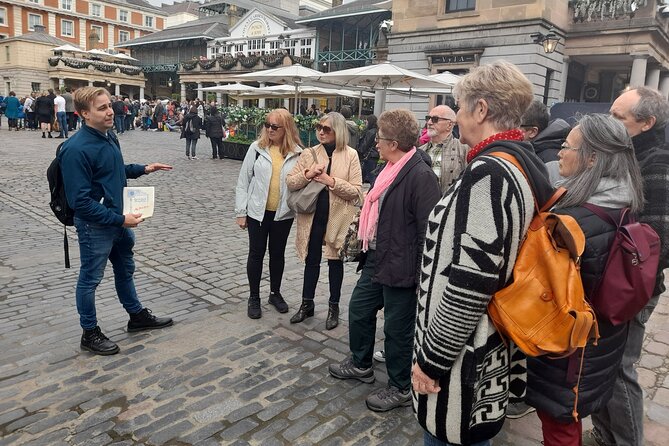
The walk then reaches Covent Garden. Here you see the famous market, London’s official Actors Church, street theatre spots, and two of the city’s oldest theatre sites.
This section gives you a break from the repeated pattern of theatre frontage, actor story, and production fact. Covent Garden brings in public performance and the connection between formal theatre and street entertainment. It is also one of the better places along the route for food or a quick drink, although the walk itself does not include refreshments.
Royal Opera House, Drury Lane, and the Lyceum
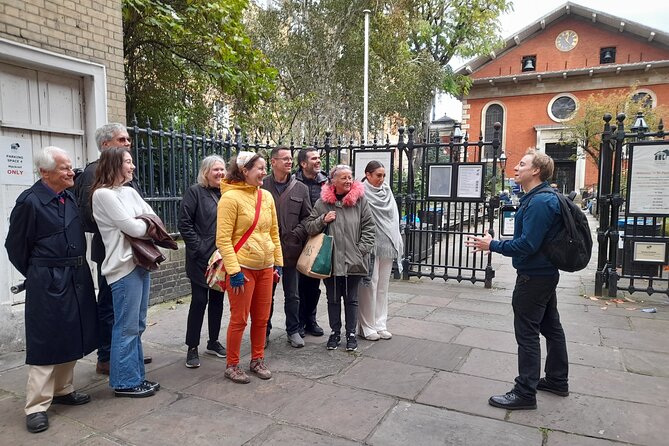
The Royal Opera House is one of London’s oldest theatre sites, established in 1732. It is now home to the Royal Opera and the Royal Ballet. If your interest leans toward opera or dance rather than only plays and musicals, this stop broadens the tour’s appeal.
The Fortune Theatre is home to The Woman in Black, the longest-running horror play. You hear about spooky events connected with the production’s more than 30-year history. The story gives the walk a welcome change of mood, especially after the formal setting of the Royal Opera House.
Theatre Royal Drury Lane is identified as the oldest active theatre site in the West End. Its stage has been tied to many famous performers and major moments in London theatre. This is one of the stops where the age of the site carries real weight, even though you remain outside.
At the Lyceum Theatre, The Lion King has been running since 1999 and remains a strong ticket seller. The commentary also turns back to Victorian theatre, focusing on Sir Henry Irving and Dame Ellen Terry, and to the origins of a famous gothic horror creation.
You should not expect a tour of the interiors at any of these stops. The value comes from seeing the locations in sequence and understanding how the same streets have held opera, ballet, comedy, melodrama, horror, and large-scale musical theatre.
Crossing to South Bank and Shakespeare’s Globe
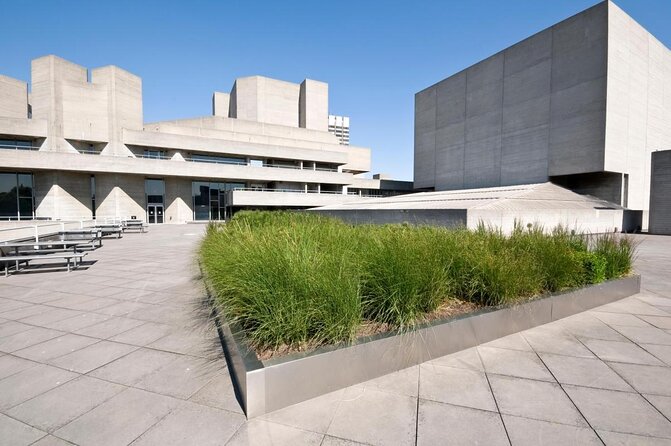
The final section changes the feel of the walk. At the National Theatre, you hear about its creation and its founder, Laurence Olivier, including his memorable opposing view on the institution. The building itself also gives you a contrast with the older West End theatres.
The walk continues across to Bankside and Shakespeare’s Globe. Here the focus turns to the area where Shakespeare made his name, the reconstruction of the Globe, and a final top-secret theatre location.
The Globe is the natural finish. It ties together the tour’s main ideas: London’s theatre buildings, famous performers, old entertainment districts, and the continuing role of live performance in the city. The end point is practical, too. It is close to food and drink options, with good transport links at London Bridge and Blackfriars.
The route ending across the river also gives you a sense of London’s changing theatre geography. You start among the modern West End venues and finish in Bankside, where Shakespearean theatre remains the main draw.
What the $38.39 price really buys you
At $38.39 per person, this is not the cheapest way to see London from the outside. You can walk past some theatres on your own for free. The price makes more sense if you want the stories organized into one route and explained by a guide who can connect buildings, actors, productions, and local traditions.
You are getting about three and a half hours of guiding, a maximum group size of 12, and 25 stops. That works out as a strong value for theatre fans who would otherwise spend time researching each venue.
The tour does not include admission to theatre interiors. You should treat it as a guided orientation and history walk, not as a backstage visit or a performance package. If your main goal is to enter the Royal Opera House, Shakespeare’s Globe, or a West End theatre, you will need to arrange separate tickets.
The most praised feature is the depth of Charlie Tantam’s commentary. He is described as well prepared, professional, and able to cover both theatre history and amusing facts. That matters because the buildings can look similar after several hours. His stories give each one a distinct place in your memory.
Timing, fitness, and the practical side
The tour is offered in English and uses a mobile ticket. It begins at 10:30 a.m. at the Oscar Wilde statue and ends at Shakespeare’s Globe. Confirmation is provided at booking, and service animals are allowed.
You need a moderate level of physical fitness. The walk is long, and one detailed account put the actual duration close to four hours. Wear comfortable footwear, and do not plan it on a tight schedule.
The experience requires good weather. If poor weather cancels it, you are offered another date or a full refund. It also requires a minimum number of participants, so a cancellation is possible if that number is not reached.
Free cancellation is available up to 24 hours before the start time. Changes or cancellations made inside that window are not accepted for a refund.
Who will enjoy this walk most?
I would choose this tour if you:
- Love West End theatre, actors, and stage productions
- Want context before seeing a London show
- Enjoy walking tours with lots of facts and stories
- Like combining theatre with London social and architectural history
- Want to see both central London and Bankside in one outing
- Prefer a small group to a large sightseeing crowd
I would think twice if you dislike long walks, need frequent indoor breaks, or want to visit theatre interiors. It is also less useful if you only want a quick photo stop at a few famous venues.
The route suits both serious theatre fans and curious first-time visitors. You do not need to know every production in advance, but you should enjoy listening. Charlie’s detailed style is a major part of the experience, so this is not a quiet stroll with occasional facts.
Should you book the West End and South Bank Theatre Walk?
Book it if theatre is one of your reasons for coming to London. The combination of 25 venues, a small group, and Charlie Tantam’s carefully prepared commentary gives you far more context than a self-guided walk past theatre doors.
I would especially recommend it early in your London stay. You finish at Shakespeare’s Globe with a better sense of how the West End, Covent Garden, and Bankside fit together. Just allow nearly four hours, wear good shoes, and remember that the theatres are viewed from outside.
For $38.39, it is a fair buy for a focused theatre lesson on foot. It is not a general London highlights tour, and that is exactly why it works.
FAQ
Where does the theatre walking tour begin?
It begins at the Oscar Wilde Statue, 3 Adelaide Street, London WC2N 4HZ.
Where does the tour finish?
The tour ends at Shakespeare’s Globe, 21 New Globe Walk, London SE1 9DT.
What time does the tour start?
The scheduled start time is 10:30 a.m.
How long does the tour last?
The listed duration is approximately 3 hours and 30 minutes. You should allow extra time, as the walk may run close to four hours.
How many people can join the tour?
The group is limited to a maximum of 12 travelers.
Are theatre admission tickets included?
No. The tour covers the theatres and landmarks from outside, and admission tickets are not included.
Just added in London
- Private Transfer From London to Southampton Cruise Terminal★ 4.0 · 2 reviews
- Layover Tour of London from LHR Executive Luxurious Vehicle Private Tour 6 hour★ 4.5 · 9 reviews
- Pub & History Tour London (History & Beers)★ 5.0 · 3 reviews
- eSIM for UK (34 EU countries) | 3 to 30 days. Up to 40GB of data★ 4.0 · 18 reviews
- Young Victoria’s London: Windsor Castle & Kensington Palace★ 5.0 · 1 review
- Zombie Scavengers Game – Southend-on-Sea, UK★ 4.5 · 2 reviews
- Women of Whitechapel 2 hour Walking Tour★ 5.0 · 15 reviews
- Working Women of the East End Walking Tour★ 5.0 · 85 reviews
Walking Tours, compared.
Oxford University Walking Tour With University Alumni Guide
Read our review →
Tour for Muggles The Ultimate Harry Potter Walking Tour in London
Read our review →
Cambridge University Walking Tour by Alumni™ Kings College Option
Read our review →
Blackbeard to Banksy – The Ultimate Walking Tour of Bristol
Read our review →
Air Raid Shelter + St. Nicholas Market Walking Tour
Read our review →
Walking Tour of Bath with Blue Badge Tourist Guide
Read our review →
Changing of the Guard Guided Walking Tour in London
Read our review →Browse the lists this tour appears in