
Reviewed · WALKING TOURS
Walking Tour around Spitalfields in the East End of London
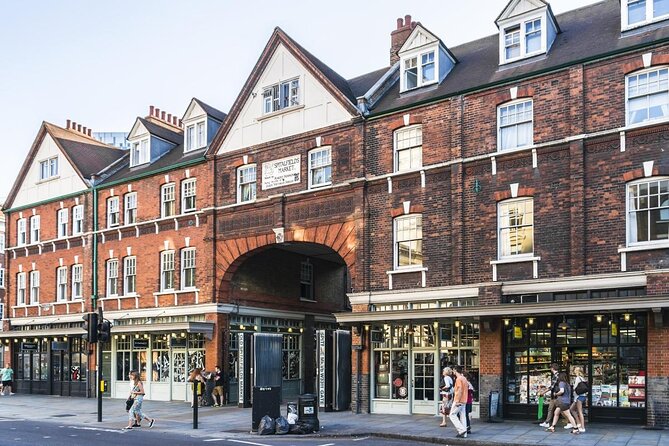
Spitalfields rewards a slower look. This two-hour walk trades central London’s big sights for small-group attention, old streets, immigrant stories, markets, and buildings with surprising second lives. I like the intimate limit of five people, and I like that the tour ends with tea and cakes in an 18th-century drawing room. The main drawback is simple: $90.28 is a serious price for two hours, and you need to be comfortable walking and standing most of that time.
The route also asks you to care about details. You will not be rushing through a checklist of famous sights. You will pause over old buildings, local lives, religious change, trade, and the way Spitalfields keeps remaking itself. If you prefer grand royal sights or a fast overview of London, this may feel too specialized.
In This Review
- Six reasons this Spitalfields walk is different
- Why Spitalfields makes a fine walking subject
- Starting beneath Nicholas Hawksmoor’s church
- Jewish immigration and the people behind an institution
- The market, the medieval survivor, and St Mary Spital
- Brewery workers and two women’s stories
- Commercial Street and the argument over its future
- One building, three religious identities
- Eighteenth-century houses and the herb garden
- The final reward: tea in a 1720 drawing room
- Is $90.28 good value for two hours?
- Timing, walking effort, and who should book
- My call: book it for stories, not speed
- FAQ
- Where does the Spitalfields walking tour start?
- What time does the tour begin?
- How long does the experience last?
- Where does the tour end?
- How many people can join the tour?
- What language is the tour offered in?
- Can I cancel for a full refund?
Six reasons this Spitalfields walk is different
- Only five people per group: You get a better chance to hear the guide, ask questions, and focus on details that larger groups would miss.
- A changing religious story: One building has served as a Huguenot chapel, synagogue, and mosque, a compact lesson in Spitalfields’ changing population.
- Personal stories behind public history: The tour connects Jewish immigration, brewery work, and local residents to the streets around you.
- An ancient market and medieval survival: The route explains why these places mattered, rather than simply pointing them out.
- A 30-minute period finish: Tea and cakes are served in an 18th-century drawing room overlooking Christ Church Spitalfields.
- A thoughtful alternative to central London: You see a working East End district shaped by trade, migration, religion, and redevelopment.
Why Spitalfields makes a fine walking subject
Spitalfields gives you a different London from the one built around Westminster, the Tower, or Buckingham Palace. Its interest lies in layers. A grand church sits near old market streets. Fine Georgian houses recall wealth, while immigrant institutions tell another story. A former brewery connects the area to work and industry. Religious buildings reveal how communities changed over time.
That makes the area well suited to a small walking group. You can stop for the finer points instead of being swept along by a guide holding up a flag. The stated group limit is five people, which is unusually personal for a London tour. It also means the guide can respond to your questions and adjust the pace within the two-hour limit.
The tone appears to be more thoughtful than theatrical. One especially praised element is the guide’s research into people who lived in the area. That matters because streets can become a parade of dates and architectural labels. Personal lives give the buildings a human scale.
More Walking Tours in London
- Tour for Muggles The Ultimate Harry Potter Walking Tour in London
★ 5.0 · 4,684 reviews - London Jack The Ripper Guided Walking Tour
★ 5.0 · 3,131 reviews - Changing of the Guard Guided Walking Tour in London
★ 5.0 · 1,793 reviews
Starting beneath Nicholas Hawksmoor’s church

The walk begins at Christ Church Spitalfields on Commercial Street at 2:00 pm. The church is described as Nicholas Hawksmoor’s masterpiece of English Baroque, so the opening gives you a strong architectural marker before the route moves into narrower, more complicated stories.
You can expect the guide to use the church as more than a photo stop. Its presence helps explain the ambition and social order of the area in the period when Spitalfields was changing rapidly. The tour then moves outward, using nearby streets to connect grand design with everyday life.
This is a good start for visitors who like architecture but do not want a lecture detached from the street. The possible limitation is that the tour’s value depends on the guide’s storytelling and interpretation. If you want a formal church interior visit or a long architectural survey, the two-hour format may feel brief.
Jewish immigration and the people behind an institution
One stop introduces an institution created to serve Jewish immigrants from Eastern Europe, including people from the area now known as Ukraine. The emphasis is on the people whose lives were connected to that work, not only on the building itself.
This is one of the route’s most meaningful themes. Spitalfields is easier to understand when you see migration as part of its identity rather than as a footnote. A stop like this can show how newcomers built support systems and how local institutions responded to pressing needs.
The personal research praised in the feedback is especially relevant here. You may hear about individuals rather than just receiving a broad statement about immigration. That approach can make the past feel less remote, and it gives you something to look for in the streets after the tour ends.
The subject is also serious. This is not simply a pleasant stroll through pretty old houses. You should expect social history alongside architecture, trade, and food.
The market, the medieval survivor, and St Mary Spital
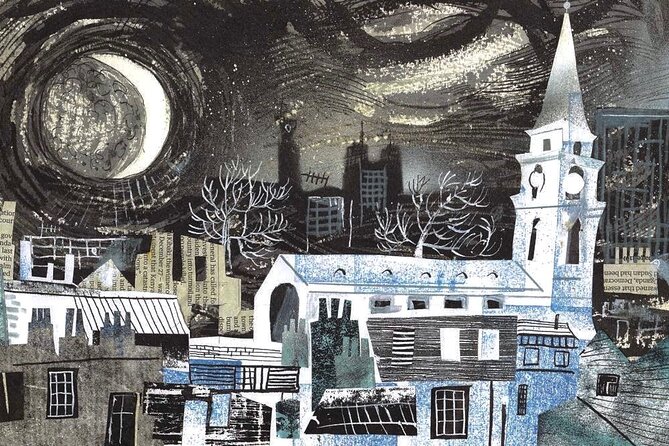
The route explains the story of an ancient market and reveals the purpose of an astonishing medieval survival. It also visits the site of the Priory of St Mary Spital.
These stops give the walk a long time span. You move beyond the Georgian and Victorian layers and consider the medieval foundation beneath the modern district. The value here is connection. A market is not just a place where goods were sold, and a surviving medieval feature is not just an old object. Each reflects how the area was organized and used.
The Priory of St Mary Spital adds another important piece. Even without a long stop inside a major monument, the site helps you picture an earlier Spitalfields, before later houses, institutions, and commercial buildings altered the streets.
I would pay close attention during this portion. Ancient sites in London can be easy to miss because the modern city has grown around them. A guide who explains their purpose gives you a better chance of noticing why a modest remnant matters.
A completely different sort of day out:
- Stonehenge, Windsor Castle, and Bath from London
★ 4.5 · 18,662 reviews - London Big Bus Hop-On Hop-Off Tour with Optional River Cruise
★ 3.5 · 10,803 reviews - London Small Group Tour of Historical Pubs
★ 5.0 · 10,422 reviews - Stonehenge, Windsor Castle and Bath with Pub Lunch in Lacock
★ 4.5 · 7,402 reviews
Brewery workers and two women’s stories
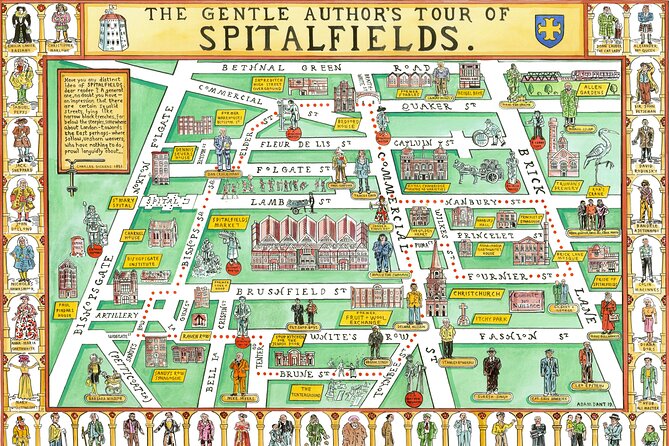
The tour tells the story of a brewery through the lives of two women who worked there. That detail gives the industrial past a welcome human focus.
Brewery history can easily become a list of production facts, owners, and dates. Centering two working women shifts attention to labor and daily life. It also broadens the picture of who shaped Spitalfields. The area was not built only by wealthy owners or famous architects. It depended on people whose work kept local institutions running.
This stop may suit you if you enjoy social history more than traditional sightseeing. It also shows why a small group helps. A guide can spend time on an unusual story like this without worrying about moving a large crowd through a rigid schedule.
Commercial Street and the argument over its future

The walk tells the story of Commercial Street and the continuing controversy over its future. Since the meeting point is on Commercial Street, this part also helps you read the street you are actually using.
The subject brings the tour into the present. Spitalfields is not a preserved museum district. Old buildings, commercial pressures, local identity, and proposed change all meet here. The exact nature of the controversy is not specified, so you should expect an explanation of the issue rather than a promise of a single answer.
This is useful if you want to understand why historic districts can feel contested. Preservation can protect character, but change can also bring new uses and investment. A good guide can show you the competing interests without turning the stop into a slogan.
For me, this is one of the reasons to choose a local walking tour instead of a general city tour. You are not only looking backward. You are being asked to notice how London decides what remains and what changes.
One building, three religious identities
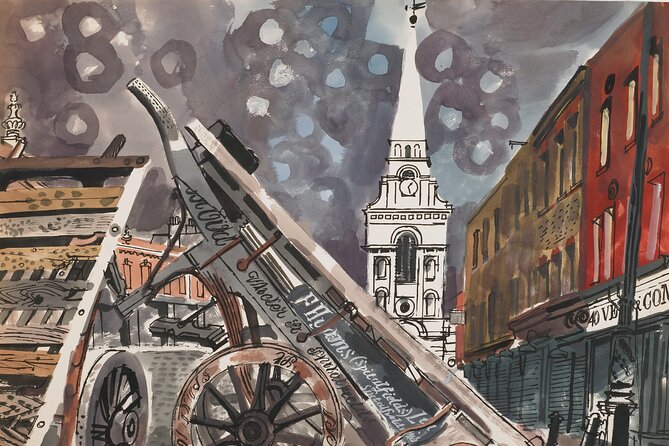
Perhaps the clearest symbol of Spitalfields’ changing population is the building that began as a Huguenot chapel, became a synagogue, and later became a mosque.
That sequence puts migration and religious history in one place. It also reminds you that buildings can outlive the communities that first created them. The structure’s changing use reflects the arrival of different groups and the practical ways neighborhoods adapt.
This should be a memorable stop for anyone interested in London’s religious history. It is also a useful corrective to the idea that historic buildings have only one proper identity. Spitalfields’ past is more flexible than that.
The description does not promise entry into every building on the route, so you should think of this as an exterior and storytelling stop unless the guide says otherwise. The strength lies in the explanation and the setting.
Eighteenth-century houses and the herb garden
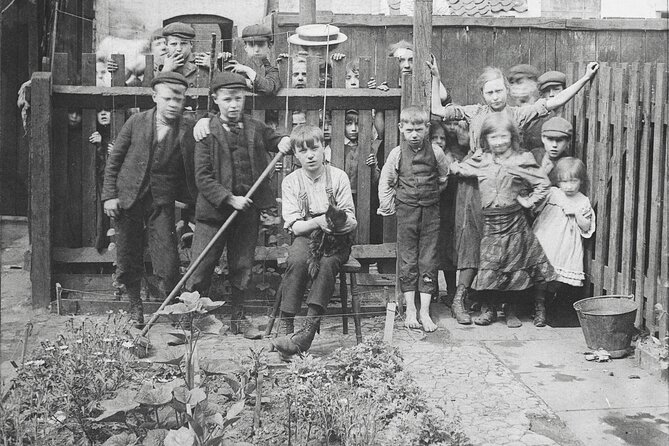
The tour also tells the story behind a group of fine 18th-century houses. Their appearance is likely to attract attention on its own, but the point is to understand who built them, who used them, and how they fit into Spitalfields’ development.
Old houses are more interesting when you know what their neat facades conceal. These buildings help balance the route’s stories of migration, work, and religious change with a look at status and wealth. The district held different social worlds close together.
Another stop visits the herb garden of the 17th-century herbalist Nicholas Culpeper. This adds a small but distinctive note to the walk. Rather than treating London as only churches, markets, and houses, the tour includes medical and botanical history.
You may particularly enjoy this if you like odd corners and overlooked subjects. The herb garden sounds modest in scale, but it gives the route variety and connects the neighborhood to an individual whose work focused on plants and remedies.
The final reward: tea in a 1720 drawing room
The tour ends back at the meeting point in a townhouse. You put your feet up in an 18th-century drawing room overlooking Christ Church Spitalfields, then enjoy tea and cakes baked to a recipe from 1720. This final segment lasts 30 minutes and admission is included.
I like this ending because it changes the pace. After two hours on foot, sitting down is not a decorative extra. It is practical. The tea also extends the period atmosphere without requiring another formal attraction.
The cakes are a particularly nice touch. A recipe from 1720 gives the refreshment a clear link to the tour’s historical focus, rather than making it an unrelated snack. One published comment praised the unusual combination of a serious walking tour and tea with a muffin included in the price.
Do not treat the tea as a reason to book the tour by itself. The walk takes up most of the experience, and the refreshment is best understood as a thoughtful close. Still, it helps justify some of the price and makes the outing feel more complete.
Is $90.28 good value for two hours?
At $90.28 per person, this is not a budget introduction to London. You can walk through Spitalfields on your own for far less. The price makes sense only if you want interpretation, close attention, and a carefully connected set of stories.
The five-person limit is the key value point. A private guide for one or two people would usually cost more, while a large group tour would provide less opportunity to ask questions. Here, you are paying for a small setting and for research that links buildings to individual lives.
The included tea and cakes add some value, but they should not be the main calculation. I would book this for the guide’s perspective and the depth of the route. I would skip it if your main goal is simply to see as many landmarks as possible.
The perfect rating and full recommendation rate suggest a strong level of satisfaction, but you should still match the tour to your interests. The same focused storytelling that delights a history-minded visitor could feel slow to someone seeking a quick London sampler.
Timing, walking effort, and who should book
The tour starts at 2:00 pm and lasts about two hours, including the final 30 minutes in the townhouse. That makes it easy to pair with another London activity earlier in the day, though you should leave enough time to reach Christ Church Spitalfields on Commercial Street.
You need to walk and stand for two hours, so this is not suited to anyone who cannot manage that amount of time on foot. The tour is near public transportation, service animals are allowed, and most people can participate.
The experience is offered in English and uses a mobile ticket. Confirmation arrives when you book. Since the activity requires good weather and a minimum number of participants, plans can change if either condition is not met. In that case, you are offered another date or experience, or a full refund.
Cancellation is free up to 24 hours before the start time. If you cancel later, the payment is not refunded, and changes made within that final 24-hour period are not accepted.
My call: book it for stories, not speed
I would recommend this Spitalfields walk if you want local history told through people and places, especially in a very small group. It suits repeat London visitors, architecture fans, and anyone curious about migration, religion, work, and the forces shaping an East End neighborhood.
I would be more cautious if this is your only London tour. The route does not focus on the capital’s headline sights, and two hours is too short to offer a broad city overview. You should also be ready for walking, standing, and a price that reflects personal attention rather than a low-cost outing.
Book it if you want to slow down, notice overlooked details, and finish with tea in an old drawing room. Skip it if you want a fast parade of famous attractions. Spitalfields is rewarding here precisely because the tour gives its ordinary streets time to speak.
FAQ
Where does the Spitalfields walking tour start?
It starts at Christ Church Spitalfields, Commercial Street, London E1 6LY, UK.
What time does the tour begin?
The stated start time is 2:00 pm.
How long does the experience last?
It lasts approximately two hours. The final townhouse visit includes 30 minutes for tea and cakes.
Where does the tour end?
The experience ends back at the meeting point.
How many people can join the tour?
The activity has a maximum of five participants.
What language is the tour offered in?
It is offered in English.
Can I cancel for a full refund?
Yes. You can cancel at least 24 hours before the start time for a full refund. Late cancellations and changes made within 24 hours are not accepted.
Just added in London
- Private Transfer From London to Southampton Cruise Terminal★ 4.0 · 2 reviews
- Layover Tour of London from LHR Executive Luxurious Vehicle Private Tour 6 hour★ 4.5 · 9 reviews
- Pub & History Tour London (History & Beers)★ 5.0 · 3 reviews
- eSIM for UK (34 EU countries) | 3 to 30 days. Up to 40GB of data★ 4.0 · 18 reviews
- Young Victoria’s London: Windsor Castle & Kensington Palace★ 5.0 · 1 review
- Zombie Scavengers Game – Southend-on-Sea, UK★ 4.5 · 2 reviews
- Women of Whitechapel 2 hour Walking Tour★ 5.0 · 15 reviews
- Working Women of the East End Walking Tour★ 5.0 · 85 reviews
Walking Tours, compared.

Oxford University Walking Tour With University Alumni Guide
Read our review →
Tour for Muggles The Ultimate Harry Potter Walking Tour in London
Read our review →
Cambridge University Walking Tour by Alumni™ Kings College Option
Read our review →
Blackbeard to Banksy – The Ultimate Walking Tour of Bristol
Read our review →
Air Raid Shelter + St. Nicholas Market Walking Tour
Read our review →
Walking Tour of Bath with Blue Badge Tourist Guide
Read our review →
Changing of the Guard Guided Walking Tour in London
Read our review →Browse the lists this tour appears in