
Reviewed · PHOTOGRAPHY SESSIONS
Ultimate introduction to photography in Central London
London can teach you photography fast. I like the small group, limited to eight, and I like that Matthew Williams-Ellis teaches in the streets rather than from a classroom. You work with real movement, changing light, strong lines, and famous London views while learning how ISO, shutter speed, and aperture work together.
I also like the clear progression from basic camera settings to slow shutter speeds and evening photography. The main consideration is the price, $232.25 per person, which is a serious spend for a half-day workshop. You are paying for expert instruction and personal help, not simply a guided walk with a camera.
In This Review
- Key points at a glance
- What this Central London photography workshop really teaches
- Starting at the London Eye and South Bank
- Leake Street Arches and the Waterloo graffiti tunnels
- South Bank skate park: learning to freeze movement
- St. Paul’s Cathedral and the evening shift
- Slow shutter speeds and photographic storytelling
- Finishing beside the Thames at sunset or blue hour
- How much personal help will you receive?
- Who should book this experience?
- Is $232.25 a fair price?
- Ratings, tone, and practical limits
- Should you book the Central London photography course?
- FAQ
- Where does the photography workshop start?
- Where does the workshop finish?
- How long does the experience last?
- How many people can join the workshop?
- What photography skills will I learn?
- Which London locations are included?
- Can I use a phone camera?
- Is the workshop suitable for beginners?
- What happens if the weather is poor?
Key points at a glance
- Small groups of eight or fewer: You get a better chance to ask questions and receive help with your own camera.
- Practical lessons in real locations: The route uses the London Eye, Leake Street Arches, South Bank skate park, St. Paul’s Cathedral, and the Thames.
- Manual settings made less baffling: You practise ISO, aperture, shutter speed, shooting modes, and focusing as you go.
- A useful mix of fast and slow subjects: Skateboard action gives you movement to freeze, while evening scenes let you experiment with blur and longer exposures.
- Good for cameras and phones: The teaching can be adapted to different skill levels, including people using phone cameras.
- A strong end to the day: Sunset, blue hour, or night photography gives you a final set of images and a chance to apply what you learned.
What this Central London photography workshop really teaches
This is not mainly a sightseeing tour with a few photography tips added. The point is to help you make deliberate pictures instead of relying on automatic settings and hoping for the best.
You learn the technical controls, but the workshop also focuses on the thought process behind a picture. That distinction matters. Knowing where the aperture button is will not automatically give you a better image. You also need to decide what deserves attention, where to place it in the frame, and how shutter speed can change the feeling of a scene.
Matthew’s teaching style is a major part of the appeal. The feedback from people who joined with very different abilities points to a patient, gentle approach. Complete beginners have worked through camera menus and manual mode, while more experienced photographers have received help with framing and more advanced techniques.
I particularly like that the workshop encourages you to practise straight away. You are not asked to remember a long lecture before trying anything. You learn a setting, use it in front of a real subject, check the result, and then adjust.
More Photo Tours in London:
- Professional Photoshoot in London Photographer
★ 5.0 · 102 reviews - Private landmarks photoshoot for families and couples
★ 5.0 · 92 reviews - Professional Private Photoshoot in London
★ 5.0 · 63 reviews
Starting at the London Eye and South Bank
The meeting point is the Starbucks on Belvedere Road, London SE1 7GQ. This puts you close to the London Eye and the South Bank stretch used during the opening part of the session.
The London Eye is a useful first stop because it gives you recognisable architecture and plenty of compositional choices. You can work on framing, lines, scale, and the relationship between a landmark and its surroundings. Instead of simply pointing at the wheel, you can think about how much of the structure belongs in the frame and what should sit around it.
For a beginner, this is a friendly place to start. You can begin with the basics of ISO, aperture, shutter speed, shooting modes, and focusing before the settings become more demanding. If you arrive with a new digital SLR or mirrorless camera and have only used automatic mode, expect to spend useful time understanding what the controls actually do.
The route also helps you get used to photographing in public. That can feel awkward at first. A busy city gives you many chances to practise without waiting for a perfect, quiet scene.
Leake Street Arches and the Waterloo graffiti tunnels
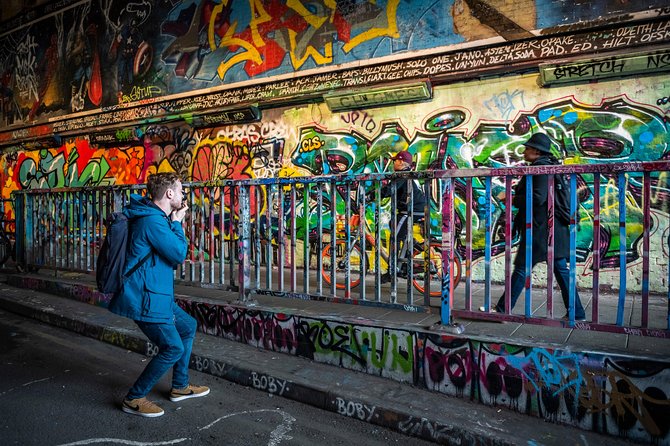
Leake Street Arches, also known as the Waterloo graffiti tunnels, bring a very different kind of subject. The walls offer colour, texture, patterns, and strong leading lines. This is where the workshop can shift from basic control of the camera to more careful composition.
You can work out how to place graffiti within the frame rather than treating it as a colourful background. The tunnel setting also gives you a chance to compare different exposures and see how your camera handles lower light.
The exact results will depend on the light and on your own camera, but the location is useful because it asks you to make choices. Do you fill the frame with detail? Do you use the tunnel lines to draw the eye? Do you include a person for scale? These are the kinds of decisions that help develop a photographic eye.
This stop is also a good reminder that an interesting photograph does not require a grand landmark. London’s famous sights are part of the route, but the graffiti arches provide a more local, graphic subject. I like that balance.
South Bank skate park: learning to freeze movement
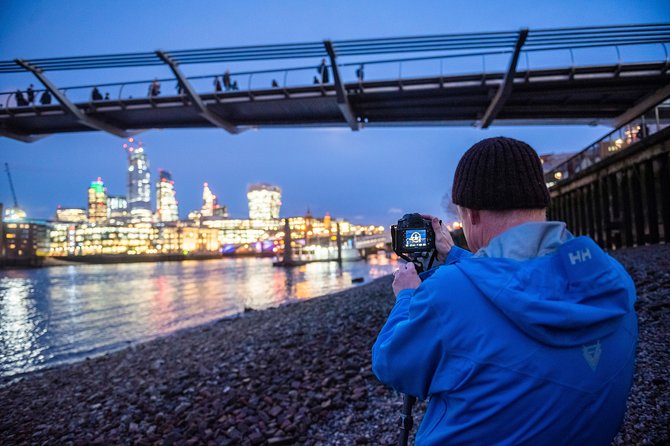
The South Bank skate park is one of the most practical parts of the workshop. Moving skateboarders give you a clear test for shutter speed, focusing, timing, and composition.
Fast action can expose the limits of automatic settings. A shutter speed that works for a still building may produce a blurred skateboarder. You learn to think about how fast the subject is moving, how much light is available, and whether you want a sharply frozen moment or a sense of motion.
The goal is not just to take a sharp picture. You can also experiment with the look of movement. A fast shutter may freeze an airborne trick, while a slower setting can introduce blur and energy. The workshop then becomes less about getting one technically correct result and more about choosing the effect you want.
This part may be challenging for someone who has never changed settings manually. That is also why the small group matters. With eight people or fewer, you have a better chance of getting help before the action has passed.
A few more to weigh up in London
- Stonehenge, Windsor Castle, and Bath from London
★ 4.5 · 18,662 reviews - London Big Bus Hop-On Hop-Off Tour with Optional River Cruise
★ 3.5 · 10,803 reviews - London Small Group Tour of Historical Pubs
★ 5.0 · 10,422 reviews - Stonehenge, Windsor Castle and Bath with Pub Lunch in Lacock
★ 4.5 · 7,402 reviews
St. Paul’s Cathedral and the evening shift
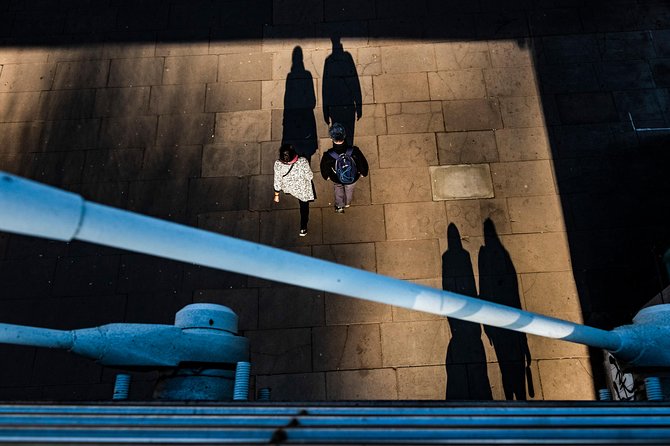
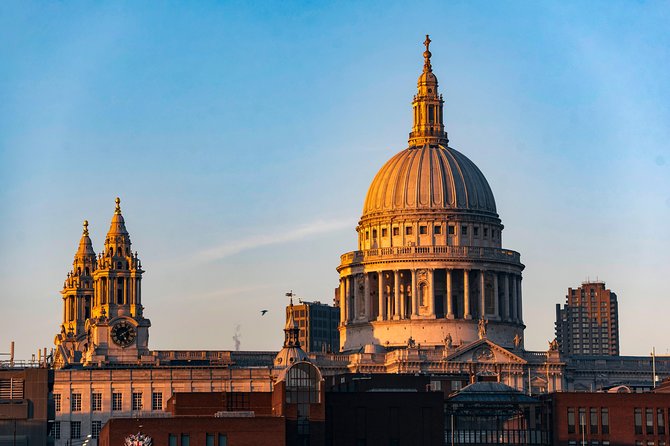
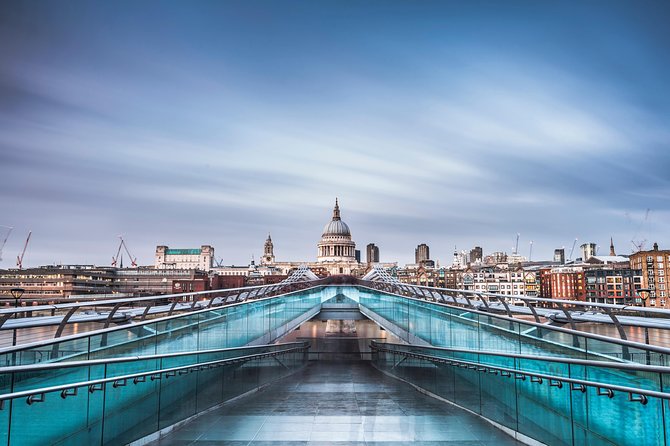
St. Paul’s Cathedral adds a large, recognisable subject and another chance to think about structure and composition. Its shape encourages you to consider symmetry, perspective, scale, and the space around a landmark.
The tour description places St. Paul’s among the main stops, while the wider session also builds toward photography around the Thames. The exact order and available light can vary, so you should treat the route as a practical workshop rather than a rigid sightseeing schedule.
As the day moves toward evening, the lesson changes again. Lower light makes ISO, aperture, and shutter speed more closely connected. You may need to decide how much noise you can accept, how wide you want the aperture, and how slow the shutter can go before movement becomes a problem.
That is where the earlier technical work begins to make sense. You have already handled brighter scenes, graffiti, and moving subjects. Now you apply the same controls to a darker setting with different creative options.
Slow shutter speeds and photographic storytelling
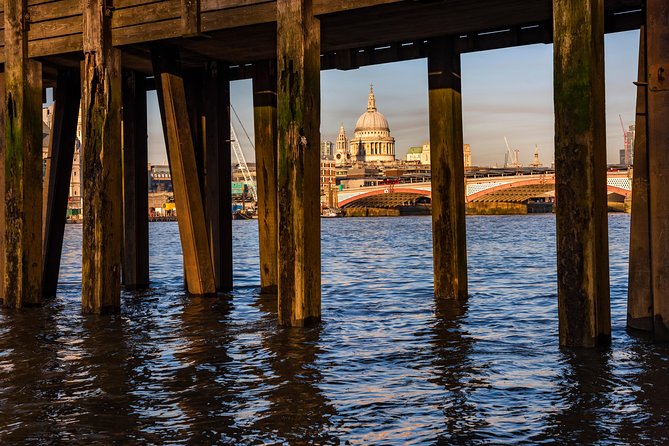
Slow shutter photography is one of the strongest features of this experience. It can make water, people, lights, or moving subjects appear blurred, smooth, or ghostlike. The aim is not to use a slow shutter simply because it is a new trick. You learn to ask what the longer exposure adds to the picture.
The workshop also covers photographic storytelling. A single image can show a place, but a series of images can suggest a route, a mood, or a small story. London gives you plenty of material for that approach, from bold graffiti to public movement and evening views across the river.
I find this focus especially useful for people who already know the basics but feel that their pictures still look flat. Technical settings can improve exposure, but decisions about timing, viewpoint, and subject are what give a photograph character.
You should expect to take notes. One person came away with a notebook full of settings and advice for photographing the northern lights. That is a useful sign of how the teaching can extend beyond London. The real test is not just the pictures you take during the workshop, but whether you can repeat the choices later.
Finishing beside the Thames at sunset or blue hour
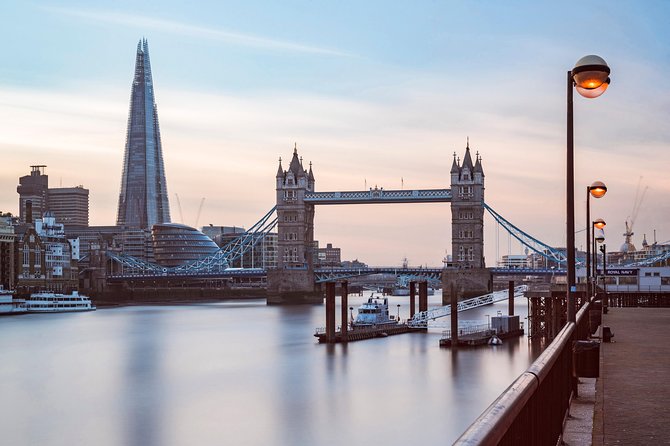
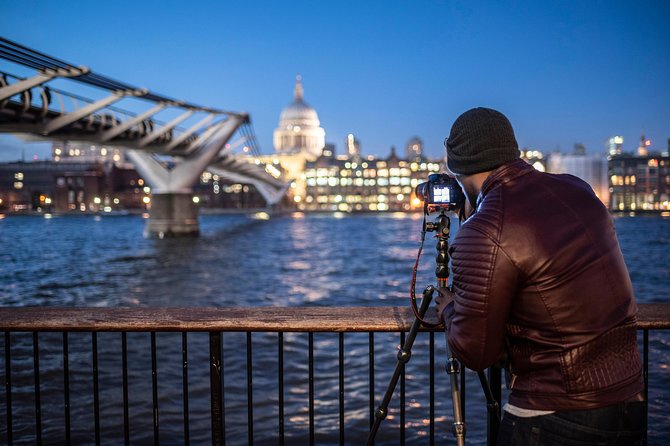
The final riverside session is designed for sunset, blue hour, or night photography, depending on the timing and conditions. This gives the day a natural finish and lets you work with softer or lower light over the Thames.
Sunset photography can be visually pleasing, but the real value here is the chance to use several skills at once. You may need to consider exposure, focus, composition, and the balance between the sky and the darker foreground. Blue hour then brings a different mood, with the remaining daylight mixing with city lights.
If the session reaches night conditions, slow shutter techniques become even more relevant. You may experiment with light trails, blur, or a carefully framed city view. The supplied description promises a range of final images rather than one fixed result, so the exact pictures will depend on the weather and the season.
The weather matters. This activity requires good weather, and poor conditions can lead to a new date or a full refund. That policy is sensible for an outdoor photography course, but you should leave some flexibility in your London plans.
How much personal help will you receive?
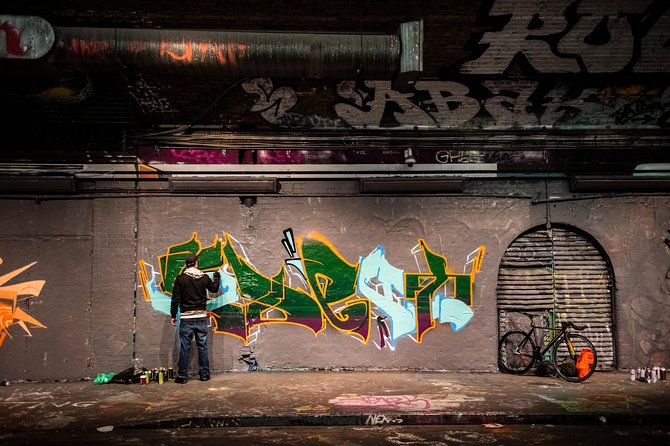
The maximum group size is eight. That is small enough to feel personal without making the session a private lesson.
The teaching also appears well suited to mixed ability levels. Beginners have used the workshop to understand a camera from the ground up, including the settings needed to leave automatic mode. People with more experience can work on composition, changing light, and more specific techniques.
Phone photographers are not automatically left out. The teaching has been adapted for people who wanted to make better use of their phone cameras, and the instructor helped a group with different skill levels take part. Still, if your main aim is advanced control over aperture or interchangeable lenses, you will get more from the course with a camera that offers those controls.
Matthew Williams-Ellis is named as the instructor and provider. The strongest praise focuses on his patience, clear communication, friendly manner, and ability to coach rather than lecture. That style is important for photography, where people often need to try a setting several times before it clicks.
Who should book this experience?
I would recommend this workshop most strongly to:
- People with a new camera who are confused by manual settings
- Beginners who want practical help rather than online tutorials
- Parents and teenagers who want to learn together
- Photographers who understand settings but need help with composition
- Phone photographers who want to use their camera more effectively
- Visitors who want to explore the Waterloo and South Bank area through photography
It also works well as a gift. One participant received the session after buying a new camera and found that the course made the camera’s functions less intimidating.
You may want to choose a different kind of experience if you are looking for a short sightseeing walk, a private one-to-one lesson, or a tour focused only on London history. The photography is the central purpose, and the five-and-a-half-hour duration requires real concentration.
A moderate level of physical fitness is requested. You should be ready for an active outdoor session around Central London, although the supplied details do not give a precise walking distance. The meeting point is near public transport, which makes arrival practical.
Is $232.25 a fair price?
At $232.25 per person, this is not a casual add-on to a London holiday. It costs roughly $42 an hour for about five and a half hours, before considering the value of a small group and an experienced instructor.
The price makes more sense if you are starting from a low confidence level. A few hours of direct help can save you from months of guessing through online tutorials. The strongest benefit is not only learning what ISO, aperture, and shutter speed mean, but learning when to use them and seeing the result immediately.
The value is also stronger if you plan to keep taking photographs after the trip. Advice on composition, focusing, slow shutter speeds, and storytelling can apply to city breaks, family occasions, wildlife, and night scenes. One participant used the guidance as preparation for photographing the northern lights, while another moved from automatic mode to more confident manual work.
The cost is harder to justify if you already control your camera comfortably and only want a few nice views of London. In that case, you may be paying for instruction you do not need. The workshop earns its price through coaching, not through entry to attractions or included meals.
Ratings, tone, and practical limits
The experience has a 5 out of 5 rating from 19 published ratings, with 100 percent recommending it. The praise is unusually consistent around patient instruction, confidence with camera settings, composition advice, and the fun of learning outdoors.
That does not remove the practical limits. Weather can affect the final evening shoot, and a group course cannot give you uninterrupted one-to-one attention. The route includes public places, so the pace and subject matter may change as the city changes around you.
You should also understand that the workshop cannot guarantee a particular sunset, a specific skateboarding trick, or a perfect photograph. Its strength is giving you tools and practice in varied conditions.
Free cancellation is available if you cancel at least 24 hours before the start time. Changes or cancellations inside that window are not accepted for a refund. If poor weather causes the provider to cancel, you are offered another date or a full refund.
Should you book the Central London photography course?
Book it if you want to understand your camera instead of leaving it on automatic mode. The mix of landmarks, graffiti, skateboarding, slow shutter work, and Thames evening photography gives you more useful practice than a standard photo walk.
I would especially choose it for a beginner, a family pair, or someone who has owned a camera for years but still feels unsure about ISO, f-stops, and shutter speed. Matthew Williams-Ellis’s patient teaching style is a strong reason to book, and the small group should give you room to ask basic questions without feeling rushed.
Think twice if $232.25 is beyond your budget, if you want a private lesson, or if your main interest is sightseeing rather than photography. For the right student, though, this is a practical way to return from London with more than landmark snapshots. You leave with a better sense of how to make pictures on purpose.
FAQ
Where does the photography workshop start?
It starts at the Starbucks on Belvedere Road, London SE1 7GQ, close to the London Eye and South Bank.
Where does the workshop finish?
The activity ends back at the meeting point.
How long does the experience last?
It lasts approximately five hours and 30 minutes.
How many people can join the workshop?
The maximum group size is eight participants.
What photography skills will I learn?
You will learn the basics of ISO, aperture, shutter speed, shooting modes, and focusing. The workshop also covers slow shutter speeds, composition, and photographic storytelling.
Which London locations are included?
The route includes the London Eye, Leake Street Arches, the Waterloo graffiti tunnels, South Bank skate park, St. Paul’s Cathedral, and a riverside Thames location for sunset, blue hour, or night photography.
Can I use a phone camera?
Yes. The instruction can be adapted for people who want to use their phone cameras more effectively.
Is the workshop suitable for beginners?
Yes. It is designed to explain basic camera functions and can begin with the absolute basics for people who have never used manual mode.
What happens if the weather is poor?
The experience requires good weather. If it is canceled because of poor weather, you will be offered a different date or a full refund.
Just added in London
- Private Transfer From London to Southampton Cruise Terminal★ 4.0 · 2 reviews
- Layover Tour of London from LHR Executive Luxurious Vehicle Private Tour 6 hour★ 4.5 · 9 reviews
- Pub & History Tour London (History & Beers)★ 5.0 · 3 reviews
- eSIM for UK (34 EU countries) | 3 to 30 days. Up to 40GB of data★ 4.0 · 18 reviews
- Young Victoria’s London: Windsor Castle & Kensington Palace★ 5.0 · 1 review
- Zombie Scavengers Game – Southend-on-Sea, UK★ 4.5 · 2 reviews
- Women of Whitechapel 2 hour Walking Tour★ 5.0 · 15 reviews
- Working Women of the East End Walking Tour★ 5.0 · 85 reviews
Photography Sessions, compared.
Professional Photoshoot in London Photographer
Read our review →
Private landmarks photoshoot for families and couples
Read our review →
30 Major London Attractions Walking Tour With Photos
Read our review →
Private Landmarks with a Professional Photographer
Read our review →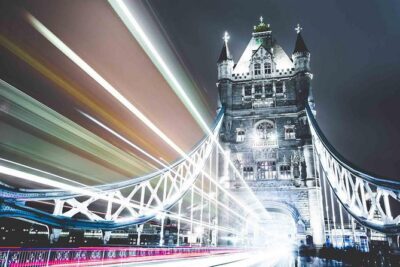
Browse the lists this tour appears in