
Reviewed · 2-HOUR EXPERIENCES
Twinings 2-Hour Tea Tasting Masterclass in London
Tea can tell a surprisingly good London story. The Twinings Tea Tasting Masterclass connects Britain’s tea habits with the plant, trade, and careful tasting behind each cup. I like the small-group format, which gives you room to ask questions, and I like the hands-on tasting of white, yellow, green, oolong, black, and pu’erh teas. The main drawback is simple: if you want a traditional afternoon tea with cakes and sandwiches, this is not that.
At $69.45 per person, the class costs more than a casual visit to the Twinings shop, but you are paying for two focused hours with a tea specialist rather than just a cup to drink. Guides such as Alessandra, Liam, Rachel, Rosie, and Angelo have made a strong impression with their humor, clear explanations, and enthusiasm. The class is in English, begins at 216 Strand, and returns there when finished.
In This Review
- Key points to know before booking
- What happens at 216 Strand
- Tea’s journey from bud to cup
- Six teas, six different directions
- Why the small group makes a difference
- More than a tea shop visit
- Is $69.45 a fair price?
- Who will enjoy this class most?
- Useful planning advice for your London day
- Should you book the Twinings tea masterclass?
- FAQ
- Where does the Twinings Tea Tasting Masterclass begin?
- Where does the experience finish?
- How long does the tea masterclass last?
- How many people can join the class?
- Which teas are included in the tasting?
- Is the class offered in English?
- Can I cancel for a full refund?
Key points to know before booking
- Six major tea categories are tasted: White, yellow, green, oolong, black, and pu’erh.
- You learn professional tasting skills: Smell, appearance, flavor, mouthfeel, and aftertaste all get attention.
- Tea history is part of the lesson: The class covers tea’s origins, arrival in Britain, and place in British culture.
- The group is small: The stated maximum is five people, making questions and discussion easier.
- Slurping is encouraged: You learn why professionals slurp tea and how that helps with tasting.
- The class ends at Twinings: You can browse the shop with a better sense of what you actually like.
What happens at 216 Strand
The masterclass begins at 216 Strand in Temple, a central London address that is easy to fit into a sightseeing day. You receive a mobile ticket, and the activity ends at the same meeting point, so there is no need to arrange a separate pickup or find your way across town afterward.
The setting is part of the appeal. Twinings is one of Britain’s best-known tea names, and the class gives you more than a generic beverage workshop. You are learning about tea in a place linked directly to British tea retail and tradition.
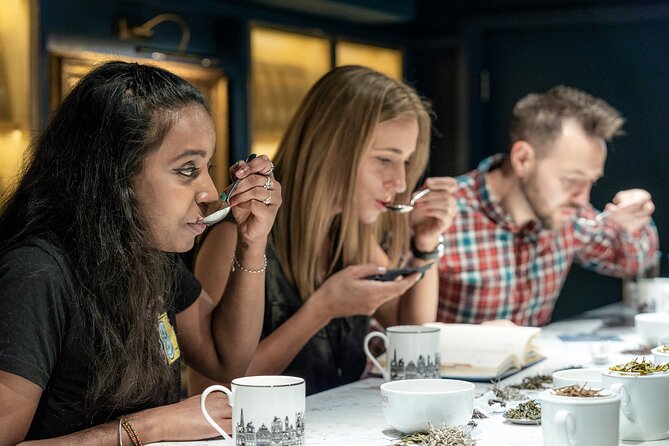
The exact room setup can vary, but one account describes a clean, stylish bar-like basement with a small group. That sounds right for the tone of the class: intimate rather than grand, practical rather than theatrical. You should expect a seated teaching session with tasting, not a walking tour of several London landmarks.
The class lasts about two hours. That timing matters. It gives the guide enough space to explain production and history, then lets you taste six different teas without making the session feel like a full-day course. One of the most useful features is the balance between explanation and participation. You are not simply listening while tea gets poured in front of you.
More Food Tours in London
- London Bridge & Borough Market Food Tour with 7 Authentic Dishes
★ 5.0 · 1,972 reviews - London Foodie Adventure:More than 10 dishes with Sherpa Food Tour
★ 5.0 · 932 reviews - Eating London: Twilight Soho VIP Food & Drinks Tour
★ 5.0 · 590 reviews
Tea’s journey from bud to cup
The opening part of the class looks at where tea comes from and how it reaches your cup. You learn about the tea plant’s journey from bud to finished drink, including how different processing methods create different tea categories.
This is the point where the class earns its masterclass title. Many people know tea by color or brand, but not by production method. The lesson helps you see why white tea, green tea, black tea, and the other categories can come from the same basic plant yet taste so different.
The history section then shifts toward Britain. You learn when tea arrived in Britain and how it became part of everyday life and social customs. The focus is not just on dates. The guide connects tea with British culture, trade, and changing habits, giving the later tasting a useful frame.
I especially like this approach for anyone who has ever wondered why tea became so closely tied to Britain despite not being grown there. You get context before judging what is in the cup. That makes each sample feel less like a random flight of drinks and more like part of a long chain from cultivation to consumption.
The guides bring different personalities to the material. Alessandra has been praised for handling questions with ease and for telling the story with passion. Liam is described as engaging and entertaining, while Rachel is known for combining clear instruction with a personable style. Rosie adds a cheerful, funny approach, and Angelo focuses strongly on tea’s place in British culture and industry.
Because several guides lead the class, the tone may differ from one session to another. That is not a flaw, but it means your experience depends partly on who teaches your date. The consistent theme is a guide who knows the subject and enjoys sharing it.
Six teas, six different directions
The tasting covers six categories:
- White
- Yellow
- Green
- Oolong
- Black
- Pu’erh
This lineup gives you a broad introduction rather than a narrow look at flavored blends. You get to compare teas across major styles and notice how much variety exists within one drink family.
White tea offers a gentle starting point. Green tea gives you a chance to think about freshness and processing. Oolong sits between familiar categories and can show how varied tea can become. Black tea connects naturally with British drinking habits, while pu’erh gives you a taste of a style many people have never tried. Yellow tea is also less familiar to many casual tea drinkers, making it a useful inclusion.
The point is not to identify every tea perfectly. You are guided through what you see, smell, and taste. You also learn how professionals slurp tea. That may feel a little silly at first, but it serves a purpose: drawing air across the tea helps spread its aromas and flavors.
The class asks you to describe each sample using several measures. These include appearance, aroma, flavor, mouthfeel, and aftertaste. You may be given vocabulary to help put impressions into words, which is useful if your usual tasting note is simply nice or strong.
That sensory structure is one of the best reasons to book. It changes how you drink tea after the class. You start noticing whether a tea feels light or full, dry or smooth, floral or earthy, and whether its finish disappears quickly or stays with you.
Do not expect a formal qualification or professional tea career training. This is an accessible introduction. You do not need prior knowledge, and the class works well for beginners who want a guided way to compare teas without feeling out of place.
Why the small group makes a difference
The stated maximum is five participants. That is a real advantage for this subject because tasting works better when you can ask questions and hear the guide explain small differences between samples.
In a larger class, tea tasting can become a demonstration. Here, the format is better suited to discussion. You can ask why one tea tastes more delicate, how production changes flavor, or what makes one tea suitable for a certain brewing style.
The small scale also helps if your group has mixed interests. A committed tea drinker can ask more detailed questions, while a beginner can follow along without needing specialist knowledge. One family enjoyed the class across three generations, which says something about its broad appeal.
At the same time, a small class can feel more personal than some people expect. If you prefer to sit quietly and observe, you may need to take part in the tasting conversation. That is not a high-pressure activity, but the class is built around interaction, not passive sightseeing.
The group size can also vary in practice. The published maximum is five, while one class account describes six people together. Either way, this is designed as a small session rather than a large public lecture.
A completely different sort of day out:
- Stonehenge, Windsor Castle, and Bath from London
★ 4.5 · 18,662 reviews - London Big Bus Hop-On Hop-Off Tour with Optional River Cruise
★ 3.5 · 10,803 reviews - London Small Group Tour of Historical Pubs
★ 5.0 · 10,422 reviews - Stonehenge, Windsor Castle and Bath with Pub Lunch in Lacock
★ 4.5 · 7,402 reviews
More than a tea shop visit
Twinings’ shop is worth seeing on its own, but the class gives your visit more purpose. Instead of browsing rows of boxes and choosing by packaging, you get a clearer idea of what styles suit your palate.
Several class accounts describe browsing the shop after the lesson. That timing is useful because you have just tasted six categories and heard how tea quality is assessed. You can make a more informed choice instead of buying a souvenir at random.
A product discount may be offered after the class. Treat that as a pleasant extra, not the main reason to book, since the central value is the teaching and tasting. If you plan to shop, allow a little time after the two-hour session. One account specifically wished for more shopping time after learning what to look for.
This is also a good way to turn the class into a practical London souvenir. Tea is light, easy to pack, and more connected to local culture than many standard gift-shop purchases. You leave with a better idea of what you are buying, even if you do not purchase anything.
Is $69.45 a fair price?
At $69.45 per person, the masterclass is not a bargain tasting in the casual sense. You could buy several teas for much less. The value comes from the guided structure, the six-category comparison, the historical context, and the chance to ask questions in a very small group.
I would consider it fairly priced for someone who is genuinely curious about tea. You get about two hours of instruction, multiple tastings, sensory guidance, and access to a specialist setting. The class also works as a compact indoor activity, which can be useful on a rainy London day.
The value is weaker if you only want to drink tea or are mainly looking for an afternoon tea spread. There are no cakes, sandwiches, or grand hotel dining-room rituals listed here. This is an educational tasting, not a meal.
It is also worth considering how much you already know. A serious tea enthusiast may find the six-category overview familiar, although the professional tasting method and the questions from the guide can still make it worthwhile. A complete beginner is likely to get the biggest gain for the price.
Who will enjoy this class most?
I would recommend the experience to:
- Tea drinkers who want to understand what they are tasting
- Couples looking for a quieter London activity
- Families with older children or several generations together
- Gift buyers seeking something more personal than a standard attraction ticket
- Visitors interested in British food and drink traditions
- Curious beginners who want a friendly introduction without a full course
It can also suit people who do not consider themselves tea drinkers. The class does not assume you already love tea. Comparing six styles may help you find a category you prefer, and the sensory exercises give you a new way to approach the drink.
I would hesitate if your schedule is packed with major sights and you would rather spend every hour outdoors. The class takes a fixed two hours, and its appeal depends on your willingness to sit, listen, smell, taste, and discuss.
The setting is indoors and air-conditioned, which is a practical plus on a hot day. Service animals are allowed, and the location is near public transportation. The class is offered in English, so you should be comfortable following an English-speaking lesson.
Useful planning advice for your London day
Book ahead if your dates are fixed. The experience is often reserved about 28 days before the start date, which suggests that the limited group size can make last-minute planning less reliable.
Place it near other central London stops, but do not schedule something that begins immediately afterward. The advertised duration is approximately two hours, and you may want time to browse Twinings once you know more about the teas.
Arrive at 216 Strand with your mobile ticket ready. Since the class returns to the starting point, you can continue with your day from the same central area.
The cancellation terms are friendly if your plans change early. You can cancel for a full refund up to 24 hours before the start time. Changes or cancellations made less than 24 hours ahead are not accepted for a refund, and the cut-off follows London local time.
Should you book the Twinings tea masterclass?
Book it if you want a focused, well-presented introduction to tea and British tea culture. The strongest reasons are the six distinct tea styles, the sensory tasting method, and the small class led by engaging teachers such as Alessandra, Liam, Rachel, Rosie, or Angelo.
Skip it if you are expecting afternoon tea, a large serving of food, or a tour of London landmarks. This is a two-hour lesson in a tea-focused setting. For the right person, it offers something better than a quick cup: a new way to notice what is in it.
FAQ
Where does the Twinings Tea Tasting Masterclass begin?
The class begins at 216 Strand, Temple, London WC2R 1AP, United Kingdom.
Where does the experience finish?
The activity ends back at the meeting point at 216 Strand.
How long does the tea masterclass last?
The masterclass lasts approximately two hours.
How many people can join the class?
The stated maximum is five participants.
Which teas are included in the tasting?
The tasting includes white, yellow, green, oolong, black, and pu’erh teas.
Is the class offered in English?
Yes. The experience is offered in English.
Can I cancel for a full refund?
Yes. You can cancel at least 24 hours before the start time for a full refund. Cancellations or changes made less than 24 hours before the start time are not accepted for a refund.
Just added in London
- Private Transfer From London to Southampton Cruise Terminal★ 4.0 · 2 reviews
- Layover Tour of London from LHR Executive Luxurious Vehicle Private Tour 6 hour★ 4.5 · 9 reviews
- Pub & History Tour London (History & Beers)★ 5.0 · 3 reviews
- eSIM for UK (34 EU countries) | 3 to 30 days. Up to 40GB of data★ 4.0 · 18 reviews
- Young Victoria’s London: Windsor Castle & Kensington Palace★ 5.0 · 1 review
- Zombie Scavengers Game – Southend-on-Sea, UK★ 4.5 · 2 reviews
- Women of Whitechapel 2 hour Walking Tour★ 5.0 · 15 reviews
- Working Women of the East End Walking Tour★ 5.0 · 85 reviews
2-Hour Experiences, compared.

Discovering Birmingham 2 hour Walking Tour to the Jewellery Quarter
Read our review →

2-Hour Jack the Ripper Small Group Walking Tour in London
Read our review →
London Essential 2 hour introductory Walking Tour With a Londoner
Read our review →
2-Hour Bath Walking Tour of Bridgerton Filming Locations
Read our review →
Private 2-Hour Cambridge Walking Tour With University Alumni Guide
Read our review →

Private Walking Tour | Blue Badge Guide, 2h, £225 per group
Read our review →Browse the lists this tour appears in