
Reviewed · WALKING TOURS
Discovering Birmingham 2 hour Walking Tour to the Jewellery Quarter
Birmingham reveals itself on foot. This two-hour walk links the city centre with the Jewellery Quarter through backstreets, canals, churches, and public squares that a coach cannot reach. I like the secret canal route into the Jewellery Quarter and the way guides such as Jonathan Berg use props, humour, and personal stories to make the city easier to understand.
I also like the audio receiver, which lets you hear the guide while walking a little apart from the group. At $20.80 per person, the tour offers solid value, especially if you are new to Birmingham or want local context for places you might otherwise pass without noticing. The main consideration is the weather: this is an outdoor walk, and the tour may continue in rain.
In This Review
- Key points to know before you book
- Starting beneath the Library of Birmingham
- Taking the canal route into the Jewellery Quarter
- The 1779 church and the Jewellery Quarter’s changing face
- St Philip’s Cathedral and a possible Burne-Jones view
- Seeing St Chad’s beside the inner ring road
- Victoria Square and the return through central Birmingham
- Chamberlain Square and Birmingham’s next chapter
- Guides, stories, and the useful audio receiver
- Price, timing, and who gets the best value
- Rain, fitness, and practical planning
- Should you book the Birmingham walking tour?
- FAQ
- Where does the Birmingham walking tour begin?
- What time does the tour start?
- How long does the walking tour last?
- Does the tour end at the starting point?
- Is entry to the attractions included?
- What happens if it rains?
Key points to know before you book
- The walk begins and ends at Centenary Square, beside the Library of Birmingham, making it easy to fit into a day in the city centre.
- A lesser-used canal route leads into the Jewellery Quarter, adding a quieter side of Birmingham to the usual central sights.
- The tour covers Georgian, Victorian, post-war, and modern Birmingham, so you see how the city has changed rather than focusing on one period.
- Jonathan Berg is known for lively storytelling and street props, while guides including Bernard, Ann, and Maria have also led tours.
- A supplied audio receiver helps with hearing, a useful feature in a group of up to 40 people.
- St Philip’s Cathedral may include a look at Edward Burne-Jones stained glass, although entry depends on time and other events.
Starting beneath the Library of Birmingham
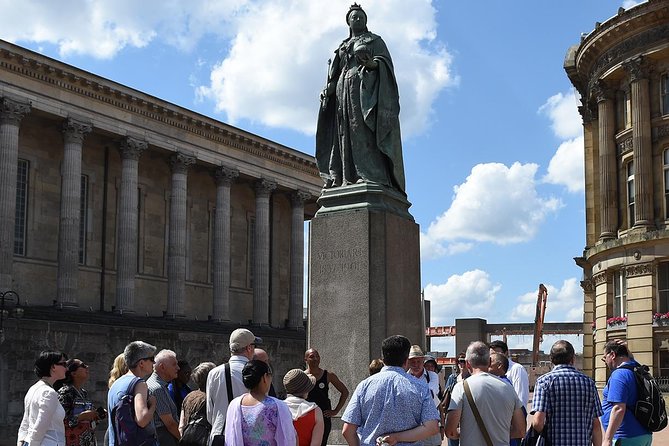
Meet at 1:30 pm in Centenary Square, beside the Library of Birmingham. This is a practical starting point because the square is central, easy to reach by public transport, and already gives the guide plenty to discuss before the walking begins.
Allow yourself enough time to find the exact meeting point. The tour starts with about 20 minutes in and around the square, using its buildings and public spaces to explain Birmingham. You are not simply being marched toward the next stop. The opening gives you a framework for the city, which helps later sights make more sense.
The square also sets the tone for the whole walk. Birmingham is a city of old buildings, major redevelopment, public art, and changing ideas about how the centre should work. You begin with that mixture immediately.
The group can contain up to 40 people. That is not a tiny private walk, but the receiver supplied by the company helps. You can hear the guide even if you are not standing directly beside them, which matters when the pavement narrows or the group spreads out.
More Walking Tours in Birmingham
- Birmingham Walking Tour: Canals, Victorians & Today (1:30pm)
★ 5.0 · 346 reviews - Birmingham Slogging Gangs Walking Tour with Edward Shelby
★ 4.5 · 306 reviews - Birmingham City Centre Daily Walking Tour (10:30am & 2pm)
★ 5.0 · 265 reviews
Taking the canal route into the Jewellery Quarter
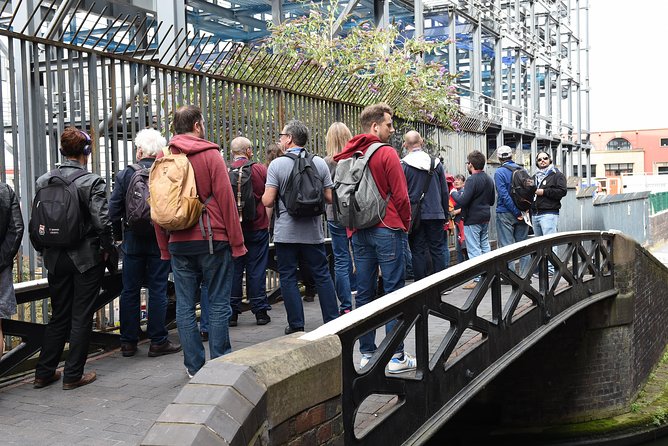
The walk reaches the Jewellery Quarter by a canal route described as one that even many locals do not use. This is one of the tour’s best features. You get a change of pace from the city centre streets, and the route shows how Birmingham’s waterways helped support trade and industry.
The Jewellery Quarter is not presented as a collection of shops alone. You learn how the district developed from Georgian times and how different kinds of business took root there. That gives the area a working identity, rather than reducing it to a pretty backdrop for photographs.
I like this part because the guide connects buildings and businesses to the wider growth of Birmingham. You begin to see why the Jewellery Quarter developed in its particular form and how it now fits into the modern city.
The route also offers the pleasure of going somewhere you might not choose by yourself. You may walk across a canal bridge or along a stretch of water that has escaped your usual city-centre route. One long-time Birmingham resident described crossing a bridge here for the first time after 47 years in the city. That tells you something useful: this tour is not only for first-time visitors.
The word secret should be taken in a light sense. This is not an inaccessible passage or a forbidden route. It is simply a less-used way into the district, and the novelty comes from seeing familiar Birmingham from a different angle.
The 1779 church and the Jewellery Quarter’s changing face
Within the Jewellery Quarter, the walk includes the outside of a church known locally as the Jewellery Quarter church. It is a Georgian building dating from 1779, and its exterior provides a compact example of the period’s architecture.
The stop is brief, but it works well as part of the wider story. You are seeing a place shaped by work, worship, transport, and urban growth. The guide’s job is to connect those pieces without turning the walk into a string of dates.
This is also where the tour’s balance between old and new becomes clear. The Jewellery Quarter is not frozen in Georgian or industrial Birmingham. Modern businesses and new development are taking their place alongside older buildings. The walk helps you notice that change without pretending every alteration is automatically an improvement.
If you enjoy architecture, this section should appeal to you. If you prefer long interior visits, keep your expectations in check. Much of the tour is about exterior views and explanation, not extended time inside buildings.
St Philip’s Cathedral and a possible Burne-Jones view
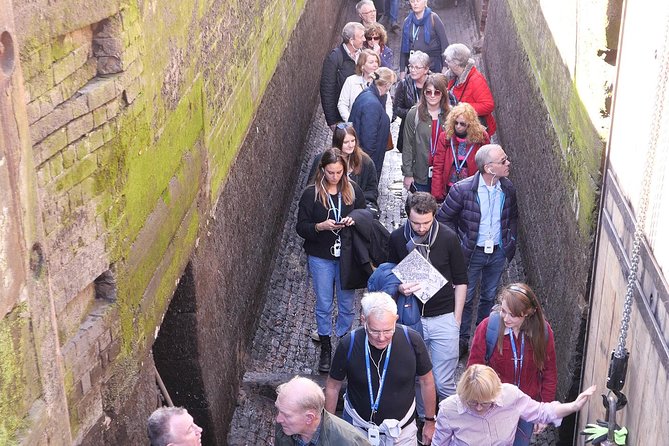
The route then returns toward the centre and reaches Birmingham Cathedral, also called St Philip’s Cathedral. It is an English Baroque building, and the guide spends time helping you read it as part of the city rather than treating it as a quick photo stop.
There may be time to go inside and see stained glass associated with Edward Burne-Jones. This is not guaranteed, since entry depends on the schedule and on whether another event is taking place. That uncertainty is worth knowing before you book, but the exterior remains part of the planned walk.
The cathedral stop is listed at about five minutes, so this is a short introduction rather than a full cathedral visit. If the stained glass is especially important to you, plan a separate visit at another time. The walking tour can point you in the right direction, but you should not count on a long interior viewing.
Even so, the stop adds welcome variety. After canals, workshops, and city redevelopment, the cathedral offers a different view of Birmingham’s civic and religious past. The guide’s commentary is likely to be more useful than simply walking in, taking a photograph, and moving on.
A completely different sort of day out:
- Entry ticket to Hoo Zoo and Dinosaur World in Telford
★ 5.0 · 591 reviews - Cadbury World Entry Ticket
★ 3.0 · 524 reviews - SEA LIFE Birmingham Admission Ticket
★ 3.0 · 218 reviews - Fun, Flexible Treasure Hunt Around Birmingham with Cryptic Clues & Hidden Gems
★ 5.0 · 167 reviews
Seeing St Chad’s beside the inner ring road
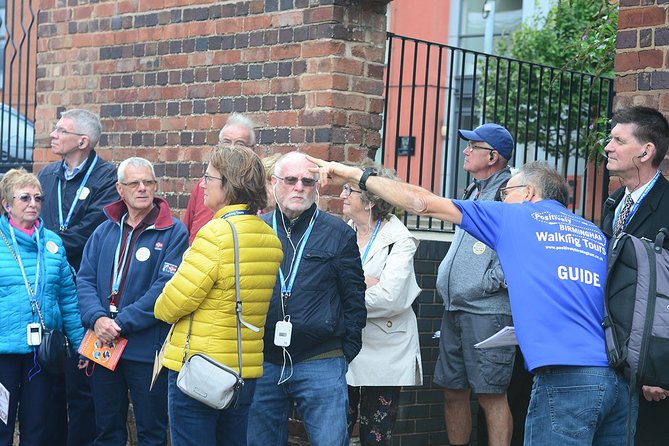
The walk also takes in St Chad’s from the inner ring road. This is an unusual but valuable viewpoint because it puts the building beside one of Birmingham’s clearest reminders of post-war planning.
The guide uses the setting to discuss what happened when the car became the priority in urban design. You are invited to consider the costs of redevelopment and decide for yourself how successfully Birmingham planned its changes.
This is one of the tour’s more thoughtful moments. It does not present the city as a neat success story. Instead, you see how older buildings and newer roads can sit awkwardly together, and how decisions made decades ago still shape the experience of walking through Birmingham today.
The viewpoint may not be as comfortable or scenic as a quiet square. That is part of its value. You are looking at a real urban problem in its actual setting, rather than receiving a polished version of the city.
Victoria Square and the return through central Birmingham
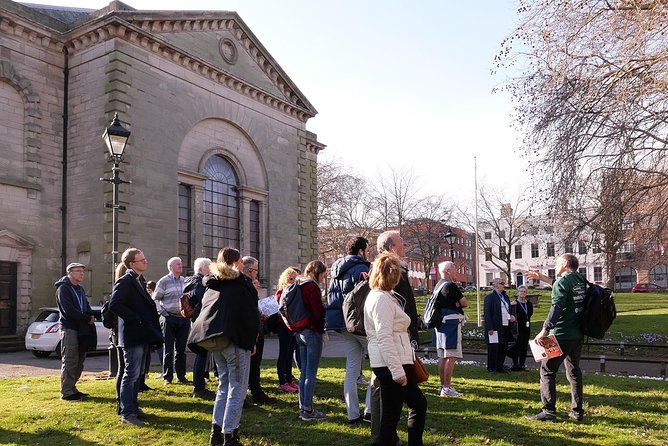
From St Chad’s, the route heads back through several important city squares toward the Library of Birmingham. Victoria Square is one of the main pauses, with about 10 minutes to look at St Philip’s Cathedral and the surrounding centre.
By this stage, the walk has given you several ways to think about Birmingham. You have seen water routes, commercial districts, religious buildings, road planning, and public space. Victoria Square helps pull those threads together.
The return route is also practical. You finish where you started, so you do not need to work out a complicated journey back to your hotel or transport connection. You can continue exploring from Centenary Square, visit the library, or make your own way to nearby attractions.
Because the tour covers a lot in two hours, the pace may feel purposeful. You will have stops for explanation, but this is still a walking tour rather than a series of long visits. Wear comfortable shoes and be ready to stay on your feet.
Chamberlain Square and Birmingham’s next chapter
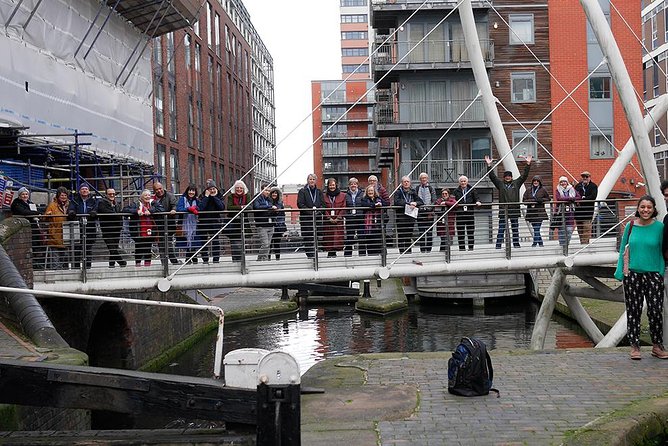
The final listed stop is Chamberlain Square, which has been renovated as part of the city’s continuing redevelopment. The guide explains how Birmingham is reconfiguring its centre for the future.
This is a useful ending because it brings the tour back to the present. You have looked at Georgian architecture, the Jewellery Quarter’s working past, cathedral buildings, and the legacy of post-war roads. Chamberlain Square shows that Birmingham is still changing.
I like tours that finish with a question rather than a tidy conclusion. Here, you can compare the old and new parts of the city and decide what feels successful. The square is not just a final photo location. It helps you understand that Birmingham is an ongoing project.
The stop is short, around five minutes, so it will not replace a longer visit to the square. Its purpose is to give you context and a final point of comparison before returning to Centenary Square.
Guides, stories, and the useful audio receiver
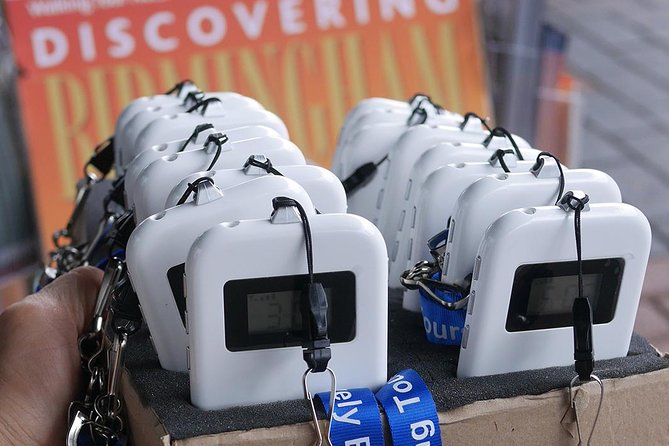
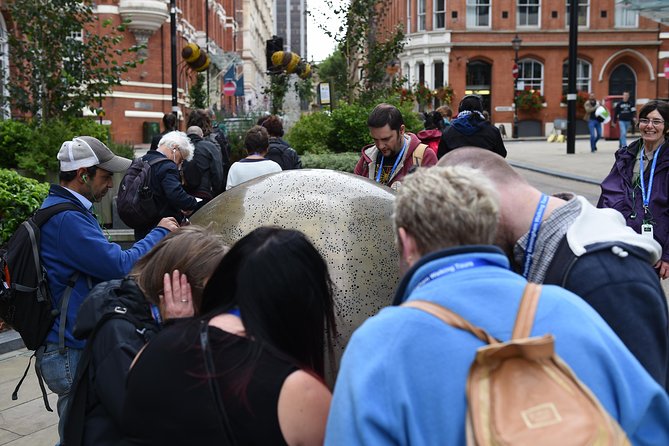
The guide makes a major difference on this walk. Jonathan Berg has led tours with a witty, energetic style and sometimes brings objects from the past to use as street-level teaching tools. He has even given visitors copies of his books on some occasions, including material connected with Birmingham’s public art.
That kind of approach suits a city tour well. A list of building dates can fade quickly, but a physical object, a funny story, or a surprising detail can make a place stick in your mind. The tour has been described as a kind of museum on the streets, which is a fair picture of the style.
Other named guides include Bernard, Ann, and Maria. The strongest praise has focused on a good blend of information, humour, and storytelling. You should expect a friendly, talkative presentation rather than a silent architectural walk.
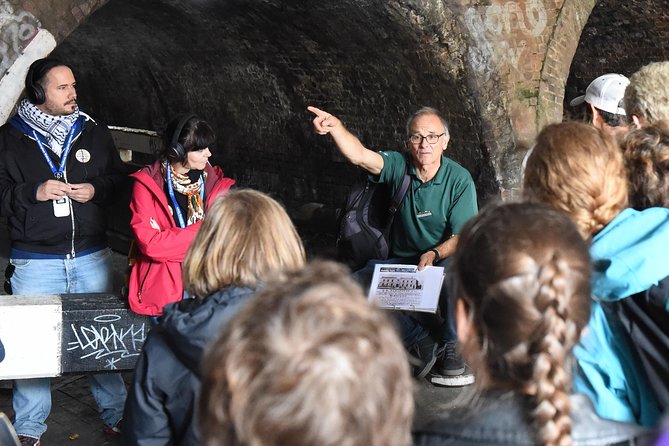
The receiver is a practical advantage. In a group of up to 40, you may not always be beside the guide. Being able to hear from a little distance means you can look at a building, keep moving, or take a better position without losing the commentary.
Price, timing, and who gets the best value
At $20.80 per person, this is reasonably priced for a two-hour guided introduction to central Birmingham and the Jewellery Quarter. There are no entry fees to add, and the supplied receiver is included.
The value is strongest if you want orientation and local context. You are paying for access to a route, but also for the guide’s ability to explain why the places matter. After the walk, you should have a better sense of where to return for a longer visit.
The price is less compelling if you want extensive indoor sightseeing. The cathedral entry is not assured, and most stops focus on exteriors, streets, squares, canals, and public views. You are buying interpretation and access to lesser-used routes, not a bundle of museum admissions.
The tour usually sells around three weeks ahead, with an average booking time of 21 days. That suggests you should not leave it until the last minute if your Birmingham schedule is fixed.
The advertised rating is 4.9 from 333 reviews, with 100 percent recommending the experience. Those figures point to a very consistent response, especially to the guides’ humour and city knowledge. Still, the format remains a two-hour outdoor walk, so it will suit some people more than others.
Rain, fitness, and practical planning
The tour generally tries to operate in poor weather. Bring a proper coat or umbrella if rain is forecast. In icy conditions, the route may be changed.
You should have a moderate level of physical fitness. The supplied information does not give a precise distance or step count, so I would plan for steady walking on city streets and canal paths for roughly two hours. Comfortable footwear is the sensible choice.
Service animals are allowed, and the start point is near public transport. Confirmation is sent when you book. Free cancellation is available if you cancel at least 24 hours before the local start time. Changes or cancellations inside that window are not accepted for a refund.
This is a useful tour for solo visitors, couples, families with older children, and local residents who want to see Birmingham differently. It also works well at the beginning of a stay because the route gives you a map in your head.
Should you book the Birmingham walking tour?
Book it if you want a lively introduction to Birmingham that joins the city’s old buildings, canals, roads, squares, and new development into one story. I would especially recommend it for first-time visitors and people who enjoy local detail more than formal museum visits.
It is also a strong choice for Birmingham residents and former locals. The canal route, street props, and overlooked views may show you parts of the city you have walked past for years.
Skip it if rain would ruin your day, if you need guaranteed cathedral entry, or if you prefer a slow tour with long stops indoors. For most people who enjoy walking and storytelling, though, $20.80 is a fair price for two hours of useful orientation, good humour, and a more personal look at Birmingham.
FAQ
Where does the Birmingham walking tour begin?
The tour begins at the Library of Birmingham in Centenary Square, Birmingham B1 2ND, UK.
What time does the tour start?
The stated start time is 1:30 pm.
How long does the walking tour last?
The tour lasts approximately two hours.
Does the tour end at the starting point?
Yes. The activity ends back at the meeting point in Centenary Square.
Is entry to the attractions included?
No entry tickets are required for the tour. The guide may sometimes take the group inside Birmingham Cathedral to see the Edward Burne-Jones stained glass, but this depends on time and conflicting events.
What happens if it rains?
The tour normally tries to continue in adverse weather. Bring a suitable coat or umbrella. If conditions are icy, the route may be adapted.
Just added in Birmingham
- Fun, Flexible Treasure Hunt Around Birmingham with Cryptic Clues & Hidden Gems★ 5.0 · 167 reviews
- Birmingham Gangs Nighttime Historical Walking Tour with Pub Stops★ 5.0 · 53 reviews
- Jewellery Quarter of Birmingham: A Walking Adventure★ 4.5 · 2 reviews
- Taste of Shrewsbury Food and Drink Tour with Guide★ 5.0 · 22 reviews
- Guided Tour of Street Art in Birmingham★ 5.0 · 2 reviews
- Pride History of Birmingham Tour★ 5.0 · 3 reviews
- Private Birmingham Ghosts and Gallows Walking Tour★ 5.0 · 5 reviews
- Birmingham Ghost Hunt: Haunted Self-Guide Tour & Quest★ 4.5 · 37 reviews
Walking Tours, compared.
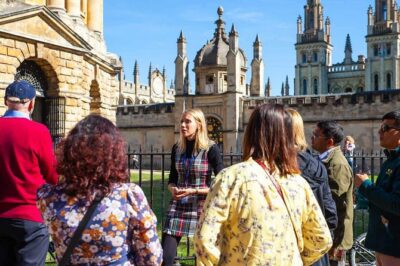
Oxford University Walking Tour With University Alumni Guide
Read our review →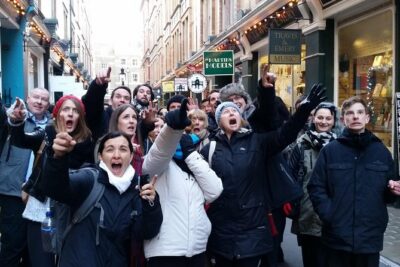
Tour for Muggles The Ultimate Harry Potter Walking Tour in London
Read our review →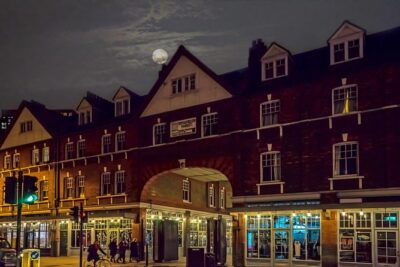
Cambridge University Walking Tour by Alumni™ Kings College Option
Read our review →
Blackbeard to Banksy – The Ultimate Walking Tour of Bristol
Read our review →
Air Raid Shelter + St. Nicholas Market Walking Tour
Read our review →
Walking Tour of Bath with Blue Badge Tourist Guide
Read our review →
Changing of the Guard Guided Walking Tour in London
Read our review →Browse the lists this tour appears in