
Reviewed · WALKING TOURS
The Mayflower Private Walking Tour
London’s best stories often hide beside the river. This private Mayflower walking tour links the South Bank’s major sights with overlooked corners, from Winchester Palace and Crossbones Graveyard to the pub where the Mayflower crew set out for the New World. I like the personal pace of a private guide and the way the route connects London’s past to places you can still see and use today. The main drawback is simple: this is a long walk, roughly 4 to 5 miles, with many stops packed into about three hours.
I also like that many sights are viewed free of charge, so you are paying mainly for guiding rather than a stack of entrance tickets. You should dress for changing weather, wear comfortable shoes, and expect the tour to finish far from its starting point, near Rotherhithe.
In This Review
- Key points to know before booking
- Why this South Bank walk is different
- Starting at Mansion House and Millennium Bridge
- Winchester Palace, the Clink, and the Golden Hinde
- Crossbones and Marshalsea: London’s hard truths
- The George, Southwark Cathedral, and Borough Market
- London Bridge to Tower Bridge
- Shad Thames and the old waterfront
- Rotherhithe and the Mayflower connection
- Brunel, the Watchhouse, and a practical finish
- How much walking and time do you need?
- Is $205.29 per person fair value?
- Who should book this walk?
- Should you book the Mayflower Private Walking Tour?
- FAQ
- How long does the Mayflower Private Walking Tour last?
- Where does the tour start?
- Where does the tour finish?
- Is transportation included between attractions?
- Are admission fees included?
- Can I cancel the tour for a full refund?
Key points to know before booking
- A private 3-hour walk: Your group has the guide to itself, with room for questions and adjustments.
- A river-to-Mayflower route: The walk begins near Mansion House and finishes around Rotherhithe, where the Mayflower Pub and St Mary’s Church tell the central story.
- About 4 to 5 miles on foot: The route suits people with a moderate level of fitness, not anyone looking for a gentle stroll.
- Mostly outdoor sightseeing: Several places are viewed from outside, while some admission charges are extra.
- Strong Dickens and social-history focus: Prisons, poverty, smugglers, markets, churches, and old docks give the walk plenty of character.
- Good value for history fans: At $205.29 per person, the tour makes the most sense for couples, families, or small groups who value a private guide.
Why this South Bank walk is different
Many London walks stick to royal buildings, grand squares, and famous churches. This one takes a less polished route along the Thames, where old prisons, warehouses, market lanes, pubs, and working-waterfront stories sit beside modern attractions.
The Mayflower connection gives the walk a clear purpose, but it is not the only subject. You will hear about Charles Dickens, the Pilgrim Fathers, Captain Cook, Victorian engineering, social reform, executions, plague burials, and the changing use of London’s riverside buildings.
That mix is the tour’s greatest strength. You are not simply ticking off landmarks. You are seeing how the South Bank changed from a rough district of prisons, docks, taverns, and poverty into one of London’s most popular places to walk.
Because the tour is private, you can ask for more detail on the subjects that interest you most. A history-minded group might spend longer on Marshalsea Prison and Crossbones Graveyard. A family may prefer the ships, bridges, and Harry Potter filming connection at Millennium Bridge.
More Walking Tours in London
- Tour for Muggles The Ultimate Harry Potter Walking Tour in London
★ 5.0 · 4,684 reviews - London Jack The Ripper Guided Walking Tour
★ 5.0 · 3,131 reviews - Changing of the Guard Guided Walking Tour in London
★ 5.0 · 1,793 reviews
Starting at Mansion House and Millennium Bridge
The meeting point is outside the Underground station at Mansion House, 38 Cannon Street. The listed start time is 9:30 a.m., although the operator suggests a later start around 10:30 or 11 a.m. when practical, helping you avoid the busiest part of rush hour.
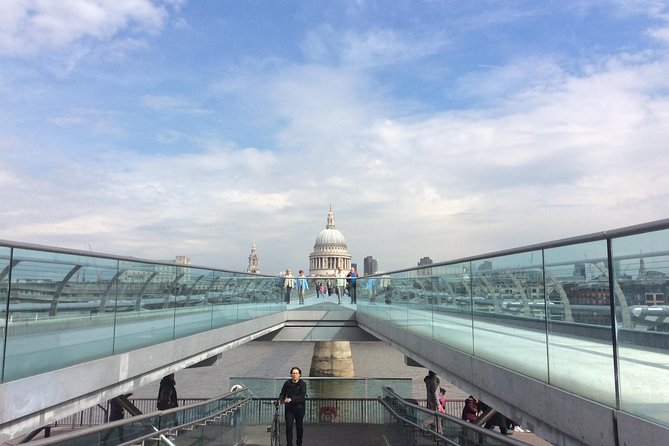
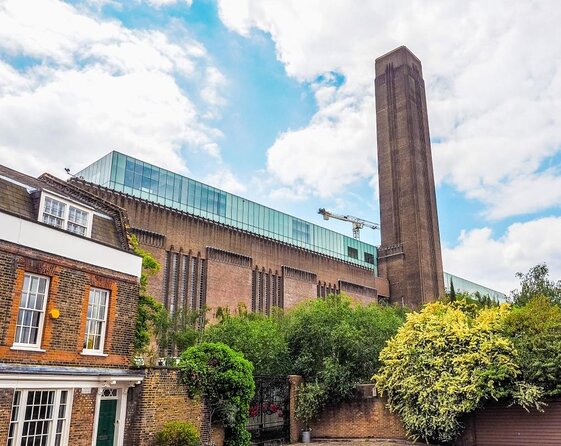
The first major sight is Millennium Bridge, which links St Paul’s Cathedral with Tate Modern. It offers one of London’s best quick views across the Thames, with the cathedral framed at one end and the former power station at the other.
The bridge also appeared in Harry Potter and other screen productions. The stop itself is brief, around five minutes, so do not expect time to visit either St Paul’s or Tate Modern during the tour.
Tate Modern is housed in a converted power station. That detail introduces one of the walk’s recurring ideas: London often gives old buildings new lives. The route keeps returning to former prisons, docks, industrial buildings, and churches that now serve very different purposes.
Winchester Palace, the Clink, and the Golden Hinde
The ruins of Winchester Palace offer an early reminder that medieval Southwark was not just an extension of the City of London. The palace once belonged to the Bishops of Winchester and was a substantial residence. What remains is only a fragment, but it survived centuries of development and wartime damage.
Admission to the Winchester Palace stop is included. You will spend only about five minutes there, so treat it as a compact historical pause rather than a full archaeological visit.
Nearby, the Clink Prison Museum adds a darker note. The name gave the English language the word clink, and the site is presented as one of Britain’s most notorious prisons. Entry is not included, and the stop is also brief.
That extra ticket matters. If you want to go inside, confirm the current admission arrangements and allow enough time, since a three-hour schedule with more than twenty stops leaves little spare room. If you stay outside, you can still hear about the prison and the atmosphere of old Southwark without adding to the cost.
The Golden Hinde, a replica of Sir Francis Drake’s famous ship, shifts the story from imprisonment to exploration. The ship gives you a useful sense of scale and helps explain how sea travel once shaped this part of London. Entry is not included.
Crossbones and Marshalsea: London’s hard truths
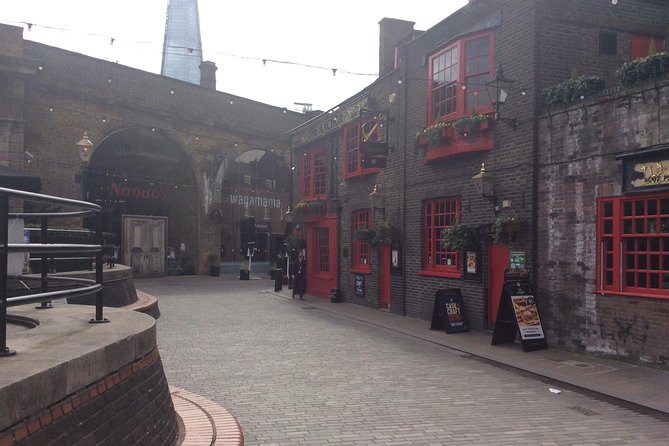
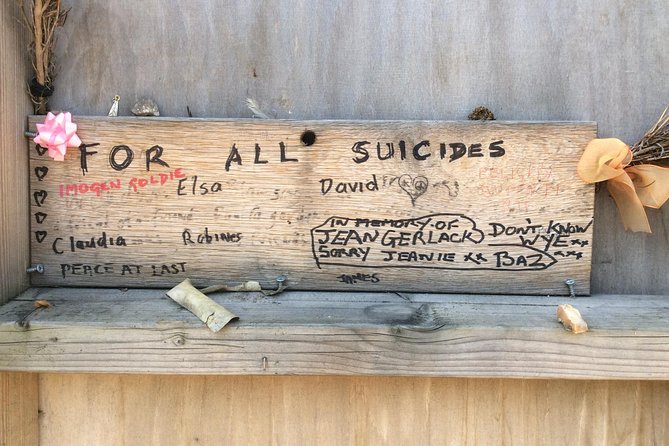
Crossbones Graveyard is one of the most affecting stops. Thousands of people, including plague victims, criminals, and women described in old records as fallen women, were buried here without ceremony.
The place also connects to the poverty that inspired social reform and Charles Dickens’s writing. The visit is short, about ten minutes, but the subject deserves attention. This is not a polished monument with a tidy story. It points to people who were pushed aside by the city and largely forgotten.
Admission is included, though the experience remains mainly an outdoor visit. The site can feel quiet and restrained, which suits its purpose.
The route then reaches the remains of Marshalsea Prison. Only part of the south wall survives, set beside a small park. Charles Dickens’s family was imprisoned here because of debt, a fact that shaped his understanding of poverty and punishment.
This stop is especially useful because it moves beyond famous names. You see how debt affected ordinary families, and why Dickens returned so often to themes of hunger, money, prisons, and social injustice. The stop lasts about ten minutes and admission is included.
A completely different sort of day out:
- Stonehenge, Windsor Castle, and Bath from London
★ 4.5 · 18,662 reviews - London Big Bus Hop-On Hop-Off Tour with Optional River Cruise
★ 3.5 · 10,803 reviews - London Small Group Tour of Historical Pubs
★ 5.0 · 10,422 reviews - Stonehenge, Windsor Castle and Bath with Pub Lunch in Lacock
★ 4.5 · 7,402 reviews
The George, Southwark Cathedral, and Borough Market
The George is London’s only remaining galleried coaching inn. Its yard is linked with the pilgrims in Chaucer’s Canterbury Tales, making it one of the few places on the route where literature and the physical setting connect so directly.
The pub is still a working establishment, but entry is not included. You may simply view the exterior and courtyard area as part of the walk. If you like old inns and literary connections, this is a rewarding stop. If you prefer major monuments, it may feel less substantial.
Southwark Cathedral follows with a calmer, more formal setting. Southwark was once its own city, and the cathedral remains an important reminder of that separate identity. It is often overlooked by people heading straight to London Bridge or Borough Market.
The market is one of the liveliest stops, with food from around the world and a history reaching back at least a thousand years, possibly to Roman times. The tour includes the market stop, but the ten-minute timing is too short for a proper meal or serious food shopping.
I would save any planned tasting for after the walk. During the tour, use the market to understand the area’s long role as a place where people gather, trade, and eat. It is also a useful place to note for a later return.
London Bridge to Tower Bridge
At London Bridge, the guide explains why the bridge is located where it is and describes the grim events once associated with it. The stop is short, but the bridge is an essential part of London’s story because it controlled movement across the Thames for centuries.
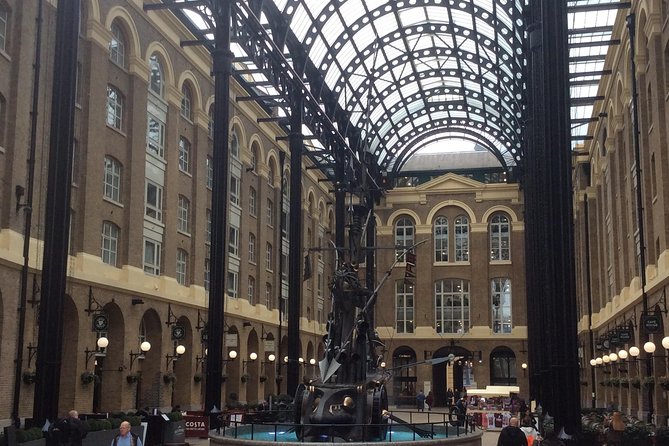
Hay’s Galleria shows another change of use. The former covered dock area is now filled with restaurants and leisure spaces. Its ironwork and enclosed design give you a clear idea of how commercial riverfront buildings could be repurposed.
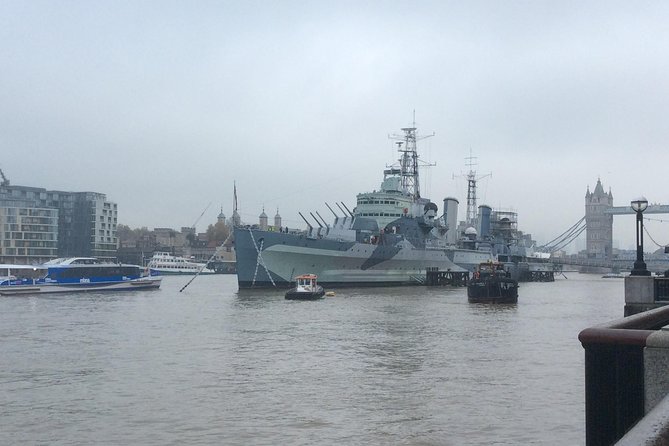
You then pass HMS Belfast, the former Royal Navy cruiser from the Second World War. The ship is now a tourist attraction, but entrance is not included. Five minutes gives you an exterior look only, not enough for the ship’s full interior.
City Hall comes next, with its rounded shape and familiar nickname, the Armadillo. The building housed the Mayor of London and the London Assembly. From here, the route also offers views toward the Tower of London across the river.
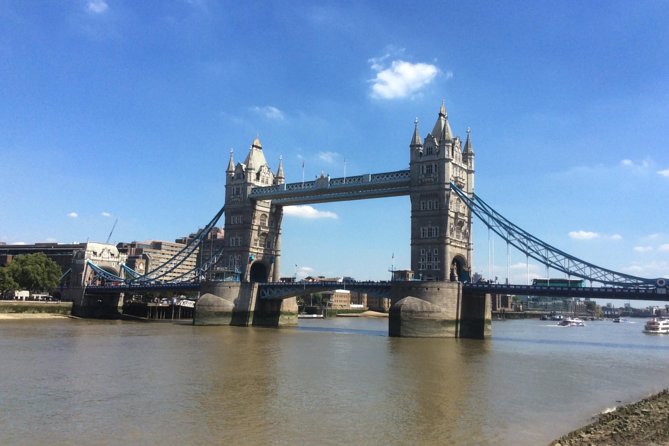
The Scoop is a modern outdoor theatre, and then you walk beneath Tower Bridge. This is one of the route’s best photo moments. The bridge’s hydraulic lifting system made it a major piece of engineering, and seeing it from below helps you appreciate its size.
Tower Bridge entry is not included, so plan a separate visit if you want to walk across the high-level glass walkways or see the engine rooms. This tour is about the bridge’s setting and story, not the full attraction.
Shad Thames and the old waterfront
Shad Thames gives the walk some of its strongest atmosphere. The streets and narrow waterways once formed a rough dock district, known for drainage problems, crime, murders, and executions.
Today, the area is far more fashionable, but the old industrial forms remain visible. Warehouses, passageways, and waterside routes help you picture how goods once moved through the district. The guide also links the area to Dickens, whose work repeatedly returned to the darker side of London.
The tour then points out the remains of Edward III’s manor house. What was once swampy ground became the site of a medieval hunting lodge. The remains were uncovered relatively recently, giving the stop an archaeological angle.
At the Angel pub, you hear about smuggling, Captain Cook’s voyages, and the hanging judge who watched sentences carried out nearby. The old pub reaches out over the Thames, and its trap doors still offer a clue to its former role.
Entry to the Angel is not included. The stop is only about five minutes, but it is another example of the tour’s method: small physical details carry large stories.
Rotherhithe and the Mayflower connection
The route becomes more focused as you reach Rotherhithe. St Mary’s Church served a village that was once separate from central London and contains a monument to the Pilgrim Fathers.
The Mayflower’s captain is buried here, and the ship was beached on the Thames behind the church. This provides a stronger connection to the Mayflower story than simply visiting a pub with the same name.
At the Mayflower Pub, you reach the tour’s main historical destination. The crew of the Mayflower departed for the New World from this area. The pub itself is an old riverside establishment and a natural place to finish a walk built around departure, ships, and the Thames.
The stop is brief, around five minutes, but I would consider returning afterward for a drink or pub meal. The tour does not provide time for a relaxed meal here, and the end point is a good reason to keep your afternoon flexible.
Brunel, the Watchhouse, and a practical finish
The Brunel Museum marks the work of the Victorian engineer Marc Brunel and the first underwater tunnel built here. Trains still use the tunnel today. The project was designed partly to address the delays caused when ships took days or even weeks to dock on the Thames.
Museum admission is not included. The guide can introduce the engineering story, but you will need a separate visit if you want the full museum experience.
The Watchhouse Café offers a more unusual piece of local history. The building once served as a watch house where bodies washed up on the shores of Rotherhithe were held to protect them from thieves and body snatchers until officials arrived.
The café is now a place for organic drinks and snacks. It is worth noting as a possible refreshment stop, though the tour’s short timing means you may not have time to sit down.
The final stop is the Rotherhithe Picture Research Gallery, an old industrial building now linked with cinema, heritage costumes, and local images. Costumes for television and films are made there, and the reference collection shows how the area looked in earlier periods.
This gives the tour an unusual ending. Instead of finishing with one more famous monument, it closes with film, design, local memory, and the changing face of Rotherhithe.
How much walking and time do you need?
The advertised duration is about three hours, but the route contains 23 listed stops. Most are five minutes long, while a few take ten minutes. That tells you what kind of tour this is: a brisk overview with many short explanations, not a slow visit inside each attraction.
The total distance is roughly 4 to 5 miles. You should be comfortable walking for several hours and standing outdoors. The tour operates in all weather, so bring suitable clothing and shoes.
There is no transportation between the sights. Hotel pickup and drop-off may be available if you select that option, but the actual sightseeing is done on foot. The route ends in a different location, around Rotherhithe, so do not plan to return to Mansion House immediately afterward.
The walk is near public transportation, and the end is within walking distance of the Overground. Still, check your onward plans before booking, especially if you have timed tickets elsewhere.
Is $205.29 per person fair value?
The price is $205.29 per person, which is high for a three-hour walk if you are comparing it with a large group tour. The value improves if you are traveling as a small private group and want the guide’s full attention.
You are paying for route design, local interpretation, and flexibility rather than expensive admissions. Several stops are free, and entry to places such as the Clink Prison Museum, Golden Hinde, HMS Belfast, Tower Bridge, and the Brunel Museum is not included.
That can be a benefit. You are not forced to pay for attractions you do not want to enter. It also means you should budget separately if you want to turn the walk into a fuller day of sightseeing.
Group discounts are available, and the tour is private. For a family or group of friends, the per-person cost may compare better with several individual tickets for a large sightseeing product, especially if you value questions and a more personal pace.
Who should book this walk?
I would recommend it to history lovers, repeat visitors to London, readers interested in Dickens, and anyone who prefers old streets and local stories to a standard list of royal sights.
It also suits people who want to get their bearings along the South Bank before exploring on their own. The route shows you where Borough Market, HMS Belfast, Tower Bridge, the Mayflower Pub, and Rotherhithe fit together.
I would be cautious if you have limited mobility, dislike long walks, or want extensive time inside museums. The moderate fitness requirement is important. You will cover a lot of ground, and short stops mean the schedule stays active.
Families can enjoy the ships, bridges, prison stories, and Harry Potter connection, but some subjects are grim. Crossbones, Marshalsea, executions, poverty, and the Clink may not suit young children.
Free cancellation is available up to 24 hours before the start time. Confirmation is sent within 48 hours, subject to availability. Service animals are allowed, and the operator says the tour runs in all weather.
Should you book the Mayflower Private Walking Tour?
Book it if you want a private, story-led walk through London’s South Bank and Rotherhithe, especially if Dickens, medieval ruins, old prisons, docks, and the Mayflower appeal to you.
Skip it if you want a relaxed stroll, a tour centered on major interiors, or a route that ends where it began. The price is easier to justify for a small group, and the best practical choice is to wear sturdy shoes, start later to avoid rush hour if possible, and keep time afterward for a meal at the Mayflower Pub or a separate visit to one of the attractions along the way.
FAQ
How long does the Mayflower Private Walking Tour last?
The tour lasts approximately three hours.
Where does the tour start?
It starts at Underground Ltd Station, Mansion House, 38 Cannon Street, London EC4N 6JD, UK. The listed start time is 9:30 a.m.
Where does the tour finish?
The tour ends in a different location from the starting point, around Rotherhithe. The end is within walking distance of the Overground.
Is transportation included between attractions?
No. Transportation to and from the attractions is not included. The sightseeing route is completed on foot.
Are admission fees included?
Some stops are free or included, including Winchester Palace, Crossbones Graveyard, Marshalsea Prison South Wall, Borough Market, Hay’s Galleria, Shad Thames, Edward III’s Manor House, St Mary’s Church, the Mayflower Pub, the Watchhouse Café, and the Rotherhithe Picture Research Gallery. Admission is not included for the Clink Prison Museum, Golden Hinde, The George, Southwark Cathedral, HMS Belfast, City Hall, Tower Bridge, the Angel, or the Brunel Museum.
Can I cancel the tour for a full refund?
Yes. You can cancel up to 24 hours before the experience’s start time for a full refund. Changes or cancellations made less than 24 hours before the start time are not accepted for a refund.
Just added in London
- Private Transfer From London to Southampton Cruise Terminal★ 4.0 · 2 reviews
- Layover Tour of London from LHR Executive Luxurious Vehicle Private Tour 6 hour★ 4.5 · 9 reviews
- Pub & History Tour London (History & Beers)★ 5.0 · 3 reviews
- eSIM for UK (34 EU countries) | 3 to 30 days. Up to 40GB of data★ 4.0 · 18 reviews
- Young Victoria’s London: Windsor Castle & Kensington Palace★ 5.0 · 1 review
- Zombie Scavengers Game – Southend-on-Sea, UK★ 4.5 · 2 reviews
- Women of Whitechapel 2 hour Walking Tour★ 5.0 · 15 reviews
- Working Women of the East End Walking Tour★ 5.0 · 85 reviews
Walking Tours, compared.
Oxford University Walking Tour With University Alumni Guide
Read our review →
Tour for Muggles The Ultimate Harry Potter Walking Tour in London
Read our review →
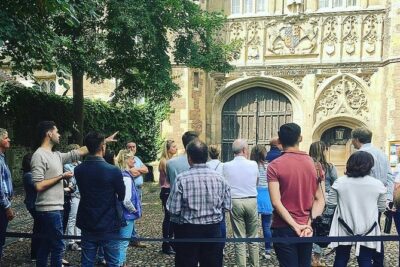
Cambridge University Walking Tour by Alumni™ Kings College Option
Read our review →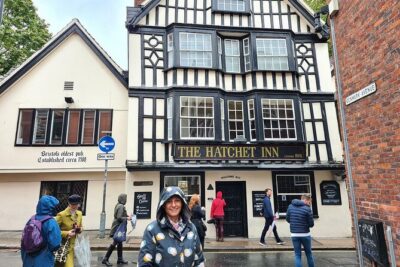
Blackbeard to Banksy – The Ultimate Walking Tour of Bristol
Read our review →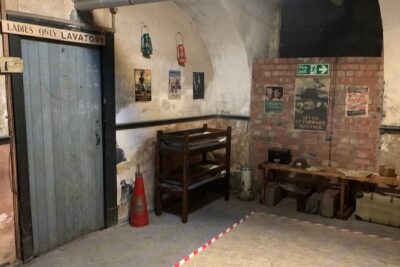
Air Raid Shelter + St. Nicholas Market Walking Tour
Read our review →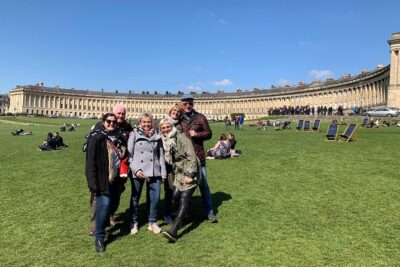
Walking Tour of Bath with Blue Badge Tourist Guide
Read our review →
Changing of the Guard Guided Walking Tour in London
Read our review →Browse the lists this tour appears in