
Reviewed · SKIP THE LINE
Skip the Line: House and Garden Admission Ticket
A quiet garden waits near Birmingham. Winterbourne House and Garden gives you a calm break from city streets, with an Edwardian Arts and Crafts villa and a botanical garden shaped by Gertrude Jekyll’s ideas. I like the restored walled garden and its crinkle-crankle wall, and I like how the grounds change with the seasons. The main drawback is that skip-the-line access may not always mean walking straight in, as a queue can still form.
This is an easygoing visit rather than a packed sightseeing tour. You can explore the house, sit on a bench, follow the woodland walk, or simply watch the borders change color. At $14.17 per person, it offers good value for a one to four hour outing, though keen gardeners will find more to study than visitors making a quick stop.
In This Review
- Key points to know before you go
- Why Winterbourne feels different from a standard Birmingham attraction
- Entering Winterbourne House and its Edwardian story
- The walled garden and its crinkle-crankle wall
- Lawns, themed borders, and places to sit
- Rock garden, woodland walk, and global plant collections
- How long to stay and when the timing matters
- The $14.17 price and the skip-the-line promise
- Access, parking, food, and practical planning
- Who will enjoy Winterbourne most
- Should you book the Winterbourne ticket?
- FAQ
- Where is Winterbourne House and Garden?
- How much does admission cost?
- How long does a visit take?
- What are the opening hours from January through February 2026?
- What are the opening hours from March through October 2026?
- Is food included with the ticket?
- Can I cancel for a refund?
Key points to know before you go
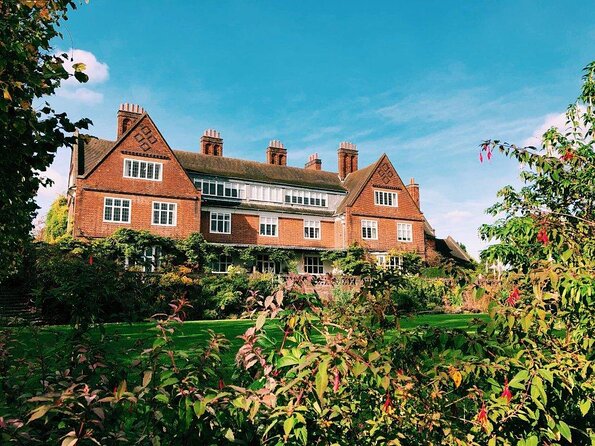
- Edwardian villa and garden in one visit: See a preserved suburban home alongside its original garden design.
- Gertrude Jekyll influence: Margaret and John Nettlefold used Jekyll’s books as guides when creating the garden.
- Strong seasonal appeal: The walled garden is especially colorful from May through October, while other areas offer interest throughout the year.
- A peaceful city escape: Lawns, benches, woodland, rock gardens, and plant collections give you plenty of space to slow down.
- Good value for a flexible visit: The $14.17 admission allows roughly one to four hours of sightseeing.
- Plan around the season: Spring flowers, summer borders, autumn color, and the garden’s plant collections each offer a different reason to return.
Why Winterbourne feels different from a standard Birmingham attraction
Winterbourne is not a grand country estate with acres of formal parkland. Its appeal is more personal. You are visiting an Edwardian suburban villa and the garden made for it, so the experience feels closer to stepping into a carefully preserved home than touring a huge public monument.
The house and garden also tell two connected stories. The building reflects the period home, while the grounds show how its owners used planting, paths, walls, and outdoor rooms to shape daily life. That combination gives you more to look at than flowers alone.
The setting makes the visit especially useful when you need a break from Birmingham’s city center. The grounds offer lawns, benches, a rock garden, woodland paths, and themed borders. You can bring a history interest, a gardening interest, or simply the wish to sit somewhere peaceful for an hour.
A 4.6 out of 5 rating from 122 reviews and a 92 percent recommendation rate suggest that the attraction delivers what it promises. The strongest praise centers on peace, beauty, staff helpfulness, and the chance to see a preserved period home without crowds pressing you along.
A few more to weigh up in Birmingham
- Entry ticket to Hoo Zoo and Dinosaur World in Telford
★ 5.0 · 591 reviews - Cadbury World Entry Ticket
★ 3.0 · 524 reviews - Birmingham Walking Tour: Canals, Victorians & Today (1:30pm)
★ 5.0 · 346 reviews
Entering Winterbourne House and its Edwardian story
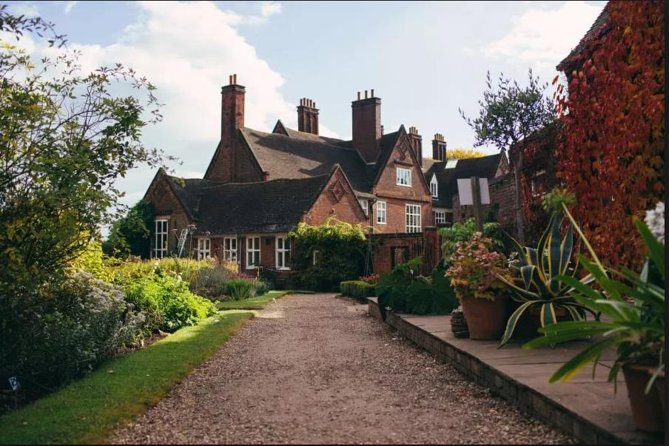
Start with the house. Winterbourne is one of Birmingham’s best surviving examples of an Edwardian Arts and Crafts suburban villa garden, and the building gives the gardens their context.
Margaret and John Nettlefold created the garden with help from the books of Gertrude Jekyll. That detail matters because Jekyll’s work helped shape the period’s approach to color, planting schemes, and the relationship between a house and its garden. You are not just looking at disconnected beds. You are seeing a planned setting made to complement a home.
The house itself is preserved as part of the experience, and you can take your time looking around. One useful advantage is that the house is not described as a crowded, fast-moving attraction. You should have room to notice details at your own pace, although the exact displays and access arrangements can vary.
The building is also a good first stop if you are visiting with family. Children may prefer the outdoor grounds, but the house gives older visitors a clear sense of the people who shaped the property. It turns a garden visit into a small history lesson without demanding a full day.
Allow about one to four hours for the entire visit. An hour can work if you want a short rest and a quick look around. Garden lovers should allow longer, particularly from May to October when the walled garden is at its most colorful.
The walled garden and its crinkle-crankle wall
The restored walled garden is one of Winterbourne’s most distinctive areas. Its crinkle-crankle wall is not a straight brick boundary, but a curving wall with a rippling shape. It adds character before you even begin studying the plants.
From May through October, this part of the garden becomes a strong reason to visit. The planting is described as a riot of rainbow shades, so you can expect the color display to change as the growing season moves along. If you want the fullest show of flowers and foliage, these months are the safest choice.
Do not rush through the beds. The pleasure here comes from seeing how the wall, borders, and planting work together. You can look for changes in color, height, and texture rather than treating the garden as one large flower photograph.
The seasonal point is important. A visit in early March can still be worthwhile, but the wisteria may not yet be in full bloom. One review noted that the wisteria was not fully open apart from the plant at the house. That is a useful warning for anyone timing a visit around one particular flower.
In other words, Winterbourne is not a one-season attraction. It offers color and interest throughout the year, but the exact display depends on when you arrive. Spring may reward you with early growth and blossom, summer brings fuller borders, and autumn can give the garden a different palette.
Lawns, themed borders, and places to sit
Beyond the walled garden, lawns are edged with striking color-themed borders. These are good areas for visitors who enjoy design as much as individual plants. The borders show how color can organize a garden, creating sections that feel deliberate rather than random.
I like that the grounds include plenty of benches. A garden visit can become tiring when every path demands another photograph and every room requires close attention. Here, you can sit down, admire the planting, and let the visit slow to its natural pace.
The clean, well-kept surroundings add to the sense of calm. One particularly favorable description called the visit quiet, peaceful, relaxing, and refreshing. That is the right expectation. Winterbourne is best enjoyed as a place to pause, not as an attraction to race through before lunch.
The lawns may also suit families because they provide a visual change from indoor rooms and narrow garden features. Still, this is a historic garden, not a dedicated play attraction. Families should come for the mix of house, plants, paths, and open areas rather than for organized entertainment.
A completely different sort of day out:
- Discovering Birmingham 2 hour Walking Tour to the Jewellery Quarter
★ 5.0 · 333 reviews - Birmingham Slogging Gangs Walking Tour with Edward Shelby
★ 4.5 · 306 reviews - Birmingham City Centre Daily Walking Tour (10:30am & 2pm)
★ 5.0 · 265 reviews - SEA LIFE Birmingham Admission Ticket
★ 3.0 · 218 reviews
Rock garden, woodland walk, and global plant collections
The original sandstone rock garden gives the visit another layer. Its interest comes from structure as well as flowers, with stone providing a different setting for plants than the formal borders.
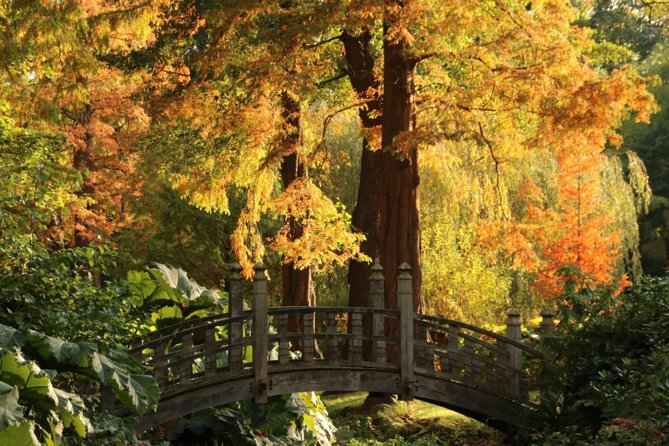
The woodland walk is a pleasant contrast to the open lawns. It takes you through Gunnera leaves and rhododendron displays, giving the garden a cooler, more enclosed feel. These changes in scale make the visit more satisfying. You move from the ordered walled garden to broad lawns, then into rock and woodland areas.
The botanical collection also reaches well beyond Britain. Winterbourne includes plants from China, North and South America, and alpine regions around the world. You do not need specialist knowledge to enjoy this, but plant enthusiasts can spend extra time comparing the different growing styles and habitats represented.
The supplied information does not promise labels, guided interpretation, or a formal tour. If you want detailed botanical explanations for every plant, check what information is available on the day. The strength here is the range of settings and collections, not a guaranteed lecture or guided walk.
How long to stay and when the timing matters
The advertised duration is approximately one to four hours. That wide range is helpful because you can fit Winterbourne into a larger Birmingham day rather than treating it as an all-day commitment.
Plan for around an hour if you want a quick look at the house and a walk through the main garden. Choose two hours if you want to pause on benches, inspect the walled garden, and follow the woodland walk without hurrying.
Allow closer to four hours if you are a serious gardener, photographing seasonal displays, or visiting with a group that prefers a slower pace. The grounds have enough separate areas to reward a relaxed visit, especially when the borders are in strong bloom.
Opening hours vary by season:
- From January 13 to February 28, 2026, the hours are 10:30 a.m. to 3:30 p.m. daily.
- From March 1 to October 31, 2026, the hours are 10:30 a.m. to 4:30 p.m. daily.
The longer opening period from March through October gives you more time for the garden. Even so, check the date and hours before setting out, especially if you are planning a late arrival. The grounds are not presented as a late-evening attraction.
Winterbourne is booked an average of 19 days ahead, so advance purchase is sensible during popular periods. The mobile ticket is convenient, and confirmation arrives when you book.
The $14.17 price and the skip-the-line promise
At $14.17 per person, the admission is reasonably priced for access to both the house and the garden. The value improves if you stay for two or three hours, use the benches, and take your time with the seasonal areas.
It is less compelling if you only want a very brief look at flowers. In that case, your value depends on how much you care about the Edwardian house, the garden design, and the peaceful setting.
The ticket is sold as a way to avoid waiting. That can help, but you should keep expectations practical. One account described still joining a queue despite booking the skip-the-line option. Queue conditions may vary, yet the wording should not make you assume instant entry at every visit.
The experience is offered in English, though this is an admission ticket rather than a guided tour. You are paying for entry, not for a named guide or a scheduled talk. That suits independent visitors who prefer to explore at their own speed.
The group capacity is limited to a maximum of 30 people for the activity. That does not guarantee an empty garden, but it suggests a more manageable experience than a large organized excursion.
Access, parking, food, and practical planning
Most people can take part, and the grounds include some wheelchair and pushchair access. The access is not complete across every area, so you should expect that some paths or sections may be easier than others.
Parking can be difficult because the car access is rather narrow. If you are driving, allow extra patience and do not assume that parking will be effortless. This is one of the clearest practical drawbacks in the available information.
Food and drinks are not included in the admission price unless specifically stated. Plan accordingly, particularly if you are staying for several hours. The ticket covers entry, so any refreshments should be treated as a separate expense.
The mobile ticket makes arrival straightforward, but keep the confirmation available on your phone. You can book in advance, and free cancellation applies if you cancel at least 24 hours before the experience start time. Changes or cancellations inside that 24-hour window are not accepted for a refund.
Who will enjoy Winterbourne most
I would recommend Winterbourne to keen gardeners first. The Jekyll connection, themed borders, rock garden, woodland walk, and international plant collections offer enough variety to hold your attention beyond a quick stroll.
History buffs should also enjoy the visit because the house and garden show how an Edwardian suburban property was created and used. You get a sense of domestic life and garden design together, rather than visiting a house with no outdoor context.
Families can make a good day of it if they are comfortable with a quiet attraction. The grounds provide open lawns, changing scenery, and outdoor space, while the house adds a cultural stop. Just remember that this is not a high-energy activity built around games or rides.
It also suits anyone who wants somewhere peaceful near the city. One visitor considered a 45-minute walk from a hotel worthwhile, which gives you a sense of how strongly the calm setting can appeal. The attraction works well when your main goal is rest, fresh air, and a change of pace.
You may want to skip it if you dislike gardens, have very limited time, or need fully step-free access across every section. You may also be disappointed if you visit solely for wisteria and arrive before it has reached full bloom.
Should you book the Winterbourne ticket?
Book it if you want an affordable, quiet Birmingham outing with real character. The best reasons are the Edwardian house, the garden’s Gertrude Jekyll connection, the unusual crinkle-crankle wall, and the mix of formal borders, rock planting, and woodland.
Choose a visit between May and October if colorful planting is your main aim. Go at another time if you prefer a quieter garden and are happy to accept that particular flowers may not be in season.
The skip-the-line ticket is useful for planning, but do not treat it as a guarantee of no queue. For $14.17, the house and grounds offer solid value, especially if you stay long enough to sit, wander, and notice the garden’s changing moods.
FAQ
Where is Winterbourne House and Garden?
Winterbourne House and Garden is in Birmingham, England.
How much does admission cost?
The listed price is $14.17 per person.
How long does a visit take?
The visit takes approximately one to four hours, depending on how much time you spend in the house and garden.
What are the opening hours from January through February 2026?
From January 13 through February 28, 2026, it is open daily from 10:30 a.m. to 3:30 p.m.
What are the opening hours from March through October 2026?
From March 1 through October 31, 2026, it is open daily from 10:30 a.m. to 4:30 p.m.
Is food included with the ticket?
No. Food and drinks are not included unless specifically stated.
Can I cancel for a refund?
Yes. You can cancel for a full refund up to 24 hours before the experience start time. Cancellations or changes made less than 24 hours before the start time are not accepted for a refund.
Just added in Birmingham
- Fun, Flexible Treasure Hunt Around Birmingham with Cryptic Clues & Hidden Gems★ 5.0 · 167 reviews
- Birmingham Gangs Nighttime Historical Walking Tour with Pub Stops★ 5.0 · 53 reviews
- Jewellery Quarter of Birmingham: A Walking Adventure★ 4.5 · 2 reviews
- Taste of Shrewsbury Food and Drink Tour with Guide★ 5.0 · 22 reviews
- Guided Tour of Street Art in Birmingham★ 5.0 · 2 reviews
- Pride History of Birmingham Tour★ 5.0 · 3 reviews
- Private Birmingham Ghosts and Gallows Walking Tour★ 5.0 · 5 reviews
- Birmingham Ghost Hunt: Haunted Self-Guide Tour & Quest★ 4.5 · 37 reviews
Skip the Line, compared.

Skip the Line Tower of London & Westminster Tour and River Cruise
Read our review →
Skip the Line: Liverpool Beatles Museum – The perfect tribute to the Beatles
Read our review →
Skip-the-Line in The National Museum of Popular Music Ticket
Read our review →
Skip the Line Parliament & Westminster Abbey Fully-Guided Tour
Read our review →
Skip the Line Westminster Abbey & Changing of The Guard Tour
Read our review →
Westminster Abbey Private Tour Oxford PhD Historian Skip the Line
Read our review →
Full Day Private Walking Tour with Skip-the-Line Tower of London
Read our review →Browse the lists this tour appears in