

Reviewed · WALKING TOURS
Jewellery Quarter of Birmingham: A Walking Adventure
Birmingham’s past is best read on foot. This private walk links the Jewellery Quarter with the city center, giving you a close look at the area’s jewellers, industry, churches, public squares, and social story. I like the personal guide service and the chance to see several central landmarks without joining a large group. I also like that the route includes distinctive places such as the Coffin Works Museum and Button Factory food mall.
The main consideration is price. At $260.28 per person for about two hours, this is a serious outlay, especially for a small private group. You also need to check what your booking includes inside the named sites, since the walking stops themselves are listed as free admissions.
In This Review
- Five useful things to know before you book
- Why Birmingham’s Jewellery Quarter makes a good walking tour
- Starting in Centenary Square
- Entering the Jewellery Quarter
- The Coffin Works Museum and Button Factory
- St. Paul’s Church and the Jewellery Quarter story
- Birmingham Cathedral in 15 minutes
- Victoria Square and Birmingham’s civic center
- Chamberlain Square as the final stop
- What the private format is really worth
- Who should book this Birmingham walk?
- Cancellation and planning advice
- Should you book Jewellery Quarter of Birmingham: A Walking Adventure?
- FAQ
- Where does the tour start?
- Where does the tour end?
- How long does the walking tour last?
- Is this a private tour?
- What price is listed for the experience?
- Are admission tickets included for the listed stops?
- Is the tour near public transportation?
- What is the cancellation policy?
Five useful things to know before you book
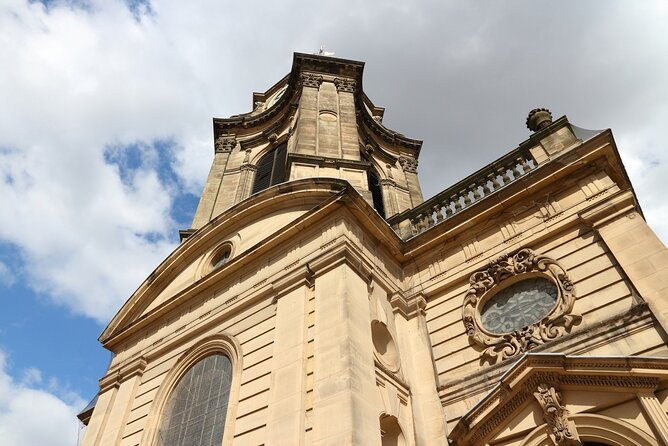
- The route begins in Centenary Square and ends in Chamberlain Square, so you finish close to major cultural sights in central Birmingham.
- The Jewellery Quarter is the focus, with attention to traditional crafts, famous jewellers, industry, and social history.
- The tour is private, meaning only your own group participates and the guide can give you more direct attention.
- Vicky received especially strong praise for bringing the area to life and explaining its history across many subjects.
- The advertised highlights include the Coffin Works Museum, Button Factory food mall, and St. Paul’s Church, alongside the main city-center squares.
- Free cancellation is available up to 24 hours before the start time, which gives you useful flexibility when planning.
Why Birmingham’s Jewellery Quarter makes a good walking tour
Birmingham is often introduced through its shopping streets, canals, and grand civic buildings. The Jewellery Quarter adds a different side of the city. Here, the focus turns to skilled making, workshops, trade, churches, factories, and the people who built their lives around local industry.
I like this kind of tour because the subject is specific. You are not simply walking past old buildings while hearing a broad account of Birmingham. The guide can connect the streets to the work carried out there, the businesses that shaped the area, and the social changes that followed.
The private format matters. A group of only your own companions should make it easier to ask about a building, pause for an explanation, or steer the conversation toward industrial history, architecture, or local culture. That is a better setup than trying to hear a guide over a large crowd.
The route lasts about two hours. That is long enough for a useful introduction, but not long enough to cover every corner of the Jewellery Quarter at a slow pace. I would treat it as a focused orientation rather than a complete examination of the district.
More Walking Tours in Birmingham
- Birmingham Walking Tour: Canals, Victorians & Today (1:30pm)
★ 5.0 · 346 reviews - Discovering Birmingham 2 hour Walking Tour to the Jewellery Quarter
★ 5.0 · 333 reviews - Birmingham Slogging Gangs Walking Tour with Edward Shelby
★ 4.5 · 306 reviews
Starting in Centenary Square

The meeting point is Centenary Square, Birmingham B1. This large public space is surrounded by important civic and cultural buildings, and it gives the walk a clear city-center beginning.
The square is a practical place to start because it helps you get your bearings before the tour moves toward the Jewellery Quarter. It also sets up the wider story of Birmingham. The city’s public buildings and cultural spaces show one side of Birmingham, while the workshops and industrial streets of the Jewellery Quarter show another.
About 25 minutes are allocated here, with no admission charge. That time should give your guide room to explain the square and point out its landmarks without turning the opening into a rushed roll call of buildings.
One point to keep in mind is that Centenary Square is a public urban space, not a museum visit. If you prefer a tour packed with indoor collections, this opening section may feel more like orientation than an attraction in its own right.
Entering the Jewellery Quarter
The heart of the experience is the Jewellery Quarter, where about 30 minutes are assigned to exploring the district itself. The area is presented as a place of artisan craftsmanship and bespoke treasures, but the useful part of the visit is the story behind that image.
You will hear about Birmingham’s famous jewellers and the industries that made the quarter important. The tour also covers social history, so the emphasis is not limited to attractive shopfronts or finished pieces. You should come away with a better sense of how work, trade, and everyday life were linked in this part of the city.
The Jewellery Quarter is also where a local guide can add the most value. A map can show you streets and buildings. A guide can explain why the district developed as it did, how its trades shaped Birmingham, and how the area became part of the city’s identity.
The time allowance is fairly short. You will not have hours to browse every workshop or stop at every business. If you want to shop for jewellery, that is best treated as an extra plan before or after the walk rather than the central purpose of the tour.
The Coffin Works Museum and Button Factory
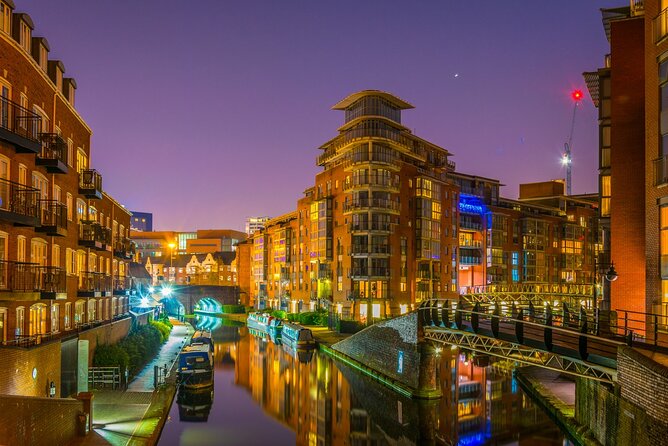
The Coffin Works Museum is one of the more unusual names connected with the tour. Its inclusion gives the experience a welcome break from the expected jewellery story. It suggests that the quarter’s industrial past involved more than precious metals and display cases.
A place associated with coffin making can help you see how specialist businesses operated and how traditional production formed part of ordinary commercial life. The supplied details identify the museum as a highlight, but they do not specify the exact admission arrangement or the amount of time spent inside. I would confirm that point before booking if entering the museum is essential to you.
The Button Factory food mall is another useful contrast. It connects the old industrial setting with present-day food and social use. The name points to the area’s manufacturing past, while the food mall gives you a modern reason to spend time there.
Again, do not assume that a meal is included. The information describes it as a place to see, not as a dining package. You may find it a convenient spot for food after the walk, but the tour itself is described as a sightseeing experience.
A completely different sort of day out:
- Entry ticket to Hoo Zoo and Dinosaur World in Telford
★ 5.0 · 591 reviews - Cadbury World Entry Ticket
★ 3.0 · 524 reviews - Birmingham City Centre Daily Walking Tour (10:30am & 2pm)
★ 5.0 · 265 reviews - SEA LIFE Birmingham Admission Ticket
★ 3.0 · 218 reviews
St. Paul’s Church and the Jewellery Quarter story
St. Paul’s Church is named among the main places featured on the walk. It provides a quieter architectural stop and helps widen the story beyond commerce and manufacturing.
Churches often reveal how a district’s working population lived, worshipped, and organized community life. Here, the value is not only the building itself. It is the chance to connect the Jewellery Quarter’s businesses and workers with the social setting around them.
The tour information does not give a separate time allocation for St. Paul’s Church. It is also separate from the listed Birmingham Cathedral stop, so you should not treat the two names as interchangeable. If church interiors matter to you, ask the provider whether the visit is exterior commentary or includes entry.
This is a good example of why a guide’s skill matters. Vicky was praised for explaining many aspects of the area and for making its past feel alive. That kind of broad command is especially helpful when a tour moves from manufacturing to religion, public life, and social change.
Birmingham Cathedral in 15 minutes
The route also includes Birmingham Cathedral, with roughly 15 minutes set aside. This is a shorter stop than the main square visits, so expect a concise look rather than a long interior examination.
The cathedral offers a change of mood. After the industrial subject of the Jewellery Quarter, a church setting gives you a calmer place to consider Birmingham’s architectural and civic development. The description presents it as a peaceful retreat in the middle of the city, which makes it a useful pause in the route.
Because the admission is listed as free, you are not paying an extra entrance charge for this stop. Still, 15 minutes passes quickly. Your guide may focus on the key architectural or historical points rather than giving you time for a detailed visit.
Victoria Square and Birmingham’s civic center

Victoria Square receives about 25 minutes and is described as the heart of Birmingham. The square is suited to readers who enjoy architecture, public spaces, and the way a city presents itself through its civic center.
This part of the route helps you compare the formal face of Birmingham with the practical working character of the Jewellery Quarter. You move from specialist trades and local industry to a central space shaped by public buildings, civic activity, and city life.
There is no admission fee, so the stop is about interpretation and setting. Your guide’s explanation should help you notice details you might otherwise pass without a second look. I would not expect a long free period here, since the square is one part of a route that covers several districts and landmarks.
Chamberlain Square as the final stop
The walk ends in Chamberlain Square, Birmingham B3, after about 25 minutes there. This is a sensible finishing point because it leaves you in the city center, near cultural institutions and architectural sights.
The square is described as a historical meeting point surrounded by notable buildings. For you, the practical advantage is simple: you finish somewhere useful rather than being returned to an isolated starting point. You can continue exploring central Birmingham from here, although the tour details do not specify which attractions are closest or whether entry to them is included.
Ending at Chamberlain Square also gives the walk a clear shape. You begin in Centenary Square, explore the Jewellery Quarter, pass through key religious and civic places, and finish among central cultural sights.
The route may feel less linear than a tour devoted only to the Jewellery Quarter. That is not necessarily a flaw. It gives you more city context, but it also means less time on the quarter’s individual streets.
What the private format is really worth
The advertised cost is $260.28 per person. For a two-hour walk, that is expensive if you are booking for one or two people and judging value by duration alone.
The calculation changes if you are sharing the cost with a larger private group or using a group discount. A private tour can also be worthwhile when you want a guide to focus on your interests, keep the pace comfortable, and answer questions without competing with strangers.
I would book this for the service and interpretation, not for included attractions or a packed schedule. The listed stops have free admission, and there is no clear indication that meals, paid museum entry, or jewellery purchases are covered.
The strongest evidence for the tour’s value comes from the praise for Vicky. Her depth of understanding and ability to discuss many sides of the area were singled out. That is exactly what you need in a short history walk. A weak guide would turn the route into a series of names and dates. A strong guide can connect the Coffin Works, the church, the jewellers, and the public squares into one readable story.
Who should book this Birmingham walk?
I would recommend it most to first-time visitors who want a structured introduction to Birmingham and to people with a clear interest in industry, architecture, crafts, or local social history.
It also suits families or friends who prefer a private format. You do not need to match the pace or interests of a larger group, and most people can participate. The tour is near public transportation, which makes reaching the start point easier.
It may be less suitable if you want an extended museum visit, a jewellery-making workshop, or a shopping experience. The two-hour schedule covers several places, so the emphasis is on walking and explanation rather than hands-on activity.
The route includes a fair amount of city-center movement. The supplied details do not describe the walking surface, stairs, or exact accessibility arrangements, so anyone with specific mobility needs should ask the provider before booking. The note that most people can participate is encouraging, but it is not a promise that every section suits every mobility requirement.
A mobile ticket is provided, and confirmation arrives at booking. Those details make the practical side fairly simple. You should still arrive at Centenary Square with the meeting point and local start time clear, since the cancellation cut-off is based on Birmingham time.
Cancellation and planning advice
Free cancellation is available when you cancel at least 24 hours before the experience begins. If you cancel later, the amount paid is not refunded, and changes made within that same 24-hour window are not accepted.
I would decide your party size before booking because the private format and group discount can affect the value. If you are booking for a group, compare the total cost with the per-person price rather than judging the experience only by the headline figure.
Allow extra time around the two-hour walk if you want to eat at the Button Factory food mall, browse the Jewellery Quarter, or continue exploring from Chamberlain Square. The tour itself is focused, so those additions work best before or after it.
Should you book Jewellery Quarter of Birmingham: A Walking Adventure?
Book it if you want a private, guide-led introduction to Birmingham’s industrial and social story, and if your group can share the cost. The mix of the Jewellery Quarter, Coffin Works Museum, St. Paul’s Church, Birmingham Cathedral, and central squares gives the walk a useful range.
I would be more cautious if you are watching your budget or expect extensive museum entry for $260.28 per person. Confirm the exact indoor visits, ask how the route handles your interests, and check the group discount before paying.
For the right group, the personal attention can make a short route worthwhile. The praise for Vicky suggests that the guide is the key part of the experience. If you value clear local explanation more than a long list of included admissions, this walk is a solid way to get oriented in Birmingham.
FAQ
Where does the tour start?
The tour starts at Centenary Square, Birmingham B1, United Kingdom.
Where does the tour end?
The tour ends at Chamberlain Square, Birmingham B3, United Kingdom.
How long does the walking tour last?
The tour lasts approximately two hours.
Is this a private tour?
Yes. Only your own group participates in the activity.
What price is listed for the experience?
The listed price is $260.28 per person. Group discounts are available.
Are admission tickets included for the listed stops?
The itinerary lists the admission ticket as free for Centenary Square, the Jewellery Quarter, Birmingham Cathedral, Victoria Square, and Chamberlain Square. The supplied details do not clarify the admission arrangement for the Coffin Works Museum.
Is the tour near public transportation?
Yes. The experience is described as being near public transportation.
What is the cancellation policy?
You can cancel at least 24 hours before the start time for a full refund. Cancellations or changes made less than 24 hours before the start time are not accepted for a refund.
Just added in Birmingham
- Fun, Flexible Treasure Hunt Around Birmingham with Cryptic Clues & Hidden Gems★ 5.0 · 167 reviews
- Birmingham Gangs Nighttime Historical Walking Tour with Pub Stops★ 5.0 · 53 reviews
- Taste of Shrewsbury Food and Drink Tour with Guide★ 5.0 · 22 reviews
- Guided Tour of Street Art in Birmingham★ 5.0 · 2 reviews
- Pride History of Birmingham Tour★ 5.0 · 3 reviews
- Private Birmingham Ghosts and Gallows Walking Tour★ 5.0 · 5 reviews
- Birmingham Ghost Hunt: Haunted Self-Guide Tour & Quest★ 4.5 · 37 reviews
- Private Birmingham Arrival Transfer – Airport to Hotel / Accommodation★ 5.0 · 1 review
Walking Tours, compared.
Oxford University Walking Tour With University Alumni Guide
Read our review →
Tour for Muggles The Ultimate Harry Potter Walking Tour in London
Read our review →
Cambridge University Walking Tour by Alumni™ Kings College Option
Read our review →
Blackbeard to Banksy – The Ultimate Walking Tour of Bristol
Read our review →
Air Raid Shelter + St. Nicholas Market Walking Tour
Read our review →
Walking Tour of Bath with Blue Badge Tourist Guide
Read our review →
Changing of the Guard Guided Walking Tour in London
Read our review →Browse the lists this tour appears in