
Reviewed · WALKING TOURS
Secrets of the London Underground Small Group Walking Tour
The Tube has secrets above ground. This 2.5-hour tour links famous stations, old railway stories, and London streets in a way that makes daily commuting feel surprisingly new. I like the focus on Victorian engineering and the chance to hear about abandoned stations that most people pass without noticing. The guides, including John, Angela, and Peter on different departures, are praised for clear storytelling and good humor. The catch is simple: this is not a behind-the-scenes station tour, and you pay for your own Tube rides.
You begin at Baker Street and finish at Westminster, moving through central London by foot and Underground. I also like the short stops, which keep the pace lively and let you connect railway history with places such as Oxford Circus, Piccadilly Circus, and the Thames Embankment. Still, allow for many stairs, outdoor walking, and possible rain. If you expected secret platforms or restricted tunnels, this experience may feel less dramatic than its title suggests.
In This Review
- Key points to know before booking
- Why the London Underground makes a fine walking tour
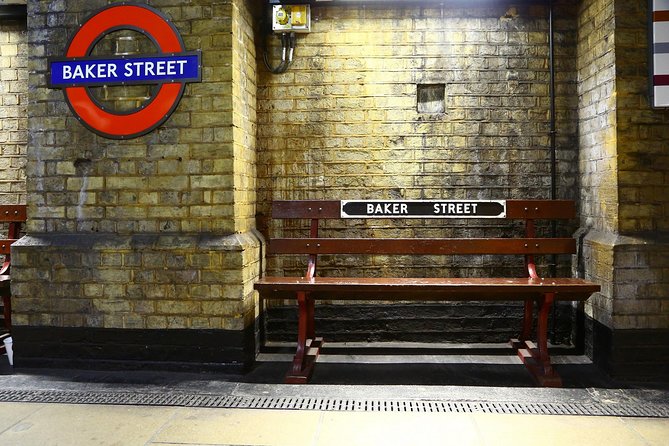
- Baker Street and the first Underground railway
- Oxford Circus and the modern Tube beneath Oxford Street
- Down Street and the stations London left behind
- Piccadilly Circus and the Underground as city infrastructure
- Victoria Embankment and the river above the rails
- Westminster Station and the 1868 beginning of the District Railway
- What the guides add to the experience
- The biggest limitation: this is not a Hidden London access tour
- Is $41.13 good value?
- Who should book this Tube history walk?
- Should you book the Secrets of the London Underground tour?
- FAQ
- Where does the tour begin?
- What time does the tour start?
- Where does the tour finish?
- How long does the experience last?
- Is public transport included?
- How many stops are included?
- Is this a behind-the-scenes tour of abandoned stations?
- Is the tour suitable for people with reduced mobility?
- What is the cancellation policy?
Key points to know before booking
- Baker Street begins the story in 1863: You visit one of the original Underground stations linked to the world’s first underground railway.
- Six central London stops in 150 minutes: The route includes Baker Street, Oxford Circus, Green Park, Piccadilly Circus, Victoria Embankment, and Westminster.
- The Tube fare is extra: Bring a contactless card, Oyster Card, or suitable Travel Card. A Zones 1 to 2 day card is advised in the tour details.
- History matters more than access: You hear about construction, politics, wartime use, haunted stations, and abandoned platforms, but you should not expect a restricted-area tour.
- Guides make a real difference: John is praised for his enthusiasm and lively pace, while Angela and Peter receive strong marks for clear explanations, photographs, humor, and historical anecdotes.
- Plan for steps and wet weather: This is a walking tour with many stairs, and it is not suitable for people with reduced mobility.
Why the London Underground makes a fine walking tour
The London Underground is easy to use but easy to overlook. You tap in, follow the colored line, change trains, and get on with your day. This tour asks you to pause and consider how such a huge system was built before modern machinery, computers, or today’s safety technology.
That change in viewpoint is the main reason to book. You are not simply riding from one attraction to another. You are learning how railways changed London, how stations were placed beneath busy streets, and how the network took on different jobs during war and peace.
The experience is part walking tour and part Tube journey. That distinction matters. You spend time outside stations, moving between locations, then use the Underground to reach the next part of the story. The route is designed for people who enjoy history, transport, architecture, and the odd tale of a station left behind.
The maximum group size is 25. That is smaller than a large sightseeing coach group, though it is not a private tour. You should be able to hear the guide, but staying close is still important in busy central London.
More Walking Tours in London
- Tour for Muggles The Ultimate Harry Potter Walking Tour in London
★ 5.0 · 4,684 reviews - London Jack The Ripper Guided Walking Tour
★ 5.0 · 3,131 reviews - Changing of the Guard Guided Walking Tour in London
★ 5.0 · 1,793 reviews
Baker Street and the first Underground railway
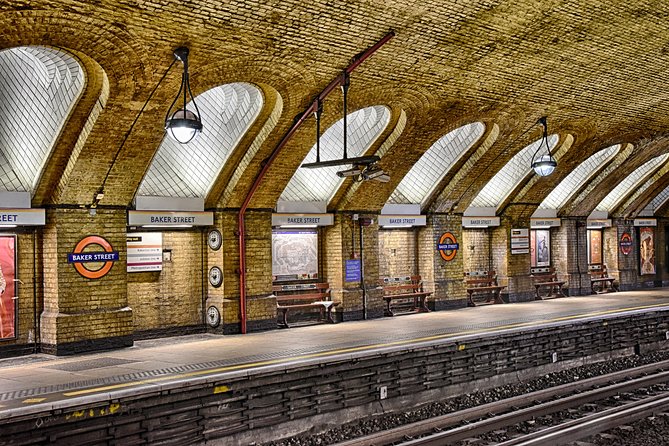
The tour starts at Baker Street Underground Station at 1:00 pm. This is a fitting place to begin because Baker Street is tied to the Metropolitan Railway, which opened in 1863 as the world’s first underground railway.
That date gives the whole tour its backbone. London’s first underground trains were built in a very different age, before the advanced technology that now makes Tube travel seem routine. At Baker Street, the guide explains how the early system was created and why building railways beneath a crowded city was such a major task.
You get about 10 minutes at this stop. That is enough for an introduction and some historical context, but not enough for a long station inspection. Admission is not separately included, although the tour takes place around the Underground system rather than offering special access.
I find Baker Street useful as a starting point because it frames the Tube as a feat of civil engineering, not just a transport map. If you have ridden the Underground for years, this first stop can change how you see the stations you use every day.
Oxford Circus and the modern Tube beneath Oxford Street
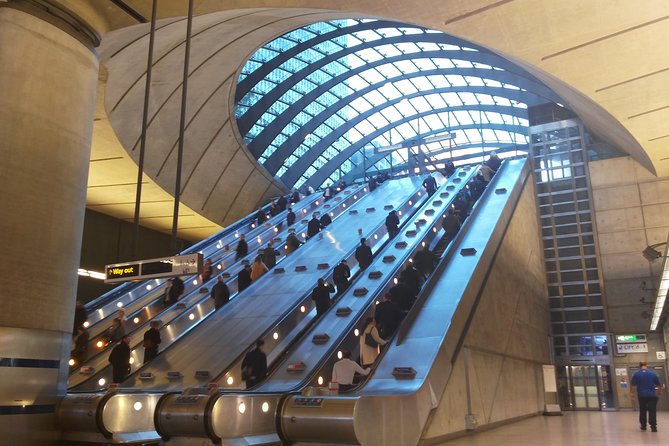
From Baker Street, the tour continues toward Oxford Street and Oxford Circus Station. Here the story moves forward into the 20th century, with attention to the Victoria line and the station’s construction.
The initial Walthamstow to Victoria section began construction in 1962. Cross-platform interchange was planned at Oxford Circus, and the Victoria line platforms opened on March 7, 1969. The station formed part of the second extension from Warren Street to Victoria.
This stop shows that the Underground did not finish its work in the Victorian era. London continued adding lines and improving connections long after the first railway opened. The contrast between the 1860s system and the late 1960s Victoria line helps you understand how the network grew in layers.
Again, the scheduled stop is about 10 minutes. You should expect a focused explanation rather than a long architectural visit. The value comes from hearing how engineering decisions affect the way you change trains today.
Your own Tube fare is needed for the journey. The tour does not supply a Travelcard. The practical choice is to bring a contactless card, Oyster Card, or valid Travelcard, with Zones 1 to 2 recommended in the tour information. Check that your payment method is ready before the 1:00 pm start, since the group cannot pause for every person to arrange transport.
Down Street and the stations London left behind
At Green Park, the tour introduces Down Street Station, one of the most intriguing stops on the route. Down Street opened in 1907 under the Great Northern, Piccadilly and Brompton Railway. It later served the Piccadilly line and sat between Dover Street, now Green Park, and Hyde Park Corner.
The station closed in 1932. Its lack of use, along with the closeness of other stations, made it unnecessary. This is the kind of practical railway decision that tells you a lot about London. A station could be carefully built and still lose its purpose when nearby stops offered better service.
Down Street also gives the guide a chance to discuss disused and haunted stations across the Underground network. You should treat this as historical storytelling, not a promise of access to abandoned platforms. The tour does not advertise restricted areas or secret tunnels.
This part is likely to appeal most to history buffs. You hear about the parts of the Tube that no longer appear on a normal journey, including stations that survive mainly through records, photographs, and stories. If you want a formal behind-the-scenes experience, though, this stop may feel too brief.
A completely different sort of day out:
- Stonehenge, Windsor Castle, and Bath from London
★ 4.5 · 18,662 reviews - London Big Bus Hop-On Hop-Off Tour with Optional River Cruise
★ 3.5 · 10,803 reviews - London Small Group Tour of Historical Pubs
★ 5.0 · 10,422 reviews - Stonehenge, Windsor Castle and Bath with Pub Lunch in Lacock
★ 4.5 · 7,402 reviews
Piccadilly Circus and the Underground as city infrastructure

Piccadilly Circus is one of central London’s best-known places, but the station beneath it has its own layered story. The station opened on March 10, 1906, for the Baker Street and Waterloo Railway, now the Bakerloo line. The Great Northern, Piccadilly and Brompton Railway platforms, now part of the Piccadilly line, opened later that same year, on December 15.
This is a useful stop for understanding how separate railway companies shaped the Underground. London’s system was not built as one neat project. Different companies developed different lines, and the network gradually became the connected system you use now.
The tour gives each stop roughly 10 minutes, so the guide has to select the most useful points. The strongest guides seem to be those who can turn dates and line names into a clear story. John is praised for his enthusiasm, lively pace, and ability to keep the group moving. Peter is praised for historical anecdotes and humor, while Angela used photographs to make construction, politics, and wartime events easier to picture.
The route also shows why a walking tour can work better than a standard Tube ride. You connect the station’s underground function with the busy London streets above it. The experience is not just about platforms and trains. It is about how transport helped shape the city around them.
Victoria Embankment and the river above the rails
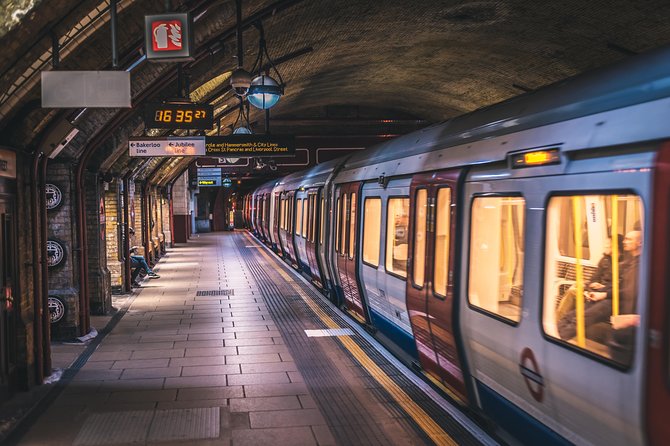
The next stop is Embankment Station, near Victoria Embankment along the north bank of the Thames. The Embankment itself was developed in the 19th century, reclaiming marshy land from the riverbank.
That setting adds another piece to the larger story. London’s transport system was built alongside major changes to the riverfront, roads, and public spaces. The city above ground was being reshaped at the same time that railways were being pushed below it.
This is also one of the places where weather can affect the experience. Much of the tour involves walking between stations, and one particularly wet departure left the route feeling harder than expected. Bring an umbrella or waterproof jacket, especially since the tour operates through much of the year.
The 10-minute stop is not designed as a full Thames sightseeing visit. You are there to connect the Embankment and the station with the city’s wider development. If you are hoping for long photo stops, you may find the pace quick.
Westminster Station and the 1868 beginning of the District Railway
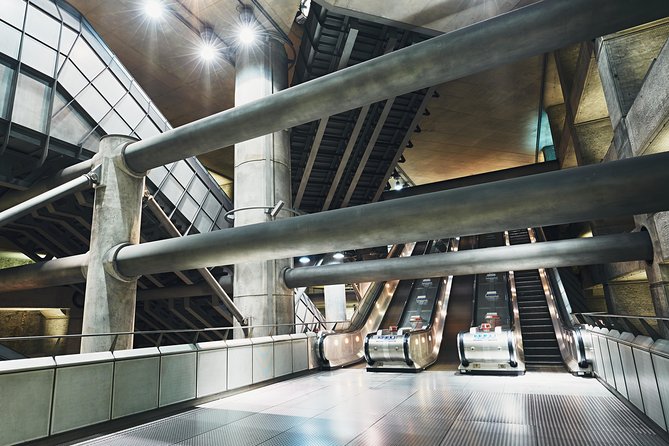
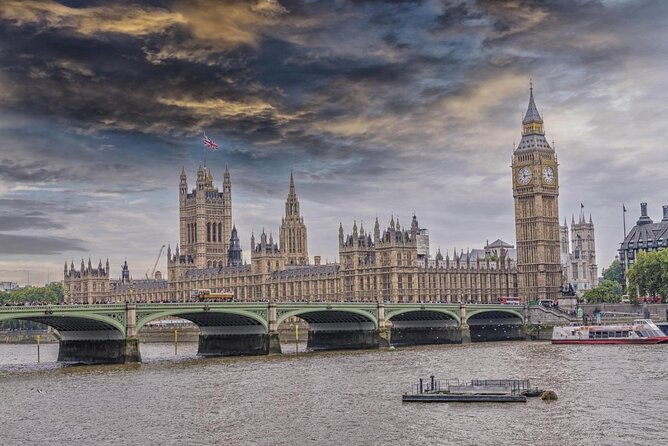
The tour ends at Westminster Tube Station, close to Bridge Street, after about two and a half hours. Westminster is another excellent place to finish because the station’s story reaches back to December 24, 1868, when it opened as Westminster Bridge under the steam-operated District Railway.
The first section of that railway ran from South Kensington. Access to the station originally came through a passageway from Bridge Street and a pedestrian subway beneath the road.
By ending here, the tour brings together several themes: early steam railways, the growth of central London, the engineering problems of underground construction, and the way stations have changed as the city grew around them. The final stop is listed as free admission, but the tour does not provide a special station ticket or transport pass.
Westminster is a convenient finish for continuing your day, but the tour does not include a return to Baker Street. You should plan your evening from Westminster and keep your Tube payment method available if you need to continue by rail.
What the guides add to the experience
The strongest part of this tour is the guide. The subject includes many dates, railway companies, line names, and construction details. A flat recital of facts would be hard work. A good guide makes those details useful.
John receives especially strong praise for his enthusiasm and clear connection between the Tube and London’s past. His lively pace suits a route with several stations and transfers. He is also credited with keeping the group interested without letting the tour drag.
Angela’s use of photographs adds visual context, especially for construction, politics, and the Underground’s World War II experience. Peter is praised for his historical anecdotes and sense of humor. The exact guide is not guaranteed, but these comments show what to value: clear speech, good pacing, visual aids, and a feel for the people in the group.
You should not assume every departure will feel identical. Much depends on the guide’s style and the size of the group. Still, the repeated praise for the staff is a strong reason to consider the tour if you prefer a human explanation to reading station plaques.
The biggest limitation: this is not a Hidden London access tour
The name may lead you to expect secret rooms, closed platforms, or entry into disused stations. That is not what this experience promises in practical terms.
You hear about abandoned and haunted stations, and you visit locations connected to old lines and former stations. You also learn how the system was built and used. But much of the time is spent walking and taking scheduled Tube journeys, not entering normally closed areas.
That difference affects value. If you already know a great deal about the Underground, the material may feel familiar. One participant found the content interesting but not new, and felt the cost was high because several Tube rides came out of pocket. That is a fair concern.
I would book this for interpretation, not access. You are paying for the guide’s organization, historical explanation, and route design. You are not paying for a secret tunnel visit.
Is $41.13 good value?
At $41.13 per person, the price is reasonable only if you want a guided history walk and do not mind paying separately for public transport. The tour lasts about 150 minutes and covers six stops, so the cost works out to a useful half-day introduction to the Underground’s past.
The extra fare weakens the value. The tour requires a contactless card, Oyster Card, or Travelcard, and a Zones 1 to 2 day card is advised. Since the route uses several Tube journeys, calculate that additional expense before booking.
I would compare this tour with the cost of a normal sightseeing activity. You are getting a specialist subject and a guide who can connect railway engineering with London’s streets. You are not getting entry tickets to attractions, a supplied day pass, or a private group.
The rating of 4.4 from 38 reviews suggests a generally positive experience, with a few clear reservations. The praise centers on the guides and the facts shared. The complaints center on the walking, the wet-weather risk, the cost of transport, and the gap between the tour name and expectations of secret access.
Who should book this Tube history walk?
I would recommend it to you if:
- You enjoy railway history, engineering, architecture, or urban development.
- You have used the Tube before and want to understand how it came to be.
- You like walking tours with regular changes of scene.
- You enjoy stories about closed stations, wartime use, and the politics of construction.
- You are comfortable with stairs and a brisk route.
- You want a local London subject rather than a standard landmark tour.
I would be cautious if you have reduced mobility, dislike stairs, or want a slow-paced sightseeing walk. The tour includes many steps and is not suitable for people with reduced mobility.
I would also choose something else if you expect to go inside abandoned stations. This tour discusses those places, but it is not advertised as a restricted-access experience.
The tour operates on Tuesdays, Thursdays, and Sundays from April through March, except December 24 to 26 and January 1. Confirmation arrives when you book, and free cancellation is available up to 24 hours before the start time. A minimum number of participants is required, so a departure could be replaced or refunded if that number is not met.
Should you book the Secrets of the London Underground tour?
Book it if you want the story behind the Tube more than a collection of secret rooms. The Baker Street beginning, the disused Down Street story, the Victoria line history, and the Westminster finish create a clear arc through London’s transport past.
The best reason to go is the guide. John, Angela, and Peter are praised for making technical material lively, clear, and memorable. The main warning is equally clear: bring your own transport payment, prepare for steps and weather, and do not confuse a history walk with a behind-the-scenes access tour.
For a first look at London’s Underground past, I think the tour is worthwhile. For the best value, book it when you are already planning to spend time in central London, so the Westminster finish and included walking route fit naturally into your day.
FAQ
Where does the tour begin?
It begins at Baker Street Underground Station, at Undergound Ltd on Marylebone Road, London NW1 5LJ.
What time does the tour start?
The tour starts at 1:00 pm.
Where does the tour finish?
It finishes at Westminster Station on Bridge Street, London SW1A 2JR.
How long does the experience last?
The tour lasts approximately 2 hours and 30 minutes.
Is public transport included?
No. You need a contactless card, Oyster Card, or valid Travelcard. The tour information advises purchasing a Zones 1 to 2 day Travelcard.
How many stops are included?
The route includes Baker Street, Oxford Street and Oxford Circus, Green Park and Down Street, Piccadilly Circus, Victoria Embankment and Embankment Station, and Westminster.
Is this a behind-the-scenes tour of abandoned stations?
No. You hear about haunted and disused stations, but the experience is a walking and Tube history tour rather than a restricted-access station visit.
Is the tour suitable for people with reduced mobility?
No. The tour includes many steps and requires a moderate level of physical fitness.
What is the cancellation policy?
You can cancel for a full refund up to 24 hours before the experience begins. Cancellations or changes made less than 24 hours before the start time are not accepted for a refund.
Just added in London
- Private Transfer From London to Southampton Cruise Terminal★ 4.0 · 2 reviews
- Layover Tour of London from LHR Executive Luxurious Vehicle Private Tour 6 hour★ 4.5 · 9 reviews
- Pub & History Tour London (History & Beers)★ 5.0 · 3 reviews
- eSIM for UK (34 EU countries) | 3 to 30 days. Up to 40GB of data★ 4.0 · 18 reviews
- Young Victoria’s London: Windsor Castle & Kensington Palace★ 5.0 · 1 review
- Zombie Scavengers Game – Southend-on-Sea, UK★ 4.5 · 2 reviews
- Women of Whitechapel 2 hour Walking Tour★ 5.0 · 15 reviews
- Working Women of the East End Walking Tour★ 5.0 · 85 reviews
Walking Tours, compared.

Oxford University Walking Tour With University Alumni Guide
Read our review →
Tour for Muggles The Ultimate Harry Potter Walking Tour in London
Read our review →
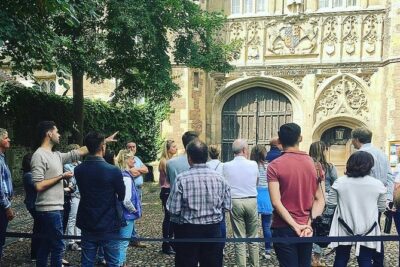
Cambridge University Walking Tour by Alumni™ Kings College Option
Read our review →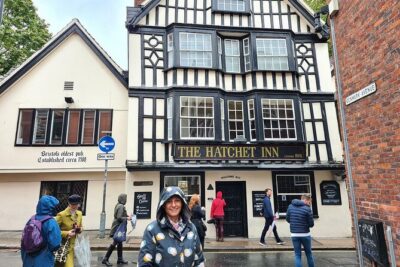
Blackbeard to Banksy – The Ultimate Walking Tour of Bristol
Read our review →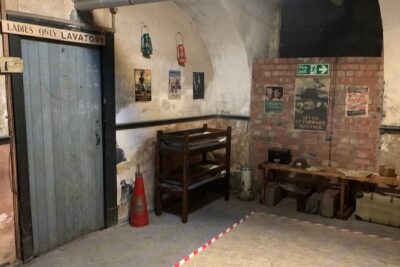
Air Raid Shelter + St. Nicholas Market Walking Tour
Read our review →
Walking Tour of Bath with Blue Badge Tourist Guide
Read our review →
Changing of the Guard Guided Walking Tour in London
Read our review →Browse the lists this tour appears in