
Reviewed · CITY TOURS
Lost Churches of the City Walking Tour
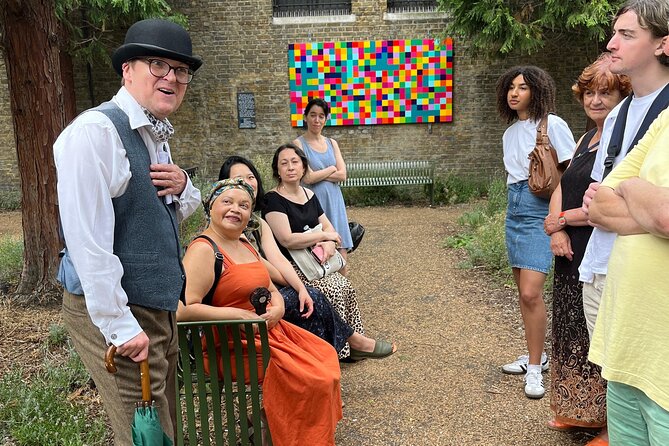
Look beneath London’s streets. This 90-minute walk reveals vanished churches destroyed by fire, war, and city planning, with historian Dr Steve connecting architecture to faith and daily life. I especially like the carefully planned route through quieter City spaces, and the way it ends in the atmospheric ruins of St Dunstan in the East. The main consideration is the pace: with five stops in an hour and a half, some subjects receive only a short introduction.
I also like the modest price, about $13.76 per person, since admission to each stop is free and the tour focuses on stories you would likely miss while sightseeing alone. The group can include up to 20 people, so it should feel more personal than a large coach outing, though it may not have the intimacy of a private walk.
In This Review
- Key points about London’s vanished churches
- Why London’s lost churches are worth your time
- London Wall and the remains of St Elsyng’s Hospital
- Guildhall and the choices that removed City churches
- St Paul’s Cathedral and the churches lost to disaster
- The Monument and the scale of the Great Fire
- St Dunstan in the East, a memorable ending
- Dr Steve’s guiding style and the small-group format
- Is $13.76 good value?
- Who should book this London walking tour?
- Final verdict: book it for the stories behind the stones
- FAQ
- How long does the Lost Churches of the City Walking Tour last?
- What is the price of the tour?
- Where does the tour start?
- Where does the tour end?
- Who leads the tour?
- What locations are included?
- Is admission to the stops included?
- How large can the group be?
- Can I cancel the booking?
Key points about London’s vanished churches
- St Elsyng’s Hospital appears at London Wall, where ancient city defenses meet the story of a lost religious institution.
- Guildhall explains the choices behind church demolition, not just the destruction caused by fire and bombing.
- St Paul’s Cathedral grounds connect several lost churches to the Great Fire of 1666 and the Second World War.
- The Monument gives the Great Fire a clear setting, showing how one disaster reshaped the City’s skyline.
- St Dunstan in the East provides a memorable finish, with a ruined church set in peaceful garden grounds.
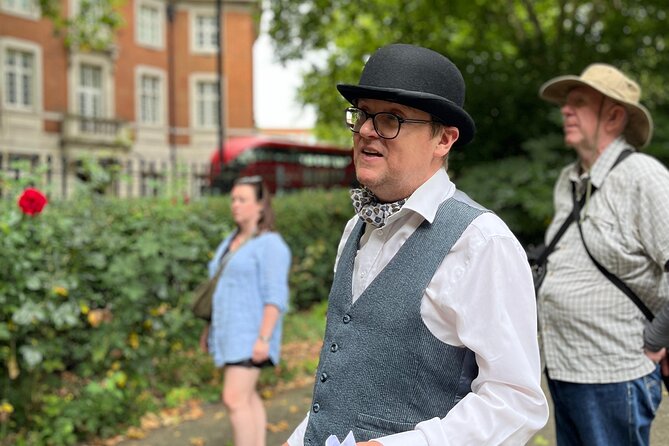
- Dr Steve’s broad knowledge is a major strength, especially if you enjoy links between religion, architecture, and social decisions.
Why London’s lost churches are worth your time
London’s City churches are easy to overlook. You may pass a stone fragment, a garden, or an ordinary-looking lane without realizing that a church once occupied the site. This tour gives those quiet places a name and a purpose.
The focus is not simply on buildings that disappeared. You learn how London changed through disaster and choice. The Great Fire destroyed many churches in 1666. Bombing during the Second World War erased others. Urban changes also led to churches being pulled down, sometimes because officials decided they were no longer needed or stood in the way of a changing city.
That wider view makes the walk more useful than a simple list of ruins. You are looking at spiritual life, public policy, architecture, and the practical pressures of a growing city. If you enjoy old buildings but want more than dates and photographs, this approach should suit you.
The tour also offers a quieter side of central London. The City can feel crowded and businesslike, but this route moves through church grounds, alleys, and small pockets of calm. You will still be in one of the capital’s busiest historic districts, yet the subject encourages you to pause and notice what is absent.
More Walking Tours in London
- Tour for Muggles The Ultimate Harry Potter Walking Tour in London
★ 5.0 · 4,684 reviews - London Jack The Ripper Guided Walking Tour
★ 5.0 · 3,131 reviews - Changing of the Guard Guided Walking Tour in London
★ 5.0 · 1,793 reviews
London Wall and the remains of St Elsyng’s Hospital
The walk begins at London Wall, meeting at The Globe83, Moorgate, London EC2M 6SA. This is a useful starting point because the ancient wall provides an immediate reminder that the City was once a tightly defended settlement with a very different shape.
The first section lasts about 20 minutes. Dr Steve introduces the ancient City of London and considers the ruins of St Elsyng’s Hospital. The site gives the tour an early historical layer before moving into the later story of churches lost to fire, war, and redevelopment.
St Elsyng’s Hospital is especially useful as an opening subject because it broadens the meaning of religious buildings. A church was not only a place for worship. Religious foundations could also support care, community life, and local identity. The stop helps you think about how much of London’s religious infrastructure has vanished.
You should expect interpretation rather than an interior visit. Admission is free, and the tour is built around what can be understood from the streets and surviving remains. If you want to photograph grand interiors, this is not that kind of outing. If you like reconstructing the past from fragments, it is a strong beginning.
The first stop also sets the tone for the whole walk. You are not being led from one famous landmark to another. Instead, you are asked to notice traces and listen to the explanation behind them.
Guildhall and the choices that removed City churches
After London Wall, the group continues to Guildhall for another 20 minutes. Here the subject shifts from what disappeared to why some churches were deliberately removed.
That distinction matters. Fire and bombing are dramatic causes, but urban change can be quieter and less obvious. Decisions about land, planning, usefulness, and the changing needs of the City all affected which buildings survived. At Guildhall, Dr Steve discusses how these decisions were made and why some City churches were pulled down.
This may be the most thought-provoking part of the tour for anyone interested in architecture. A ruined building often has a clear story of destruction. A demolished building can be harder to understand because it may have vanished through a chain of official decisions, practical compromises, and changing priorities.
The Guildhall stop also shows why a guide adds value here. Without explanation, an ordinary street or civic precinct gives you few clues about the churches that once shaped it. Dr Steve’s strength, according to the available feedback, is his ability to connect subjects across social, cultural, and religious history. One particularly strong comment praised his wide range of knowledge and his ability to make the walk engaging, fascinating, and fun.
That praise is worth weighing carefully. The tour is not designed for a specialist audience only. The subject has plenty of detail, but the guide’s role is to make those details usable as you walk. You can ask questions in the small-group setting, with a maximum of 20 people.
St Paul’s Cathedral and the churches lost to disaster
The next section takes place in the grounds of St Paul’s Cathedral and lasts about 10 minutes. It is the shortest formal stop, but it links two major events: the Great Fire of 1666 and the bombing of the Second World War.
St Paul’s is a natural place for this discussion. It is one of London’s best-known religious landmarks, yet the cathedral’s presence can make it easy to forget how much of the surrounding City changed over time. The tour uses the cathedral grounds to consider churches that did not survive nearby disasters.
The Great Fire and wartime bombing were very different events, but both reshaped London’s religious architecture. The fire destroyed many City churches in a concentrated disaster. Wartime bombing brought another wave of loss centuries later. Placing the two events in the same setting helps you see that London’s skyline was repeatedly rebuilt rather than created in one period.
Because this stop is only around 10 minutes, you should not expect a full architectural study of St Paul’s Cathedral itself. The cathedral is a setting and reference point, not the main attraction. If you have already planned a separate cathedral visit, this tour should complement it rather than replace it.
I like this part because it connects personal worship spaces to major civic events. Churches were woven into everyday City life, so their destruction was not merely a matter of architecture. It changed familiar routes, local communities, and the visual markers people used to understand their neighborhood.
A completely different sort of day out:
- Stonehenge, Windsor Castle, and Bath from London
★ 4.5 · 18,662 reviews - London Big Bus Hop-On Hop-Off Tour with Optional River Cruise
★ 3.5 · 10,803 reviews - London Small Group Tour of Historical Pubs
★ 5.0 · 10,422 reviews - Stonehenge, Windsor Castle and Bath with Pub Lunch in Lacock
★ 4.5 · 7,402 reviews
The Monument and the scale of the Great Fire
The walk pauses for about 20 minutes at the Monument to the Great Fire of London. This is the longest stop after the opening sections, giving Dr Steve time to explain how the 1666 fire affected the City’s churches.
The Monument itself is a powerful reference point even if you do not enter it. From here, the fire becomes easier to picture as a force that changed a dense urban center. The discussion is not limited to one famous disaster. It also shows why churches mattered so much to the shape and identity of the City.
You will hear about churches destroyed by the fire and the decisions that followed. Rebuilding was not simply a matter of replacing every lost structure in the same form. London had to decide what the new City should look like, which churches were needed, and how much religious architecture should remain in a changing commercial district.
This is where the tour’s connection between faith and building design becomes clearest. A church could serve as a place of worship, a landmark, a meeting point, and a visible sign of local identity. When churches disappeared, the City lost more than stone walls.
The Monument stop also gives the route a clear historical center. Before this point, you have considered ancient foundations, civic decisions, and wartime destruction. Here, the Great Fire becomes the main event tying many lost churches together.
There is one practical limitation. The tour pauses outside and around landmarks rather than offering an extended indoor visit. You are paying for interpretation and route design, not admission to a major attraction. That is perfectly reasonable at this price, but it helps to know what kind of experience you are buying.
St Dunstan in the East, a memorable ending
The final 20 minutes take place in the grounds of St Dunstan in the East, ending at St Dunstan’s Hill, London EC3R 5DD. This is likely to be the most visually memorable stop.
The church survives as a ruin within garden grounds, offering a calm setting after the denser urban streets earlier in the route. Its damaged walls and open-air setting make the effects of London’s long cycle of destruction and rebuilding easy to understand.
St Dunstan in the East is also a fitting end because it does not present the past as something perfectly restored. You see a religious building in an altered form, surrounded by later life. That contrast encourages a useful question: should every old building be rebuilt, or can a ruin carry its own meaning?
The garden setting gives the tour a contemplative finish. You can pause and look at the remaining structure rather than rushing immediately toward another major attraction. This quieter ending is one of the route’s strongest features, especially if you want a break from London’s better-known sights.
The tour ends here rather than returning to the starting point, so plan your day around that. The route runs from Moorgate toward St Dunstan’s Hill. The supplied information confirms that it is near public transportation, but it does not provide a specific route back to your hotel or next attraction. A mobile ticket is provided, and confirmation arrives when you book.
Dr Steve’s guiding style and the small-group format
The guide is historian Dr Steve, and his broad subject range appears to be central to the experience. This is important because lost churches can become a dry topic if the discussion focuses only on construction dates and demolition records.
The strongest praise for the tour highlights Dr Steve’s ability to make the subject engaging, fascinating, and fun. I would expect that to matter most at Guildhall and the Monument, where the story depends on decisions and context rather than a large surviving building.
The group size can reach 20 people. That is small enough for a more direct walking experience than a big sightseeing group, though it is not a private tour. The information specifically notes that the setting encourages questions, so you should make use of that if a particular church, building style, or historical decision catches your interest.
The tour is conducted in English and includes an in-person guide. It does not include lunch, though the 90-minute duration means you can easily plan a meal before or after. The walking time is modest, but a moderate level of physical fitness is required. You should be prepared to walk between City locations and remain on your feet for the stops.
Is $13.76 good value?
At about $13.76 per person, this is an inexpensive way to add structure to a day in the City of London. The stops have no admission charge, so the price mainly pays for Dr Steve’s interpretation, the route, and the time spent making sense of places that can be hard to read on your own.
I see good value here for three reasons. First, the subject is specialized. You are not paying for a standard overview of London landmarks. Second, the route links several causes of loss, including the Great Fire, wartime bombing, and urban change. Third, the final stop at St Dunstan in the East gives the walk a distinct visual and emotional finish.
The value is lower if you want extensive access to interiors or a full-day tour. The walk lasts about an hour and a half, and some stops are brief. You are buying a focused history walk, not a broad introduction to London or a series of paid attractions.
The fact that it is booked an average of 33 days ahead suggests that you should not assume you can always decide at the last minute. If your London schedule is fixed, booking in advance may be sensible. Free cancellation is available up to 24 hours before the start time, giving you some flexibility.
Who should book this London walking tour?
I would choose this experience if you enjoy:
- Religious and architectural history
- The effects of fire, war, and redevelopment on old cities
- Quiet gardens and ruins more than famous interiors
- Small-group walking tours with room for questions
- Stories about how civic decisions change the built environment
- A focused activity that fits into a morning or afternoon
It should suit history buffs especially well, but you do not need specialist knowledge. Dr Steve’s role is to explain the subject in a way that links buildings to ordinary life and civic change.
You may want to skip it if you prefer fast sightseeing, grand interiors, or a tour centered on London’s most famous landmarks. The route rewards attention. If you are not interested in what has disappeared, some of the stops may feel too subtle.
Weather also matters. The experience requires good weather and can be canceled if conditions are poor. In that case, you are offered another date or a full refund. Service animals are allowed.
Final verdict: book it for the stories behind the stones
The Lost Churches of the City Walking Tour is a strong low-cost choice for anyone who wants to see London through a less familiar subject. I like its clear route from London Wall to St Dunstan in the East, its attention to both disaster and civic decision-making, and the reported enthusiasm for Dr Steve’s wide-ranging guidance.
Book it if you want a thoughtful 90-minute walk that adds meaning to streets and ruins you might otherwise pass without a second glance. Skip it if you need a major attraction at every stop. For curious history fans, the modest price and distinctive subject make this one of the more worthwhile short walks in the City.
FAQ
How long does the Lost Churches of the City Walking Tour last?
The tour lasts approximately 1 hour and 30 minutes.
What is the price of the tour?
The listed price is $13.76 per person.
Where does the tour start?
The meeting point is The Globe83, Moorgate, Greater London EC2M 6SA, UK.
Where does the tour end?
The tour ends at St Dunstan in the East Church Garden, St Dunstan’s Hill, London EC3R 5DD, UK.
Who leads the tour?
The tour is led in English by historian Dr Steve.
What locations are included?
The route includes London Wall, Guildhall, the grounds of St Paul’s Cathedral, the Monument to the Great Fire of London, and St Dunstan in the East.
Is admission to the stops included?
The stops listed for the tour have no admission charge. Lunch is not included.
How large can the group be?
The maximum group size is 20 people.
Can I cancel the booking?
You can cancel up to 24 hours before the start time for a full refund. Changes or cancellations made less than 24 hours before the start time are not accepted for a refund.
Just added in London
- Private Tour: Royal High Tea At Kensington Palace Gardens★ 5.0 · 39 reviews
- Private Tour: Personal Travel Photographer Tour in London★ 4.5 · 27 reviews
- London East End Private Walking Food Tour – Secret Food Tours★ 5.0 · 26 reviews
- Private Tour: Night Photography Tour in London★ 5.0 · 48 reviews
- London Like a Local, Private & Personalized (2-3 hrs)★ 4.5 · 11 reviews
- British Museum & National Gallery of London – Exclusive Guided Combo Tour★ 5.0 · 48 reviews
- Private Tour: Tower of London and St Paul’s Cathedral★ 5.0 · 1 review
- London Soho District – Exclusive Guided Walking Tour★ 5.0 · 2 reviews
City Tours, compared.


Liverpool City Sights Hop On Hop Off City Tour – 24hr Ticket
Read our review →
1.5-hour Oxford City and University Walking Tour
Read our review →
City Sightseeing London Hop-On Hop-Off Bus Tour & Bookable Extras
Read our review →
City Sightseeing Oxford Hop-On Hop-Off Bus Tour
Read our review →
Browse the lists this tour appears in