
Reviewed · WALKING TOURS
Liverpool Slavery Walking Tour – Commercial Side
Liverpool’s wealth has an uncomfortable story. This two-hour walk follows the money, ships, banks, cotton, and merchants tied to the city’s role in the transatlantic slave trade. I like the clear commercial focus, and I like how the route links grand buildings with old streets and working docks. The main drawback is its brisk pace, with around 15 short stops and plenty of information packed into each one.
The tour costs $38.19 per person and is capped at 12 people, which should make it easier to hear and ask questions. Guides such as Edward and Tommy Allen have been praised for using old photographs and answering questions beyond the planned script. Allow time afterward for the free International Slavery Museum, since this walk gives more attention to Liverpool’s business machinery than to the full human story.
In This Review
- Key points at a glance
- Why Liverpool’s commercial story matters
- Starting at Our Lady and Saint Nicholas Church
- Banks, cotton, and the fortunes of William Brown
- Rumford Place and Liverpool’s American connections
- Exchange Flags and the Nelson Monument
- Sir Alfred Lewis Jones and the shipping business
- Water Street’s banking houses
- Old lanes, Dale Street, and a 1726 public house
- Castle Street, the castle site, and Town Hall
- Graving docks and the work behind the ships
- Salthouse Dock and the Old Dock
- James Street and the final sculpture
- What the $38.19 price buys you
- Who should book this walk?
- Should you book the Liverpool Slavery Walking Tour?
- FAQ
- How long is the Liverpool Slavery Walking Tour?
- Where does the tour start?
- Where does the tour finish?
- How much does the tour cost?
- How many people can join the tour?
- Is the tour offered in English?
- Can I visit the International Slavery Museum after the walk?
Key points at a glance
- Follows the money behind slavery: Explore banks, cotton trading, shipping, insurance, and merchant wealth rather than focusing only on the docks.
- Starts at the Liver Building: Meet at the Liver Building at Pier Head, then walk through Liverpool’s historic commercial center.
- Includes old Liverpool: See surviving lanes, a 1726 public house, Castle Street, Water Street, and the site of Liverpool Castle.
- Connects local trade with America: Learn about cotton, Confederate agents, weapons, ships, and the American trade that helped Liverpool’s banks grow.
- Small-group format: The maximum group size is 12, useful for a walking tour with frequent stops and discussion.
- Ends at the Old Dock: Finish near Thomas Steers Way, close to the Merseyside Maritime Museum and International Slavery Museum.
Why Liverpool’s commercial story matters
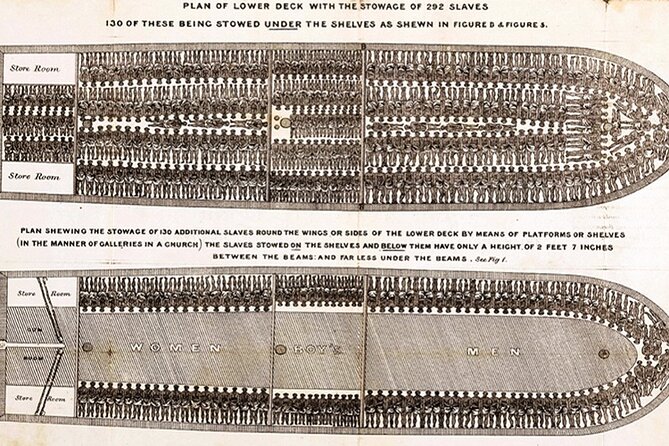
Liverpool’s connection to slavery was not limited to ships leaving port. The city’s merchants, bankers, cotton traders, insurers, shipbuilders, and dock owners helped create the system that moved enslaved people and goods across the Atlantic.
That is the central idea of this tour. You are not simply shown a memorial or told that Liverpool once traded overseas. You follow the practical machinery that made the trade possible. Banks raised money. Merchants arranged cargoes. Cotton generated profits. Docks handled ships. Grand civic buildings reflected the wealth.
I find this approach useful because it explains how an entire city can profit from an industry without every person directly boarding a slave ship. The route also links Liverpool with the United States, Africa, and the Caribbean, giving you a wider view of Atlantic trade.
The tour does not pretend that Liverpool’s past is comfortable. At the same time, its commercial angle means the human experience of enslaved people is not always the main subject at each stop. For that reason, I would pair it with the International Slavery Museum, which you can visit free of charge at the end.
More Walking Tours in Liverpool
- A Walk Through Time: History of Liverpool Walking Tour
★ 5.0 · 911 reviews - Liverpool Ghost Walking Tour
★ 5.0 · 862 reviews - Beatles Famous Walking Tour Of Liverpool- Fully Guided
★ 5.0 · 751 reviews
Starting at Our Lady and Saint Nicholas Church
Meet at the Liver Building, Pier Head. The opening stop is Our Lady and Saint Nicholas Church and its garden, a short introduction to the people who helped shape Liverpool’s early trading world.
Many slave traders worshipped at this church and were buried in the churchyard. That detail quickly turns the subject from an abstract economic story into something rooted in ordinary city life. The people involved were not distant names in a ledger. They attended church, held civic roles, built businesses, and left their mark on familiar streets.
You get around 10 minutes here. That is enough for the guide to set the tone, but not enough for a long examination of every grave or architectural feature. Listen for the names and connections, then keep moving. This tour is built as a chain of linked clues rather than a single long talk.
Banks, cotton, and the fortunes of William Brown
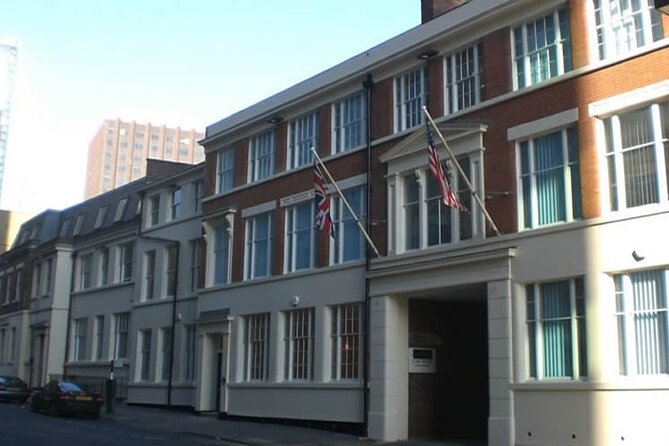
At the Hargreaves Building, the focus shifts to William Brown, a cotton broker and banker who founded the Bank of Liverpool and Brown & Shipley Merchant Bankers.
This stop helps explain why cotton matters so much to Liverpool’s story. Cotton was not just a fabric sold in shops. It was a major commercial product connected to plantations, shipping, credit, brokers, and international markets. People who handled the money and contracts could gain great wealth without working on the plantations or sailing aboard the ships.
The nearby Cotton Exchange Building takes that lesson further. Liverpool became a world leader in cotton trading, and the guide explains how the so-called Liverpool Rules continued to influence cotton business. You see how commercial habits, legal agreements, and trading networks helped build the city’s wealth.
I like these stops because they show the mechanics of profit. A grand bank façade can look harmless if you do not know what passed through its accounts. With the guide’s explanation, the buildings become part of the evidence.
Rumford Place and Liverpool’s American connections
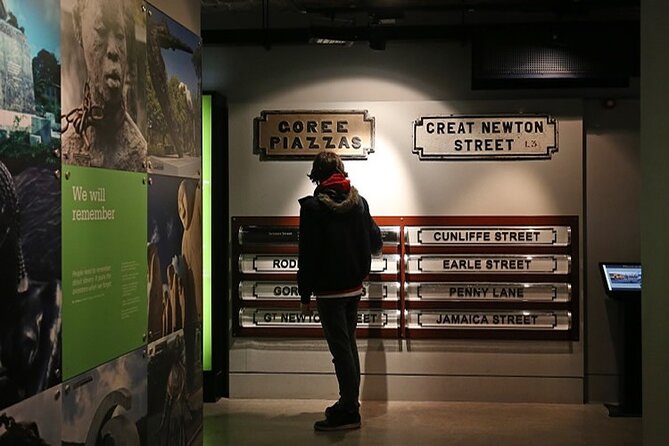
At Tithebarn Street, you visit Rumford Place, linked to the Confederate Embassy during the American Civil War.
The subject here is not slavery in Liverpool alone. It is the city’s role in an international network. You learn how Bulloch established a network of spies in Liverpool and how the Confederate armies obtained weapons and ships.
This stop adds a different layer to the walk. Liverpool was not only a port for cargo. It was also a place where agents, financiers, shipbuilders, and suppliers could operate during a major conflict. The link between the American Civil War and Liverpool’s commercial world shows how the city’s Atlantic connections continued long after the height of the slave trade.
The stop lasts about 10 minutes, so expect a compact explanation rather than a full Civil War lesson. If American history interests you, this is a good place to ask questions. Guides Edward and Tommy Allen have been praised for responding to questions and moving beyond the basic script when time allows.
A completely different sort of day out:
- Beatles Magical Mystery Tour
★ 5.0 · 9,266 reviews - Liverpool: “Blue Route” – City & Beatles Tour
★ 5.0 · 8,562 reviews - Liverpool City Sights Hop On Hop Off City Tour – 24hr Ticket
★ 4.5 · 2,555 reviews - The LFC Stadium Tour
★ 5.0 · 1,548 reviews
Exchange Flags and the Nelson Monument
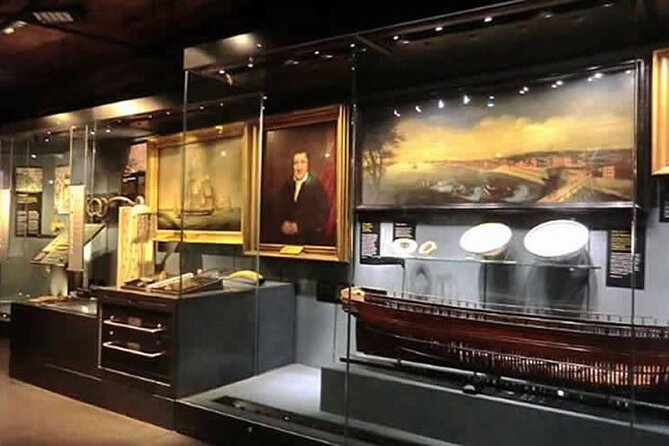
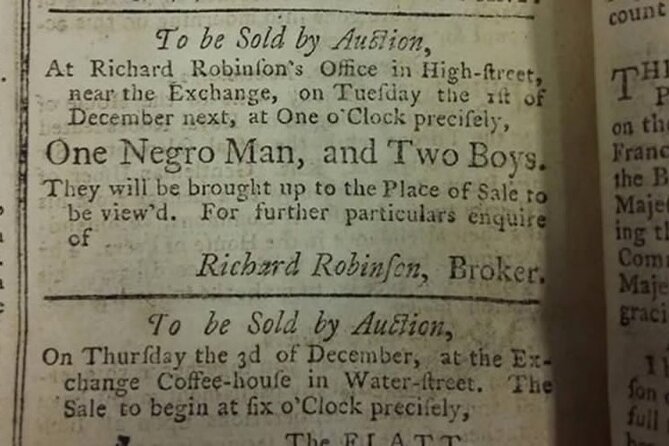
Exchange Flags was the original exchange, where traders conducted business and where enslaved people were sold. This is one of the most direct and difficult points on the route.
The stop also includes the Nelson Monument. The monument gives the guide a chance to explain how public symbols can carry several meanings. Liverpool’s commercial success, naval power, imperial ambition, and slavery-related wealth all meet in this part of the city.
I would pay close attention here. It is easy to see Exchange Flags as an attractive urban square and move on. The story changes the way you read the space. The tour asks you to picture the activity that once took place here, then consider how that activity helped shape Liverpool’s public identity.
As with several stops, the site itself may not provide a long visual display. The value comes from the guide’s context. A clear explanation is essential, and the strong comments about Edward and Tommy suggest that the quality of guiding matters greatly on this walk.
Sir Alfred Lewis Jones and the shipping business
The memorial to Sir Alfred Lewis Jones introduces another route to wealth. You learn how Jones built his fortune and gained a monopoly over the Elder Dempster Shipping Line.
The guide also covers Jones’s philanthropy and his funding of the School of Tropical Medicine. This creates a useful but complicated portrait. A wealthy businessman can support public institutions and still have made his money through systems tied to exploitation and colonial trade.
That tension is worth holding onto. The tour does not reduce the past to simple heroes and villains. Instead, it asks how philanthropy, business power, shipping, and empire could exist side by side.
The shipping theme returns later at the docks. Taken together, these stops show why you should not think of Liverpool’s involvement only in terms of the moment a ship sailed. Profits were made through ownership, freight, finance, maintenance, and control of trade routes.
Water Street’s banking houses
Liverpool Water Street takes you into the business and banking district of the 18th and 19th centuries.
Here you see buildings connected with bankers who grew wealthy through American trade. The route points out the Martins Bank Building and the old Bank of Liverpool building. Their decoration and scale reflect the confidence of institutions that handled large sums of money.
The stop also includes the first Bank of England branch outside London, located on Castle Street. That detail helps place Liverpool within the national financial system. The city was not a minor provincial port waiting for London’s approval. Its trade had grown important enough to support major banking operations of its own.
One practical note: some buildings are viewed from the outside, and admission is not included at Water Street or Liverpool Town Hall. The tour is mainly an outdoor walk, so you should not expect full interior access to every historic building.
Old lanes, Dale Street, and a 1726 public house

Dale Street offers a change of mood. You leave the grand banking façades and see surviving 18th-century streets that escaped Victorian widening.
You walk through narrow streets and passageways associated with old Liverpool. The guide also takes you to a public house that existed in 1726 and may have been visited by early slave traders. If it is open and you want to stop, you might enjoy a drink there, but the tour information does not promise a scheduled pub break.
This is one of the route’s most appealing features for me. The commercial story becomes easier to grasp when you see the older street pattern. Liverpool’s history is not found only in famous monuments. It can sit in a narrow passage, a worn wall, or a building that survived later redevelopment.
The pace may feel quick for anyone who wants to photograph every corner. You have about 10 minutes here, not an afternoon to wander. Wear comfortable shoes, especially since the route includes many separate stops and older streets.
Castle Street, the castle site, and Town Hall
Castle Street links merchants, slavery, and banking. It also brings you to the building that housed the first Bank of England branch outside London.
Then you reach the Queen Victoria Monument, where Liverpool Castle once stood before its demolition in 1726. St George’s Church was later built on the site and served as a place of worship for Liverpool mayors and town councillors.
These stops show how trade, religion, local government, and public ceremony occupied the same small part of town. Liverpool’s merchant class did not operate in isolation from civic power. The same people and families could appear in business, religious, and municipal life.
At Liverpool Town Hall, the guide explains how the Mansion House of Liverpool’s Lord Mayor was funded and used. You can admire its architecture and decoration, including depictions of African people on the frieze.
Town Hall is a valuable stop, but admission is not included. Treat it as an exterior visit unless your guide confirms otherwise. The building’s decoration may raise questions that the walk can only partly answer, so this is another good moment to ask how wealth and public display were connected.
Graving docks and the work behind the ships
At the graving dock, the focus moves from finance to maintenance.
After a slave ship completed the terrible journey from Liverpool to Africa, then to the Americas, and back to Liverpool, it needed repair and refitting. Graving docks handled that work. The original mid-18th-century docks remain, giving you a physical link to the ships that carried people and goods through the Atlantic trade.
This is an important stop because it reveals the routine work behind the voyages. A ship was not merely an object that appeared at the waterfront. It required labor, repairs, supplies, and investment before it could sail again.
The stop is short, about five minutes. You will get the basic purpose and historical connection, then continue toward the modern waterfront. If you want to think through the details, the International Slavery Museum is the better place to spend more time afterward.
Salthouse Dock and the Old Dock
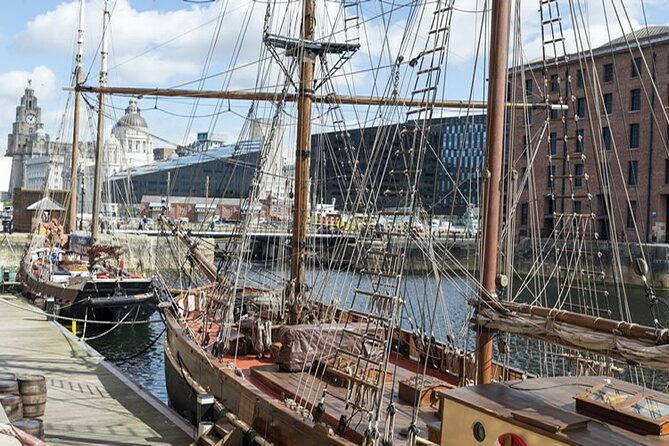
At Salthouse Dock and Canning Dock, you walk across cobbles and stones once used by merchants and dock workers handling ships’ cargo.
These docks were built in quick succession after Liverpool’s Old Dock to handle the city’s growing trade with America. Some construction used massive stones from Liverpool Castle. That detail connects the city’s medieval past with its commercial expansion.
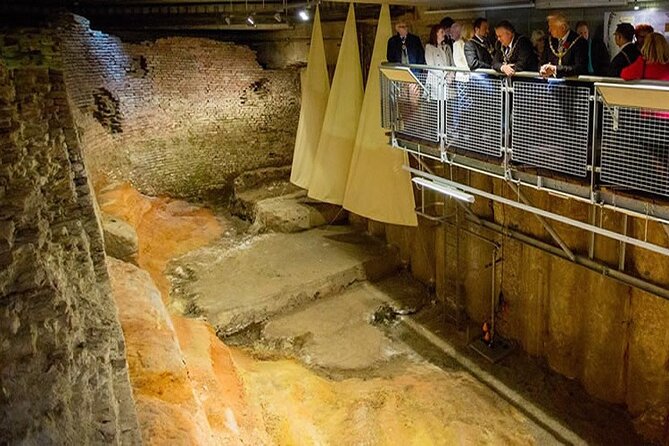
The route then reaches Thomas Steers Way and the site of the Old Dock, built by Thomas Steers in 1715. The dock helped Liverpool exploit its position and expand its African and transatlantic trade. You can see part of the old dock through an observation window in the ground. With prior arrangement, a guided visit to the actual dock may be possible.
This ending works well because you finish at the infrastructure that made the growth possible. Banks and merchants could arrange trade, but ships still needed a place to load, unload, repair, and wait safely.
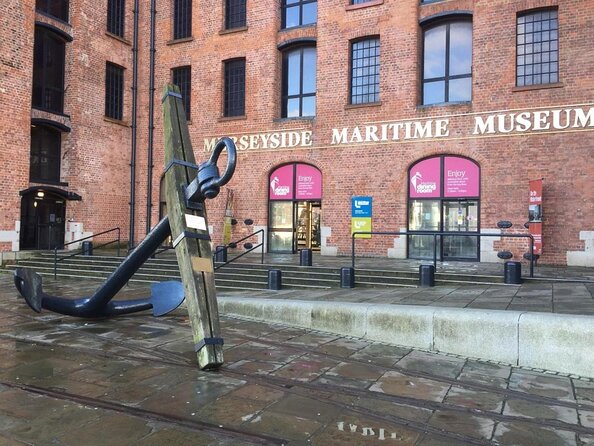
The end point is 2 Custom House Place, at the site of the Old Dock in the L1 shopping centre. It is close to the Merseyside Maritime Museum, making it easy to continue your historical afternoon.
James Street and the final sculpture
The final stop takes you through Victorian back streets and past the classic architecture of old banking houses.
You also see a modern sculpture that enigmatically evokes the slave house on Goree Island. It is a quieter ending than the exchange or docks. Rather than giving you one last business fact, it connects Liverpool’s commercial past with a place associated with the capture and confinement of enslaved people.
The sculpture may not explain itself immediately. That is part of its purpose, and it gives you something to consider as the walk ends. From here, you can continue toward the maritime museums and take in more of the human history that the commercial route only begins to address.
What the $38.19 price buys you
At $38.19, this is not the cheapest way to walk around Liverpool. You can see many of the streets and waterfront areas without paying for a guide.
The value comes from the connections. Without explanation, a bank, churchyard, exchange, dock, and monument can look like unrelated sights. This tour brings them together and shows how Liverpool’s wealth was built through trade, finance, cotton, shipping, and Atlantic links.
The small maximum group of 12 also matters. On a route with frequent pauses, a huge group would make it harder to hear and ask questions. A smaller group should feel more personal, although the actual group may be much smaller or larger within that limit.
The tour has earned an overall rating of 3.9 from 14 reviews, while the available written comments are strongly positive about the guides and educational value. That difference is a useful reminder to keep expectations realistic. This is a focused history walk, not a polished theatrical show, and the experience will depend heavily on the guide and the weather.
Who should book this walk?
I would choose this tour if you want to understand how Liverpool’s commercial district gained its wealth. It suits history fans, people interested in banking and shipping, and anyone who wants more than the usual music-focused visit to Liverpool.
It is also a good choice for local residents. One local had lived in Liverpool for 15 years and still found streets and buildings that had gone unnoticed. That is a strong reason to take the walk even if you already know the city center.
The tour may be less suitable if you want a long, quiet visit inside historic buildings. Many stops last only five or 10 minutes, and some sites are viewed from the street. It also deals mainly with the commercial side of slavery, so you should add the International Slavery Museum for a fuller account.
Bring comfortable shoes and dress for changeable weather. The experience requires good weather, and it can be moved or refunded if poor conditions prevent it from going ahead. Free cancellation is available up to 24 hours before the start time, but changes or cancellations inside that window are not refunded.
Should you book the Liverpool Slavery Walking Tour?
Book it if you want the city’s difficult past explained through its buildings, banks, docks, and business networks. Edward and Tommy Allen have been praised for clear explanations, old photographs, and the ability to answer questions, all of which are especially valuable when the sites themselves offer few signs.
I would not make this your only slavery-related visit in Liverpool. Use the walk to understand the commercial system, then visit the free International Slavery Museum to give the story its human center. Together, they make a far more complete afternoon than either experience alone.
FAQ
How long is the Liverpool Slavery Walking Tour?
The tour lasts approximately two hours.
Where does the tour start?
It starts at the Liver Building, Pier Head, Liverpool L3 1HU, UK.
Where does the tour finish?
It finishes at 2 Custom House Place, Liverpool L1 8LZ, at the site of Liverpool’s Old Dock in the L1 shopping centre.
How much does the tour cost?
The listed price is $38.19 per person.
How many people can join the tour?
The activity has a maximum of 12 participants.
Is the tour offered in English?
Yes. The tour is offered in English and includes a mobile ticket.
Can I visit the International Slavery Museum after the walk?
Yes. The route passes the Merseyside Maritime Museum, which houses the International Slavery Museum. The museum can be visited free of charge at the end of the tour.
Just added in Liverpool
- Scouse Safari private 3 hour authentic Liverpool experience★ 5.0 · 2 reviews
- LIVERPOOL: Yorkshire Adventure – Sightseeing Day Trip Tour★ 5.0 · 13 reviews
- The Story of Liverpool 2-Hour Walking Tour★ 5.0 · 3 reviews
- Half Day Welcome to Liverpool Walking Tour★ 5.0 · 17 reviews
- Liverpool City Scavenger Hunt Excursion by Zombie Scavengers★ 5.0 · 1 review
- Fun, Flexible Treasure Hunt Around Liverpool with Cryptic Clues & Hidden Gems★ 5.0 · 141 reviews
- Beatles Ticket To Ride Half Day Tour Small Groups★ 5.0 · 60 reviews
- Small-Group: Experience Local Food Tour in Liverpool★ 5.0 · 32 reviews
Walking Tours, compared.
Oxford University Walking Tour With University Alumni Guide
Read our review →
Tour for Muggles The Ultimate Harry Potter Walking Tour in London
Read our review →
Cambridge University Walking Tour by Alumni™ Kings College Option
Read our review →
Blackbeard to Banksy – The Ultimate Walking Tour of Bristol
Read our review →
Air Raid Shelter + St. Nicholas Market Walking Tour
Read our review →
Walking Tour of Bath with Blue Badge Tourist Guide
Read our review →
Changing of the Guard Guided Walking Tour in London
Read our review →Browse the lists this tour appears in