
Reviewed · HISTORICAL TOURS
Inspirational Women Liverpool Past-Present History Tour – monthly
History looks different when women return to the picture. This two-hour Liverpool walk follows the city’s streets, cathedrals, schools, theatres, and public buildings while telling the stories of women who shaped medicine, education, politics, social reform, and culture. It is a thoughtful way to move beyond the usual Beatles and waterfront circuit.
I like the gentle pace, with ten short stops rather than one long lecture, and I like the way the tour uses real places to give each story a setting. Guides such as Pam and Jean are praised for their warmth, enthusiasm, and ability to involve the whole group. The main drawback is that the walk includes slopes, cobbles, and busy areas, so comfortable shoes are essential and some people may need extra time.
In This Review
- Key points before you book
- Why this Liverpool walk feels different
- Liverpool Cathedral and the Lady Chapel
- Blackburne House and the education of girls
- Rodney Street, Liverpool’s medical address
- Everyman Theatre and the suffragette connection
- Mount Pleasant and women in medicine
- Pembroke Place and the rise of red-brick universities
- The Metropolitan Cathedral and the Nightingale nurses
- Lime Street and a darker Victorian story
- William Brown Street and the Walker Art Gallery
- St. George’s Hall and the final stories
- Guide style and the value of the storytelling
- Price, pace, and practical value
- Who should take this walk?
- Should you book the Inspirational Women Liverpool tour?
- FAQ
- Where does the Inspirational Women Liverpool tour start?
- Where does the tour finish?
- What time does the tour begin?
- How long does the walking tour last?
- How much does the tour cost?
- Is admission to Liverpool Cathedral included?
- Is the route suitable for people with limited mobility?
- Are dogs allowed on the tour?
- What happens if the weather is poor?
- Can I cancel my booking?
Key points before you book
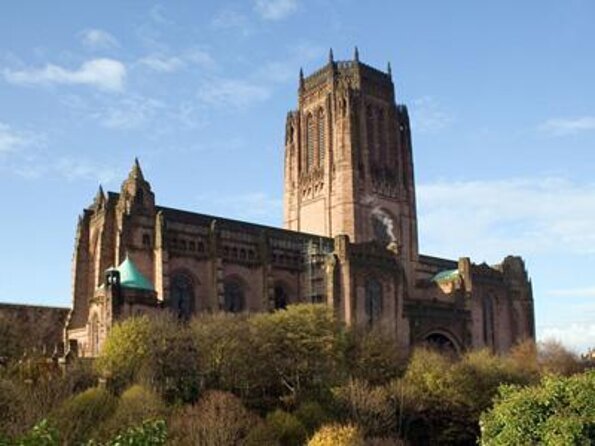
- Ten central Liverpool stops: The route runs from Liverpool Cathedral to St. George’s Hall, with stops at historic institutions along the way.
- Women often left out of the story: Expect stories about campaigners, teachers, nurses, philanthropists, artists, reformers, and local pioneers.
- Pam and Jean bring different strengths: Pam is especially praised for her engaging delivery and wide grasp of the subject, while Jean is described as fun and passionate.
- A donation to Liverpool Cathedral is included: The first stop includes entry to the Lady Chapel by donation.
- Easy in pace, uneven underfoot: You will cover gentle walking terrain, but there are cobbled sections and slopes.
- Small enough to stay personal: The maximum group size is 26, a useful limit for a walking tour with discussion.
Why this Liverpool walk feels different
Many first visits to Liverpool focus on the waterfront, the Cavern Quarter, the Beatles, and grand maritime buildings. Those places deserve their fame, but this tour points your attention uphill and inland, toward the institutions where women studied, worked, campaigned, cared for others, and changed public life.
The subject is not limited to famous names. You hear about women connected with Liverpool’s medical world, educational institutions, social reform, women’s rights, and the arts. That gives you a broader view of the city. Liverpool is presented not just as a port with a dramatic past, but as a place shaped by determined local women and by wider movements for equality.
I also like the route’s use of short stops. Ten minutes at a site is enough to hear the main story and take photographs without turning the whole morning into a stationary talk. The opening cathedral visit is longer, at about 20 minutes, which makes sense because the Lady Chapel and its stained glass need a little time.
The tour is offered monthly and begins at 10:30 a.m. It lasts about two hours, ending near St. George’s Hall. That timing leaves plenty of room for lunch, a museum, or another Liverpool walk afterward.
More History Tours in Liverpool
- A Walk Through Time: History of Liverpool Walking Tour
★ 5.0 · 911 reviews - Best Of Liverpool Heritage, History & Culture Guided Walking Tour
★ 5.0 · 539 reviews - History Guided Tour of Liverpool and the Beatles
★ 5.0 · 408 reviews
Liverpool Cathedral and the Lady Chapel
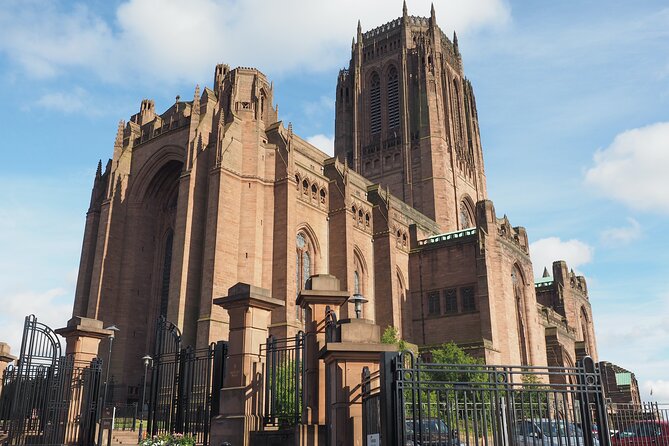
Your morning begins outside Liverpool Cathedral on St. James’ Mount. The cathedral is an imposing start, but the focus quickly narrows to the Lady Chapel, where stained-glass windows depict women connected with Liverpool’s story and wider history.
This is a strong opening because it sets the theme before you head into the streets. You are not simply hearing a list of names. You are looking at women represented in a major public building, then considering why so many other women were left out of traditional accounts.
The chapel also contains one of the final works by a major female sculptor of the modern era. The tour uses this detail to connect historic women with the artistic work of a more recent woman. It is a neat link between representation, public memory, and the physical spaces where history gets displayed.
Admission to the cathedral is included through a donation in the ticket price. You should still dress for a walk, since the cathedral visit is only the first part of the morning. The meeting point is Liverpool Cathedral, St. James’ Mount, Liverpool L1 7AZ.
Blackburne House and the education of girls
From the cathedral, the group continues to Blackburne House, a Grade II listed building with a major role in girls’ and women’s education. The stop is brief, around ten minutes, but the subject matters because education was one of the main routes through which women gained greater control over their lives.
You hear about notable former pupils and the building’s wider purpose. This is the kind of stop that benefits from a guide who can provide context quickly. The building itself may look like another handsome piece of Liverpool architecture, but the story gives it a sharper meaning.
I would pay close attention here if you are interested in social change. The tour repeatedly shows that progress did not come from one famous campaign alone. Schools, colleges, reformers, and local networks all played a part.
Rodney Street, Liverpool’s medical address
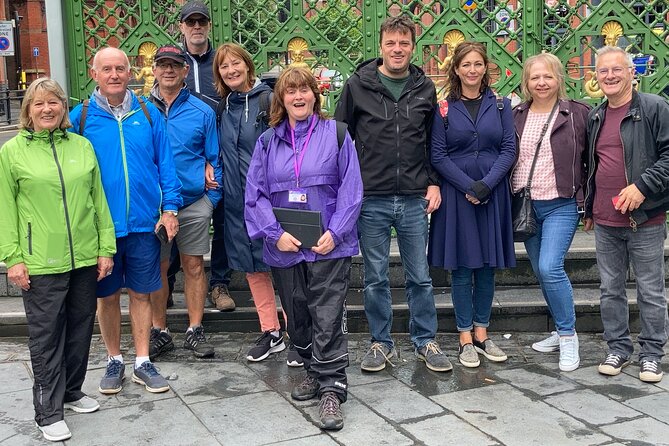
Rodney Street has long been called the Harley Street of the North, a reference to its medical connections. The tour uses the street to introduce some of its notable female residents.
This section shifts the focus from education to professional life. Women who wanted to enter medicine faced serious barriers, and the walk explains how some Liverpool women overcame them. The setting is useful because you are standing in a place associated with medical work rather than hearing about the subject in an abstract room.
The stop lasts about ten minutes. You will not get a full medical history of the street, but you will gain a sense of how women’s professional ambitions met the limits of their era. It is also one of the more photogenic pauses, with time to take pictures before moving on.
A completely different sort of day out:
- Beatles Magical Mystery Tour
★ 5.0 · 9,266 reviews - Liverpool: “Blue Route” – City & Beatles Tour
★ 5.0 · 8,562 reviews - Liverpool City Sights Hop On Hop Off City Tour – 24hr Ticket
★ 4.5 · 2,555 reviews - The LFC Stadium Tour
★ 5.0 · 1,548 reviews
Everyman Theatre and the suffragette connection
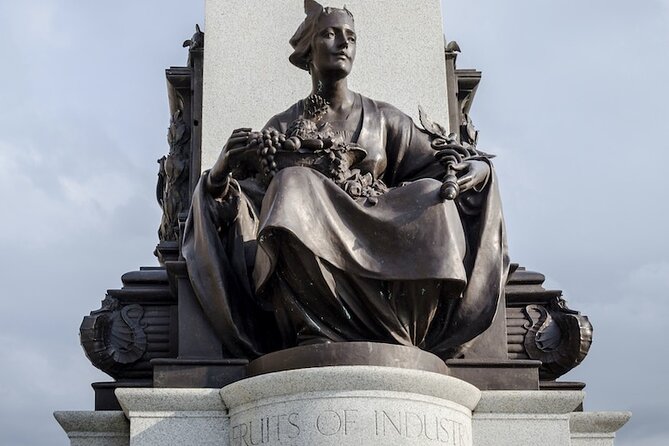
At the Everyman Theatre, the story reaches back to the building’s earlier life as Hope Hall. This was linked with a bohemian atmosphere and political activity, including movements connected with the suffragettes.
Theatre buildings often make good history stops because they bring together performance, debate, and public gathering. Here, the venue helps show that political movements were not confined to formal government rooms. Meetings, speeches, and cultural spaces could also shape public opinion.
The tour does not treat women’s rights as a tidy success story. Instead, you hear about the political edge of the site and the ground-breaking movements linked with it. That makes this a useful stop for anyone who wants more than a collection of inspirational anecdotes.
Mount Pleasant and women in medicine
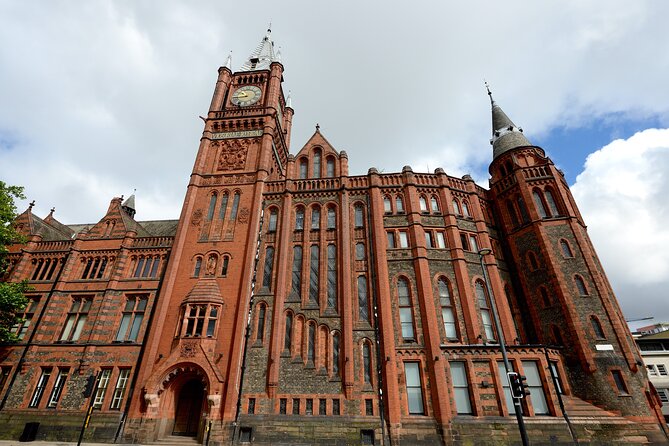
Mount Pleasant has a long connection with medicine. The tour uses this area to tell the stories of several Liverpool women who influenced medicine, education, and health services around the turn of the 20th century.
This may be one of the most substantial themes of the walk. The women discussed here had to work through social and professional obstacles before they could shape public services. Their achievements become easier to understand when you see the places connected with medical training and civic life.
A guide’s delivery matters greatly during this part. Pam is repeatedly praised for making complex material clear and interactive, and for keeping the group involved. Her approach seems particularly suited to a subject with many names and dates, since the stories are presented as human struggles rather than a dry roll call.
Pembroke Place and the rise of red-brick universities
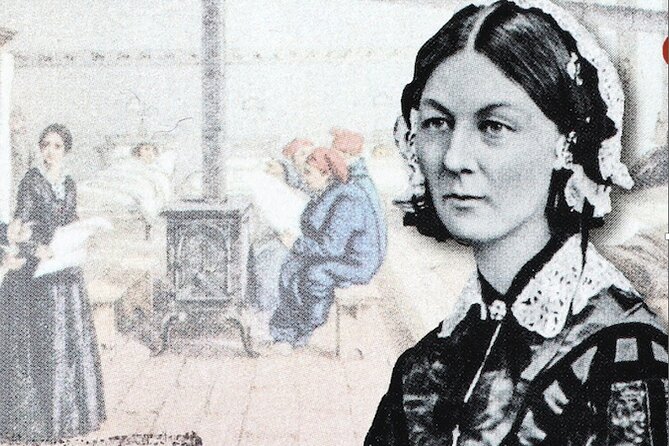
Pembroke Place gives the tour another educational setting and connects Liverpool with the phrase red-brick universities. You hear about female alumni and pioneering women associated with the area, including a major philanthropist who campaigned for women’s rights and family welfare in the early 1900s.
This stop helps explain why universities mattered beyond their lecture rooms. Education gave women access to ideas, careers, networks, and public influence, even when those opportunities were limited or hard won.
The short stop is also a reminder that Liverpool’s story is not only about wealthy benefactors or grand civic buildings. It includes campaigns for family support and social welfare, causes that affected daily life for ordinary people.
If names such as Kitty Wilkinson and Josephine Butler interest you, listen closely during the middle part of the walk. They are among the women highlighted by the guide, and their work gives the tour some of its strongest examples of practical reform.
The Metropolitan Cathedral and the Nightingale nurses
At the Metropolitan Cathedral of Christ the King, the tour explores Liverpool’s Catholic cathedral and its links with the Nightingale nurses. The cathedral provides a very different setting from Liverpool Cathedral, giving the walk a useful change of mood and architecture.
The discussion also turns to a leading 19th-century reformer whose work supported women and families. The story is described as both tragic and remarkable, which suggests a stop with emotional weight as well as political importance.
This part of the walk shows how religious and social networks could overlap. Nursing, education, charity, and legislation were not separate worlds. Women working in one field often influenced the others, especially when formal political power was closed to them.
You should allow a little flexibility here. The stop itself is planned for about ten minutes, but cathedrals are places where you may want to pause and look around. The tour’s main purpose is the women’s history, not a full architectural visit.
Lime Street and a darker Victorian story
Lime Street carries an infamous 19th-century reputation, and the tour uses it to tell the story of a woman who appears in several well-known Liverpool songs.
This is a welcome change of tone. The morning is not only about respectable institutions, campaigners, and public reform. It also acknowledges the harsher side of city life and the women whose stories became part of local memory through music.
The details provided for this stop are limited, so you should expect a focused story rather than a broad study of Lime Street. Still, the location gives the tour some grit. It reminds you that women’s lives in Liverpool covered the full social range, from civic leaders and educators to women remembered through the city’s darker songs.
William Brown Street and the Walker Art Gallery
On William Brown Street, the group passes sites associated with social and political union meetings in the early 1900s. You then reach the Walker Art Gallery, often called the national gallery of the North.
The gallery is used to introduce women connected with Liverpool’s art world, including women whose work or stories remain on display. This is a good place to consider who gets collected, exhibited, and remembered in publicly owned cultural institutions.
The tour does not include a separate gallery admission in the stated price, and this stop is listed as a free exterior visit. If you want to explore the Walker’s interiors afterward, plan that as a separate activity rather than assuming it forms part of the two-hour walk.
There is also a practical benefit to ending near this part of the city. You finish close to several major cultural sights, so you can continue your day without crossing Liverpool again.
St. George’s Hall and the final stories
The tour ends beside Grade I listed St. George’s Hall. This grand Neoclassical building is tied to the history of the suffragist movement, bringing the political thread back into view at the final stop.
The building also has an unexpected link with modern cookery. That detail gives the ending a lighter, more surprising note after several serious discussions of rights, health, education, and social reform.
St. George’s Hall is a fitting finish because it represents public life on a grand scale. The tour has taken you through smaller spaces of influence, including schools, medical addresses, meeting places, and theatres, then ends at one of Liverpool’s most formal civic buildings.
The official end point is St. George’s Place, Liverpool L1 1JJ. From here, you are well placed to continue sightseeing in the city centre.
Guide style and the value of the storytelling
The most praised part of this experience is the guiding. Pam is described as friendly, interactive, passionate, and able to make the two hours pass quickly. She also adjusted the pace for an older group, showing that the tour can respond to the needs of the people present without dropping the main stories.
Jean is also associated with the walk and is described as fun, passionate, and well prepared. Since the guide may vary, you should not book solely on the assumption that one particular person will lead every date. Still, the guiding team clearly places strong emphasis on making the history personal and accessible.
The best feature is the sense of discovery. Even people familiar with Liverpool may find new buildings, names, and connections. The tour is not aimed only at visitors from out of town. It can work just as well for local residents who want to understand how women shaped places they pass every day.
The group size can reach 26 people. That is not a private tour, but it is small enough for a guide to keep an eye on the group and invite participation. The walk has also worked for a person using a wheelchair, with extra help from the group and some route adjustment. You should still contact the provider if you have specific mobility needs, since the route includes steep sections, cobbles, and busy areas.
Price, pace, and practical value
At $31.58 per person, this is not the cheapest way to spend two hours in Liverpool, but the price includes a guided route through ten locations and the cathedral donation. The value depends on how much you want from a guide. If you enjoy learning the background behind buildings and names, the cost is reasonable for a focused specialist walk.
You are paying for interpretation rather than entry to a string of attractions. Most stops are outside and free to visit, so the guide is the main product. That is a strength if the subject matters to you, but it may feel less worthwhile if you prefer to spend two hours inside museums or major paid sights.
The walk begins at 10:30 a.m. and lasts about two hours. Wear comfortable, non-slip shoes. Cobblestones and slopes are specifically part of the route, and you may be walking through busy areas at times. Bring water, use a reusable bottle if possible, and wear sunscreen, even on a cool day.
Service animals are allowed, and well-behaved dogs are welcome. Children under 16 must be accompanied by an adult. The experience is offered in English, with a mobile ticket, and confirmation is sent at booking.
Free cancellation is available up to 24 hours before the start time. If bad weather causes the tour to be cancelled, you are offered another date or a full refund. Since the walk depends on outdoor conditions, check the forecast before setting out.
Who should take this walk?
I would choose this tour if you want a fresh angle on Liverpool, enjoy social history, or feel that standard city tours leave out too many women. It suits adults, older children with an interest in history, local residents, and anyone who prefers a calm walk to a packed attraction schedule.
It is especially good for people who like stories tied to real places. You will move through Liverpool rather than sit in one lecture room, and each stop gives you a chance to connect a woman’s work with a school, hospital, theatre, cathedral, gallery, or civic building.
It may be less suitable if you have difficulty with uneven ground or need a fully step-free route. The pace is gentle, but gentle does not mean flat. You should also expect the experience to be discussion-led rather than attraction-led, with only the cathedral donation included.
Should you book the Inspirational Women Liverpool tour?
Book it if you want to see Liverpool through the lives of women who fought for education, medical progress, social welfare, artistic recognition, and equal rights. The route is manageable, the subject is distinctive, and guides such as Pam and Jean give the walk warmth as well as structure.
I would book well ahead if your dates are fixed, since this monthly experience is often reserved around 43 days in advance. Choose sturdy shoes, arrive ready for outdoor walking, and leave room in your afternoon for the Walker Art Gallery or St. George’s Hall.
Skip it only if you want a broad introduction to every side of Liverpool or prefer indoor attractions. For a focused, human look at the women behind the city’s public life, this is a strong choice.
FAQ
Where does the Inspirational Women Liverpool tour start?
The tour starts at Liverpool Cathedral, St. James’ Mount, Liverpool L1 7AZ.
Where does the tour finish?
The walk ends at St. George’s Hall, St. George’s Place, Liverpool L1 1JJ.
What time does the tour begin?
The scheduled start time is 10:30 a.m.
How long does the walking tour last?
The experience lasts approximately two hours.
How much does the tour cost?
The listed price is $31.58 per person.
Is admission to Liverpool Cathedral included?
Yes. Admission to the cathedral by donation is included in the ticket price.
Is the route suitable for people with limited mobility?
The walk is described as easy, but it includes slopes, cobbles, uneven surfaces, and busy areas. One group received route adjustments and assistance for a person using a wheelchair, but you should consider your own needs carefully.
Are dogs allowed on the tour?
Well-behaved dogs are welcome. Service animals are also allowed, but dogs will be walking with a group in busy areas.
What happens if the weather is poor?
If the tour is cancelled because of poor weather, you are offered a different date or a full refund.
Can I cancel my booking?
You can cancel up to 24 hours before the start time for a full refund. Cancellations or changes made less than 24 hours before the start time are not accepted for a refund.
Just added in Liverpool
- Scouse Safari private 3 hour authentic Liverpool experience★ 5.0 · 2 reviews
- LIVERPOOL: Yorkshire Adventure – Sightseeing Day Trip Tour★ 5.0 · 13 reviews
- The Story of Liverpool 2-Hour Walking Tour★ 5.0 · 3 reviews
- Half Day Welcome to Liverpool Walking Tour★ 5.0 · 17 reviews
- Liverpool City Scavenger Hunt Excursion by Zombie Scavengers★ 5.0 · 1 review
- Fun, Flexible Treasure Hunt Around Liverpool with Cryptic Clues & Hidden Gems★ 5.0 · 141 reviews
- Beatles Ticket To Ride Half Day Tour Small Groups★ 5.0 · 60 reviews
- Small-Group: Experience Local Food Tour in Liverpool★ 5.0 · 32 reviews
Historical Tours, compared.

Shadows of York: Ghost Walk and Horrible History.
Read our review →
A Walk Through Time: History of Liverpool Walking Tour
Read our review →
Royal Historic Pubs Walking Guided Tour in London
Read our review →
Private Group: Historical Pub Walking Tour of London
Read our review →
Best Of Liverpool Heritage, History & Culture Guided Walking Tour
Read our review →Browse the lists this tour appears in