
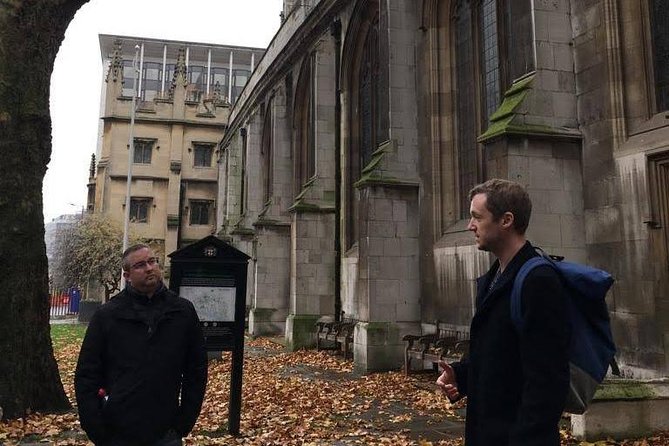
Reviewed · WALKING TOURS
Burnings, Butchery & Black Death: A Walking Tour of London’s Bloody Past
London’s darkest stories hide in ordinary streets. This two-hour walk links plague pits, medieval religious houses, execution lore, Victorian sewage, and the Great Fire of 1666 across a compact part of central London. I like the way it avoids the usual Jack the Ripper routine, and I especially like the small group limit of 15, which makes it easier to hear the guide and ask questions. Tom is often praised for his clear delivery, humor, and command of local history.
The price is $27.73 per person, a fair deal for a focused history walk that includes entry to St. Bartholomew the Great. I also like that the route points out places you could easily pass without noticing, from Cloth Fair to the Golden Boy of Pye Corner. The main drawback is the subject matter: plague, public executions, butchery, bomb attacks, and open sewers are not light entertainment, and the tour requires good weather.
In This Review
- Five things to know before you book
- Why this part of London works so well
- Starting at the Charterhouse and Smithfield Market
- Medieval power at St. John’s Gate and Cloth Fair
- William Wallace, St. Bartholomew the Great, and old London stories
- The Golden Boy and the city’s strange ghost stories
- Holborn Viaduct and the buried River Fleet
- Ye Olde Mitre and the final stretch
- Saint Bartholomew’s Hospital and the meaning of the route
- How much value do you get for $27.73?
- What the guide adds to the experience
- Who should book this walk?
- Should you book Burnings, Butchery & Black Death?
- FAQ
- How long does the walking tour last?
- How much does the tour cost?
- Where does the tour start?
- Where does the tour end?
- What language is the tour offered in?
- How large is the group?
- Is admission included?
- Can I cancel for a full refund?
- What happens if bad weather cancels the tour?
Five things to know before you book
- A thousand years in two hours: The route moves from medieval monasteries and hospitals to Victorian London and the Great Fire.
- Small groups matter: A maximum of 15 people gives you a better chance to hear every story in narrow lanes and busy streets.
- The focus is broader than Jack the Ripper: You get plague, religious conflict, executions, markets, ghost hysteria, wartime damage, and sanitation.
- Many stops are easy to miss: Smithfield, St. John’s Gate, Cloth Fair, and Ely Place reward a guide who knows the area well.
- The finish is near Farringdon: The walk ends on Ely Place, around the corner from Farringdon Station, with Ye Olde Mitre along the way.
- Plan for the weather: If poor weather cancels the walk, you are offered another date or a full refund.
Why this part of London works so well
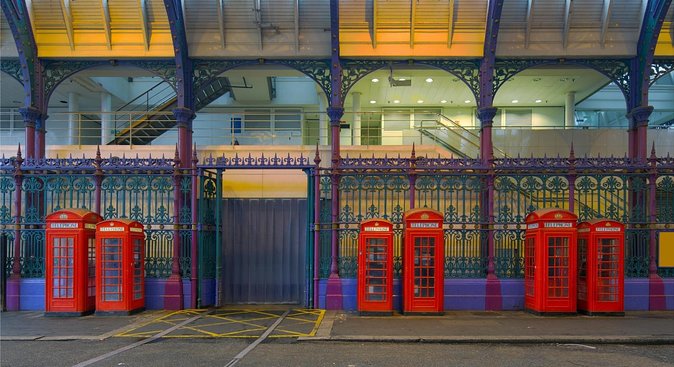
This tour takes place in and around the City of London, where modern offices sit on top of layers of medieval streets, religious foundations, markets, hospitals, and old crime stories. You are not simply shown famous buildings. You are asked to notice how London’s past survives in street names, alleyways, memorials, church walls, and odd little statues.
That makes the route useful for a first visit, but it can also reward anyone who already knows the main sights. Several people who had taken other London walks placed this one near the top of their list because it reveals corners they had previously walked past.
The subject is grim, but the tour is not only a parade of grisly facts. It explains how disease, trade, religion, fire, war, and sanitation shaped the city. You hear about the way medieval institutions worked, why Smithfield became associated with death as well as commerce, and how the River Fleet became a major open sewer in Victorian times.
The route also has a good sense of contrast. One moment you are in a quiet alley with old buildings. A few minutes later, you are beside a market or major road, hearing how the same ground once served a very different purpose.
More Walking Tours in London
- Tour for Muggles The Ultimate Harry Potter Walking Tour in London
★ 5.0 · 4,684 reviews - London Jack The Ripper Guided Walking Tour
★ 5.0 · 3,131 reviews - Changing of the Guard Guided Walking Tour in London
★ 5.0 · 1,793 reviews
Starting at the Charterhouse and Smithfield Market
The meeting point is on Aldersgate Street near Barbican, at Underground Ltd, London EC1A 4JA. The first stop is the Charterhouse, a fourteenth-century monastery and plague pit. That pairing gives you the tone of the tour at once: religious devotion on one side, mass death on the other.
The Charterhouse is a good opening because it connects medieval London to the Black Death. You get a sense of how disease affected the city and how religious foundations became part of the response. The stop lasts about 10 minutes, so expect an introduction rather than a long visit inside.
From there, the walk reaches Smithfield Market, a meat market with roughly a thousand years of history. This is one of the route’s strongest stops because the modern market can make the past feel close at hand. Butchery, animals, trade, public life, and violence all overlap here.
The guide’s role matters at Smithfield. Without context, you may see only a market district and surrounding streets. With a good guide, you can connect the site to changing food practices, public punishment, wartime damage, and the wider story of London’s working life.
The market stop is also a reminder that the tour is not built around one famous criminal case. It looks at the practical forces that made the city difficult, dangerous, and often unhealthy.
Medieval power at St. John’s Gate and Cloth Fair
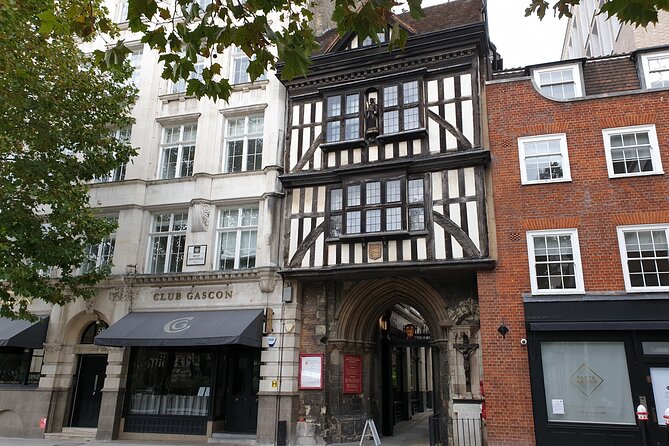
St. John’s Gate was once home to the medieval Knights Hospitallers. The site adds a different kind of story to the walk, moving away from plague and butchery toward religious orders, care, power, and medieval institutions.
You are likely to appreciate this stop if you enjoy seeing how an ordinary city street can preserve the outline of a much larger organization. The tour does not treat London’s past as a series of isolated disasters. It shows how hospitals, religious groups, markets, and government developed beside one another.
Next comes Cloth Fair, a quiet alley with a noisy history. This is exactly the sort of place where a guided walk earns its price. You might pass through without a second look, yet the name and setting open up stories about the people who lived and worked in the area.
The alley is also useful for understanding how much of old London is still present in fragments. You do not need a grand monument to find the past. Sometimes an awkward bend in a lane or an unusually old building tells you more about the city’s earlier shape than a polished attraction does.
The stops are listed at about 10 minutes each, but the route includes walking time between them. Wear comfortable shoes, especially if you prefer to pause, take photographs, or keep up with the group while listening.
William Wallace, St. Bartholomew the Great, and old London stories
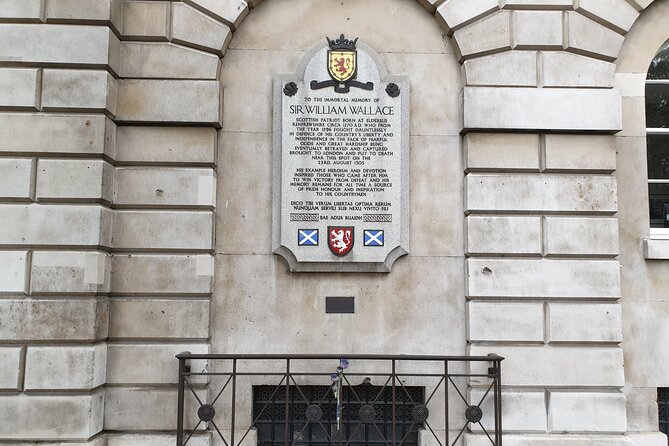
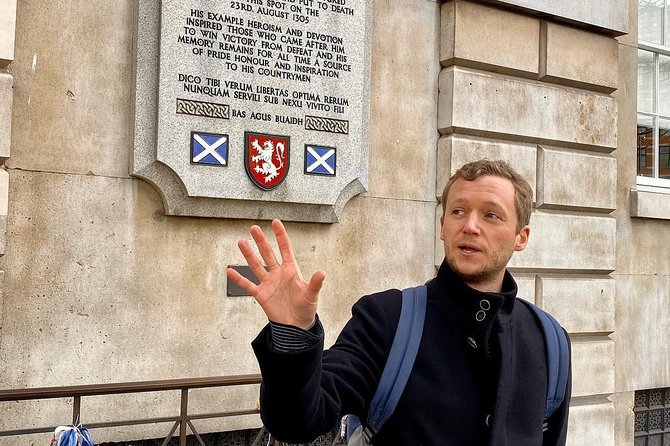
The William Wallace Memorial is an unexpected stop. Wallace, also known as Braveheart, is associated with Scottish resistance rather than London’s local history, so the memorial adds a wider British connection to the route.
This is one of the moments where a guide can make the difference between a quick glance and a memorable detail. Tom is repeatedly praised for connecting individual sites to broader events and for answering questions without losing the group’s pace.
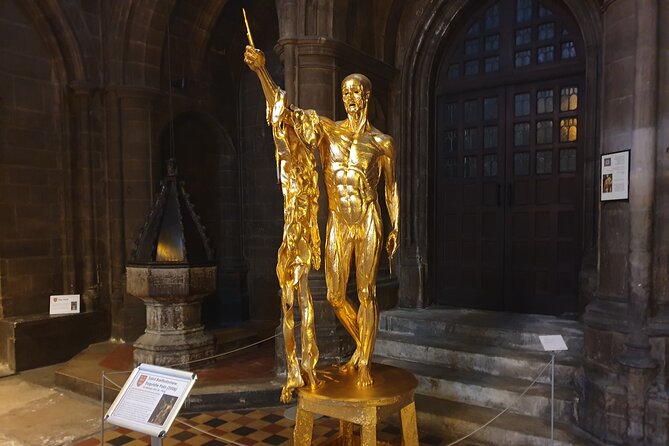
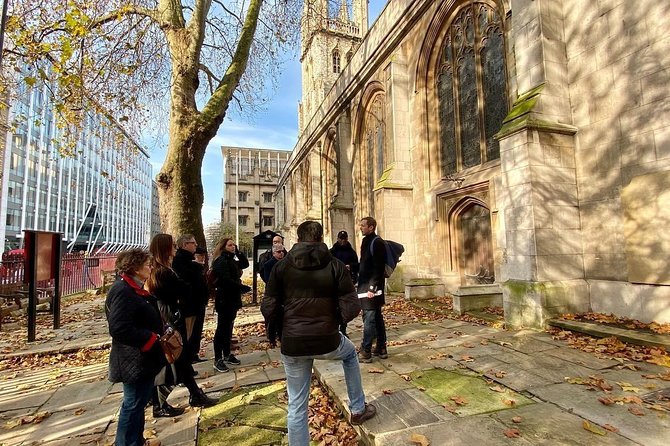
The Church of St. Bartholomew the Great is the only stop with admission included. It is London’s oldest surviving parish church, making it one of the most important points on the walk.
The church gives the tour a calmer pause. After stories of disease, markets, and violence, you get a place where centuries of worship and architecture remain visible. You can better understand how religious buildings acted as anchors in a city that was repeatedly damaged, rebuilt, and altered.
Allow your attention to shift here from the grisly theme to the building itself. The church is valuable not just because it is old, but because it helps explain the continuity of London. Fires, wars, urban growth, and changing institutions did not erase every earlier layer.
The visit is still brief, so do not expect the length of a dedicated church tour. If medieval buildings are a major interest, you may want to return later with more time.
A completely different sort of day out:
- Stonehenge, Windsor Castle, and Bath from London
★ 4.5 · 18,662 reviews - London Big Bus Hop-On Hop-Off Tour with Optional River Cruise
★ 3.5 · 10,803 reviews - London Small Group Tour of Historical Pubs
★ 5.0 · 10,422 reviews - Stonehenge, Windsor Castle and Bath with Pub Lunch in Lacock
★ 4.5 · 7,402 reviews
The Golden Boy and the city’s strange ghost stories
The Golden Boy of Pye Corner marks the place where the Great Fire of 1666 stopped. It is a small and unusual memorial, and the story attached to it is much bigger than the object itself.
The stop also brings in eighteenth-century ghost hysteria. That combination is typical of this walk. It moves from a major urban catastrophe to the way people later interpreted fear, rumor, and unexplained events.
I like this part because it shows that London’s bloody past is not only about confirmed events. The city’s history also includes legends, public anxieties, and strange episodes that reveal how people thought at the time.
The Golden Boy is easy to overlook, so keep your eyes open and listen for the exact location. A quick photograph is possible, but the explanation is more important than the memorial’s size.
Holborn Viaduct and the buried River Fleet
At Holborn Viaduct, the tour reaches the River Fleet, once Victorian London’s largest open-air sewer. This stop explains a major reason why the city’s growth created serious health problems.
The Fleet was not just a waterway. Its story shows how London turned natural features into drains as population and industry increased. The modern city hides much of this from view, which is why the guide’s explanation gives the street a new meaning.
This is a useful counterpoint to the medieval plague stories. Disease was not only an ancient problem. Poor sanitation, overcrowding, waste, and industrial growth continued to shape public health long after the Middle Ages.
You may find this stop less visually dramatic than the church or old gates. Its value comes from the connection between what you see now and what once ran beneath or beside the city. It is a strong example of the tour’s central idea: London’s past is often present, but out of sight.
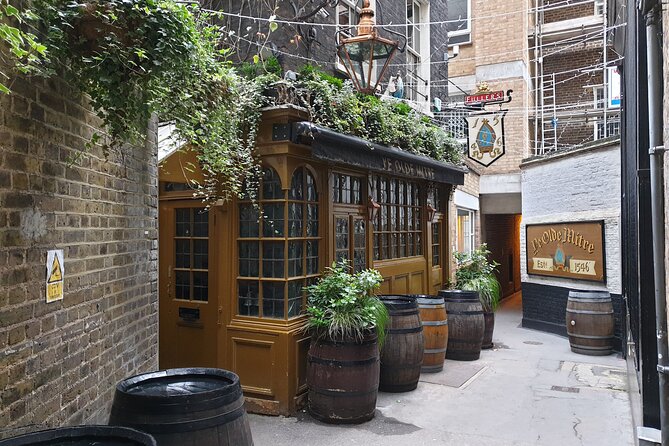
Ye Olde Mitre and the final stretch
Ye Olde Mitre is tucked down an alleyway and is described as a particularly atmospheric pub. It gives the walk a welcome change of pace near the end.
The stop is not presented as a meal included in the tour. Food and drinks are not listed as part of the $27.73 price, so treat the pub as a place to see and perhaps return to, rather than as a guaranteed dining break.
If you want to extend the experience, the pub may be a good place to continue the conversation after the walk. Cheese toasties and pork pies have been singled out as appealing choices, but you should budget separately for anything you order.
The tour ends on Ely Place, around the corner from Farringdon Station. That is practical for getting back across London and useful if you want to continue exploring the Clerkenwell and Smithfield area.
Saint Bartholomew’s Hospital and the meaning of the route
The final listed stop is Saint Bartholomew’s Hospital Museum, the oldest surviving hospital in the country. Its presence brings together several themes from the walk: illness, care, medicine, poverty, religious foundations, and the changing organization of London.
You do not need a specialist interest in medicine to find this stop worthwhile. Hospitals reveal what a city feared and how it tried to respond. They also show the gap between modern expectations of care and earlier forms of treatment.
The route works because its subjects connect. The Charterhouse introduces plague. Smithfield shows commerce and butchery. St. John’s Gate points to medieval religious institutions. The church and hospital show continuity. The Fleet shows urban neglect and sanitation. The Great Fire and Golden Boy show disaster and memory.
How much value do you get for $27.73?
At $27.73 per person, this is reasonably priced for a two-hour guided walk in central London. The cost is not paying for a long list of entry tickets. Most stops are viewed from public areas, and only St. Bartholomew the Great is specifically listed with admission included.
You are paying for access to the guide’s research, timing, local knowledge, and storytelling. That matters here because several sites are small or easy to miss. A guide who can explain what happened there gives the location its value.
The small group limit also supports the price. With no more than 15 people, you have a better chance of hearing the stories in narrow streets and asking about details that catch your attention.
The value drops if you want a broad survey of London’s main attractions. This is not a substitute for Westminster Abbey, the Tower of London, or a general city tour. It is best treated as a focused walk for people who want a stranger, darker, and more local view of the city.
What the guide adds to the experience
The guide is central to this tour. Tom is repeatedly praised for being approachable, funny, clear-speaking, and able to bring old events to life. He also asks questions of the group and offers suggestions for pubs and places to eat nearby.
That personal approach can make a small group feel more like a conversation than a lecture. It also helps if you have questions about the area, since the route contains many overlapping subjects.
Tom’s delivery is said to include details about filming locations, the origins of St. John Ambulance, bomb attacks during the Blitz, the markets, the Charterhouse, and William Wallace. Those extra links broaden the tour beyond the title’s focus on executions and plague.
Of course, the exact guide can affect the experience. The strongest feedback centers on Tom, so you may want to check the guide assignment if that matters to you when booking.
Who should book this walk?
I would recommend it to you if you like social history, old buildings, unusual memorials, and stories that explain how a city developed. It suits repeat visitors especially well because it covers streets and sites that are not always part of a first-time London plan.
It also works for anyone tired of tours that repeat the same famous murder stories. The focus here includes disease, markets, religion, sanitation, fire, hospitals, ghosts, and war.
You may want to skip it if you dislike gruesome subjects or prefer a relaxed sightseeing walk with broad views and major landmarks. The route is not built around grand scenery. Its rewards are details, connections, and stories.
The tour is offered in English, uses a mobile ticket, and is near public transportation. Most people can participate, and service animals are allowed. Confirmation arrives when you book. Free cancellation is available up to 24 hours before the start time, but changes or cancellations inside that window are not refunded. Poor weather can cancel the experience, with another date or a full refund offered.
Should you book Burnings, Butchery & Black Death?
Book it if you want London to feel less like a checklist of famous sights and more like a city shaped by disease, trade, belief, fire, and waste. The strongest reasons are the small group size, the compact route, the unusual stops, and the guide’s ability to connect them.
Skip it if you want interiors, major attractions, or a gentle family stroll. For $27.73, I think it offers good value for a curious history lover, especially early in a London visit, when its local suggestions can help you plan more time around Smithfield, Clerkenwell, and Farringdon.
FAQ
How long does the walking tour last?
The tour lasts approximately two hours.
How much does the tour cost?
The listed price is $27.73 per person.
Where does the tour start?
It starts at Underground Ltd on Aldersgate Street, near Barbican, London EC1A 4JA, UK.
Where does the tour end?
It ends on Ely Place, around the corner from Farringdon Station.
What language is the tour offered in?
The tour is offered in English.
How large is the group?
The group has a maximum of 15 participants.
Is admission included?
The tour includes admission to the Church of St. Bartholomew the Great. The other listed stops have no admission ticket charge.
Can I cancel for a full refund?
Yes. You can cancel at least 24 hours before the start time for a full refund. Cancellations or changes made less than 24 hours before the start time are not accepted or refunded.
What happens if bad weather cancels the tour?
If poor weather causes a cancellation, you are offered a different date or a full refund.
Just added in London
- Private Tour: Royal High Tea At Kensington Palace Gardens★ 5.0 · 39 reviews
- Private Tour: Personal Travel Photographer Tour in London★ 4.5 · 27 reviews
- London East End Private Walking Food Tour – Secret Food Tours★ 5.0 · 26 reviews
- Private Tour: Night Photography Tour in London★ 5.0 · 48 reviews
- London Like a Local, Private & Personalized (2-3 hrs)★ 4.5 · 11 reviews
- British Museum & National Gallery of London – Exclusive Guided Combo Tour★ 5.0 · 48 reviews
- Private Tour: Tower of London and St Paul’s Cathedral★ 5.0 · 1 review
- London Soho District – Exclusive Guided Walking Tour★ 5.0 · 2 reviews
Walking Tours, compared.
Oxford University Walking Tour With University Alumni Guide
Read our review →
Tour for Muggles The Ultimate Harry Potter Walking Tour in London
Read our review →
Cambridge University Walking Tour by Alumni™ Kings College Option
Read our review →
Blackbeard to Banksy – The Ultimate Walking Tour of Bristol
Read our review →
Air Raid Shelter + St. Nicholas Market Walking Tour
Read our review →
Walking Tour of Bath with Blue Badge Tourist Guide
Read our review →
Changing of the Guard Guided Walking Tour in London
Read our review →Browse the lists this tour appears in