
Reviewed · HISTORICAL TOURS
2 Hours History Walking Tour of The Secret Streets in Chelsea
Chelsea rewards curious walkers. This two-hour tour moves beyond the famous King’s Road into quiet lanes, old military quarters, garden squares, and streets shaped by royals, migrants, artists, and musicians. I like the small maximum of six people, which should make it easier to ask questions, and I like that Chelsea Physic Garden admission and cheese tasting are included.
The main consideration is the price: $88.97 per person is a serious sum for a two-hour walk. The value depends on what you want. If you prefer personal stories and unusual local details over a standard sightseeing route, it can make sense. If you mainly want grand landmarks, you may find it costly.
In This Review
- Key points about Chelsea’s secret streets
- Why this small Chelsea walk feels different
- Chelsea Physic Garden: plants, poison, and empire
- Duke of York Square and the old military barracks
- Knightsbridge: garden squares and dangerous streets
- King’s Road: Charles II, Nell Gwynn, and Chelsea’s famous names
- Pavilion Road: British and French cheese with a side of social history
- Cheyne Walk: wealth, poverty, and darker Chelsea tales
- What the $88.97 price gets you
- Who will enjoy this Chelsea walk?
- Should you book it?
- FAQ
- How long does the Chelsea secret streets tour last?
- Where does the tour begin?
- Where does the tour end?
- Is admission to the Chelsea Physic Garden included?
- How many people can join the tour?
- Can I cancel for a full refund?
Key points about Chelsea’s secret streets
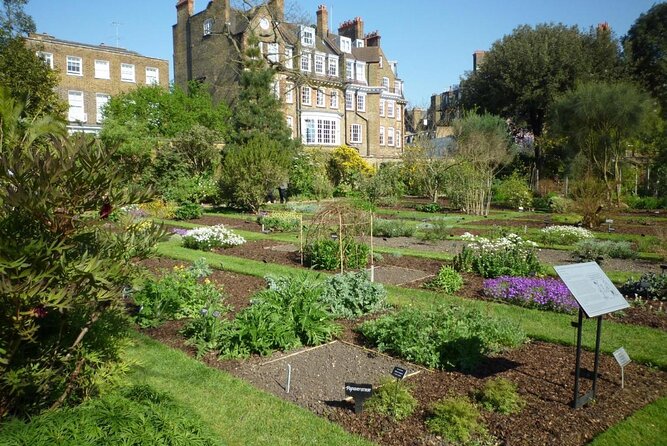
- Chelsea Physic Garden is the tour’s strongest anchor, with stories about tea, hot chocolate, medicinal plants, empire, and Agatha Christie.
- Sarah Reid offers local perspective, having grown up in the area rather than simply reading from a guidebook.
- The small group size, capped at six, allows for a more conversational walk.
- Cheese tasting at Pavilion Road adds a pleasant food break and connects Chelsea with French, Jewish, and British history.
- The route links glamour with darker stories, from royal affairs and punk-era culture to Tudor torture and Russian mafia murders.
- The tour finishes where it starts, at Ottolenghi Chelsea on Pavilion Road, making the logistics simple.
Why this small Chelsea walk feels different
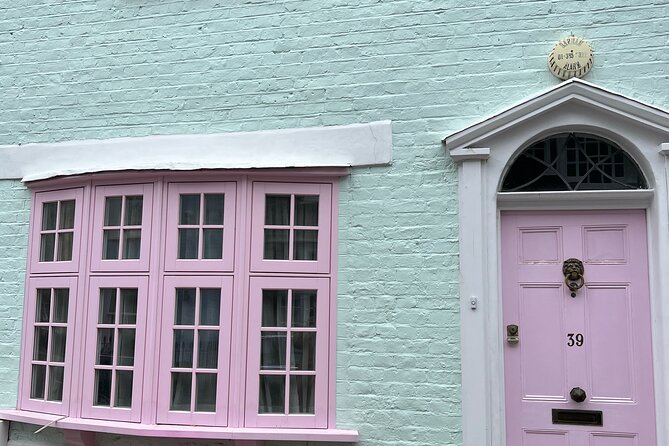
Chelsea is often reduced to designer shops, expensive homes, and the fashionable King’s Road. This walk gives you a more layered view. You still see polished squares and grand houses, but you also hear about former slums, Irish migration, military barracks, smugglers, prison hulks, and the people who gave the district its character.
The group size matters here. With no more than six participants, the guide can adjust the pace and follow your interests. That is useful in Chelsea, where a single street can lead to several stories: architecture, royal gossip, immigration, art, crime, or local commerce.
Sarah Reid is the named provider, and one particularly positive account describes her as having grown up in Chelsea. That local connection is important. It suggests a walk shaped by personal familiarity rather than a fixed list of famous sights. The tour has received a five-star rating from the two published reviews, with special praise for Sarah’s intimate knowledge of the area and for helping participants understand Chelsea as a community.
The route is also not just a parade of buildings. You stop for admission at the Chelsea Physic Garden, sample British and French cheeses, and receive personal suggestions from the guide. Those details give the walk some texture.
More History Tours in London
- London Small Group Tour of Historical Pubs
★ 5.0 · 10,422 reviews - Soho Music & Historic Pubs Tour
★ 5.0 · 1,993 reviews - Royal Historic Pubs Walking Guided Tour in London
★ 5.0 · 803 reviews
Chelsea Physic Garden: plants, poison, and empire
The Chelsea Physic Garden takes about 30 minutes and includes admission. This is the longest stop, and rightly so. It gives the tour a clear starting point because the garden connects science, trade, medicine, royalty, and Britain’s overseas ambitions.
You learn about Sir Hans Sloane, who helped bring hot chocolate to Britain. You also hear how medicinal plants changed medical practice and how the garden’s story links with America. Tea enters the discussion through theft and empire, a useful reminder that familiar British habits often have complicated origins.
The garden is also tied to Sir Joseph Banks and Captain Cook’s voyages. Their connection places Chelsea within the larger story of plant collecting and imperial exploration. You are not simply looking at attractive planting beds. You are considering why plants were gathered, who controlled them, and how botanical knowledge moved around the world.
Agatha Christie adds a darker note. The tour explains her training in poisons, linking the garden’s medicinal purpose with the writer’s fascination with dangerous substances. It is a memorable way to make botanical history feel practical rather than dusty.
Allow yourself time to look around during the stop. The information is dense, and the garden provides some of the best photo opportunities on the route. If you are especially interested in plants, medicine, or colonial history, this part may justify much of the admission cost by itself.
Duke of York Square and the old military barracks
The stop at Duke of York Square lasts around 10 minutes. The former military barracks have been repurposed as art galleries, cafés, shops, and homes. That change captures a major theme of Chelsea: old institutions are repeatedly turned into expensive modern spaces.
You hear a sharp royal complaint about London architecture. One royal reportedly claimed that German bombing during the Second World War had done less damage than modern building work. It is a memorable line because it opens a discussion about taste, preservation, and the uneasy relationship between old Chelsea and new development.
The area also brings together fashion designers, artists, social media makeup personalities, and a photographer known for using lookalikes in humorous, satirical images. These examples show that Chelsea is not only about aristocrats and old money. It remains a place where style and image carry real weight.
There is also gossip involving the Earl of Cadogan, one of Chelsea’s largest landlords, and the question of who makes the best tenant. This is the sort of local detail that can make a short walk entertaining, though it may appeal more to people who enjoy social history and neighborhood rumor than to those seeking formal architectural analysis.
Knightsbridge: garden squares and dangerous streets

At the Chelsea and Knightsbridge boundary, the tour turns toward Queen Anne-style houses and apartments. You will need to look up. The area’s architectural details are easy to miss when shop windows and traffic pull your attention down to street level.
The guide explains why Chelsea has so many garden squares. The story includes miasma, the old belief that bad air spread disease. Slums and unpleasant air in East London helped shape ideas about housing and development, and garden squares became part of the answer for wealthier residents.
This stop also covers the older dangers of Knightsbridge, including highway robbery. The modern version of danger is very different, but the area still uses private security patrols. You might spot a private policeman while walking, a small detail that connects the district’s past fears with its present concerns.
Look for the Italianate tiles on a former hospital. The stop is brief, about 10 minutes, so you will not get an exhaustive architectural lesson. Still, it adds useful context to the polished streets and helps explain why so many buildings are arranged around shared green spaces.
More Walking Tours in London
- Tour for Muggles The Ultimate Harry Potter Walking Tour in London
★ 5.0 · 4,684 reviews - London Jack The Ripper Guided Walking Tour
★ 5.0 · 3,131 reviews - Changing of the Guard Guided Walking Tour in London
★ 5.0 · 1,793 reviews - The Great British Rock and Roll Walking Tour
★ 5.0 · 1,371 reviews
King’s Road: Charles II, Nell Gwynn, and Chelsea’s famous names
The 20-minute King’s Road section is where royal stories take center stage. Charles II used the road as a private route to Hampton Court, and he also used it to visit his mistress Nell Gwynn. Their relationship is remembered in a well-known fountain along the street.
The royal connections continue with later residents and visitors, including Princess Kate Middleton. This gives the King’s Road a more personal feel than a simple shopping street. You are looking at a route that has long connected public power with private life.
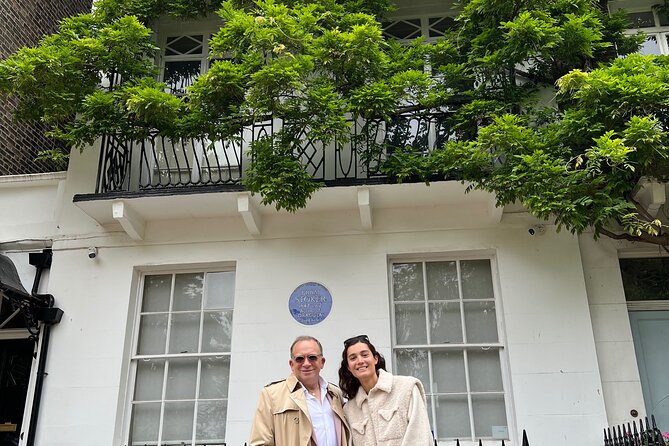
The tour then takes a playful turn toward vampires. You hear about actors who played vampires and lived nearby, along with Bram Stoker’s home. King Charles III’s connection to Transylvania also enters the story. These links are unusual, but they suit Chelsea’s taste for theatrical characters and dramatic gossip.
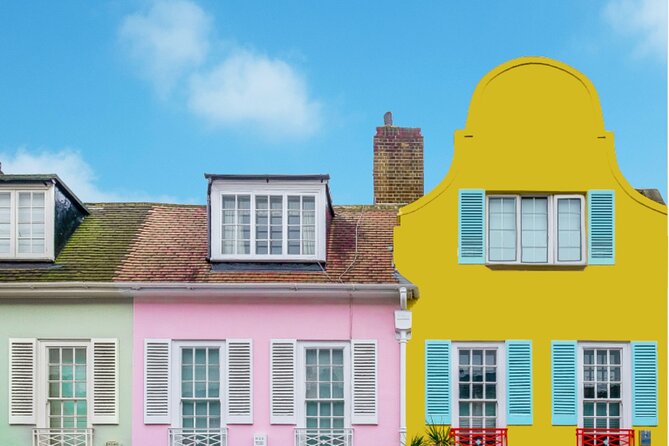
Migration is just as important. Irish and French newcomers helped shape the area, and the tour points out Dutch-style architecture with a look reminiscent of Cape Dutch buildings in Stellenbosch. This is a good reminder that London’s streets often contain architectural ideas carried across borders.
The King’s Road can be busy and commercial, so this is one portion where the value comes from the guide’s explanation rather than from quiet surroundings. I would pay attention to the buildings above the shops and to the details that connect the street with people who lived nearby.
Pavilion Road: British and French cheese with a side of social history
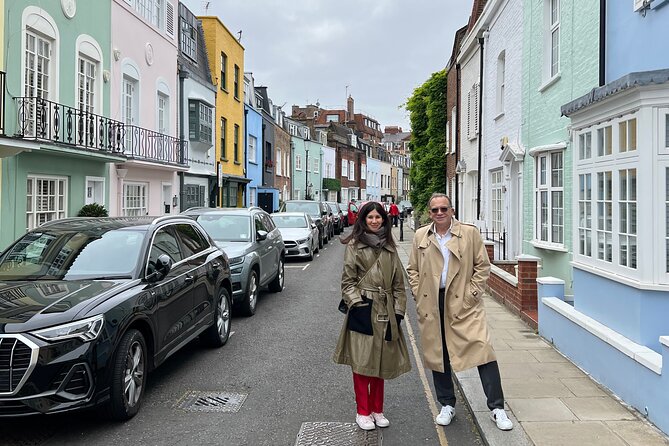
Pavilion Road is the meeting point and the place for the cheese tasting. You sample British cheeses that inspired Stilton, along with French cheeses. This is a welcome change of pace after several history-heavy stops.
The tasting is not just a snack. It reflects Chelsea’s French connections, from Huguenot arrivals to more recent French migrants living in Chelsea and South Kensington. Food makes the migration story easier to grasp. You can connect national history with something immediate and memorable.
The tour also explores Jewish migration and the role Jewish financiers played in helping royals pay for palaces, going back to William the Conqueror. The story then moves to fish and chips, including fried fish coated in matzo flour. It is an effective example of how immigrant traditions can become part of everyday British culture.
Australia enters through the history of prison hulks. These were decommissioned ships used to hold prisoners, and the guide explains the harsh punishments imposed for petty crimes. The material is grim, but it shows how crime, class, transportation, and empire were linked.
There is also an unusual comparison involving Islamic law and British law. This section covers a lot in roughly 10 minutes, so you should expect a fast sequence of connected stories rather than a full lecture on any single topic.
The cheese makes Pavilion Road especially appealing to food-minded participants. Just remember that this is a tasting within a walking tour, not a full meal. Plan to eat separately if you need lunch.
Cheyne Walk: wealth, poverty, and darker Chelsea tales
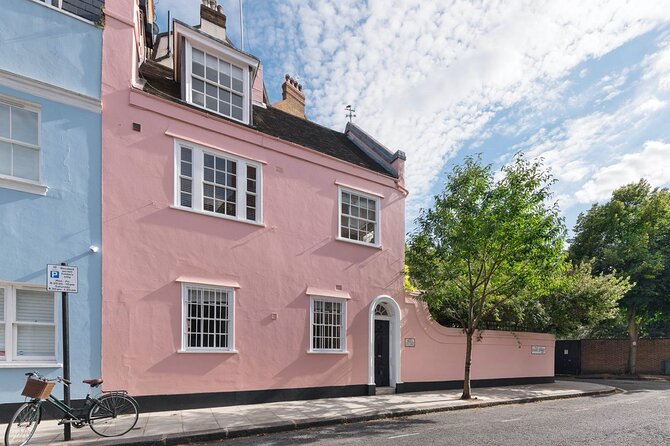
The final stop is Cheyne Walk, lasting about 15 minutes. The tone turns darker, with stories ranging from Tudor torture to Russian mafia murder mysteries. Backstreets nicknamed the burglars routes add a criminal edge to the polished image of Chelsea.
This is also where the tour addresses one of Chelsea’s biggest contradictions. The borough is among the richest in England, yet parts of it have been among the poorest. That contrast is easy to miss if you only see expensive houses and well-kept squares.
A tree planted by Elizabeth I when she was a child provides a more personal link to the past. Details like this help turn a broad royal story into a specific place you can see.
Cheyne Walk is a fitting finish because it brings together the route’s main themes: status, danger, old power, private lives, and the survival of unexpected traces. It also leaves you with a more complicated view of Chelsea. The district is not simply wealthy or fashionable. It is a place shaped by sharp divisions and colorful inhabitants.
What the $88.97 price gets you
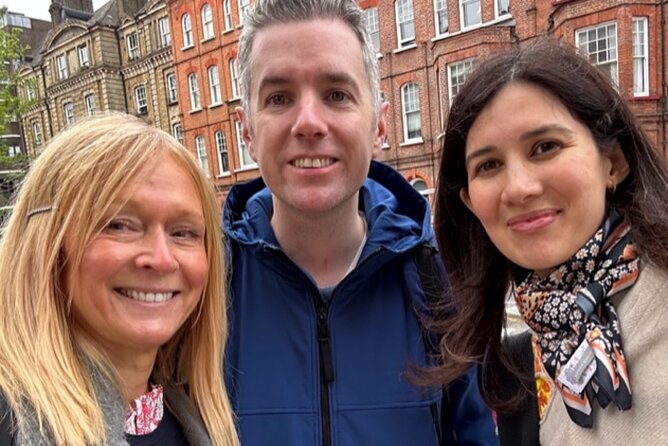
At $88.97 per person, this is priced as a premium small-group experience. The tour lasts about two hours, which makes the cost high if you judge it only by time. You are paying for a maximum group of six, a local guide, Chelsea Physic Garden admission, a cheese tasting, and access to stories that are not obvious from a normal walk along the King’s Road.
The value is strongest for you if you enjoy personal guiding. Sarah’s local connection, noted in the five-star feedback, is a major part of the appeal. A guide who grew up in the neighborhood can point out social links and small details that a large coach tour cannot handle.
The value is weaker if you want a long museum-style visit or a slow architectural survey. Several stops last only 10 minutes, and the route covers many subjects. The tour favors variety and storytelling over depth at any single site.
The average booking time is 33 days ahead, which suggests you should not leave it until the last moment if the timing matters to your London plans. You receive a mobile ticket, and the meeting point is Ottolenghi Chelsea, 261 Pavilion Road, London SW1X 0BP. The walk returns to that same point, a useful arrangement if you want to continue eating or shopping nearby.
Free cancellation is available until 24 hours before the start time. Changes or cancellations inside that window are not accepted for a refund.
Who will enjoy this Chelsea walk?
I would recommend this tour most strongly to people who:
- Have already seen central London’s major sights and want a less standard neighborhood walk
- Enjoy royal gossip, crime stories, migration, architecture, and local personalities
- Prefer a small group and plenty of opportunity to ask questions
- Like food stops that support the history rather than replace it
- Want personal recommendations from someone with local ties
- Appreciate photo opportunities, especially at the Chelsea Physic Garden
It may be less suitable if you want a completely quiet walk. The route includes busy King’s Road and a large number of topics in a short time. It may also disappoint you if your main interest is shopping, since the tour is about the stories behind Chelsea rather than a guided retail visit.
Most participants can take part, and service animals are allowed. The activity is near public transportation. Since it is a two-hour walking experience, comfortable shoes are a sensible choice, though the supplied information does not specify the walking distance.
Should you book it?
Book this Chelsea tour if you want to understand how royal scandal, immigration, art, medicine, food, crime, and property development overlap in one London district. The strongest features are the small group, the Chelsea Physic Garden visit, Sarah Reid’s local background, and the cheese tasting at Pavilion Road.
Think twice if $88.97 feels too high for a short walk or if you prefer a slower tour with fewer subjects. For the right audience, though, this is a lively way to see Chelsea beyond its polished front. You leave with more than photographs of pretty houses. You get a clearer sense of the people and arguments that shaped the streets.
FAQ
How long does the Chelsea secret streets tour last?
The walking tour lasts approximately two hours.
Where does the tour begin?
It begins at Ottolenghi Chelsea, 261 Pavilion Road, London SW1X 0BP, United Kingdom.
Where does the tour end?
The activity ends back at the meeting point on Pavilion Road.
Is admission to the Chelsea Physic Garden included?
Yes. Admission to the Chelsea Physic Garden is included, and the visit lasts about 30 minutes.
How many people can join the tour?
The tour has a maximum of six participants.
Can I cancel for a full refund?
Yes. You can cancel at least 24 hours before the experience start time for a full refund. Cancellations or changes made less than 24 hours before the start time are not accepted for a refund.
Just added in London
- Private Shoreditch Street Photography Workshop★ 4.5 · 4 reviews
- London to Southampton Cruise Port Including Stonehenge★ 5.0 · 13 reviews
- Private 2.5 Hour Taxi Tour of London – London’s Greatest Bits!★ 5.0 · 4 reviews
- Private Round Trip Transfer from London to Canterbury Cathedral and Leeds Castle★ 5.0 · 1 review
- Private Round Trip Transfer between London Airports and Hotel★ 3.5 · 56 reviews
- East London to Southampton Cruise Terminals Private Port Transfer★ 5.0 · 2 reviews
- Private Round Transportation: London to London with Stopover at Stonehenge★ 5.0 · 2 reviews
- Bicester Village Private Vehicle Round Trip Service from London★ 4.5 · 3 reviews
Historical Tours, compared.
Shadows of York: Ghost Walk and Horrible History.
Read our review →

A Walk Through Time: History of Liverpool Walking Tour
Read our review →
Royal Historic Pubs Walking Guided Tour in London
Read our review →
Private Group: Historical Pub Walking Tour of London
Read our review →
Best Of Liverpool Heritage, History & Culture Guided Walking Tour
Read our review →Browse the lists this tour appears in