Reviewed · PRIVATE
Visit the Birthplace of The Rolling Stones – Private Tour
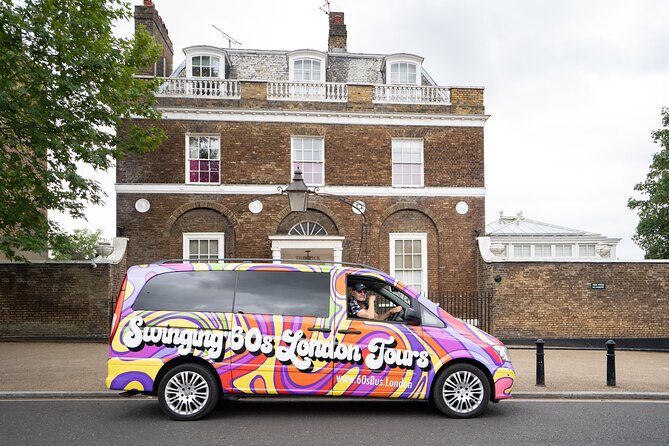
The Stones started in small rooms. This private London tour follows that story from Chelsea to Richmond, linking early flats, clubs, recording studios, and homes tied to the band. I like the small-group format, with up to six people sharing an air-conditioned minivan and a guide who can focus on your group. I also like the route’s local feel, since it reaches places most music fans would miss on a standard London sightseeing tour.
The tour covers several important moments in a compact three hours, including the Crawdaddy Club, Olympic Studios, and 102 Edith Grove. The main consideration is that many stops are brief exterior visits, so you should book this for stories, streets, and atmosphere rather than museum interiors or long visits inside music venues.
In This Review
- Key points about this Rolling Stones tour
- Why the Stones story works so well in London
- Meeting at Earl’s Court and riding west
- Chelsea, the Wetherby Pub, and the flat at 102 Edith Grove
- Cheyne Walk and Swinging London
- The Half Moon in Putney
- Olympic Studios and six consecutive albums
- Richmond’s Station Hotel and the first Crawdaddy Club
- Richmond Hill, celebrity homes, and a famous song
- Ormond Road and Sandover Hall
- The second Crawdaddy Club and the road to Reading
- What the three-hour format feels like
- How to use Richmond after the tour
- Who should book this private Stones tour?
- Should you book it?
- FAQ
- How long does the Rolling Stones tour last?
- Where does the tour begin?
- What time does the tour start?
- Where does the tour end?
- How many people can join the private tour?
- Is transportation included?
- Are admission tickets included?
- What language is the tour offered in?
- What is the minimum age?
Key points about this Rolling Stones tour
- Follow the band from Chelsea to Richmond: The route connects the Stones’ early London years with the clubs and homes that shaped their rise.
- Visit 102 Edith Grove: See the flat shared by Brian Jones, Mick Jagger, and Keith Richards in 1962 and 1963.
- Trace the Crawdaddy Club story: Visit both Richmond locations linked to the club that helped launch the band.
- See Olympic Studios: The Stones recorded six consecutive albums there between 1966 and 1972.
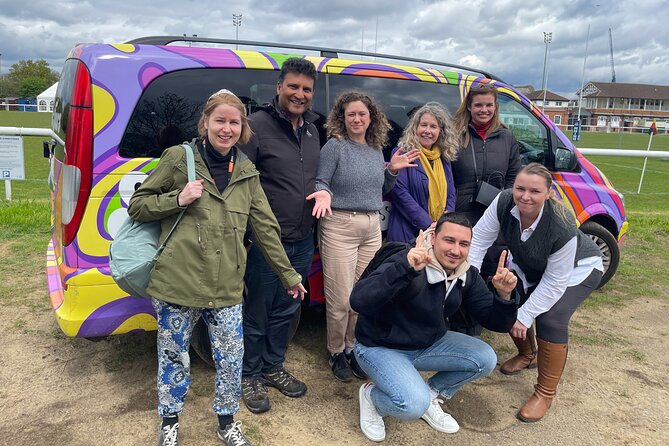
- Enjoy a genuinely private outing: Only your group participates, with space for up to six people.
- Finish at Richmond Station: You can return quickly to central London or stay in Richmond for the river and Richmond Park.
Why the Stones story works so well in London
The Rolling Stones are often presented through albums, stage costumes, and famous photographs. This tour gives you something more grounded: ordinary streets, modest buildings, pubs, clubs, and suburban homes where the band’s story took shape.
That matters because the early Stones were not yet an arena act. They were young musicians looking for rehearsal space, club dates, and a regular audience. The route follows that climb in a useful order, beginning around Chelsea and moving west toward Richmond, where the band found one of its first reliable platforms.
I like the way the tour connects personal places with career turning points. You see where Mick Jagger, Keith Richards, and Brian Jones lived together, then follow the band to performance sites and recording rooms. The result is less about checking off famous addresses and more about understanding how a working band built momentum.
The 4.9 rating from 36 reviews, with 100 percent recommending the experience, fits the strongest feature here: the tour is built around commentary. A quick stop at a building becomes worthwhile when you know what happened there and why it mattered.
A few more to weigh up in London
- Stonehenge, Windsor Castle, and Bath from London
★ 4.5 · 18,662 reviews - London Big Bus Hop-On Hop-Off Tour with Optional River Cruise
★ 3.5 · 10,803 reviews - London Small Group Tour of Historical Pubs
★ 5.0 · 10,422 reviews
Meeting at Earl’s Court and riding west
The tour begins at the Earl’s Court Police Box on Earls Court Road at 1 pm. You should arrive ready to start on time, since the route has several stops packed into roughly three hours.
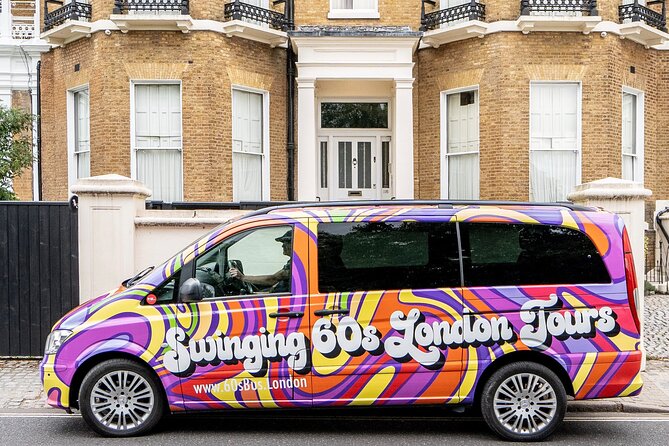
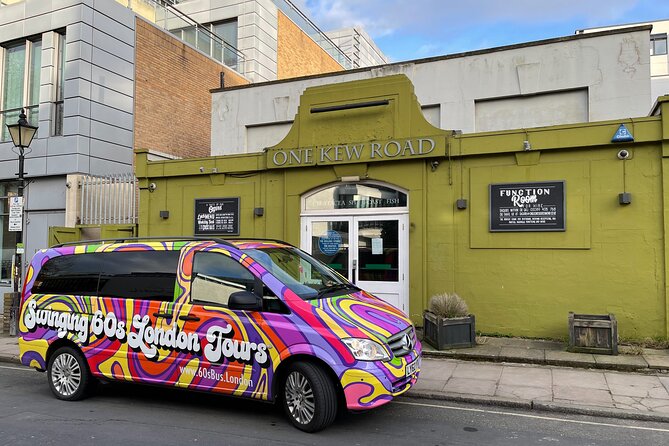
The air-conditioned minivan is useful in London, where a route covering Chelsea, Putney, Olympic Studios, and Richmond would otherwise require several changes by bus or train. You spend less energy navigating and more time listening. The private setup also lets your group ask questions as the afternoon develops.
The tour price is $575.86 per group of up to six. That works out to about $96 per person for six people, before any extra costs. For a solo visitor or couple, the value is less obvious. For a family or group of friends who already share an interest in the Stones, the private vehicle and guide can make the cost reasonable compared with booking several separate activities.
Public transportation is listed at £5 per person as an additional cost, and snacks are not included. The end point is Richmond Station, with frequent train and Tube connections back to London and Windsor. The route is therefore practical even if you have plans after the tour.
Chelsea, the Wetherby Pub, and the flat at 102 Edith Grove
One early point of interest is the former location of the Wetherby Pub. Bill Wyman auditioned for the band there, and the group also rehearsed at the pub. It is a small detail, but it shows the practical side of the Stones’ beginnings. Before the fame, the band needed places where musicians could meet, test one another, and play.
The first named stop is 102 Edith Grove, where Brian Jones, Mick Jagger, and Keith Richards shared a flat between 1962 and 1963. You stop outside for about five minutes, with no admission charge.
Do not expect a lengthy visit. This is an address and an exterior view, not a preserved band museum. Still, it is one of the most meaningful stops because it puts three central figures in the same physical setting before the band became a global force.
The story becomes even better when you hear that they invited The Beatles back to the flat after first meeting them in Richmond. That detail links two major British bands at a point when both were still finding their way. I would pay close attention here, since the guide’s storytelling is what turns a short pavement stop into a memorable one.
Cheyne Walk and Swinging London
The route continues to Cheyne Walk, one of London’s grandest streets. Mick Jagger and Keith Richards purchased houses there in 1968, when the band had already moved well beyond its early club years.
You spend only about two minutes looking at the houses. That is enough to understand the setting, but not enough for a long architectural visit. The appeal is the contrast: the Stones’ story moves from a shared flat in Edith Grove to high-value homes on one of Chelsea’s most prestigious streets.
The tour also passes through the part of Chelsea associated with Swinging London. The area is linked with the former Chelsea Drugstore and with famous fashion and music venues. This section helps place the band in the wider cultural change of 1960s London, not just in a series of isolated addresses.
I find this part useful for context. The Stones did not grow in a vacuum. Clubs, clothing, nightlife, and new music venues were all part of the same city scene. You get a sense of that world from the streets, even though the stops themselves are short.
A completely different sort of day out:
- Stonehenge, Windsor Castle and Bath with Pub Lunch in Lacock
★ 4.5 · 7,402 reviews - Tower of London and Crown Jewels Exhibition Ticket
★ 4.5 · 6,677 reviews - Thorpe Park Admission Ticket
★ 4.0 · 5,915 reviews - Stonehenge, Windsor Castle and Bath Full Day Guided Tour
★ 4.5 · 5,346 reviews
The Half Moon in Putney
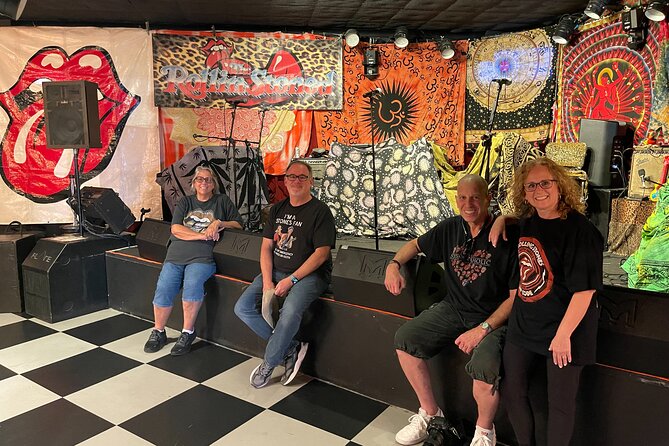
At The Half Moon in Putney, the tour pauses for about 10 minutes. The venue is linked to a private party where The Rolling Stones performed as recently as 2000.
This stop gives the route a wider time span. Much of the itinerary focuses on the band’s early years, but The Half Moon shows that the Stones’ connection with London did not end when they became famous. A venue that can be tied to both the group’s London identity and a later performance adds useful depth.
Admission is free for the stop, but the visit is primarily a look at the venue from outside unless the tour operator provides another arrangement. You should not plan on a full concert-site visit or a long indoor stay based on the stated timing.
The 10-minute pause is a good length for photographs and a quick explanation. If you enjoy old music venues as much as the band itself, this may be one of the more satisfying stops.
Olympic Studios and six consecutive albums
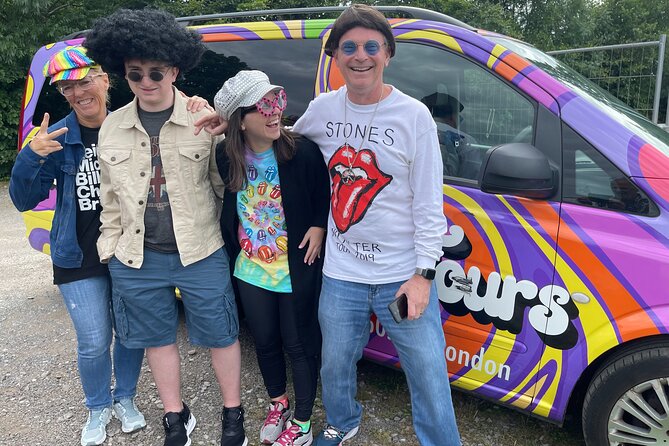
Olympic Studios receives another 10-minute stop. The Stones recorded six consecutive albums there between 1966 and 1972, working with Chris Kimsey and Glyn Johns.
For many fans, this is the musical heart of the route. A recording studio is not as visually dramatic as a concert hall, but it marks the point where the band’s sound was shaped and preserved. The dates also cover a major period in the Stones’ career, making Olympic more than a single-album footnote.
The tour also explains that the band recorded its first hit, Come On, in 1963 at Olympic’s earlier location off Baker Street. That distinction is worth noting. The stop connects two versions of Olympic and shows how the studio’s role in the Stones’ story stretched from their early recording days into a much more established period.
Again, you are looking at the cinema and studio location from outside, with no admission ticket required. The value comes from the explanation and the sequence of events. If your interest is mainly in seeing preserved recording equipment, this will feel limited. If you want the timeline behind the albums, it is an important pause.
Richmond’s Station Hotel and the first Crawdaddy Club
The next major stop is All Bar One Richmond, formerly the Station Hotel. This was the original Richmond home of the Crawdaddy Club.
The Rolling Stones secured their first residency there on Sunday, February 24, 1963. They also first met The Beatles at this Richmond location and signed with Decca Records there. That is an extraordinary concentration of music history in one place.
The Crawdaddy Club matters because a regular residency gives a young band a chance to develop. Instead of playing one-off sets to a new crowd each night, the Stones could build a following and refine their performance. The stop helps explain how the band moved from promising musicians to a group with real momentum.
You spend about 10 minutes here, and admission is free. As with most locations on the route, the building is the subject rather than an exhibition. I would treat this as one of the stops where the guide’s account matters most.
Richmond Hill, celebrity homes, and a famous song
At Terrace Gardens on Richmond Hill, you see homes connected with several well-known musicians. Mick Jagger and Jerry Hall lived here in the early 1990s. Ronnie Wood lived here from 1971, and It’s Only Rock And Roll But I Like It was written here in 1973.
The location is also linked with Rupert Murdoch, who lives here with Jerry Hall, and with a house owned by Pete Townshend that is currently offered for sale at £15 million. The prices and names underline how strongly this part of Richmond has long appealed to major figures in music and public life.
The stop lasts about five minutes and does not include admission. You get a street-level look rather than access to private homes, so respect for residents is essential. The point is not celebrity spotting. It is seeing how the Stones’ London story later extended into the quieter, wealthier setting of Richmond.
I like this contrast with Edith Grove. Early band life appears cramped and improvised; later life is tied to spacious homes and one of London’s finest views. The two stops together tell a clear story about success without needing a formal museum.
Ormond Road and Sandover Hall
Ormond Road is associated with the Sandover Hall location, where The Stones performed between 1962 and 1963. The stop lasts about five minutes and is free.
This is another brief exterior visit, but it helps fill in the band’s working schedule during its early period. You are not just seeing the one famous Crawdaddy address. You are following the network of halls and clubs where the group played while building its name.
For casual listeners, this may be a less essential stop than Olympic Studios or 102 Edith Grove. For committed fans, the details add texture. The band’s rise depended on repeated local performances, and places like Sandover Hall were part of that process.
The second Crawdaddy Club and the road to Reading
The final named stop is the second Crawdaddy Club location. In 1963, The Yardbirds replaced The Stones as the resident band there.
The site also hosted Harold Pendleton’s National Jazz and Blues Festival from 1961 to 1965. After moving through several locations, the festival eventually settled in Reading and became the world’s longest-running pop festival.
This is a strong ending because it widens the story beyond The Rolling Stones. The club scene fed into a larger British music network, and the festival connection shows how local venues helped shape events that lasted for decades.
The stop lasts about 10 minutes and is free. By this point, you have moved from the band’s earliest shared flat through its first residency, later homes, recording work, and the wider club culture around it. Ending in Richmond makes practical sense too, since you finish at the station rather than needing to retrace the route.
What the three-hour format feels like
Three hours is a sensible length for this route. You cover a lot of ground, but you are not committing an entire day to music addresses. The tradeoff is pace. Several stops last only two to five minutes, while the longest pauses are around 10 minutes.
I would book this if you like a moving narrative and are happy with exterior visits. You should choose something else if you want long time inside venues, archival displays, or live music.
The private format is a major help. Your group can stay focused on the Stones instead of listening to a broad London tour that gives each subject only a few minutes. A private guide can also adjust the conversation to your interests, although the exact guide’s name is not provided.
The tour is offered in English, and confirmation is sent when the booking is made. The minimum age is nine, so it can work for families with older children who already know the band’s music. Most people can participate, and the route is near public transportation.
How to use Richmond after the tour
The tour ends at Richmond Station, a useful finishing point rather than an awkward roadside drop-off. Fast and frequent train and Tube services connect Richmond with other parts of London and Windsor.
You can also extend the afternoon. Richmond offers a walk along the river, while Richmond Park provides roaming deer and plenty of history. Those additions are not included in the tour, but the station ending gives you a simple chance to keep exploring.
If you are staying in central London, you can return after the final stop. If you have already seen the main sights, staying in Richmond gives the tour a calmer finish than rushing straight back into the city center.
Who should book this private Stones tour?
I would recommend it most strongly to:
- Rolling Stones fans who want places connected with the band’s early years
- Small groups willing to share the $575.86 price
- Visitors who prefer a private guide to a large coach tour
- Music fans interested in clubs, recording studios, and working musicians’ homes
- Families with children aged nine or older who already enjoy the band
The experience is less suitable for someone seeking ticketed attractions or a full museum program. You will see many locations from the street, and some stops are very short. The reward is the story linking them together.
Free cancellation is available up to 24 hours before the 1 pm start time. Changes or cancellations inside that window are not accepted for a refund, so check your plans before the final day.
Should you book it?
Book this tour if the idea of standing outside 102 Edith Grove, Olympic Studios, and the two Crawdaddy Club sites sounds exciting. The route gives you a clear picture of how The Rolling Stones developed from young musicians sharing a flat into one of Britain’s defining bands.
The best value comes when six people share the vehicle and guide. If you are traveling alone or as a couple, compare the group cost with your interest level. For committed fans, the private attention and rare locations can justify the price. For casual listeners, a general London music tour may offer broader value.
The highest praise belongs to the personal, informative approach. You get a focused afternoon, a useful route from Chelsea to Richmond, and plenty of details that are easy to miss on your own. Just keep your expectations clear: this is a guided history of places, not an indoor Stones museum.
FAQ
How long does the Rolling Stones tour last?
The tour lasts approximately three hours.
Where does the tour begin?
It begins at the Earl’s Court Police Box, 232 Earls Court Road, London SW5 9RD.
What time does the tour start?
The scheduled start time is 1 pm.
Where does the tour end?
The tour ends at Richmond Station, Stop C, Richmond TW9 1DJ.
How many people can join the private tour?
The private vehicle and guide are available for groups of up to six people.
Is transportation included?
An air-conditioned vehicle and professional guide are included. Public transportation is listed separately at £5 per person.
Are admission tickets included?
The listed stops have no admission charge, and the tour includes the exterior visits described. No separate attraction admission is included.
What language is the tour offered in?
The tour is offered in English.
What is the minimum age?
The minimum age is nine years old.
Just added in London
- Private Transfer From London to Southampton Cruise Terminal★ 4.0 · 2 reviews
- Layover Tour of London from LHR Executive Luxurious Vehicle Private Tour 6 hour★ 4.5 · 9 reviews
- Pub & History Tour London (History & Beers)★ 5.0 · 3 reviews
- eSIM for UK (34 EU countries) | 3 to 30 days. Up to 40GB of data★ 4.0 · 18 reviews
- Young Victoria’s London: Windsor Castle & Kensington Palace★ 5.0 · 1 review
- Zombie Scavengers Game – Southend-on-Sea, UK★ 4.5 · 2 reviews
- Women of Whitechapel 2 hour Walking Tour★ 5.0 · 15 reviews
- Working Women of the East End Walking Tour★ 5.0 · 85 reviews
Private, compared.
The Premier Classic London: Private 4-Hour Tour in a Black Cab
Read our review →
Stonehenge Inner Circle Private Tour from London with Bath Visit
Read our review →

Private London Arrival Transfer – Airport to Hotel / Accommodation
Read our review →
Private 3-Hour Guided Beatles Classic Tour of Liverpool
Read our review →
British Museum London Guided Tour Semi-Private 8ppl Max
Read our review →