Reviewed · TOURS
The Nursery Rhyme Tour of London
Nursery rhymes have darker roots than you think. This private London walk connects familiar verses with old churches, execution sites, medieval lanes, monuments, and the City’s grandest landmarks. I like the unusual theme, and I especially like that guide Stephen uses the city itself as the classroom rather than keeping you inside a museum. You get the Tower of London, London Bridge, and St Paul’s Cathedral along the way.
I also like the private format, since you can ask questions and shape the pace around your own family or group. The tour’s stories bring a playful edge to serious subjects such as plague, public executions, fire, and harsh old laws. The main consideration is the $220.20 per person price, which can feel high for a three-hour walk unless you have a larger private group or a strong interest in London folklore.
In This Review
- Key points to know before booking
- Why nursery rhymes make a clever London tour theme
- Starting beneath the Tower of London
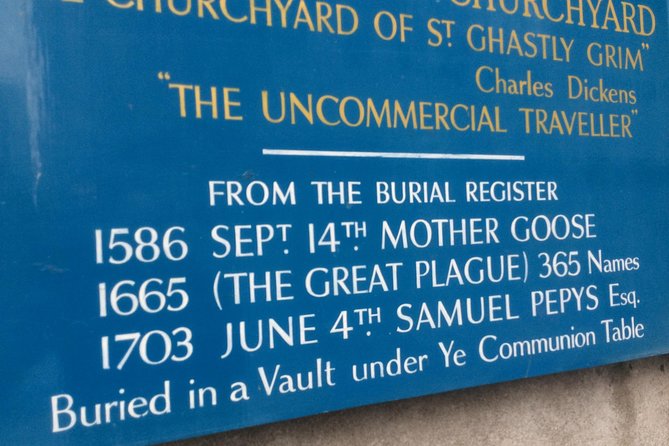
- St Olave’s Church and the Old Mother Goose story
- London Bridge, fallen bridges, and changing landmarks
- The Great Fire and the place where London burned
- Medieval lanes around Clements Lane
- Bank, the Cat and the Fiddle, and the financial district
- St Paul’s Cathedral and Baa Baa Black Sheep
- William Wallace and Doctor Foster
- Smithfield, Three Blind Mice, and Mary, Mary, Quite Contrary
- The Charterhouse and the Black Death
- Farringdon and the meaning of Pop Goes the Weasel
- Timing, walking effort, and what to bring
- Is $220.20 per person good value?
- Who should book the Nursery Rhyme Tour?
- FAQ
- Where does the Nursery Rhyme Tour of London start?
- What time does the tour begin?
- Where does the tour end?
- How long does the tour last?
- Is this a private tour?
- Are admission tickets included?
- Can I cancel for a full refund?
Key points to know before booking
- Nursery rhymes guide the route: You connect verses such as Ring a Ring o’ Rosies, Three Blind Mice, Baa Baa Black Sheep, and Pop Goes the Weasel with real London places.
- The walk begins at the Tower of London: Meet at Tower Hill at 9:30 a.m., then travel west on foot through the City.
- It ends at Farringdon Station: The final stop is close to restaurants, pubs, and a well-connected Underground station.
- Stephen adds humor and questions: The guide’s style is conversational, and one account describes nearly five hours of lively discussion rather than a rushed sightseeing circuit.
- Admission fees are limited but not always included: The Tower, Monument, and St Paul’s Cathedral stops are exterior or nearby encounters unless you arrange entry separately.
- The tour is private: Only your group participates, making it a good fit for families, friends, or anyone who prefers questions over a fixed group script.
Why nursery rhymes make a clever London tour theme
I enjoy tours that give familiar places a fresh purpose. Most people can recognize London Bridge or St Paul’s Cathedral, but fewer expect those landmarks to lead into stories about old songs, political figures, religious customs, disease, and public punishment.
The nursery rhymes are not all proven historical records. Some connections are traditional theories, local associations, or playful interpretations. That is part of the appeal, but you should approach the tour as folklore mixed with London history, not as a final answer to every nursery rhyme mystery.
The subject also keeps the walk moving. You are not simply stopping for photographs and dates. At each location, the guide explains how a building, statue, street, or old trade may relate to a line you may have heard as a child.
That mix suits families with older children, adults who enjoy odd bits of history, and repeat visitors who have already seen London’s headline sights. Younger children may enjoy the familiar rhymes, though the material includes executions, plague, death, and grim punishments.
A few more to weigh up in London
- Stonehenge, Windsor Castle, and Bath from London
★ 4.5 · 18,662 reviews - London Big Bus Hop-On Hop-Off Tour with Optional River Cruise
★ 3.5 · 10,803 reviews - London Small Group Tour of Historical Pubs
★ 5.0 · 10,422 reviews
Starting beneath the Tower of London
The meeting point is Tower Hill, London EC3N 4DJ, directly outside the Tower of London area. The scheduled start is 9:30 a.m., though the provider suggests a later start around 10:30 or 11 a.m. when practical, partly to avoid rush hour.
Your first stop is the Tower itself. The tour does not include admission to the Crown Jewels or the interior, and the listed stop lasts about 15 minutes. Still, the setting gives the opening story real weight. The Tower reaches back to Roman-era London and is linked with royal power, imprisonment, executions, and some of the city’s bleakest stories.
The unusual twist here is the mulberry bush. The Tower grounds include an ancient tree associated with the rhyme about going round the mulberry bush. The guide uses that small detail to move from a major fortress to a childhood song.
I would not book this tour expecting a full Tower visit. If you want the Crown Jewels, you need a separate ticket and more time. Think of this stop as a dramatic introduction and a chance to see how the tour works: a famous monument, a lesser-known detail, and a rhyme connection.
St Olave’s Church and the Old Mother Goose story
The walk continues to St Olave’s Church, where the stop lasts about five minutes and admission is free. This is a brief pause, but the church is tied to literary history and the remains of Old Mother Goose.
The subject is especially useful for anyone who has wondered if Mother Goose was a real person. The guide can explain the local tradition and the uncertainty around the name without turning the stop into a long church visit.
Because the stop is short, do not expect a detailed examination of the building. Its value comes from the story and from seeing how literary figures, nursery characters, and old London locations overlap.
London Bridge, fallen bridges, and changing landmarks
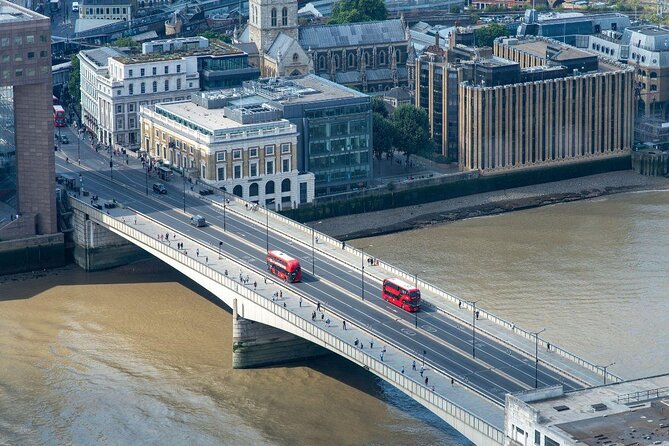
At London Bridge, you spend about 15 minutes considering the famous structure and the bridges that came before it. The bridge you see today is not the medieval London Bridge, and it is not every bridge remembered in old songs and stories.
That distinction matters. London often keeps the same name while the physical object changes. A guide can help you separate the current structure from earlier versions and explain why a line about a bridge falling down has remained so memorable.
This is also a practical sightseeing stop. You will see one of London’s best-known river crossings, but the tour’s purpose is not simply to point at it. The bridge becomes a prompt for discussing collapse, rebuilding, and the way public memory turns events into rhyme.
A completely different sort of day out:
- Stonehenge, Windsor Castle and Bath with Pub Lunch in Lacock
★ 4.5 · 7,402 reviews - Tower of London and Crown Jewels Exhibition Ticket
★ 4.5 · 6,677 reviews - Thorpe Park Admission Ticket
★ 4.0 · 5,915 reviews - Stonehenge, Windsor Castle and Bath Full Day Guided Tour
★ 4.5 · 5,346 reviews
The Great Fire and the place where London burned

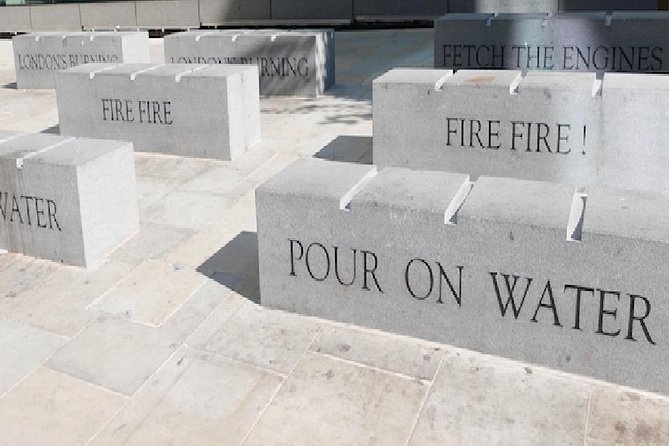
The Monument to the Great Fire of London is the next major stop, lasting around 15 minutes. Admission is not included, so this walk focuses on the monument and surrounding setting rather than taking you up the column.
The connection here is London’s Burning. The Monument provides a clear physical marker for a catastrophe that transformed much of the City. You get both a large memorial and smaller reminders of the fire, then hear how the event became part of the city’s popular storytelling.
I like this stop because it links a nursery phrase to a documented event rather than relying only on speculation. It also gives you a useful sense of how close together many City landmarks are. The walk is compact, but each stop changes the subject.
Medieval lanes around Clements Lane
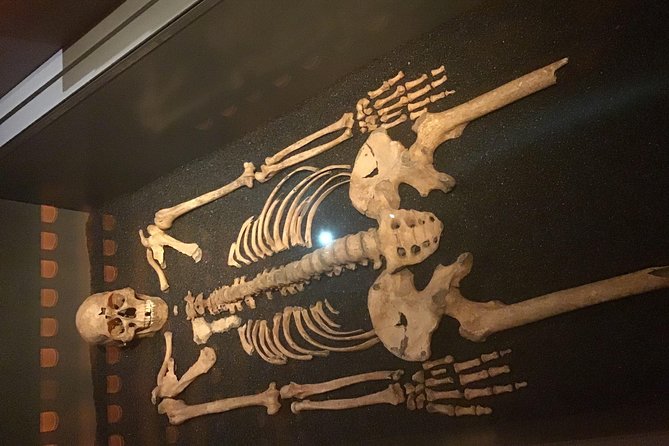
Clements Lane brings you into older, narrower parts of the City. The stop lasts about 30 minutes, making it one of the longer sections of the tour.
Here you encounter St Clement’s and the familiar oranges and lemons rhyme. The guide also brings in St Swithin’s Day, Dick Whittington, and his cat. These stories widen the tour beyond one simple rhyme. They show how songs, saints’ days, civic legends, and famous characters all grew from London’s streets.
This is a good point to pay attention to your guide’s storytelling. The supplied account describes Stephen as someone who encourages questions and keeps the experience fun. That matters here because the material can branch in several directions. You are likely to get more from the stop if you ask why a particular tradition became attached to a church or street.
The lanes are part of the experience, but you should still expect an urban walking tour, not a quiet countryside stroll. Wear comfortable shoes and be ready to walk on hard surfaces for roughly three hours.
Bank, the Cat and the Fiddle, and the financial district
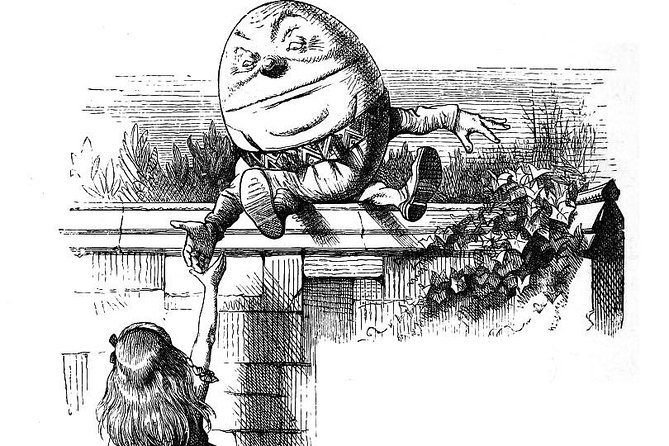
At Bank, the tour asks why a cat and fiddle appear only a short walk from the Bank of England. This stop takes about 10 minutes and is free.
The contrast is the point. The City of London is known for finance, banks, and imposing offices, yet old signs, pub names, and traditional symbols remain nearby. The guide uses that contrast to explain the possible meaning behind the rhyme and the setting in which it survives.
I find this kind of stop more rewarding than another grand façade. You are encouraged to look at details you might otherwise pass without noticing. The drawback is that the connection may feel more interpretive than certain, so listen for the difference between established fact and a popular explanation.
St Paul’s Cathedral and Baa Baa Black Sheep

St Paul’s Cathedral gives you one of the tour’s most recognizable views. The stop lasts about 10 minutes, and admission to the cathedral is not included.
The focus is not a full cathedral visit. Instead, you look at a statue linked with the wall and meat trade, then hear about the strict law associated with Baa Baa Black Sheep. It is an unexpected way to approach St Paul’s. While many sightseeing walks focus on the dome and architecture, this one uses the area to discuss trade, taxation, and authority.
If you want to see the interior, plan another visit. Ten minutes is enough for the exterior setting and the related story, not for the cathedral’s chapels, galleries, or interior displays.
William Wallace and Doctor Foster
The William Wallace Memorial is a five-minute stop, and its location in London is surprising. The tour then asks how this Scottish figure might connect with Doctor Foster, who went to Gloucester.
This is one of the more unusual links on the route. It shows the tour at its most curious, moving from a national memorial to a nursery rhyme that names a different English city. I would treat this as a short folklore lesson rather than a major sightseeing stop.
The stop is free, and its brief length keeps the walk from becoming overloaded. You get a strange detail, hear the proposed connection, and continue toward Smithfield.
Smithfield, Three Blind Mice, and Mary, Mary, Quite Contrary
The memorials to Rogers, Bradford, and Philpot bring you to Smithfield, an area filled with stories of markets, punishment, and public life. This stop lasts about 10 minutes.
The guide connects the area with possible origins of Three Blind Mice and adds Mary, Mary, Quite Contrary. Again, the word possible matters. Nursery rhyme origins are often debated, and the tour is more useful when it presents the connection as a question to consider rather than an unquestionable fact.
Smithfield also helps explain why many nursery rhymes sound cheerful but carry grim undertones. Public punishment and political conflict could become part of popular memory, later softened into verses for children.
The Charterhouse and the Black Death
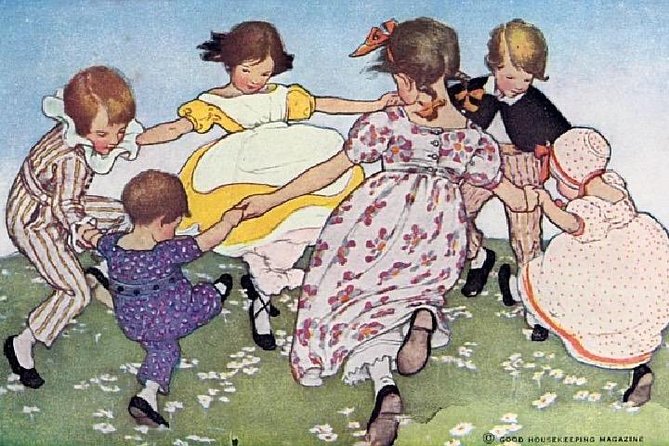
The Charterhouse section takes about 15 minutes and turns to the Black Death, one of the most serious subjects on the route. The guide links plague traditions with Ring a Ring o’ Rosies and may show you the memorial of a plague victim.
This is likely to be one of the tour’s darker moments. The connection between the rhyme and the plague is widely repeated, but it is not a simple proven explanation. A good guide should help you understand both the popular story and the uncertainty around it.
The Charterhouse and its quiet medieval lanes provide a fitting setting for this part of the walk. You get a strong sense of how disease shaped London and how later generations tried to make sense of death through ritual, song, and memory.
Families should consider the tone before booking. The tour is not a light children’s entertainment walk. The familiar rhymes are a doorway into difficult subjects, and some children may find that fascinating while others may not.
Farringdon and the meaning of Pop Goes the Weasel
The final stop is in Farringdon, near a pub connected with Pop Goes the Weasel. The stop lasts about 15 minutes, and admission is free.
The guide uses the pub to explore why the lyrics mention a weasel and what the phrase may mean. As with several stops, the fun comes from looking at ordinary surroundings in a new way. A pub is no longer just a place to eat or drink. It becomes a clue in a much older story.
The tour finishes at Farringdon Station on Cowcross Street, London EC1M 6BY. This is a useful ending point, with Underground connections and nearby pubs and restaurants. You can stop for lunch, continue sightseeing, or head back across London without retracing the route.
Timing, walking effort, and what to bring
The advertised duration is about three hours, though the published account describes spending almost five hours with Stephen. That longer experience may reflect questions, conversation, and an unhurried pace. I would allow extra time rather than scheduling a tight appointment immediately afterward.
The tour requires a moderate level of fitness. You travel on foot between 11 stops, with the longest individual sections lasting 15 to 30 minutes. Public transport is nearby, service animals are allowed, and the experience is private for your group.
The start point is easy to identify near the Tower, while the finish at Farringdon makes onward travel simple. The provider can offer pickup, and hotel meetings may be possible, though the stated guidance favors meeting at the start point.
Bring comfortable shoes and weather-appropriate clothing. No meal is listed, so plan food around the walk, especially if your tour runs longer than three hours.
Is $220.20 per person good value?
At $220.20 per person, this is not a budget walking tour. The price makes the most sense for a private group that wants a tailored experience and enjoys asking questions. If you are mainly looking for quick photographs of the Tower, London Bridge, and St Paul’s, cheaper sightseeing options will serve you better.
The value comes from the connections. You are paying for a guide-led route that links small details, old streets, monuments, churchyards, and folklore. A private tour also avoids the fixed pace and limited question time of a large group.
Admission costs are not included for the Tower of London, the Monument, or St Paul’s Cathedral. Since the stops are short, you may not need those tickets during the walk, but you should budget separately if you want to enter any of them before or after the tour.
Who should book the Nursery Rhyme Tour?
I would choose this tour if you enjoy unusual London stories, have already seen the main sights, or want a private walk for your family. It is also a good fit for adults who grew up with these rhymes and want to know why they survived.
Families should decide if the dark subjects are suitable. Executions, plague, death, fire, and harsh laws are part of the material. The rhymes may be familiar, but the stories behind them are not always gentle.
I would skip it if you want a conventional architecture tour, a full Tower visit, or a relaxed walk with very little historical discussion. I would also compare the price carefully for a small group of one or two people.
FAQ
Where does the Nursery Rhyme Tour of London start?
The tour starts at Tower Hill, London EC3N 4DJ, outside the Tower of London area.
What time does the tour begin?
The scheduled start time is 9:30 a.m. The provider suggests that a later start around 10:30 or 11 a.m. may help you avoid rush hour.
Where does the tour end?
The walk ends at Farringdon Station on Cowcross Street, London EC1M 6BY.
How long does the tour last?
The advertised duration is approximately three hours. The actual time can be longer if the group spends extra time asking questions and discussing the stories.
Is this a private tour?
Yes. Only your group participates with the guide.
Are admission tickets included?
Admission is not included for the Tower of London, the Monument to the Great Fire of London, or St Paul’s Cathedral. Several other stops are listed as free.
Can I cancel for a full refund?
Yes, if you cancel at least 24 hours before the local start time. Cancellations made less than 24 hours in advance are not refunded, and late changes are not accepted.
Just added in London
- Private Transfer From London to Southampton Cruise Terminal★ 4.0 · 2 reviews
- Layover Tour of London from LHR Executive Luxurious Vehicle Private Tour 6 hour★ 4.5 · 9 reviews
- Pub & History Tour London (History & Beers)★ 5.0 · 3 reviews
- eSIM for UK (34 EU countries) | 3 to 30 days. Up to 40GB of data★ 4.0 · 18 reviews
- Young Victoria’s London: Windsor Castle & Kensington Palace★ 5.0 · 1 review
- Zombie Scavengers Game – Southend-on-Sea, UK★ 4.5 · 2 reviews
- Crash course in archaeology at the British Museum★ 5.0 · 96 reviews
- Women of Whitechapel 2 hour Walking Tour★ 5.0 · 15 reviews
Tours, compared.
London Big Bus Hop-On Hop-Off Tour with Optional River Cruise
Read our review →

Oxford University Walking Tour With University Alumni Guide
Read our review →
Stonehenge, Windsor Castle and Bath Full Day Guided Tour
Read our review →
London Jack the Ripper Guided Tour with Ripper-Vision
Read our review →