
Reviewed · RIVER THAMES CRUISES
Thames Beachcombing
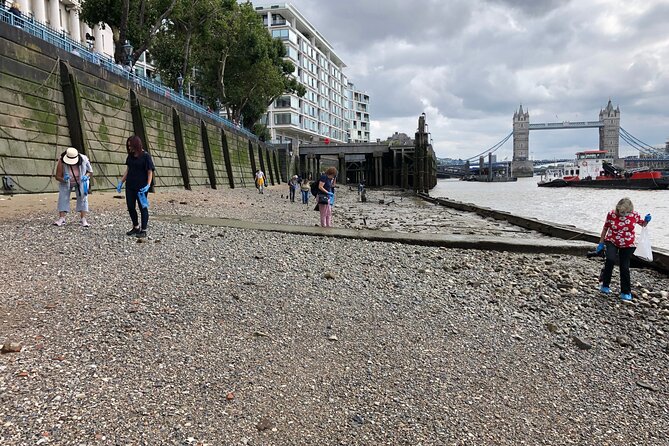
History turns up under your boots. This two-hour Thames beachcombing tour gives you a hands-on way to explore London, with time on the foreshore at low tide and a local guide to help identify what you find. I like the small-group format and the chance to handle ordinary objects linked to earlier London, from pottery fragments and roof tiles to clay pipes. The main drawback is that the exact meeting place and start time change with the tide and season, so planning takes more effort than booking a standard city tour.
I also like that this is not only a talk about the Thames. You spend about 1.5 hours looking carefully at the shoreline yourself, using gloves and a bag provided by the guide. The experience can be wonderfully satisfying, but your finds depend on the stretch of foreshore, recent tides, and plain luck. You could uncover a memorable fragment, or spend much of the morning finding pieces that need careful sorting.
In This Review
- Key points to know before you book
- Why mudlarking works so well in London
- The changing Thames meeting point
- What happens during the two-hour outing
- The objects you might find
- Robert’s role and the small-group format
- Footwear, fitness, and family advice
- Is $41.41 a fair price?
- Planning around weather and cancellation
- Who should book Thames Beachcombing?
- FAQ
- Where does the Thames Beachcombing tour meet?
- How long does the experience last?
- What can I find on the foreshore?
- Are gloves and bags provided?
- What should I wear?
- Can children join the tour?
- What happens if bad weather cancels the tour?
- Should you book it?
Key points to know before you book
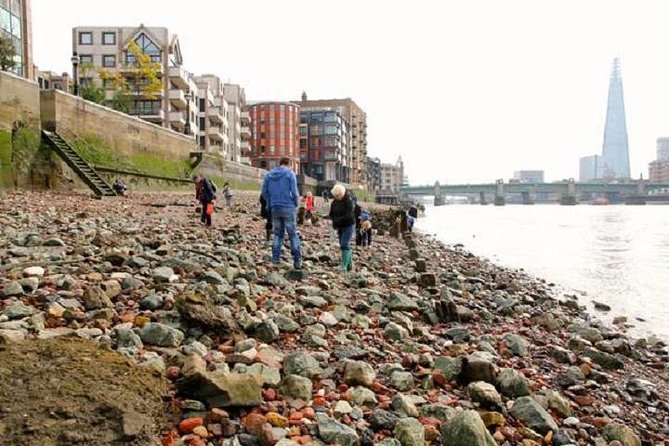
- Low tide controls the schedule: The guide confirms the meeting place and time because the group visits different Thames foreshore sites during the year.
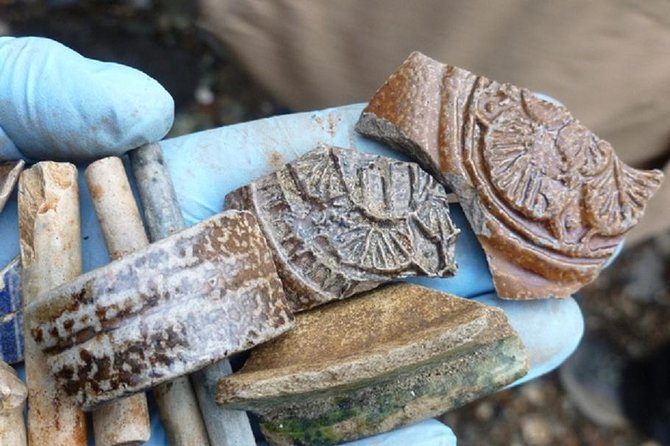
- Historic finds can include clay pipes and pre-Great Fire tiles: Pottery, roof tiles, ceramics, and other small objects may appear in the mud and stones.
- Robert receives especially strong praise: He helps identify finds, explains their age and use, and gives the search a clear focus.
- The outing is genuinely hands-on: You search for about 1.5 hours rather than simply watching a demonstration.
- Bring serious footwear: Wellington boots or hiking boots are required because the foreshore is stony and can be muddy.
- The $41.41 price buys personal attention: A local guide, gloves, bags, and a maximum group size listed as 20, with the tour description also referring to groups of no more than 15.
Why mudlarking works so well in London
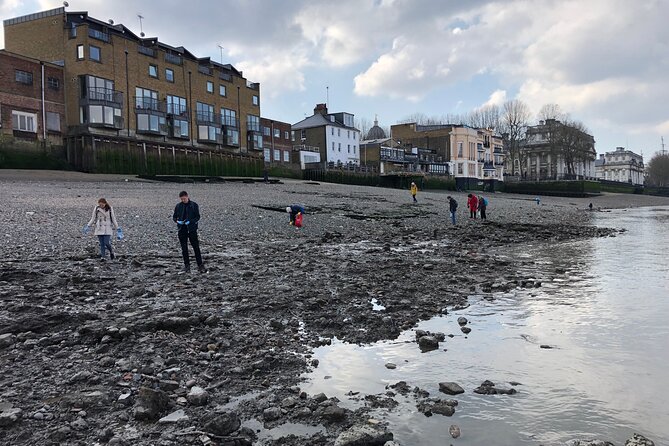
The River Thames is more than a backdrop for London sightseeing. Its changing tide exposes a strip of shore that has collected discarded and broken objects for centuries. On this outing, you look at the river from ground level, where small fragments can connect everyday life with the city’s past.
That is the appeal of mudlarking. You are not only hearing that London grew around the Thames. You are looking at a broken piece of a bowl, a roof tile, or part of a clay pipe and asking what it was used for, how old it might be, and how it reached the river.
The finds are not guaranteed, and they are not all spectacular. That uncertainty is part of the fun. A small piece of pottery can be more interesting than a shiny object because the guide may explain its material, shape, or likely period. Several people have found tiles thought to predate the Great Fire of London, while others have uncovered clay pipes and pottery fragments.
I like the way this activity slows you down. London sightseeing often means moving from one major landmark to the next. Here, you may spend several minutes studying a small patch of mud and stones. It is a quiet, almost meditative change of pace, with the reward of seeing the city’s past in your own hands.
More Thames cruises:
- High-Speed Thames River Speedboat in London
★ 5.0 · 3,971 reviews - London Tootbus Hop on Hop off Bus Tour and Thames River Cruise
★ 4.0 · 3,834 reviews - Westminster to Greenwich Sightseeing Thames Cruise in London
★ 4.5 · 2,969 reviews
The changing Thames meeting point
You do not simply show up at one permanent address. The guide contacts you with the meeting location and time, which vary throughout the year. The group visits different sections of the Thames foreshore, including areas near Cannon Street, Putney Bridge, and other London locations.
This flexibility matters because low tide determines when the shore is accessible. It also means the character of the outing can change. One stretch may produce more pottery or tiles, while another may offer a different feel and a different amount of exposed foreshore.
You make your own way to the meeting point. The activity is near public transportation, but the information provided does not give one fixed station or route. I would wait for the guide’s final instructions before planning a tight connection or booking another activity immediately afterward.
The start time can be especially important if you are fitting this into a packed London visit. Tide-based activities may begin early or at an unusual hour, so check the confirmed details before arranging breakfast, theater tickets, or a train.
What happens during the two-hour outing
The full activity lasts about two hours. After meeting the guide, you receive gloves and plastic bags, then get practical advice on what to look for. The introduction helps you tell possible historic objects from modern rubbish and gives you a better chance of spotting details that are easy to miss.
The search itself takes about 1.5 hours. You walk along the foreshore at low tide and examine the exposed stones, mud, and shoreline. The description specifically says that you look with your eyes only, so this is a surface search rather than an excavation.
That point is useful. You do not need specialist equipment, and you are not expected to know archaeology before arriving. The guide gives you a way to begin, but the activity still depends on your attention. Look for unusual shapes, fired clay, patterned surfaces, smooth ceramic, and objects that do not look like ordinary modern debris.
At the end, the guide helps identify your finds and explains their historical context. This final sorting session adds real value. Without it, a bag of broken fragments might be hard to understand. With it, even a small piece can become a clue about household goods, building materials, or past trades along the river.
Robert receives repeated praise for this part of the experience. He is described as approachable and helpful when identifying objects, and he shows people how to separate interesting pieces from less useful ones. A guide who can answer questions as you find things makes the search feel purposeful rather than random.
The objects you might find
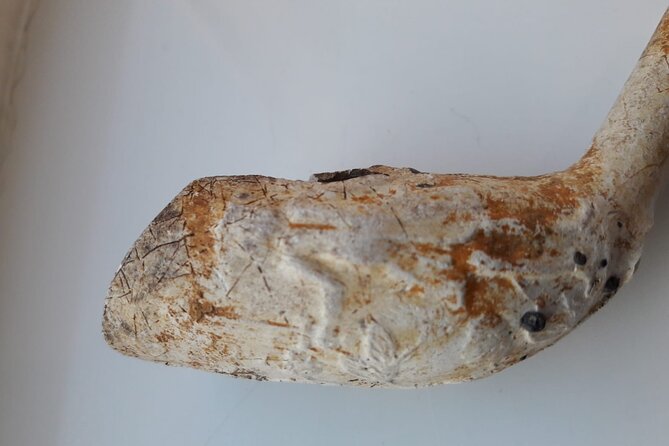
You might find clay pipes, pottery fragments, roof tiles, ceramics, and other small objects washed or exposed along the foreshore. Some pieces can be linked to London before the Great Fire, though the age and importance of any particular find must be assessed by the guide.
One especially memorable detail from the experience is the reported imprint of a person’s fingerprints on the handle of a bowl. That kind of mark gives the activity its human scale. You are not looking only for famous objects. You are also looking for traces left by ordinary people making and using everyday items.
The phrase buried treasure can set expectations too high. You should not book this expecting coins, jewels, or a major archaeological discovery. The real reward is the act of finding something yourself, then learning how it fits into London’s past.
Some outings produce more than others. One group searching near Cannon Street found the site less rewarding than another mudlarking session closer to the Millennium Bridge. That is an important limitation. The exact location can influence the number and variety of objects you see, and the tour cannot promise a particular haul.
Still, even a modest find can be satisfying when you understand it. I would measure the experience by the quality of the search and the guide’s explanations, not by the number of pieces in your bag.
A few more to weigh up in London
- Stonehenge, Windsor Castle, and Bath from London
★ 4.5 · 18,662 reviews - London Big Bus Hop-On Hop-Off Tour with Optional River Cruise
★ 3.5 · 10,803 reviews - London Small Group Tour of Historical Pubs
★ 5.0 · 10,422 reviews - Stonehenge, Windsor Castle and Bath with Pub Lunch in Lacock
★ 4.5 · 7,402 reviews
Robert’s role and the small-group format
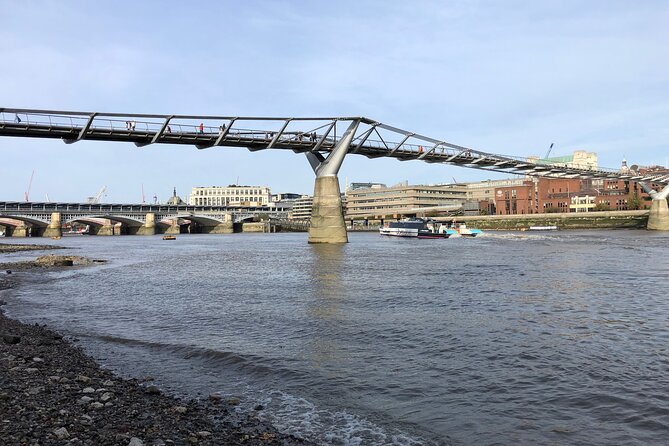
The guide makes a major difference here. Robert is repeatedly praised for being helpful, friendly, and well informed about the foreshore and the objects found there. He also shows images of possible discoveries at the start, which gives you a visual reference before you begin looking.
That simple preparation is useful for families and first-time mudlarkers. A clay pipe fragment or roof tile may not look special at first. Seeing examples beforehand helps you know what deserves a closer look.
The group is described as small, although the supplied details give two different limits: no more than 15 people in one description and a maximum of 20 in the additional information. Either way, this is not presented as a large coach outing. A smaller group should give you a better chance to ask about your finds and hear the end-of-tour explanations.
The personal attention seems strongest when the guide moves between participants during the search and then looks at everyone’s objects. You also learn from the items other people find. A piece that means little to you may become interesting when the guide explains its purpose or age.
There is one less positive account of a guide at Putney Bridge, described as lacking energy. That suggests the guide’s style can shape the morning. Robert’s name appears often in the strongest praise, so confirm who will lead your departure if that matters to you.
Footwear, fitness, and family advice
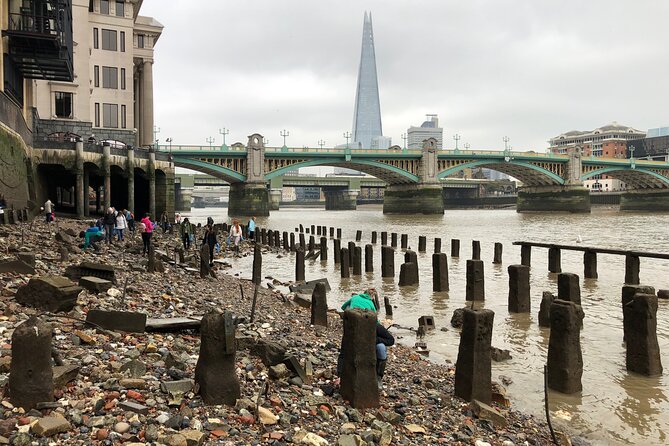
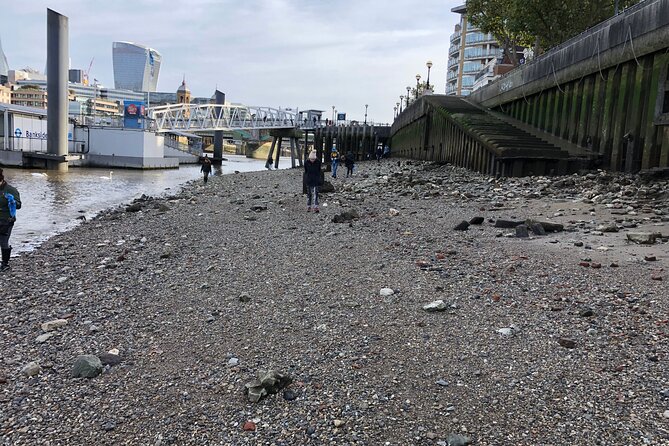
Take the clothing instructions seriously. The Thames foreshore is stony and can be muddy, so wear wellington boots or sturdy hiking boots. Comfortable city shoes are a poor match for wet, uneven ground.
You should have a moderate level of physical fitness. The activity involves walking along the shore and spending time standing, bending, and looking closely at the ground. It is not described as strenuous, but it is less comfortable than a paved walking tour.
Gloves and bags are included. The supplied gloves are a practical touch, although one family found that the gloves were too large for a five-year-old and kept slipping off. If you bring a young child, consider bringing smaller gloves of your own.
Children under 16 must be accompanied by an adult. Families have found the activity engaging for children aged five, eight, and nine, particularly when the guide explains what to look for and identifies the objects at the end. Young children may enjoy the treasure hunt, but the muddy ground and oversized gloves could test their patience.
The experience suits curious families, history fans, people who enjoy collecting small clues, and anyone who wants a break from London’s indoor sights. It is less suitable if you want a guaranteed archaeological site, a polished museum setting, or a fixed schedule.
Is $41.41 a fair price?
At $41.41 per person, the price is reasonable if you value the guide’s help and the unusual setting. You get about two hours of activity, a local guide, gloves, bags, and a chance to search a part of London that most sightseeing routes never reach.
The value is not in the equipment. Gloves and plastic bags are inexpensive. The real cost covers the guide’s time, tide planning, site selection, safety advice, and ability to identify the objects you find.
Small groups also help justify the price. If you can ask about several finds during the walk and receive individual help at the end, the guide adds something you would not get by simply walking along the river alone.
I would not call it the best choice for someone who only wants a list of major London sights. For that person, £40 or so could go toward a museum, tower, or formal historical tour with more predictable content. But if you like hands-on discovery, this gives you a very different way to understand the city.
The experience is also recommended by 93 percent of its audience and holds a 4.7 rating from 100 reviews. Those figures suggest strong satisfaction, while the less positive comments offer a fair warning: the location and guide can affect the result, and the number of finds is never certain.
Planning around weather and cancellation
This activity requires good weather. If poor weather cancels it, you are offered another date or a full refund. That policy is helpful, but you should still avoid placing it beside an unmissable reservation.
You can cancel for a full refund up to 24 hours before the start time. Changes or cancellations made less than 24 hours ahead are not accepted for a refund, and the cut-off uses London local time.
Confirmation arrives within 48 hours of booking, subject to availability. Since the guide later provides the exact time and location, keep an eye on your messages after booking.
Who should book Thames Beachcombing?
I would book this if you want to do something active, quirky, and tied closely to London’s past. It works especially well on a return visit, when you have already seen the major landmarks and want an experience that feels less standard.
Families can enjoy it, but young children need proper footwear, close adult supervision, and gloves that fit. History fans will get the most from the identification session, while casual visitors can simply enjoy the search and the strange pleasure of finding an object made long before modern London took shape.
I would skip it if muddy ground bothers you, if you need a fixed meeting point, or if a successful outing depends on finding a valuable object. The river decides what appears, and some stretches may offer less than others.
FAQ
Where does the Thames Beachcombing tour meet?
The meeting point changes throughout the year. The guide contacts you with the exact location and time after booking.
How long does the experience last?
The activity lasts about two hours. About 1.5 hours is spent searching the Thames foreshore.
What can I find on the foreshore?
You might find clay pipes, pottery fragments, roof tiles, ceramics, and other objects exposed or washed ashore at low tide.
Are gloves and bags provided?
Yes. Gloves and plastic bags are included.
What should I wear?
Wear wellington boots or hiking boots because the foreshore is stony and can be muddy.
Can children join the tour?
Yes. Children under 16 must be accompanied by an adult. The activity has been enjoyed by children as young as five, though the supplied gloves may be too large for very young children.
What happens if bad weather cancels the tour?
You are offered a different date or a full refund if the activity is canceled because of poor weather. You can also cancel up to 24 hours before the start time for a full refund.
Should you book it?
Book it if you enjoy finding small clues rather than chasing famous sights. The guide’s help, the low-tide setting, and the chance to handle fragments connected with London’s past make this a memorable two-hour activity.
Go with flexible expectations. You may find pre-Great Fire tiles or a clay pipe, or you may find only modest fragments. The fun is in looking closely, asking questions, and letting the Thames reveal whatever it has exposed that day.
Just added in London
- Private Transfer From London to Southampton Cruise Terminal★ 4.0 · 2 reviews
- Layover Tour of London from LHR Executive Luxurious Vehicle Private Tour 6 hour★ 4.5 · 9 reviews
- Pub & History Tour London (History & Beers)★ 5.0 · 3 reviews
- eSIM for UK (34 EU countries) | 3 to 30 days. Up to 40GB of data★ 4.0 · 18 reviews
- Young Victoria’s London: Windsor Castle & Kensington Palace★ 5.0 · 1 review
- Zombie Scavengers Game – Southend-on-Sea, UK★ 4.5 · 2 reviews
- Women of Whitechapel 2 hour Walking Tour★ 5.0 · 15 reviews
- Working Women of the East End Walking Tour★ 5.0 · 85 reviews
River Thames Cruises, compared.


London Tootbus Hop on Hop off Bus Tour and Thames River Cruise
Read our review →
Westminster to Greenwich Sightseeing Thames Cruise in London
Read our review →

Uber Boat – Single Journey River Thames Cruise
Read our review →
Hop-On Hop-Off Sightseeing River Cruise on the Thames
Read our review →
Lunch River Cruise on the Thames with 2-Course Meal
Read our review →
Browse the lists this tour appears in