Reviewed · LONDON TOURS
Shakespeare Promenade
Theatre history hides in plain sight. This two-hour Shakespeare walking tour links riverside views, ruined playhouse sites, Roman London, and modern Shoreditch with an actor guide who brings the past to life. The group is capped at six people, so you have room to ask questions instead of trailing behind a large crowd.
I like the route’s mix of major sights and overlooked corners, especially the Millennium Bridge views and the old Theatre site in New Inn Yard. I also like the theatrical approach: guide Dee has woven Shakespearean lines into the walk, adding wit without turning every stop into a lecture. The main drawback is physical. You will cross roads, climb steps, keep moving, and finish in Shoreditch rather than near the starting point.
In This Review
- Key points to know before booking
- From Dowgate Hill to the Thames
- Blackfriars, where monastery and playhouse history meet
- St. Paul’s and Shakespeare’s City
- Guildhall and the folio connection
- Roman London and Shakespeare’s lodgings
- The Barbican Highwalk and a much-needed pause
- Bunhill Fields and the Fortune Playhouse site
- Entering the Barbican Centre
- New Inn Yard and the first Theatre
- Finishing in Shoreditch
- What the actor guide adds
- Is $23.08 a fair price?
- Practical advice for the two-hour walk
- Who should book Shakespeare Promenade?
- Should you book it?
- FAQ
- How long does Shakespeare Promenade last?
- Where does the tour start?
- Where does the tour end?
- How large is the group?
- Is the tour suitable for children?
- Are food and drinks provided?
- Is the tour accessible for people with mobility issues?
Key points to know before booking
- A small group of six or fewer gives you plenty of time to speak with the actor guide and ask about Shakespeare, theatre, and London.
- The route crosses central London on foot, from Dowgate Hill and the Thames to Blackfriars, the City, the Barbican, and Shoreditch.
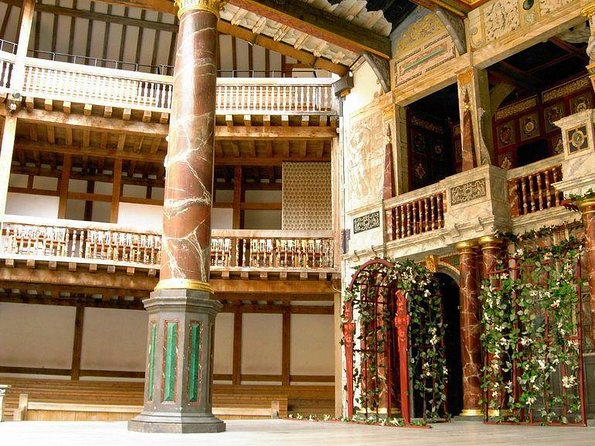
- The Millennium Bridge provides excellent city views, with the Globe Theatre visible across the river.
- The walk visits the former Theatre site, England’s first playhouse, now associated with the Shakespeare Museum in New Inn Yard.
- The Barbican includes a 20-minute interval, with restrooms available and time to catch your breath.
- This is not a gentle stroll. Steps, stairs, road crossings, and a steady pace make good footwear essential.
From Dowgate Hill to the Thames
Your meeting point is outside the Tallow Chandlers Company at 4 Dowgate Hill, near the river in the City of London. This is a practical place to begin because the walk quickly leaves office blocks and heads toward the Thames path.
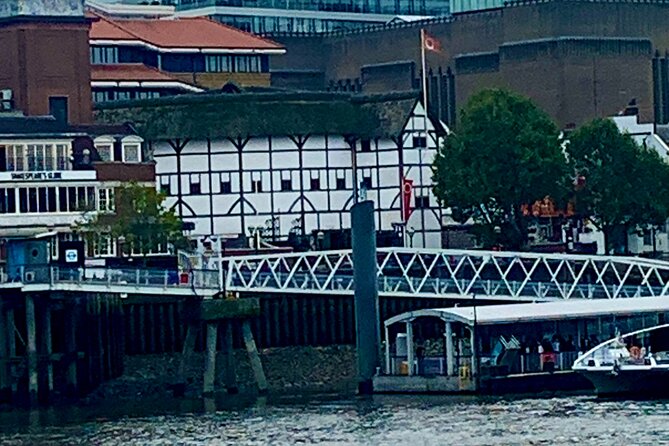
The first stretch follows the north bank for about 20 minutes. You look across the water toward the Globe Theatre before continuing in the direction of Blackfriars. The river gives the tour a strong opening. Shakespeare’s theatre was tied to the Thames, and the view helps you understand the relationship between the playhouses on the south bank and the City on the north.
The Millennium Bridge is one of the visual rewards along this part of the route. You get broad views of London while crossing one of the city’s best-known modern footbridges. Have your camera ready, but do not expect a long photo stop. This is a walking tour, and the total duration includes the time spent getting from one location to the next.
The Globe is viewed from across the river rather than visited. That distinction matters if you want an interior theatre visit or a performance. This experience is about the streets and sites connected with Shakespeare’s world, not a ticketed Globe program.
A few more to weigh up in London
- Stonehenge, Windsor Castle, and Bath from London
★ 4.5 · 18,662 reviews - London Big Bus Hop-On Hop-Off Tour with Optional River Cruise
★ 3.5 · 10,803 reviews - London Small Group Tour of Historical Pubs
★ 5.0 · 10,422 reviews
Blackfriars, where monastery and playhouse history meet
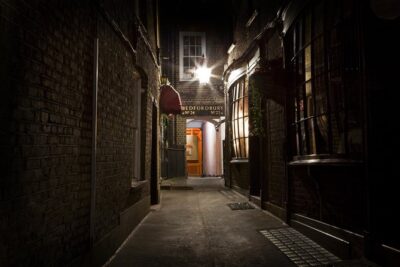
The short stop at Playhouse Yard packs several layers of London history into a very small space. The site once held a Dominican monastery and later the first and second Blackfriars Playhouses.
You will not spend long here, about five minutes, so listen closely. The value is in seeing how one location changed use over time. Religious buildings, playhouses, and city streets sit close together in this part of London, and the guide helps connect those pieces.
This stop also shows the tour’s general style. You are not simply ticking off famous buildings. You are hearing how Shakespearean theatre occupied real urban spaces, often in places that now look ordinary. If you prefer lengthy visits inside historic buildings, the brief timing may feel thin. If you enjoy quick scenes linked by a strong narrator, it keeps the walk moving.
St. Paul’s and Shakespeare’s City
The route then circles St. Paul’s Cathedral along Cheapside and Milk Street. The stop is listed at about five minutes, so this is an exterior orientation rather than a cathedral visit.
St. Paul’s gives you a useful sense of scale and setting. You are moving through the old City, where trade, religion, civic life, and theatre history overlapped. The route does not include cathedral admission, and no entry fees are part of the experience.
I like this kind of stop because it prevents the tour from becoming a narrow biography of Shakespeare. You are looking at the wider city that shaped the playwright’s working life. Still, you should not book this expecting extended time at St. Paul’s. The cathedral is one landmark within a much longer walk.
Guildhall and the folio connection
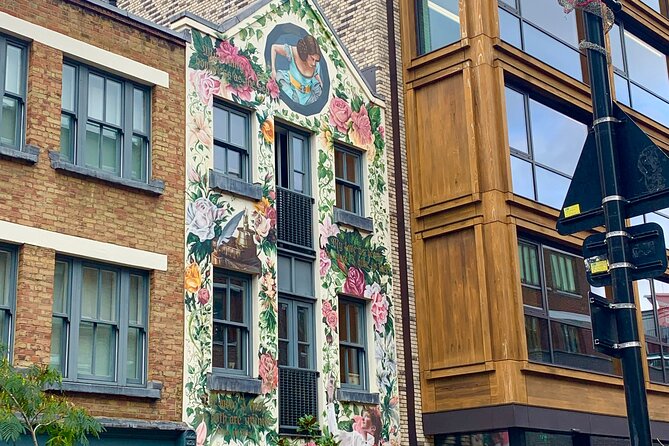
At Guildhall, the tour pauses near the Shakespeare statue on Love Lane, associated with Heminges and Condell. You also hear about Shakespeare’s folio housed at Guildhall, along with the building’s history and a piece of speech from the guide.
This is one of the more theatrical moments on the route. An actor guide can give a statue and civic building more life than a standard walking commentary, and Dee has been praised for combining clear historical explanation with performed lines from the plays.
The stop lasts around ten minutes. That gives you enough time to look, listen, and ask a question, but not enough for a full Guildhall visit. The building itself is viewed from the route, and the tour does not include an admission ticket there.
A completely different sort of day out:
- Stonehenge, Windsor Castle and Bath with Pub Lunch in Lacock
★ 4.5 · 7,402 reviews - Tower of London and Crown Jewels Exhibition Ticket
★ 4.5 · 6,677 reviews - Thorpe Park Admission Ticket
★ 4.0 · 5,915 reviews - Stonehenge, Windsor Castle and Bath Full Day Guided Tour
★ 4.5 · 5,346 reviews
Roman London and Shakespeare’s lodgings
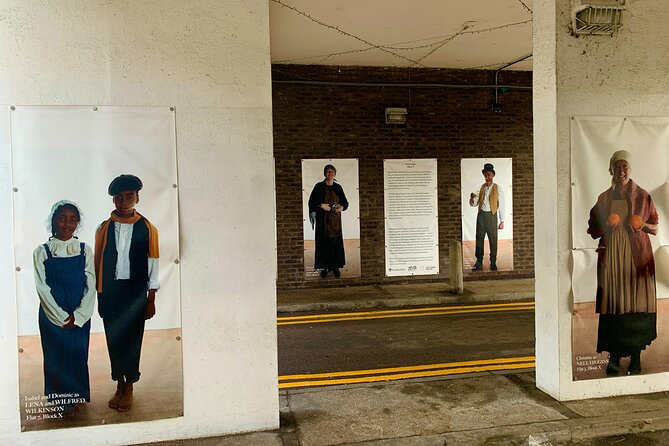
The next stop brings together two very different clues to the past. On Noble Street, you see ruins of London’s Roman wall. On nearby Silver Street, you see a plaque marking Shakespeare’s lodgings.
This is exactly the sort of pairing that makes the promenade useful. Roman London and Elizabethan London are not presented as separate museum subjects. They are layered into the same streets, and you can see how much older the city was before Shakespeare arrived.
The visit is brief, about five minutes. The Roman wall ruins are not a large attraction, and the lodging plaque is a small marker rather than a grand monument. You will get more from this stop if you enjoy details and are willing to pay attention to plaques, fragments, and street names.
The Barbican Highwalk and a much-needed pause
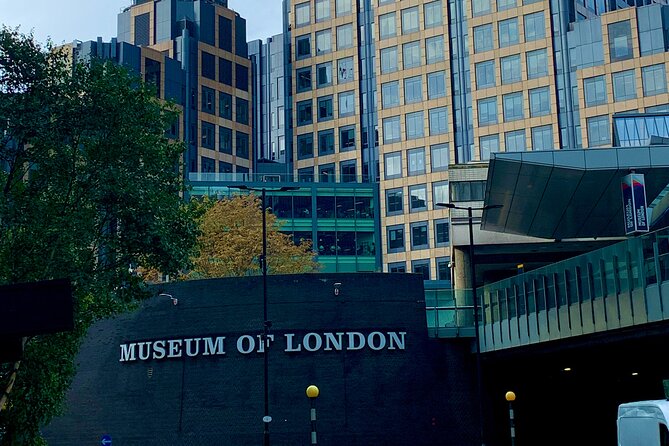
The Barbican section changes the mood. You walk through the Barbican Highwalk, a lesser-known elevated path with views across the estate and toward the Barbican Centre. The guide explains the estate and its design while showing you a part of London many people pass without understanding.
This is one of the route’s more unusual choices. The Barbican is modern compared with the Roman wall and Shakespearean sites, but it fits the walk because the centre is London’s home of the Royal Shakespeare Company. The tour connects the city’s early playhouses with its present-day theatre life.
A 20-minute interval is built into the Barbican portion. Restrooms are available here, which is useful because the route does not provide food, drinks, or refreshments. Bring your own bottled water. You can also use this pause to check your shoes, adjust your coat, or prepare for the remaining walk.
The Barbican Centre is the only stop specifically described as having admission included. This does not mean the tour includes a theatre performance. It means the route enters the centre as part of the guided experience.
Bunhill Fields and the Fortune Playhouse site
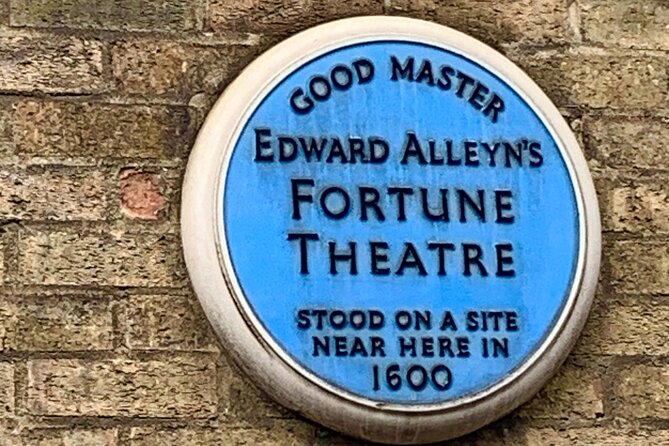
After the Barbican, you walk up Whitecross Street and see the site of the Fortune Playhouse before crossing toward Shoreditch. The route then includes the history of the burial ground at Bunhill Fields.
This part asks you to keep going. The route is not built around one big attraction. Instead, it uses streets, boundaries, former theatre sites, and burial-ground history to show how London changed as it grew.
The Fortune Playhouse site is especially useful for putting Shakespearean theatre into a larger setting. It reminds you that the period’s playgoing culture was not limited to one famous name or one theatre. You are following a network of places where performance, trade, religion, and daily life met.
The listed stop takes about ten minutes. Some of the historical value will come through the guide’s explanation rather than dramatic remains on the ground. That is worth knowing before you book. This is an interpretive walk, so the narration matters as much as what you can see.
Entering the Barbican Centre
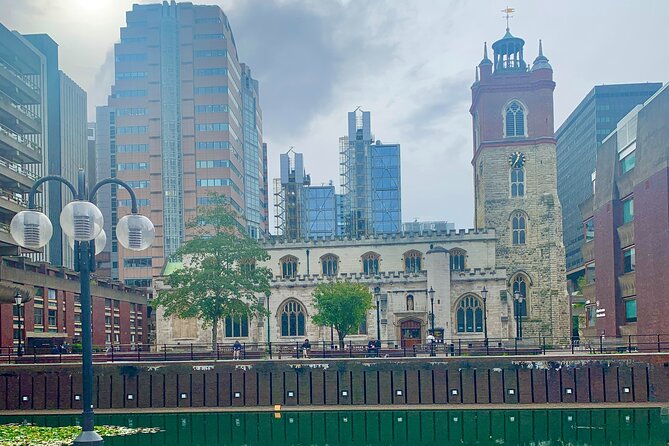
The route enters the Barbican by its walkways, and the guide explains the story of the centre as London’s base for the Royal Shakespeare Company. This is the most direct link between Shakespeare’s historic theatre world and modern performance in the city.
The Barbican can feel confusing on your own, with its raised paths, concrete structures, and multiple levels. A guide is useful here because you can focus on the design, the views, and the theatre connection instead of trying to work out where the walkway leads.
The built-in interval makes this a sensible midpoint. You are not expected to walk continuously for two hours without a pause, though the route still requires a reasonable level of fitness. If stairs are difficult for you, this section deserves special attention before booking.
New Inn Yard and the first Theatre
New Inn Yard is the final major destination and one of the tour’s strongest stops. This is the site of the Theatre, described as England’s first playhouse, and it is now the location of the Shakespeare Museum.
The stop itself is listed at about five minutes, so do not expect a long museum visit or a full indoor exhibition unless separately arranged. The power of the place comes from standing where London’s early public theatre took shape. After hearing about the Globe, Blackfriars, the Fortune, and other playhouse sites, you reach a location tied to the beginning of that story.
The tour ends outside the new Shakespeare Museum. This makes the finish practical if you want to continue exploring Shakespeare-related material, but any museum entry beyond what is included in the walk is not listed as part of the tour. Check the day’s plans before assuming you have time for a separate visit.
Finishing in Shoreditch
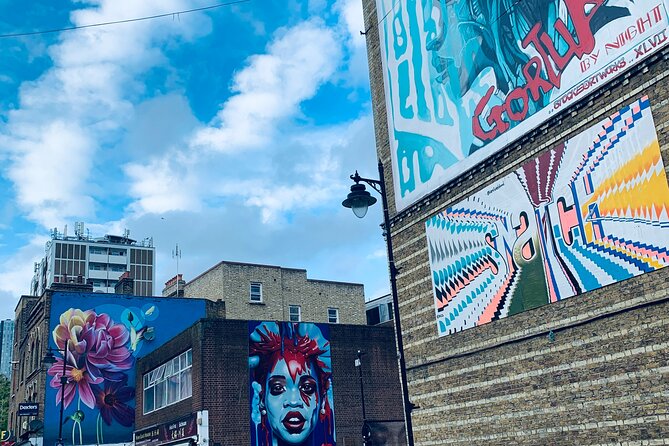
The last 15 minutes lead through modern Shoreditch toward Curtain Road. This gives the promenade a useful final contrast. You begin beside the Thames, pass old City landmarks and theatre sites, then finish in a district known for a very different London identity.
Shoreditch is also convenient for continuing your day. The end point is about 10 minutes from Old Street Tube on the Northern Line and about 15 minutes from Liverpool Street on the Central Line. Those walking times make the finish easy to connect with the rest of London, though you should allow extra time if you are tired or carrying luggage.
The start and finish are not near each other, so this is not a loop. Plan your transport around the end point, not just the meeting point.
What the actor guide adds
The included guide is an actor narrator, and that choice shapes the experience. Shakespeare can become dry when reduced to dates, titles, and plaques. A guide who performs lines and presents information theatrically can give the walk a stronger sense of place.
The praise for Dee is specific: clear affection for Shakespeare and theatre, well-delivered quotations, amusing presentation, and short performances that explain Shakespeare’s life and plays. That is the tour’s most highly praised feature. You are not only walking past locations. You are hearing the material performed in the streets where the stories belong.
Because the group has a maximum of six people, you should have a better chance to ask about a confusing detail or request clarification. Small groups also make it easier to hear a spoken performance outdoors. The exact guide may vary, so Dee’s style should not be treated as a guarantee for every departure.
Is $23.08 a fair price?
At $23.08 per person, the tour offers a good value if you want a guided introduction to Shakespeare’s London rather than a series of paid admissions. The price covers about two hours, an actor guide, a small group, and a route linking many locations that would be hard to connect on your own.
The value is strongest for first-time visitors to Shakespeare-related London and for people who enjoy local history presented through stories. You are paying for the route design and interpretation. You are not paying for food, drinks, or a full set of museum and theatre entries.
The lack of entry fees can be a benefit because you are not forced into attractions you may not want. It also means you should budget separately if you plan to visit the Shakespeare Museum, the Globe, St. Paul’s, or other paid sites afterward.
Practical advice for the two-hour walk
Wear proper walking shoes. Steps, stairs, road crossings, and the need to keep up with a small group make flimsy footwear a poor choice.
Carry water and prepare for London weather. An umbrella or raincoat may be needed, and much of the experience takes place outdoors. The Barbican pause helps, but it is not a substitute for being ready to walk.
The experience is not recommended for people with mobility issues or anyone who has difficulty walking at a group pace. It is also not suitable for children under 16. Service animals are allowed, and the route is near public transport.
Free cancellation is available if you cancel at least 24 hours before the local start time. Changes or cancellations inside that window are not accepted for a refund.
Who should book Shakespeare Promenade?
I would choose this for an adult who likes theatre, city walks, and small historical clues. It suits you especially well if you want to see more than the standard London sights and enjoy learning why an ordinary street corner mattered.
It is also a good choice for London residents who think they know the City but want fresh connections between playhouses, Roman remains, civic buildings, and modern theatre. One local couple found new places despite already being interested in London history, which says a lot about the route’s choice of locations.
I would skip it if you want a relaxed stroll, a seated theatrical show, or substantial time inside museums and landmarks. The schedule is active, the stops are often short, and the guide’s commentary is central to the experience.
Should you book it?
Book this walk if you want Shakespeare presented as part of London’s streets, not sealed away in a lecture hall. The small group, actor guide, unusual route, and strong theatre focus make $23.08 a sensible price.
Before booking, check three things: you can manage stairs and road crossings, you are happy with outdoor sightseeing in changeable weather, and you understand that the walk ends in Shoreditch. If those conditions suit you, this is a lively and focused way to connect the Globe’s river view with the Theatre site at New Inn Yard.
FAQ
How long does Shakespeare Promenade last?
The experience lasts approximately two hours, including the walking time between stops.
Where does the tour start?
It starts at The Tallow Chandlers Company, 4 Dowgate Hill, London EC4R 2SH, UK.
Where does the tour end?
It ends at New Inn Yard, outside the new Shakespeare Museum in London.
How large is the group?
The tour has a maximum of six participants.
Is the tour suitable for children?
No. The experience is not suitable for children under 16.
Are food and drinks provided?
No. The host does not provide refreshments, food, or drinks. You should bring your own bottled water.
Is the tour accessible for people with mobility issues?
The walk includes steps, stairs, and road crossings. It is not recommended for people with mobility issues or for anyone who has difficulty walking or keeping up with a group.
Just added in London
- Private Transfer From London to Southampton Cruise Terminal★ 4.0 · 2 reviews
- Layover Tour of London from LHR Executive Luxurious Vehicle Private Tour 6 hour★ 4.5 · 9 reviews
- Pub & History Tour London (History & Beers)★ 5.0 · 3 reviews
- eSIM for UK (34 EU countries) | 3 to 30 days. Up to 40GB of data★ 4.0 · 18 reviews
- Young Victoria’s London: Windsor Castle & Kensington Palace★ 5.0 · 1 review
- Zombie Scavengers Game – Southend-on-Sea, UK★ 4.5 · 2 reviews
- Crash course in archaeology at the British Museum★ 5.0 · 96 reviews
- Women of Whitechapel 2 hour Walking Tour★ 5.0 · 15 reviews
London Tours, compared.
Stonehenge, Windsor Castle, and Bath from London
Read our review →
London Big Bus Hop-On Hop-Off Tour with Optional River Cruise
Read our review →
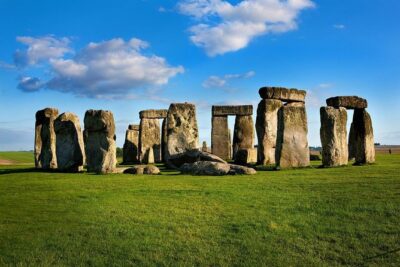
Stonehenge, Windsor Castle and Bath with Pub Lunch in Lacock
Read our review →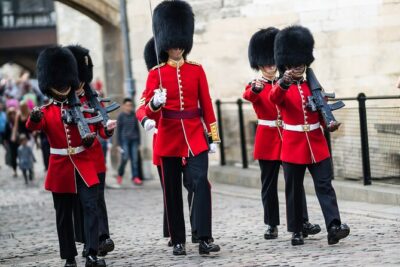
Tower of London and Crown Jewels Exhibition Ticket
Read our review →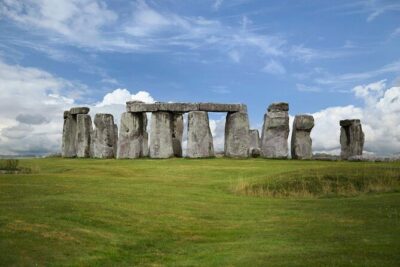
Stonehenge, Windsor Castle and Bath Full Day Guided Tour
Read our review →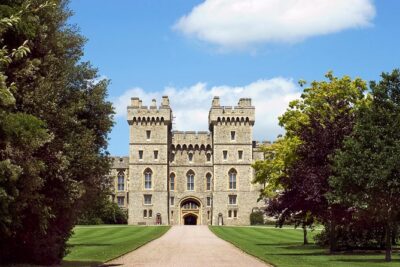
Windsor Castle, Stonehenge, and Oxford Day Trip from London
Read our review →