
Reviewed · GREENWICH TOURS
Royal Observatory Greenwich & Prime Meridian Entry Ticket London
Time begins on a hill above London. The Royal Observatory Greenwich brings Greenwich Mean Time, historic clocks, astronomy, and the Prime Meridian together in one compact visit. I like the chance to stand with one foot in the eastern hemisphere and one in the western hemisphere, and I like the thoughtful audio guide, which adds useful context without forcing you into a group schedule. The main drawback is the steep climb through Greenwich Park, followed by stairs and some limited access inside the historic buildings.
This is not a traditional guided tour with a guide waiting at a meeting point. You make your own way to the observatory, use your mobile admission ticket, and explore at your own pace. That arrangement works well for independent visitors, but make sure your ticket barcode is ready before you arrive. Some people have had trouble getting third-party vouchers scanned, so buying directly from the attraction may be worth considering if you want the simplest entry.
In This Review
- Key points to know before you go
- Why the Royal Observatory matters
- Walking up Greenwich Park for the view
- Meridian Courtyard and the Prime Meridian line
- Flamsteed House and the Astronomers Royal
- Harrison’s clocks and the problem of longitude
- The Shepherd Gate Clock and the red Time Ball
- The Great Equatorial Telescope under the onion dome
- How long to spend and how to plan the day
- Price, ticket problems, and practical value
- Accessibility and weather concerns
- Who will enjoy this Greenwich visit most
- Should you book the Royal Observatory ticket?
- FAQ
- How long does the Royal Observatory visit take?
- Is admission to the Prime Meridian included?
- Is an audio guide included?
- Is transportation included?
- Are children under four admitted free?
- Are the National Maritime Museum and Queen’s House included?
- Is the observatory fully accessible?
- Can I cancel for a full refund?
Key points to know before you go
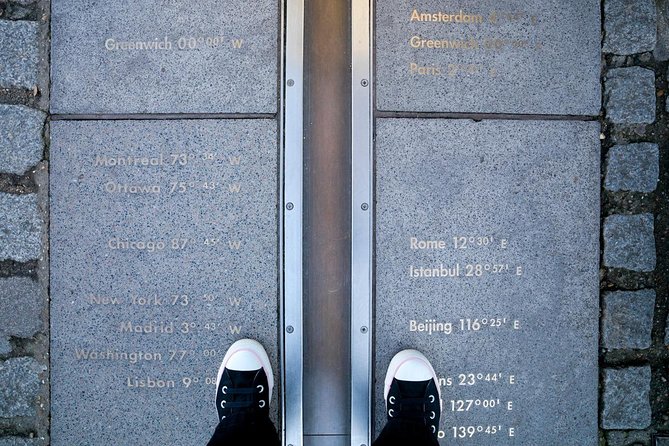
- The Prime Meridian photo stop is the star attraction: Stand astride the marked line with one foot in each hemisphere.
- Flamsteed House connects timekeeping with real science: See the Octagon Room, Harrison’s clocks, the Shepherd Gate Clock, and the historic Time Ball.
- The hill matters: The observatory sits high in Greenwich Royal Park, with a steep walk and some stairs at the site.
- The audio guide gives the visit shape: It explains the observatory, time, space, and its scientists in several languages.
- You can make a full Greenwich day of it: The National Maritime Museum and Queen’s House are nearby and free, while Cutty Sark is close by.
- Allow about two hours: You can rush through the site, but the clocks, telescope, views, and audio commentary deserve a slower pace.
Why the Royal Observatory matters
The Royal Observatory is more than a spot for a clever photograph. It is the place most closely linked with Greenwich Mean Time, the system once used to organize time around the world. The Prime Meridian also gives visitors a clear physical marker for longitude, dividing east from west.
That makes the visit unusually easy to understand. You do not need a strong background in astronomy to appreciate the basic idea. You can see the line, hear how accurate time helped sailors determine their position, and connect old scientific work with the time zones used in daily life.
The observatory forms part of Maritime Greenwich, a UNESCO World Heritage Site. That setting adds weight to the visit, but you do not need to treat the entire day like a formal museum program. The observatory is compact enough for a couple of hours, and the surrounding park and riverside sights give you plenty of room to slow down afterward.
More Greenwich outings:
- Westminster to Greenwich Sightseeing Thames Cruise in London
★ 4.5 · 2,969 reviews - Leeds Castle, Canterbury, Dover & Greenwich Boat ride
★ 4.5 · 604 reviews - Leeds Castle, Canterbury, Dover & Greenwich Cruise from London
★ 4.0 · 369 reviews
Walking up Greenwich Park for the view
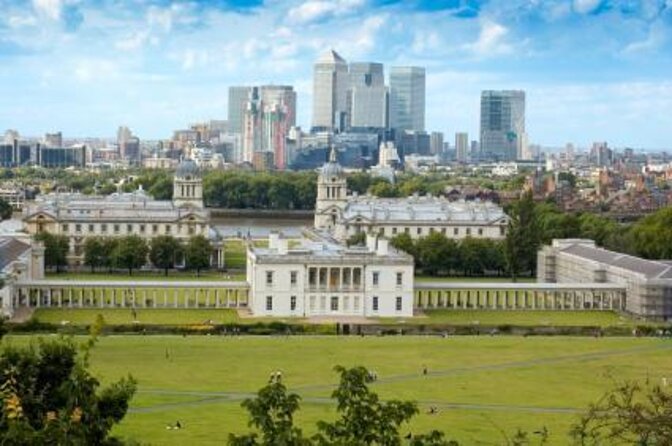
The observatory sits on a hill inside Greenwich Royal Park. You will get dramatic views toward the River Thames and the City of London as you climb, and these views are one of the best reasons to take your time.
The walk is not a minor detail. Several people found the uphill approach longer or steeper than expected, and it can be hard work for anyone with limited mobility. One route from the river takes you uphill, while access from other directions may also involve a climb. Check the route before you leave your hotel, particularly if you are visiting with children, older family members, or anyone who tires easily.
The reward is a broad view over London. On a clear day, the skyline and river make a strong opening to the visit. On a wet day, the outdoor sections are less comfortable, since much of the appeal comes from walking through the park and pausing outside the buildings.
I would avoid treating the observatory as a quick stop between other appointments. The hill takes time, and you may want to pause for photographs before entering.
Meridian Courtyard and the Prime Meridian line
Your visit begins in the Meridian Courtyard, where the famous Prime Meridian line provides the most recognizable moment of the day. Put one foot on each side and you are, in the simplest possible sense, standing in the east and west hemispheres at once.
The photograph is fun, but the setting also gives the science a physical form. Longitude can feel abstract on a map. Here, it becomes a line beneath your shoes. That simple act helps explain why Greenwich became such an important reference point for navigation and timekeeping.
Go to the courtyard early if the photograph matters to you. The line can become crowded quickly, especially after the gates open and during busy summer periods. Get your picture first, then begin the indoor displays. That small change can save you from waiting behind a long line of people taking several versions of the same pose.
The Prime Meridian is also a good place to set expectations. This is not an observatory visit built around a large planetarium show or a modern space exhibit. The focus is the working history of astronomy, clocks, navigation, and the measurement of time.
Flamsteed House and the Astronomers Royal
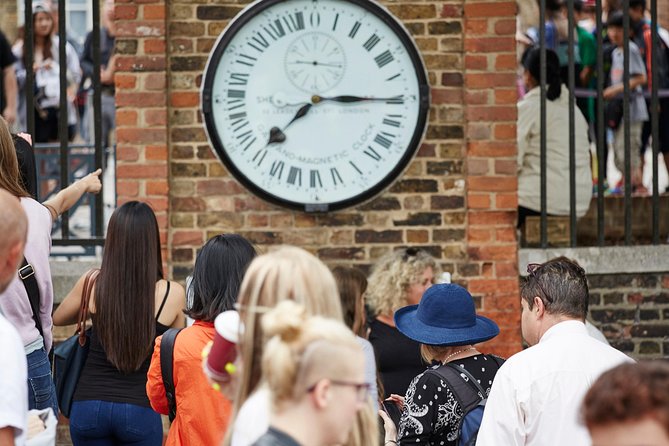
Inside Flamsteed House, you follow the rooms used by the Astronomers Royal. The building helps you picture astronomy as careful, patient work rather than a fast-moving modern spectacle.
The Octagon Room is a highlight. Designed by Sir Christopher Wren, it is one of the best-preserved Wren interiors in London. The room gives the observatory a sense of place that a stand-alone display case could not provide. Look up, slow down, and listen to the audio commentary here.
The audio guide is included and can be downloaded for free. The information supplied for the experience gives different language counts in different places, with seven languages noted on site and ten listed for the downloadable guide. Either way, you should have several language options, rather than needing to depend entirely on printed text.
The guide also helps when the rooms are crowded. One person praised the audio system because it was easier to hear than nearby group commentary. That is useful here, since the historic rooms are not large and several groups may be moving through at once.
A few more to weigh up in London
- Stonehenge, Windsor Castle, and Bath from London
★ 4.5 · 18,662 reviews - London Big Bus Hop-On Hop-Off Tour with Optional River Cruise
★ 3.5 · 10,803 reviews - London Small Group Tour of Historical Pubs
★ 5.0 · 10,422 reviews - Stonehenge, Windsor Castle and Bath with Pub Lunch in Lacock
★ 4.5 · 7,402 reviews
Harrison’s clocks and the problem of longitude

The clocks made by John Harrison are among the strongest reasons to visit. Their importance is not just mechanical beauty. They relate to one of the great practical problems of seafaring: how to work out a ship’s position at sea.
Accurate time allowed navigators to compare local solar time with a fixed reference time. That comparison helped calculate longitude. Harrison’s inventions changed the way people approached this problem, and the observatory presents the story through the actual clocks rather than only through a written explanation.
I would give these displays more time than the Prime Meridian photograph. The line is memorable, but the clocks explain why Greenwich became associated with global time in the first place. If you enjoy engineering, navigation, or the history of science, this may be the most satisfying part of the visit.
The observatory also connects its work with figures such as Isaac Newton, Edmond Halley, James Bradley, Edward Maunder, George Airy, and Einstein. You do not need to memorize the names. The useful point is that Greenwich was tied to generations of scientific observation and debate.
The Shepherd Gate Clock and the red Time Ball
Outside Flamsteed House, look for the Shepherd Gate Clock. It was the first clock to show Greenwich Mean Time publicly. That detail explains how a scientific reference gradually became something ordinary people could read and use.
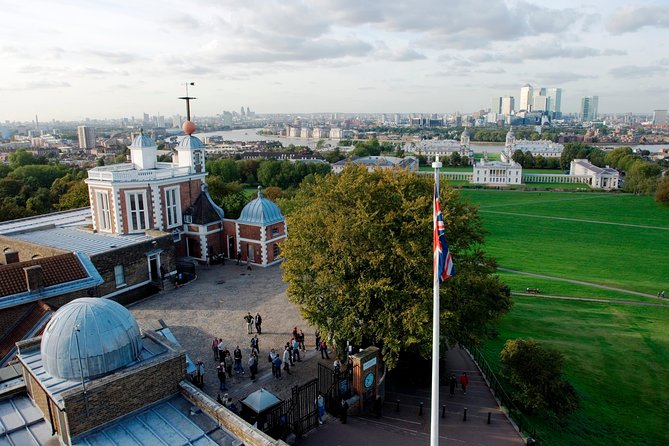
Above Flamsteed House, the bright red Time Ball is hard to miss. First used in 1833, it remains in operation and is one of the world’s earliest public time signals. Its purpose was practical: people nearby could check the signal and set their own clocks.
These features are easy to pass if you hurry from room to room. The audio guide should point them out, but I would also keep an eye on the exterior of Flamsteed House as you move between displays. The Time Ball is one of those small details that makes the observatory feel like a working place, not only a preserved museum.
The Great Equatorial Telescope under the onion dome

The Great Equatorial Telescope sits beneath the observatory’s large onion-shaped dome. It gave astronomers new views of the universe more than a century ago and remains one of the site’s most striking objects.
The telescope provides a useful change of scale. The Prime Meridian and clocks deal with time and position on Earth. The telescope turns your attention outward, toward the universe observed from this hill. You can move from navigation and precise measurement to the much larger questions of astronomy within a short walk.
The experience does not promise a full night of stargazing, and the included admission is centered on the historic observatory buildings and displays. If you expect a large planetarium program, check exactly what is included before booking. One review specifically treated the planetarium as an additional worthwhile activity, not part of the basic visit described here.
How long to spend and how to plan the day
The advertised visit lasts about two hours. That is a sensible minimum for the observatory itself if you want to use the audio guide, see the clocks, visit the historic rooms, look at the telescope, and take photographs at the Meridian Courtyard.
You can finish faster, but you will lose much of the explanation that makes the admission worthwhile. I would allow two hours for the observatory, then add more time for the park and nearby attractions.
Greenwich works especially well as a full day out:
- The National Maritime Museum is within short walking distance and free to visit.
- The Queen’s House is also nearby and free.
- Cutty Sark, the surviving tea clipper, is close to the observatory and now operates as a museum and visitor attraction.
- Greenwich Royal Park gives you space to walk and enjoy the view after the indoor visit.
A pub lunch in Greenwich can fit naturally between the observatory and the nearby museums. If you arrive by the river, the Thames ferry can be a scenic way to reach the area, although transportation is not included with this ticket.
Price, ticket problems, and practical value
At $33.90 per person, this is not London’s cheapest museum entry. The value depends on what you want from the visit. If standing on the Prime Meridian is a priority, and you care about Harrison’s clocks, the Octagon Room, and the telescope, the price can make sense for a focused two-hour experience.
The ticket also saves you from arriving without a plan at a popular attraction. However, advance booking is not a guarantee of a trouble-free entrance. Some people have reported that the supplied mobile voucher or barcode could not be scanned at the observatory and that they had to buy another ticket at the box office.
That is the most serious practical concern. Have your confirmation available in the required mobile format, keep your phone charged, and allow a few extra minutes at the entrance. If your phone has trouble displaying the ticket, or if you are uncomfortable with third-party voucher systems, buying directly from the attraction may be the safer choice.
The experience is offered in English, while the downloadable audio guide is available in several languages. Children under four enter free, and children must be accompanied by an adult. Service animals are allowed, and the attraction is near public transportation, but transport to and from Greenwich is your responsibility.
Accessibility and weather concerns
The observatory is not fully accessible in every area. The hill is steep, and there are stairs around the site. One small lift covers a short set of outdoor steps, but historic interiors do not all have lifts.
If you use a wheelchair, have difficulty with stairs, or simply dislike steep walks, contact the attraction before booking. You may need help planning which parts are practical. This is not a place I would recommend choosing casually for someone with significant mobility limits.
Weather also affects the experience. The views are best in fair weather, and walking through the park is much more pleasant when it is dry. Rain can make the climb and outdoor sections tiring, so check the forecast and allow extra time for a slower approach.
Who will enjoy this Greenwich visit most
I would recommend this experience to families, couples, solo visitors, and anyone curious about how time became standardized. Children may enjoy the two-hemisphere photograph, while older children can follow the basic story of navigation and longitude.
It is also a good match for anyone who likes clocks, inventions, astronomy, or old scientific buildings. The visit is educational without requiring a technical background. You can take in the main ideas through the audio guide and displays, then spend longer on whichever object catches your attention.
I would be more cautious if you want a modern planetarium, a long live presentation, or a fully guided tour. The visit is largely self-guided. You may encounter staff or volunteer talks, and one visitor singled out a guide named Ross for an especially interesting presentation, but you should not book this expecting a guide to lead you from a fixed meeting point.
Should you book the Royal Observatory ticket?
Book it if the Prime Meridian, Greenwich Mean Time, historic clocks, and London views sound appealing. The strongest part is the combination of a simple photo opportunity with real scientific history. You can stand on the line, then learn why that line mattered.
Plan carefully for the hill, arrive with your mobile ticket ready, and reserve at least two hours. If you have mobility concerns, contact the attraction first. If you want better value from the day, combine the observatory with the free National Maritime Museum and Queen’s House, then add Cutty Sark if your budget and interest allow.
For the right visitor, this is a memorable and well-focused Greenwich stop. For someone expecting a large planetarium or an easy, fully accessible attraction, it may disappoint.
FAQ
How long does the Royal Observatory visit take?
The visit takes approximately two hours. You may need additional time if you plan to walk through Greenwich Royal Park or visit nearby attractions.
Is admission to the Prime Meridian included?
Yes. The attraction admission ticket includes access to the Meridian Courtyard, where you can stand on the Prime Meridian line.
Is an audio guide included?
Yes. A free downloadable audio guide is included. It covers the observatory, time, space, and related scientific discoveries, with several language options available.
Is transportation included?
No. Transportation to and from the Royal Observatory is not included. The attraction is near public transportation.
Are children under four admitted free?
Yes. Children under four can enter the attraction free of charge, and children must be accompanied by an adult.
Are the National Maritime Museum and Queen’s House included?
The National Maritime Museum and Queen’s House are free to visit and located within a short walk of the observatory. They are not part of the observatory admission ticket itself.
Is the observatory fully accessible?
No. Certain areas are not fully accessible, and the site includes a steep hill, stairs, and historic interiors without lifts in every section. Contact the attraction if you need help planning your visit.
Can I cancel for a full refund?
You can cancel for a full refund if you do so at least 24 hours before the experience start time. Cancellations or changes made less than 24 hours in advance are not accepted for a refund.
Just added in London
- Private Tour: Royal High Tea At Kensington Palace Gardens★ 5.0 · 39 reviews
- Private Tour: Personal Travel Photographer Tour in London★ 4.5 · 27 reviews
- London East End Private Walking Food Tour – Secret Food Tours★ 5.0 · 26 reviews
- Private Tour: Night Photography Tour in London★ 5.0 · 48 reviews
- London Like a Local, Private & Personalized (2-3 hrs)★ 4.5 · 11 reviews
- British Museum & National Gallery of London – Exclusive Guided Combo Tour★ 5.0 · 48 reviews
- Private Tour: Tower of London and St Paul’s Cathedral★ 5.0 · 1 review
- London Soho District – Exclusive Guided Walking Tour★ 5.0 · 2 reviews
Greenwich Tours, compared.

Westminster to Greenwich Sightseeing Thames Cruise in London
Read our review →
Leeds Castle, Canterbury, Dover & Greenwich Boat ride
Read our review →
Leeds Castle, Canterbury, Dover & Greenwich Cruise from London
Read our review →
Ghosts of Greenwich: London’s Haunted Walking Tour
Read our review →

Cambridge and Greenwich – Day Tour from Brighton
Read our review →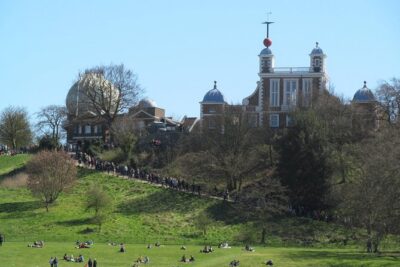

Blockbuster Film Tours – Old Royal Naval College, Greenwich
Read our review →Browse the lists this tour appears in