Reviewed · PRIVATE
London in the Swinging 60s – Private Tour
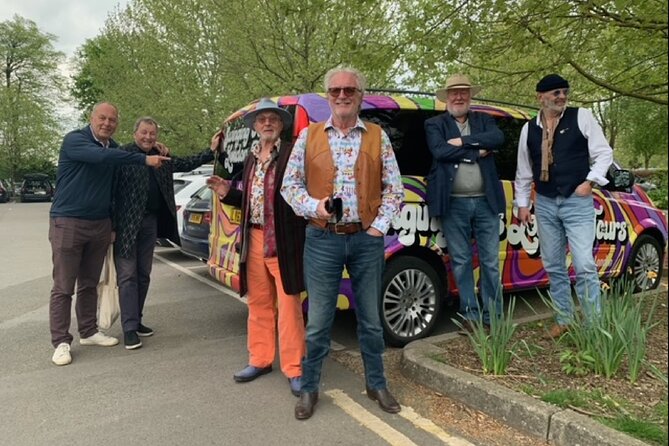
London still has rock-and-roll ghosts. This private 90-minute ride connects you with Beatles, Rolling Stones, Eric Clapton, and Bob Dylan landmarks in Chelsea and along the King’s Road. I especially like the psychedelic minibus and the way the tour links music, fashion, recording studios, and everyday London streets. The main limitation is time: several stops last only a minute or two, and most are exterior views rather than places you enter.
The tour works best if you want focused stories instead of a broad London sightseeing circuit. Guide Paul Endacott is praised for friendly, engaging commentary and an impressive knowledge of 1960s music and fashion. You meet at the Royal Court Theatre beside Sloane Square at 11 a.m., ride with only your own group, and return to the same place.
In This Review
- Key points to know before booking
- Why this short tour works
- Starting at Sloane Square and the King’s Road
- The Pheasantry and Eric Clapton’s Chelsea years
- Old Church Street, studios, and present-day connections
- Cheyne Walk and the Thames-side addresses
- Flood Street and the Sgt Pepper photo location
- Edith Grove and the early Rolling Stones
- The Troubadour, the tour’s longest stop
- Paul Endacott’s guiding style
- The psychedelic minibus experience
- Price, timing, and practical value
- Who should book this London music tour?
- Should you book London in the Swinging 60s?
- FAQ
- Where does the tour start and finish?
- What time does the tour begin?
- How long does the tour last?
- How many people can join the private tour?
- Is admission to the Troubadour included?
- Can children join the tour?
Key points to know before booking
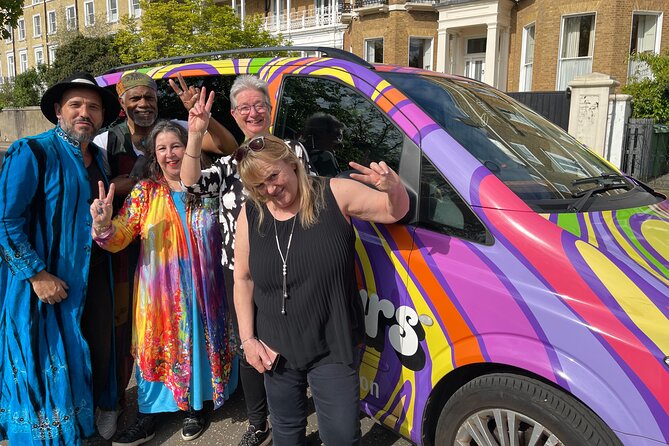
- The psychedelic minibus sets the mood: This is not a standard open-top bus ride. The Beatles-inspired vehicle is part of the fun.
- Chelsea is the main stage: Sloane Square, the King’s Road, Cheyne Walk, and nearby streets form the heart of the route.
- The music coverage goes beyond the Beatles: You hear stories about the Rolling Stones, Cream, Pink Floyd, The Who, Cat Stevens, Jimi Hendrix, Paul Simon, and Bob Dylan.
- Most stops are quick exterior visits: The Troubadour receives the longest stop, at about 15 minutes, with admission included.
- Private means personal: Your group alone takes part, with a maximum of six people according to the price information.
- It suits several generations: The stories and music can work for lifelong fans, curious teenagers, and family members who simply want an unusual London outing.
Why this short tour works
Swinging London is often reduced to a few famous names and bright colors. This tour gives the era a physical setting. You move through the streets where musicians lived, bands formed, clothes shops changed youth culture, and small clubs helped launch careers.
I like that the route is not only about celebrity homes. It also points to boutiques such as Mary Quant’s Bazaar and Granny Takes A Trip, London’s first psychedelic boutique. Those stops help explain why the 1960s were about more than hit records. Fashion, design, art, and music were feeding one another in the same small part of the city.
The private format matters here. A large coach can make music history feel like a list of names shouted through a microphone. With your own group, you can ask about a favorite band or request more attention to a certain part of the story. Paul’s style, based on the available comments about his tours, is warm, humorous, and full of specific detail rather than stiff lecture material.
Still, set your expectations correctly. This is a moving history lesson, not a museum visit. You will see locations from the street, take in the explanation, and continue. If you need long photo stops, interior access, or a full afternoon of sightseeing, 90 minutes may feel too brief.
A few more to weigh up in London
- Stonehenge, Windsor Castle, and Bath from London
★ 4.5 · 18,662 reviews - London Big Bus Hop-On Hop-Off Tour with Optional River Cruise
★ 3.5 · 10,803 reviews - London Small Group Tour of Historical Pubs
★ 5.0 · 10,422 reviews
Starting at Sloane Square and the King’s Road
The meeting point is the Royal Court Theatre at 50 to 51 Sloane Square. This is a useful central location, close to public transportation, and the tour begins at 11 a.m. The first stop shows the hotel the Beatles used as their first London base in the early 1960s.
That opening gives the tour a clear sense of place. You are not starting with a random music fact. You are beginning at one of the points where the Beatles’ London story took shape. The stop itself lasts about two minutes, so you should think of it as a quick look and a story from the guide, not a hotel visit.
From there, the route moves into the King’s Road area, described as the beating heart of Swinging London. This is where music, fashion, and youth culture met. The King’s Road is valuable because it gives the tour its wider setting. You can picture the boutiques, clubs, and social scene as parts of one connected district rather than isolated addresses.
Mary Quant’s Bazaar is one of the significant fashion references. Mary Quant helped define the modern look associated with 1960s London, and her shop represents the link between clothing and pop culture. Granny Takes A Trip adds a more psychedelic note, showing how independent shops helped create the visual language of the period.
You may not go inside these former locations, and the tour does not promise admission to them. Their value comes from the guide’s explanation and from seeing how close these cultural landmarks were to one another.
The Pheasantry and Eric Clapton’s Chelsea years
The Pheasantry is a very short stop, listed at about one minute. It was Eric Clapton’s old flat during his days with Cream. That detail connects an elegant Chelsea address with one of the era’s major guitar figures.
This is a good example of the tour’s appeal. London’s music story did not happen only in concert halls. Musicians lived in ordinary flats, met friends in local streets, and built careers from nearby neighborhoods. The contrast between Chelsea’s polished appearance and the raw energy of 1960s rock makes these addresses interesting.
The drawback is obvious: one minute is enough for a quick look and a sentence or two, but not much else. Keep your camera ready if you want a photo. You will get more from listening to the story than from expecting a formal stop.
Old Church Street, studios, and present-day connections
Old Church Street receives about five minutes, making it one of the more substantial street stops. You see Eric Clapton’s current London home, along with the location of a recording studio favored by Pink Floyd, Cat Stevens, The Who, and other 1960s figures.
This stop broadens the subject beyond the Beatles. It also shows how one address can hold several layers of music history. Pink Floyd brings a different sound and mood from the Rolling Stones, while The Who and Cat Stevens add further variety. For anyone interested in how British rock developed across different styles, this is an especially useful part of the route.
I also like the connection between past and present. An old studio site can make the period feel less like a sealed-off chapter in a textbook. You are looking at a real street that continues to exist, even though its musical role has changed.
The tour does not include entry to the recording studio, and no admission fee is listed for this stop. You are there for the location, the context, and the guide’s stories.
A completely different sort of day out:
- Stonehenge, Windsor Castle and Bath with Pub Lunch in Lacock
★ 4.5 · 7,402 reviews - Tower of London and Crown Jewels Exhibition Ticket
★ 4.5 · 6,677 reviews - Thorpe Park Admission Ticket
★ 4.0 · 5,915 reviews - Stonehenge, Windsor Castle and Bath Full Day Guided Tour
★ 4.5 · 5,346 reviews
Cheyne Walk and the Thames-side addresses
Cheyne Walk follows with roughly three minutes. This exclusive street beside the River Thames has been home to music legends, and the tour uses it to show another side of the 1960s scene.
The stop is less about one single band than about the social geography of the era. Cheyne Walk helps explain where famous musicians lived and how London’s most sought-after addresses intersected with the music business. The river setting also gives the ride a pleasant change from the commercial streets around the King’s Road.
Again, this is an exterior viewing stop. You should not expect to enter private homes or receive access beyond the public street. The appeal is seeing the addresses while hearing who lived there and why the area mattered.
Flood Street and the Sgt Pepper photo location
Flood Street is a brief two-minute visit to the studio where the Beatles’ famous Sgt Pepper’s Lonely Hearts Club Band album photograph was taken in 1967.
For Beatles fans, this may be one of the most satisfying stops because it connects a familiar image with a real London location. The album cover is so recognizable that knowing where the photograph was made adds another layer to it. Even if you are not a serious collector, you will probably recognize the cultural importance of the image.
The stop is free and quick. There is no promise of a studio tour, so the experience depends on the guide making the connection clear. This is a place where a good explanation matters more than a long visit, and the tour’s private format gives you room to ask about the photograph and the album.
Edith Grove and the early Rolling Stones
At Edith Grove, you see the former home of Mick Jagger, Keith Richards, and Brian Jones in 1962, the year the Rolling Stones were named. The listed visit lasts about two minutes.
This is one of the route’s strongest band-history moments. The address represents the Stones before global fame, when the group was still taking shape. It gives you a glimpse of the cramped, early stage of a story that would soon become much larger.
The stop also helps balance the Beatles focus. If your group includes fans of both bands, Edith Grove gives the Rolling Stones their own clear place in the tour. If you are more interested in the Stones than the Beatles, you can ask for extra detail during the ride, since this is a private activity.
As with the other homes, you view the location from outside. The attraction is the connection between an unassuming residential address and the band’s beginnings.
The Troubadour, the tour’s longest stop
The Troubadour is the only stop with admission included, and the visit lasts about 15 minutes. That makes it the natural centerpiece of the tour.
This London music venue is presented as a place that has changed little from the 1960s, when Paul Simon, Bob Dylan, Jimi Hendrix, and other music figures played and spent time there. Unlike the residential addresses, the Troubadour offers a stronger sense of entering a working music space rather than simply looking at a doorway or façade.
The long stop lets you pause and take in the setting. It also gives the guide more time to explain why small venues mattered. Clubs such as this helped musicians build an audience, meet other performers, and develop their work away from the grand stages.
If you have limited time in London, this stop gives the tour much of its practical value. You are not only checking an address off a list. You are visiting a venue tied to several major artists, with admission covered in the tour price.
Paul Endacott’s guiding style
The guide can make or break a specialized music tour. Paul Endacott is repeatedly praised for being friendly, funny, engaging, and full of useful information. He is also described as good at tailoring private tours, including versions with a stronger Beatles, Rolling Stones, or Kinks focus.
For this standard Swinging 60s route, that suggests a flexible experience rather than a memorized script delivered without pause. You can expect stories about music and fashion, plus the social world around them. The best comments describe the tour as interactive and tailored to the group.
The reviews also show that the tour can bridge generations. Parents and grandparents who lived through the period can revisit familiar music, while younger family members can learn what London was like before they were born. Teenagers have enjoyed the experience, especially when the stories are paired with music and real locations.
That makes this a good birthday gift or family outing. It has enough substance for serious music fans, but it does not require you to know every band before climbing aboard.
The psychedelic minibus experience
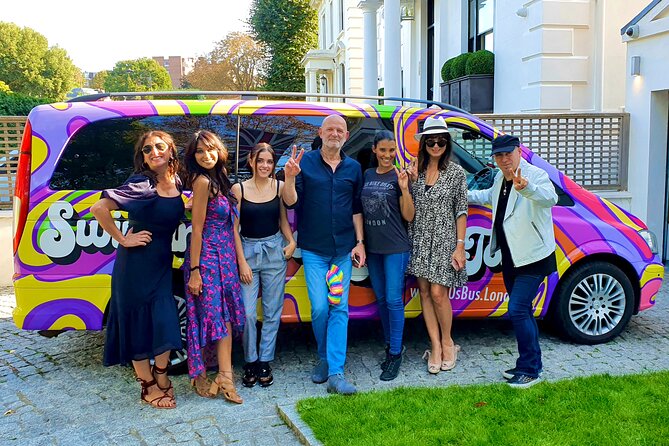
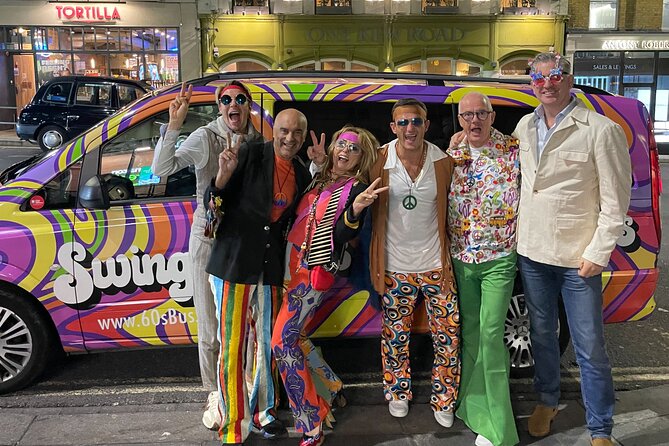
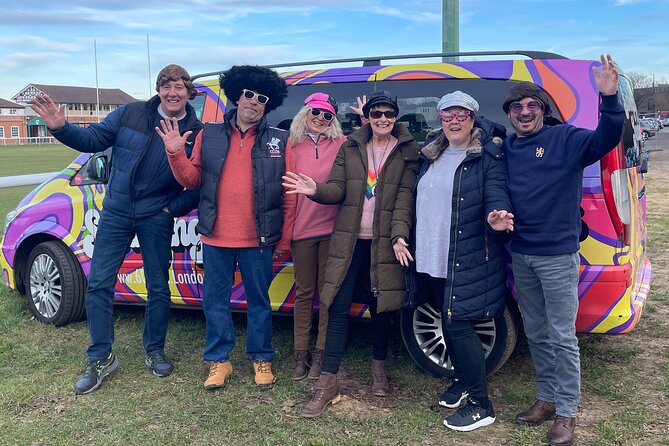
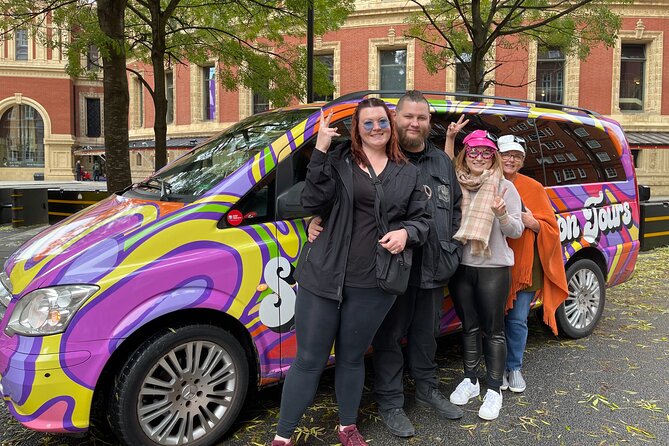
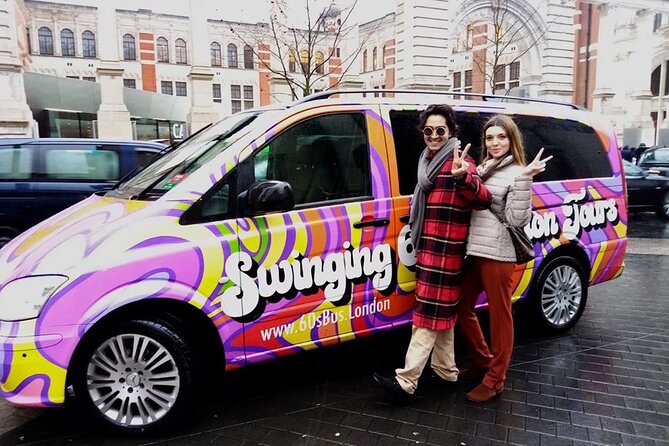
The vehicle is part of the attraction. The psychedelic minibus gives the tour a playful 1960s identity and helps separate it from an ordinary city drive. It is described as comfortable and inspired by the Beatles’ Magical Mystery Bus style.
You spend much of the tour seated while moving between locations, which is useful if you want to cover several Chelsea addresses without a long walk. The small vehicle also supports the private format and makes it easier to hear the guide’s commentary.
The tradeoff is that the vehicle may not provide the same broad views as an open-top bus. The tour is about specific streets and stories, not panoramic sightseeing. You should also remember that the advertised price covers a group of up to six, while the highlights describe a maximum group size of eight. If your party is larger than six, confirm the exact arrangement before booking.
Price, timing, and practical value
The listed price is $397.75 per group of up to six. That works out to about $66 per person for six people, before any optional spending on drinks. For a couple, the per-person cost is much higher, but you are paying for a private guide and vehicle rather than a seat on a standard shared bus.
I see the best value for families, close friends, or music clubs that can fill most of the available places. The private setup means you do not pay for six individual tickets, and your group controls the conversation. A smaller party should decide if that privacy is worth the premium.
The tour lasts about 90 minutes and returns to the Royal Court Theatre. Transportation to the meeting point is not included, and neither are alcoholic drinks, coffee, or tea. The Troubadour admission is included, along with taxes, fees, handling charges, and the professional guide.
You receive confirmation when the booking is accepted. Availability is checked during booking, and the card is charged only after the tour is confirmed. You can cancel for a full refund up to 24 hours before the 11 a.m. start time. Changes or cancellations inside that window are not refunded.
The minimum age is nine. Service animals are allowed, public transportation is nearby, and the activity states that most people can participate.
Who should book this London music tour?
I would choose this tour for:
- Beatles, Rolling Stones, Cream, Pink Floyd, or 1960s music fans
- Families traveling across three generations
- Anyone interested in the connection between fashion and music
- Visitors who prefer a private guide to a large group
- Birthday groups looking for a distinctive London activity
- People who have already seen the major London sights and want something more focused
I would hesitate if you want a full-day activity, extensive walking, museum interiors, or a broad tour of London. The route is concentrated in Chelsea and nearby streets, and the short stops mean you will not linger at every address.
You should also choose it for the stories, not just the photo opportunities. Several locations are private homes or former sites, and the most important information comes from the guide.
Should you book London in the Swinging 60s?
Book it if 1960s music is a real interest, especially if you can share the cost with a family or group of friends. The combination of a psychedelic minibus, Chelsea streets, famous addresses, and Paul Endacott’s personal presentation gives you a more focused experience than a general rock-and-roll sightseeing ride.
I would give it extra credit for bringing fashion into the story and for including the Troubadour, where you get the tour’s strongest sense of place. Just allow for quick exterior stops and remember that 90 minutes passes fast.
For a private, music-centered introduction to Swinging London, this is a strong choice. For a slow, detailed look at each site, choose a longer tour or pair this ride with a separate visit to a London music venue.
FAQ
Where does the tour start and finish?
The tour starts at the Royal Court Theatre, 50 to 51 Sloane Square, London SW1W 8AS. It ends back at the same meeting point.
What time does the tour begin?
The stated start time is 11 a.m.
How long does the tour last?
The tour lasts approximately 1 hour and 30 minutes.
How many people can join the private tour?
The price is listed for one group of up to six people. The tour is private, so only your group participates.
Is admission to the Troubadour included?
Yes. Admission to the Troubadour is included. The other listed stops do not include admission tickets, and most are viewed from outside.
Can children join the tour?
Yes. The minimum age is nine years old. Service animals are allowed, and the activity states that most people can participate.
Just added in London
- Private Transfer From London to Southampton Cruise Terminal★ 4.0 · 2 reviews
- Layover Tour of London from LHR Executive Luxurious Vehicle Private Tour 6 hour★ 4.5 · 9 reviews
- Pub & History Tour London (History & Beers)★ 5.0 · 3 reviews
- eSIM for UK (34 EU countries) | 3 to 30 days. Up to 40GB of data★ 4.0 · 18 reviews
- Young Victoria’s London: Windsor Castle & Kensington Palace★ 5.0 · 1 review
- Zombie Scavengers Game – Southend-on-Sea, UK★ 4.5 · 2 reviews
- Women of Whitechapel 2 hour Walking Tour★ 5.0 · 15 reviews
- Working Women of the East End Walking Tour★ 5.0 · 85 reviews
Private, compared.
The Premier Classic London: Private 4-Hour Tour in a Black Cab
Read our review →
Stonehenge Inner Circle Private Tour from London with Bath Visit
Read our review →

Private London Arrival Transfer – Airport to Hotel / Accommodation
Read our review →
Private 3-Hour Guided Beatles Classic Tour of Liverpool
Read our review →
British Museum London Guided Tour Semi-Private 8ppl Max
Read our review →